Do all women go through menopause? What the science says
TL;DR: Yes. Every woman born with ovaries goes through menopause, either naturally or induced by surgery, chemotherapy, or radiation. Doctors confirm natural menopause after 12 straight months without a period, and the median age in the United States is 51. The lead-up, perimenopause, can start a decade earlier and is often the harder stretch to live through.
Do all women go through menopause?
Yes, with almost no exceptions. Every person born with ovaries reaches menopause at some point. The ovaries hold a finite supply of eggs, and once that supply runs out they stop producing meaningful amounts of estrogen and progesterone. That hormonal shift is menopause.
The only real nuance is timing and cause. Most women get there naturally in their late 40s or early 50s. Some arrive earlier because of surgery (bilateral oophorectomy), chemotherapy, pelvic radiation, or a rare genetic condition. The biology never changes: estrogen falls, the menstrual cycle stops, and the body settles into a new hormonal baseline.
Women who have had a hysterectomy but kept their ovaries will not have periods, so they miss the classic "12 months without a period" marker. Their ovaries still shut down on the same schedule as everyone else's. Many have no idea menopause has arrived until symptoms show up or bloodwork shows an elevated FSH.
So if someone has told you menopause might skip you, that is wrong. What varies enormously is how early it arrives, how disruptive it feels, and how long perimenopause drags on before you get there.
What exactly is menopause, biologically speaking?
Menopause is not a disease, a syndrome, or a phase. It is a single point in time: the day you have gone 12 consecutive months without a menstrual period, with no other medical cause for that absence [1]. Everything before that point is perimenopause. Everything after is postmenopause.
The driver is the depletion of ovarian follicles. You are born with roughly one to two million follicles. By puberty that number has fallen to about 300,000. Across your reproductive years, follicles are lost continuously, far more than the handful released at ovulation. Once the remaining pool drops below a critical threshold, the ovaries can no longer respond normally to the pituitary hormones FSH and LH. FSH climbs, sometimes dramatically. Estradiol, the main estrogen your ovaries make, drops.
That estrogen drop drives nearly every menopause symptom: hot flashes, night sweats, vaginal dryness, broken sleep, joint pain, mood changes, and the longer-term risks like bone loss and cardiovascular changes [2].
Progesterone also falls sharply in perimenopause, often before estrogen does. That early progesterone drop is one reason perimenopausal women have irregular cycles, heavier bleeding, anxiety, and poor sleep years before their last period. The progesterone overview covers that hormone's role in more detail.
What is the average age of menopause?
The median age of natural menopause in the United States is 51, and the normal range runs from about 45 to 55 [1]. Roughly 1 percent of women reach natural menopause before age 40, which doctors call primary ovarian insufficiency (POI). Another 5 percent get there between 40 and 45, called early menopause.
Race and ethnicity appear to matter. The Study of Women's Health Across the Nation (SWAN) found that Black and Hispanic women tend to reach menopause slightly earlier than non-Hispanic white women, and Japanese American women slightly later, though all groups fell inside the 45 to 55 range [3].
Family history is probably the strongest single predictor. If your mother had early menopause, your own risk is meaningfully higher. Smoking advances ovarian aging by roughly one to two years on average [3]. Women who have never been pregnant, or who carry a lower BMI, tend to reach menopause a little earlier too.
For a closer look at timing by age group, the perimenopause age and menopause age articles break down what the data actually shows. The when does menopause start article walks through the transition timeline specifically.
What is perimenopause and how long does it last?
Perimenopause is the transition period before menopause, and for many women it is the most symptomatic chapter of the whole story. It usually starts in the mid-to-late 40s, though it can begin as early as the late 30s [1].
The average duration runs four to eight years, but it can be as short as a year or stretch past a decade [4]. During perimenopause, ovulation turns irregular, cycles shorten or lengthen without warning, and hormones swing hard rather than declining in a smooth line. Estradiol can spike higher than premenopausal levels on some days, then crash. That is why perimenopause often feels more chaotic than postmenopause.
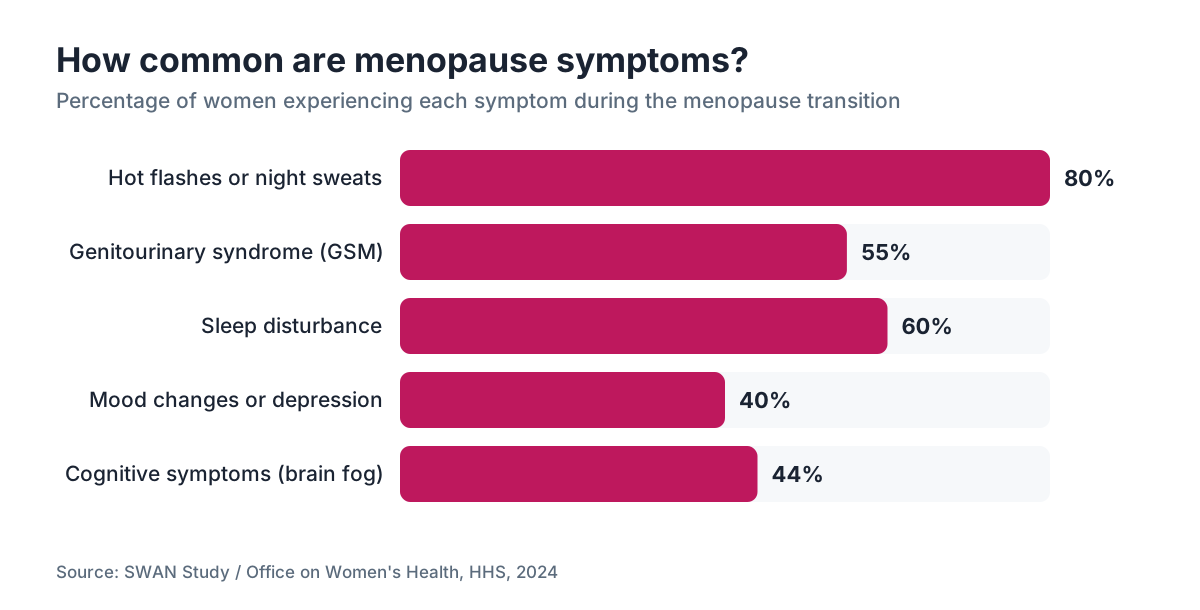
Common perimenopause symptoms include hot flashes (which affect up to 80 percent of women at some point during the transition [4]), night sweats, irregular bleeding, breast tenderness, mood swings, brain fog, and worsening sleep. Plenty of women are surprised these symptoms start years before their period stops.
The clinical standard for staging the transition is the STRAW+10 framework, published by a consortium that included NAMS and the Endocrine Society. It defines specific stages by cycle changes and hormone levels rather than age alone [5].
Are there types of menopause beyond natural menopause?
Yes. Menopause splits into two broad categories: natural and induced.
Natural menopause happens on its own when ovarian follicles run out. Induced menopause happens when the ovaries stop working because of medical treatment or damage.
The main causes of induced menopause:
- Bilateral oophorectomy: surgical removal of both ovaries. This triggers immediate surgical menopause. Estrogen drops within 24 hours of surgery, and symptoms tend to hit harder and faster than natural menopause because there is no gradual perimenopause to ease the landing [6].
- Chemotherapy: certain agents (particularly alkylating drugs like cyclophosphamide) are toxic to ovarian follicles. Whether menopause becomes permanent depends on the woman's age plus the specific drugs and doses.
- Pelvic radiation: radiation to the pelvis or abdomen can damage ovarian tissue directly. Surgeons sometimes move the ovaries out of the radiation field beforehand (ovarian transposition) to reduce that risk.
- Primary ovarian insufficiency (POI): some women's ovaries fail before age 40 for genetic reasons (Turner syndrome, FMR1 premutation), autoimmune reasons, or no identifiable cause. POI affects about 1 in 100 women [7].
Women who reach menopause before 45, by any route, face a longer postmenopausal life and higher risks of osteoporosis and cardiovascular disease. Guidelines usually recommend hormone therapy for these women until at least the average age of natural menopause, unless something rules it out [2].
Can you go through menopause if you've had a hysterectomy?
Yes, and the experience depends on which procedure you had.
If your hysterectomy removed the uterus but kept one or both ovaries (the most common type), your ovaries keep working. You will not have periods, so the usual "12 months without a period" signal never comes, but your ovaries still deplete their follicles on the same timeline as any other woman's. Menopause arrives on schedule. You just may not notice until symptoms appear or a blood test shows elevated FSH and low estradiol.
If you had a bilateral salpingo-oophorectomy (both ovaries removed along with the uterus), you enter surgical menopause immediately. No perimenopause, no gradual transition. Symptoms can be intense.
Women with hysterectomies often end up underdiagnosed and undertreated for menopause simply because there is no period to track. An FSH level above 40 mIU/mL, paired with symptoms, is a reasonable clinical signal, though hormone levels alone are not definitive in perimenopause because they swing so widely [1].
If this is you, raise it directly with a provider who understands the distinction. For treatment options, the hormone replacement therapy and estrogen patch articles are good starting points.
What symptoms does every woman experience vs. what varies?
Here the "all women go through menopause" answer gets more layered. The biology is universal. The symptom experience is anything but.
The SWAN study tracked over 3,000 women through the transition and found that about 80 percent reported vasomotor symptoms (hot flashes and night sweats) at some point, with severity ranging from barely noticeable to life-disrupting [3]. Roughly 20 percent of women sail through with minimal symptoms. Another 20 percent get severe, prolonged symptoms. Most women land somewhere in the middle.
Vaginal and urinary symptoms (together called the genitourinary syndrome of menopause, or GSM) affect roughly 27 to 84 percent of postmenopausal women. Unlike hot flashes, they tend to worsen over time rather than fade on their own [8].
Bone loss is essentially universal after menopause. Women lose bone fastest in the first few years after their final period, at roughly 1 to 2 percent per year, then the pace slows [2]. Guidelines recommend a bone density test for all women by age 65, and earlier for women with risk factors.
Some women get significant cognitive changes, mood disruption, or joint pain. Others do not. Whether that comes down to genetics, hormones, lifestyle, or some mix is still an open research question.
Does menopause affect transgender women or people with intersex conditions?
This question comes up more now, and it deserves an honest answer.
Transgender women (people assigned male at birth) do not have ovaries and do not go through menopause in the biological sense described above. But transgender women who stop taking estrogen therapy can get estrogen withdrawal symptoms that look a lot like menopause, including hot flashes and mood changes.
Transgender men and nonbinary people assigned female at birth with ovaries do go through menopause on the same biological timeline as other people with ovaries. Testosterone therapy suppresses menstruation, but the ovaries still age. Menopausal symptoms can surface when testosterone doses drop or stop, and the long-term ovarian and cardiovascular effects of sustained testosterone in aging ovaries are not well characterized in the literature yet.
People with intersex conditions vary widely depending on their specific chromosomal, gonadal, and hormonal profile. Some have ovaries that undergo normal menopause. Others do not. There is no single answer for the broad category of intersex.
Anyone in these groups is best served by a provider with real experience in gender-affirming endocrinology. The Endocrine Society publishes clinical guidelines for gender-affirming hormone therapy that address some of these questions [9].
How is menopause diagnosed?
For most women, the diagnosis is clinical: 12 consecutive months without a period, in a woman in her late 40s or early 50s, with typical symptoms. No blood test is required to confirm it [1].
Blood tests earn their place in specific situations. If a woman is under 45, has no clear reason for missing periods, or had a hysterectomy without oophorectomy, checking FSH and estradiol makes sense. An FSH consistently above 40 mIU/mL, paired with low estradiol and no menstruation, supports a menopause diagnosis. In perimenopause, though, these levels bounce around enough that a single reading can mislead you.
NAMS guidance states that "the diagnosis of menopause is primarily clinical" and that "laboratory testing generally is not needed for women who present with typical symptoms and are of the appropriate age" [1].
Thyroid disease, pregnancy (yes, still possible in perimenopause), high prolactin, and certain medications can all disrupt cycles and mimic perimenopause. A workup to rule those out is reasonable when the picture is murky.
AMH (anti-Mullerian hormone) is sometimes used to estimate ovarian reserve and roughly approximate timing, but it is not precise enough to predict the date. Its main use stays in fertility evaluation.
What are the long-term health effects of menopause?
Menopause is about more than the symptoms in front of you. The estrogen drop has downstream effects on multiple organ systems that pile up over years.
Bone: estrogen actively holds back bone resorption. When estrogen falls, breakdown outpaces formation. The result is faster bone loss, rising osteoporosis risk, and fracture risk that climbs sharply after 65. About 50 percent of women over 50 will have an osteoporosis-related fracture in their lifetime [10].
Cardiovascular: before menopause, women have lower rates of heart disease than age-matched men. After menopause, that gap closes. Estrogen's protective effects on lipid profiles and vascular function fade. LDL cholesterol typically rises, HDL falls, and arteries stiffen. Cardiovascular disease becomes the leading cause of death in postmenopausal women [2].
Brain: estrogen receptors sit throughout the brain. The cognitive symptoms women report during perimenopause, word-finding trouble, memory lapses, brain fog, are real, and research supports a neurological basis rather than pure sleep deprivation. Whether early hormone therapy lowers long-term dementia risk is still debated, with some observational data suggesting benefit and randomized trials showing a murkier picture [11].
Genitourinary: GSM progresses without treatment. Recurrent UTIs, urinary urgency, and pelvic floor dysfunction grow more common with age and estrogen deficiency.
Managing these long-term risks is one of the main reasons menopause care reaches well past symptom relief. The menopause hub covers the evidence on treatment options.
What treatments are available for menopause, and who needs them?
Not every woman needs treatment. If your symptoms are mild and your long-term risk profile is average, watchful waiting plus lifestyle work (strength training, calcium, vitamin D, sleep hygiene) is a reasonable path.
For women with moderate-to-severe symptoms, or meaningful bone or cardiovascular risk, menopausal hormone therapy (MHT, also called HRT) is the most effective evidence-based option. The North American Menopause Society describes hormone therapy as "the most effective treatment for vasomotor symptoms and is appropriate for healthy symptomatic women who are within 10 years of menopause or under 60 years of age" [1]. That timing matters: starting hormone therapy close to menopause onset carries a more favorable risk-benefit ratio than starting a decade later.
Options include estrogen-only therapy (for women without a uterus) and combined estrogen-progestogen therapy (for women who still have a uterus, to protect the uterine lining). There are also non-hormonal FDA-approved options for hot flashes specifically. Fezolinetant (brand name Veozah), approved in 2023, is the first neurokinin receptor antagonist approved for this indication [12].
For GSM, low-dose vaginal estrogen is remarkably effective, absorbs minimally into the bloodstream, and is considered safe even for many women with a history of hormone-sensitive cancer, per NAMS guidance [8].
WomenRx offers telehealth consultations for menopause hormone therapy if you want to talk through options with a clinician who focuses on this area.
Weight changes in menopause are real and common. Some women find GLP-1 receptor agonists helpful for the weight gain that often rides along with the hormonal shift. The semaglutide for weight loss and semaglutide vs tirzepatide articles cover that option in detail.
What can you do to prepare for and manage menopause well?
The single most useful move is to stop treating menopause as something that happens to you and start treating it as a life stage you can prepare for.
Bone health starts now, not at 65. Weight-bearing exercise, enough calcium (1,000 mg per day before menopause, 1,200 mg after [10]), and vitamin D (the Endocrine Society recommends 1,500 to 2,000 IU daily for adults at risk of deficiency [13]) all matter. If you carry risk factors for osteoporosis, ask your provider about a bone density test before the standard age-65 recommendation.
Cardiovascular risk matters more after menopause. Blood pressure, lipids, and blood sugar all deserve closer watching. The risk profile that looked benign at 40 can read very differently at 55.
Learn the symptom timeline. Perimenopause can start in your late 30s. Knowing that irregular cycles, broken sleep, and rising anxiety might be perimenopausal rather than purely stress-related changes how you respond and when you seek care.
Find a provider who knows this territory. A surprising number of women still report doctors who brushed off their symptoms or never mentioned hormone therapy as an option. Providers who focus on menopause care, including those reachable through WomenRx, are more likely to lay out the full menu of evidence-based choices.
And track your cycles. The free period-tracking apps most women already use generate exactly the data a clinician needs to stage where you are in the transition.
Frequently asked questions
Do all women go through menopause, even if they're healthy?
Yes. Menopause is a normal biological process, not a sign of illness. Every person born with ovaries reaches it because the follicle supply is finite. Health and fitness affect symptom severity and long-term risk, but they do not prevent menopause from arriving. The median age is 51 in the United States, and the normal range is 45 to 55.
Can menopause be prevented or delayed?
No approved or validated treatment prevents natural menopause. Some research suggests lifestyle factors, like not smoking, may delay it by a year or two on average. Experimental approaches like ovarian tissue cryopreservation are being studied for fertility preservation, not menopause prevention. Hormone therapy manages symptoms and lowers long-term risks but does not stop the underlying ovarian aging.
What is the earliest age menopause can happen?
Natural menopause before age 40 is called primary ovarian insufficiency (POI) and affects about 1 in 100 women. Early menopause between 40 and 45 affects roughly 5 percent. Surgical or chemotherapy-induced menopause can happen at any age. Women who reach menopause early face longer postmenopausal lives and higher bone and cardiovascular risk, so hormone therapy is usually recommended until at least the average natural menopause age.
Does menopause happen all at once or gradually?
Gradually, in most cases. The transition, called perimenopause, typically takes four to eight years and involves irregular periods, swinging hormones, and building symptoms before the final period. Surgical menopause is the exception: removing both ovaries causes an immediate hormonal drop within 24 hours, with no gradual lead-up, which is why symptoms after surgical menopause hit more abruptly and severely.
Is menopause the same as perimenopause?
No. Perimenopause is the transition leading up to menopause and can last several years. Menopause is the specific point when you have gone 12 consecutive months without a period. After that point, you are postmenopausal for the rest of your life. Most people use 'menopause' loosely for the whole transition, but clinically they are distinct stages.
Do women who never had children go through menopause differently?
Research suggests women who have never been pregnant tend to reach menopause slightly earlier than women who have had children, though the difference is modest. The symptom experience is not dramatically different based on parity. Hormonal contraception, which suppresses ovulation, does not meaningfully change when menopause arrives. The ovaries age on their own clock regardless of reproductive history.
Can you get pregnant during perimenopause?
Yes. Ovulation still happens in perimenopause, even with irregular cycles. Pregnancy is possible until menopause is confirmed (12 full months without a period). NAMS and most gynecology guidelines recommend continuing contraception until that 12-month mark if pregnancy is not desired. Women over 40 who want to conceive should see a reproductive endocrinologist promptly, since fertility declines significantly in this window.
How do I know if I'm in perimenopause or just have irregular periods?
The main signals are cycle changes plus symptoms: periods that are shorter, longer, heavier, lighter, or more irregular than usual, paired with hot flashes, night sweats, broken sleep, or mood changes. In a woman in her mid-40s, that pattern usually points to perimenopause. A provider can check FSH and estradiol, though a single test is not definitive given how much these levels swing during the transition.
Does menopause cause permanent weight gain?
Menopause itself does not directly cause weight gain, but the hormonal shift changes body composition: fat moves from the hips and thighs to the abdomen, and lean muscle tends to drop. Combined with normal aging and often reduced activity, many women do gain weight during this transition. Resistance training, enough protein, and in some cases GLP-1 medications are all options for managing body composition.
Are hot flashes a guaranteed part of menopause?
Not guaranteed, but very common. Roughly 80 percent of women get vasomotor symptoms (hot flashes and night sweats) at some point in the transition, with wide variation in severity. For most women, symptoms peak in the first one to two years after the final period and gradually improve, though some have symptoms for a decade or more. Effective treatments exist, including hormone therapy and the non-hormonal FDA-approved drug fezolinetant.
Does hormone therapy prevent menopause?
No. Hormone therapy manages symptoms and lowers certain long-term risks like bone loss, but it does not prevent or reverse the underlying ovarian shutdown. If you stop hormone therapy, symptoms that would have occurred without it can return. Some women on hormone therapy never notice their natural menopause transition because symptoms are masked, which makes deciding when to stop a clinical conversation.
What happens to women who never treat menopause symptoms?
Many women go through menopause without formal treatment and do fine, especially if symptoms are mild. The concern is long-term: untreated estrogen deficiency links to faster bone loss, worsening cardiovascular risk markers, and progressive genitourinary symptoms. Moderate-to-severe hot flashes also carry real quality-of-life and sleep costs. Whether to treat is a personal decision made with your provider, weighing your specific symptom burden and risk profile.
Does menopause affect mental health?
Yes, meaningfully for many women. Perimenopause and early postmenopause link to higher rates of depression, anxiety, and mood instability. This is at least partly hormonal: estrogen affects serotonin, dopamine, and GABA pathways. Women with a history of depression or premenstrual dysphoric disorder (PMDD) appear more vulnerable. Hormone therapy can improve mood symptoms in perimenopausal women, though it is not a substitute for treating clinical depression.
Is there anything that makes menopause come earlier?
Yes. Smoking is the most studied modifiable factor, advancing menopause by roughly one to two years. Chemotherapy and pelvic radiation can cause early or immediate menopause depending on the regimen and dose. Genetic factors (including FMR1 premutation and Turner syndrome) can cause primary ovarian insufficiency before 40. Having only one ovary, a history of certain autoimmune diseases, and low body weight are also linked to earlier menopause.
Sources
- North American Menopause Society (NAMS), Menopause Practice: A Clinician's Guide
- Endocrine Society, Clinical Practice Guideline on Menopause
- Study of Women's Health Across the Nation (SWAN), National Institute on Aging
- Office on Women's Health, U.S. Department of Health and Human Services, Menopause page
- Harlow SD et al., 'Executive Summary of the Stages of Reproductive Aging Workshop + 10,' Menopause, 2012
- National Cancer Institute, Surgical Menopause
- National Institute of Child Health and Human Development (NICHD), Primary Ovarian Insufficiency
- NAMS, 'The 2020 Genitourinary Syndrome of Menopause Position Statement,' Menopause, 2020
- Endocrine Society, Clinical Practice Guideline on Gender-Affirming Hormone Therapy
- National Osteoporosis Foundation (Bone Health and Osteoporosis Foundation), Clinician's Guide to Prevention and Treatment of Osteoporosis
- Maki PM et al., 'Guidelines for the Evaluation and Treatment of Perimenopausal Depression,' Menopause, 2018
- U.S. Food and Drug Administration, Veozah (fezolinetant) Approval, 2023
- Holick MF et al., Endocrine Society Clinical Practice Guideline on Vitamin D Deficiency, Journal of Clinical Endocrinology and Metabolism, 2011