Perimenopause vs menopause: what actually makes them different
TL;DR: Perimenopause is the transition into menopause, usually 4 to 10 years long, when estrogen and progesterone swing unpredictably. Menopause is a single point: 12 straight months without a period. Everything after that is postmenopause. Symptoms can show up in all three stages, but the hormone patterns underneath them, and the treatments that work, differ in ways that change what you should do.
What is the actual difference between perimenopause and menopause?
The two words get used interchangeably, and that sloppiness costs women. Some dismiss real symptoms too early. Others panic that something is wrong when their body is doing exactly what it should.
Perimenopause means "around menopause." It is a transition, not an event. Your ovaries gradually make less estrogen and progesterone, periods turn irregular, and symptoms like hot flashes, broken sleep, and mood shifts often start here, sometimes years before your last period [1].
Menopause is technically one day. It is the day you complete 12 consecutive months without a menstrual period. That 12-month mark is the diagnostic threshold the North American Menopause Society (NAMS) uses, and it is the standard clinicians apply worldwide [2]. Until you cross it, you are still in perimenopause, even if you have not bled in six or eight months.
After the 12-month mark comes postmenopause. That is the rest of your life. Most of what people call "menopause symptoms" are actually perimenopausal, and a few carry over. The distinction matters for treatment, for reading hormone tests correctly, and for knowing what your body is doing and why.
Short version: perimenopause is the runway. Menopause is the moment of touchdown. Postmenopause is everything after.
How long does perimenopause last, and when does it start?
Perimenopause runs about 4 to 10 years on average, with a short tail around 2 years and a long tail up to 14 [1]. The average age of natural menopause in the United States is 51.4 years [3], so the transition usually opens somewhere in the mid-to-late 40s.
Earlier starts happen more than people think. The Study of Women's Health Across the Nation (SWAN), an NIH-funded study that followed women for over a decade, found hormonal changes consistent with early perimenopause in some women in their late 30s [3]. Irregular cycles, the most common first sign, can begin at 40 or before. Our perimenopause age article breaks down what is typical versus what should prompt a workup.
Smoking, chemotherapy, surgical removal of the ovaries, and some autoimmune conditions all push the transition earlier. Genetics counts too. If your mother went through menopause early, your odds rise, though nothing is guaranteed.
SWAN tracked more than 3,300 women across multiple racial and ethnic groups, and the differences by race were real. Black women tended to enter perimenopause earlier and reported more severe hot flashes and night sweats, while Asian women reported fewer on average [3]. That shapes when you should start paying attention and when to bring symptoms to a clinician.
For a closer look at timing, see our when does menopause start article.
What are the symptoms of perimenopause vs menopause?
Here is the honest answer most articles skip: the symptoms overlap heavily. Hot flashes, night sweats, poor sleep, brain fog, mood changes, vaginal dryness, and shifting weight can all appear in perimenopause, continue through the transition, and stick around in postmenopause. The difference is not really which symptoms you have. It is the hormone pattern underneath them.
In perimenopause, estrogen does more than glide downward. It swings. High-estrogen stretches get followed by sharp drops, which is why some perimenopausal women get estrogen-excess symptoms (breast tenderness, heavy bleeding, bloating) right alongside classic low-estrogen ones. Progesterone usually falls first, so irregular cycles and sleep trouble tend to show up before hot flashes do [1].
By the time you reach menopause and move into postmenopause, estrogen has settled at a persistently low level. The erratic swings quiet down for many women, but sustained low estrogen has consequences that build: bone density loss speeds up, genitourinary symptoms (dryness, urgency, recurrent UTIs) often get worse, and cardiovascular risk factors shift [4].
Some symptoms lean toward early perimenopause:
- Shorter or longer cycles (a change of 7 or more days is a recognized early marker)
- Heavier or lighter bleeding than your baseline
- Breast tenderness
- New or worsening premenstrual mood changes
Others tend to emerge or intensify closer to and after the final period:
- Vaginal and vulvar dryness
- Urinary urgency and recurrent infections
- Joint pain
- Serious sleep fragmentation
The variation between women is huge. Some sail through with almost nothing. Others are flattened. Nobody can reliably predict which you will be.
Can you be in perimenopause and still get pregnant?
Yes. Fertility drops during perimenopause, but it does not hit zero until after your final period. Ovulation still happens, just less often and less predictably. NAMS is clear that pregnancy stays possible throughout perimenopause, and women who want to avoid it should keep using contraception until they have been period-free for 12 full months (some guidelines say 24 months if you are under 50) [2].
This catches a lot of women off guard. They assume irregular periods mean ovulation has stopped. It has not. Irregular cycles mean ovulation is inconsistent, not gone. A missed period does not prove you skipped ovulation that month.
If you rely on cycle tracking or a symptothermal method for birth control, perimenopause makes those far less reliable, because cycle length stops being predictable. Ask a clinician about longer-acting options if preventing pregnancy still matters to you.
How do you know which stage you're actually in?
The Stages of Reproductive Aging Workshop (STRAW+10) is the framework most specialists use to place a woman in the transition [5]. It sorts reproductive aging into stages based on cycle changes and hormone levels, from peak reproductive years through late postmenopause.
The markers clinicians actually watch:
Cycle changes: A shift of 7 or more days from your normal cycle length, across two consecutive cycles, signals early perimenopause. Gaps of 60 or more days between periods signal late perimenopause [5].
FSH levels: Follicle-stimulating hormone rises as the ovaries lose responsiveness. An FSH above 25 IU/L on a cycle day 2-3 draw, or above 30 to 40 IU/L on a random draw, fits perimenopause or menopause. But FSH bounces around wildly in perimenopause, so one normal value rules out nothing [2].
AMH: Anti-Müllerian hormone reflects ovarian reserve and declines earlier and more steadily than FSH. Some clinicians use it as an earlier signal of where someone sits in the transition, though it is not yet a standard tool for this.
One caveat that trips people up: if you are on hormonal contraception (pill, patch, ring, hormonal IUD), your hormone tests will not read your true menopausal status. The outside hormones suppress the feedback loop. You could be deep into perimenopause and never see it on labs until you stop.
Blood tests are supporting evidence, not a verdict. Symptoms, cycle history, and hormone trends over time give the clearest read.
What hormone changes drive perimenopause vs postmenopause?
Progesterone declines first. As follicle quality and quantity drop, ovulation happens less often, and progesterone (made only after ovulation) falls. That is why early perimenopause often looks like worsening PMS or shortened luteal phases before a single hot flash arrives [1].
Estrogen is messier. During perimenopause it can spike above premenopausal norms before it finally drops. Those spikes are why heavy bleeding and breast tenderness are perimenopausal phenomena more than low-estrogen ones. And the day-to-day unpredictability of estrogen is part of what sets off the brain's thermoregulatory misfires behind hot flashes.
Postmenopause is a different hormone world. Estradiol, the strongest estrogen, settles below 20 pg/mL in most postmenopausal women, against a premenopausal range of 20 to 300+ pg/mL across a cycle [4]. Testosterone drops with age too, though more gradually than estrogen. Plenty of women report that libido, energy, and lean muscle track their testosterone as much as their estrogen.
This is why one prescription cannot fit everyone. A woman in early perimenopause with high-estrogen symptoms and low progesterone may do best on progesterone support. A postmenopausal woman with hot flashes and genitourinary changes may need estrogen, and sometimes testosterone too. Our hormone replacement therapy overview walks through the options in plain language.
The progesterone article covers how progesterone shifts across the transition in detail.
Does menopause cause weight gain, or does perimenopause?
Both, and neither one tells the whole story.
Body composition changes across the entire transition. SWAN found women gained about 1.5 kg (roughly 3.3 lbs) over 3 years during the menopausal transition, and fat mass rose even in women whose total weight barely moved, especially around the abdomen [3]. That belly shift tracks falling estrogen, which normally steers fat toward the hips and thighs.
Aging pulls its own weight here. Muscle mass drops with age no matter what your hormones do. Resting metabolic rate falls. And the sleep disruption that perimenopausal hormone swings drive pushes cortisol up and makes appetite harder to control.
So weight gain in this window is real, common, and stacked from several causes at once. The hormonal piece is not imaginary. It is also not the only lever.
Some women in this stage turn to GLP-1 receptor agonists when weight stops responding to diet and exercise. Our semaglutide for weight loss coverage and other GLP-1 explainers come up often in perimenopause and postmenopause conversations, because GLP-1s change appetite, lean mass, and cardiovascular risk in ways that intersect with the hormone shifts of this life stage. WomenRx has clinical content on how GLP-1s fit into hormone-driven weight management if you want that angle.
Weight in menopause is not a willpower problem. It is a physiology problem, and it sometimes needs a physiology-level fix.
What are the health risks that increase after menopause?
Estrogen protects bone, the heart, and the brain, and you mostly notice that protection once it is gone. The first few years after the final period are when several risk lines start bending upward.
Bone density: Bone loss speeds up sharply in the first 2 to 5 years after the final period. NAMS estimates women can lose 2 to 3 percent of bone density per year during this window [2]. Over a decade that becomes real fracture risk. The U.S. Preventive Services Task Force recommends bone density screening (DEXA) for all women 65 and older, and earlier for women with risk factors [6]. Our bone density test article explains what a DEXA scan actually tells you.
Cardiovascular disease: Before menopause, women have lower heart disease rates than men their age. That edge narrows and then vanishes after menopause. LDL cholesterol tends to rise, HDL can fall, and blood pressure often climbs [4]. The American Heart Association reports that postmenopausal women carry higher cardiovascular risk than premenopausal women of the same age [8].
Genitourinary syndrome of menopause (GSM): The clinical term for vaginal dryness, thinning, urinary urgency, and recurrent UTIs driven by low estrogen in the urogenital tissues. Unlike hot flashes, which often ease over time, GSM tends to get worse without treatment [2]. Local vaginal estrogen works well and is not absorbed at levels that raise the concerns systemic HRT does.
Cognitive changes: Brain fog and memory lapses get reported often in perimenopause and can linger. The link between menopause and Alzheimer's risk is real but still being sorted out. Current evidence does not support taking HRT specifically to prevent dementia, though timing relative to menopause onset may matter (the "timing hypothesis").
What treatment options exist for perimenopause vs menopause symptoms?
Treatment depends on which symptoms hurt most, which stage you are in, and your health history. There is no single right answer.
Hormonal options:
For perimenopausal women, low-dose hormonal contraception can regulate cycles, cut heavy bleeding, and ease symptoms while also preventing pregnancy. Progesterone alone (oral micronized progesterone, sold as Prometrium) often helps in early perimenopause when progesterone deficiency is the main driver.
Systemic hormone replacement therapy (estrogen alone for women without a uterus, estrogen plus progesterone for those with one) is the most effective treatment for hot flashes and night sweats. The estrogen patch is one common delivery method, with a pharmacokinetic profile many clinicians prefer over oral estrogen.
For postmenopausal GSM specifically, low-dose vaginal estrogen or ospemifene (an oral SERM) treats genitourinary symptoms without meaningful systemic absorption.
The FDA-approved nonhormonal option for hot flashes is fezolinetant (brand name Veozah), a neurokinin B receptor antagonist approved in 2023 [7]. It works centrally to cut hot flash frequency and severity without touching estrogen levels, which makes it useful for women who cannot or will not use HRT.
Lifestyle and nonprescription options:
Cognitive behavioral therapy (CBT) has the strongest evidence among nonpharmacological approaches for hot flashes and sleep problems. Mindfulness-based stress reduction has some trial support too. Soy isoflavones and other phytoestrogens show inconsistent results; a few small trials find modest benefit, but the effect does not touch prescription options.
Exercise, resistance training in particular, genuinely protects lean mass and bone during this transition. It is not filler in the plan.
A practical note on timing: The evidence is strongest for starting HRT within 10 years of menopause or before age 60. Starting systemic estrogen long after menopause, in women who already show cardiovascular or cognitive changes, carries more uncertainty [2]. That is one more reason to get an accurate read on where you are in the transition.
How do perimenopause and menopause affect mental health?
This is one of the most neglected parts of the transition, and one of the top reasons women seek care.
Anxiety, depression, irritability, and emotional swings are more than reactions to bad sleep or a hard stretch of life, though those pile on. Estrogen and progesterone directly modulate serotonin, dopamine, and GABA pathways in the brain. As those hormones fluctuate and fall, mood regulation gets harder at a neurochemical level [1].
The Endocrine Society's 2015 clinical practice guideline on menopause ties the perimenopause transition to a 2 to 4 times higher risk of depressive symptoms, even in women with no prior history of depression [4]. That is not a small signal. Women who had premenstrual dysphoric disorder (PMDD) or postpartum depression carry higher risk during perimenopause, because those conditions point to sensitivity to hormone fluctuation.
Antidepressants, especially SSRIs and SNRIs, have modest evidence for hot flashes on top of mood symptoms, which makes them reasonable for women who cannot or will not use hormones. Among antidepressants, venlafaxine and paroxetine have the best data for reducing hot flashes [2].
HRT can improve mood symptoms in perimenopausal and early postmenopausal women, though the evidence for treating established major depression with estrogen alone is weaker. For most women, mood symptoms in this transition are best handled by treating the underlying hormonal disruption and adding targeted mood support if needed.
If you are struggling, bring it to a clinician who understands the hormonal context. "It's just perimenopause" is not a reason to white-knuckle through it.
Perimenopause vs menopause: a side-by-side comparison
This table pulls together the clinical differences that matter most for daily understanding and for talking with your care team.
| Feature | Perimenopause | Menopause | Postmenopause | |---|---|---|---| | Definition | Transition phase before last period | 12 consecutive months without a period | All time after the 12-month mark | | Typical duration | 4 to 10 years | One point in time | Lifelong | | Typical age range | Late 30s to early 50s | Average 51.4 in the US | 51+ onward | | Estrogen pattern | Erratic, can spike high then drop | Declining | Persistently low | | Progesterone pattern | Declining early | Very low | Very low | | Periods | Irregular; may be heavier or lighter | None (for 12 months) | None | | Pregnancy possible? | Yes | Technically at the cusp | No | | FSH level | Rising, variable | Elevated (typically >30 IU/L) | Elevated | | Hot flashes typical? | Yes, often begin here | Yes | Can persist; may improve | | Bone loss acceleration | Beginning | Accelerating | 2-3% per year in early years [2] | | Key symptom driver | Hormone fluctuation | Estrogen withdrawal | Sustained low estrogen |
Sources: NAMS 2023 Menopause Practice Guidelines [2]; STRAW+10 criteria [5]; SWAN study [3].
When should you talk to a doctor about perimenopause or menopause symptoms?
Short answer: sooner than most women do. The average woman waits 3 to 5 years after symptoms start before seeking care for menopause-related issues, per NAMS survey data [2]. That gap costs years of sleep, quality of life, and sometimes bone and cardiovascular health.
Book a dedicated conversation with a clinician if:
- Your cycles have turned irregular or your flow has changed a lot and you are over 35
- Hot flashes or night sweats disrupt sleep more than a few times a week
- Mood changes feel out of proportion to what is happening in your life
- Vaginal dryness or pain with sex has started or gotten worse
- You have risk factors for early menopause (autoimmune disease, prior chemotherapy or radiation, family history of early menopause)
- You are bleeding heavily, between periods, or after 12 months without one (that last one always needs evaluation to rule out endometrial problems)
WomenRx connects women with clinicians trained specifically in hormone management for this life stage. Our menopause overview is a good starting point before your appointment.
You do not need a tidy clinical picture to ask for help. "My cycles are weird, I feel off, and I think it might be perimenopause" is enough to start.
Frequently asked questions
Can perimenopause start in your 30s?
Yes. The average onset is the mid-to-late 40s, but the SWAN study documented cycle and hormone changes consistent with early perimenopause in some women in their late 30s. Symptoms before 40 may point to premature ovarian insufficiency (POI), a distinct condition worth evaluating on its own. If you are under 40 with irregular periods and hot flashes, ask your clinician about FSH and AMH testing.
What is the average age of menopause in the United States?
The average age of natural menopause in the US is 51.4 years, based on SWAN data. The normal range runs roughly 45 to 55. Menopause before 40 is premature ovarian insufficiency (POI). Menopause between 40 and 45 is early menopause. Both warrant evaluation and often hormone therapy, given the longer stretch of estrogen deficiency ahead.
How is menopause diagnosed? Do you need a blood test?
Menopause is diagnosed clinically: 12 consecutive months without a period in someone who has not had a hysterectomy and has no other medical cause for absent periods. Blood tests (FSH, estradiol) support the picture but are not required. A single high FSH does not confirm menopause, because FSH swings enough during perimenopause that trend or repeat testing tells you more than one draw.
Does perimenopause always cause hot flashes?
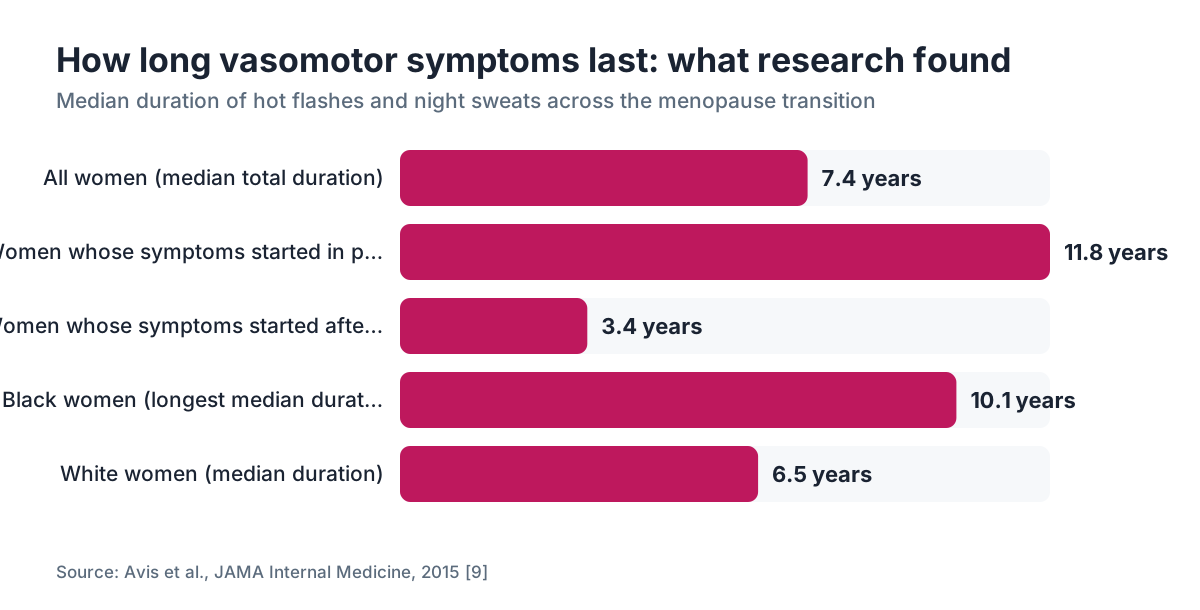
No. Hot flashes are common but not universal. About 75 to 80 percent of women in the US report vasomotor symptoms at some point in the transition, but timing, severity, and duration vary enormously. Some get significant hot flashes in early perimenopause. Others only near or after the final period. A real minority move through the whole transition with almost none. Genetics and body composition both seem to influence who gets hit.
Can you have menopause symptoms while still having regular periods?
Yes. Sleep disruption, mood changes, brain fog, and breast tenderness can all appear while periods are still regular or barely irregular. Progesterone starts falling before cycles look noticeably off, and that early drop drives a lot of the first symptoms. Symptoms that feel hormonal while your cycles stay regular do not mean your hormones are holding steady.
What is the difference between menopause and postmenopause?
Menopause is the single point marked by 12 consecutive months without a period. Postmenopause is every day after that. Symptoms that began in perimenopause may continue or change. New concerns like genitourinary syndrome, bone density loss, and shifting cardiovascular risk become more prominent in postmenopause. Many women find hot flashes ease over time, though for some they last a decade or more.
Is hormone replacement therapy safe during perimenopause?
For most healthy women under 60 or within 10 years of menopause onset, the benefits of HRT for quality of life, bone density, and cardiovascular risk usually outweigh the risks. NAMS and the Endocrine Society both back individualized decisions over blanket avoidance. Risk depends on age, timing, hormone type, and personal history. The Women's Health Initiative data that scared many women off HRT involved older postmenopausal women and has since been substantially recontextualized.
Can perimenopause cause anxiety or depression?
Yes. The Endocrine Society documents a 2 to 4 times higher risk of depressive symptoms during the perimenopause transition, even in women with no prior psychiatric history. Estrogen and progesterone modulate serotonin, GABA, and dopamine signaling, so their fluctuation and decline directly affect mood. Anxiety and irritability are common too. These are neurochemical changes, more than reactions to life, and they often respond to hormonal or targeted pharmacological support.
Does menopause affect sleep, and why?
Sleep disruption is one of the most common and most disruptive symptoms of the transition. Night sweats that wake you are the obvious cause, but hormone changes also shift sleep architecture directly. Progesterone promotes sleep, and its early decline in perimenopause feeds insomnia before hot flashes even start. Lower estrogen affects thermoregulation and serotonin pathways. Poor sleep then drives fatigue, mood problems, brain fog, and appetite trouble, compounding everything else.
Can lifestyle changes manage perimenopause and menopause symptoms without medication?
For mild symptoms, yes. Cognitive behavioral therapy (CBT) has the strongest evidence among nonpharmacological approaches for hot flashes and sleep. Regular resistance training protects bone and lean mass. Cutting alcohol, which worsens hot flashes and sleep, matters more than most women expect. Still, lifestyle changes alone do not match HRT for moderate to severe hot flashes. They work best as adjuncts, not standalone fixes for a heavy symptom load.
Do women gain weight in perimenopause even if they don't change their diet?
Yes. SWAN found women gained about 1.5 kg over 3 years during the menopausal transition, with more visceral fat even when total weight held steady. Falling estrogen pushes fat storage toward the abdomen. Declining muscle mass lowers resting metabolic rate. Sleep disruption raises cortisol and appetite hormones. These are physiological changes, not willpower failures, and they may need targeted intervention beyond standard diet advice.
What is premature ovarian insufficiency, and how is it different from early menopause?
Premature ovarian insufficiency (POI) is loss of normal ovarian function before age 40. Early menopause is natural menopause between 40 and 45. POI is not always permanent and can tie to autoimmune disease, genetic conditions like Turner syndrome, or prior cancer treatment. Women with POI still have a uterus and ovaries but do not make enough hormones for normal reproductive function. Both warrant hormonal evaluation and usually hormone therapy, given the long stretch of estrogen deficiency.
How do you know when perimenopause has ended and menopause has been reached?
You only know in hindsight: once you have completed 12 full consecutive months without a period. You cannot know a period was your last until a year passes. During that year you are still in late perimenopause. Once the 12-month mark is confirmed, you are postmenopausal. If you are on hormonal contraception, this gets murkier, because the hormones can suppress periods and mask where you actually are.
Sources
- NAMS (North American Menopause Society), The Menopause Guidebook 9th ed.
- NAMS, 2023 Menopause Practice: A Clinician's Guide
- Study of Women's Health Across the Nation (SWAN), NIH-funded longitudinal cohort study
- Endocrine Society, 2015 Clinical Practice Guideline: Treatment of Menopause
- Harlow et al., Executive summary of the Stages of Reproductive Aging Workshop +10 (STRAW+10), Menopause 2012
- U.S. Preventive Services Task Force, Osteoporosis Screening Recommendation (2018)
- FDA, Drug Approval Package: Veozah (fezolinetant) 2023
- American Heart Association, Menopause and Heart Disease
- Avis NE et al., Duration of Menopausal Vasomotor Symptoms Over the Menopause Transition, JAMA Internal Medicine 2015
- National Institute on Aging, NIH, What is Menopause?