What is perimenopause? Definition, symptoms, and timeline
TL;DR: Perimenopause is the years-long hormonal transition leading up to menopause, when ovarian estrogen and progesterone output becomes erratic. It typically starts in the mid-40s but can begin in the late 30s, lasts 4 to 10 years on average, and ends 12 months after your last menstrual period. Irregular periods, hot flashes, sleep disruption, and mood changes are the hallmark signs.
What is the medical definition of perimenopause?
Perimenopause means "around menopause" in Greek, and the clinical definition is plain: it is the transitional phase when the ovaries gradually make less estrogen and progesterone, the menstrual cycle turns irregular, and this continues until menstruation has stopped for 12 straight months. That 12-month mark is the formal line between perimenopause and menopause itself [1].
The North American Menopause Society defines it as the period of "changing ovarian function" that can start up to a decade before the final menstrual period, with the sharpest hormonal swings in the final one to three years [1]. It is not a disease. It is a normal, inevitable biological transition.
What sets perimenopause apart from ordinary aging is how volatile hormone levels get. Estradiol, the dominant form of estrogen in reproductive-age women, does not fall in a clean line. It lurches up and down, sometimes spiking well above premenopausal norms before it finally drops. That erratic pattern is why symptoms feel chaotic and hard to predict, even when a woman's cycle looks roughly normal.
The Endocrine Society uses the STRAW+10 staging system (Stages of Reproductive Aging Workshop) to give clinicians a standard framework. Under STRAW+10, perimenopause covers Stage -2 (early menopausal transition, when cycle length varies by seven or more days from the norm) and Stage -1 (late menopausal transition, when cycles are skipped and gaps of 60 or more days appear) [2]. Staging matters clinically because symptoms, fertility status, and treatment needs differ between early and late perimenopause.
How is perimenopause different from menopause?
The terms get swapped in everyday talk, but they mean different things. Perimenopause is the transition. Menopause is a single day: the moment you mark 12 full months without a period. After that day, you are postmenopausal [1].
So a 47-year-old who says she is "going through menopause" is almost certainly describing perimenopause. True menopause is only confirmed looking backward, once those 12 months have passed. This is not a pedantic distinction. Fertility, treatment eligibility, and symptom patterns all shift across these stages.
During perimenopause, pregnancy is still possible. Ovulation still happens, just unpredictably. Contraception is still needed until 12 months after the last period if avoiding pregnancy is the goal [3]. This surprises a lot of women in their mid-40s who assume skipped periods mean they can no longer conceive.
For a full breakdown of what happens after that 12-month threshold, see the menopause article. And if you want to understand where menopause typically falls on the age spectrum, menopause age covers the data.
What age does perimenopause start?
Most women enter perimenopause between 45 and 55, with onset around age 47 on average [4]. The average age of the final menstrual period in the United States is 51.4 years [4]. But "average" hides a wide spread, and perimenopause can start considerably earlier.
Early perimenopause, loosely defined as onset before 45, affects a meaningful minority of women. Onset before 40 is classified as primary ovarian insufficiency (POI) rather than typical perimenopause, and it warrants separate evaluation [2].
Several factors push the timeline earlier:
- Smoking: women who smoke reach menopause one to two years earlier than non-smokers [4]
- Genetics: the strongest single predictor of your timing is your mother's and sisters' timing [5]
- Chemotherapy and pelvic radiation
- Surgical removal of one or both ovaries
- Lower body weight (less adipose tissue means less peripheral estrogen production)
For a deeper look at the age patterns, perimenopause age and when does menopause start go into detail.
What are the symptoms of perimenopause?
Symptoms vary enormously from woman to woman. About 20% of women pass through perimenopause with little disruption. Another 20% have severe symptoms. The other 60% land somewhere in the middle [1].
The most common symptoms track the hormonal swings directly:
Menstrual changes. This is often the first sign. Cycles shorten (25-day cycles become common in early perimenopause), then lengthen, then turn irregular or skip entirely. Flow can get heavier than it has ever been, because high, unopposed estrogen thickens the uterine lining.
Vasomotor symptoms. Hot flashes and night sweats are the signature complaints. A hot flash is a sudden feeling of intense heat spreading across the chest, neck, and face, lasting two to four minutes on average and sometimes coming with heavy sweating and a pounding heart. About 75% of women get them at some point, and for some they persist seven years or longer after the final period [1].
Sleep disruption. Night sweats are the obvious culprit, but research shows progesterone decline independently harms sleep architecture, cutting slow-wave and REM sleep even in women without sweating episodes [5].
Mood changes. Irritability, anxiety, low mood, and what many women describe as a new difficulty regulating emotions are common. A history of PMS or postpartum depression raises the risk of more pronounced mood symptoms during perimenopause [5].
Brain fog. Memory lapses and trouble concentrating show up in clinic regularly. The Study of Women's Health Across the Nation (SWAN) found objective, measurable decline in verbal memory and processing speed during the transition, though these largely recovered after menopause in most participants [5].
Genitourinary changes. Vaginal dryness, painful intercourse, more urinary urgency, and recurrent UTIs fall under genitourinary syndrome of menopause (GSM). Unlike vasomotor symptoms, GSM tends to worsen over time without treatment.
Bone loss. This one is invisible but it counts. Bone density falls faster in the two to three years around the final period than at any other point in a woman's life [6]. If you have not had a baseline bone density test, perimenopause is a reasonable time to think about one.
What causes perimenopause biologically?
The ovaries hold a finite number of follicles at birth, roughly one to two million, and that number falls throughout life. By puberty the count is around 300,000 to 500,000. By the early 40s, the pool is small enough that the ovaries can no longer reliably answer the pituitary hormones (FSH and LH) that trigger ovulation each month [2].
As follicle reserves shrink, FSH climbs, trying to force the ovaries to make more estrogen. Estradiol turns unstable, swinging from very high to very low, sometimes within the same cycle. Progesterone output drops because progesterone comes from the corpus luteum after ovulation, and cycles without ovulation produce no corpus luteum. This pattern of high or fluctuating estrogen with low progesterone explains many early perimenopausal symptoms: heavy periods, breast tenderness, mood changes, and poor sleep [2].
Anti-Mullerian hormone (AMH) marks remaining follicle reserve. AMH levels fall steadily through a woman's 30s and 40s and reach undetectable levels around the time of the final period. AMH testing is sometimes used to estimate ovarian reserve, though it does not reliably predict the exact timing of menopause for an individual woman [2].
Eventually estradiol output falls below the level needed to trigger the shedding of a period. The 12-month absence of menstruation signals that estrogen is now consistently low, and the transition is complete.
How long does perimenopause last?
The average duration is around four to eight years, but the range is genuinely wide: anywhere from a few months to more than a decade [1]. The SWAN study, which followed more than 3,000 women across multiple ethnic groups starting in the mid-1990s, found that median total duration of vasomotor symptoms (hot flashes plus night sweats) was 7.4 years, and that symptoms lasted longer in women who started having them earlier in the transition [5].
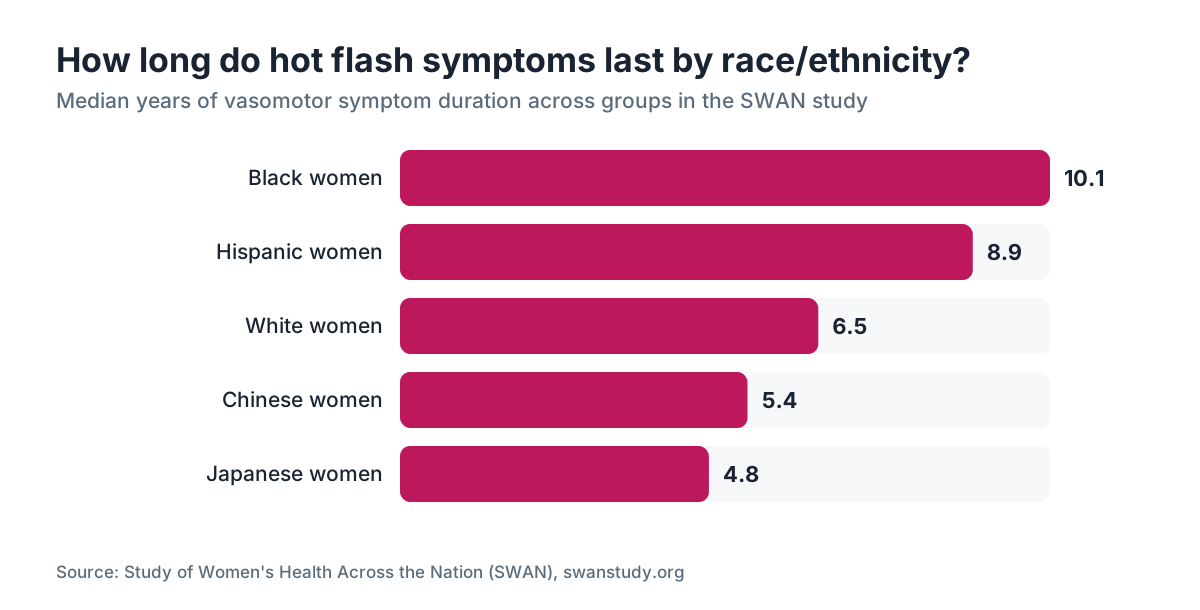
Ethnicity matters here in ways that rarely get discussed. SWAN found that Black women reported hot flashes more often and for longer than white women, and that Hispanic and Chinese women reported the shortest duration of vasomotor symptoms [5]. This is no small difference. Black women averaged roughly 10.1 years of hot flash symptoms compared with 6.5 years for white women in the SWAN data [5].
The late stage of perimenopause, the final 12 months before the last period, tends to bring the most intense symptoms for most women. This is when estradiol drops most sharply and vasomotor symptoms usually peak.
| Stage | STRAW+10 label | Duration (typical) | What's happening | |---|---|---|---| | Early perimenopause | Stage -2 | 1-3 years | Cycles vary by 7+ days; FSH rising | | Late perimenopause | Stage -1 | 1-3 years | Cycles skip 60+ day gaps; estradiol falling | | Menopause | Stage 0 | Single point in time | 12 months since last period | | Early postmenopause | Stage +1 | Up to 5 years | Rapid bone and tissue changes | | Late postmenopause | Stage +2 | Rest of life | Slower rate of change |
How is perimenopause diagnosed?
There is no single blood test that diagnoses perimenopause. This confuses a lot of women who expect a clean lab result. FSH (follicle-stimulating hormone) is often checked, and a level above 25 to 30 mIU/mL on two tests done at least a month apart can suggest the menopausal transition. But FSH swings dramatically during perimenopause and can look completely normal one month and elevated the next [2].
The clinical diagnosis rests mainly on symptoms and menstrual history in a woman aged 45 or older. A woman in her mid-40s with irregular periods and classic symptoms does not need extensive lab work to get a clinical diagnosis and start a conversation about management [1].
Blood tests that can help:
- FSH: elevated levels support the diagnosis, but normal levels do not rule it out
- Estradiol: highly variable; more useful for tracking changes over time than for a one-time diagnosis
- TSH: thyroid dysfunction mimics perimenopause closely and should be ruled out
- AMH: low levels confirm declining ovarian reserve but are not required for diagnosis
- Metabolic panel and CBC: baseline health markers, useful before starting any hormone therapy
For women under 45 with irregular periods and symptoms, more testing is warranted to rule out premature ovarian insufficiency, thyroid disease, hyperprolactinemia, and other causes [2].
What hormone changes happen during perimenopause?
Three hormones drive the perimenopausal story: estradiol, progesterone, and FSH.
Estradiol swings wildly in early perimenopause before it declines overall. It is common for estradiol to spike above 200 pg/mL (higher than typical peak levels in a regular cycle) and then crash below 50 pg/mL within the same month. That volatility, not a simple downward slope, is what the symptoms respond to [2].
Progesterone falls more steadily and earlier in the transition. Because cycles without ovulation produce no progesterone, even women with regular-looking periods may run short on it for part of the cycle. Low progesterone is linked to poor sleep, anxiety, and heavier periods. Progesterone is an underappreciated part of the perimenopausal picture.
FSH climbs as the pituitary tries to stimulate the fading ovaries, sometimes reaching 40 to 100 mIU/mL or higher in late perimenopause and early postmenopause. Elevated FSH is the body's loudest signal that the ovarian reserve is spent.
Testosterone also declines across the transition, though the fall is gradual and starts as early as the late 20s. Lower testosterone contributes to less libido, less energy, and shifts in body composition.
What treatments are available for perimenopause symptoms?
The evidence base for symptom management is solid, and the options are broader than most women realize.
Hormone therapy (HT). The most effective treatment for vasomotor symptoms and for preventing the bone loss that speeds up in perimenopause. Current guidance from both NAMS and the Endocrine Society supports hormone therapy as safe for most healthy women under 60 or within 10 years of menopause, unless there are specific contraindications [1][7]. The old fear of HT came largely from a misreading of the Women's Health Initiative data, which used older oral formulations at higher doses in an older population. An estrogen patch or other transdermal delivery skips first-pass liver metabolism and carries a lower clot risk than oral estrogen.
For women who still have a uterus, estrogen must be paired with a progestogen to protect the uterine lining. Progesterone (especially micronized bioidentical progesterone) is the preferred option for many practitioners and may bring sleep and mood benefits beyond uterine protection.
See the full hormone replacement therapy guide for dosing options, formulations, and how to have the conversation with your provider.
Non-hormonal prescription options. Fezolinetant (Veozah), an NK3 receptor antagonist, was FDA-approved in 2023 specifically for moderate to severe vasomotor symptoms in women who cannot or prefer not to use estrogen [8]. SSRIs and SNRIs (particularly paroxetine, escitalopram, and venlafaxine) cut hot flash frequency by 50 to 60% in most trials [10]. Gabapentin and clonidine are older options with more side effects.
Weight management. Excess adipose tissue, particularly visceral fat, worsens insulin resistance and may amplify vasomotor symptoms. Women who lose weight report better hot flash frequency and severity. Some women in perimenopause are exploring GLP-1 medications (semaglutide, tirzepatide) for this reason, especially because the hormonal shift of perimenopause tends to push fat toward the abdomen. A platform like WomenRx can give context on both hormone therapy and GLP-1 options through one clinician. For more on GLP-1s, semaglutide for weight loss and semaglutide vs tirzepatide lay out the evidence.
Lifestyle. Not a cure, but genuinely helpful. A consistent sleep schedule, less alcohol (which fragments sleep and triggers hot flashes), regular resistance training (protective of bone density and muscle mass), and stress management all lower symptom burden. The data are not as clean as for HT, but they are real.
Does perimenopause affect mental health and cognition?
Yes, and this connection is better established than most primary care providers admit.
The risk of a first depressive episode roughly doubles during the menopausal transition compared with premenopause, even in women with no history of depression [5]. The SWAN study found women were far more likely to report depressive symptoms during perimenopause than before it, with the risk highest in late perimenopause and the early postmenopausal years [5]. The mechanism involves estrogen's effects on serotonin, dopamine, and norepinephrine pathways, plus its effect on inflammation.
Cognition is another area where women notice real changes that get waved off. Processing speed and verbal memory dip during the transition and partly recover afterward in most women. Chronic sleep disruption, itself a direct symptom of perimenopausal hormone shifts, adds to the cognitive load on its own.
Anxiety, sometimes brand-new anxiety, is a very common complaint. Women describe a low-grade sense of dread or a hair-trigger startle response they do not recognize as their normal baseline. This is not purely psychological. Estrogen modulates the amygdala's reactivity, and falling estrogen raises stress sensitivity in measurable ways.
If you are dealing with significant mood symptoms, a clinician who understands the hormonal context matters. Antidepressants alone, without addressing the underlying hormonal volatility, often give incomplete relief.
Can you still get pregnant during perimenopause?
Yes. This is one of the most important practical facts about perimenopause, and it catches women off guard regularly.
Ovulation still happens during perimenopause, even when cycles are irregular or skipped. You can ovulate without a regular period, and one ovulation is all it takes to conceive. Fertility does decline sharply with age, but it does not reach zero until 12 full months after the last period. Until then, pregnancy is possible.
The American College of Obstetricians and Gynecologists recommends that women who do not want to get pregnant keep using contraception throughout perimenopause and for 12 months after their last period [3]. Hormonal IUDs, low-dose combined pills (in non-smokers without cardiovascular risk factors), progestin-only pills, and copper IUDs are all options. Some forms of hormonal contraception also ease perimenopausal symptoms as a bonus.
One complication: hormonal contraception, particularly combined pills, can mask the hormonal changes of perimenopause and make it impossible to tell when natural menopause has arrived. Women who want to know their hormonal status may switch to a non-hormonal method in their late 40s for that reason.
What health risks increase during perimenopause?
Perimenopause is a window when several health risks either begin or speed up, and the window matters because early action changes outcomes.
Bone density. The two to three years around the final period are when bone loss runs fastest. Women lose an average of 10 to 20% of their bone density in the first five years after menopause if untreated [6]. The perimenopausal years are when to get a bone density test if you have risk factors, and to start resistance training and calcium/vitamin D optimization.
Cardiovascular disease. Estrogen protects the heart. As estrogen falls, LDL cholesterol rises, HDL may drop, and blood pressure tends to climb. Lifetime cardiovascular risk for women rises sharply after menopause. This is one reason the "timing hypothesis" for hormone therapy exists: starting HT close to the transition may preserve the cardiovascular benefit [7].
Metabolic changes. Insulin sensitivity declines, visceral fat accumulates even without changes in caloric intake, and the risk of metabolic syndrome rises. Body composition changes in perimenopause are partly driven by estrogen loss independent of total calorie balance.
Sleep disorders. Obstructive sleep apnea risk goes up after menopause. Women who show up with new or worsening snoring, unrefreshing sleep, or daytime fatigue in perimenopause deserve an evaluation for sleep apnea, more than a pat reassurance that hot flashes are the problem.
Urinary symptoms. The genitourinary tissue changes of perimenopause set the stage for GSM, which affects up to 50% of postmenopausal women and, unlike hot flashes, does not improve on its own without treatment [1].
Is there anything you can do to prepare for perimenopause?
The honest answer: you cannot prevent it, but you can shape how it goes.
The groundwork you lay before perimenopause starts matters. Bone density peaks in the late 20s and early 30s. Women who enter perimenopause with strong bones from years of weight-bearing exercise and adequate calcium and vitamin D start from a better position. The same logic holds for the heart: blood pressure, LDL, and blood glucose controlled before estrogen starts fluctuating means fewer problems as cardiovascular protection fades.
Knowing your family history is actionable. If your mother or older sister entered perimenopause at 42, watch for symptoms in your late 30s and start the conversation with your provider before symptoms arrive. If your family history includes early osteoporosis or early heart disease, that shapes both the timing and the aggressiveness of intervention.
Finding a provider who takes perimenopausal symptoms seriously before you are desperate for relief is genuinely useful. Many women reach a menopause specialist only after years of being told their symptoms are anxiety or normal aging. Telehealth platforms focused on women's hormones, including WomenRx, have widened access to practitioners with this specific expertise.
The SWAN data make one thing clear: symptoms in perimenopause are real, measurable biological events, not primarily psychological. You are not imagining it.
Frequently asked questions
What is the simplest definition of perimenopause?
Perimenopause is the transitional phase when the ovaries gradually reduce estrogen and progesterone production, causing irregular periods and symptoms like hot flashes and sleep disruption. It begins, on average, in the mid-40s and ends when a woman has gone 12 consecutive months without a period. That 12-month mark is when menopause officially begins, in retrospect.
How do I know if I am in perimenopause or just stressed?
The overlap is real and frustrating. Both stress and perimenopause cause sleep problems, mood changes, and brain fog. The clearest perimenopause signal is menstrual change: cycles shortening, lengthening, becoming unpredictable, or skipping. Hot flashes (waves of heat across the chest and face) are fairly specific. Thyroid function should also be checked since it mimics perimenopause closely. If you are 45 or older with these symptoms, perimenopause is the most likely explanation.
What is the difference between perimenopause and premenopause?
Premenopause means the reproductive years before any menopausal transition begins, essentially the baseline. Perimenopause is the active transition phase when hormones become erratic and symptoms emerge. The distinction matters clinically: a premenopausal woman with irregular cycles has a different differential diagnosis than a perimenopausal one. Some guidelines use premenopause loosely to mean any time before the final period, which adds to the confusion.
Can perimenopause start at 35?
It is uncommon but possible. Perimenopause before 40 is classified as premature ovarian insufficiency (POI) rather than typical perimenopause, affecting roughly 1% of women. Between 40 and 44, it is called early menopause. Onset at 35 to 39 falls in a gray zone warranting evaluation for POI, thyroid disease, and other causes. Smoking, genetics, chemotherapy, and autoimmune conditions can all accelerate ovarian aging.
Do periods stop suddenly in perimenopause or gradually?
Almost always gradually, though individual patterns vary. The typical progression is: cycles shorten, then grow irregular, then start skipping, with gaps of 60 days or more. Occasionally a woman will simply stop having periods without much warning and later confirm she has passed the 12-month mark. Sudden cessation is more common after surgical menopause (removal of the ovaries) than in natural perimenopause.
What blood tests confirm perimenopause?
No single test confirms perimenopause definitively. FSH above 25 to 30 mIU/mL on two tests taken at least a month apart is suggestive. Estradiol levels fluctuate too much to be diagnostic alone. TSH should be checked to rule out thyroid disease. AMH below 1 ng/mL signals declining ovarian reserve. In women over 45 with classic symptoms and menstrual changes, clinical diagnosis without extensive testing is appropriate per NAMS guidance.
What are the early signs of perimenopause in your 40s?
The earliest signs are usually menstrual cycle changes: periods arriving a few days earlier than usual, or flow becoming heavier. Sleep quality declining, waking at 3 or 4 a.m., is a common early complaint tied to progesterone changes. Mild hot flashes, new-onset night sweats, and a heightened emotional sensitivity or irritability also tend to appear in early perimenopause, often before cycles become obviously irregular.
How is perimenopause treated?
Hormone therapy (estrogen with or without progesterone depending on whether the uterus is present) is the most effective treatment for vasomotor symptoms and bone protection. Non-hormonal options include fezolinetant (FDA-approved 2023), SSRIs, and SNRIs. Lifestyle changes, particularly resistance training, alcohol reduction, and consistent sleep schedules, reduce symptom burden meaningfully. Genitourinary symptoms respond well to topical vaginal estrogen, which has minimal systemic absorption and a strong safety profile.
Does perimenopause cause weight gain?
Perimenopause is associated with fat redistribution, specifically a shift toward visceral abdominal fat, driven by declining estrogen and increasing insulin resistance. Total weight gain in midlife is partly aging and partly hormonal. Studies show women gain roughly one to two pounds per year during the menopausal transition on average. Estrogen therapy may partially counter the visceral fat shift. GLP-1 medications are increasingly used by perimenopausal women for this metabolic component.
Is perimenopause worse for some women than others?
Yes, significantly. About 20% of women have severe, debilitating symptoms; another 20% barely notice the transition. Black women experience vasomotor symptoms more frequently and for longer (averaging around 10 years) than white women, per SWAN data. Women with a history of PMS, postpartum depression, or high stress tend to have more pronounced mood and sleep symptoms. Smoking, lower body weight, and earlier age of onset also correlate with more intense symptoms.
Can hormone therapy start during perimenopause, more than after menopause?
Yes, and this is an important point that many women do not know. NAMS and the Endocrine Society both support initiating hormone therapy during perimenopause for women with significant symptoms, provided there are no contraindications. Starting closer to the onset of menopause, rather than years after, may confer better cardiovascular and cognitive benefits, a principle called the timing hypothesis. Some women on low-dose combined hormonal contraception transition directly to HT.
What is the difference between perimenopause and surgical menopause?
Natural perimenopause is a gradual transition lasting years. Surgical menopause occurs when both ovaries are removed, causing estrogen to drop to near zero within hours to days. Symptoms from surgical menopause tend to be more abrupt and severe than in natural perimenopause. Women who undergo bilateral oophorectomy before 45 are generally advised to use hormone therapy until at least the average age of natural menopause to protect bone and cardiovascular health.
Does perimenopause affect libido?
Yes. Declining estrogen, testosterone, and progesterone all affect sexual interest and response. Vaginal dryness and thinning (part of genitourinary syndrome of menopause) make intercourse uncomfortable or painful, which reduces libido secondarily. Testosterone contributes to sexual desire in women, and its gradual decline through the 40s is a real factor. Both systemic hormone therapy and topical vaginal treatments can improve sexual function in perimenopause.
How long do hot flashes last in perimenopause?
Each hot flash episode typically lasts two to four minutes. How many years a woman experiences them is a different question. The SWAN study found median duration of hot flash symptoms was 7.4 years total, starting during perimenopause and often continuing well into postmenopause. Women who develop symptoms earlier in the transition, in their early to mid-40s, tend to experience them for the longest time overall.
Sources
- North American Menopause Society (NAMS), Menopause Practice: A Clinician's Guide
- Harlow SD et al., STRAW+10 staging system, Menopause (journal), 2012
- American College of Obstetricians and Gynecologists (ACOG), Practice Bulletin on Menopause
- Office on Women's Health, U.S. Department of Health and Human Services, Menopause page
- Study of Women's Health Across the Nation (SWAN), NIH-funded longitudinal study; summary data via SWAN Data Repository
- NIH National Institute of Arthritis and Musculoskeletal and Skin Diseases, Bone Health and Osteoporosis
- Endocrine Society Clinical Practice Guideline, Treatment of Symptoms of the Menopause, 2023
- U.S. Food and Drug Administration, FDA Drug Approvals and Databases, Veozah (fezolinetant) approval 2023
- Santoro N et al., Menopausal Symptoms and Their Management, Endocrinology and Metabolism Clinics of North America, 2015