What is perimenopause? A plain-language definition and guide
TL;DR: Perimenopause is the hormonal transition leading up to menopause. It usually begins in a woman's mid-to-late 40s (sometimes earlier) and lasts 2 to 10 years. Estrogen and progesterone swing erratically, causing irregular periods, hot flashes, broken sleep, mood shifts, and brain fog. It ends 12 months after your final period, which is the formal definition of menopause.
What exactly is perimenopause?
Perimenopause means "around menopause." It is the years-long process during which your ovaries gradually make less estrogen and progesterone, your menstrual cycles turn irregular, and your body settles toward a new hormonal baseline. The North American Menopause Society (NAMS) defines it as the transition beginning with the first signs of approaching menopause and ending 12 months after your final menstrual period [1].
The word is just Greek: "around" (peri) plus menopause. That simplicity is misleading. Hormone levels during perimenopause do not slide down in a smooth line. They swing hard, sometimes spiking higher than they were in your 30s before eventually trending down. That volatility, more than the eventual low level, drives most of the symptoms women find so disruptive.
The formal endpoint is menopause itself: exactly 12 consecutive months without a period. Until you cross that 12-month mark, you are still technically in perimenopause, even if you haven't bled in 10 months. The distinction matters clinically. You can still get pregnant during perimenopause, and symptoms often peak in the final 1 to 2 years before that threshold.
When does perimenopause start, and how long does it last?
Most women enter perimenopause between ages 45 and 55, with the average onset around age 47 [2]. The range is wide. Roughly 10 percent of women hit early perimenopause before age 45, and a smaller group before 40 (a condition called premature ovarian insufficiency, which is separate from typical perimenopause and needs its own workup).
Duration varies just as much. NAMS notes that perimenopause typically lasts 4 to 8 years, but the full range in published studies runs roughly 2 to 10 years [1]. The longest transitions tend to happen in women who start earlier. A widely cited analysis published in Menopause found that women who began the transition before age 45 had a median transition length nearly two years longer than those who started after 45 [3].
A few factors shape your personal timeline:
- Genetics. The age your mother and sisters reached menopause is probably the single strongest predictor of when you will.
- Smoking. Smokers reach menopause an average of 1 to 2 years earlier than nonsmokers [2].
- Chemotherapy or pelvic radiation. These can trigger abrupt, early menopause.
- Surgical menopause. Removing both ovaries causes immediate menopause and skips the gradual transition entirely.
For a closer look at the typical age ranges, see our article on perimenopause age and when does menopause start.
What are the most common perimenopause symptoms?
The symptom list is long, and the length is not exaggeration. Estrogen receptors sit in nearly every tissue, including the brain, heart, bone, bladder, and skin, so erratic estrogen hits the whole body.
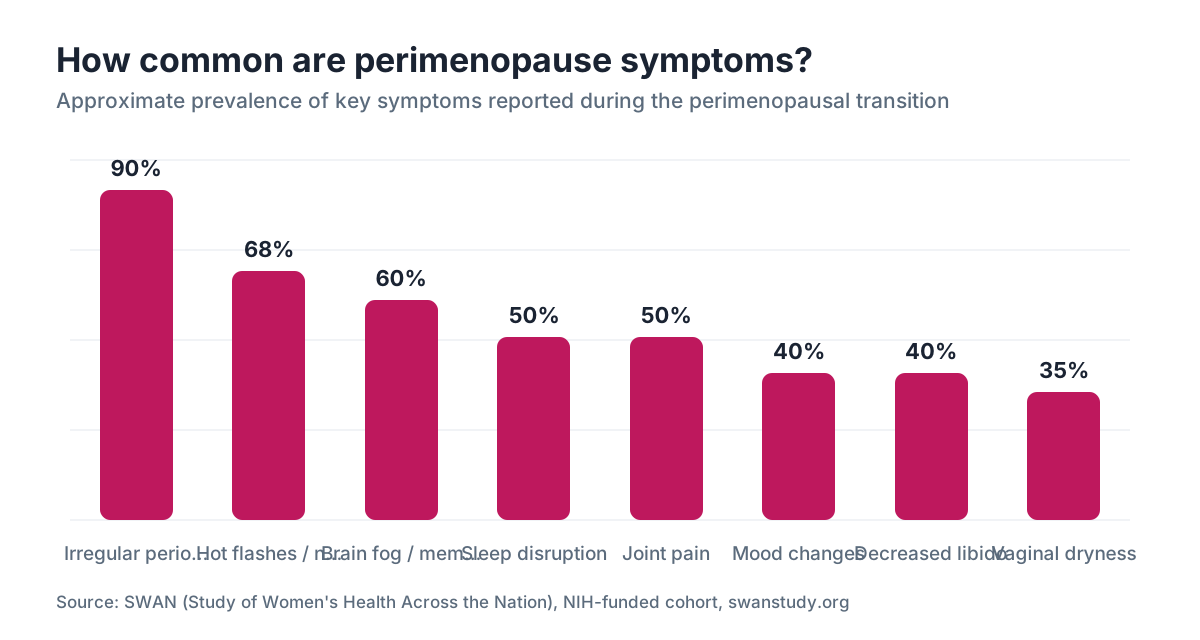
The most frequently reported symptoms come from the Study of Women's Health Across the Nation (SWAN), a federally funded study that followed over 3,000 women through the transition [4]:
| Symptom | Approximate prevalence during perimenopause | |---|---| | Irregular periods | Up to 90% | | Hot flashes / night sweats | 55-80% (varies by ethnicity and study) | | Sleep disruption | 40-60% | | Mood changes (irritability, low mood) | 30-50% | | Vaginal dryness | 25-50% (rises post-menopause) | | Brain fog / memory complaints | ~60% report some cognitive change | | Joint pain | ~50% | | Decreased libido | ~40% |
Hot flashes get all the cultural attention, but irregular bleeding is usually the first thing women notice. Cycles run shorter or longer, lighter or heavier, and may skip a month or two before returning. Bleeding that is extremely heavy or lasts more than 7 days is worth a conversation with your provider, because it can point to uterine problems unrelated to perimenopause.
Brain fog deserves more attention than it gets. SWAN data show verbal memory and processing speed both dip measurably during the late transition and often partly recover post-menopause [4]. This is not imagined. It is a real, documented, hormonal effect.
Mood symptoms get underattributed too. The hormonal swings of perimenopause, especially rapid drops in estradiol, affect serotonin and GABA signaling. Women with a prior history of premenstrual dysphoric disorder (PMDD) or postpartum depression face higher risk for mood trouble during perimenopause [5].
How is perimenopause diagnosed?
There is no single test for perimenopause. A clinician makes the call from your age, symptom pattern, and menstrual history.
FSH (follicle-stimulating hormone) and estradiol tests get ordered often, but they have real limits here. Hormone levels swing so much from week to week that a single blood draw can read normal even when someone is clearly deep in the transition. The Endocrine Society and NAMS both say FSH and estradiol should not be the sole diagnostic criterion in women over 40 with typical symptoms [1][6]. An elevated FSH (generally above 25-30 mIU/mL) in the right context supports the diagnosis, but a normal FSH does not rule it out.
AMH (anti-Müllerian hormone) reflects ovarian reserve and drops years before FSH rises. It is sometimes used to estimate how close menopause is, but it is not standard for diagnosis.
Hypothyroidism mimics perimenopause almost perfectly: fatigue, weight gain, mood changes, irregular periods, brain fog. A TSH test is reasonable in any woman with these complaints. So is a complete blood count if cycles have turned very heavy, since iron-deficiency anemia from blood loss can stack on top of hormonal fatigue.
If you are under 40 with these symptoms, your provider should evaluate for premature ovarian insufficiency (POI), which carries different implications for bone health, cardiovascular health, and fertility than typical perimenopause.
What causes perimenopause? What is actually happening hormonally?
The short answer: your ovaries are running out of eggs, and they are getting more resistant to the brain's signals to ovulate.
You are born with roughly 1 to 2 million eggs. By puberty the number is around 300,000. Ovarian follicles (the structures that house eggs) decline throughout your reproductive life, and each follicle also makes estrogen and progesterone. As follicle numbers fall in your 40s, the hypothalamus and pituitary gland push harder, pumping out more FSH and LH. The ovaries answer erratically, some cycles flooding out estrogen, others barely producing any.
So estrogen can run higher than your 30s one month and be nearly undetectable the next. Progesterone, which only shows up in real amounts after ovulation, gets erratic too, often low because anovulatory cycles (cycles where no egg releases) grow more common. That relative progesterone shortage against fluctuating or high estrogen is sometimes called "estrogen dominance," though that phrase is not a formal clinical term.
The hypothalamic-pituitary-ovarian axis eventually resets to the new, lower hormone environment after the final period, which is why some women feel better post-menopause. For others, especially those with genitourinary symptoms or cardiovascular risk factors, the lower-estrogen state brings new problems.
For a detailed look at one key hormone here, see our article on progesterone.
How is perimenopause different from menopause?
This confuses almost everyone, and it matters practically.
Menopause is a single point in time: the day marking exactly 12 consecutive months since your last period. You can only name it in hindsight. Everything before that is perimenopause. Everything after is postmenopause. People use "menopause" loosely for the whole transition, which is understandable but technically wrong.
The distinction matters for contraception (you can still get pregnant during perimenopause), for symptom management (some treatments behave differently in perimenopause than postmenopause), and for knowing where you stand.
The average age of menopause in the United States is 51 [2]. Once you cross the 12-month mark, hormone levels settle at a new, lower baseline, and many symptoms either resolve or change character. Genitourinary symptoms (vaginal dryness, urinary urgency) often worsen post-menopause without treatment, because the tissues no longer get any estrogen stimulus.
For everything after the transition, our guide to menopause covers it in detail.
What does perimenopause do to your long-term health?
Perimenopause is about more than the symptoms you feel today. The hormonal shift carries real long-term consequences for bone, cardiovascular, and metabolic health.
Bone density. Estrogen actively holds back bone breakdown. As estrogen falls in perimenopause, that breakdown speeds up. Women can lose 1 to 3 percent of bone density per year in the years around menopause, compared to roughly 0.5 percent per year before perimenopause [7]. This is why a bone density test is recommended starting at age 65 for most women, or earlier with risk factors.
Cardiovascular risk. Before menopause, women have far lower rates of heart disease than age-matched men. That advantage narrows fast afterward. The transition is linked to rising LDL cholesterol, triglycerides, blood pressure, and belly fat even in women who don't change their diet or exercise [8]. SWAN documented these changes over time.
Metabolic changes and weight. Average weight gain during perimenopause runs roughly 1.5 to 2 pounds per year, but the bigger story is fat moving from hips and thighs to the abdomen. Visceral fat is more metabolically active and more dangerous. Insulin sensitivity also drops. This is why so many women find that what worked for weight in their 30s stops working in their 40s.
Women managing weight alongside perimenopause increasingly ask about GLP-1 medications like semaglutide. WomenRx offers a clinical evaluation for women considering GLP-1 therapy alongside hormonal management, because these issues rarely travel alone. For background on the medication itself, see our coverage of semaglutide for weight loss.
Brain health. Estrogen appears to support neurovascular function and may reduce amyloid buildup. Some researchers propose a "window of opportunity": that hormone therapy started during perimenopause, rather than years after menopause, may have different effects on long-term cognitive health. The evidence is still evolving, and conclusions should be held loosely [9].
What are the treatment options for perimenopause symptoms?
Treatment depends on which symptoms bother you most, your health history, and your own preferences. There is no single right answer.
Hormone therapy. Low-dose hormonal options remain the most effective treatment for hot flashes, night sweats, broken sleep, and vaginal dryness during perimenopause. For women who still have a uterus, estrogen must be paired with progesterone (or a progestogen) to protect the uterine lining. The FDA has approved many formulations: pills, patches, gels, creams, rings, and vaginal inserts. See our guides on hormone replacement therapy and estrogen patch for the specifics.
The 2022 Hormone Therapy Position Statement from NAMS states: "For women who are younger than 60 years or who are within 10 years of menopause onset and have no contraindications, the benefit-risk ratio is favorable for treatment of bothersome vasomotor symptoms." [1] That was a meaningful update from the cautious posture that followed the Women's Health Initiative papers in the early 2000s.
Non-hormonal prescriptions. Fezolinetant (brand name Veozah), approved by the FDA in May 2023, is the first non-hormonal prescription drug specifically approved for moderate-to-severe hot flashes [10]. It blocks the neurokinin-3 receptor pathway in the hypothalamus, which drives temperature dysregulation. SSRIs and SNRIs (paroxetine, venlafaxine, escitalopram) also cut hot flash frequency modestly and are sometimes preferred for women with mood symptoms or contraindications to estrogen.
Lifestyle. The evidence for specific lifestyle changes on hot flash frequency is mixed, but aerobic exercise, cutting alcohol, quitting smoking, and keeping a healthy body weight track with a somewhat easier transition and clear long-term health benefits regardless.
Sleep. Perimenopausal sleep trouble usually has more than one driver: hot flashes, mood, and possibly direct hormonal effects on sleep architecture. Treating the hot flashes often improves sleep on its own. Cognitive behavioral therapy for insomnia (CBT-I) has good evidence and is worth trying whether or not you also use hormone therapy.
For women dealing with weight gain too, our article on semaglutide vs tirzepatide compares the two leading GLP-1 options.
Is perimenopause the same as "the change"?
Culturally, yes. Technically, "the change" usually means the whole arc: perimenopause through menopause. The phrase has described something real for generations of women, even when medical language was sparse or dismissive.
The trouble with vague language is that it let symptoms get minimized or misattributed. Women describing brain fog, heart palpitations, joint pain, or wiping fatigue were often told it was anxiety or stress, not hormones. The medicalization of the transition is imperfect, but naming it clearly gives women and clinicians something to act on.
There is also real variation by culture and ethnicity in how symptoms are felt and reported. SWAN data show Black women report more frequent and persistent hot flashes than white women; Japanese and Chinese American women report fewer [4]. These differences are real and not fully explained by body mass index or income. They point to both biological and cultural components in how perimenopause gets experienced.
What is the difference between perimenopause and PMS or PMDD?
PMS (premenstrual syndrome) and PMDD (premenstrual dysphoric disorder) hit in the luteal phase, usually the 1 to 2 weeks before a period. Symptoms clear with menstruation. Perimenopause symptoms are not cycle-dependent the same way; they can show up anytime and often persist regardless of where you are in an irregular cycle.
That said, the two overlap heavily, and perimenopausal swings can amplify existing PMS or PMDD. Women who have struggled with PMDD in their reproductive years should tell their providers, because the brain's sensitivity to estrogen fluctuation appears to be a shared mechanism. These women may benefit from more aggressive symptom management earlier in the transition.
One practical distinction: if your symptoms follow a predictable luteal-phase pattern and clear at menstruation, that points more toward PMDD. If they run continuous or unpredictable with no clear cycle link, perimenopause is more likely, especially in a woman in her mid-40s or older with irregular periods.
Can you get pregnant during perimenopause?
Yes. Until you have gone 12 straight months without a period, ovulation is still possible, even with irregular and infrequent cycles.
Unplanned pregnancy in women in their 40s gets underestimated constantly. The CDC reports that nearly half of pregnancies in women aged 40 to 44 are unintended [11]. Irregular cycles make contraception feel unnecessary, which is exactly when it still matters if pregnancy is not the goal.
Contraception during perimenopause looks a little different than earlier in life. Combined oral contraceptives are generally avoided in smokers over 35 due to cardiovascular risk, but low-dose progestin-only pills, hormonal IUDs, and barrier methods are all on the table. Hormonal IUDs (like Mirena) are often a practical choice because they handle both contraception and heavy irregular bleeding at once.
The 12-month clock for confirming menopause resets only if you have another period. A single period after 11 months of no bleeding restarts the count.
How does perimenopause affect mental health?
The mental health side of perimenopause is real and increasingly well-documented. It is not simply "stress about aging."
Estrogen modulates serotonin, dopamine, and norepinephrine signaling. Rapid drops in estradiol can trigger a neurochemical cascade that looks like depression or anxiety in biologically susceptible women. A 2018 systematic review in the journal Menopause found perimenopausal women had roughly two to four times the odds of a major depressive episode compared to premenopausal women [5].
Common mental health presentations during perimenopause:
- Irritability and rage out of proportion to the trigger
- Low mood, tearfulness, or anhedonia
- Anxiety, sometimes new in women with no prior history
- Panic attacks
- Feelings of dissociation or unreality (sometimes tied to sleep loss)
These symptoms deserve treatment, more than reassurance. Hormone therapy, SSRIs, SNRIs, and behavioral therapy all have evidence in this group. The right choice depends on symptom pattern, severity, and individual history. Women who see a primary care provider and walk out with only an antidepressant, and no discussion of the hormonal context, are not getting the full picture, and a growing number of clinicians and researchers agree.
Frequently asked questions
What age does perimenopause usually start?
Most women begin perimenopause between 45 and 55, with the average onset around 47. About 10 percent start before 45. Genetics, smoking, and certain medical treatments can shift that window earlier. Clear symptoms before age 40 warrant evaluation for premature ovarian insufficiency, a different condition with its own management approach.
What are the first signs of perimenopause?
Irregular periods are often the first noticeable sign: cycles shortening, lengthening, or changing in flow. Hot flashes, night sweats, and broken sleep commonly follow. Some women notice mood changes, irritability, or brain fog before cycle changes. Because these overlap with thyroid disease and other conditions, any mix of them in a woman in her 40s is worth discussing with a provider.
How long does perimenopause last?
The typical duration is 4 to 8 years, though the full range is 2 to 10 years. Women who enter perimenopause earlier tend to have longer transitions. It officially ends 12 months after the last menstrual period. There is no reliable way to predict in advance how long your personal transition will take.
Can a blood test confirm perimenopause?
Not reliably on its own. FSH and estradiol fluctuate so much that a single blood draw can read normal even in someone clearly in the transition. An elevated FSH above roughly 25 to 30 mIU/mL supports the diagnosis when symptoms are present, but a normal result does not rule it out. Diagnosis is primarily clinical, based on age, symptoms, and menstrual pattern.
What is the difference between perimenopause and menopause?
Menopause is a single point in time: 12 consecutive months without a period. Perimenopause is the transition leading up to that point and ends the day menopause is confirmed. The distinction matters for contraception (pregnancy is still possible during perimenopause) and for treatment planning. Most people use the terms interchangeably, but clinicians keep them separate for good reason.
Can perimenopause cause anxiety or depression?
Yes, directly. Estrogen modulates serotonin, dopamine, and GABA. Rapid drops in estradiol during perimenopause can trigger depressive episodes, new-onset anxiety, or panic attacks. A 2018 systematic review in Menopause found perimenopausal women had two to four times the odds of a major depressive episode compared to premenopausal women. These symptoms are biological, more than situational, and they respond to hormonal and non-hormonal treatments.
Does perimenopause cause weight gain?
Weight gain during perimenopause averages roughly 1.5 to 2 pounds per year, but the bigger change is fat shifting from hips and thighs to the abdomen. This visceral fat buildup is driven partly by falling estrogen and partly by declining insulin sensitivity. Diet and exercise habits that worked in your 30s may suddenly feel useless, which is a real metabolic change, not a failure of willpower.
Is hormone therapy safe during perimenopause?
For most healthy women under 60 who are within 10 years of menopause onset and have no contraindications, NAMS states the benefit-risk ratio is favorable for treating bothersome vasomotor symptoms with hormone therapy. Risk varies by formulation, route, dose, and personal history. The conversation should include your personal and family history of breast cancer, clotting disorders, and cardiovascular disease.
Can perimenopause cause heart palpitations?
Yes. Palpitations, a sense of the heart racing or fluttering, are a documented perimenopausal symptom. They are thought to relate to estrogen's effects on the autonomic nervous system and often coincide with hot flashes. Still, any new or concerning palpitations should be evaluated by a clinician to rule out arrhythmia or thyroid disease before you attribute them to perimenopause.
How do I know if my period changes are perimenopause or something else?
Perimenopause typically causes cycles that vary in length and flow over time in a woman in her mid-40s or older. Heavy or prolonged bleeding, bleeding between periods, or bleeding after sex can also signal fibroids, polyps, or in rare cases endometrial pathology, and those need evaluation. Any change in bleeding that concerns you warrants a conversation with your gynecologist rather than an assumption it is hormonal.
Can perimenopause start in your 30s?
Early perimenopause before age 45 affects about 10 percent of women and occasionally begins in the late 30s. Symptoms in your 30s that match the perimenopausal picture, especially with rising FSH levels, should be taken seriously. Below age 40 this is called premature ovarian insufficiency (POI) rather than perimenopause and carries specific implications for bone and cardiovascular health that require prompt management.
What non-hormonal treatments work for perimenopause symptoms?
Fezolinetant (FDA-approved May 2023) is the first non-hormonal prescription option specifically for hot flashes, targeting the neurokinin-3 receptor pathway. SSRIs and SNRIs like paroxetine and venlafaxine cut hot flash frequency modestly and also address mood. Cognitive behavioral therapy for insomnia has strong evidence for sleep disruption. Aerobic exercise and alcohol reduction help too, though the effect sizes are smaller than hormone therapy.
Does perimenopause affect bone density?
Significantly. Estrogen holds back bone breakdown. As levels fall during perimenopause, that breakdown speeds up and women can lose 1 to 3 percent of bone density per year in the years around the final period. This is why screening with a DEXA scan is recommended at age 65 for average-risk women, and earlier for those with risk factors like early menopause, smoking, or low body weight.
What is the SWAN study and why does it matter for perimenopause?
SWAN, the Study of Women's Health Across the Nation, is a federally funded study that has followed over 3,000 women from seven U.S. sites through the menopausal transition since 1996. It has produced the most detailed naturalistic data on symptom prevalence, timing, hormonal changes, cognitive effects, and cardiovascular changes during perimenopause. When you see statistics quoted about hot flash prevalence or cognitive change, SWAN is usually the source.
Sources
- North American Menopause Society (NAMS), Menopause Practice: A Clinician's Guide and 2022 Hormone Therapy Position Statement
- National Institute on Aging (NIA), Menopause overview
- Menopause journal, Harlow et al., 2012: 'Executive summary of the Stages of Reproductive Aging Workshop +10'
- Study of Women's Health Across the Nation (SWAN), University of Michigan, NIH-funded cohort study
- Menopause journal, Gordon et al., 2018: 'Perimenopausal mental health: major depression prevalence systematic review'
- Endocrine Society, Clinical Practice Guideline: Treatment of Menopause-Associated Vasomotor Symptoms
- NIH Office of Research on Women's Health, Bone health and menopause
- SWAN publication: Matthews et al., Circulation 2009, 'Menopause transition and cardiovascular risk'
- Alzheimer's & Dementia journal, Mosconi et al., 2021: 'Menopause impacts human brain structure, connectivity, energy metabolism, and amyloid-beta deposition'
- FDA Drug Approval, Veozah (fezolinetant) NDA approval May 2023
- CDC National Center for Health Statistics, Unintended pregnancy by age