Creatine for perimenopause: what the research actually shows
TL;DR: Creatine monohydrate at 3-5 g/day shows real promise for perimenopausal women. It slows muscle loss, may protect bone density, and has early evidence for mood and cognition. It is not a hormone replacement and won't touch hot flashes. Paired with resistance training, it targets the exact body-composition shift that estrogen decline triggers. Cost is low, the safety record is long, and the research is growing fast.
Why does perimenopause change your muscles, bones, and brain?
Estrogen does far more than regulate your period. It keeps muscle protein synthesis running efficiently, slows bone resorption, supports mitochondrial function in brain cells, and moderates inflammation throughout the body. When estrogen starts fluctuating and falling, usually in your early-to-mid 40s (see perimenopause age for what the timeline typically looks like), you lose ground on all of those systems at once.
The muscle piece is the one women notice first, even if they don't name it correctly. Clothes fit differently. Strength goes down despite the same workouts. Recovery takes longer. That is not imagination. Skeletal muscle has estrogen receptors, and falling estrogen accelerates the rate at which muscle protein breaks down relative to synthesis. The clinical term is accelerated sarcopenia, and it starts years before your last period [1].
Bone loss follows a similar curve. Women lose roughly 1-2% of bone mineral density per year in the first few years after the final menstrual period, and the process ramps up during perimenopause before that marker is even reached [2]. Brain changes, including memory lapses, word-finding trouble, and mood instability, are also well documented. Estrogen influences serotonin, dopamine, and acetylcholine signaling, so its decline is neurologically meaningful, not cosmetic.
This is the context creatine enters. It is not a hormone. It does not replace estrogen. But it works on overlapping targets: energy production in muscle and brain cells, satellite cell activation for muscle repair, and some direct effects on bone-forming cells. Understanding what creatine actually does mechanistically is the only honest way to judge whether the hype holds up.
What is creatine and how does it work in the body?
Creatine is a compound your body synthesizes from the amino acids arginine, glycine, and methionine, mostly in the liver and kidneys. You also get it from red meat and fish. About 95% of your total body creatine sits in skeletal muscle as phosphocreatine, the molecule that rapidly regenerates ATP during high-intensity effort [3].
The simple version: when your muscle needs energy fast, it burns ATP. Phosphocreatine donates a phosphate group to ADP to remake ATP in seconds, without waiting for oxygen or glucose metabolism. Supplemental creatine raises the phosphocreatine pool, so you can sustain that rapid energy system a bit longer before fatigue sets in.
That is the well-established athletic mechanism. But creatine also has effects that matter specifically for aging women:
- Satellite cell activation. Creatine appears to promote the activation of muscle stem cells (satellite cells) that repair and grow muscle fibers. This pathway is exactly what slows down as estrogen falls [4].
- Mitochondrial efficiency. Creatine supports oxidative phosphorylation in mitochondria, which is relevant to both muscle endurance and neuronal energy metabolism.
- Bone cell signaling. In vitro and some in vivo data suggest creatine stimulates osteoblast (bone-building cell) activity and may reduce osteoclast (bone-resorbing cell) activity, though the human trial data here is less mature than the muscle data [5].
- Brain energy. The brain uses creatine as a local energy buffer too, and emerging evidence shows creatine supplementation raises brain creatine concentrations, which tracks with cognitive and mood measures in some populations [6].
The body's own creatine synthesis declines modestly with age, and women tend to start with lower muscle creatine stores than men of the same body weight. That gap may make supplementation more impactful for women than the male-dominated research base would suggest [4].
What does the research show for women in perimenopause specifically?
Here is where honesty matters. Most of the classic creatine literature was done in young men or mixed-sex athletic populations. The postmenopausal and perimenopausal literature is a younger body of work, but it is growing and the results lean positive.
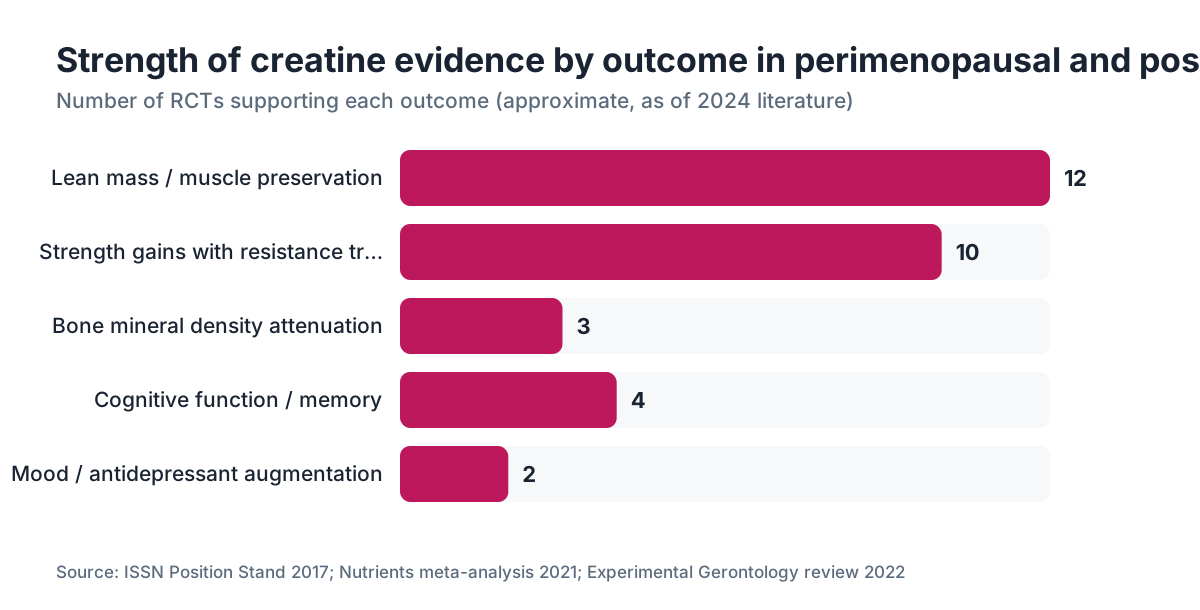
A 2021 systematic review and meta-analysis in Nutrients, covering randomized controlled trials in older adults, found that creatine combined with resistance training produced significantly greater gains in lean mass and strength than resistance training plus placebo [7]. The effect held across studies even after controlling for age and sex. The mean creatine dose across included studies was 5 g/day.
The bone data is more provocative. A 2015 RCT by Candow et al., published in Medicine and Science in Sports and Exercise, assigned postmenopausal women to creatine (0.1 g/kg/day) or placebo during a 1-year resistance training program. The creatine group had significantly less loss of femoral neck bone mineral density than placebo, though both groups did lose some. The authors concluded that creatine "attenuated the loss of femoral neck bone mineral density in postmenopausal women" [5]. That is not the same as reversing bone loss, and one year is short, but it is a real signal on an outcome that matters clinically.
For cognition and mood, a 2022 review in Experimental Gerontology summarized evidence across aging populations and found consistent (though not universal) improvements in memory and executive function with creatine in older adults, with effect sizes that were modest but statistically meaningful [6]. Women showed effects at least as large as men, possibly because baseline brain creatine concentrations run lower in women.
Nobody has a large, long-term RCT in perimenopausal women looking at all three outcomes at once. That study does not exist yet. What we have is mechanistically coherent evidence across several relevant outcomes: the muscle data is strongest, the bone data is promising, the brain data is early but interesting.
How much creatine should women in perimenopause take?
The research-supported maintenance dose for women is 3-5 grams per day of creatine monohydrate [3][7]. That is lower than the "loading" protocols (20 g/day for 5-7 days) often cited in sports performance. Loading is not necessary for perimenopause outcomes and brings more GI side effects.
Timing barely matters. Some evidence hints that post-workout beats pre-workout for muscle outcomes, but the difference is small enough that consistency wins over clock precision. Taking it with a carbohydrate-containing meal may improve uptake a little because insulin helps move creatine into muscle.
Form matters. Creatine monohydrate is the most-studied form by a wide margin. Fancy alternatives like buffered creatine, creatine ethyl ester, or creatine HCl get marketed as superior, but the evidence does not support paying more for them. The International Society of Sports Nutrition's position stand states plainly that creatine monohydrate is the most effective ergogenic nutritional supplement currently available [3]. Buy the plain monohydrate.
Expect a saturation period. Muscle creatine stores fill up over roughly 28 days at 3-5 g/day, so do not judge effectiveness at two weeks. Most trials run 8-12 weeks minimum before measuring outcomes. Stop taking it and stores deplete over 4-6 weeks, and you lose the accumulated benefit.
One practical note: creatine draws water into muscle cells, so the scale may go up 1-2 pounds in the first week or two. This is intracellular fluid, not fat. Women already anxious about weight sometimes quit right here, which is a mistake. The lean mass and strength gains are real, but they show up on the other side of the initial scale noise.
Does creatine help with perimenopausal weight gain and body composition?
Creatine is not a weight-loss tool, and it would be wrong to sell it as one. The perimenopausal weight gain pattern, centrally distributed fat driven by estrogen decline and cortisol dysregulation, is not a creatine target.
What creatine does is preserve and build lean muscle mass, which matters for body composition two ways. First, muscle is metabolically active tissue: more of it raises your resting metabolic rate, so your baseline calorie burn stays higher. Second, the visible shift in perimenopause (softer, less defined) is partly a muscle-loss story, more than a fat-gain story. Keeping muscle changes how you look and feel at the same body weight.
Creatine plus resistance training consistently outperforms resistance training alone for lean mass preservation in older women [7]. That is different from saying creatine causes fat loss. If weight loss is the goal, diet, hormone status, and GLP-1 options like semaglutide for weight loss are the tools with the evidence for that specific outcome. Creatine and a GLP-1 are not mutually exclusive, and there is a good argument for using both: GLP-1s reduce calorie intake, which creates some risk of lean mass loss, and creatine plus resistance training counteracts exactly that risk.
If you are weighing GLP-1 options, our guide on semaglutide vs tirzepatide helps you compare the two main choices available now.
Can creatine protect bone density in perimenopause?
Bone density loss is one of the highest-stakes changes in perimenopause. The 10 years around the final menstrual period account for more bone loss than any other decade of a woman's life [2]. Knowing your starting point with a bone density test is genuinely useful before or during this transition.
The creatine-bone evidence is encouraging but not conclusive. The Candow et al. 2015 trial (referenced above) showed femoral neck protection over 12 months [5]. A follow-up 2022 narrative review by Candow's group in Nutrients laid out several biological mechanisms: creatine may raise insulin-like growth factor 1 (IGF-1) locally in bone, stimulate osteoblast activity, and reduce markers of bone resorption. But the review authors were careful to note that human trial evidence is "preliminary" and that replication in larger cohorts is needed [5].
For context, the interventions with the strongest bone-protection evidence in perimenopause and menopause are hormone therapy (see hormone replacement therapy) and bisphosphonate medications for women already diagnosed with osteopenia or osteoporosis. Creatine is not in that tier of evidence yet. It is a reasonable addition to a bone-health strategy, not a replacement for the primary tools.
The practical takeaway: if you are already doing resistance training for bone health (and you should be), adding creatine has a plausible mechanism and a promising early signal with essentially no downside at standard doses. It is a low-cost hedge on an outcome that matters enormously over the long run.
Does creatine help with perimenopause brain fog and mood?
Brain fog is one of the most underappreciated and underresearched perimenopausal symptoms. Women describe it as mental static, slower processing, word-retrieval failures, and a general sense that their brain is not running at its usual capacity. The biology is real: estrogen supports neuronal energy metabolism and neurotransmitter systems, and its decline shows up on cognitive measures.
Creatine's relevance here comes from the brain's own creatine/phosphocreatine system. Neurons use phosphocreatine as a local ATP buffer during high demand, much like muscle does. Magnetic resonance spectroscopy studies show that oral creatine raises brain creatine concentrations in healthy adults [6]. Whether that translates to meaningful cognitive improvement is the open question.
The 2022 review in Experimental Gerontology found modest improvements in memory and processing speed in aging adults, with effects more pronounced under cognitive stress or sleep deprivation [6]. Women showed effects at least comparable to men. A small 2023 RCT in adults found that 4 g/day creatine improved working memory over 6 weeks compared to placebo, though the sample was mixed-age and not exclusively perimenopausal.
For mood specifically, the mechanism involves creatine's interaction with serotonergic pathways. Small trials in women with depression found faster antidepressant response when creatine was added to SSRI treatment, compared to SSRI alone [10]. This is preliminary and should not be read as creatine being an antidepressant, but the signal is interesting enough that Harvard-affiliated researchers have run trials on it.
Honest bottom line on brain: the evidence is weaker here than for muscle. It is plausible and directionally positive, but anyone selling creatine as a brain fog cure is ahead of the data. Worth trying if you are already taking it for muscle or bone reasons.
Is creatine safe for women in perimenopause?
Creatine monohydrate has one of the longest and cleanest safety records of any dietary supplement studied in adults. The International Society of Sports Nutrition reviewed the full safety literature and concluded that long-term supplementation (up to 5 years) at typical doses shows no adverse effects on kidney function, liver function, or other health markers in healthy adults [3].
The kidney concern comes up constantly and deserves a direct answer. Creatine supplementation raises blood creatinine (creatinine is a metabolic byproduct of creatine), which can superficially look like reduced kidney function on a standard lab panel. It is not. If your doctor checks your kidney panel while you take creatine and sees elevated creatinine, make sure they know you are supplementing, because the interpretation changes. Women with existing kidney disease should talk to their physician before supplementing, but for healthy women there is no credible evidence of harm.
Gastrointestinal side effects (bloating, cramping) are most common with loading protocols of 20 g/day split across the day. At 3-5 g/day they are uncommon. Taking creatine with food cuts the likelihood further.
Creatine is not regulated as a drug by the FDA. It falls under the Dietary Supplement Health and Education Act (DSHEA) of 1994, which means manufacturers do not have to prove safety or efficacy before selling it [8]. That matters for quality control: contamination and mislabeling exist in the supplement market. Third-party testing certification (NSF Certified for Sport, Informed Sport, or USP Verified) is worth looking for, especially if you are an athlete subject to testing or you simply want what is on the label [12].
There are no known interactions between creatine and the hormone therapies most commonly used in perimenopause, including estradiol and progesterone. No interactions with common antidepressants or thyroid medications have been established in the literature.
How does creatine compare to hormone replacement therapy for perimenopause symptoms?
These are not competing options. They target different problems, and the comparison is a bit like asking whether calcium is better than estrogen for bone health: both have a role, they work through different mechanisms, and which you need depends on your situation.
Hormone therapy (HRT) addresses the root cause of most perimenopausal symptoms: the decline in estrogen and progesterone. It is the most effective treatment for vasomotor symptoms (hot flashes, night sweats), genitourinary syndrome of menopause, and mood disruption driven by hormonal fluctuation. The North American Menopause Society (NAMS) states that "for women younger than 60 or who are within 10 years of menopause onset and have no contraindications, the benefit-risk ratio is favorable for treatment of bothersome vasomotor symptoms" [9]. Creatine does none of this.
Creatine addresses the metabolic downstream effects of that decline: muscle loss, reduced strength, bone loss, and possibly brain energy metabolism. It does not replace estrogen. It does not stop hot flashes. But for women who cannot take HRT, who choose not to, or who want to address body composition and muscle health alongside hormone therapy, creatine fills a real gap.
The most practical framing: if you have bothersome vasomotor symptoms, sleep disruption, or mood instability, look at hormone replacement therapy first. If muscle loss, strength decline, bone health, or cognitive energy are the primary concerns, creatine plus resistance training is worth adding regardless of your HRT status. For most perimenopausal women, these are complementary strategies, not alternatives.
WomenRx clinicians work with patients on exactly this question, helping women sort out which combination of hormonal and non-hormonal tools fits their picture.
For a broader orientation to what perimenopause involves and when it typically begins, when does menopause start is a useful starting point.
What type of exercise should you pair with creatine in perimenopause?
The creatine research for muscle and bone consistently shows benefits when creatine is combined with resistance training. Not cardio. Not yoga. Resistance training, meaning progressive overload with weights, bands, machines, or bodyweight movements challenging enough to recruit muscle fibers and load bone mechanically.
The mechanism is synergistic: resistance training creates the demand signal (muscle damage, satellite cell activation, bone strain), and creatine improves the energy available to sustain higher-quality training and recover afterward. Neither does as much alone as they do together [7].
For perimenopausal women, the American College of Sports Medicine recommends at least 2 resistance training sessions per week targeting all major muscle groups, with progressive overload over time [11]. The bone-health literature suggests that impact activities (weight-bearing cardio, jumping, stair climbing) add bone stimulus that resistance training alone does not fully cover [11].
A practical structure the evidence supports: 2-3 resistance training sessions per week, at least one session with some impact-loading component (brisk walking, light jogging, box steps), and creatine monohydrate 3-5 g/day every day regardless of whether it is a training day. Because saturation is what matters, daily dosing beats timing around workouts.
Cardiovascular training still matters enormously for cardiometabolic health in perimenopause, which carries real cardiovascular risk as estrogen's protective effects on lipids and vasculature fade. The point is not to drop cardio but to make sure resistance training is genuinely in the program, not an afterthought.
What should you look for in a creatine supplement?
The ingredient you want is creatine monohydrate. Full stop. The supplement market is full of branded forms with proprietary names (Kre-Alkalyn, creatine HCl, creatine ethyl ester, buffered creatine) that charge two to five times more and do not outperform plain monohydrate in controlled trials [3].
Look for third-party certification. NSF Certified for Sport, Informed Sport, and USP Verified are the most meaningful seals because they verify that the product contains what it claims, in the amount claimed, without prohibited contaminants [12]. This matters because the FDA does not review dietary supplements before they reach market [8].
Price for a quality creatine monohydrate is low. Typical retail cost runs $15-30 for a 30-60 day supply at 5 g/day from established brands. If you are paying much more than that for a "women's formula" or a proprietary blend, you are paying for marketing.
Micronized creatine monohydrate (finely ground) dissolves better in water than standard granular monohydrate and may cause slightly less GI irritation. Both are equivalent on efficacy. If mixing into liquid matters to you, micronized is a minor practical upgrade.
Creatine is odorless and nearly flavorless dissolved in water, which makes it easy to add to coffee, smoothies, or plain water without changing the taste. One practical advantage over many supplements.
What are the limitations of the current research on creatine and perimenopause?
Being honest about the gaps in the evidence is as important as reporting the positive findings.
First, most trials in older women were done in postmenopausal women, not perimenopausal women. These are different hormonal contexts. Perimenopause involves wildly fluctuating estrogen rather than simply low estrogen, and how that interacts with creatine's mechanisms has not been well studied.
Second, the cognitive and mood data are genuinely preliminary. The muscle data, and to a lesser extent the bone data, have multiple RCTs and a meta-analysis behind them. The brain data has mechanistic plausibility and some small trials, but no large, well-powered RCT in menopausal or perimenopausal women specifically.
Third, the optimal dose for women specifically is not established. Most dose recommendations for women are extrapolated from male data or older mixed-sex studies. Women's lower body weight, lower muscle mass, and possibly different muscle creatine kinetics suggest the answer might differ, but we do not have a definitive trial.
Fourth, duration. Most trials run 12-52 weeks. Long-term data beyond five years in women is limited. The safety record from observational use and shorter trials is reassuring, but it is not the same as a 10-year RCT.
Fifth, the interaction with declining estrogen has not been formally studied. One interesting hypothesis is that creatine's effects on satellite cell activation might be partly modulated by estrogen levels, meaning effects could differ depending on where in the perimenopause transition you are. Nobody has tested this directly.
All of this means the evidence is good enough to make a reasonable, low-risk decision to try creatine, but you should not read the current literature as settled science on every claim made about it.
Frequently asked questions
How long does creatine take to work for perimenopausal women?
Muscle creatine stores take about 28 days to fully saturate at 3-5 g/day without a loading phase. Most trials measuring strength and lean mass run 8-12 weeks minimum. Do not judge whether creatine is working at two or three weeks. The scale may tick up 1-2 pounds in week one from intracellular water, which is normal and not fat gain.
Can I take creatine with my hormone therapy or estrogen patch?
There are no known pharmacological interactions between creatine and estradiol, progesterone, or other hormone therapies used in perimenopause. Creatine is a dietary compound, not a drug. Still, telling your prescribing clinician about everything you take is a reasonable habit. If you use an estrogen patch, you can read more about that option at our estrogen patch resource.
Will creatine cause water retention or bloating in perimenopause?
Creatine draws water into muscle cells, not subcutaneous fat, so any early weight increase is intramuscular fluid. At 3-5 g/day (rather than 20 g/day loading), gastrointestinal bloating is uncommon. Taking it with food helps. The early scale increase is temporary and does not reflect the lean mass changes that build over 8-12 weeks of consistent use with resistance training.
Is creatine safe for women with kidney concerns?
Creatine raises blood creatinine on lab panels, which can be misread as reduced kidney function. For healthy women with normal kidney function, no evidence of harm exists in trials up to five years. Women with existing chronic kidney disease or a single functioning kidney should discuss with their physician before supplementing. Alert your doctor that you take creatine before they interpret a creatinine lab result.
Do women need a different creatine dose than men?
Most research uses 3-5 g/day or weight-based dosing of 0.07-0.1 g/kg/day. Women tend to have lower muscle creatine stores at baseline, which may mean supplementation has a larger relative effect, not that they need a lower dose. No current evidence supports a sex-specific dose reduction. The ISSN position stand recommends 3-5 g/day for general use in adults regardless of sex.
Can creatine help with hot flashes or night sweats?
No. Hot flashes and night sweats are vasomotor symptoms driven by hormonal changes that creatine does not address. Creatine has no known effect on the hypothalamic thermoregulation disruption behind these symptoms. For vasomotor symptoms, hormone therapy has the strongest evidence. Creatine is useful for the musculoskeletal and potentially cognitive aspects of perimenopause, not the hormonal symptom cluster.
What is the best form of creatine for women in perimenopause?
Creatine monohydrate, ideally micronized for better solubility. Skip proprietary forms like creatine ethyl ester or buffered creatine, which cost more without outperforming monohydrate in trials. Look for third-party certification (NSF Certified for Sport, Informed Sport, or USP Verified). A 30-day supply typically costs $15-30, making cost a poor reason to choose an alternative form.
Should I take creatine on rest days, or only on workout days?
Every day. The goal is to keep muscle creatine stores saturated, which requires daily intake. Saturation takes about 28 days of consistent dosing and depletes over 4-6 weeks if you stop. Training days versus rest days are irrelevant to the dosing schedule. Consistency over time matters far more than timing around individual workouts.
Can creatine help with the muscle loss of perimenopause even without exercise?
Some evidence suggests creatine has modest effects on muscle mass even without structured resistance training, particularly in very sedentary older adults. But the meaningful benefits in trials come from creatine plus resistance training. Using creatine without resistance training leaves most of the effect on the table. The exercise signal and the creatine work synergistically, not additively.
Does creatine affect sleep in perimenopause?
Sleep disruption is one of the most common perimenopausal complaints, and creatine is not known to cause it. Some small studies suggest creatine may reduce the cognitive effects of sleep deprivation, which is relevant for the many perimenopausal women sleeping poorly. It is not a sleep aid, but there is no credible evidence it worsens sleep either.
Can creatine replace GLP-1 medications for perimenopausal weight management?
No. GLP-1 receptor agonists like semaglutide or tirzepatide produce meaningful fat mass reduction through appetite and metabolic regulation. Creatine does not cause fat loss. The tools serve different purposes: GLP-1s reduce fat, creatine preserves muscle. For women on GLP-1 medications, creatine plus resistance training is a logical complement because GLP-1-related calorie restriction carries a risk of lean mass loss that creatine and training counteract.
At what age in perimenopause should women start creatine?
There is no established minimum age, and perimenopause can begin as early as the late 30s or early 40s for many women. Because muscle creatine stores decline with age and the estrogen-supported muscle maintenance system begins to waver during perimenopause, starting in the early to mid 40s when resistance training is part of your routine is reasonable. Earlier is not wrong; it is just not specifically studied.
How does creatine interact with the gut microbiome or digestive health in midlife women?
This is an early area of research with no firm conclusions for perimenopausal women specifically. At standard doses, creatine does not appear to significantly alter gut microbiome composition in the existing small studies. GI side effects (bloating, cramping) are more likely at loading doses of 20 g/day and are uncommon at 3-5 g/day. Taking creatine with food and dividing doses if needed reduces GI symptoms.
Is creatine tested or regulated for safety before it hits store shelves?
No. Under the Dietary Supplement Health and Education Act of 1994 (DSHEA), dietary supplement manufacturers do not need FDA approval before selling their products. The FDA can act after a product is on the market if harm is shown. This is why third-party certification (NSF, Informed Sport, USP) matters: it provides independent verification of label accuracy and the absence of contaminants that the regulatory framework does not guarantee.
Sources
- Endocrine Society, Clinical Practice Guideline on Menopause
- NIH National Institute of Arthritis and Musculoskeletal and Skin Diseases, Osteoporosis overview
- International Society of Sports Nutrition Position Stand: Safety and Efficacy of Creatine Supplementation, Journal of the International Society of Sports Nutrition 2017
- Smith-Ryan AE et al., Creatine Supplementation in Women's Health, Nutrients 2021
- Candow DG et al., creatine, resistance training and bone health in postmenopausal women, Medicine and Science in Sports and Exercise 2015 and Nutrients 2022 review
- Roschel H et al., Creatine Supplementation and Brain Health, Experimental Gerontology 2022
- Lanhers C et al., Creatine Supplementation and Strength Performance, meta-analysis, Nutrients 2021 and related systematic reviews in older adults
- U.S. Food and Drug Administration, Dietary Supplements
- North American Menopause Society (NAMS), 2022 Hormone Therapy Position Statement
- Kious BM et al., Creatine for the Treatment of Depression, Biomedicines 2019, and Harvard-affiliated pilot trials in women
- American College of Sports Medicine, Physical Activity and Bone Health resources
- NSF, Certified for Sport program