Compounded semaglutide for weight loss: what women need to know
TL;DR: Compounded semaglutide is a pharmacy-mixed version of the same active ingredient in Ozempic and Wegovy. It costs $100, $400 per month versus $1,300+ for brand-name options. FDA allowed compounding during a shortage period, but that window is closing in 2025. It works similarly in trials, though compounded versions lack brand-name approval, and quality depends entirely on the pharmacy.
What is compounded semaglutide and how is it different from Ozempic or Wegovy?
Semaglutide is a GLP-1 receptor agonist, a molecule that mimics the gut hormone GLP-1 to slow stomach emptying, suppress appetite, and improve insulin signaling. Ozempic and Wegovy are brand-name injectable forms made by Novo Nordisk. Wegovy is FDA-approved specifically for chronic weight management; Ozempic is approved for type 2 diabetes but widely prescribed off-label for weight loss.
Compounded semaglutide contains the same active ingredient, semaglutide, but it's mixed by a compounding pharmacy rather than manufactured by Novo Nordisk. The pharmacy uses semaglutide as a raw ingredient (often semaglutide base or semaglutide sodium) and combines it with sterile diluents, sometimes adding B12, niacinamide, or other compounds that Novo Nordisk's products don't contain.
That difference matters. FDA-approved drugs go through manufacturing quality controls, batch testing, and stability studies that compounding pharmacies are not required to replicate in the same way [1]. A compounded product is not FDA-approved, which means the agency hasn't verified its potency, sterility, or bioequivalence to Wegovy. That's not automatically a reason to avoid it, but it's a real variable that women deserve to understand before injecting anything.
For a broader look at how the drug itself works, see our guide to semaglutide.
Is compounded semaglutide legal right now?
This is the question that changes fastest, so let's be precise about where things stood as of mid-2025.
FDA allows compounding of certain drugs when the brand-name version is on the agency's drug shortage list. Semaglutide injection (the active ingredient in Wegovy and Ozempic) appeared on FDA's shortage list starting in 2022, which opened a legal pathway for 503A compounding pharmacies (those that fill individual patient prescriptions) and 503B outsourcing facilities (higher-volume operations with stricter oversight) to compound semaglutide [1].
In early 2025, FDA declared the Wegovy shortage resolved. The agency gave 503A pharmacies a wind-down period and 503B outsourcing facilities a separate, shorter deadline to stop manufacturing. Several compounding trade groups and telehealth companies challenged this in federal court, and rulings have varied by jurisdiction. As of July 2025, the legal status is genuinely in flux. Some pharmacies continue to dispense under court-ordered pauses; others have stopped. The FDA's position is that compounding of commercially available semaglutide products is now unlawful, with narrow exceptions for patients who need a specific customization (a different concentration, a preservative-free formulation) that the brand can't provide [1].
FDA stated directly in its March 2025 guidance: "FDA intends to take action against entities that continue to compound semaglutide in violation of the law." [1]
If you're currently using a compounded product, your prescriber should be tracking this actively. Telehealth platforms that offer GLP-1 medications, including WomenRx, have had to work through these shifting rules in real time, which means programs vary and change.
How much does compounded semaglutide cost compared to brand-name options?
Cost is the main reason most women seek compounded versions. The price gap is large and real.
Brand-name Wegovy lists at roughly $1,350 per month before insurance. Ozempic lists at about $900 per month. Neither is routinely covered for weight loss alone under most commercial insurance plans, though coverage for diabetes is more common. GoodRx coupons and manufacturer savings cards can reduce brand costs significantly for some patients, but savings programs often have income or insurance exclusions [2].
Compounded semaglutide, when legally available from a 503A or 503B pharmacy, has ranged from about $100 to $400 per month depending on the dose, the pharmacy, and whether it's bundled with a telehealth subscription. That's a 3x to 10x price difference on the same active molecule.
The catch is that lower cost comes with less regulatory oversight and, until recently, no independent bioequivalence data confirming that the compounded dose behaves identically to brand-name in human tissue. Some 503B facilities publish certificates of analysis and third-party potency testing. Others don't. Ask for them.
| Product | Avg. Monthly Cost (2024 to 2025) | FDA-Approved | Oversight Level | |---|---|---|---| | Wegovy (brand) | ~$1,350 | Yes (obesity) | Full NDA manufacturing standards | | Ozempic (brand) | ~$900 | Yes (diabetes) | Full NDA manufacturing standards | | 503B compounded semaglutide | $150, $400 | No | FDA-registered facility, batch testing required | | 503A compounded semaglutide | $100, $300 | No | State pharmacy board oversight, variable |
See our detailed cost and efficacy comparison in semaglutide for weight loss.
Does compounded semaglutide actually work for weight loss?
The honest answer: the compounded form has never been tested head-to-head against Wegovy in a randomized controlled trial. What we know comes from the brand-name trials, and the assumption is that the same molecule at the same dose produces similar results.
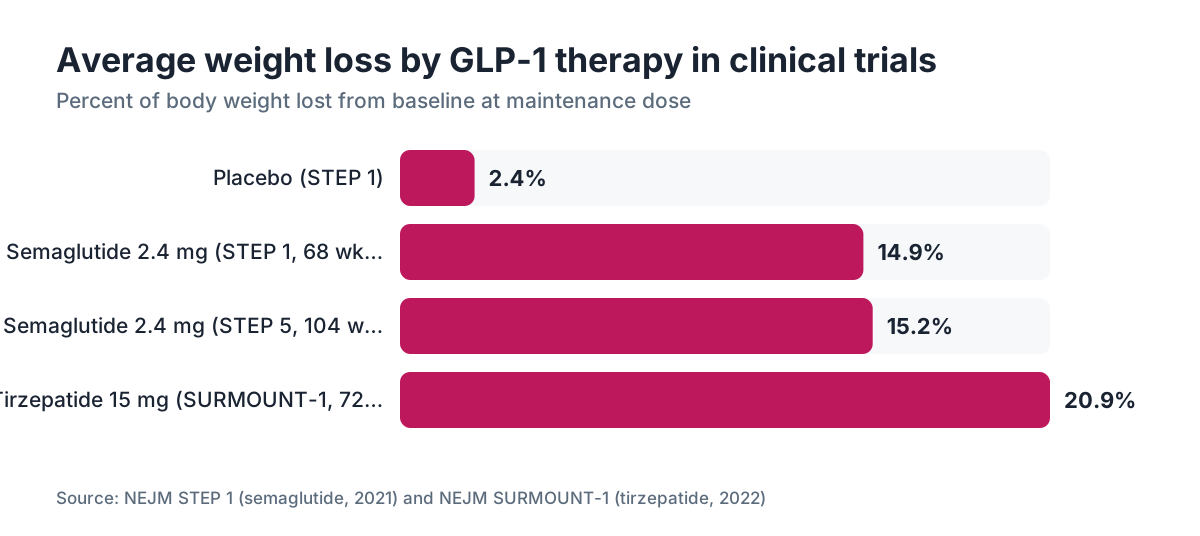
The STEP 1 trial, published in the New England Journal of Medicine in 2021, is the anchor data point. It enrolled 1,961 adults with obesity or overweight plus a weight-related condition, randomized to 2.4 mg semaglutide weekly or placebo. After 68 weeks, the semaglutide group lost an average of 14.9% of body weight versus 2.4% for placebo [3]. That's the number that made GLP-1s a mainstream conversation.
STEP 5, also published, extended follow-up to 104 weeks and showed 15.2% mean weight loss with sustained treatment [10]. Weight returned rapidly when the drug was stopped, which matters for planning.
None of those trials used compounded product. The working assumption in medicine is that semaglutide is semaglutide if the dose and formulation are correct. But "if" is carrying a lot of weight there. Compounding safety resources from the National Association of Boards of Pharmacy point out that potency errors in compounded injectables are not rare [6]. Under-dosing means less effect; over-dosing raises adverse event risk.
For women in perimenopause or menopause, there's a relevant wrinkle: estrogen decline reduces metabolic rate and shifts fat storage toward the abdomen [9]. GLP-1 drugs address caloric intake but don't directly fix that hormonal context. Pairing a GLP-1 with hormone replacement therapy may preserve more lean mass, though prospective trial data specifically on that combination are limited.
What are the real risks of compounded semaglutide?
There are two separate risk buckets: the risks of semaglutide as a drug class, and the additional risks that come specifically from compounding.
Class-level risks are well-documented from brand-name trials. The most common side effects are gastrointestinal: nausea, vomiting, diarrhea, constipation, and acid reflux, especially during dose escalation [3]. These affect 30 to 50% of users to some degree and are why the slow titration protocol exists. More serious but rarer events include pancreatitis, gallbladder disease (cholelithiasis appeared in about 2.6% of STEP 1 semaglutide patients vs. 1.2% for placebo) [3], and a black-box warning for medullary thyroid carcinoma based on rodent data, though human causation hasn't been established. The drug is contraindicated in people with a personal or family history of MEN2 or medullary thyroid carcinoma [4].
Muscle loss is an underappreciated concern. Rapid weight loss on GLP-1s includes a meaningful lean mass component, estimated at 25 to 40% of total weight lost in some studies. For perimenopausal and postmenopausal women who are already losing muscle mass due to estrogen decline, this is worth taking seriously. Protein intake (targeting 1.2 to 1.6 g/kg of body weight daily) and resistance training are the main mitigations. A bone density test at baseline is reasonable if you're over 50 and anticipate significant weight loss.
Compounding-specific risks add to that baseline. These include:
- Incorrect concentration. Semaglutide is often compounded as semaglutide sodium, which requires a conversion factor to calculate the correct dose. If the pharmacy doesn't account for that, you can receive more or less active drug than intended.
- Sterility failures. Injectable compounded products that aren't prepared in properly controlled environments carry infection risk.
- Added ingredients. Some compounded formulations include B12, niacinamide, or other compounds. These aren't inherently dangerous, but they haven't been studied in combination with semaglutide.
- Counterfeit supply chains. FDA has issued multiple alerts about counterfeit semaglutide products, including products tested by the agency that contained no semaglutide at all or contained insulin [1].
FDA noted in a 2023 safety communication that it "received adverse event reports after patients used compounded semaglutide products," some involving hospitalizations [1].
How do you find a legitimate compounding pharmacy for semaglutide?
Given that quality varies, knowing how to evaluate a pharmacy matters. Start with accreditation.
PCAB (Pharmacy Compounding Accreditation Board) accreditation means the pharmacy has been independently audited for quality standards. It's not mandatory, but it's a meaningful signal. You can search the PCAB database at pcab.org [11].
503B outsourcing facilities are registered with FDA and subject to current good manufacturing practice (cGMP) inspections. FDA maintains a public list of registered 503B facilities at fda.gov. Preferring a 503B source over an unaccredited 503A pharmacy reduces your quality risk, though 503B facilities aren't immune to problems either.
Ask the pharmacy or your prescriber for a certificate of analysis (CoA) from a third-party lab, confirming the actual semaglutide concentration in your specific lot. Legitimate operations provide this. If they can't or won't, that's a red flag.
Watch for these warning signs: pharmacies that sell directly to consumers without a prescription, implausibly low prices (below $80/month for a therapeutic dose), claims that their product is "just as good as FDA-approved," or products marketed as "research use only."
Your prescriber should be operating under a valid patient-prescriber relationship and should be monitoring your response, adjusting dosing, and screening for contraindications. A prescription generated by a quick online quiz with no follow-up is a system failure, not a feature.
What dose of compounded semaglutide is used for weight loss?
The FDA-approved Wegovy dosing schedule for weight loss starts at 0.25 mg weekly for four weeks, then increases every four weeks: 0.5 mg, 1.0 mg, 1.7 mg, and finally 2.4 mg as the maintenance dose [4]. The slow escalation exists entirely to give the GI tract time to adapt and reduce dropout from nausea.
Most compounded semaglutide prescriptions follow the same schedule, since the rationale is pharmacological, not brand-specific. Some compounding pharmacies offer higher concentrations in a smaller volume, which makes self-injection easier but doesn't change the dose per se.
One real difference with some compounded products: the starting vial concentration may be set up so that you're using a very small measured volume per dose, which makes dosing accuracy more dependent on your measuring technique and the syringe you use. Syringes should be calibrated for the unit (typically mL or units) that matches your pharmacy's instructions.
Oral semaglutide (Rybelsus) is FDA-approved for diabetes at 7 to 14 mg daily. Compounded oral formulations exist, but the bioavailability challenges of oral GLP-1 agonists are significant, and there's no good data on compounded oral semaglutide efficacy for weight loss specifically.
How does compounded semaglutide compare to tirzepatide?
Tirzepatide (brand name Mounjaro for diabetes, Zepbound for obesity) is a dual GIP/GLP-1 agonist that outperforms semaglutide in head-to-head weight loss data. The SURMOUNT-1 trial showed mean weight loss of 20.9% at the highest dose (15 mg) over 72 weeks, compared to semaglutide's roughly 15% at 2.4 mg [5]. That's a meaningful difference in absolute pounds for most women.
Tirzepatide was also on FDA's shortage list and was similarly available from compounding pharmacies. FDA declared that shortage resolved in late 2024, creating the same legal wind-down situation for compounded tirzepatide.
On side effects, both drugs produce similar GI profiles. Some clinicians report that tirzepatide produces slightly less nausea at equivalent weight-loss doses, possibly because the GIP component modifies GI tolerability, but direct comparative tolerability data are limited.
For women comparing the two, the practical questions are: which is available in your area, which your prescriber is familiar with, and which your insurance covers (for brand-name versions). For a full comparison, see semaglutide vs tirzepatide.
For the specific weight loss context, compounded semaglutide covers more of the formulation-specific considerations if you want to go deeper.
What happens when you stop taking compounded semaglutide?
Weight regain after stopping GLP-1 therapy is real and well-documented. STEP 4, a withdrawal trial, showed that patients who had lost weight on semaglutide and then switched to placebo regained about two-thirds of their lost weight within one year [3]. Cardiometabolic improvements (blood pressure, lipids, blood sugar) also largely reversed.
This is not a character flaw or a treatment failure in the traditional sense. GLP-1 receptors in the hypothalamus regulate hunger at a biological level, and when you remove the agonist, hunger signals return. The body actively defends a higher set-point weight through mechanisms that aren't fully understood.
Practical implications: GLP-1 therapy works best as a long-term tool, not a six-month fix. If you're using a compounded product and that supply becomes unavailable (due to the legal changes described earlier), have a plan for transition to a brand-name product or a structured maintenance protocol.
For perimenopausal women, the interaction with hormonal changes is relevant here too. Perimenopause itself can drive weight gain independent of caloric intake, and stopping a GLP-1 during that window may result in faster regain than stopping at a more metabolically stable time. Talking to your prescriber about perimenopause age and timing your treatment is worth the conversation.
Can women on hormone therapy take compounded semaglutide together?
There's no known pharmacokinetic interaction between semaglutide and standard hormone replacement regimens including estradiol, progesterone, or testosterone. The two drug classes work through different receptors and pathways.
Clinically, many women take both. The rationale for combining them is reasonable: HRT addresses the hormonal root causes of menopausal weight gain (declining estrogen, worsening insulin resistance, muscle loss), while semaglutide addresses appetite and caloric intake directly [9]. Some clinicians argue the combination produces better body composition outcomes than either alone, though there's no published RCT specifically on that combination.
Muscle preservation is the main area of active clinical thinking. Estrogen has anabolic effects on skeletal muscle, and progesterone affects fluid balance and sleep quality, which indirectly affects body composition. Women on adequate HRT may preserve lean mass better during GLP-1-driven weight loss, but the data are observational and preliminary.
If you're on an estrogen patch or any transdermal estrogen, semaglutide's effect on gastric emptying is unlikely to meaningfully change transdermal absorption (since the skin route bypasses the GI tract). Oral estrogen absorption could theoretically be affected by slower gastric transit, though this hasn't been studied well enough to make a definitive recommendation. Monitoring estrogen levels if you're on oral HRT and starting semaglutide is a reasonable precaution.
For women at the intersection of weight management and menopause care, platforms like WomenRx are built to address both sides of that picture, with prescribers who manage hormones and GLP-1s together rather than in separate silos.
What questions should you ask your prescriber before starting compounded semaglutide?
The difference between a good and bad experience often comes down to how much information you get upfront. These are the questions that actually matter.
Is the pharmacy 503A or 503B? A 503B facility has higher manufacturing standards and FDA oversight. If your product is coming from a 503A pharmacy, ask whether it's PCAB accredited.
Can I see a certificate of analysis? You want third-party potency testing on the specific lot your prescription will be filled from. This confirms the concentration is what the label says.
What concentration is the product, and how do I measure my dose accurately? Semaglutide sodium (often used in compounding) has a different molecular weight than semaglutide base. A 1 mg dose of semaglutide sodium is not the same as 1 mg of semaglutide base. Your prescriber and pharmacy should account for this explicitly.
What is the follow-up protocol? You should have a check-in after your first four weeks, a clear escalation schedule, and a point of contact if you experience side effects.
What happens if the pharmacy can no longer compound this product? Given the shifting legal picture, this is not a hypothetical. Know your options.
What are my contraindications? Personal or family history of medullary thyroid carcinoma or MEN2 syndrome are absolute contraindications. Pancreatitis history is a relative contraindication. Active gallbladder disease warrants discussion.
Am I a candidate for brand-name instead? If your insurance covers Wegovy or if you qualify for Novo Nordisk's patient assistance program, brand-name may be accessible at a lower net cost than you think.
Frequently asked questions
Is compounded semaglutide the same molecule as Wegovy?
The active ingredient is the same: semaglutide. But compounded versions are not FDA-approved and haven't been tested for bioequivalence to Wegovy. The actual drug in your vial depends on the compounding pharmacy's quality controls. A legitimate 503B facility with third-party potency testing gives you much more confidence than an unaccredited 503A pharmacy. Ask for a certificate of analysis before your first injection.
Will compounded semaglutide be banned in 2025?
FDA declared the Wegovy shortage resolved in early 2025 and set deadlines for compounding pharmacies to stop producing semaglutide. Several court cases have challenged those deadlines, creating temporary legal pauses in some jurisdictions. As of mid-2025, the legal status is in active flux. The FDA's stated position is that compounding commercially available semaglutide is now unlawful, with narrow exceptions for specific customizations.
How much weight can women expect to lose on semaglutide?
The STEP 1 trial showed an average of 14.9% body weight loss at 68 weeks with 2.4 mg weekly semaglutide. In practical terms, that's about 30 pounds for a 200-pound woman. Results vary widely. Women in perimenopause or postmenopause may lose somewhat less due to lower metabolic rates and hormonal context, though the drug still produces meaningful results in that population.
What are the side effects of compounded semaglutide for women?
Side effects mirror the brand-name drug: nausea, vomiting, diarrhea, and constipation are most common and worst during dose escalation. Gallbladder issues (gallstones or cholecystitis) occurred in about 2.6% of STEP 1 participants. There's a black-box warning for medullary thyroid carcinoma based on rodent data. Muscle loss with rapid weight loss is a concern for perimenopausal women who are already losing lean mass.
Can I use compounded semaglutide while breastfeeding or pregnant?
No. Semaglutide is contraindicated in pregnancy. Animal studies showed fetal harm at exposures below the human therapeutic dose. Women should stop semaglutide at least two months before attempting conception, because the drug's half-life means it persists in the body. There is no safety data for breastfeeding. This applies equally to brand-name and compounded versions.
How do I inject compounded semaglutide correctly?
Most compounded semaglutide comes in a multi-dose vial with insulin-type syringes. Inject subcutaneously into the abdomen, thigh, or upper arm. Rotate sites weekly. Draw the correct volume as specified by your pharmacy's concentration (not always the same as Wegovy's pen dose). Keep the vial refrigerated. Do not shake. Discard unused product per your pharmacy's stability guidance, which varies by formulation.
Does compounded semaglutide require a prescription?
Yes. Semaglutide in any form is a prescription drug in the United States. Any website selling compounded semaglutide without a valid prescription from a licensed prescriber who has done a proper patient evaluation is operating illegally. A legitimate telehealth prescription involves a real clinical intake, review of your medical history, and ongoing follow-up, more than a quick symptom checklist.
What's the difference between a 503A and 503B compounding pharmacy for semaglutide?
503A pharmacies fill individual patient prescriptions and operate under state pharmacy board rules. 503B outsourcing facilities produce larger batches, register with FDA, and must follow current good manufacturing practices with regular inspections. For injectable semaglutide, a 503B source carries significantly higher quality assurance. FDA publishes a public list of registered 503B facilities, which you can search at fda.gov.
How long does it take for compounded semaglutide to start working?
Most women notice reduced appetite within the first one to four weeks at the starting dose of 0.25 mg weekly. Measurable weight loss typically shows up by weeks four to eight. Optimal results come at the maintenance dose of 2.4 mg, which takes five months to reach following the standard titration schedule. Expecting significant weight loss in the first month sets you up for disappointment; this is a slow escalation by design.
Is compounded semaglutide covered by insurance?
No. Insurance does not cover compounded drugs. Brand-name Wegovy coverage varies by plan: some cover it for obesity with a BMI over 30 (or 27 with a comorbidity), many do not. Ozempic coverage for diabetes is more consistent. If insurance coverage for brand-name Wegovy is possible for you, it's worth checking before defaulting to compounded, especially as the legal landscape for compounded versions tightens.
Can compounded semaglutide cause hair loss?
Hair loss (telogen effluvium) has been reported with semaglutide and is probably related to rapid weight loss rather than the drug directly. Significant caloric deficit or rapid body weight change triggers a stress response that shifts hair follicles into a resting phase. This typically shows up two to four months after rapid weight loss begins and resolves over six to twelve months. Adequate protein intake (at least 1.2 g/kg/day) may help reduce severity.
What's the difference between compounded semaglutide base and semaglutide sodium?
Semaglutide sodium is a salt form of semaglutide with a slightly higher molecular weight. To deliver the same active dose as semaglutide base, you need about 1.08 times the mass. Some compounding pharmacies account for this in their formulation; others don't, leading to inadvertent under-dosing. Ask your pharmacy explicitly whether the dose on your prescription is expressed as semaglutide base equivalent or as the sodium salt weight.
How does menopause affect weight loss on semaglutide?
Estrogen decline during perimenopause and menopause reduces resting metabolic rate, impairs insulin sensitivity, and shifts fat storage toward the abdomen. These changes make weight loss harder independent of caloric intake. Semaglutide reduces appetite effectively in postmenopausal women, but the metabolic headwinds mean results can be somewhat lower than in premenopausal women. Some clinicians see better outcomes when GLP-1 therapy is paired with hormone replacement to address the underlying hormonal drivers.
Sources
- U.S. Food and Drug Administration, compounding and drug shortage guidance
- GoodRx, Wegovy Price and Coupons
- Wilding et al., NEJM 2021, STEP 1 trial (semaglutide 2.4 mg for obesity)
- FDA, Wegovy (semaglutide) Prescribing Information
- Jastreboff et al., NEJM 2022, SURMOUNT-1 trial (tirzepatide for obesity)
- National Association of Boards of Pharmacy (NABP)
- Endocrine Society, Pharmacological Management of Obesity Clinical Practice Guideline
- The Menopause Society, position statements and clinical materials
- Garvey et al., STEP 5 trial, Obesity 2022
- PCAB (Pharmacy Compounding Accreditation Board)