Compounded semaglutide vs Ozempic: what's actually different
TL;DR: Ozempic is FDA-approved brand-name semaglutide made by Novo Nordisk. Compounded semaglutide is a copy mixed by a pharmacy, not FDA-approved, and never tested as a finished product in a clinical trial. It usually costs $150 to $400 a month versus $900 to $1,000-plus for Ozempic. The FDA flagged compounded semaglutide safety risks in 2024 and ended the shortage designation in early 2025, which legally restricts most compounding now.
What is the core difference between compounded semaglutide and Ozempic?
Ozempic is a brand-name injectable made by Novo Nordisk. It contains semaglutide, a GLP-1 receptor agonist, in a pre-filled pen at doses of 0.5 mg, 1 mg, and 2 mg. The FDA approved it in December 2017 for type 2 diabetes, and it is the same molecule inside Wegovy, which is approved for weight loss. Every Ozempic pen that leaves a pharmacy was made under FDA-approved conditions, with verified purity, sterility, and stability data.
Compounded semaglutide is a copy of that molecule mixed by a 503A or 503B compounding pharmacy. It has never gone through the FDA's new drug approval process as a finished product. The pharmacy buys the active ingredient from bulk drug substance suppliers and formulates it in-house. The formula, the concentration, and even the salt form (more on that below) can vary from one pharmacy to the next. No FDA inspector checks each batch for potency the way one would with brand-name manufacturing.
Here is the practical upshot. The molecule belongs to the same class, but the product is not the same product. That gap matters for safety, consistency, and whether you can legally get it at all.
Why did compounded semaglutide become available in the first place?
Federal law under 21 U.S.C. § 503A and 503B lets pharmacies compound copies of brand-name drugs when those drugs sit on the FDA's drug shortage list [1]. Semaglutide (both Ozempic and Wegovy) landed on that list in 2022, and demand kept it there through 2024. During that stretch, compounding pharmacies could legally make and sell compounded semaglutide at scale.
Early 2025 changed that. The FDA declared the semaglutide shortage resolved and pulled it from the shortage list in February 2025 [2]. That decision started a legal wind-down. Under the existing framework, 503A pharmacies (traditional, patient-specific compounders) had until April 22, 2025 to stop, and 503B outsourcing facilities had until May 22, 2025. Courts got involved too: a federal district court temporarily blocked parts of the FDA's wind-down enforcement in spring 2025, which left the picture unsettled. The situation is still moving as of mid-2025, so check the FDA's shortage database directly before you assume any pharmacy's supply is legal [2].
Here is what that means if you are trying to plan. The window of clearly legal, widely available compounded semaglutide has closed or is closing. What you can still get depends on your state, your prescriber, and whether litigation has paused enforcement where you live.
How does the cost of compounded semaglutide compare to Ozempic?
Cost is the main reason women switched to compounded versions, and the gap is not small.
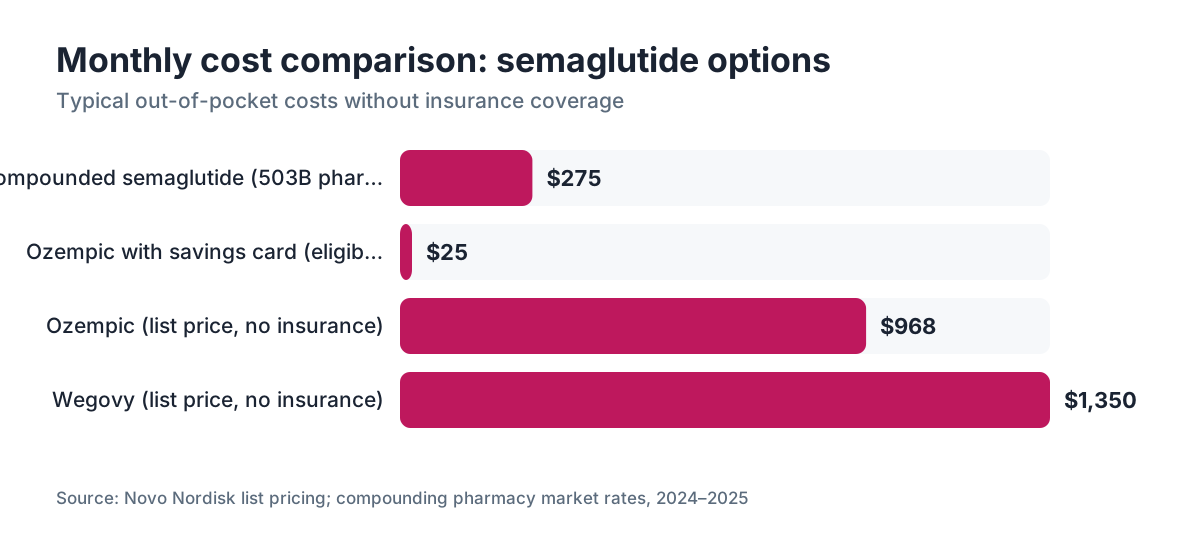
Ozempic's list price runs roughly $935 to $1,000 a month without insurance, based on Novo Nordisk's published pricing [3]. Commercial insurance covering it for type 2 diabetes can drop your out-of-pocket a lot. But insurance rarely covers Ozempic or Wegovy when weight loss is the only reason. The Novo Nordisk savings card can bring costs as low as $25 a month for eligible commercially insured patients, and it does nothing for Medicare or Medicaid patients.
Compounded semaglutide, back when it was widely available, usually ran $150 to $400 a month, with some telehealth platforms charging closer to $100 for the lowest doses. Prices moved with dose, pharmacy, and whether the formulation included add-ins like B12 or NAD+.
| Option | Typical monthly cost | FDA approval status | Insurance coverage | |---|---|---|---| | Ozempic (brand) | $935 to $1,000 list; $25 to $200 with coverage | Yes (diabetes) | Often yes for T2D; rarely for weight loss | | Wegovy (brand) | $1,300 to $1,400 list | Yes (weight loss) | Increasingly covered; still patchy | | Compounded semaglutide (503A/B) | $150 to $400 | No | No |
The difference is real, especially for women paying entirely out of pocket. But the lower price reflects a product that skipped the approval pathway, not one that's simply cheaper to make. [chart placement after this section]
Is compounded semaglutide as effective as Ozempic?
Nobody has run a head-to-head randomized trial of compounded semaglutide against Ozempic. That trial does not exist. What we have is strong efficacy data for the brand-name molecule and a reasonable guess about the copy.
The STEP trials built semaglutide's weight loss record. STEP 1, published in the New England Journal of Medicine in 2021, found that weekly subcutaneous semaglutide 2.4 mg (Wegovy dosing) produced average weight loss of 14.9% of body weight over 68 weeks in adults with obesity, versus 2.4% with placebo [4]. STEP 5 pushed the timeline to 104 weeks and found similar durability. Those are the numbers that made semaglutide famous, and they belong to the FDA-tested formulation.
For compounded versions, the honest answer is: probably similar, if the dose is accurate, the product is sterile, and the salt form is right. That "if" is carrying a lot of weight. The FDA issued an alert in 2024 after adverse event reports tied to compounded semaglutide, including dosing errors from concentration differences between compounded and brand-name products [5]. Some compounded versions used semaglutide sodium or acetate salts instead of the base form in Ozempic, which may change bioavailability, though the clinical meaning of that difference is not yet well described in peer-reviewed literature.
If your compounded semaglutide comes from a reputable 503B facility that tests every batch, the real-world efficacy gap is probably small. If it comes from a sloppier source, you have no way to know what you're injecting.
What safety concerns has the FDA raised about compounded semaglutide?
The FDA has been blunt about this. In a 2024 safety communication, the agency warned that it had received reports of adverse events tied to compounded semaglutide, some involving "dosing errors" because providers and patients did not know the concentration differed between compounded and branded formulations [5]. Patients were sometimes injecting ten times the intended dose.
The agency also raised concerns about compounded products using semaglutide salts (sodium or acetate) instead of the same molecular form as Ozempic. The FDA said these salt forms are not the same as the active ingredient in approved semaglutide products and have not been shown to be safe or effective.
Sterility is another real worry. 503A pharmacies answer to state pharmacy boards, not FDA manufacturing standards. A 503B facility gets more federal oversight, but the compounding world is large and inspections do not hit every facility on the same schedule.
None of this means compounded semaglutide automatically hurts you. Millions of women used it from 2022 to 2025 without reported serious problems from reputable pharmacies. It does mean you take on more uncertainty than with the brand-name product, and that uncertainty is not zero.
What's the difference between semaglutide base, semaglutide sodium, and semaglutide acetate?
This runs more technical than most people want to go, but it changes how you judge what you're buying.
Ozempic and Wegovy use semaglutide in its base form. When pharmacies compound from bulk drug substances, they sometimes use semaglutide sodium or semaglutide acetate, which are salt forms of the same molecule. Salt forms are common in pharmaceuticals and often behave just like the base compound, but the FDA's position is that these particular salt forms have not been shown to be bioequivalent to the approved product [5].
Here is what that means in practice. If a pharmacy's semaglutide is a different salt form, you cannot assume it absorbs or acts the same way. You also cannot assume the dose markings on the vial translate to the same dose as Ozempic. That is part of why the dosing error reports happened.
When you evaluate a compounding pharmacy, ask straight out: what form of semaglutide do you use, and can you provide a certificate of analysis from a third-party lab? A reputable 503B facility will have that documentation. If they can't or won't hand it over, that tells you something too.
Can I still get compounded semaglutide legally in 2025?
As of mid-2025, ongoing litigation makes this messy. The short version:
The FDA pulled semaglutide from the drug shortage list in February 2025, which triggered the legal ban on 503A and 503B compounding of it at scale [2]. Then a federal district court issued a temporary stay of part of the FDA's enforcement in spring 2025, after a lawsuit from compounding pharmacy trade groups. That stay let some pharmacies keep operating during the fight.
One path stays open under federal law no matter the shortage status. A 503A pharmacy can compound a copy of a brand-name drug for an individual patient when there is a documented medical need the brand-name drug cannot meet. People call this "clinical necessity" compounding. A patient allergic to an Ozempic pen component who needs a different formulation qualifies. A patient who simply cannot afford Ozempic generally does not qualify under a strict reading, though some prescribers and pharmacies read it more loosely.
The legal picture will likely sharpen by late 2025. The FDA keeps a current list of drugs in shortage on its website [2]. Before you start or continue compounded semaglutide, check that list and ask your prescriber directly whether your pharmacy's supply rests on a valid legal basis.
For the wider compounded semaglutide landscape, including how to size up a pharmacy, see our compounded semaglutide guide.
How do the injection devices and dosing protocols compare?
Ozempic comes in a pre-filled, pre-calibrated pen. You dial the dose, inject, done. The pen holds a fixed concentration (0.68 mg/mL in the 0.5 mg pen, 1.34 mg/mL in the higher-dose pens), and the mechanism keeps you from dialing something wild.
Compounded semaglutide usually comes in a multi-dose vial with a separate insulin syringe. You draw up the dose yourself. The vial's concentration depends on how the pharmacy formulated it. A common concentration is 2.5 mg/mL or 5 mg/mL, but that varies. Switch from Ozempic's pen to a vial with a different concentration and the number of units you draw changes completely, even for the same intended dose in milligrams. This is exactly where the overdose errors the FDA documented happened [5].
For women who have never self-injected from a vial, the learning curve is real. A nurse or provider should walk you through dose math, syringe choice, and technique. Do not skip that step.
How does using GLP-1s like semaglutide interact with menopause and hormones?
This is an under-researched area, and it lands squarely on the women most likely to be comparing these options. Weight gain in perimenopause and menopause is driven partly by the estrogen decline that shifts fat toward the abdomen and slows resting metabolic rate. GLP-1 receptor agonists work on appetite and gastric motility, not directly on hormonal pathways. They can produce real weight loss in menopausal women, but the data are thinner for this group than for the younger trial populations.
Hormone therapy and GLP-1 medications hit different mechanisms and can run together. Some clinicians who treat perimenopausal women start hormone replacement therapy first to improve the metabolic environment, then add a GLP-1, and see better results than either alone. That combination has biological plausibility but limited direct trial evidence as of 2025.
One thing worth flagging: semaglutide produces fast weight loss, and fast weight loss in midlife women speeds up bone density loss [6]. STEP trial bone sub-analyses showed small but real drops in bone mineral density on semaglutide. If you already carry osteoporosis risk, raise this with your provider and consider tracking it with a bone density test.
Muscle loss is the other concern. GLP-1s blunt appetite across the board, and protein intake often falls with total calories. In women over 40 already losing muscle to hormonal shifts, protecting muscle through enough protein (1.2 to 1.6 g per kg of body weight per day is the range most cited in the resistance-training and obesity-medicine literature) and strength training is not optional. It is the difference between losing fat and losing the tissue you need to stay metabolically healthy for decades.
For the bigger picture on how hormones shift before and during menopause, see our perimenopause age and menopause articles.
WomenRx providers can prescribe both GLP-1 medications and hormone therapy for women in this transition, which is one reason women at this stage often find a specialized telehealth practice more practical than coordinating between separate specialists.
Is Ozempic approved for weight loss, or only diabetes?
Ozempic itself is FDA-approved for type 2 diabetes and, added in 2020, for reducing cardiovascular risk in adults with type 2 diabetes and established heart disease [7]. It is not FDA-approved for weight loss.
Wegovy is the weight-loss version of semaglutide. Same molecule, higher maintenance dose (2.4 mg weekly versus Ozempic's 2 mg cap), and it carries the FDA obesity indication. In 2024, Wegovy also won FDA approval for reducing serious cardiovascular events in adults with obesity or overweight plus established cardiovascular disease, based on the SELECT trial [7].
Many providers prescribe Ozempic off-label for weight loss, which is legal. But plans that cover Ozempic for diabetes often refuse it when obesity is the only diagnosis. Wegovy's coverage is improving, especially since the SELECT cardiovascular data, though it stays inconsistent.
Use compounded semaglutide for weight loss and you are using an unapproved product for an off-label purpose. That is two layers of regulatory distance from the trials. For some people the cost math makes it worth it; for others it does not. What it should never be is a decision made without seeing both layers.
For a direct comparison of semaglutide to the newer dual-agonist option, see our semaglutide vs tirzepatide article.
What should you ask a compounding pharmacy before ordering?
If you are in a legal window or a clinical necessity situation where compounded semaglutide fits, the pharmacy's quality matters a great deal. Here are the questions worth asking, and the answers a reputable operation should give.
First: is this a 503A or 503B facility? A 503B outsourcing facility registers with the FDA and sits under current good manufacturing practice (cGMP) inspections. That is meaningfully more oversight than a traditional 503A pharmacy. Look the facility up in the FDA's 503B registration database to confirm [8].
Second: what form of semaglutide do you use (base, sodium salt, acetate salt)? A pharmacy that cannot answer clearly is not one you want compounding your injectable.
Third: do you have a certificate of analysis (COA) from a third-party lab for each batch? A COA should show potency (how close to label claim), sterility, and absence of endotoxins. Reputable pharmacies hand this over on request.
Fourth: what is the vial's concentration, and how do I calculate my weekly dose? Get it in writing and reconcile it against what your prescriber told you.
Fifth: how is the product shipped and stored? Semaglutide needs refrigeration. A pharmacy that ships without cold packs in warm weather may be sending you degraded product.
For more on evaluating pharmacies and understanding the semaglutide molecule itself, those linked guides go deeper on pharmacology and sourcing.
Which option is actually better for most women: compounded or brand-name?
Honest answer, not a hedge: for women who can get Ozempic or Wegovy at a cost they can sustain, the brand-name is the better product. The efficacy data are for that formulation. The safety profile is known for that formulation. The device is easier to use accurately. Those advantages are real.
For women who genuinely cannot afford $900-plus a month, lack insurance coverage, and were using a reputable 503B pharmacy during the shortage, compounded semaglutide delivered real weight loss at a price that didn't demand a financial sacrifice. That outcome counts too.
Access is now the deciding factor more than safety or efficacy. Legally available compounded semaglutide from a high-quality source is narrowing. What to avoid entirely: compounded semaglutide from an unverified online pharmacy, from a source that cannot supply a COA, or from any product using a salt form without explanation. The risk-benefit math there tilts toward harm.
If you are mid-course on compounded semaglutide and the supply gets cut off, talk to your provider about a transition plan before you stop cold. Weight regain after stopping GLP-1s is well documented. The STEP 4 trial showed that participants who discontinued semaglutide regained about two-thirds of lost weight within a year [9]. A gradual transition, or a switch to a brand-name product at a lower dose, beats an abrupt stop.
For more on using semaglutide for weight loss, including dosing ramp-up and managing side effects, the semaglutide for weight loss guide covers it in detail.
Frequently asked questions
Is compounded semaglutide the same as Ozempic?
They use the same class of molecule but are not the same product. Ozempic is made under FDA-approved conditions with verified purity and sterility. Compounded semaglutide is mixed by a pharmacy from bulk drug substance, has not been FDA-approved as a finished product, and may use different salt forms of the molecule. Clinical effects are likely similar if the compounded version is accurately dosed and sterile, but that cannot be guaranteed without batch testing.
Why is compounded semaglutide so much cheaper than Ozempic?
Compounding pharmacies skip the multi-billion-dollar FDA approval process, the clinical trials, and branded manufacturing. They buy bulk active ingredient and mix it themselves. That cuts cost sharply but also removes the safety and quality assurances approval requires. The lower price reflects less regulatory oversight, not greater manufacturing efficiency.
Can I still legally get compounded semaglutide in 2025?
It depends on your location and the specific pharmacy. The FDA removed semaglutide from the drug shortage list in February 2025, which legally restricts most compounding. Ongoing litigation has complicated enforcement. Compounding for individual patients with documented clinical necessity may still be allowed under 503A rules. Check the FDA shortage database and ask your prescriber directly before assuming any pharmacy's supply is legal.
Does compounded semaglutide work as well for weight loss?
There are no head-to-head trials comparing compounded to brand-name semaglutide. The brand-name STEP 1 trial showed 14.9% average weight loss over 68 weeks. If a compounded product is accurately dosed and uses the correct molecular form, real-world results are probably similar. The risk is inaccurate dosing or wrong salt forms, which could reduce effectiveness or cause harm.
What are the side effects of semaglutide, and are they different with compounded versions?
The most common side effects of semaglutide are nausea, vomiting, diarrhea, and constipation, seen in 40 to 50% of users in the STEP trials. These trace back to the GLP-1 mechanism and should be similar regardless of source if the dose is equivalent. Compounded versions carry added risk of injection site reactions or sterility-related infection if the pharmacy's quality controls fall short.
Will insurance cover compounded semaglutide?
No. Insurance plans do not cover compounded drugs because they lack FDA approval. If you have coverage for Ozempic or Wegovy, that applies only to the brand-name products dispensed through licensed retail pharmacies. The lower cost of compounded semaglutide matters only if you are paying entirely out of pocket.
What is the difference between Ozempic and Wegovy?
Both contain semaglutide. Ozempic is FDA-approved for type 2 diabetes and cardiovascular risk reduction, with doses up to 2 mg weekly. Wegovy uses the same molecule at a 2.4 mg weekly maintenance dose and is FDA-approved for chronic weight management. Wegovy also received cardiovascular risk reduction approval in 2024. In practice, many providers prescribe Ozempic off-label for weight loss because it is more available.
What happens if I stop taking compounded semaglutide abruptly?
Weight regain is expected. The STEP 4 trial found that participants who stopped semaglutide after 20 weeks regained about two-thirds of lost weight within the following year. Appetite typically returns to baseline within a few weeks of stopping. If your supply is being cut off by legal changes, talk to your provider about a taper or transition to a brand-name product rather than quitting cold.
Is compounded semaglutide safe for women in perimenopause or menopause?
Semaglutide's general safety profile applies regardless of menopausal status. The specific concern for midlife women is accelerated bone density loss with rapid weight loss; the STEP trials showed small but real reductions in bone mineral density. Women already at osteoporosis risk should discuss baseline bone density screening and get enough calcium, vitamin D, and resistance training while on any semaglutide product.
Can I take compounded semaglutide and hormone therapy at the same time?
Yes. They work through entirely different pathways, and there are no known significant drug interactions between semaglutide and standard hormone therapy formulations like estradiol or progesterone. Some clinicians actively combine them for perimenopausal women, with HRT addressing the hormonal environment and the GLP-1 addressing appetite and weight. The combination hasn't been studied in dedicated trials, so this rests on mechanism and clinical experience.
What is a 503B compounding pharmacy and why does it matter?
A 503B outsourcing facility is a compounding pharmacy registered with the FDA and subject to current good manufacturing practice inspections, similar to pharmaceutical manufacturers. Products from 503B facilities carry more rigorous quality oversight than those from traditional 503A pharmacies, which are regulated mainly by state pharmacy boards. For injectable medications like semaglutide, sourcing from a 503B facility meaningfully lowers quality and sterility risk.
What does semaglutide sodium or acetate mean, and should I be worried about it?
Some compounding pharmacies use semaglutide sodium or semaglutide acetate (salt forms) instead of the base form used in Ozempic. The FDA has stated these salt forms are not the same as the approved active ingredient and have not been shown to be safe or effective in a finished product. Whether they produce meaningfully different clinical outcomes is not well characterized in published trials. When evaluating a pharmacy, ask which form they use and request documentation.
How do I switch from compounded semaglutide to Ozempic or Wegovy?
The main adjustment is dose translation. Because concentrations differ between compounded vials and brand-name pens, do not assume your previous dose in milligrams maps directly to a pen setting. Your prescriber should guide the conversion. It's also reasonable to restart at a lower brand-name dose and titrate up to limit side effects, especially if there was any gap in your injections during the switch.
Are there alternatives to semaglutide if I can no longer get it compounded?
Tirzepatide (Mounjaro for diabetes, Zepbound for weight loss) is the main alternative. It acts on both GLP-1 and GIP receptors and showed slightly greater average weight loss (about 20 to 22% in the SURMOUNT-1 trial at the highest dose) compared with semaglutide's 15%. Compounded tirzepatide also exists and faces its own similar regulatory scrutiny. Our semaglutide vs tirzepatide guide covers that comparison in detail.
Sources
- U.S. FDA, Compounding and the FDA main page
- U.S. FDA, Drug Shortages page (Drug Safety and Availability)
- Novo Nordisk, Ozempic U.S. list price information
- Wilding JPH et al., NEJM 2021, STEP 1 trial: once-weekly semaglutide in adults with overweight or obesity
- U.S. FDA, Drug Safety and Availability (2024 semaglutide compounding safety alert)
- Rubino DM et al., JAMA 2021, STEP trial data including body composition and bone-relevant outcomes
- U.S. FDA, Drugs main page (Ozempic and Wegovy approval history)
- Rubino DM et al., JAMA 2022, STEP 4 trial: effect of continued semaglutide treatment versus withdrawal
- Jastreboff AM et al., NEJM 2022, SURMOUNT-1 trial: tirzepatide for obesity
- U.S. Congress, 21 U.S.C. § 353b (Outsourcing facilities), via govinfo.gov