Compounded semaglutide: what it is, what changed, and how to get it
TL;DR: Compounded semaglutide is a pharmacy-made version of the GLP-1 drug in Ozempic and Wegovy, mixed to order when branded supplies ran short. The FDA removed semaglutide from its drug shortage list in early 2025, triggering a phase-out of most compounded versions. Some access still exists through 503B outsourcing facilities and personalized dosing exemptions, but the landscape changed fast.
What is compounded semaglutide, exactly?
Compounded semaglutide is a copy of the active ingredient in Ozempic, Wegovy, and Rybelsus, made by a licensed compounding pharmacy rather than the original manufacturer, Novo Nordisk. Pharmacies that compound drugs mix them from bulk pharmaceutical ingredients, adjusting dose, concentration, or delivery form to fit a specific patient's prescription.
The active molecule is semaglutide, a glucagon-like peptide-1 (GLP-1) receptor agonist. It works by mimicking GLP-1, a gut hormone that slows gastric emptying, reduces appetite signals in the brain, and prompts the pancreas to release insulin after meals. The FDA-approved branded products use this same molecule. Compounded versions aim to replicate it, though they are not FDA-approved and are not required to go through the same clinical trial process Novo Nordisk completed before launching Wegovy [1].
Compounded pharmacies operate under two main regulatory frameworks. A 503A pharmacy compounds drugs for specific patients with a valid prescription. A 503B outsourcing facility can produce larger batches without patient-specific prescriptions but must follow Current Good Manufacturing Practice (CGMP) standards and is subject to FDA inspection [2]. The safety of a compounded product depends heavily on which type of facility made it and how rigorously it follows quality standards.
One more thing worth knowing: some compounded products have been labeled as "semaglutide" but actually contain semaglutide sodium or semaglutide acetate, which are salt forms of the molecule. The FDA has stated clearly that these salt forms are not the same as the approved drug substance and should not be compounded [3].
Why did compounded semaglutide become so popular?
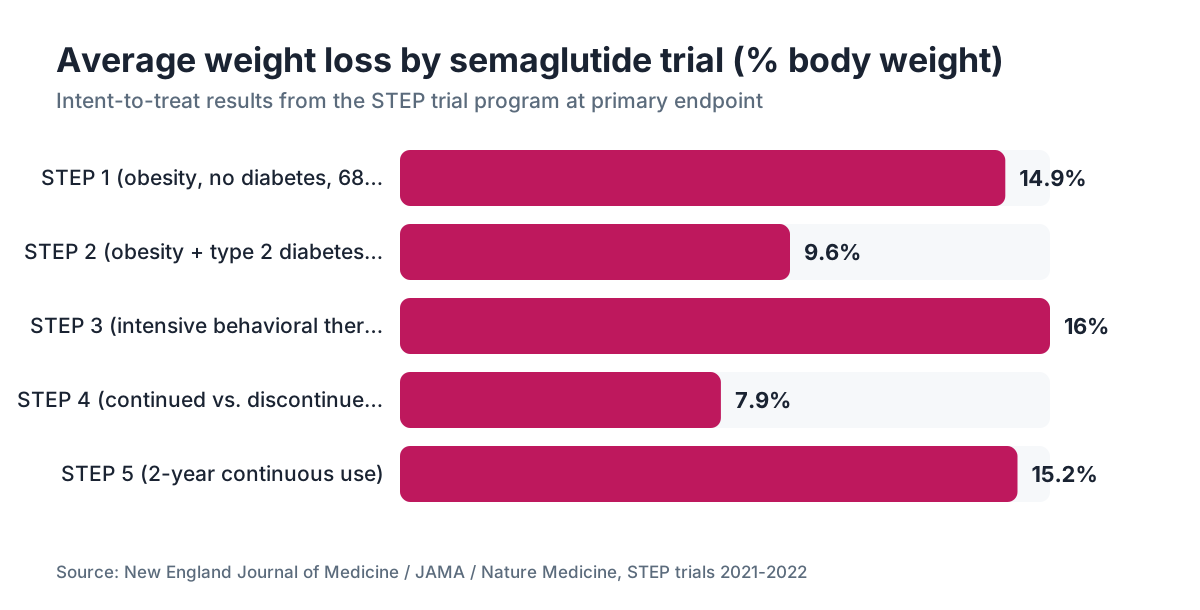
Simple: demand exploded and supply could not keep up. After the STEP clinical trial program showed that semaglutide 2.4 mg weekly produced an average body weight loss of about 15% over 68 weeks in adults without diabetes, prescriptions surged [4]. Novo Nordisk was not ready for that volume. The FDA placed both Wegovy and Ozempic on its drug shortage list, and under federal law, that shortage status opened a legal window for compounding pharmacies to produce copies.
The cost gap made compounded versions even more appealing. Branded Wegovy lists at roughly $1,350 per month before insurance or manufacturer coupons, while compounded versions were typically priced between $150 and $500 per month depending on dose and pharmacy [5]. For women who were not covered by insurance for a weight-loss indication, that difference was the entire decision.
Women in perimenopause and menopause were a particularly large part of this demand. Hormonal shifts around menopause, especially declining estrogen, change where the body stores fat and make it harder to lose weight through diet alone. GLP-1 medications address the appetite and metabolic side of that equation. Pair that with hormone replacement therapy or an estrogen patch, and many women found the combination moved the needle in a way neither approach did alone.
At peak, the FDA estimated hundreds of thousands of patients were receiving compounded semaglutide. The compounding market for this one drug got very large, very fast.
Is compounded semaglutide banned now? What did the FDA actually do?
Not a total ban, but close to one for most patients. Here is what happened.
The FDA removed semaglutide from its official drug shortage list on February 21, 2025 [3]. That removal matters legally because the shortage exception that allowed 503A and 503B pharmacies to compound copies of an FDA-approved drug no longer applies once the shortage ends. After a brief transition period, 503A compounding pharmacies were required to stop producing compounded semaglutide for most patients. The deadline for 503A pharmacies was around May 22, 2025. 503B outsourcing facilities had a slightly longer window, with their phase-out deadline set for approximately March 19, 2025 for new orders, though existing inventory management created some overlap in practice.
There are narrow exceptions. A 503A pharmacy can still compound semaglutide for a specific patient if that patient has a documented clinical need that the commercially available product cannot meet, such as an allergy to an inactive ingredient in the branded product or a medically necessary dose that is not available commercially. These are case-by-case determinations, not a general loophole [3].
Some 503B outsourcing facilities challenged the FDA's removal decision in court. As of mid-2025, litigation was ongoing, and a small number of facilities continued to supply compounded product under court orders or pending legal review. The situation stayed fluid. If you are relying on a compounded source, verify its current legal status directly with the dispensing pharmacy before your next refill.
What the FDA did not do is declare all previously dispensed compounded semaglutide unsafe or require patients to immediately stop. If you are currently on a compounded product and transitioning, the clinical question is simply whether to move to a branded product or to pause treatment, which is a conversation for your prescriber.
Is compounded semaglutide safe compared to branded Wegovy or Ozempic?
Honest answer: it depends on where it was made, and the data is incomplete.
FDA-approved Wegovy and Ozempic went through the full NDA process, including manufacturing audits, stability testing, and the STEP trial series in tens of thousands of patients. The safety and efficacy data is real and well-documented [4]. Compounded versions have none of that institutional backing. The active molecule is theoretically identical, but pharmaceutical equivalence requires more than the right molecule. It requires the right purity, the correct concentration verified by independent testing, sterile preparation for injectable products, and stable storage throughout the supply chain.
The FDA issued multiple safety communications in 2024 and early 2025 citing adverse event reports linked to compounded semaglutide, including dosing errors (some products were formulated at much higher concentrations than branded versions, increasing overdose risk), contamination issues at some facilities, and products that did not contain the amount of drug stated on the label [3]. The agency also warned specifically about semaglutide salt forms, noting they are not bioequivalent to the approved free-base molecule.
That said, many 503B outsourcing facilities with strong CGMP compliance produced compounded semaglutide without known incidents. The problem is that the patient receiving a vial often had no easy way to know which category their pharmacy fell into.
If you used compounded semaglutide and are wondering whether your results or side effects were typical, the honest frame is this: the mechanism was almost certainly the same, but dose accuracy and purity varied more across compounded products than across branded auto-injector pens. If your experience was very different from what trials predict, a dose discrepancy is a plausible explanation.
How does semaglutide work, and what does it actually do in the body?
Semaglutide is a GLP-1 receptor agonist. GLP-1 is a peptide hormone released from the gut after eating. It tells the pancreas to release insulin, tells the liver to slow glucagon secretion, slows how fast the stomach empties, and sends satiety signals to the hypothalamus in the brain [1].
The weight-loss effect comes mostly from appetite suppression and reduced food reward signaling in the brain, more than from slower gastric emptying. Studies using functional MRI have shown that semaglutide changes how the brain responds to food cues, reducing the perceived reward value of high-calorie foods. People on therapeutic doses typically eat less not because they are forcing themselves to, but because the desire to eat is genuinely reduced.
For women specifically, the metabolic picture matters. Estrogen affects GLP-1 receptor expression and fat distribution. Women in perimenopause often see a shift toward visceral (belly) fat storage even when total body weight stays stable. That visceral fat is metabolically active and drives insulin resistance. Semaglutide targets this pattern directly. Some clinicians pair it with estrogen therapy during the menopause transition, since estrogen also improves insulin sensitivity and may reduce the GI side effects some women experience on GLP-1s. See our overview of semaglutide for weight loss for a deeper look at the hormonal angle.
For type 2 diabetes, semaglutide (as Ozempic) lowers HbA1c by roughly 1.5 to 1.8 percentage points at the 1 mg dose in clinical trials. For cardiovascular risk, the SELECT trial (2023) showed a 20% reduction in major adverse cardiovascular events in people with obesity but without diabetes [9].
The drug does not work permanently. When people stop taking it, appetite and food reward signaling return to baseline for most patients, and weight regain typically follows over 12 to 18 months. This is not a personal failing. It reflects that the drug is treating a chronic condition, and like most chronic condition treatments, it requires ongoing use to maintain the effect.
How much does semaglutide cost, compounded vs. branded?
Cost is where the compounded vs. branded conversation gets most pointed.
Branded Wegovy has a list price of approximately $1,349 per month in the United States as of 2025 [5]. Ozempic lists at roughly $935 per month. Both have manufacturer savings cards that can bring the cost to $25 per month for commercially insured patients who qualify, but those cards are not available for Medicare or Medicaid beneficiaries. Without insurance coverage or a savings card, most patients pay the full list price or negotiate cash-pay rates with specialty pharmacies.
Compounded semaglutide, while widely available, ranged from about $150 to $500 per month depending on dose, the specific pharmacy, and whether the prescription came through a telehealth platform or a direct provider. Some telehealth services bundled the medication cost with the consultation fee.
Now that the shortage has ended and most compounded access has closed, the cost comparison matters mainly for people weighing whether to start branded treatment or wait. Insurance coverage for Wegovy (obesity indication) remains inconsistent. The Endocrine Society has called for improved insurance coverage of obesity pharmacotherapy as part of treating it as a chronic disease, not a lifestyle choice [6].
| Option | Approximate monthly cost | FDA approval | Requires shortage | |---|---|---|---| | Wegovy (branded) | $1,349 list; $25 with card | Yes | No | | Ozempic (branded, off-label for weight) | $935 list; $25 with card | Yes (diabetes) | No | | Compounded semaglutide (503A, 2024) | $150-$500 | No | Yes (now ended) | | Compounded semaglutide (503B, 2024) | $200-$500 | No | Yes (now ended) |
The savings cards matter enormously. If you have commercial insurance and your prescriber codes the diagnosis correctly, your out-of-pocket cost with Novo Nordisk's NovoCare program can be as low as $25 per month for Wegovy.
How do you get semaglutide now that most compounding has stopped?
There are still real pathways, and they depend on your insurance, income, and clinical situation.
First option: your primary care doctor or OB-GYN. Many now prescribe Wegovy or Ozempic directly. Bring your BMI (Wegovy is approved for BMI 30 or above, or 27 with a weight-related condition) and a list of any prior weight-management attempts, which insurers often require. Ask specifically about prior authorization and what documentation your doctor's office needs to submit.
Second option: a telehealth obesity medicine or women's health platform. Platforms like WomenRx (which focuses on women's hormones and GLP-1s) connect patients with prescribers who know how to work through insurance and write the clinical notes that support prior authorization. A telehealth visit typically costs $50 to $150 without insurance and can result in a prescription sent to a retail or specialty pharmacy the same day.
Third option: Novo Nordisk's patient assistance program. The NovoCare Patient Assistance Program provides Wegovy at no cost for patients who meet income requirements (generally at or below 400% of the federal poverty level without insurance coverage) [7]. The application is available directly from NovoCare and requires income documentation.
Fourth option: 503B outsourcing facilities that remain legally operational. As of mid-2025, some outsourcing facilities continued to supply compounded semaglutide under ongoing litigation. If a pharmacy or telehealth service is still offering compounded semaglutide, ask them directly: what is their legal basis for continuing to dispense, are they a 503A or 503B facility, and can they provide their FDA registration number. A legitimate operation will answer those questions without hesitation.
Fifth option: switching molecules. Tirzepatide (Zepbound, Mounjaro) is on a separate shortage and compounding pathway. As of this writing, tirzepatide's shortage status was still active for some presentations, making compounded tirzepatide more available than compounded semaglutide. Your prescriber can help you evaluate whether switching makes clinical sense. Our semaglutide vs tirzepatide comparison lays out the tradeoffs.
What should women in perimenopause or menopause know specifically?
The weight gain that happens around perimenopause is not purely caloric. Declining estrogen reduces metabolic rate, changes fat distribution toward the abdomen, and impairs the insulin sensitivity that helps the body use glucose efficiently. These changes can make standard diet and exercise advice feel completely ineffective, because the hormonal environment has genuinely shifted [12].
GLP-1 medications like semaglutide address the appetite and insulin-sensitivity piece of that equation, but they do not replace estrogen. Women who are also candidates for hormone replacement therapy may find that combining the two approaches works better than either alone. Estrogen restores some of the metabolic protection that declines after menopause, potentially making the GLP-1 medication more effective and improving the bone and cardiovascular outcomes that matter over a longer time horizon.
One practical concern: GLP-1s reduce appetite broadly, including for the protein and calcium-rich foods that protect muscle and bone. Women on semaglutide should watch protein intake (most research suggests 1.2 to 1.6 grams per kilogram of body weight per day to preserve lean mass during GLP-1-assisted weight loss) and consider a bone density test if they have other risk factors for osteoporosis, since rapid weight loss is a known risk factor for bone mineral density reduction.
Nausea, the most common GLP-1 side effect, tends to be worse in the first four to eight weeks of treatment. Some women find it correlates with the hormonal phase of their cycle if they are still cycling. Starting at the lowest dose (0.25 mg weekly for Wegovy) and titrating slowly over the recommended 16-week schedule cuts the dropout rate from GI side effects sharply.
If you are on progesterone as part of HRT, there is no known pharmacokinetic interaction with semaglutide, but slower gastric emptying can in theory affect absorption timing of oral medications. Take oral progesterone at a consistent time and note any changes in its effectiveness after starting a GLP-1.
What are the real risks and side effects of semaglutide?
The side effect profile of semaglutide is well-characterized from the STEP trials and post-marketing data. Here is what the evidence actually shows.
Gastrointestinal effects are the most common: nausea (44% of Wegovy patients in STEP 1 vs. 16% on placebo), vomiting, diarrhea, and constipation [4]. Most GI symptoms peak during dose escalation and improve. Severe, persistent nausea that does not respond to dietary changes (smaller portions, low-fat meals, avoiding lying down after eating) is a reason to slow the titration, not to stop the medication permanently.
Pancreatitis is a labeled warning. The absolute risk is low but real. Patients with a personal or family history of pancreatitis or medullary thyroid carcinoma should not use semaglutide. This is listed in the FDA prescribing information for both Ozempic and Wegovy [1].
Muscle loss is an underappreciated concern. In the STEP 1 trial, roughly 40% of total weight lost was lean mass [4]. That is a higher proportion than typically seen with diet and exercise alone. Resistance training and adequate protein intake are not optional add-ons when on a GLP-1. They are the main tools for protecting muscle while losing fat.
Gallbladder disease risk rises with any significant weight loss and semaglutide is no exception. The STEP trials showed a higher rate of cholelithiasis (gallstones) in the semaglutide group.
Suicidality: the FDA reviewed this signal in 2023 after case reports emerged. Its evaluation of the clinical trial data did not find a causal link, but monitoring remains ongoing [1].
What semaglutide does not do: it does not cause hair loss directly. Telogen effluvium (temporary hair shedding) can follow significant rapid weight loss of any cause. It typically resolves within six months as weight stabilizes.
There is no strong evidence that semaglutide causes significant thyroid cancer in humans. The warning on the label is based on rodent studies using doses much higher than human therapeutic doses; human epidemiological data has not confirmed this risk, though long-term surveillance continues [1].
How is compounded semaglutide different from branded Ozempic or Wegovy?
Three meaningful differences exist: regulatory status, manufacturing standards, and formulation.
Regulatory status: Wegovy is FDA-approved for chronic weight management. Ozempic is FDA-approved for type 2 diabetes. Compounded semaglutide has no FDA approval and has not been evaluated in clinical trials. This does not automatically make it less effective, but it means there is no independent verification of any specific compounded product's safety or efficacy.
Manufacturing: Novo Nordisk manufactures branded products under strict CGMP standards with validated stability data, dose accuracy testing, and quality control at scale. Compounding pharmacy standards vary. 503B facilities come closest to CGMP requirements; 503A pharmacies are subject to less intensive oversight and USP standards rather than FDA CGMP.
Formulation: Wegovy comes in a pre-filled auto-injector pen with fixed doses per pen (0.25 mg, 0.5 mg, 1 mg, 1.7 mg, 2.4 mg) [1]. Compounded versions typically come as multi-dose vials requiring the patient to draw and inject the dose themselves. This introduces a real possibility of dosing error, particularly if the concentration of the vial differs from what the patient expects.
The addition of vitamin B12 to some compounded semaglutide products was marketed as a benefit. There is no published clinical evidence that B12 improves semaglutide efficacy or reduces side effects. The FDA has questioned whether adding B12 constitutes a meaningful difference or simply a way to argue the compounded product is not essentially a copy of the approved drug.
See the full semaglutide reference page for a complete breakdown of the molecule's pharmacology and approved uses.
What happens when you stop taking semaglutide?
Weight regain is the rule, not the exception. The STEP 4 trial extension showed that patients who discontinued semaglutide after 68 weeks of treatment regained two-thirds of the weight they had lost over the following 52 weeks, and most metabolic improvements reversed as well [8]. The drug is suppressing appetite and metabolic signals that return to their pre-treatment state when the drug is removed.
This does not mean stopping is impossible or always wrong. Some women reach a stable lower weight and choose to extend the dosing interval or taper off under medical supervision, accepting that some regain is likely. Others have reached the maintenance phase of Wegovy (2.4 mg weekly) and prefer to continue indefinitely as they would any other chronic disease medication.
For women who stop compounded semaglutide because of the 2025 regulatory changes and cannot access branded Wegovy at a manageable cost, the practical advice is: do not panic about immediate regain if you stop abruptly. Appetite changes gradually over the weeks after the last dose. That transition period is the ideal time to reinforce the dietary and behavioral habits built during treatment. A prescriber or registered dietitian who specializes in obesity medicine can help structure that transition.
The STEP 5 trial followed patients for two years of continuous treatment and showed sustained weight loss with a safety profile consistent with shorter trials [11]. Long-term use appears safe for most patients based on current evidence, though we do not yet have ten-year data.
How does telehealth access to semaglutide work for women?
Telehealth changed the GLP-1 landscape for women in a real way. Before direct-to-consumer telehealth platforms expanded, most women had to see an endocrinologist or bariatric specialist to access Wegovy, often waiting months for an appointment. Telehealth compressed that access to a same-day or next-day consult.
Here is how a legitimate telehealth pathway works. You complete a health history intake online. A licensed prescriber in your state (a physician, nurse practitioner, or physician assistant) reviews your information and conducts a synchronous or asynchronous visit. If you meet clinical criteria, they write a prescription and send it to a pharmacy, either a retail chain or a specialty pharmacy that ships to your home.
The key question to ask any telehealth platform right now is whether they are prescribing branded Wegovy or Ozempic, or whether they are prescribing compounded semaglutide. Post-May 2025, a platform prescribing compounded semaglutide without clear documentation of a patient-specific need should be able to explain its legal basis clearly. If the answer is vague, that is a red flag.
WomenRx is one telehealth platform built specifically for women managing hormones and GLP-1s together, which matters if you are also treating perimenopause or menopause symptoms alongside weight. A provider who understands both the hormonal and metabolic picture is meaningfully different from one who only manages weight.
For insurance work, the most useful thing a telehealth prescriber can do is write a thorough prior authorization letter that documents BMI, comorbidities, and prior treatment history. That documentation is what gets Wegovy covered, or does not, and it requires a provider who knows the insurer's specific criteria.
Frequently asked questions
Is compounded semaglutide still legal to get in 2025?
For most patients, no. The FDA removed semaglutide from its drug shortage list in February 2025, ending the legal basis for most compounding. Narrow exceptions exist for patients with documented clinical needs the branded product cannot meet, such as allergies to inactive ingredients. Some 503B facilities continued under litigation as of mid-2025. Verify the current status with any pharmacy still offering it.
Does compounded semaglutide work as well as Wegovy?
The mechanism is identical if the compound contains accurate amounts of pharmaceutical-grade semaglutide. However, compounded products are not subject to the same manufacturing verification as branded drugs, and some products tested by independent labs showed dose inaccuracies. If a compounded product worked well for you without concerning side effects, it likely contained active drug at a reasonable dose. There are no head-to-head trials comparing compounded to branded semaglutide.
What is the difference between Ozempic, Wegovy, and Rybelsus?
All three contain semaglutide but differ in dose and route. Ozempic is an injectable approved for type 2 diabetes (up to 2 mg weekly). Wegovy is an injectable approved for chronic weight management (up to 2.4 mg weekly). Rybelsus is an oral tablet approved for type 2 diabetes (up to 14 mg daily). Wegovy uses the highest dose and has the largest body of weight-loss trial data.
Can semaglutide interact with hormones like estrogen or progesterone?
No documented pharmacokinetic interaction exists between semaglutide and estrogen or progesterone. The main practical concern is that slower gastric emptying from a GLP-1 medication could affect absorption timing of oral medications, including oral estrogen or oral progesterone. Take hormones at a consistent time and mention any changes in symptom control to your prescriber after starting semaglutide.
How long does it take for semaglutide to start working for weight loss?
Appetite reduction often begins within the first week at the starting 0.25 mg dose, but measurable weight loss typically appears by weeks four to six. The full titration schedule for Wegovy takes 16 weeks to reach the 2.4 mg maintenance dose. The STEP 1 trial showed about 15% average weight loss over 68 weeks, with most loss occurring in the first 20 to 30 weeks.
Why do some compounded semaglutide products contain vitamin B12?
Some compounding pharmacies added vitamin B12 to their semaglutide formulations, claiming it reduced side effects or improved energy. There is no published clinical trial evidence supporting this claim for semaglutide. The FDA has questioned whether B12 additions represent a genuine clinical need or simply an attempt to argue that the compounded product differs meaningfully from the branded drug, which would affect its legal status.
What is semaglutide sodium or semaglutide acetate, and is it safe?
Semaglutide sodium and semaglutide acetate are salt forms of the semaglutide molecule. The FDA has stated these are not the same as the approved drug substance, semaglutide free base, and has warned that they should not be compounded for patient use. Products labeled as semaglutide that contain these salt forms may not be bioequivalent to approved products and carry additional uncertainty about efficacy and safety.
Does insurance cover Wegovy for weight loss?
Coverage varies widely. Medicare Part D is prohibited by law from covering weight-loss drugs unless the patient has a qualifying condition such as cardiovascular disease. Commercial insurance coverage depends on your specific plan. Novo Nordisk's savings card can reduce cost to $25 per month for eligible commercially insured patients. Prior authorization almost always requires documented BMI and comorbidities.
Can you lose weight on a lower semaglutide dose than 2.4 mg?
Yes. The STEP 1 trial showed significant weight loss at all doses studied, though the highest dose (2.4 mg) produced the greatest average loss. Some patients achieve their weight goal at 1 mg or 1.7 mg and choose to maintain at that lower dose. There is no clinical requirement to reach 2.4 mg. Dose should be individualized based on response and side effect tolerance.
What happens to muscle mass when you take semaglutide?
In the STEP 1 trial, approximately 39% of total weight lost was lean mass, which is higher than typical diet-and-exercise weight loss. This makes resistance training and adequate protein intake essential during treatment. Most researchers recommend 1.2 to 1.6 grams of protein per kilogram of body weight daily. Emerging trials are studying whether adding a resistance training protocol changes the lean-to-fat ratio of weight lost.
Is tirzepatide a better option than semaglutide now that compounding is restricted?
Tirzepatide (Zepbound) targets both GLP-1 and GIP receptors and showed slightly greater average weight loss in head-to-head comparison data, roughly 20% vs. 15% in respective trials. As of mid-2025, compounded tirzepatide remained more accessible because tirzepatide's shortage status was still active for some presentations. Whether it is a better option depends on your metabolic profile, side effect history, and cost. See the full comparison at semaglutide vs tirzepatide.
How do I know if a compounding pharmacy is legitimate?
Verify that the pharmacy holds a state pharmacy license (searchable through your state board of pharmacy) and check whether it is registered with the FDA as a 503B outsourcing facility (searchable at FDA.gov). The PCAB accreditation from the Pharmacy Compounding Accreditation Board is a useful additional credential for 503A pharmacies. Ask for their CGMP compliance documentation and whether they conduct third-party potency and sterility testing.
Can semaglutide help with belly fat specifically during menopause?
Yes. Visceral fat, the metabolically active fat stored around abdominal organs that increases after menopause, is particularly responsive to GLP-1 medications. Semaglutide reduces total body fat with a preferential reduction in visceral fat, according to body composition substudies in the STEP trials. Estrogen therapy addresses the hormonal driver of that fat redistribution, making the combination potentially more effective than either alone for menopausal women.
Sources
- FDA, Wegovy (semaglutide) Prescribing Information
- FDA, Compounding and the FDA (503A and 503B outsourcing facilities)
- FDA, Medications Containing Semaglutide (marketed for weight loss)
- Wilding JPH et al., STEP 1 Trial, New England Journal of Medicine, 2021
- Novo Nordisk, Wegovy List Price and NovoCare Savings Program
- Endocrine Society, Obesity Pharmacotherapy Position Statement
- Novo Nordisk, NovoCare Patient Assistance Program
- Rubino DM et al., STEP 4 Trial, JAMA, 2021
- Lincoff AM et al., SELECT Trial, New England Journal of Medicine, 2023
- Davies M et al., STEP 5 Trial, Nature Medicine, 2021
- North American Menopause Society (NAMS), Menopause and Metabolic Health Position Statement