Common symptoms of perimenopause: what's normal and what to do
TL;DR: Perimenopause usually starts in a woman's mid-to-late 40s, sometimes in the late 30s. The most common symptoms are irregular periods, hot flashes, night sweats, broken sleep, mood swings, vaginal dryness, and brain fog. Fluctuating estrogen and progesterone drive most of them. They last anywhere from a few months to more than a decade, and most respond well to treatment.
What exactly is perimenopause and when does it start?
Perimenopause is the stretch of time before menopause, the point when your periods have stopped for 12 straight months. Your ovaries are winding down estrogen and progesterone production, but not in a tidy downward line. Levels spike and crash without warning. That volatility, more than low estrogen itself, is what drives most of the early symptoms.
The average age of onset is around 47. The range is wide. The Study of Women's Health Across the Nation (SWAN), one of the largest long-running studies of midlife women in the United States, found the menopausal transition usually begins between ages 45 and 55, with some women noticing changes in their late 30s [1]. If you want to know where you fall, read our piece on perimenopause age.
The whole transition lasts an average of 4 to 8 years, sometimes far longer. The North American Menopause Society (NAMS) reports that hot flashes and night sweats last a median of 7.4 years in women who first get them before their final period [2]. That's a long time to just "wait it out."
Here's the part that trips people up. Sleep trouble, mood shifts, and memory lapses often show up before periods get noticeably irregular. So women and their doctors miss the connection to hormones entirely.
What are the most common perimenopause symptoms?
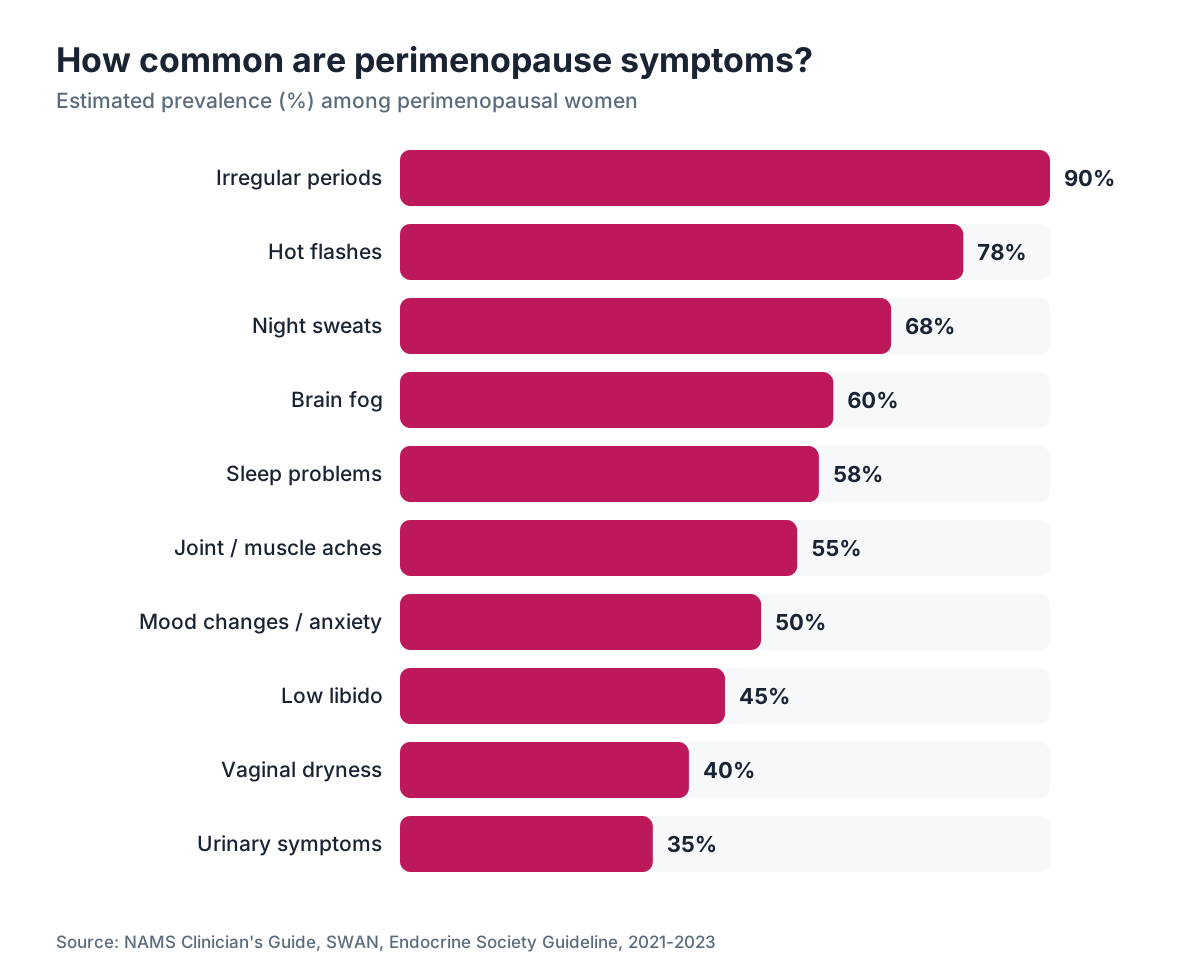
The list is long. Below is what the evidence actually says about how often each one shows up, ordered from most to least common.
| Symptom | Estimated prevalence in perimenopause | Notes | |---|---|---| | Irregular periods | ~90% | Often the first noticeable sign | | Hot flashes | 75 to 80% | Peak frequency near the final period | | Night sweats | 60 to 75% | Often more disruptive than daytime flashes | | Sleep problems | 40 to 60% | Can precede hot flashes by years | | Mood changes (anxiety, irritability) | 40 to 60% | Highest risk with prior PMS or depression | | Vaginal dryness | 27 to 55% | Underreported; worsens after menopause | | Brain fog / memory lapses | ~60% | Usually temporary; peaks near final period | | Low libido | 40 to 50% | Hormonal, relational, and psychological | | Joint and muscle aches | 50 to 60% | Estrogen is anti-inflammatory; loss drives pain | | Weight changes | ~70% | Average gain 1.5 lbs/year during transition [3] | | Headaches or migraines | 30 to 40% | Worse with a prior migraine history | | Heart palpitations | 20 to 30% | Usually benign but needs a cardiac check | | Urinary symptoms (urgency, leakage) | 25 to 45% | Part of genitourinary syndrome of menopause | | Hair thinning | 30 to 40% | Driven by the androgen-to-estrogen shift | | Skin changes (dryness, thinning) | Common | Collagen loss speeds up after estrogen drops |
Data compiled from NAMS, SWAN, and the Endocrine Society [1][2][4].
The symptoms that actually get women into a doctor's office are hot flashes, broken sleep, and mood changes. Vaginal and urinary symptoms are almost as common, but they get reported far less often, because many women don't realize they're hormonal or feel too awkward to mention them.
Why do hot flashes and night sweats happen?
A hot flash is a sudden wave of intense heat, usually across the chest, neck, and face, often followed by sweating and a chill. Most last 1 to 5 minutes. Night sweats are the same thing happening while you sleep.
The cause sits in the hypothalamus, the brain region that runs your internal thermostat. Estrogen withdrawal seems to narrow the thermoneutral zone, the temperature band in which your body doesn't need to sweat or shiver to hold its core temperature steady. When estrogen swings, that thermostat gets touchy [2]. A tiny rise in core temperature sets off a chain that dilates skin blood vessels and switches on sweating.
About 75 to 80 percent of women get hot flashes at some point during the transition, which makes them the most recognized sign of perimenopause [2]. For roughly 25 percent, they're bad enough to disrupt daily life. SWAN found hot flashes peaked in frequency and severity in the two years around the final period, and 15 to 20 percent of women still had them 10 or more years after menopause [1].
Estrogen therapy is the most effective treatment for hot flashes and night sweats. The FDA-approved nonhormonal option fezolinetant (Veozah) targets the neurokinin B pathway in the hypothalamus and cut moderate-to-severe hot flash frequency by about 45 percent versus placebo in its trials [5]. Low-dose paroxetine (Brisdelle) is the only SSRI with FDA approval specifically for menopausal hot flashes, though several other SSRIs and SNRIs get used off-label with decent evidence.
How do periods change during perimenopause?
Irregular periods are usually the first solid sign perimenopause has arrived. Cycles may shorten (under 21 days apart), lengthen (over 35 days), or turn unpredictable month to month. You might skip a couple of months, then have two periods in quick succession.
Flow changes too. Some women bleed lighter, others much heavier, sometimes with clots. Heavy bleeding deserves a doctor's attention. Erratic cycles are normal, but very heavy or drawn-out bleeding can point to fibroids, polyps, or, rarely, endometrial hyperplasia. The American College of Obstetricians and Gynecologists defines heavy menstrual bleeding as soaking through a pad or tampon every hour for several hours in a row [6].
Ovulation still happens in early perimenopause, just on no schedule. Read that again: you can still get pregnant. Contraception is recommended until you've had 12 straight months with no period, which is the clinical definition of menopause [6].
The STRAW+10 staging system, the standard framework clinicians use, splits the transition into early and late stages based on cycle variability. Early perimenopause means cycles that vary by 7 or more days. Late perimenopause means gaps of 60 days or longer between periods [4].
What causes perimenopause brain fog and memory problems?
Brain fog is one of the harder symptoms to sit with, because it's tougher to explain to a boss or partner than a hot flash. Women describe losing words mid-sentence, walking into a room with no idea why, needing far longer to process information, or just feeling mentally muffled.
Estrogen receptors sit all over the brain, including the hippocampus, which handles memory. When estrogen swings during perimenopause, verbal memory and processing speed can genuinely dip. A 2012 study in the journal Menopause found women in late perimenopause showed measurable declines in learning and memory compared with their own premenopausal baseline, and that these changes partly reversed once the transition finished [7].
Poor sleep makes all of it worse. If night sweats wake you three times a night, no amount of omega-3s or brain-training apps will offset the cognitive tax. Treat the underlying sleep disruption, which is often tied to hot flashes, and a big chunk of the fog usually lifts.
The research on hormone therapy and cognition is genuinely mixed and depends heavily on age. The current read is that estrogen may protect cognition, or at least not harm it, when started during the perimenopausal window (the so-called critical window hypothesis), but the picture gets murky or possibly harmful when it's started much later [7]. The science here is still moving.
Why does perimenopause cause mood changes and anxiety?
Mood symptoms are among the most common signs of perimenopause and the ones most often written off as "just stress." Estrogen tunes serotonin and norepinephrine signaling. When estrogen swings, mood regulation swings with it.
Women with a history of premenstrual dysphoric disorder (PMDD) or postpartum depression face a higher risk of perimenopausal mood changes, likely because their brains react more sharply to hormonal flux [4]. Plenty of women who sailed through their earlier reproductive years still hit real anxiety or low mood now.
Anxiety tends to arrive before depression, and before periods look visibly irregular. It can show up as a low hum of unease that wasn't there before, a shorter fuse, or panic attacks in women who never had one. Irritability is common and unsettling, because women often feel like strangers to themselves.
This isn't in your head. It's in your hormones. Still, rule out thyroid dysfunction, which mimics perimenopausal mood and energy symptoms almost exactly. A TSH test belongs in any workup.
What happens to sleep during perimenopause?
Sleep takes a hit. Up to 60 percent of perimenopausal women report significant sleep problems, and many never link them to hormones [2]. Night sweats are the obvious offender, but women without any vasomotor symptoms also sleep worse during perimenopause, which suggests hormones change sleep architecture directly.
Progesterone, which drops in early perimenopause, has a sedative effect through its conversion to allopregnanolone, a GABA-A receptor modulator. As progesterone falls, many women notice lighter sleep, more waking, and less time in restorative slow-wave sleep. Some researchers think that progesterone decline explains the "I slept but I woke up wrecked" complaint that shows up months or years before hot flashes.
Chronic sleep loss ripples outward. It worsens mood, amplifies pain, impairs glucose metabolism, and makes weight harder to manage. A 2023 SWAN analysis found insufficient sleep in midlife women was independently tied to higher fasting glucose and more visceral fat [3].
If your sleep problems clearly track with night sweats, treating those often improves sleep a lot. For insomnia that has nothing to do with hot flashes, cognitive behavioral therapy for insomnia (CBT-I) is the first-line recommendation from major sleep organizations.
What is genitourinary syndrome of menopause and why does it matter?
Genitourinary syndrome of menopause (GSM) is the medical term for vaginal dryness, thinning, and inflammation, plus bladder symptoms like urgency and recurrent urinary tract infections, all caused by falling estrogen. The old term was vaginal atrophy, which was accurate but so off-putting that women and clinicians alike avoided the conversation.
Unlike hot flashes, which tend to ease over time, GSM gets worse without treatment. By postmenopause, prevalence estimates for GSM symptoms run as high as 40 to 60 percent [2]. Sexual discomfort is the most common complaint: tissues thin, lubrication drops, and intercourse can turn painful, a condition called dyspareunia.
The good news is that local (vaginal) estrogen works well, uses tiny doses, barely enters the bloodstream, and is safe for most women, including many breast cancer survivors depending on the case [4]. The FDA has approved several vaginal estrogen products: creams, rings, and tablets. DHEA (prasterone/Intrarosa) and ospemifene (Osphena), a selective estrogen receptor modulator taken by mouth, are nonhormonal alternatives with good evidence.
Urinary urgency and repeat UTIs during this stage usually trace back to the same source: estrogen-dependent changes in the urethral and bladder lining. Local estrogen can cut UTI recurrence in postmenopausal women by a meaningful margin, and plenty of urologists and gynecologists still underuse it.
Does perimenopause cause weight gain?
Yes, and it isn't purely about eating more or moving less, though those still count. The transition brings a shift in body composition: more visceral (belly) fat, less lean muscle, and a lower resting metabolic rate. SWAN data show women gain an average of about 1.5 pounds a year during the transition, with the rate speeding up around the final period [3].
Estrogen decides where fat lands. Before menopause, fat favors the hips and thighs (subcutaneous fat). After estrogen falls, it moves to the abdomen (visceral fat), which carries higher metabolic and cardiovascular risk than the subcutaneous kind.
Managing weight in perimenopause takes a different playbook than it did in your 30s. Resistance training matters more, because you're losing muscle. Protein targets go up. Cardio alone tends to fall short.
Some women in perimenopause have turned to GLP-1 receptor agonists like semaglutide or tirzepatide for weight management, especially when lifestyle changes haven't been enough. The evidence in women is substantial: the STEP 1 trial showed a mean weight reduction of 14.9 percent with semaglutide 2.4 mg versus 2.4 percent with placebo [8]. If you're weighing that route, see our pieces on semaglutide for weight loss and semaglutide vs tirzepatide. Platforms like WomenRx can connect you with clinicians who work at this exact intersection of hormones and metabolic health.
Hormone therapy may modestly reduce belly fat and help preserve lean mass through the transition. It isn't a weight loss drug, but it can blunt some of the metabolic headwinds that come with estrogen loss.
What perimenopause symptoms are most often missed or misdiagnosed?
Several symptoms that are genuinely common in perimenopause get sent to the wrong diagnosis.
Heart palpitations are a good example. Estrogen helps stabilize cardiac conduction. When it swings, some women feel palpitations, a racing heart, or skipped beats. These are usually benign but should always be checked to rule out arrhythmias. A woman who shows up at a cardiologist with new palpitations in her late 40s sometimes leaves with "normal" results and no one connecting it to perimenopause.
Joint aches are another one that gets overlooked. Estrogen is anti-inflammatory, and its decline raises systemic inflammation and worsens cartilage health. Studies estimate 50 to 60 percent of perimenopausal women report new or worse musculoskeletal pain [4]. It usually gets blamed on aging or arthritis.
Dry eyes, tinnitus (ringing in the ears), and new or worsening migraines all plausibly link to estrogen changes, though the evidence is stronger for some than others. Migraines that shift pattern around the cycle during perimenopause are well documented.
Then there's bone loss. Women lose bone density fast in the two to three years around the final period, and it's invisible until a fracture happens or a bone density test catches it. The Bone Health and Osteoporosis Foundation recommends a baseline DEXA scan for any woman at menopause with risk factors, and for all women by age 65 regardless of risk [9].
What treatments actually work for perimenopause symptoms?
Treatment depends on which symptoms bother you most and what your health history looks like. No single protocol fits every woman.
Hormone therapy (HT), meaning estrogen alone for women without a uterus, or estrogen plus progesterone for women with one, is the most effective treatment for hot flashes, night sweats, broken sleep, and GSM. It also prevents bone loss. The Women's Health Initiative (WHI) set off years of fear about HT starting in 2002, but later analysis has made clear the risks were overstated for younger, recently menopausal women [4]. For healthy women under 60 or within 10 years of menopause, the current consensus from NAMS, the Endocrine Society, and the British Menopause Society is that the benefits of HT generally outweigh the risks for symptom relief. More detail lives in our piece on hormone replacement therapy.
Nonhormonal options with real evidence:
- Fezolinetant (Veozah): FDA-approved for moderate-to-severe hot flashes, targets neurokinin B. Cuts frequency by roughly 45 percent [5].
- Low-dose paroxetine 7.5 mg (Brisdelle): FDA-approved for hot flashes in women who can't or won't use hormones.
- Gabapentin: off-label, moderate effect on hot flashes across several trials.
- Ospemifene (Osphena): FDA-approved for GSM, specifically painful intercourse.
- CBT-I: the standard for insomnia, works whether or not hot flashes are the cause.
Lifestyle changes have a real but modest effect. Regular aerobic exercise eases hot flash severity in some studies. Layering clothes, keeping rooms cool, and cutting triggers (alcohol, caffeine, spicy food) reduce frequency and discomfort. None of these replace treatment when symptoms are moderate to severe, but they help at the margins.
For women with real mood symptoms, SSRIs and SNRIs have their own evidence for perimenopausal depression and anxiety, and some (like venlafaxine) reduce hot flashes as a bonus.
An estrogen patch is often chosen over oral estrogen because it skips first-pass liver metabolism, which lowers clotting risk. That matters especially for women with migraine with aura.
When should you see a doctor about perimenopause symptoms?
Many women put up with symptoms for years before asking for help, partly because they're told it's normal and partly because they aren't sure where to start. Here's a rough guide.
See a clinician promptly if you have very heavy bleeding (soaking a pad or tampon per hour for several hours), any bleeding after 12 straight months without a period, severe depression or suicidal thoughts, chest pain with palpitations, or new neurological symptoms.
See a clinician when symptoms are wrecking your quality of life. That line is personal. But if you're missing work, avoiding intimacy, unable to sleep, or feeling unlike yourself most days, that's reason enough.
Start with your primary care physician or gynecologist. Better yet, find someone with specific training in menopause medicine. NAMS keeps a directory of certified menopause practitioners. At the appointment, ask about hormone levels (FSH, estradiol), thyroid function (TSH), and your symptom timeline.
FSH above 40 mIU/mL on two tests at least a month apart is one marker of ovarian insufficiency, but FSH bounces around wildly in perimenopause, so a normal result doesn't rule anything out. Your symptoms plus your menstrual history often tell more than a single lab value [4].
If you'd rather use telehealth, or you can't easily reach a menopause specialist nearby, platforms like WomenRx offer clinician consultations built around perimenopause, hormones, and related metabolic concerns, and can order labs and prescriptions when appropriate.
Frequently asked questions
How do I know if I'm in perimenopause or just stressed?
The clearest tell is a change in your menstrual cycle, especially periods that vary by 7 or more days from your usual length. Stress can disrupt cycles too, but perimenopausal changes tend to be persistent and progressive. If you're in your mid-to-late 40s and cycles are shifting alongside poor sleep, mood swings, or hot flashes, perimenopause is the likelier explanation. A TSH test and FSH level help rule out thyroid issues and ovarian changes.
Can perimenopause symptoms start in your 30s?
Yes. Some women notice changes in their late 30s, often shortened cycles or worsening PMS. It isn't rare: SWAN data suggest roughly 10 percent of women begin the transition before age 45. If symptoms start before 40, that's classified as premature ovarian insufficiency (POI) and needs separate evaluation, since the hormonal and long-term health implications differ from typical perimenopause.
How long do perimenopause symptoms last?
The transition averages 4 to 8 years, but symptoms don't all vanish once periods stop. NAMS data show hot flashes last a median of 7.4 years in women who develop them before their final period. Genitourinary symptoms tend to worsen over time without treatment rather than fade. Sleep and mood symptoms often ease after the transition, but the timeline varies a lot from woman to woman.
What's the difference between perimenopause and menopause?
Menopause is a single moment: 12 straight months without a period. Everything before that, while cycles are changing but haven't stopped, is perimenopause. Everything after is postmenopause. Perimenopause can run for years. The symptoms most people file under "menopause" (hot flashes, broken sleep, mood swings) usually begin in perimenopause and can carry on for years into postmenopause.
Is it normal to have anxiety during perimenopause if I've never had it before?
Very normal. New-onset anxiety is one of the most common perimenopausal symptoms, and many women are blindsided by it precisely because they have no prior history. Estrogen tunes serotonin and GABA signaling. When levels swing unpredictably, the brain's stress-response system gets less stable. This isn't a psychological failing. It's a physiological shift. Options include hormone therapy, SSRIs/SNRIs, and CBT, depending on severity and preference.
Does hormone therapy help with all perimenopause symptoms?
It helps with most of the estrogen-driven ones. Hot flashes, night sweats, broken sleep, vaginal dryness, and bone loss all respond well. Joint aches and brain fog often improve. Mood symptoms improve in many women but may need extra support if depression or anxiety is significant. GSM often still needs local vaginal estrogen even when systemic hormone therapy is on board. No single treatment covers every symptom.
Can perimenopause cause weight gain even if I haven't changed my diet or exercise?
Yes. The estrogen shift changes where fat is stored and lowers resting metabolic rate. SWAN data show women gain an average of about 1.5 pounds a year during the transition, independent of lifestyle changes. Muscle mass also declines as estrogen and progesterone fall, further cutting baseline calorie burn. This isn't willpower; it's a metabolic shift. Resistance training and more protein help, but many women need a more tailored plan.
What lab tests should I ask for if I think I'm in perimenopause?
A reasonable starting panel: FSH (follicle-stimulating hormone), estradiol, TSH (thyroid), and a complete metabolic panel. FSH above 40 mIU/mL on two separate tests suggests diminished ovarian reserve, though FSH fluctuates daily in perimenopause, so one normal result doesn't rule it out. Thyroid testing matters because hypothyroidism mimics perimenopause almost perfectly. Your clinician may also check fasting glucose, lipids, and vitamin D, given how estrogen affects metabolic health.
Is vaginal dryness a normal part of perimenopause?
It's common, showing up in 27 to 55 percent of perimenopausal women and rising after menopause, but you don't have to accept it. Vaginal and urinary symptoms (grouped under genitourinary syndrome of menopause, or GSM) respond well to local vaginal estrogen, DHEA suppositories, or ospemifene. Over-the-counter vaginal moisturizers used regularly help, but they usually don't fully reverse the tissue changes the way prescription options do.
Can perimenopause cause heart palpitations?
Yes. Palpitations affect 20 to 30 percent of perimenopausal women and are usually benign, tied to the same estrogen-driven thermoregulatory instability behind hot flashes. New palpitations still need an ECG to rule out cardiac arrhythmias. If heart tests come back normal and you're in the perimenopausal age range, hormones are the likely cause. They often improve with hormone therapy or other hot flash treatments.
Do I still need contraception during perimenopause?
Yes. Ovulation is erratic but still happens during perimenopause, which means pregnancy is possible. Contraception is recommended until you've gone 12 straight months without a period, the clinical definition of menopause. After that, you no longer need it. Some hormonal contraceptives (particularly low-dose combined pills) also relieve symptoms during the transition while providing birth control, a practical two-for-one for eligible women.
What is the single most disruptive perimenopause symptom for most women?
Sleep disruption consistently ranks near the top in surveys of perimenopausal women, often above hot flashes, because of its knock-on effects on mood, cognition, and daily function. Night sweats make it worse, but many women report poor sleep even without any vasomotor symptoms, likely from progesterone decline. Treating the root hormonal cause tends to have the widest positive ripple across other symptoms.
Are there natural or nonhormonal options for perimenopause symptoms?
Some nonhormonal options have reasonable evidence. Fezolinetant (Veozah) is FDA-approved and nonhormonal, cutting hot flash frequency by about 45 percent in trials. Low-dose paroxetine, venlafaxine, and gabapentin reduce hot flashes off-label or (for paroxetine) with FDA approval. CBT-I improves sleep regardless of cause. Evidence for supplements like black cohosh is mixed and weak; the North American Menopause Society does not recommend them as first-line options.
How does perimenopause affect bone health?
Estrogen actively holds back bone resorption. As estrogen falls in perimenopause, bone turnover speeds up. Women can lose 1 to 3 percent of bone density a year in the years around the final period. That's the fastest bone loss of a woman's life. Hormone therapy prevents it effectively. Adequate calcium (1,200 mg/day from food plus supplements), vitamin D (800 to 1,000 IU/day), and weight-bearing exercise also matter. A bone density test at menopause sets your baseline.
Sources
- SWAN (Study of Women's Health Across the Nation), University of Michigan / NIH
- North American Menopause Society (NAMS), Menopause Practice: A Clinician's Guide
- Greendale GA et al., Journal of Clinical Endocrinology and Metabolism, SWAN weight data
- Endocrine Society, Clinical Practice Guideline: Treatment of Symptoms of the Menopause
- FDA Drug Approval: Fezolinetant (Veozah), FDA.gov
- American College of Obstetricians and Gynecologists (ACOG), Practice Bulletin on Abnormal Uterine Bleeding
- Greendale GA et al., Menopause (journal), 2012: Verbal memory during the menopausal transition
- Wilding JPH et al., STEP 1 Trial, New England Journal of Medicine, 2021
- Bone Health and Osteoporosis Foundation, Clinician's Guide to Prevention and Treatment of Osteoporosis
- NIH National Institute on Aging, Menopause overview
- FDA, Brisdelle (paroxetine mesylate 7.5 mg) Prescribing Information