Cheapest semaglutide without insurance: every real option ranked
TL;DR: Brand-name semaglutide (Ozempic, Wegovy) costs $900 to $1,400 per month without insurance. Compounded semaglutide from a licensed 503A or 503B pharmacy runs $100 to $500 per month, the cheapest legal option for most women right now. Novo Nordisk's patient assistance program can bring brand cost to $0 if you qualify on income. Here is how every option ranks.
What does semaglutide actually cost without insurance?
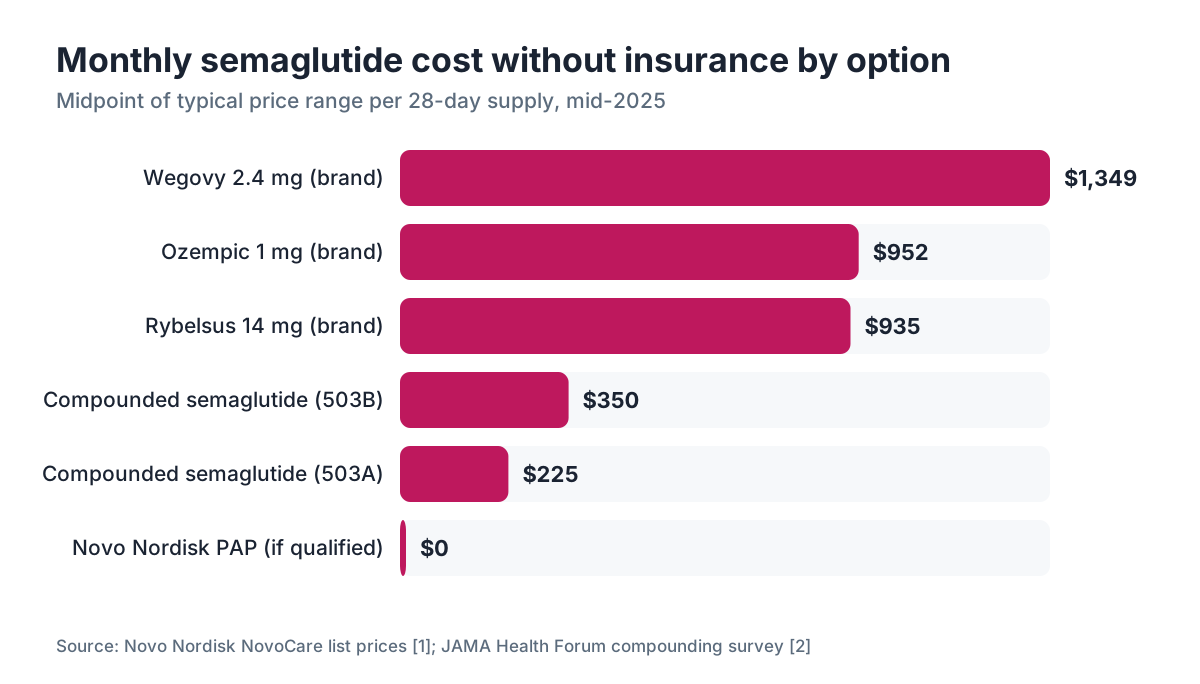
The honest answer depends on which product you mean. Ozempic (the 0.5 mg, 1 mg, and 2 mg injectable approved for type 2 diabetes) lists around $935 to $969 per month for a single pen [1]. Wegovy (the 2.4 mg dose approved for weight management) lists at roughly $1,349 per month [1]. Rybelsus, the oral tablet, sits around $935 per month [1]. None of those include a dispensing fee or shipping.
Those are list prices, not what anyone necessarily pays. Cash prices at a GoodRx-negotiated pharmacy run a little lower, often $850 to $950 for Ozempic and $1,100 to $1,250 for Wegovy depending on the chain and your zip code. Still steep.
Compounded semaglutide from a licensed pharmacy typically costs $100 to $500 per month depending on dose and pharmacy [2]. That gap explains why compounding took off so fast.
One more number worth knowing. The STEP 1 trial found participants lost an average of 14.9% of body weight over 68 weeks at the 2.4 mg dose of semaglutide [3]. The drug works. Affordability is the problem.
How does compounded semaglutide compare to brand-name on price?
Compounded semaglutide is the single biggest cost lever for most uninsured women. A licensed compounding pharmacy (either a 503A pharmacy filling individual prescriptions or a 503B outsourcing facility making batches) produces semaglutide for a fraction of brand cost because it sources the active ingredient directly and carries no marketing overhead.
Prices vary a lot. Here is a realistic range based on market data as of mid-2025 [2]:
| Option | Typical monthly cost | Source | |---|---|---| | Wegovy (brand, 2.4 mg) | $1,200 to $1,349 | Novo Nordisk list price | | Ozempic (brand, 1 mg) | $900 to $969 | Novo Nordisk list price | | Compounded semaglutide (503A pharmacy) | $100 to $350 | Market survey data | | Compounded semaglutide (503B facility) | $200 to $500 | Market survey data | | Rybelsus oral tablet | $850 to $935 | Novo Nordisk list price |
The FDA confirmed in May 2023, and maintained through several updates, that semaglutide was on the drug shortage list, which gave licensed compounders legal authority to produce it [4]. The FDA removed Wegovy from shortage status in March 2025 and told 503B outsourcing facilities they could no longer compound copies of it. 503A pharmacies serving individual patients have a slightly longer runway under state law. The landscape is shifting fast.
Read our compounded semaglutide guide before you order anything.
One thing to know going in. Compounded semaglutide is not FDA-approved, and the compounding pharmacy is not FDA-approved to make it as a generic equivalent. What oversight does apply focuses on the pharmacy's practices, not the product itself. That is a real tradeoff, and you should own it.
What patient assistance and savings programs actually exist for semaglutide?
Novo Nordisk runs two programs worth knowing about.
The Novo Nordisk Patient Assistance Program (PAP) can provide Wegovy or Ozempic at no cost to patients who meet income requirements. You generally need a household income at or below 400% of the federal poverty level and no insurance coverage for the drug [5]. The application takes a few weeks and requires your prescriber to submit paperwork. It is real money. Zero dollars a month if you qualify.
The Wegovy Savings Card, aimed at commercially insured patients, usually does nothing if you have no insurance at all. Its terms have changed repeatedly. As of early 2025, eligible commercially insured patients can pay as little as $0 for a 28-day supply under certain conditions, but the fine print excludes Medicare, Medicaid, and uninsured patients in most cases [5].
Mark Cuban's Cost Plus Drugs has looked at semaglutide pricing but as of mid-2025 does not carry brand semaglutide. That may change.
Not every program stays open. Verify directly with Novo Nordisk's NovoCare line (1-844-668-6463), because terms change quarterly.
Is telehealth the cheapest way to get a semaglutide prescription?
Telehealth can meaningfully lower your total cost because you skip the in-person visit fee (often $150 to $300 at an endocrinology or obesity medicine practice). Many telehealth platforms also partner with 503A compounding pharmacies and pass the lower drug price straight to you.
The real math looks like this: a membership or subscription fee (often $25 to $99 per month), plus the drug cost. If the platform provides compounded semaglutide at $150 to $250 per month and charges $50 a month for the visit layer, your all-in cost runs $200 to $350. Still a fraction of brand.
The catch is quality variation. Some platforms are legitimate medical practices with licensed physicians or NPs doing real clinical oversight. Others are order-processing operations with barely any review. The FDA has flagged this. Look for a platform that runs a real intake, reviews labs, and gives you a licensed provider in your state who can answer questions between visits.
For women in perimenopause or menopause, a platform that handles both GLP-1 prescribing and hormone replacement therapy in one place often makes more financial and clinical sense, because midlife weight gain involves both hormones and appetite regulation. WomenRx is one example of a practice built around that combined approach.
See the semaglutide for weight loss page for who is a good candidate.
What's the cheapest legal way to get semaglutide right now, step by step?
Here is the actual decision tree, ranked from lowest cost to highest.
Step 1: Check Novo Nordisk's PAP first. If you qualify on income (household income at or below 400% FPL, no insurance coverage for the drug), this is $0 and should be your first call [5].
Step 2: If you don't qualify for PAP, check whether your state has Medicaid expansion and whether your income puts you in range. Some states cover Ozempic for diabetes under Medicaid, though weight-loss coverage of Wegovy is rarer.
Step 3: Check GoodRx, Blink Health, and RxSaver for brand-name Ozempic at your local pharmacy. For diabetes-indicated prescribing, this is sometimes a little under $800. Not cheap, but it is the brand drug.
Step 4: Consider a 503A compounding pharmacy through a telehealth platform or your own physician. This is typically the cheapest ongoing option for most uninsured women right now, running $100 to $350 per month depending on dose [2].
Step 5: If you're weighing semaglutide against tirzepatide on cost and results, read our semaglutide vs tirzepatide comparison. Compounded tirzepatide is similarly priced and has stronger weight-loss trial data in some analyses.
What I would actually do: call NovoCare first (10 minutes), confirm you don't qualify for PAP, then find a telehealth platform that prescribes compounded semaglutide from a licensed 503A pharmacy with real physician oversight. That combination gets most women to $150 to $300 per month with proper supervision.
Can you buy semaglutide online without a prescription?
No. Semaglutide is a prescription drug in the United States. Any website selling it without requiring a valid prescription from a licensed US prescriber is operating illegally, and the product almost certainly is not what it claims to be.
The FDA and FTC have both warned about counterfeit semaglutide sold online [6]. In November 2023, the FDA warned consumers about counterfeit Ozempic pens found in US supply chains. Those pens held different active ingredients, wrong doses, or no drug at all.
There is a specific scam to know. Sellers market "semaglutide peptide" for "research use only" at very low prices. That is not pharmaceutical-grade semaglutide, it is not dosed for human use, and the FDA does not authorize this as a legal pathway for patients [6].
If a price seems impossibly low (we are talking $20 to $50 a month), the product is fake, mislabeled, or not what you think it is. Compounded semaglutide from a licensed 503A pharmacy carries real overhead and real cost. Anything under $80 to $100 a month should make you ask hard questions about sourcing.
How does semaglutide cost change by dose?
Semaglutide starts low and titrates up over weeks to reduce nausea. Your cost can change as the dose climbs, though this matters more for brand-name products than for most compounded prescriptions (which often charge per month regardless of dose tier).
For Wegovy, Novo Nordisk structures pens by dose strength. Titration starts at 0.25 mg weekly and steps to 0.5 mg, 1 mg, 1.7 mg, and finally 2.4 mg, each typically held for 4 weeks [7]. In early titration you pay the same monthly price for a lower-dose pen. Novo Nordisk prices each strength similarly, so there is no meaningful discount for being on a lower dose.
For compounded semaglutide, many pharmacies charge a flat monthly fee across a range of doses. Some charge by vial concentration. Ask the pharmacy directly how pricing changes if your prescriber raises your dose, because some patients need 1 mg or 2 mg weekly long-term and the cost can step up.
Also worth knowing: the 0.5 mg and 1 mg Ozempic pens are sometimes easier to find in stock than the 2.4 mg Wegovy. During shortage periods some physicians prescribe Ozempic off-label for weight loss, which can affect your access and cost.
Does your BMI or diagnosis affect what you can access?
Yes, and it matters for both brand-name and telehealth access.
Wegovy is FDA-approved for adults with a BMI of 30 or higher, or 27 or higher with at least one weight-related condition (high blood pressure, type 2 diabetes, high cholesterol) [7]. Ozempic is approved only for type 2 diabetes, not weight loss, though physicians can prescribe it off-label.
Telehealth platforms generally follow these thresholds because they prescribe legally and need to document medical necessity. If your BMI is below 27, you will likely have a harder time getting a prescription through any channel.
For women in perimenopause or menopause, body composition shifts are real and documented. Fat redistribution toward the abdomen is hormonally driven and can push someone from a BMI of 26 to 29 in a few years without major lifestyle changes [8]. That is clinically relevant to prescribing, and a good provider will weigh it alongside estrogen status.
If you're also noticing symptoms that suggest hormone shifts, reading when does menopause start can help you and your provider build a full picture before deciding whether GLP-1s, hormones, or both make sense.
What are the hidden costs of semaglutide most people miss?
The monthly drug price is the headline number. It is not the whole bill.
Lab work. A responsible prescriber wants baseline metabolic labs before starting and monitoring labs periodically. If you're uninsured, a basic metabolic panel plus HbA1c and lipids runs $50 to $200 depending on the lab. Direct-to-consumer options through Quest or LabCorp cut this substantially.
Visit fees. Even telehealth has them. An initial consult runs $99 to $250. Follow-ups are often $50 to $99 each, and most programs require quarterly check-ins at minimum.
Side effect management. Nausea is common in the first 8 to 12 weeks. OTC remedies like generic ondansetron (Zofran) or ginger supplements are small costs, but a prescription antiemetic for severe nausea adds up.
Supplies. Compounded semaglutide comes as a vial you inject with an insulin syringe. Syringes run $10 to $20 a box, single-use. Small but real.
Discontinuation. The STEP 1 extension found participants who stopped semaglutide regained about two-thirds of lost weight within a year [3]. If the drug works for you, the cost is indefinite. Build that into your budget from the start.
Women who also need hormone replacement therapy for menopausal symptoms are running two medication costs at once. Some telehealth platforms fold them into one membership, which beats paying two separate prescribers.
Is compounded semaglutide safe, and what should you look for in a pharmacy?
Compounded semaglutide can be safe when it comes from a pharmacy that follows USP standards and operates under proper state board oversight. The concern is not the molecule. It is quality control.
The FDA's 503A and 503B framework is the relevant structure [4]. A 503A pharmacy compounds for individual patients based on individual prescriptions. A 503B outsourcing facility makes larger batches and must register with the FDA, though it still lacks FDA approval for specific products.
Check these before ordering from any compounding pharmacy.
First, confirm the pharmacy is licensed in your state. Verify it through your state board of pharmacy's public lookup tool.
Second, ask if they hold a Certificate of Analysis (COA) from a third-party lab for their semaglutide batches. A legitimate pharmacy shares this or at least confirms it exists.
Third, check for PCAB (Pharmacy Compounding Accreditation Board) accreditation. Not every good pharmacy has it, but it is a positive signal.
Fourth, avoid any pharmacy shipping semaglutide without a valid prescription from a licensed prescriber in your state.
The Endocrine Society's position is that compounded drugs lack the same safety and efficacy evidence as FDA-approved medications and should generally be a last resort when approved medications are unavailable or unaffordable [9]. That is a reasonable stance and worth factoring in.
How does semaglutide cost compare to tirzepatide for uninsured women?
Tirzepatide (Zepbound for weight management, Mounjaro for diabetes) lists at roughly $1,059 per month for Zepbound and $1,023 for Mounjaro [1]. That is comparable to Wegovy and Ozempic.
Compounded tirzepatide runs a similar range to compounded semaglutide, roughly $150 to $500 per month depending on dose and pharmacy. The FDA added tirzepatide to its shortage list, which authorized compounding, but that status has also been contested and updated.
On results, the SURMOUNT-1 trial (tirzepatide) showed a mean weight loss of 20.9% at the highest dose, 15 mg, over 72 weeks [10], against 14.9% in STEP 1 for semaglutide at 2.4 mg [3]. That is a meaningful difference if you tolerate both similarly.
For an uninsured woman choosing between them on pure cost, the prices sit close enough that tolerability and your prescriber's experience with each become the deciding factors. Read the full semaglutide vs tirzepatide comparison before deciding.
One practical note. During shortage periods, whichever drug your compounding pharmacy can actually source may be the tiebreaker. Ask before you assume one is available.
What questions should you ask a telehealth provider before paying?
Before you hand a credit card to any telehealth platform prescribing compounded semaglutide, ask these directly.
Who is the prescribing provider, and are they licensed in my state? You want a specific answer, not "our medical team."
Which compounding pharmacy do you use, and can I see their PCAB accreditation or a sample COA for semaglutide? A good platform answers without hesitation.
What labs do you require before starting, and who orders them? If the answer is "none," be cautious. Baseline thyroid function, a metabolic panel, and HbA1c are reasonable minimums.
What happens if I have side effects or questions between visits? Is there a nurse line or async messaging with a clinician?
What is the full cost per month, including the visit fee and the drug? Get it in writing before you pay.
Is there a minimum commitment or cancellation policy? Some platforms lock you into 3-month minimums.
For women also managing hormonal symptoms, add one more: can the provider prescribe estrogen or progesterone if it is clinically appropriate? A platform that does both well is rare but worth finding. WomenRx is built around that combined approach for women 35 and older.
Check whether the platform's compounding pharmacy ships to your state. Not all states allow all compounders to ship, and this can catch you off guard after you have already paid for a consult.
Frequently asked questions
How much does semaglutide cost per month without insurance?
Brand-name Wegovy lists at roughly $1,349 per month and Ozempic at about $935 to $969 per month without insurance. Compounded semaglutide from a licensed 503A pharmacy typically runs $100 to $350 per month. Your total out-of-pocket also includes a telehealth visit fee (often $25 to $99 a month) and any required lab work. The cheapest legal path for most uninsured women is compounded semaglutide through a telehealth platform.
Is there a generic semaglutide available in the US?
No FDA-approved generic semaglutide exists as of mid-2025. Novo Nordisk's patents on Ozempic and Wegovy are expected to begin expiring in the late 2020s, but no generic has been approved yet. Compounded semaglutide is not a generic. It is a pharmacy-prepared copy made under different legal authority and without FDA approval for the specific product.
Can I get semaglutide for free or close to free through a patient assistance program?
Yes, if you qualify. Novo Nordisk's Patient Assistance Program can provide Wegovy or Ozempic at no cost to patients with household income at or below 400% of the federal poverty level who have no insurance coverage for the drug. You apply through NovoCare (1-844-668-6463). The process takes a few weeks and needs prescriber participation. This is the first option any uninsured, income-eligible woman should explore.
Does GoodRx help with semaglutide?
GoodRx can lower the cash price at participating pharmacies, often to $850 to $950 for Ozempic versus the $935 to $969 list price. The savings are real but modest. GoodRx generally helps less with Wegovy because it is less widely stocked at retail. It can't be combined with insurance and isn't valid for Medicare Part D. Always compare GoodRx's price against the pharmacy's own cash price.
What is the difference between Ozempic and Wegovy in terms of cost?
Wegovy (2.4 mg weekly, approved for weight management) lists at about $1,349 per month. Ozempic (up to 2 mg weekly, approved for type 2 diabetes) lists at about $935 to $969 per month. Some physicians prescribe Ozempic off-label for weight loss, which can lower cost, but insurance coverage for off-label use is unlikely. Both deliver the same active ingredient. The approved dose and indication differ.
Is compounded semaglutide legal to buy?
Yes, under specific conditions. Licensed 503A compounding pharmacies can legally prepare semaglutide for individual patients with a valid prescription from a licensed prescriber, historically justified under FDA drug shortage provisions. Regulatory status has tightened since March 2025 as the FDA updated shortage designations. Buying semaglutide without a prescription, or from sellers claiming it is for "research use only," is not legal for patient use.
How much does a telehealth visit for semaglutide cost?
Telehealth initial consultations for semaglutide prescribing typically run $99 to $250. Many platforms structure ongoing care as a monthly membership of $25 to $99, which covers async check-ins and prescription renewals. Some fold the drug cost into one bundled price. Get the total all-in monthly figure before signing up, because the membership fee and the drug are often billed separately.
Can women in menopause use semaglutide, and does it interact with hormone therapy?
Yes, semaglutide is used in women across the menopause transition. There's no documented clinically significant pharmacokinetic interaction between semaglutide and standard hormone therapy (estradiol patches, oral progesterone). Menopausal women often gain weight from estrogen decline alongside appetite dysregulation. Treating both with GLP-1 therapy and HRT is an area of active clinical interest, though large trials specifically in postmenopausal women are still limited.
What happens if I stop taking semaglutide to save money?
Weight regain is the main documented risk. The STEP 1 extension study found that participants who discontinued semaglutide regained about two-thirds of their lost weight within one year of stopping. This doesn't mean you can never stop. It means the drug works as long as you take it, not permanently after a course. Budget for it as a long-term cost if it works for you, not a one-time expense.
Does semaglutide cost less as a tablet (Rybelsus) than as an injection?
No. Rybelsus (oral semaglutide) lists at about $850 to $935 per month, similar to Ozempic and with no meaningful price advantage. Rybelsus is only approved at up to 14 mg per day, which delivers less total drug exposure than the 2.4 mg weekly injection. It is generally less effective for weight loss at those doses and not approved for weight management. It is rarely the cheapest or most effective choice for weight loss.
What labs do I need before starting semaglutide, and what do they cost?
A responsible prescriber wants at minimum a basic metabolic panel, HbA1c (to screen for diabetes), a lipid panel, and TSH (thyroid) to rule out thyroid cancer risk, given the FDA warning. If you're uninsured, ordering these direct-to-consumer through Quest or LabCorp typically runs $60 to $150 total depending on the panel. Some telehealth platforms include lab orders in onboarding. Confirm whether you pay separately.
Can I use an HSA or FSA to pay for semaglutide?
Yes. Semaglutide is a prescription medication and qualifies as an eligible medical expense for both Health Savings Accounts (HSA) and Flexible Spending Accounts (FSA), per IRS Publication 502. This lets you pay with pre-tax dollars, effectively cutting your cost by your marginal tax rate. If your employer offers an FSA or you have an HSA-compatible health plan, using those funds for compounded or brand-name semaglutide is entirely legitimate.
Are there income limits for Novo Nordisk's semaglutide assistance program?
The general threshold for Novo Nordisk's PAP is household income at or below 400% of the federal poverty level with no insurance coverage for the specific drug. For a single person, 400% FPL is roughly $58,000 to $62,000 per year depending on the current year's guidelines. Exact limits update annually and are verified during the application through NovoCare. A prescriber signature is also required on the application.
How do I know if a compounding pharmacy's semaglutide is legitimate?
Ask for a Certificate of Analysis from a third-party lab for the specific batch. Confirm the pharmacy is licensed by your state board of pharmacy (searchable online). Check whether they hold PCAB accreditation. A legitimate pharmacy won't fill a semaglutide order without a valid prescription from a licensed US prescriber. If they offer to sell without a prescription or won't provide sourcing documentation, walk away.
Sources
- Novo Nordisk, US list prices for Ozempic, Wegovy, Rybelsus (NovoCare)
- JAMA Health Forum, analysis of compounded semaglutide pricing vs FDA-approved agents
- New England Journal of Medicine, STEP 1 trial: Wilding et al., 'Once-Weekly Semaglutide in Adults with Overweight or Obesity' (2021)
- FDA, Drug Shortages and compounding guidance (503A/503B framework)
- Novo Nordisk NovoCare, Patient Assistance Program and Wegovy Savings Card terms
- FDA, MedWatch Safety Alert on counterfeit Ozempic (semaglutide) in the US drug supply, November 2023
- FDA, Drugs@FDA: Wegovy (semaglutide) Prescribing Information
- The Menopause Society, 2023 Menopause Hormone Therapy Position Statement
- Endocrine Society, Clinical Practice Guideline on obesity pharmacotherapy
- New England Journal of Medicine, SURMOUNT-1 trial: Jastreboff et al., 'Tirzepatide Once Weekly for the Treatment of Obesity' (2022)
- IRS, Publication 502: Medical and Dental Expenses