Cheapest semaglutide options in 2025: what you'll actually pay
TL;DR: Brand-name semaglutide (Ozempic, Wegovy) costs $900 to $1,400 per month without insurance. FDA-registered 503B compounding facilities can supply compounded semaglutide for roughly $150 to $400 per month, though FDA has flagged safety risks with some compounders. Manufacturer savings cards cut brand cost to near zero for eligible insured patients. The cheapest safe option depends entirely on your insurance and where you look.
Why does semaglutide cost so much in the first place?
Semaglutide has no FDA-approved generic. That single fact drives the whole price story. Novo Nordisk holds the patents on Ozempic (approved for type 2 diabetes in 2017) and Wegovy (approved for chronic weight management in 2021), and with no competitor version on shelves, list prices have kept climbing. [1] The Wholesale Acquisition Cost for Wegovy 2.4 mg is roughly $1,349 per month. Ozempic 1 mg runs about $935 per month at that same list price. [2]
Insurance is the biggest single variable. Medicare Part D can now cover Wegovy for patients who have obesity-related cardiovascular disease, following the SELECT trial results and a 2024 policy update. [3] Employer plans are a coin toss, and many still exclude weight-loss drugs entirely. No insurance means you pay list price minus whatever a discount card shaves off.
That gap between list price and real out-of-pocket cost is what created the discount market: manufacturer coupons, telehealth cash pricing, and compounding pharmacies. Each route has a real trade-off, and some are riskier than they look.
What does brand-name semaglutide (Ozempic and Wegovy) actually cost?
A 28-day supply of Wegovy lists at roughly $1,349. Ozempic lists at roughly $935. [2] Almost nobody pays those numbers, but they are the ceiling everything else discounts from.
Novo Nordisk runs two savings programs worth knowing:
- The Wegovy Savings Card can bring monthly out-of-pocket cost to as low as $0 for commercially insured patients, and as low as $99 per month for uninsured patients who meet income criteria, through the NovoCare program. [4]
- The Ozempic Savings Card caps cost at $25 per month for eligible commercially insured patients.
Both programs exclude Medicare and Medicaid patients. Income caps and terms change, so verify current eligibility at NovoCare.com or with your pharmacy before you count on a number.
GoodRx and similar discount platforms drop Ozempic to roughly $850 to $900 at major pharmacy chains. That is a small dent in the list price and still expensive. Wegovy discounts through GoodRx tend to be smaller.
Here is a real quirk of the system. Ozempic and Wegovy are the same molecule, approved under two indications, and insurers are far more likely to cover Ozempic when you carry a diabetes diagnosis. Some prescribers write Ozempic off-label for weight management because their patients get better coverage that way. That is a clinical and insurance conversation to have with your provider, not something to engineer on your own.
How much does compounded semaglutide cost, and is it legal?
Compounded semaglutide flooded the market in 2022 and 2023, when Wegovy hit severe shortages and the FDA placed semaglutide on its drug shortage list. Federal law (21 U.S.C. § 503A and 503B) lets compounding pharmacies produce copies of drugs on that list. [5] While semaglutide stayed on it, compounding was legal. The FDA removed semaglutide injection products from the shortage list in late 2024, which started the clock on a phase-out for most 503A compounders. [6]
What that means today: FDA has said most 503A compounding pharmacies must stop making copies of semaglutide injection, meaning products essentially the same as Ozempic or Wegovy. Larger 503B outsourcing facilities may keep compounding under tighter oversight, but only for documented patient needs. [6]
While it was widely available, compounded semaglutide ran about $150 to $400 per month depending on dose and pharmacy. Some telehealth platforms quoted as low as $99 for starter doses. The savings were real. The rules have changed, though, and any platform still offering compounded semaglutide should be able to name the specific 503B facility it uses and explain the legal basis for continuing.
The salt form matters more than most buyers realize. Some compounders shifted to semaglutide sodium or semaglutide acetate rather than the base semaglutide in FDA-approved products. The FDA has stated plainly that these salt forms "have not been shown to be safe and effective" and that compounding them raises safety concerns. [6] If a pharmacy or platform offers cheap "semaglutide" without disclosing the form or the 503B source, walk away.
For a deeper look at the compounding landscape, see our guide to compounded semaglutide.
What are the real monthly cost ranges across every option?
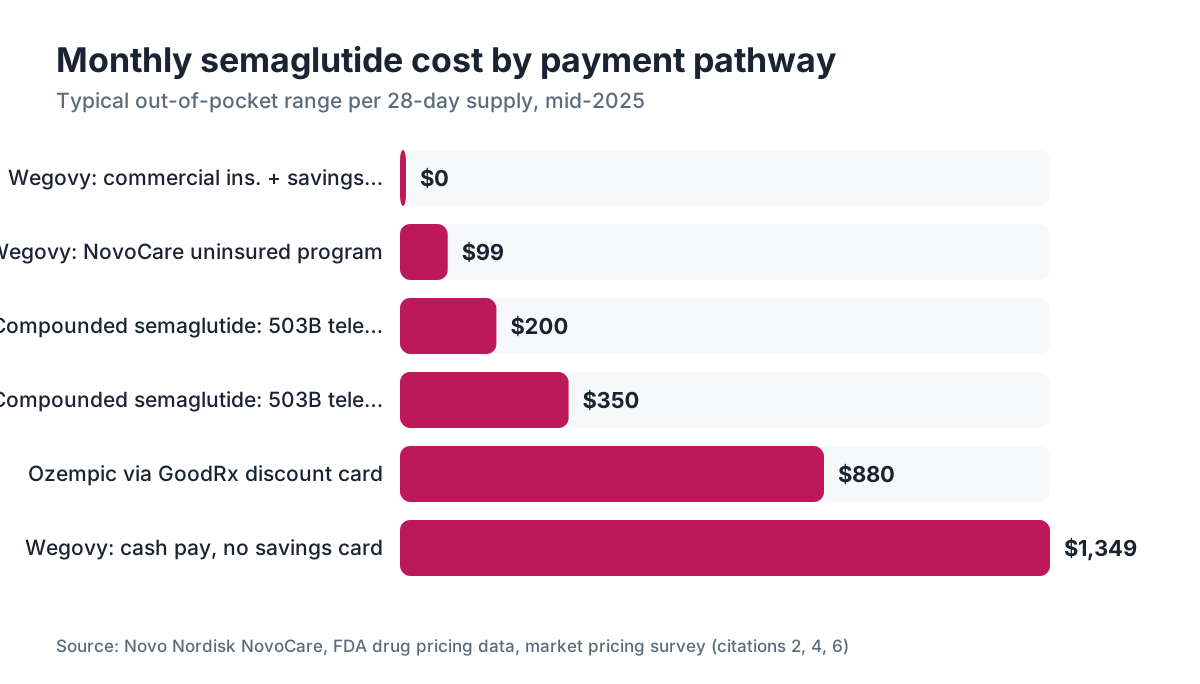
Here is what people actually pay through each pathway, based on published list prices, savings program terms, and market pricing as of mid-2025.
| Option | Typical monthly cost | Who qualifies | Key risk | |---|---|---|---| | Wegovy with commercial insurance + savings card | $0, $99 | Commercially insured, BMI criteria | Coverage may lapse; prior auth required | | Ozempic with commercial insurance + savings card | $25, $150 | T2D or insurer covering weight Rx | Off-label weight use may not be covered | | Wegovy Medicare Part D (CVD indication) | Varies by plan; $0, $300 after deductible | Medicare patients with obesity-related CVD | Only specific clinical indication covered [3] | | Brand via GoodRx / discount card | $850, $950 | Anyone | Still expensive; no savings card stacking | | Compounded semaglutide via 503B facility | $200, $400 | Anyone (while legally available) | Legal status in flux; quality varies | | Compounded via non-compliant pharmacy | $99, $200 | Anyone | Illegal under current FDA rules; safety risk | | Telehealth cash-pay (brand + visit fee) | $300, $600 all-in | Anyone | Platform fees vary; drug still brand-name |
The honest bottom line: if you have commercial insurance and meet criteria, the Novo Nordisk savings programs make brand-name Wegovy or Ozempic the cheapest legal path. If you are uninsured and those programs do not fit, a legitimate 503B compounded option (while legally available) has been the next cheapest. Any price below $150 per month for a full therapeutic dose should send you straight to the pharmacy's regulatory status before you spend a dollar.
Does insurance cover semaglutide for women, and how do you get coverage?
Coverage hinges on two things: the indication (diabetes versus weight management) and your specific plan. The Affordable Care Act does not require employer plans to cover weight-loss medications, so most employer plans still exclude them. [7] Medicare coverage expanded in 2024 for Wegovy specifically when used to reduce cardiovascular risk in patients who already have established cardiovascular disease, based on the SELECT trial, which showed a 20% reduction in major adverse cardiovascular events in adults with obesity. [3]
Medicaid coverage varies by state. A handful of states have added GLP-1s for weight management. Most have not. Your state Medicaid website is the only reliable source for your situation.
To improve your odds of coverage:
- Get a diagnosis documented. If you have obesity (BMI 30+) or overweight (BMI 27+) with a qualifying comorbidity like hypertension, sleep apnea, or dyslipidemia, your prescriber should put it in your chart. Wegovy's FDA-approved indication requires BMI 30+, or 27+ with at least one weight-related condition. [1]
- Request prior authorization proactively. Your prescriber's office usually starts this. Supply documentation of comorbidities, prior weight-loss attempts, and relevant labs.
- Appeal denials. First-level denials often get overturned with added clinical documentation. Ask your prescriber for a letter of medical necessity.
- Ask about step therapy. Some plans make you try other interventions before approving GLP-1s.
For women in perimenopause or menopause, hormonal shifts change body composition and cardiovascular risk in ways that can strengthen a medical necessity case. That argument has to come from your physician's documentation, more than your request.
Is the cheapest semaglutide online actually safe to buy?
Cheap and safe are not the same thing online, and the FDA has the case files to prove it. The agency has issued repeated warnings about counterfeit and unapproved semaglutide sold online. In 2023 and 2024, it found products labeled as semaglutide that contained little to no active ingredient, or that were contaminated. [6] Adverse event reports have included hospitalizations.
The FDA's BeSafeRx campaign says to verify any online pharmacy through the NABP .pharmacy accreditation program before buying prescription drugs online. [8] A legitimate online pharmacy or telehealth platform requires a valid prescription from a licensed U.S. prescriber, is licensed in your state, and uses an accredited dispensing pharmacy.
Red flags to avoid:
- No prescription required
- Price below $100 per month for a therapeutic dose (0.5 mg and up)
- No U.S. phone number or physical address for the pharmacy
- Ships from outside the United States
- Uses vague language like "research chemical" or "peptide"
- Cannot name the specific 503B facility producing the compound
The peptide-research-chemical gray market sells semaglutide labeled "not for human use" to dodge pharmaceutical regulation. Buying from those sources is legally risky, and the manufacturing quality is completely uncontrolled. You have no idea what is in the vial.
For more on what makes a legitimate telehealth semaglutide program, see our overview of semaglutide for weight loss.
How do GLP-1 telehealth platforms price semaglutide, and which are cheapest?
The direct-to-consumer telehealth market exploded between 2021 and 2024 around compounded semaglutide. Platforms like Ro, Hims & Hers, Calibrate, and Found sold monthly subscriptions that bundled the drug, prescriber visit, and coaching for one price.
As of early-to-mid 2025, those programs ran about $199 to $499 per month all-in when they included compounded semaglutide, with some starting lower for starter doses and rising as the dose escalated. Brand-name programs through telehealth cost more, often $350 to $600 per month including the visit fee, because the drug is actual Ozempic or Wegovy.
The compounding regulatory shift reshuffled everything. Platforms that leaned entirely on 503A compounders had to switch to 503B sourcing, pivot to brand-name prescriptions, or shut the service down. Check current pricing directly with any platform. A quote from late 2023 or 2024 may bear no relation to what the same platform charges now.
WomenRx offers GLP-1 programs for women that can include semaglutide, with clinicians who also understand how menopausal hormone shifts affect weight and metabolism. If you are weighing GLP-1 options alongside hormone therapy, that context matters.
One thing separates the better programs from the cheap ones: metabolic labs, a baseline cardiovascular assessment, and ongoing prescriber review. A program that saves you $50 a month but skips those safeguards is not the better deal.
For a head-to-head with the other major GLP-1 option, see semaglutide vs tirzepatide.
Can women in menopause or perimenopause get semaglutide more cheaply through different indications?
Weight loss gets harder in perimenopause and menopause, and that is not in your head. Estrogen decline shifts fat toward the abdomen, lowers resting metabolic rate, disrupts sleep in ways that wreck appetite regulation, and reduces insulin sensitivity. [9] These are documented medical changes, not personal failures.
This matters for cost because those same documented comorbidities can strengthen a prior authorization. New-onset hypertension, dyslipidemia, prediabetes, or worsening insulin resistance tied to menopausal metabolic change all build a stronger case for Wegovy or Ozempic coverage. If your prescriber documents obesity-related hypertension or prediabetes, your insurer faces a real clinical basis for coverage instead of a chart note that says "patient wants to lose weight."
Some women in this age group also qualify for Ozempic on a diabetes or prediabetes basis, which often carries better coverage than Wegovy for weight management. That is a clinical conversation, not a loophole, and it needs an honest metabolic workup.
HRT and GLP-1s are not either-or. Some evidence suggests estrogen therapy improves insulin sensitivity and reduces the abdominal fat gain of menopause, which could mean a lower GLP-1 dose gets you to your goal, which lowers cost. [9] Nobody has definitive head-to-head data on this combination yet. The closest we have are observational studies and the mechanistic literature. See our related articles on hormone replacement therapy and menopause for those trade-offs.
For women in the 40 to 55 range wondering when these hormonal changes start hitting metabolism, our article on perimenopause age covers the timeline.
What is the cheapest dose of semaglutide, and does starting low actually save money?
Semaglutide always starts low and titrates up over weeks to blunt nausea and GI side effects. The FDA-approved schedule for Wegovy runs 0.25 mg per week for 4 weeks, then 0.5 mg, then 1.0 mg, then 1.7 mg, reaching the 2.4 mg maintenance dose at week 17 or later. [1]
Here is the cost fact that surprises people. Ozempic and Wegovy come as prefilled pens at set dose strengths, and you pay per pen, not per milligram. A Wegovy 0.25 mg starter box costs roughly the same per fill as the 2.4 mg maintenance box. The price does not fall as the dose falls.
Compounded semaglutide was different. Some platforms priced by dose, so the starter phase really was cheaper, around $99 to $150 per month. That is where a lot of "cheapest semaglutide" marketing came from. But you cannot camp at a starter dose and expect weight-loss results. The maintenance dose is where the effect lives.
Staying at a low dose to save money is not a strategy. It either delays results, so you pay longer before you see benefit, or it simply does not work. The real question is which pathway gets you to the therapeutic dose most affordably and safely.
For a full breakdown of what semaglutide does and how it works, that article covers the mechanism.
What happens to cost if you stop semaglutide, and should you factor that in?
This is the financial question most price comparisons skip. The STEP 4 trial found that people who stopped semaglutide after 68 weeks regained about two-thirds of the weight they had lost over the following year. [10] The STEP 1 extension showed the same pattern. The FDA's approved labeling calls Wegovy a chronic weight management drug, meaning it is built for long-term use, not a short course.
So if semaglutide works for you, the honest number is not $1,349 for one month. It is that cost per month for years, potentially indefinitely, unless you use the weight-loss window to build habits that hold. Some people manage it. Many do not, which is exactly why the trials show regain.
That changes how you weigh the cheapest option. A $200 compounded program looks very different across 24 months than across one fill. A savings card that expires after year one matters a lot when you need the drug for years.
For women combining semaglutide with HRT, addressing the hormonal environment behind the weight gain may improve long-term outcomes, but the data is early. What is clear: the per-month price is not the only number that counts.
How do you find a legitimate prescriber for the cheapest semaglutide option?
You need a licensed U.S. prescriber to get semaglutide legally by any route. Your options are your primary care physician, an endocrinologist, an obesity medicine specialist, or a telehealth platform with prescribers licensed in your state.
Obesity medicine specialists (physicians board-certified by the American Board of Obesity Medicine) tend to be most current on GLP-1 prescribing, prior authorization strategy, and patient assistance programs. [11] The ABOM directory is a reasonable place to start if your PCP is not comfortable managing semaglutide.
Telehealth quality is all over the map. The good platforms run a real intake, review labs, and hold actual synchronous prescriber visits. The cheap ones have you fill out a form and fire back a prescription in hours. That may be legal, but the care is thin, and if you have cardiovascular disease, a history of pancreatitis, or a personal or family history of medullary thyroid carcinoma, you need someone actually reading your history.
The Endocrine Society's clinical practice guideline on obesity pharmacotherapy calls for shared decision-making with a clinician who can monitor for adverse effects and assess ongoing benefit. [12] That is not a formality. Semaglutide has real contraindications and a real side effect profile that deserve real clinical attention.
WomenRx connects women with clinicians who can assess both GLP-1 candidacy and hormonal context in one visit, which is worth a look if you are managing perimenopause or menopause alongside a weight goal.
Frequently asked questions
What is the cheapest way to get semaglutide without insurance?
Without insurance, the cheapest legitimate options are the Novo Nordisk NovoCare uninsured program for Wegovy (as low as $99/month if you meet income criteria), or a compounded semaglutide program through an FDA-registered 503B outsourcing facility (roughly $200 to $400/month). Anything priced below $100 for a full therapeutic dose should be verified carefully for pharmacy accreditation and regulatory compliance.
Is compounded semaglutide still legal in 2025?
The FDA removed semaglutide from its drug shortage list in late 2024. Most 503A compounding pharmacies are no longer legally permitted to produce semaglutide copies. Larger 503B outsourcing facilities may continue under specific conditions. Compounders using semaglutide sodium or acetate salts face additional FDA scrutiny. Always ask any platform which specific 503B facility it sources from and request documentation before purchasing.
How does the Novo Nordisk savings card work for Wegovy?
The Wegovy Savings Card is available to commercially insured patients and can reduce monthly cost to as low as $0 for eligible patients. Uninsured patients may qualify for the NovoCare patient assistance program at around $99/month based on income. Both programs exclude Medicare and Medicaid. Eligibility and terms change; verify current terms at NovoCare.com or through your pharmacy before counting on specific savings.
Does Medicare cover semaglutide for weight loss?
Since 2024, Medicare Part D covers Wegovy for patients with established cardiovascular disease and obesity, based on the SELECT trial, which showed a 20% reduction in major cardiovascular events. Medicare does not yet broadly cover Wegovy solely for weight management without a cardiovascular indication. Ozempic is covered by Medicare Part D when prescribed for type 2 diabetes. Coverage details vary by specific Part D plan.
What is the difference between Ozempic and Wegovy for cost purposes?
Both contain semaglutide but are FDA-approved for different indications. Ozempic (approved for type 2 diabetes) lists around $935/month; Wegovy (approved for weight management) lists around $1,349/month. Insurance coverage tends to be better for Ozempic when you have a diabetes diagnosis. Wegovy carries a higher list price partly because it is dispensed at higher doses and in a different delivery device.
Can I get semaglutide cheaper from Canada or Mexico?
Importing prescription drugs from other countries for personal use is generally illegal under U.S. federal law, though FDA enforcement has historically been limited for small personal-use quantities. The quality and authenticity of drugs from foreign online pharmacies is unverifiable. The FDA has found counterfeit semaglutide in online supply chains. This is a real risk, not a theoretical one, and not a route we recommend.
How much does semaglutide cost per month through a telehealth platform?
Telehealth platforms pricing compounded semaglutide (while legally available) ran about $150 to $400/month all-in. Platforms prescribing brand-name Wegovy or Ozempic typically charge the drug cost plus a visit or subscription fee, usually $350 to $600/month total. Prices have shifted as compounding rules changed. Always check current quotes directly and ask whether the price includes prescriber visits, dose escalation, and lab monitoring.
Is semaglutide covered by insurance if I have PCOS or insulin resistance?
PCOS with insulin resistance or documented prediabetes can support a prior authorization for semaglutide, particularly Ozempic for the metabolic indication. Wegovy coverage for weight management still depends on your specific plan. Well-documented metabolic comorbidities written into your medical record by your prescriber significantly strengthen a prior authorization or appeal. There is no universal answer; your insurer's prior auth criteria decides it.
What happens to your weight if you stop semaglutide to save money?
The STEP 4 trial found that patients who discontinued semaglutide after 68 weeks regained approximately two-thirds of their lost weight within one year. Weight regain appears to be the rule rather than the exception. This means the real cost of semaglutide is a long-term ongoing cost, not a one-time expense. Factoring in multi-year use changes how any monthly price comparison looks.
Are there lower-cost alternatives to semaglutide that actually work?
Tirzepatide (Zepbound for weight management, Mounjaro for diabetes) is a dual GIP/GLP-1 agonist with similar or slightly greater weight-loss efficacy in trials. Its list price is comparable to Wegovy. Older GLP-1s like liraglutide (Saxenda) are cheaper but less effective. Metformin is inexpensive and improves insulin sensitivity but produces far less weight loss. For a direct comparison, see our article on semaglutide vs tirzepatide.
Does being in menopause affect how well semaglutide works?
No large randomized trials have been run specifically in menopausal women on semaglutide. The STEP trials included women across age ranges. Mechanistically, menopausal estrogen decline worsens insulin resistance and shifts fat to visceral depots, which GLP-1s specifically target. Some clinicians believe GLP-1 and HRT together may work better than either alone for menopausal weight gain, but definitive trial data does not yet exist on this combination.
How do I know if an online pharmacy selling cheap semaglutide is legitimate?
Check the pharmacy's accreditation through the NABP .pharmacy verified program. It must require a valid U.S. prescription, have a licensed pharmacist available by phone, and be licensed in your state. Confirm that compounded products come from a named 503B outsourcing facility. If the site sells semaglutide without a prescription, ships from outside the U.S., or cannot name its compounding source, do not buy from it.
What is semaglutide sodium and why is it cheaper?
Semaglutide sodium is a salt form of semaglutide not used in any FDA-approved product. Some compounders switched to it after regulatory pressure on standard compounded semaglutide. The FDA has explicitly stated that semaglutide sodium has not been shown to be safe and effective for any use and that compounding it raises safety concerns. The lower price reflects lower regulatory scrutiny, not equivalent quality. Avoid it.
Can I get semaglutide covered if I have obesity-related high blood pressure or sleep apnea?
Yes, these are FDA-recognized qualifying comorbidities for Wegovy. The approved indication is BMI 30+, or BMI 27+ with at least one weight-related condition such as hypertension, dyslipidemia, type 2 diabetes, or obstructive sleep apnea. Your prescriber documenting these in the prior auth request materially improves approval odds. Having the diagnosis in your chart before you submit matters more than most patients realize.
Sources
- FDA, Wegovy (semaglutide) prescribing information
- Novo Nordisk, U.S. list price disclosures for Ozempic and Wegovy
- CMS, Medicare coverage of anti-obesity medications announcement 2024
- Novo Nordisk NovoCare patient assistance program
- U.S. Code, 21 U.S.C. § 503A and § 503B on pharmacy compounding
- FDA, safety alerts and guidance on compounded semaglutide and salt forms
- HHS, ACA essential health benefits and employer plan exclusions
- FDA BeSafeRx and NABP .pharmacy accreditation program
- Menopause journal, NAMS, estrogen and metabolic function in menopausal women
- Wilding et al., STEP 4 trial, New England Journal of Medicine, 2021
- American Board of Obesity Medicine, physician certification and directory
- Endocrine Society, clinical practice guideline on pharmacological management of obesity
- Lincoff et al., SELECT trial, New England Journal of Medicine, 2023