Can you take progesterone without estrogen? What the evidence says
TL;DR: Yes, you can take progesterone without estrogen, and there are real reasons to: better sleep, less anxiety, erratic perimenopausal cycles, and heavy bleeding. Progesterone alone does not treat hot flashes or protect bone the way estrogen does. The right call depends on your symptoms and where you sit in the menopause transition. In early perimenopause it's often the sensible first step.
What does progesterone actually do on its own?
Progesterone is not a sidekick that only matters when estrogen shows up. It binds its own receptors across the brain, uterus, breast, bone, cardiovascular tissue, and immune cells. Its effect on the brain is the part most women feel: progesterone metabolizes into a compound called allopregnanolone, which acts on GABA-A receptors much like a mild anxiolytic. That is why many women sleep better and feel calmer in the second half of their cycle, when progesterone peaks, and why both fall apart in perimenopause once progesterone starts dropping first.
Progesterone also has a settled job in the uterus. It counters estrogen's push on the uterine lining. Without it, estrogen-driven buildup can progress to hyperplasia or, in some cases, cancer. That is the original reason progesterone gets prescribed alongside estrogen in women who have a uterus.
So the honest answer to "can progesterone stand alone" is: it depends on the job. For sleep and mood in perimenopause, it can carry real weight by itself. For hot flashes and bone protection, it usually cannot do enough [1][2].
Who actually takes progesterone without estrogen?
More women than you'd expect. Four groups end up on progesterone solo.
First, perimenopausal women with erratic cycles. In early perimenopause, estrogen can run high and swing wildly while progesterone drops off because ovulation gets unreliable. These women don't need more estrogen. They need the progesterone they've stopped making on schedule. Oral micronized progesterone (brand name Prometrium in the US) is commonly prescribed here for cycle regulation, heavy bleeding, and sleep [3][11].
Second, postmenopausal women whose main complaint is sleep and anxiety, not heat. Some clinicians prescribe low-dose oral micronized progesterone at bedtime (usually 100 mg) when insomnia or mood is the problem and the woman isn't ready for estrogen. The sedating effect is real and shows up in smaller trials, though large randomized data are thin.
Third, women who've had a hysterectomy but still report symptoms that seem progesterone-related. This one is debated. The old rule was simple: no uterus, estrogen only. But progesterone's brain effects may matter on their own, so some clinicians now offer it to post-hysterectomy women who report broken sleep or mood changes on estrogen alone.
Fourth, women who decline estrogen outright. A breast cancer history, a strong family history, or just a firm preference to avoid it. Progesterone alone can address a slice of their symptoms even though it won't cover everything [1][4].
For where these women sit on the timeline, see perimenopause age and when does menopause start.
Does progesterone alone help hot flashes?
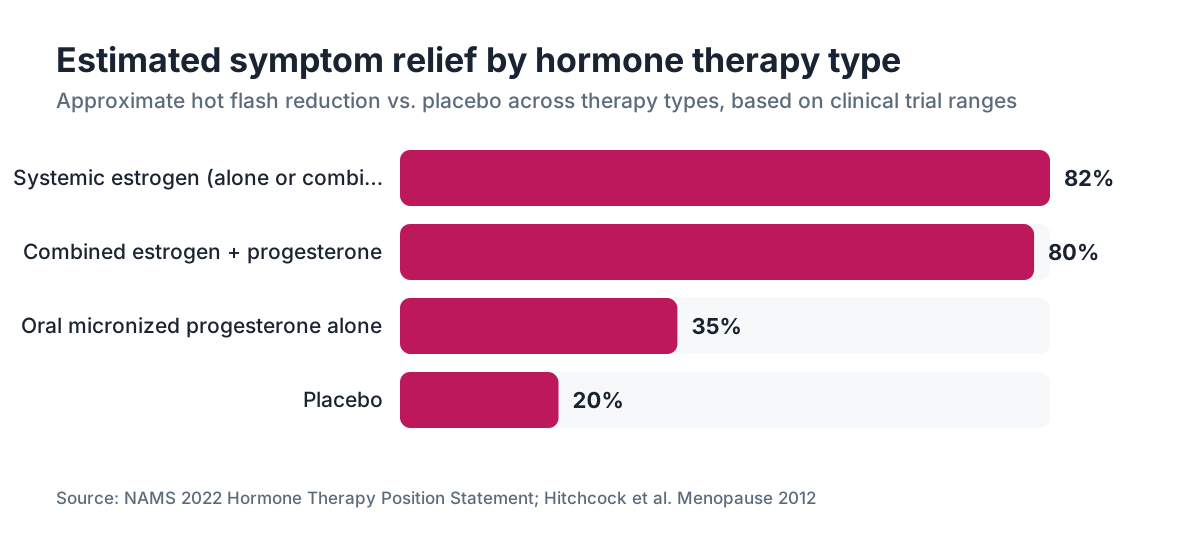
A little, not reliably, and nowhere near as well as estrogen. That's the honest answer, and it's the question most women actually came here to ask.
There is one trial worth naming. Hitchcock and Prior published a placebo-controlled randomized trial in Menopause in 2012 showing that oral micronized progesterone 300 mg nightly cut hot flash frequency and severity compared to placebo in postmenopausal women. The effect was real but modest. Estrogen reduces hot flash frequency by 75 to 90 percent in clinical trials. Progesterone alone gets nowhere close [5].
The North American Menopause Society 2022 hormone therapy position statement notes progesterone's potential for hot flash relief but does not list it as first-line or standard for vasomotor symptoms. Its guidance is plain that estrogen is the most effective drug option for hot flashes [1].
If your hot flashes are mild and your reason for avoiding estrogen is real rather than habit, progesterone alone may take the edge off. If they're waking you four times a night, you'll likely need estrogen in the picture. See hormone replacement therapy and menopause for the wider treatment map.
Does progesterone alone protect bone density?
No, and you shouldn't count on it. The evidence is thin, and this is the wrong tool for the job.
Estrogen drives bone protection in women. The Women's Health Initiative showed combined estrogen-progestin therapy lowered hip fracture risk. The 2022 NAMS position statement calls estrogen the most effective option for preventing menopausal bone loss [1][9]. Progesterone shows some minor bone-building signals in lab and animal work, but human trial data supporting progesterone alone for fracture prevention barely exist.
If bone density worries you and you're not taking estrogen, real options exist: bisphosphonates, denosumab, and raloxifene each have solid fracture-reduction data. A bone density test (DEXA scan) is where any serious fracture-risk conversation starts. Leaning on progesterone alone to protect your skeleton is not a plan the evidence backs.
What form of progesterone is used when it's prescribed alone?
This matters more than most women realize, because not all progesterone is the same molecule.
Oral micronized progesterone (Prometrium) is FDA-approved and bioidentical, meaning it is chemically identical to what your ovaries make. Taken by mouth, a large share converts to allopregnanolone during first-pass liver metabolism, which is exactly what produces the sleep and calming effects. A 100 mg oral dose at bedtime is what most clinicians reach for when the goal is sleep. A 200 mg dose is more typical when the goal is protecting the lining in a woman on estrogen [3][6].
Synthetic progestins (medroxyprogesterone acetate, norethindrone, levonorgestrel) are different compounds with different receptor profiles and different side effects. They don't convert to allopregnanolone, so they skip the sedating, mood-calming payoff of oral micronized progesterone. They may also hit breast tissue and cardiovascular markers differently. The WHI used medroxyprogesterone acetate, and some researchers argue its findings don't transfer cleanly to oral micronized progesterone [4][9].
Progesterone creams sold over the counter are a separate problem. Skin absorption is inconsistent, and most OTC creams don't deliver enough progesterone to protect the uterus. The FDA has approved no OTC progesterone cream for endometrial protection or menopause symptoms [6][10].
For the drug specifics, progesterone goes deeper.
What does research say about progesterone alone for sleep and mood?
This is where progesterone-only therapy has its strongest case.
Progesterone's neurosteroid metabolites have measurable effects on sleep architecture, reducing wake-after-sleep-onset time and increasing non-REM sleep, based on several smaller trials of allopregnanolone and GABA-A modulation [4][11]. These aren't giant effects, but they show up consistently.
For mood, the evidence is more observational than experimental. Progesterone withdrawal, more than low progesterone on its own, seems to drive some of the mood instability in late perimenopause. Women on continuous low-dose oral micronized progesterone often report steadier mood, though well-powered randomized trials on progesterone alone for perimenopausal mood are scarce. Nobody has good data at the scale we'd want here. The closest studies tend to be small and run 12 weeks or less.
The practical read: if a woman in perimenopause sleeps badly and feels anxious but has no real hot flashes yet, starting with oral micronized progesterone at bedtime is a reasonable, lower-intervention first step before adding estrogen. Plenty of clinicians do exactly this.
Does a woman without a uterus need progesterone at all?
Traditionally, no. The one settled reason to combine progesterone with estrogen in conventional HRT is to prevent endometrial hyperplasia. No uterus means no endometrium, so no protection is needed. The Endocrine Society and NAMS have both taken this line [1][2].
The conversation has shifted, though. Some clinicians now offer oral micronized progesterone to post-hysterectomy women specifically for its brain effects on sleep and mood. There's also ongoing research into whether progesterone treats breast tissue more favorably than some synthetic progestins, which would matter for post-hysterectomy women on long-term estrogen. The 2022 NAMS statement raises these questions without settling them [1].
The short version: after a hysterectomy, progesterone is optional. Let symptoms drive the decision, not reflex.
Can progesterone without estrogen help with perimenopause specifically?
Perimenopause is the strongest argument for progesterone alone, because the hormonal story here is different from full menopause.
In early perimenopause, reliable ovulation is the first thing to go, which makes progesterone production erratic. Estrogen can actually climb higher than ever during this phase before it eventually falls. So for a 44-year-old with irregular periods, heavy bleeding, poor sleep, and mood swings but no hot flashes, adding progesterone without estrogen is often exactly right. You're replacing what's actually missing [11].
Oral micronized progesterone 100 to 200 mg for 10 to 14 days per month (or continuously once periods get irregular enough) is a common approach. It can regulate cycles, cut heavy bleeding, improve sleep, and steady mood without piling more estrogen onto a system that may already have plenty [3][4].
This is genuinely underused. Too many perimenopausal women get handed an antidepressant or told it's stress when low progesterone is the cleaner explanation. The perimenopause age article covers the timeline in full.
What are the risks and side effects of taking progesterone alone?
Oral micronized progesterone is generally well tolerated. It is not free of side effects.
The most common is drowsiness, which is why it's taken at bedtime. Some women find even the 100 mg dose leaves them groggy the next morning. A smaller number get mood changes, bloating, or breast tenderness. Allergic reactions are rare but possible, and Prometrium is formulated in peanut oil, so women with peanut allergies need a different preparation [6].
Synthetic progestins carry a wider side effect profile: mood depression, lower libido, acne, and possibly less favorable cardiovascular and lipid effects than oral micronized progesterone.
For progesterone used without estrogen, there's no meaningful signal of increased breast cancer risk at the doses used for perimenopause management or endometrial protection. The WHI finding of slightly higher breast cancer risk tracked with the synthetic progestin MPA, not oral micronized progesterone [4][9]. The French E3N cohort followed more than 80,000 women and found no statistically significant rise in breast cancer risk with micronized progesterone compared with women taking no hormones [8].
If you're weighing where progesterone fits in a broader hormone plan, a conversation with a clinician who does hormones day in and day out matters more than any article. WomenRx works with clinicians who do exactly this kind of symptom-by-symptom evaluation for women in perimenopause and menopause.
For the full risk picture on the broader therapy, hormone replacement therapy and menopause are worth reading.
How is progesterone-only therapy prescribed and monitored?
There's no single protocol, because the indication sets the dose and the timing.
For cycle regulation in perimenopause: oral micronized progesterone 200 mg for 10 to 14 days per cycle, usually timed to the second half. This copies the luteal phase, cuts heavy bleeding, and smooths mood swings.
For sleep and mood without cycle regulation: 100 mg nightly, continuously. Some clinicians use this in women who've stopped bleeding but aren't clearly postmenopausal by the 12-month mark yet.
For endometrial protection in women on estrogen: 200 mg nightly for 12 days a month (cyclic) or 100 mg nightly continuously. The continuous route tends to cause less breakthrough bleeding over time but takes several months to settle.
Monitoring is simpler than for estrogen. There's no progesterone blood level that guides dosing the way estradiol levels sometimes do. Clinical response (sleep, mood, bleeding pattern) and how well you tolerate it are the main guides. Endometrial biopsy or pelvic ultrasound to check lining thickness is used for unusual bleeding, not routinely.
If you're getting hormone care through telehealth, make sure the provider is taking a detailed symptom history rather than ordering one hormone panel and calling it done. Perimenopausal hormone levels swing so much day to day that a single blood draw is a snapshot, not the story [2][3].
What does the FDA say about progesterone without estrogen?
The FDA has approved oral micronized progesterone (Prometrium) for two things: secondary amenorrhea and prevention of endometrial hyperplasia in postmenopausal women taking conjugated equine estrogen [6]. It is not FDA-approved as a standalone treatment for hot flashes, insomnia, or perimenopausal mood.
That doesn't make those uses wrong. Off-label prescribing is common, legal, and often grounded in evidence. When your clinician prescribes oral micronized progesterone for sleep in perimenopause, they're making a clinical judgment from the mechanism and the available data, not reading off an FDA-approved label. In many cases that's a sound judgment.
The FDA has also issued guidance clarifying that compounded progesterone preparations don't carry the same safety and efficacy evidence as FDA-approved oral micronized progesterone [10]. That matters if someone offers you a compounded cream or a custom formulation.
The Prometrium label states the product "should be used as part of a combined hormonal regimen for postmenopausal women with a uterus," which reflects the approved indication. Off-label use for the conditions above lives outside that label language [6].
Progesterone alone vs. combined HRT: how do the options compare?
Here's a plain comparison to frame the decision.
| Symptom or Goal | Progesterone alone | Estrogen alone | Combined HRT | |---|---|---|---| | Hot flashes | Modest effect, not first-line | Highly effective (75-90% reduction) | Highly effective | | Sleep disruption | Good evidence for improvement | Moderate benefit | Strong benefit | | Mood / anxiety | Good evidence via allopregnanolone | Moderate benefit | Strong benefit | | Bone protection | Insufficient evidence | Well-established | Well-established | | Vaginal dryness | Little to no effect | Highly effective | Highly effective | | Uterine protection | Provides protection | Increases risk without progestogen | Combined provides protection | | Heavy perimenopausal bleeding | Effective for cycle regulation | Not indicated alone | Used in some protocols |
The pattern is clear. Progesterone alone covers the brain-side symptoms (sleep, mood, anxiety) reasonably well but falls short on the physical ones estrogen drives (hot flashes, bone loss, vaginal atrophy). Combined therapy covers the most ground. Estrogen alone fits only women without a uterus.
For women in early perimenopause where estrogen isn't deficient yet, starting with progesterone alone is often the sensible, lower-intervention first move [1][2][3].
Frequently asked questions
Can I take progesterone by itself if I still have a uterus?
Yes. Taking progesterone without estrogen raises no endometrial safety concern, because progesterone protects the lining rather than stimulating it. Women with a uterus can take progesterone alone for sleep, mood, or cycle regulation in perimenopause without adding estrogen. The risk of endometrial hyperplasia comes from unopposed estrogen, not from progesterone.
Will progesterone alone stop hot flashes?
It can reduce them modestly. One randomized trial found oral micronized progesterone 300 mg nightly cut hot flash frequency and severity versus placebo. But estrogen reduces hot flashes by 75 to 90 percent in clinical trials, which progesterone alone can't match. Mild hot flashes may respond to progesterone. Severe ones, or ones wrecking your sleep, will likely need estrogen.
What's the difference between progesterone and progestin?
Progesterone is bioidentical: chemically identical to what your ovaries make. Progestins are synthetic compounds built to mimic progesterone's effect on the uterus but with different structures. They don't convert to allopregnanolone, so they lack progesterone's sleep and mood effects. They may also hit breast tissue and cardiovascular markers differently. Oral micronized progesterone (Prometrium) is not the same thing as medroxyprogesterone acetate.
Is progesterone cream from the health food store the same as prescription progesterone?
No. Over-the-counter progesterone creams have inconsistent and generally low skin absorption. The FDA has approved no OTC progesterone cream for menopause symptoms or endometrial protection. They can't reliably protect the uterus or deliver the brain effects of oral micronized progesterone. If you want progesterone to do a specific clinical job, you need a pharmaceutical-grade oral or vaginal preparation.
Can progesterone alone help with perimenopausal anxiety?
Yes, this is one of its better-supported uses. Oral progesterone metabolizes into allopregnanolone, which binds GABA-A receptors and calms anxiety. Many perimenopausal women have dropping progesterone alongside relatively normal estrogen, which makes progesterone the logical target. The evidence base is smaller than we'd like, but the mechanism is solid and clinical experience backs it.
Do I need progesterone if I've had a hysterectomy?
Not for uterine protection. But some clinicians now offer oral micronized progesterone to post-hysterectomy women who are on estrogen and still dealing with broken sleep or mood issues, specifically for its brain effects. This is off-label and not a universal recommendation. Whether it fits depends on your symptom picture and your clinician's read.
Can progesterone alone protect my bones during menopause?
The evidence doesn't support using progesterone alone for bone protection. Estrogen is the primary drug for preventing menopausal bone loss, with a solid record from the Women's Health Initiative and other large trials. Some lab studies hint progesterone has minor bone-building properties, but no clinical trials show fracture reduction with progesterone alone. If bone density worries you, get a DEXA scan and talk options with your doctor.
What dose of progesterone is typically used without estrogen?
For sleep and mood: 100 mg oral micronized progesterone at bedtime, continuously. For cycle regulation in perimenopause: 200 mg for 10 to 14 days per cycle, usually the second half. For heavier sedation or more significant hot flashes: some clinicians use 200 to 300 mg. Dose gets adjusted on clinical response and tolerability, not blood levels.
Is it safe to take progesterone long term without estrogen?
The long-term safety profile of oral micronized progesterone without estrogen is generally considered favorable. No significant rise in breast cancer risk turned up with micronized progesterone in the large French E3N cohort (over 80,000 women followed). Cardiovascular and metabolic effects look neutral. The main downsides are practical: drowsiness, and the fact it won't touch symptoms only estrogen treats.
Can progesterone without estrogen help with insomnia specifically?
Yes, this is one of the best-supported uses of progesterone alone. Oral micronized progesterone at bedtime reduces wake-after-sleep-onset time and increases non-REM sleep, based on several smaller trials. The mechanism is its conversion to allopregnanolone, a GABA-A modulator. The 100 mg bedtime dose is the most common starting point for sleep-focused use.
Will progesterone alone help with vaginal dryness?
No. Vaginal dryness and atrophy come from estrogen deficiency. Progesterone has no meaningful effect on vaginal tissue. If dryness or pain with sex is your main symptom, you need local or systemic estrogen. Low-dose vaginal estrogen (cream, ring, or tablet) works well for this and has minimal systemic absorption, so it's an option even for women cautious about systemic HRT.
Does natural progesterone from wild yam or plant sources work the same way?
No. Wild yam (diosgenin) contains a compound that can be converted to progesterone in a lab, but your body can't make that conversion itself. Eating wild yam or taking wild yam supplements does not raise progesterone levels. The term 'natural progesterone' in supplement marketing is misleading. Pharmaceutical oral micronized progesterone is bioidentical but needs a prescription.
How long does it take for progesterone alone to start working?
Sleep effects can show up within days of starting oral micronized progesterone at bedtime. Cycle regulation usually takes one to two cycles to see clear changes. Mood effects are more variable and may take four to six weeks to judge. If you see no benefit after two to three months, it's worth re-checking whether progesterone alone is treating the right underlying issue.
Can a telehealth provider prescribe progesterone without estrogen?
Yes. Oral micronized progesterone is a prescription medication that licensed clinicians can prescribe by telehealth in most US states after a proper medical evaluation. A thorough symptom history matters more than a single blood draw here, since progesterone levels swing hard during perimenopause. Providers who focus on women's hormones, including telehealth platforms like WomenRx, typically run a detailed intake before prescribing.
Sources
- North American Menopause Society (NAMS), 2022 Hormone Therapy Position Statement
- Endocrine Society, Menopause and Hormone Therapy Clinical Practice Guidelines
- The American College of Obstetricians and Gynecologists (ACOG), Practice Bulletin on Hormone Therapy
- Stute P et al., 'Is there a role for progesterone-only hormone therapy in peri- and postmenopause?', Maturitas, 2020
- Hitchcock CL, Prior JC, 'Oral micronized progesterone for vasomotor symptoms: a placebo-controlled randomized trial', Menopause, 2012
- FDA, Prometrium (progesterone, USP) Prescribing Information
- Fournier A et al., 'Unequal risks for breast cancer associated with different hormone replacement therapies: results from the E3N cohort study', Breast Cancer Research and Treatment, 2008
- National Institutes of Health, Women's Health Initiative Study Overview
- FDA, Compounded Drug Products That Are Copies of Commercially Available Drug Products Under Section 503A of the FDCA (Guidance Document)
- Prior JC, 'Progesterone for symptomatic perimenopause treatment: progesterone politics, physiology and potential for perimenopause', Facts, Views and Vision in ObGyn, 2011
- National Institute on Aging (NIA), Menopause: Overview and Treatment Options