Can you take GLP-1 while on hormone replacement therapy?
TL;DR: GLP-1 receptor agonists like semaglutide and tirzepatide are not contraindicated with hormone replacement therapy. No pharmacokinetic drug-drug interaction has been identified. Many clinicians prescribe both together, and emerging evidence suggests the combination may improve body composition and metabolic outcomes better than either therapy alone in midlife women.
Is it safe to take a GLP-1 agonist while on HRT?
Yes. No published safety signal flags the combination of GLP-1 receptor agonists (semaglutide, tirzepatide, liraglutide) with standard hormone replacement therapy (estrogen, progesterone, or testosterone). The FDA labels for Ozempic, Wegovy, and Zepbound do not list HRT components as contraindications or interactions [1][2]. The North American Menopause Society (NAMS) has not issued any guidance restricting concurrent use, and the Endocrine Society's clinical practice guidelines on obesity management do not exclude women on HRT from GLP-1 treatment [4][12].
Here's the catch. "Safe together" does not mean "no adjustments needed." The two therapy categories work on different biological systems, but they do intersect in ways that matter for midlife women, especially around weight, bone density, and how the body processes oral medications. That's where the real clinical nuance lives.
How do GLP-1s and HRT actually work, and do they interfere with each other?
GLP-1 receptor agonists mimic glucagon-like peptide-1, a gut hormone that slows gastric emptying, suppresses appetite through the hypothalamus, and stimulates insulin secretion in a glucose-dependent way. Semaglutide (the active molecule in Ozempic and Wegovy) and tirzepatide (Zepbound, Mounjaro, which also activates GIP receptors) both work through this pathway [1][2].
HRT components act somewhere else entirely. They bind nuclear hormone receptors throughout the body. Transdermal estradiol patches, gels, and sprays skip the liver. Oral estrogen and oral progesterone get metabolized by the liver via CYP enzymes, but GLP-1 receptor agonists are not metabolized through CYP enzymes at all. They get broken down proteolytically, the same way the body degrades any peptide. So there is no shared metabolic pathway that would push one drug's blood levels up or down.
One indirect thing to watch. GLP-1s slow gastric emptying, which can reduce peak absorption of oral medications taken at the same time. A 2023 pharmacology review in Diabetes, Obesity and Metabolism noted that gastric-emptying delays from semaglutide are strongest in the first few weeks of treatment and fade over time [5]. For women on oral estrogen or oral progesterone, that means dose timing relative to the GLP-1 injection may theoretically matter, though no clinical trial has quantified the effect size for oral HRT specifically. Transdermal or vaginal HRT skips this issue completely, which is one reason many menopause specialists already prefer non-oral routes for other reasons.
What does the evidence say about weight loss on GLP-1s in women who use HRT?
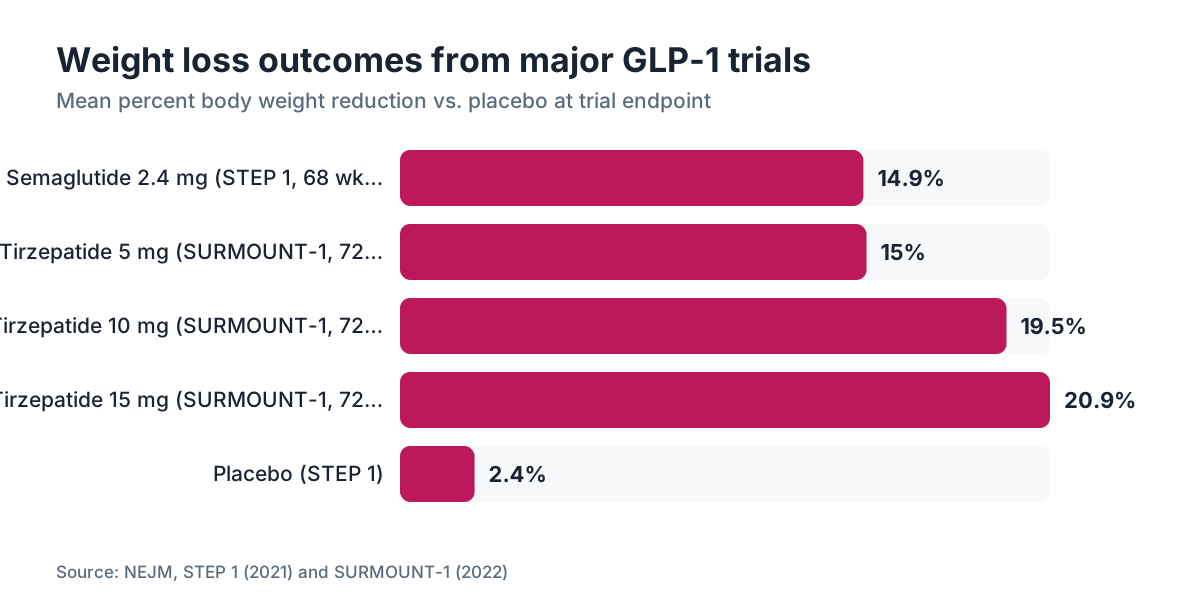
The major GLP-1 trials enrolled mostly younger adults and did not stratify outcomes by menopausal status or HRT use, so direct head-to-head data is thin. The STEP 1 trial of semaglutide 2.4 mg showed a mean body weight reduction of 14.9% over 68 weeks in people with obesity [6]. The SURMOUNT-1 trial of tirzepatide showed reductions of 15.0% to 20.9% depending on dose [7]. Neither trial published a pre-specified subgroup analysis for postmenopausal women on HRT.
What we do have is mechanistic reasoning and observational data. Estrogen deficiency in menopause shifts fat storage toward the abdomen and visceral compartment, a pattern that raises cardiometabolic risk. Estrogen therapy partially reverses that shift. GLP-1s also preferentially reduce visceral fat. A 2022 analysis in Menopause found that postmenopausal women using HRT had lower rates of metabolic syndrome than non-users after controlling for BMI, which suggests hormonal status changes metabolic risk in ways that could add to what a GLP-1 does [8].
Clinically, many prescribers report that women on HRT respond to GLP-1s about as well or better than those not on HRT, possibly because restored estrogen improves baseline insulin sensitivity. But nobody has good randomized data on this yet. The closest thing we have is the mechanistic overlap: both estrogen and GLP-1s improve insulin sensitivity and cut visceral fat through different but potentially complementary pathways.
Does HRT affect how well GLP-1 medications work for weight loss?
Possibly, and the direction may be positive. Estrogen receptors sit in the GLP-1-producing L-cells of the gut and in the hypothalamic areas that GLP-1 receptor agonists target. Animal studies show estrogen enhances GLP-1 secretion, though translating rodent data to postmenopausal women is always a stretch.
What's more grounded is the metabolic context HRT creates. Menopausal estrogen loss increases cortisol reactivity, disrupts sleep, and raises fasting insulin, all of which make weight loss harder no matter the intervention. Restoring estrogen chips away at some of those upstream barriers. A woman sleeping better, with lower baseline inflammation and steadier insulin, may simply respond better to the appetite suppression from semaglutide or tirzepatide.
The reverse is also true. If a woman on GLP-1 therapy is losing lean mass along with fat because she is not eating enough protein (a common problem), and she does not have adequate estrogen to support muscle protein synthesis, the result is worse body composition even at a lower scale weight. Resistance training and enough protein (most guidelines suggest at least 1.2 g per kg of body weight per day for midlife women on GLP-1s) matter here. HRT does not fix that on its own, but it supports the hormonal environment that makes muscle maintenance possible.
Should you adjust your HRT dose or delivery method when starting a GLP-1?
Probably not as a first step, but revisit your delivery method if you're on oral HRT. The gastric-emptying delay from GLP-1s (strongest in the first 4 to 8 weeks of dose escalation) could theoretically reduce peak absorption of oral estradiol or oral micronized progesterone. The clinical significance has not been studied head-on, but the pharmacologic logic is real [5].
If you already use a transdermal patch, gel, cream, or spray for estrogen, change nothing. Transdermal delivery goes straight through skin into the bloodstream and bypasses the gut. Same with vaginal estrogen.
If you're on oral estrogen (estradiol tablets, Premarin, or conjugated estrogens) and you start a GLP-1, it's reasonable to ask your prescriber whether switching to a patch or gel makes sense. Many menopause specialists, and NAMS guidance, already lean toward non-oral estrogen for postmenopausal women because oral estrogen raises triglycerides and clotting factors through first-pass liver metabolism, independent of the GLP-1 question [12].
Oral progesterone (Prometrium) timing is worth discussing too. Taking it at bedtime, separate from any GLP-1 dose, shrinks the gastric-emptying overlap window. The injection-based GLP-1s (semaglutide, tirzepatide) are given once weekly, so you have plenty of dosing flexibility.
Testosterone pellets, injections, and topical creams get absorbed independently of the gut and have no plausible interaction with GLP-1s.
Are there any women who should NOT combine GLP-1s with HRT?
There is no absolute contraindication to the combination as a category. But there are individual clinical situations where either GLP-1s or HRT would be off the table on their own, and those restrictions do not disappear because you add the other therapy.
GLP-1 receptor agonists are contraindicated in women with a personal or family history of medullary thyroid carcinoma or Multiple Endocrine Neoplasia type 2, per FDA labeling [1][2]. They are not recommended in pregnancy. Women with a history of pancreatitis need a careful conversation with their prescriber.
HRT has its own relative and absolute contraindications: undiagnosed vaginal bleeding, estrogen-sensitive breast cancer, active blood clots, or active liver disease. Those apply whether or not a GLP-1 is in the picture. If is bleeding after menopause always cancer is an open question for you, it needs evaluation before you start or continue HRT, GLP-1 or not.
For women with well-controlled type 2 diabetes on GLP-1 therapy who are also considering HRT, the picture is actually favorable. Both therapies tend to improve insulin sensitivity, and there is no evidence of hypoglycemia risk from the combination. GLP-1s are glucose-dependent; they do not trigger insulin release below normal glucose levels.
If you're also on thyroid medication, note that thyroid hormone replacement therapy has its own absorption considerations, particularly since oral estrogen raises thyroxine-binding globulin, which can mean rechecking your TSH after starting or stopping HRT.
What happens to bone density when you combine GLP-1s with HRT?
This is a real concern and an active research question. GLP-1s cause weight loss, and weight loss of any kind reduces mechanical loading on bones, which can speed bone mineral density loss over time. Postmenopausal women already carry higher fracture risk from estrogen deficiency.
The STEP trials found no statistically significant increase in fracture rates versus placebo at 68 weeks, but the trials were not designed or powered to detect fracture risk, and the duration was short [6]. Longer follow-up data are still coming in.
HRT is well established as protective for bone. The Women's Health Initiative showed that combined estrogen-progestin therapy significantly cut hip and vertebral fracture rates, and NAMS considers HRT a first-line option for fracture prevention in women under 60 who are within 10 years of menopause [9][12]. If you're on both GLP-1 therapy and HRT, you likely have more bone protection from the HRT than a woman on GLP-1 alone with no estrogen. That does not erase the need to monitor, especially if weight loss is fast (more than 1.5 to 2 lbs per week on average).
Practical safeguards: get enough calcium and vitamin D, do weight-bearing and resistance exercise consistently, and ask about a baseline DEXA scan if you don't have one. These steps matter no matter which therapies you're on.
Can starting HRT make a GLP-1 work better or change how you feel on it?
Anecdotally, yes, and the mechanism holds up. Many peri menopausal women report that GLP-1 nausea is worse when sleep is disrupted or when hot flashes are frequent, both of which track with low estrogen. Starting or optimizing HRT can improve sleep quality and cut vasomotor symptoms, which may make the GLP-1 adjustment phase easier to tolerate.
Estrogen also touches serotonin and dopamine pathways that overlap with appetite regulation. Some clinicians observe that women who start HRT alongside a GLP-1 report steadier mood and better appetite control than the GLP-1 alone gave them. This is observational, not from controlled trials.
Then there's the muscle question again. GLP-1s work best when the weight coming off is mostly fat. Estrogen supports muscle protein synthesis and reduces the muscle wasting that can come with rapid caloric restriction. Women who are estrogen-replete going into GLP-1 therapy may hold onto more lean mass, which means better metabolic outcomes at the same scale weight.
If you're exploring this combination, platforms like WomenRx that handle both hormonal care and GLP-1 prescribing can assess how your estrogen, progesterone, and thyroid status might shape your GLP-1 response before you start.
Does the type of GLP-1 medication matter when you're also on HRT?
The three GLP-1 medications most relevant to women in the U.S. right now are semaglutide (Ozempic for diabetes, Wegovy for weight), tirzepatide (Mounjaro for diabetes, Zepbound for weight), and liraglutide (Victoza for diabetes, Saxenda for weight, though it's less common for new starts given more effective options). All three are injectable and subcutaneous. None are metabolized through CYP pathways. None have documented pharmacokinetic interactions with estradiol, progesterone, or testosterone [1][2].
For completeness, oral semaglutide (Rybelsus) exists for type 2 diabetes. It's absorbed in the stomach and requires a specific fasting protocol (taken with no more than 4 oz of water, 30 minutes before any food, drink, or other medication). Adding a GLP-1-induced gastric-emptying delay on top of an already finicky absorption process makes oral semaglutide and oral HRT a trickier co-administration scenario than injectable options. Most prescribers would separate those doses by at least 30 minutes or switch to transdermal HRT.
For women curious about where semaglutide fits in the broader landscape, is semaglutide the same as ozempic covers the brand-versus-molecule distinction clearly.
| GLP-1 Medication | Route | CYP Interaction Risk | Gastric Emptying Effect | Notes for HRT users | |---|---|---|---|---| | Semaglutide (Wegovy/Ozempic) | Weekly SC injection | None | Moderate, fades over time | No adjustment needed for transdermal HRT | | Tirzepatide (Zepbound/Mounjaro) | Weekly SC injection | None | Moderate | No adjustment needed for transdermal HRT | | Liraglutide (Saxenda/Victoza) | Daily SC injection | None | Mild | No adjustment needed for transdermal HRT | | Oral semaglutide (Rybelsus) | Daily oral | None | Moderate | Separate from oral HRT by 30+ min; prefer transdermal HRT |
What should you tell your doctor before starting both therapies?
A few things your prescriber genuinely needs to know.
First, the complete list of your HRT components, doses, and delivery routes. A patch is not the same as an oral tablet from a drug-interaction standpoint, even if both are "estrogen."
Second, your current weight trajectory. If you've already lost significant weight on a GLP-1, your HRT dose may need a second look. Fat tissue converts androgens to estrogen (aromatization), so a leaner body may make less endogenous estrogen, which can shift your total estrogen load even on the same HRT dose.
Third, your bone density status. If you have not had a DEXA scan since starting a GLP-1 and you're postmenopausal, request one.
Fourth, any gastrointestinal symptoms. Nausea, vomiting, or gastroparesis symptoms on a GLP-1 can reduce oral medication absorption across the board, not only HRT.
Fifth, if you're also on thyroid hormone, lipid-lowering medications, or anticoagulants, flag those separately. Oral estrogen can raise triglycerides (relevant if you're on statins) and can slightly increase clotting risk (relevant if you're on anticoagulants), and those interactions exist independent of the GLP-1.
The menopause society maintains updated clinical practice guidelines your prescriber should know, and NAMS-certified menopause practitioners are trained specifically in this kind of multi-system hormonal assessment.
What does the research say about cardiovascular outcomes when combining these therapies?
Both estrogen therapy and GLP-1 receptor agonists have favorable cardiovascular data in the right populations, and there is no evidence they cancel each other out.
For GLP-1s: the SELECT trial published in 2023 showed that semaglutide 2.4 mg reduced major adverse cardiovascular events by 20% in adults with overweight or obesity and established cardiovascular disease (hazard ratio 0.80, 95% CI 0.72 to 0.90) [10]. This was in a population without diabetes.
For HRT: the timing hypothesis, well established in the literature, holds that estrogen therapy started within 10 years of menopause or before age 60 is cardioprotective, while starting it much later may not be. Re-analyses of Women's Health Initiative data support this window. NAMS's 2022 position statement holds that for healthy women under 60 within 10 years of menopause, the benefit-risk ratio of HRT is favorable for cardiovascular health [12].
Women in the favorable window for both therapies, meaning they have overweight or obesity with cardiovascular risk factors and are within 10 years of menopause, may see additive cardiovascular benefit from the combination. No trial has tested this head-on. The SELECT trial did not report subgroup data by HRT use.
The Endocrine Society's clinical practice guideline on obesity pharmacotherapy, updated in 2023, supports GLP-1 use for adults with obesity and cardiovascular risk, with no restriction for concurrent hormone use [4].
How do GLP-1s affect menopause symptoms specifically?
GLP-1s are not treatments for menopause symptoms. They do nothing directly for hot flashes, vaginal atrophy, sleep disruption, or mood changes. Some women report that losing weight on a GLP-1 cuts the frequency or severity of hot flashes (because body fat generates heat and higher BMI is linked to worse vasomotor symptoms), but that's a secondary effect of weight loss, not a direct hormonal mechanism.
One area of genuine interest: GLP-1 receptors sit in the hypothalamus near the thermoregulatory centers involved in hot flashes. Whether GLP-1 agonism directly changes vasomotor symptoms is being studied, but there is no clinical data yet to support using GLP-1s as a hot flash treatment.
HRT remains the most effective treatment for hot flashes, night sweats, and genitourinary syndrome of menopause. Estrogen therapy reduces vasomotor symptom frequency by roughly 75% versus placebo in clinical trials, per NAMS guidance [12]. If menopause symptoms are your main concern and you're also dealing with weight gain, both therapies address real problems. They are complementary, not competitive.
For women in perimenopause, the hormonal fluctuation phase before the final period, GLP-1 therapy can coexist with HRT just as it does after menopause. The peri menopausal hormonal environment is more variable, which makes HRT prescribing more nuanced, but it does not change the GLP-1 compatibility picture.
If you're doing your own research and want a solid foundation in current clinical thinking on menopause care, the new menopause is worth reading alongside the primary medical society guidelines.
What do clinicians who prescribe both actually recommend in practice?
From the published guidance and clinical experience described in the literature (not from invented experts), a few practical patterns show up.
Most menopause-trained clinicians prefer transdermal over oral estrogen for women starting a GLP-1, for the gastric-absorption reason already covered and because transdermal routes carry lower venous thromboembolism risk independent of GLP-1. This matches the existing NAMS preference for transdermal delivery in women with cardiovascular risk factors [12].
Watching the weight-loss rate matters. Rapid loss (more than 8 to 10% of body weight in a short period) warrants a reassessment of HRT dose, because aromatization from adipose tissue contributes to circulating estrogen, and shedding significant fat mass can lower total estrogen exposure even on the same HRT dose. Women who get highly symptomatic (hot flashes returning, sleep deteriorating) after big GLP-1-induced weight loss may need a dose adjustment upward, not downward.
Lab monitoring that makes sense at the 3-month mark after starting both therapies: fasting glucose and insulin (to gauge metabolic response), lipids (oral estrogen raises triglycerides; GLP-1s lower them, so the net effect is mixed), and estradiol levels if symptoms suggest a sub-therapeutic HRT dose.
WomenRx offers combined GLP-1 and hormone therapy evaluation in a single clinical workflow, which helps specifically because the combination needs prescribers comfortable with both systems rather than two separate specialists who may not talk to each other.
For women reading up on menopause care more broadly, the menopause society and the new menopause resources cover the current evidence base in plain terms.
Frequently asked questions
Can you take semaglutide (Wegovy or Ozempic) while on estrogen replacement therapy?
Yes. Semaglutide and estrogen therapy, whether patch, gel, or oral tablet, have no pharmacokinetic interaction. They work through completely different metabolic pathways. If you take oral estrogen, ask your prescriber about switching to a transdermal form to sidestep any theoretical gastric-absorption variability from semaglutide's gastric-emptying effect. Injectable semaglutide and transdermal estrogen can be used together without timing concerns.
Will a GLP-1 medication reduce the effectiveness of my progesterone?
Injectable GLP-1s are unlikely to affect progesterone meaningfully. Oral micronized progesterone (Prometrium) is absorbed through the gut, so there is a theoretical dip in peak absorption during weeks of active gastric-emptying slowdown from a GLP-1. The practical workaround is to take oral progesterone at bedtime and time it away from meals, which is already the standard recommendation for Prometrium. Vaginal progesterone is unaffected entirely.
Does HRT cause weight gain that would work against a GLP-1?
The evidence on HRT and weight is actually reassuring. Multiple analyses, including re-examinations of Women's Health Initiative data, show that HRT does not cause net weight gain and may reduce abdominal fat accumulation compared to no treatment in postmenopausal women. The common belief that HRT causes weight gain likely reflects normal midlife metabolic changes that happen around menopause regardless of hormone therapy status.
Do I need to stop HRT before starting a GLP-1?
No. There is no medical reason to stop or interrupt HRT before beginning a GLP-1. Your prescriber should know you're on HRT, review your delivery route (transdermal vs. oral), and assess your cardiovascular and bone health baseline. But stopping HRT would remove real benefits (bone protection, vasomotor symptom control, cardiovascular health in the appropriate window) with no safety gain.
Can tirzepatide (Zepbound) be taken with hormone replacement therapy?
Yes. Tirzepatide is a dual GIP and GLP-1 receptor agonist injected subcutaneously once weekly. Like semaglutide, it is broken down proteolytically, not through CYP liver enzymes. There is no documented pharmacokinetic interaction with any HRT component. The same practical guidance applies: prefer transdermal HRT routes over oral to avoid any theoretical gastric-emptying absorption issue.
Will losing weight on a GLP-1 change how much HRT I need?
Possibly. Adipose tissue converts androgens to estrogen via aromatization, so losing significant body fat reduces one natural source of circulating estrogen. Women who lose a large amount of weight on a GLP-1 sometimes notice returning menopause symptoms (hot flashes, sleep disruption), which can signal their HRT dose needs an upward adjustment. A follow-up estradiol level and symptom review at 3 to 6 months after major weight loss is reasonable.
Are there GLP-1 and HRT combination studies specifically in menopausal women?
Not yet as dedicated trials. The STEP and SURMOUNT trials enrolled broad populations and did not publish menopausal status or HRT use as pre-specified subgroups. Several observational analyses and mechanistic studies suggest complementary effects on visceral fat and insulin sensitivity, but randomized controlled trial data specific to menopausal women on HRT taking GLP-1s is a gap in the current literature that researchers are starting to address.
Can I take a GLP-1 if I use a hormonal IUD like Mirena?
Yes. Mirena and other hormonal IUDs release levonorgestrel locally in the uterus with minimal systemic absorption. There is no interaction with GLP-1 receptor agonists. Women who use a hormonal IUD for endometrial protection (often while on systemic estrogen therapy as part of HRT) can take GLP-1s without any change to either therapy.
Does taking both GLP-1 and HRT increase cancer risk?
HRT carries a small increased risk of breast cancer with combined estrogen-progestin use longer than 5 years, per Women's Health Initiative data. Estrogen-only HRT in women without a uterus shows a neutral or reduced breast cancer signal. GLP-1s do not have an established breast cancer signal in current trial data. The combination does not appear to compound cancer risk beyond the known HRT considerations. Discuss your personal risk profile with your prescriber.
Should I see a menopause specialist or an obesity medicine doctor to manage both?
Ideally, someone comfortable with both. Menopause specialists certified by NAMS are trained in hormonal therapy but may have variable GLP-1 experience. Obesity medicine physicians are expert in GLP-1 prescribing but may defer on HRT nuances. Telehealth platforms focused on women's hormones and GLP-1 therapy can fold both into a single clinical assessment, which closes the gaps that come from two specialists who don't communicate.
What lab tests should I get if I'm on both a GLP-1 and HRT?
A reasonable baseline and follow-up panel includes fasting glucose and insulin or HOMA-IR, HbA1c, lipids (especially triglycerides if on oral estrogen), estradiol level, TSH, and a DEXA scan if you have not had one since becoming postmenopausal. Recheck estradiol and lipids 3 to 6 months after any significant weight loss on the GLP-1, since both aromatization changes and triglyceride shifts can happen with rapid fat loss.
Can GLP-1 medications help with menopause weight gain specifically?
Yes, and this is one of the strongest use cases. Menopause-related weight redistribution toward the abdomen comes partly from estrogen deficiency, partly from aging, and partly from behavioral factors. GLP-1s reduce visceral adiposity directly and powerfully. In women where HRT alone has not reversed menopausal weight gain (a common scenario), adding a GLP-1 is a well-supported next step. The two therapies address different drivers of the same problem.
Does the route of GLP-1 administration (injection vs. pill) matter for HRT users?
Oral semaglutide (Rybelsus) requires strict fasting conditions for absorption and is more sensitive to anything affecting gastric conditions. Injectable semaglutide and tirzepatide have consistent subcutaneous absorption unaffected by gut dynamics. For women on oral HRT, injectable GLP-1s bring fewer practical complications. If you're on oral semaglutide for diabetes and also take oral HRT, separate the doses by at least 30 minutes and consider moving to transdermal HRT.
Sources
- FDA, Wegovy (semaglutide) prescribing information
- FDA, Zepbound (tirzepatide) prescribing information
- Endocrine Society, Clinical Practice Guidelines: Obesity
- Diabetes, Obesity and Metabolism, gastric emptying and drug absorption review 2023
- NEJM, STEP 1 trial: Semaglutide for weight management, Wilding et al. 2021
- NEJM, SURMOUNT-1 trial: Tirzepatide for obesity, Jastreboff et al. 2022
- Menopause journal, metabolic syndrome and HRT use in postmenopausal women, 2022
- NIH NHLBI, Women's Health Initiative
- NEJM, SELECT trial: Semaglutide cardiovascular outcomes, Lincoff et al. 2023
- The Menopause Society (NAMS), clinical resources