Can you reverse hormonal belly fat after 50?
TL;DR: Yes, you can reduce hormonal belly fat after 50, but it takes more than calorie-cutting. The drop in estrogen at menopause shifts fat storage to the abdomen and raises metabolic risk. Evidence supports hormone therapy, strength training, protein-forward eating, and in some cases GLP-1 medications. None of these is a quick fix, but the combination works.
What exactly is hormonal belly fat after 50?
Hormonal belly fat is visceral fat, the kind that sits deep inside your abdomen, wrapped around your liver, intestines, and other organs. It is not the same as the subcutaneous fat you can pinch under your skin. Visceral fat is metabolically active in the worst sense: it secretes inflammatory cytokines and interferes with insulin signaling.
Before menopause, estrogen directs fat storage toward the hips and thighs. When estrogen drops, that protective signal disappears and the body preferentially stores energy in the abdomen. A 2012 analysis published in Climacteric found that the menopause transition itself, independent of aging, is associated with an increase in central adiposity [1]. Women gain roughly 1.5 kg of body fat per year in the two years before and after their final period, and a disproportionate share of that gain is visceral [1].
This matters beyond appearance. Visceral fat is a stronger predictor of cardiovascular disease, type 2 diabetes, and all-cause mortality than BMI alone. The North American Menopause Society (NAMS) notes that central obesity in postmenopausal women is associated with a significantly elevated cardiometabolic risk profile [2].
If you are in the peri menopausal years and watching your waist expand despite no change in your habits, this is the mechanism behind it. It is not a willpower failure.
Why does estrogen loss cause belly fat to accumulate?
Estrogen does several things that collectively keep fat from settling in your midsection. It increases the sensitivity of adipose tissue to lipolysis (fat breakdown), it modulates cortisol signaling, and it supports insulin sensitivity in skeletal muscle. Lose estrogen and all three of those protective effects weaken simultaneously.
Cortisol becomes relatively more influential with declining estrogen. Cortisol is well established as a driver of visceral fat deposition, and the abdominal region has a high density of glucocorticoid receptors. So even at the same cortisol level you had at 35, your abdominal fat cells are now more responsive to its fat-storing signal.
There is also the sleep connection. Perimenopause disrupts sleep through hot flashes, anxiety, and altered sleep architecture. Poor sleep raises ghrelin and lowers leptin, which increases appetite and makes it harder to stay in any caloric deficit. Sleep loss also raises evening cortisol. These are not separate problems; they stack.
Progesterone decline is part of this picture too. Progesterone has a mild diuretic and anti-estrogenic effect on fat tissue. When it drops first in perimenopause, before estrogen follows, some women notice bloating and weight changes even before hot flashes begin. For a broader view of how the menopause transition changes the body, The New Menopause is worth reading.
What does research say about reducing belly fat after menopause?
The honest answer is that the research is good enough to act on, but modest in its effect sizes. No single intervention erases visceral fat. Combinations do better than any one strategy alone.
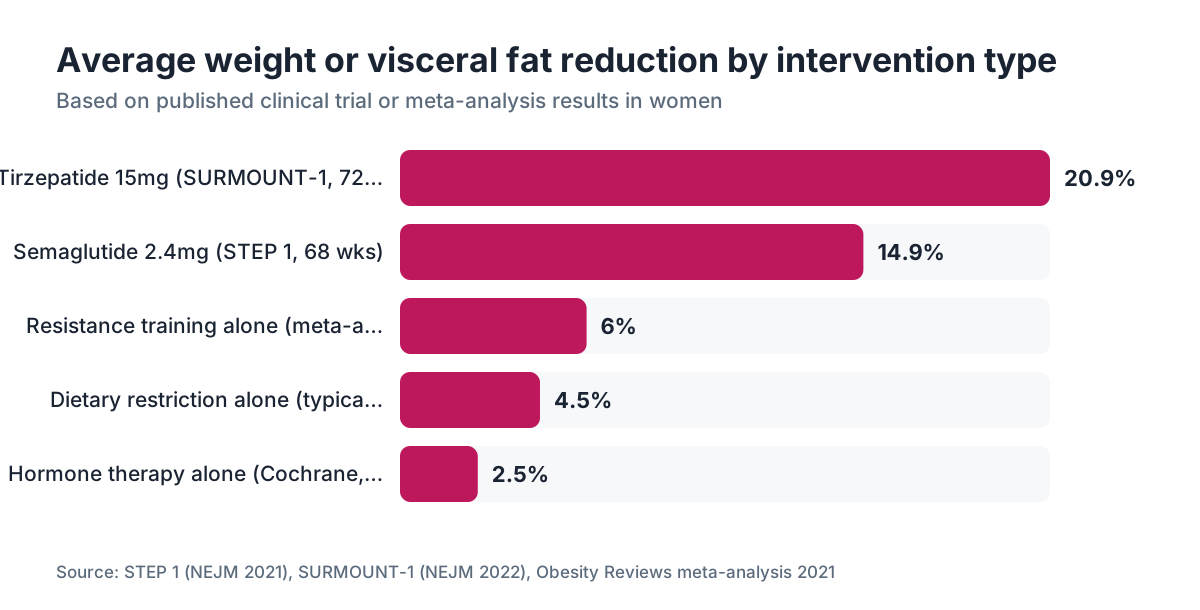
Hormone therapy (HT) is the most direct intervention because it addresses the root cause. A 2015 Cochrane review found that systemic estrogen-containing HT was associated with reductions in total body fat and abdominal fat compared with placebo in postmenopausal women, though the effect on body weight was modest [3]. The NAMS 2022 position statement on HT supports its use in appropriate candidates and notes cardiovascular and metabolic benefits, particularly in women who start within 10 years of menopause or before age 60 [2].
Strength training has among the strongest evidence for visceral fat reduction in older women. A meta-analysis in Obesity Reviews found that resistance training alone reduced visceral fat by roughly 1.1 kg on average, and combined with aerobic exercise the effect was larger [4]. The mechanism is partly the increase in resting metabolic rate from added muscle mass.
GLP-1 receptor agonists are the newest and most dramatic option. In the STEP 1 trial, semaglutide 2.4 mg weekly produced a mean weight loss of 14.9% at 68 weeks in adults with obesity [5]. Visceral fat was reduced disproportionately compared with subcutaneous fat, which matters clinically. The SURMOUNT-1 trial of tirzepatide showed even larger effects, with a mean weight reduction of 20.9% at the highest dose [6]. Most participants in these trials were women, though menopause status was not stratified in the published primary results.
Dietary changes alone produce modest results, mostly because they do not address the hormonal environment. But protein intake is worth emphasizing: women over 50 retain muscle more effectively when protein intake is at the higher end, around 1.2 to 1.6 grams per kilogram of body weight per day, which also supports satiety [4].
Does hormone therapy actually shrink belly fat?
It can, and for many women it is the intervention most often missing from the conversation. Estrogen therapy does not cause weight gain in most women, despite the widespread belief that it does. The 2022 NAMS Hormone Therapy Position Statement states that "hormone therapy does not cause weight gain" and that the weight redistribution from hips to abdomen that happens at menopause is attenuated by estrogen use [2].
The form of estrogen matters less than whether you are using systemic versus topical-only therapy. Vaginal estrogen, which is absorbed only locally, does not significantly affect visceral fat. Oral, patch, gel, or spray estrogen that reaches systemic levels is what influences fat distribution.
Progesterone matters too. Micronized progesterone (Prometrium and generics) appears metabolically neutral. Older synthetic progestins like medroxyprogesterone acetate (MPA) have shown some insulin-resistance effects in older studies, which is one reason many clinicians now prefer micronized progesterone for women with intact uteruses [2].
HT is not appropriate for everyone. Women with a history of estrogen-receptor-positive breast cancer, active blood clots, or unexplained vaginal bleeding typically are not candidates without specialist evaluation. Is bleeding after menopause always cancer? is a question worth understanding before starting HT. Timing also matters; the benefit-to-risk calculation is most favorable for women within 10 years of menopause onset [2].
If you are considering HT and want a clinician who understands the metabolic case for it, WomenRx offers telehealth prescribing specifically for hormone therapy in women at menopause and perimenopause.
What type of exercise burns hormonal belly fat most effectively?
Cardio burns calories during the workout. Strength training changes your metabolism between workouts. After 50, the second effect is more important.
Muscle mass declines by roughly 3 to 8% per decade after 30, and the rate accelerates after menopause. Less muscle means a lower resting metabolic rate. Every pound of muscle you add burns approximately 6 to 10 extra calories per day at rest, and those calories add up over months. More importantly, muscle acts as a glucose sink, pulling blood sugar out of circulation and improving insulin sensitivity directly.
A 2023 meta-analysis in the British Journal of Sports Medicine found that resistance training reduced visceral adipose tissue (VAT) significantly in postmenopausal women even without dietary restriction [4]. The effective doses in the trials ranged from two to four sessions per week, 45 to 60 minutes per session, with progressive loading (meaning you increase weight or resistance over time).
High-intensity interval training (HIIT) shows comparable visceral fat reduction to moderate-intensity continuous training in less time, and it preserves or builds muscle better than steady-state cardio. Two to three HIIT sessions per week, each 20 to 30 minutes, is a well-supported frequency.
Walking does help, and it's underrated. Studies consistently show that 7,000 to 10,000 steps per day is associated with lower visceral fat and lower all-cause mortality in midlife women compared with sedentary patterns [7]. The mechanism is partly direct energy expenditure and partly improved insulin sensitivity from non-exercise activity thermogenesis (NEAT). Walking is not a substitute for strength training, but it is additive.
The combination that works best in practice: two to three strength sessions per week, one to two HIIT sessions, and daily walking as the floor.
Does diet matter, and which eating pattern works best?
Diet matters, but the type of caloric restriction matters more than the total at this stage of life.
Protein should come first. The Recommended Dietary Allowance for protein is 0.8 g/kg body weight, but most sports medicine and geriatric nutrition researchers now argue that this is a floor, not a target, for older adults trying to maintain or build muscle. The International Society of Sports Nutrition recommends 1.4 to 2.0 g/kg for active adults over 50, with some researchers suggesting the higher end for women in caloric deficit [4]. At 68 kg (150 lbs), that means 95 to 136 grams of protein per day.
Refined carbohydrates and added sugar are the foods most directly linked to visceral fat accumulation and insulin resistance. A diet high in ultra-processed foods drives postprandial insulin spikes that, over time, promote visceral fat storage. You do not need to eliminate carbohydrates, but choosing ones with fiber (vegetables, legumes, whole grains) over ones without makes a measurable difference.
Time-restricted eating (a form of intermittent fasting) has shown some benefit for visceral fat in women. A 2022 trial in The New England Journal of Medicine found that caloric restriction with time restriction did not outperform caloric restriction alone for weight loss, though some studies focused on visceral fat specifically show modest additional benefit [8]. The practical upside is that many women find it easier to reduce total calories by limiting their eating window than by counting every gram.
Alcohol is worth mentioning directly because its contribution is underestimated after 50. Alcohol is preferentially metabolized as fat in the liver, it raises cortisol, it disrupts sleep, and it lowers inhibitions around food. Even two drinks per day meaningfully impairs the ability to reduce visceral fat. This is not a moral judgment; it's a metabolic one.
There is no single named diet that wins here. Mediterranean-pattern eating (olive oil, fish, vegetables, legumes, moderate whole grains) has the most long-term evidence for cardiovascular and metabolic benefit in postmenopausal women and is easy to sustain [7].
Can GLP-1 medications like semaglutide help with belly fat after menopause?
Yes, and the effects are substantial. GLP-1 receptor agonists work primarily by slowing gastric emptying, reducing appetite, and modulating the reward response to food. They also improve insulin sensitivity and reduce liver fat.
Semaglutide at 2.4 mg weekly (Wegovy) produced 14.9% mean body weight loss in the STEP 1 trial [5]. Imaging substudies of semaglutide trials have consistently shown that visceral fat is reduced proportionally more than subcutaneous fat, which is the more important health outcome. For reference, the FDA approved Wegovy in June 2021 for chronic weight management in adults with a BMI of 30 or higher, or 27 or higher with at least one weight-related condition [9].
Tirzepatide (Zepbound), a dual GLP-1 and GIP receptor agonist, showed even more pronounced results in SURMOUNT-1: 20.9% mean weight reduction at the 15 mg dose [6]. The FDA approved Zepbound for chronic weight management in adults in November 2023 [9].
For women after 50, the question is whether GLP-1s work as well as they do in younger adults. The data suggest they do. Analyses from the STEP trials did not show meaningful age-related attenuation of effect in the 50 to 70 age range.
The practical challenge is muscle loss. GLP-1 medications can cause loss of lean mass along with fat, and this is a real concern for postmenopausal women who are already at risk for sarcopenia. The current expert consensus is to combine GLP-1 therapy with progressive resistance training and high protein intake to protect muscle. Stop a GLP-1 medication without maintaining those habits and the weight comes back, primarily as fat, not muscle.
For more context on how semaglutide is prescribed and what to expect, see is semaglutide the same as Ozempic and semaglutide news.
WomenRx provides GLP-1 prescribing as part of its telehealth platform, with a focus on supporting women through the specific challenges of hormonal weight changes.
How long does it take to see results?
This depends heavily on which interventions you use and how consistently.
With hormone therapy alone, changes in fat distribution tend to emerge over three to six months, with most of the measurable visceral fat benefit visible by 12 months. HT is not a rapid weight loss tool; it shifts the metabolic environment so that other efforts work better.
With resistance training alone, waist circumference often begins to decrease within six to eight weeks even before the scale moves meaningfully, because muscle gain can offset fat loss on weight. Visceral fat reduction measured by DEXA scan typically shows meaningful change by three months of consistent training.
With GLP-1 medications, weight loss is usually noticeable within four to eight weeks, but the full effect takes 12 to 17 months at therapeutic dose. The STEP 1 trial ran for 68 weeks [5]. Expect the first two months to involve a lot of dose adjustment and side effect management.
With dietary changes alone, modest reductions in visceral fat (in the range of 5 to 10%) are achievable in three to six months, but most studies show plateau without the addition of exercise or hormonal support.
Realistic expectations matter here. A 10% reduction in visceral fat produces measurable improvements in insulin sensitivity, blood pressure, and triglycerides even if your waist measurement only drops by one to two inches. The metabolic benefits arrive before the cosmetic ones.
Are there any supplements that reduce belly fat after 50?
The supplement market for menopausal belly fat is enormous and mostly not worth the money.
There is no supplement with clinical evidence comparable to HT, strength training, or GLP-1 medications for reducing visceral fat. That is the honest answer.
There are a few with limited but real supporting data:
Magnesium (200 to 400 mg daily) improves insulin sensitivity and sleep quality, both of which indirectly support fat loss. It is cheap and safe.
Vitamin D deficiency is common after 50 and associated with increased visceral fat in observational studies. Correcting a deficiency (not megadosing in someone replete) may help. The Endocrine Society recommends screening for deficiency in at-risk populations [10].
Creatine monohydrate is one of the few supplements with strong evidence for preserving and building muscle in older adults. 3 to 5 grams per day combined with resistance training has a real effect on lean mass in postmenopausal women and indirectly helps body composition.
For supplements marketed to menopause specifically, the evidence for most is thin. For an honest look at what's in menopause-branded products, health & her perimenopause support is worth reviewing.
Thyroid function also comes up frequently in this context. Hypothyroidism is more common in women over 50 and contributes directly to weight gain and fat accumulation. If you have unexplained weight gain, fatigue, and cold intolerance alongside belly fat, get your TSH checked. Thyroid hormone replacement therapy covers what treatment looks like when that is the underlying issue.
What does a realistic plan look like, week by week?
A practical framework, based on the evidence above, without any single intervention being required:
Week 1 to 2: Establish baseline habits. Add two resistance training sessions. Aim for 8,000 steps per day. Start tracking protein intake (most women under-eat protein significantly). Get bloodwork: fasting glucose, insulin, HbA1c, TSH, vitamin D, and a lipid panel. These numbers tell you how serious the metabolic situation is and guide what else to add.
Week 3 to 6: Add a third training session or swap one for HIIT. Tighten carbohydrate quality rather than cutting total calories. If sleep is disrupted, address it: melatonin, sleep hygiene, or a conversation with a clinician about whether hot flashes are the driver.
Month 2 to 3: Evaluate whether hormone therapy is appropriate. If you are within 10 years of menopause onset, have no contraindications, and are bothered by both vasomotor symptoms and belly fat accumulation, the evidence-based case for at least a consultation is strong. This is also the point where some women consider GLP-1 therapy if lifestyle measures are producing slow results and BMI is 27 or above with metabolic comorbidities.
Month 3 to 6: Progress the resistance training (add weight or reps). By now, many women see meaningful waist circumference reduction. Recheck labs at six months.
Months 6 to 12: Maintain. The biggest mistake at this stage is declaring victory and stopping the behaviors that produced the results. Visceral fat returns if the hormonal and lifestyle inputs that reduced it are withdrawn.
Nobody has perfect adherence. The question is whether you hit your targets most of the time, not all of the time. A 2019 study on lifestyle adherence in postmenopausal women found that hitting resistance training targets at least 80% of the time was sufficient to produce statistically significant visceral fat reductions over 12 months [4].
When should you see a doctor rather than going it alone?
If your waist circumference is above 35 inches (88 cm), that is the clinical threshold for abdominal obesity risk in women, per the National Heart, Lung, and Blood Institute [11]. At or above that threshold, the metabolic risk is real enough that a clinical evaluation is worth having, not optional.
See a clinician if: you have gained 10 or more pounds in the past 12 months without a clear explanation, your fasting blood sugar has crept above 100 mg/dL, you have a family history of type 2 diabetes, or you have tried consistent exercise and protein-forward eating for three months with no change in waist circumference.
A specialist (endocrinologist, NAMS-certified menopause specialist, or a telehealth provider focused on women's hormones) can evaluate whether HT is appropriate, whether GLP-1 therapy is indicated, and whether thyroid or cortisol dysfunction is contributing. The menopause society maintains a directory of certified providers.
A good clinical plan treats the hormonal root cause alongside the behavioral factors, rather than handing you a prescription and leaving. If you are being told that weight gain at menopause is inevitable and there is nothing to do, find a different provider.
Frequently asked questions
Is hormonal belly fat different from regular belly fat?
Yes. Hormonal belly fat is predominantly visceral fat, which sits around the organs rather than under the skin. It behaves differently metabolically, secreting inflammatory signals and driving insulin resistance. It appears specifically at menopause because the drop in estrogen removes a hormonal signal that previously directed fat storage to the hips and thighs.
Can you lose belly fat at 55 or 60, or is it too late?
Not too late. Clinical trials of resistance training, hormone therapy, and GLP-1 medications all include women in the 55 to 70 age range with meaningful results. The STEP 1 semaglutide trial included participants up to age 75. Effect sizes are similar across the postmenopausal age range. Baseline metabolic rate is lower than at 35, so it takes more effort for the same result, but the biology still responds.
Does menopause cause belly fat even if your diet hasn't changed?
Yes. The shift in fat distribution at menopause is driven by hormonal changes more than caloric intake. Studies show women gain visceral fat during the menopause transition even when caloric intake and physical activity stay stable. This is because estrogen loss reduces lipolysis in peripheral fat depots and increases cortisol sensitivity in abdominal adipose tissue.
How much does waist circumference need to decrease to improve health markers?
A 5 to 10% reduction in visceral fat, which may translate to a 1 to 3 inch reduction in waist circumference, produces measurable improvements in fasting insulin, triglycerides, and blood pressure. The clinical threshold for risk is a waist above 35 inches (88 cm) in women. Even modest reductions below that threshold carry metabolic benefit.
Is hormone therapy safe for reducing belly fat after 50?
For most women under 60 or within 10 years of menopause onset without contraindications, systemic hormone therapy has a favorable benefit-to-risk profile per the 2022 NAMS position statement. It is not appropriate for everyone. Women with a history of hormone-receptor-positive breast cancer, active clotting disorders, or unexplained vaginal bleeding need specialist evaluation before starting.
Does Ozempic or Wegovy work for menopausal belly fat?
Yes. Both contain semaglutide, a GLP-1 receptor agonist. Wegovy is FDA-approved for chronic weight management. In the STEP 1 trial, participants lost an average of 14.9% body weight at 68 weeks, with visceral fat declining disproportionately compared with subcutaneous fat. The medication works in postmenopausal women, but muscle protection through protein and resistance training is important.
What blood tests should I ask for if I have belly fat after 50?
Ask for fasting glucose, fasting insulin (to calculate HOMA-IR, a measure of insulin resistance), HbA1c, a full lipid panel, TSH, vitamin D (25-OH), and a metabolic panel. If your clinician will order it, a DEXA scan can quantify visceral versus subcutaneous fat precisely. These numbers tell you what you are actually dealing with more than the scale does.
Does cortisol cause belly fat in women over 50?
Cortisol contributes but is rarely the primary driver on its own. Abdominal fat cells have a high density of glucocorticoid receptors, so they respond strongly to cortisol. Estrogen normally blunts this response. When estrogen drops, cortisol's fat-storing effect in the abdomen becomes relatively stronger. Chronic stress, poor sleep, and alcohol all raise cortisol and compound the problem.
How many grams of protein per day should a woman over 50 eat to lose belly fat?
Most sports nutrition and geriatric nutrition researchers recommend 1.2 to 1.6 grams per kilogram of body weight for postmenopausal women trying to reduce fat and preserve muscle. At 150 lbs (68 kg), that is roughly 82 to 109 grams per day. If using a GLP-1 medication or in a significant caloric deficit, aim for the higher end to protect lean mass.
Is intermittent fasting good for belly fat after menopause?
It can help, but mainly because it reduces total caloric intake, not because of a unique metabolic effect. A 2022 NEJM trial found time-restricted eating did not outperform caloric restriction alone for weight loss. Some women find it easier to manage hunger within a compressed eating window. If it helps you eat less without sacrificing protein intake or sleep quality, it is worth trying.
Can you get rid of belly fat after menopause with exercise alone?
Partially. Resistance training alone reduces visceral fat by roughly 1 kg on average in postmenopausal women per meta-analysis data. Adding aerobic exercise increases the effect. But without addressing the hormonal environment or diet, results plateau. Exercise is essential, and it works best combined with hormone therapy and adequate protein rather than as a standalone fix.
Why do I gain weight in my belly but not my hips after menopause?
Before menopause, estrogen promotes fat storage in hips, thighs, and buttocks. That pattern is largely protective from a cardiovascular standpoint. When estrogen falls, the regulatory signal disappears and the body defaults to the pattern more common in men: visceral and abdominal fat accumulation. Cortisol and insulin, which are relatively more influential without estrogen, both favor abdominal fat depots.
Does stress management actually help reduce belly fat after 50?
Yes, but as a supporting factor rather than a primary intervention. Chronic psychological stress raises cortisol, promotes abdominal fat storage, disrupts sleep, and increases appetite for high-calorie foods. Sleep is particularly important: even one week of restricted sleep raises ghrelin and reduces leptin measurably. Addressing stress and prioritizing 7 to 9 hours of sleep improves the results of everything else.
What's the fastest way to lose belly fat after menopause?
The fastest evidence-based approach combines GLP-1 medication with progressive resistance training and high protein intake. Semaglutide 2.4 mg produced 14.9% weight loss in 68 weeks; tirzepatide produced 20.9%. Adding hormone therapy further improves fat distribution. No single approach is both fast and sustainable without the muscle-protective elements, which is why the combination matters.
Sources
- Climacteric, Lovejoy et al., 2008 and associated review in Climacteric journal
- North American Menopause Society (NAMS), 2022 Hormone Therapy Position Statement
- Cochrane Database of Systematic Reviews, Boardman et al., Hormone therapy for preventing cardiovascular disease in post-menopausal women, 2015
- Obesity Reviews, Ismail et al., meta-analysis on resistance training and visceral fat in postmenopausal women
- New England Journal of Medicine, Wilding et al., STEP 1 trial, 2021
- New England Journal of Medicine, Jastreboff et al., SURMOUNT-1 trial, 2022
- JAMA Internal Medicine, Saint-Maurice et al., 2020, steps per day and mortality
- New England Journal of Medicine, Liu et al., time-restricted eating vs caloric restriction, 2022
- U.S. Food and Drug Administration, FDA Drug Approvals and Databases
- Endocrine Society, Clinical Practice Guideline on Vitamin D Deficiency
- National Heart, Lung, and Blood Institute (NHLBI), Obesity Clinical Guidelines