Can you get pregnant during perimenopause? What you need to know
TL;DR: Yes, you can get pregnant during perimenopause. Fertility drops sharply but does not hit zero until you have gone 12 months in a row without a period, the clinical definition of menopause. Women in their 40s still ovulate unpredictably, and unintended pregnancies in this age group are common. Keep using contraception unless you are actively trying to conceive.
Can you get pregnant during perimenopause?
Yes. Perimenopause is a transition, not an off switch. Ovulation keeps happening throughout perimenopause, just on a schedule you can no longer predict the way you could in your 20s and 30s. Cycles get irregular, stretch out, or vanish for months. It feels like fertility has ended. That feeling is wrong often enough to matter.
The North American Menopause Society (NAMS) is blunt about this: pregnancy is possible any time ovulation occurs, and ovulation can happen even when periods are sporadic [1]. The only reliable endpoint is 12 consecutive months without a menstrual period, which is the clinical definition of menopause [1]. Until that anniversary passes, your body still has everything it needs to conceive.
Here is the fact most women in their 40s do not expect. Unintended pregnancy rates among women 40 to 44 run higher than the rates among teenagers in the United States, per the Guttmacher Institute [2]. The reason is simple. Women in perimenopause quietly drop contraception based on the reasonable but incorrect belief that pregnancy is off the table. The data disagree.
So if you are in your 40s, your periods are irregular, and you are skipping contraception, yes, you can still get pregnant. The odds are lower than they were a decade ago. They are not zero.
How fertile are you during perimenopause?
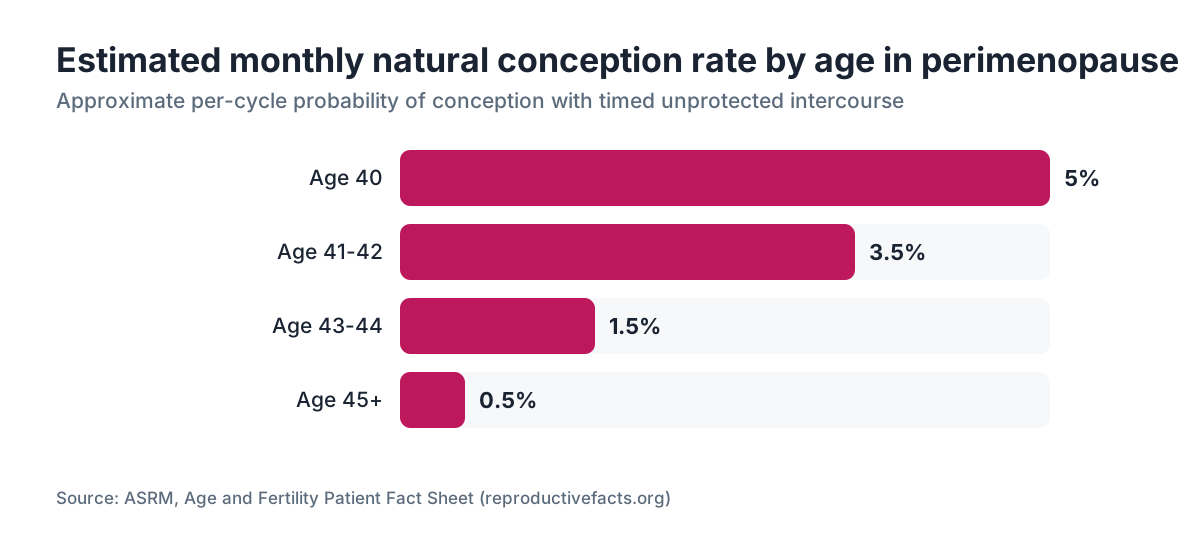
Fertility falls hard during perimenopause, but the drop is gradual and uneven, not a clean line down to nothing. A 40-year-old woman has roughly a 5 percent chance of conceiving per cycle with timed intercourse, against about 20 to 25 percent per cycle for a woman in her late 20s [3]. By 44 to 45, monthly fecundity sits around 1 to 2 percent per cycle [3]. Small numbers. But across a year of irregular cycles, small numbers add up.
The real trouble is timing. Perimenopausal ovulation is unpredictable. You might skip three periods and then ovulate out of nowhere. Calendar tracking and temperature charting fall apart when cycles are irregular, which is exactly what perimenopause hands you. You cannot spot ovulation the way you could when your cycle ran like clockwork.
FSH (follicle-stimulating hormone) climbs during perimenopause as the ovaries stop responding well to hormonal signals. But one elevated FSH reading does not confirm infertility [1]. FSH swings month to month. Plenty of clinicians have watched patients with FSH in the menopausal range go on to conceive. No single hormone test closes the door before that 12-month mark.
AMH (anti-Müllerian hormone) is a better read on ovarian reserve. Even so, very low AMH does not promise you will not ovulate. It signals lower odds, not zero.
What are the odds of getting pregnant in perimenopause by age?
The numbers move a lot across the perimenopausal decade. Here is what the reproductive medicine literature shows [3][4]:
| Age | Approximate monthly chance of conception (natural cycles) | Notes | |---|---|---| | 40 | ~5% per cycle | Fertility declining but real | | 41-42 | ~3-4% per cycle | IVF live-birth rates also drop sharply | | 43-44 | ~1-2% per cycle | Egg quality decline accelerates | | 45+ | <1% per cycle | Very low but not zero |
These figures come from women actively trying to conceive, so they assume timed intercourse. For women not tracking ovulation at all, the per-cycle risk in any given month is low. Across a year of unprotected sex, it is not something to wave off.
The Society for Assisted Reproductive Technology (SART) publishes annual IVF outcomes by age [4]. In 2021, live birth rates per retrieval cycle for women using their own eggs were roughly 5.4 percent at age 42 and under 2 percent at age 44. Treat those as a floor, since IVF patients often already have known fertility problems. Natural conception is not the same as IVF, but the age curve runs the same direction.
What the table leaves out: the chance of a chromosomal abnormality climbs with age. At 40, roughly 40 to 50 percent of embryos carry an abnormality. By 44, that figure is estimated at 70 to 80 percent [3]. That is why miscarriage rates are high in this group even when conception does happen.
Is it dangerous to get pregnant during perimenopause?
Pregnancy in your 40s carries real, documented risks, and you deserve straight talk about them. This is not about talking anyone out of a wanted pregnancy. It is about deciding with your eyes open.
For the mother, the risks of a perimenopausal pregnancy include gestational hypertension and preeclampsia (rates roughly two to three times higher than in women in their 20s), gestational diabetes, placenta previa, placental abruption, and cesarean delivery [5]. The American College of Obstetricians and Gynecologists (ACOG) classifies pregnancies at age 35 and older as "advanced maternal age" because the complication profile shifts enough to warrant closer monitoring [5].
Cardiac complications are the most serious maternal risk. Cardiomyopathy and arrhythmia rates run higher in pregnancies over 40, and women in this age group more often carry underlying conditions like hypertension, diabetes, or thyroid disease that complicate a pregnancy on their own [5].
For the baby, the main concern is chromosomal aneuploidy, especially trisomy 21 (Down syndrome). At 40, the risk is about 1 in 100. At 45, it rises to about 1 in 30 [6]. Those figures come from the CDC's reference data. Prenatal screening, including cell-free DNA testing and amniocentesis, can assess chromosomal status early.
None of this makes a healthy pregnancy at 43 or 44 impossible. Women have them every day. It does mean you want care from a maternal-fetal medicine specialist or high-risk OB rather than a standard practice. The monitoring runs more often and the testing decisions land differently.
So, is it dangerous to get pregnant in perimenopause? Honestly: it carries more risk than pregnancy at 30, those risks are manageable with the right care, and the specifics ride heavily on your own health baseline.
What are the signs of pregnancy vs. perimenopause?
This is where it gets genuinely confusing, because early pregnancy and perimenopause share almost the same symptom list.
Both can bring missed or irregular periods, fatigue, breast tenderness, mood swings, bloating, and broken sleep. Hot flashes and night sweats lean more perimenopausal, though not absolutely. Nausea leans more toward pregnancy, though plenty of women never get it.
Only one thing settles the question: a urine or blood pregnancy test. If you have had unprotected sex and your period is late or missing, test. A standard over-the-counter urine hCG test works at any age. If the urine test is negative and symptoms hang on or your period stays gone, a blood hCG test (more sensitive) plus a hormone panel (FSH, estradiol, progesterone) from your doctor can sort out what is going on [1].
Do not file a missed period in your 40s under "just perimenopause" without ruling out pregnancy. The cost of guessing wrong is not the cost of a pregnancy test.
Some women also mistake an early miscarriage for a heavy perimenopausal period. If a period comes unusually heavy, later than expected, or with cramping worse than your normal, and you have had unprotected sex, mention it to your doctor and ask whether it needs a closer look.
Do you still need contraception during perimenopause?
Yes. NAMS advises continuing contraception until menopause is confirmed, meaning 12 consecutive months without a period if you are over 50, and some guidelines extend that to 24 months for women under 50 (though 12 months is the more widely cited threshold in the United States) [1].
The practical snag is that irregular periods make the 12-month count hard to hold. Bleed at month 10 of a dry stretch, and the clock resets. This drives perimenopausal women up the wall, but it is the biologically correct rule, because sporadic ovulation keeps going the whole time.
Several contraceptive options work well during perimenopause and manage symptoms at the same time:
Low-dose combined oral contraceptives (if you do not smoke and have no history of VTE or cardiovascular risk factors) can steady cycles, cut hot flashes, and prevent pregnancy [7]. The FDA-approved label notes contraceptive efficacy holds regardless of age in healthy non-smoking women.
The levonorgestrel IUD (Mirena, Liletta) earns its keep here. It is over 99 percent effective, it reduces the heavy bleeding common in perimenopause, and it can serve as the progestogen half of a combined HRT regimen if you later add estrogen [7].
Progestin-only methods (mini-pill, implant, Depo-Provera) suit women who cannot use estrogen. They work, but they can add irregular spotting, which muddies an already messy bleeding picture.
Barrier methods (condoms, diaphragm with spermicide) stay on the table but carry typical-use failure rates of 12 to 18 percent per year [7]. That is a lot when even a small pregnancy chance comes with elevated risk.
If you want to talk through contraceptive options that also handle perimenopausal symptoms, WomenRx offers telehealth consultations with clinicians who work in exactly this overlap.
See also: hormone replacement therapy and progesterone for how progestogen choice differs between contraception and HRT.
Can perimenopausal hormone symptoms be mistaken for pregnancy?
Absolutely, and it cuts both ways. Women mistake perimenopause for pregnancy and pregnancy for perimenopause, sometimes for weeks or months.
The estrogen and progesterone swings of perimenopause can mimic early pregnancy nearly symptom for symptom. Estrogen surges in early perimenopause, then drops, then surges again. Those swings hit mood, sleep, breast tissue, and the uterine lining in ways that feel a lot like early pregnancy.
Picture the setup. A woman whose periods have gone irregular goes six weeks without one, notices sore breasts and deep fatigue, and lands on perimenopause as the explanation. She is probably right. She might also be pregnant. A pregnancy test takes two minutes. There is no good reason to skip it.
One clue that sometimes helps: early pregnancy nausea tends to stay fairly steady across the day (worse in the morning for many women) and ties to specific smells or foods. Perimenopausal mood and energy dips tend to track sleep loss from night sweats. But symptom patterns are not diagnostic. The test is.
What happens to a perimenopausal pregnancy if you are also on hormones?
If you are using menopausal hormone therapy (MHT, also called HRT) and find out you are pregnant, stop the hormones and call your OB the same day. Most systemic HRT formulations are not safe in pregnancy. The FDA labeling for combined estrogen-progestogen products lists known or suspected pregnancy as a contraindication [8].
If you are using hormone replacement therapy for perimenopausal symptoms, the cleanest safeguard is to rule out pregnancy before you start, any time there is a chance you could be pregnant.
If you are on a low-dose combined oral contraceptive (which some perimenopausal women use for symptoms and contraception at once) and conceive despite the pill, the evidence on outcomes is reassuring for accidental first-trimester exposure. Stop the pill and call your provider [9].
Some clinicians prescribe progesterone (oral micronized or vaginal) to support luteal phase defects in perimenopausal women with irregular cycles. If you are also trying to conceive, progesterone in early pregnancy is sometimes used to lower miscarriage risk in women with documented low progesterone, though the evidence is mixed and a specialist should run it [9].
See perimenopause age and when does menopause start for context on timing your transition.
How do you know when you are finally past the risk of pregnancy?
The clinical rule is clean: 12 consecutive months without any menstrual bleeding defines menopause, and once you hit that anniversary you are no longer fertile in any clinically meaningful sense [1][10].
The real-world version is messier. "No bleeding" means none at all, including the lightest spotting. Any vaginal bleeding after the 12-month mark counts as post-menopausal bleeding and needs a doctor's evaluation, because while pregnancy is now extremely unlikely, bleeding after menopause has other causes (including endometrial disease) that call for a workup [10].
Can a hormone test confirm you are past fertility before the 12 months are up? Short answer, no, not reliably. Even with FSH over 40 mIU/mL (the classic menopausal threshold) and very low estradiol, the numbers can bounce, and ovulation has been documented in women whose labs read menopausal [1]. The 12-month clinical criterion beats any hormone panel.
The average age of menopause in the United States is 51 to 52 [10]. Perimenopause usually starts 4 to 8 years earlier, so most women enter it in their mid-to-late 40s. The spread is wide, though. Some women start perimenopause at 40, others not until 55. See menopause age for what shapes your timing.
If menopause arrives before 40, that is premature ovarian insufficiency (POI), a separate condition with its own evaluation and treatment. Women with POI still ovulate intermittently and can still conceive, so the fertility question gets even trickier in that group.
What should you do if you think you might be pregnant in perimenopause?
Take a pregnancy test first. Obvious, and skipped constantly, because "it's probably just perimenopause" feels like an answer when it is only a guess.
If the test is positive, contact your OB or midwife within a day or two. Early confirmation of a viable intrauterine pregnancy by ultrasound matters at any age, and at 40-plus it matters more, because the rate of ectopic pregnancy rises with age and because chromosomal testing runs on time windows.
Expect a referral to a maternal-fetal medicine (MFM) specialist or high-risk management. That is standard care, not an alarm. The MFM will walk you through prenatal screening, including cell-free DNA testing (available from 10 weeks gestation) and amniocentesis for a definitive chromosomal diagnosis [6].
If the test is negative and you were worried, this is a good moment to talk contraception if you are not already using it reliably, and to ask whether your symptoms warrant a perimenopause evaluation. A baseline FSH, estradiol, and possibly AMH panel can map where you sit in the transition, even though those results cannot slam the door on fertility.
For women working through this stretch, WomenRx helps with perimenopause evaluation and can help you sort whether hormonal support fits your situation alongside a contraceptive plan.
Also worth reading: menopause for the full picture of what follows perimenopause, and estrogen patch if you are weighing transdermal options for symptoms.
Are there any benefits to getting pregnant during perimenopause?
This question rarely surfaces in the exam room, but the research on reproductive history and long-term health is worth a look. Some observational studies link late pregnancy (after 40) to a small drop in all-cause mortality and a modestly longer lifespan, probably because later natural fertility reflects slower biological aging rather than any benefit from the pregnancy itself [11]. The cause and effect here is murky, and this is absolutely not a reason to chase pregnancy for longevity.
Clearer from the research: breastfeeding after any pregnancy, including a late one, has established benefits for the mother, including lower risks of breast and ovarian cancer, though how much that holds specifically in perimenopausal pregnancies has not been well studied [11].
For women who do want to conceive in perimenopause, assisted reproduction outcomes improve sharply with donor eggs. Live birth rates with donor eggs in recipients over 40 run roughly 40 to 50 percent per transfer cycle, close to rates in younger recipients, because egg age matters more than uterine age [4]. Worth knowing if you are building a family in your 40s.
The emotional side counts too. An unplanned perimenopausal pregnancy is one of the more disorienting surprises at this stage of life. Good information ahead of time, keeping contraception in place and knowing when to test, protects against that kind of shock.
Frequently asked questions
Can you get pregnant during perimenopause if your periods are irregular?
Yes. Irregular periods mean irregular ovulation, not absent ovulation. You can ovulate even during a long gap between periods, and that ovulation can lead to pregnancy if you have unprotected sex around that time. Since you cannot reliably predict ovulation on an irregular cycle, contraception is the only dependable way to prevent pregnancy until you hit 12 consecutive period-free months.
Can you get pregnant during perimenopause at 47?
Yes, though the monthly probability is very low, around 1 percent or less per cycle. Most women are in perimenopause at 47, and many have not yet reached their 12-month menopause anniversary. Sporadic ovulation continues. The risk of chromosomal abnormality is high at this age (an estimated 70 to 80 percent of embryos), and miscarriage rates are elevated, but conception stays biologically possible until menopause is confirmed.
What are the chances of getting pregnant naturally at 45 during perimenopause?
Estimates from the reproductive medicine literature put the monthly chance of natural conception at 45 under 1 percent per cycle. Over a full year of unprotected sex, cumulative probability stays low, but not zero. SART data for IVF with own eggs at 44 to 45 show live birth rates under 2 percent per cycle, which gives a sense of scale for natural fertility at this age.
How do you tell the difference between perimenopause symptoms and early pregnancy?
You often cannot tell from symptoms alone. Missed periods, fatigue, breast tenderness, mood changes, and bloating show up in both. A urine or blood hCG pregnancy test is the only reliable way to separate them. Take the test first. If it is negative, a hormone panel (FSH, estradiol, progesterone) ordered by your doctor can help confirm whether your symptoms are perimenopausal in origin.
Is it safe to get pregnant at 44?
Pregnancy at 44 is higher-risk than at younger ages. Rates of gestational hypertension, preeclampsia, gestational diabetes, and cesarean delivery are elevated. The risk of chromosomal abnormality in the baby is about 1 in 30 at age 45. With close monitoring by a maternal-fetal medicine specialist, many women have healthy pregnancies at 44, but it takes specialist-level care rather than standard obstetric management.
Does an elevated FSH mean you can't get pregnant?
No. An elevated FSH (above 10 to 20 mIU/mL, depending on lab reference ranges) suggests declining ovarian reserve, but it does not confirm infertility. FSH levels swing from cycle to cycle, and documented conceptions have occurred in women with FSH in the classic menopausal range (above 40 mIU/mL). No single hormone test rules out ovulation or conception before the 12-month menopause mark.
What contraception works best during perimenopause?
The levonorgestrel IUD (Mirena, Liletta) is a strong option for many perimenopausal women: over 99 percent effective, it reduces the heavy bleeding common in perimenopause, and it can serve as the progestogen in an HRT regimen later. Low-dose combined oral contraceptives also work well in healthy non-smoking women and can cut hot flashes. Talk to your provider about which fits your health history, since cardiovascular risk affects suitability.
When can you safely stop using birth control during perimenopause?
The standard guideline from NAMS is 12 consecutive months without a period. Some European guidelines recommend 24 months for women under 50. Until that threshold is confirmed, ovulation remains possible and contraception remains appropriate. Hormone tests alone (FSH, estradiol) are not reliable enough to use as the signal to stop, because they fluctuate and do not reliably predict the end of ovulation.
Can perimenopause cause a false positive pregnancy test?
Standard over-the-counter tests measure hCG, a hormone made by placental tissue after conception. Perimenopause does not cause hCG production, so a positive urine hCG test indicates pregnancy (or, rarely, a tumor that produces hCG). Elevated LH from perimenopause once caused false positives on older test kits, but modern tests are designed to avoid this. If you get a positive, confirm with a blood hCG test.
What is the risk of miscarriage if you get pregnant in perimenopause?
Miscarriage risk rises sharply with age. At 40, rates are estimated at 30 to 40 percent of recognized pregnancies. By 44 to 45, the rate reaches 50 to 60 percent or higher. The main driver is chromosomal abnormality in the embryo, not the uterine environment. Prenatal genetic testing (cell-free DNA from 10 weeks, or amniocentesis) can assess chromosomal status early in a perimenopausal pregnancy.
Can you get pregnant during perimenopause while on HRT?
Yes, if you have not yet reached the 12-month menopause mark and you are ovulating. HRT is not contraception. Standard MHT doses do not reliably suppress ovulation. If you use MHT during perimenopause and want to avoid pregnancy, you need a separate contraceptive method. A levonorgestrel IUD can do both jobs at once, acting as contraception and providing the progestogen component of an HRT regimen.
How does perimenopause affect IVF success rates?
IVF using a woman's own eggs falls sharply in perimenopause. SART 2021 data show live birth rates under 5.4 percent per retrieval at age 42 and under 2 percent at age 44. Using donor eggs improves outcomes a lot: recipients over 40 reach live birth rates of 40 to 50 percent per transfer, because egg age is the dominant factor. Women considering IVF in their 40s should discuss egg donor options early.
Is there a specific perimenopausal age when pregnancy becomes impossible?
There is no single age. The transition varies widely: some women reach menopause at 44, others at 57. Pregnancy becomes extremely unlikely but not definitively impossible before the 12-month period-free mark, regardless of age. Once you have had 12 consecutive months without any menstrual bleeding, natural pregnancy is considered clinically over. Post-menopausal pregnancy through egg donation and IVF is a separate question.
Sources
- North American Menopause Society (NAMS), Menopause Practice: A Clinician's Guide
- Guttmacher Institute, Unintended Pregnancy in the United States
- American Society for Reproductive Medicine (ASRM), Age and Fertility Patient Fact Sheet
- Society for Assisted Reproductive Technology (SART), 2021 National Summary Report
- American College of Obstetricians and Gynecologists (ACOG), Committee Opinion on Advanced Maternal Age
- CDC, Facts about Down Syndrome, National Center on Birth Defects and Developmental Disabilities
- ACOG Practice Bulletin No. 206, Use of Hormonal Contraception in Women with Coexisting Medical Conditions
- FDA, Prescribing Information for Combined Estrogen-Progestogen Hormone Therapy Products
- Cochrane Review: Progesterone for prevention of miscarriage in women with recurrent miscarriage (Devall et al., 2021)
- National Institute on Aging (NIA), NIH, What Is Menopause?
- Perls T et al., Menopause and longevity, Menopause, 2022 NAMS journal