Can perimenopause cause nausea? What's actually happening
TL;DR: Yes, perimenopause causes nausea. The driver is rapidly shifting estrogen, which hits the gut, the brain's nausea centers, and your sleep all at once. Nausea usually peaks in early perimenopause, when hormone swings are most erratic, and eases as estrogen settles into a steadier low range near menopause. For some women it stays bad enough to treat.
Does perimenopause actually cause nausea, or is something else going on?
Perimenopause causes nausea. This isn't a fringe symptom buried in fine print. The North American Menopause Society (NAMS) lists gastrointestinal symptoms, nausea among them, among the recognized symptoms of the menopausal transition [1]. The mechanism is real and documented, even if your doctor hasn't connected the dots for you yet.
Nausea also has dozens of other causes, and perimenopause doesn't give you a pass to skip ruling those out. Thyroid trouble peaks in women in their 40s and causes both nausea and irregular periods. So does anxiety, iron deficiency, GERD, and an unplanned pregnancy (perimenopause does not reliably prevent conception). If your nausea is new and severe, do a basic workup first.
But if your labs are normal, your pregnancy test is negative, and the nausea tracks with hot flashes, broken sleep, or mood swings, perimenopause is a strong suspect. Most women describe waves rather than constant queasiness, often worst in the morning or after a bad night. That timing is itself a clue pointing back to hormones.
Why does fluctuating estrogen make you feel nauseous?
Estrogen talks directly to your gut and to your brain's vomiting center. Wild swings in its level trigger nausea through several pathways at once. That's the short version.
Estrogen changes serotonin signaling throughout the gastrointestinal tract. About 90 to 95 percent of the body's serotonin is made in the gut, and serotonin runs intestinal motility and nausea [2]. When estrogen spikes and then crashes, serotonin signaling shifts with it, slowing gastric emptying and triggering nausea the same way serotonin-active chemotherapy drugs do, just at far lower intensity.
Estrogen also acts on the chemoreceptor trigger zone in the brainstem, the area that detects circulating hormones and toxins and tells the vomiting center to fire. That's why nausea is a textbook symptom of early pregnancy, when estrogen and HCG rise fast, and why it returns during perimenopause when estrogen fluctuates hard before its eventual fall [3].
There's a third mechanism that gets less airtime: the hot flash itself. A hot flash is a sudden surge of sympathetic nervous system activity. That surge raises heart rate, redirects blood flow, and can bring a wave of nausea that lingers for minutes after the flush passes. Plenty of women feel vaguely queasy for 10 to 20 minutes after a severe flash. That's an autonomic response, not a separate GI condition.
Progesterone matters here too. Progesterone is what made many women queasy in the luteal phase of their cycles, and it's why pregnancy morning sickness hits so hard. During perimenopause, progesterone becomes erratic and often drops before estrogen does, which shifts the estrogen-to-progesterone ratio in ways that amplify estrogen's effects and the body's sensitivity to them [4]. More on how progesterone changes in this transition is in our article on progesterone.
How common is nausea during perimenopause?
Solid prevalence numbers for perimenopause nausea are harder to pin down than for hot flashes or sleep problems, mostly because big menopause studies have historically lumped GI symptoms together into one bucket.
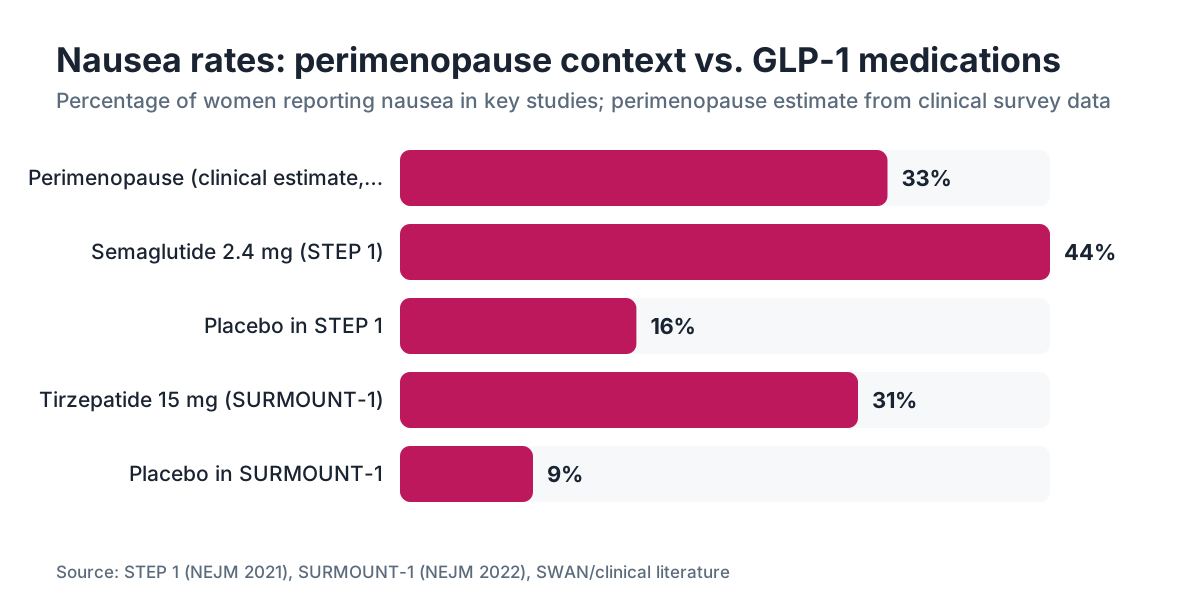
The Study of Women's Health Across the Nation (SWAN), which followed over 3,300 women through the transition, found GI symptoms including nausea reported by a meaningful subset of participants, though its main focus was vasomotor and psychological symptoms [5]. Smaller clinical surveys put nausea somewhere between 25 and 40 percent of perimenopausal women at some point, ranging from mild and occasional to bad enough to disrupt daily life.
Women in early perimenopause, when estrogen swings are most chaotic, report nausea more often than women in late perimenopause, when estrogen has settled into a low but stable range. That fits the mechanism. It's the volatility, not the low level, that seems to trigger nausea most sharply.
Nausea runs consistently higher in perimenopausal women than in postmenopausal women of the same age. That gap points to hormone fluctuation, rather than aging itself, as the primary cause.
What does perimenopause nausea actually feel like?
Most women describe it like first-trimester pregnancy nausea or the queasiness that used to ride along with PMS, but without a predictable monthly pattern. It comes in waves. Morning is the most reported time, probably because overnight sleep disruption from hot flashes leaves cortisol and blood sugar off-kilter by dawn. But it can hit in the afternoon or evening too, especially after a broken night.
Some women find foods that never bothered them suddenly do, particularly fatty or rich food, coffee on an empty stomach, or alcohol. Estrogen affects gastric acid secretion, so digestive tolerance can shift a lot during perimenopause.
Vomiting is usually not part of it. Most women describe a low-grade background queasiness that makes eating unappealing rather than urgent nausea that demands the bathroom. Some do vomit, though, particularly during or right after a severe hot flash.
Perimenopause nausea also tends to travel in a pack: breast tenderness, headaches (especially migraines around ovulation or cycle days 1 to 2), mood swings, and bloating. If you track it and see nausea cluster with these, the hormonal link gets clearer.
Perimenopause nausea vs. other causes: how to tell the difference
Nausea has many causes, so run a quick mental differential before assuming perimenopause is the whole story.
| Cause | Timing pattern | Associated symptoms | Key test | |---|---|---|---| | Perimenopause | Waves, often morning, tracks with hot flashes or poor sleep | Hot flashes, mood changes, irregular periods | FSH, estradiol (though these fluctuate and single values can mislead) | | Thyroid dysfunction | Persistent, not wave-like | Weight change, fatigue, hair loss, palpitations | TSH, free T4 | | GERD / acid reflux | After meals, when lying down | Heartburn, regurgitation, cough | Clinical history, trial of PPI | | Anxiety or panic disorder | Situational, with racing heart | Worry, insomnia, avoidance | Clinical assessment | | Pregnancy | Morning-dominant, weeks 6-12 | Missed period, breast tenderness | Urine hCG | | Medication side effect | Temporal link to starting a new drug | Varies | Medication review | | GLP-1 receptor agonists | Dose-dependent, early in treatment | Fullness, reflux | Medication review |
One note on FSH testing: a single FSH level can look normal even in early perimenopause because levels swing enormously day to day. NAMS guidance says FSH and estradiol alone should not diagnose perimenopause in women who are still having periods; the clinical picture and symptom history carry more weight [1]. The perimenopause age article walks through the diagnostic approach in more detail.
If you're on a GLP-1 like semaglutide for weight management and also in perimenopause, you have two independent nausea sources running at once. GLP-1 receptor agonists slow gastric emptying as part of how they work, and the STEP 1 trial found nausea in 44 percent of participants on semaglutide 2.4 mg versus 16 percent on placebo [6]. Sorting out which one is doing more comes down to timing: GLP-1 nausea is usually worst in the first 4 to 8 weeks after a dose increase and then fades, while perimenopause nausea stays erratic.
Does hormone therapy help with perimenopause nausea?
For many women, yes. If estrogen fluctuation is the root cause, steadying estrogen with hormone therapy (HT) often cuts nausea along with hot flashes and sleep problems.
Delivery route is the whole game here. Oral estrogen gets absorbed through the gut and passes through the liver, which can briefly worsen nausea in some women, especially at the start. Transdermal estrogen, via patch, gel, or spray, goes straight into the bloodstream and skips the GI first-pass effect. For women whose nausea is GI-mediated, transdermal is the better starting point [7]. Our article on the estrogen patch covers how transdermal delivery works.
If you still have your uterus, you'll need progesterone alongside estrogen to protect the lining. Oral micronized progesterone (like Prometrium) is better tolerated than synthetic progestins for most women. Some women find adding progesterone actually calms the estrogen volatility enough to ease the nausea.
Women who can't or won't take systemic hormones still have options. Gabapentin has evidence for vasomotor symptoms and may cut hot-flash-linked nausea indirectly. Fezolinetant, an FDA-approved non-hormonal drug for vasomotor symptoms since May 2023, can lower hot flash frequency and their associated nausea, though direct data on nausea as an endpoint is thin [8].
For a wider look at what hormone therapy involves and who it suits, the hormone replacement therapy article covers the evidence, the risks, and how to raise it with a clinician.
What else actually helps perimenopause nausea (non-hormonal options)?
Not every woman is a candidate for hormone therapy, and not everyone wants it. Here's what has real evidence or strong clinical consensus behind it.
Blood sugar stabilization is the most underrated fix. Nausea gets amplified by low or unstable blood sugar, and perimenopause worsens insulin sensitivity. Eating within 30 minutes of waking, front-loading protein at breakfast, and skipping long fasts cuts morning nausea meaningfully for a lot of women. It costs nothing and has no downside.
Ginger has the best evidence of any natural remedy for nausea generally. A review in the British Journal of Anaesthesia found ginger was statistically superior to placebo for postoperative nausea across multiple trials [9]. The dose in studies is typically 1 to 1.5 grams per day, not the trace amount in ginger ale. Capsules, crystallized ginger, or strong tea at that dose are practical ways to hit it.
Fixing sleep matters enormously, because broken sleep from hot flashes sets off the cascade that ends in morning nausea. Treat the hot flashes, with HT or non-hormonal options, and nausea often improves as a side effect. That's why managing vasomotor symptoms frequently solves the nausea without ever targeting nausea directly.
Acupressure at the P6 (pericardium 6) point on the inner wrist has decent evidence for pregnancy and chemotherapy nausea. Sea-Bands work through that point. Evidence for perimenopause nausea specifically is thin, but the risk is zero and the cost is low, so it's a reasonable thing to try while you work on the hormonal root cause.
Antiemetics like ondansetron or promethazine handle acute nausea but make a poor long-term plan here. If the cause is perimenopause, you'd be treating the symptom forever instead of the driver. Save them for a flight or an event you can't miss, not daily management.
Can perimenopause nausea be a sign of something more serious?
Usually not. Perimenopause nausea is a functional symptom driven by hormone fluctuation, not a sign of structural disease. But some red flags need prompt evaluation no matter your perimenopausal status.
See a doctor quickly if nausea comes with severe abdominal pain, blood in vomit or stool, unexplained weight loss (more than 5 percent of body weight over 6 months without trying), jaundice, or nausea that is constant rather than coming in waves. Those patterns don't fit perimenopause and need a proper workup.
Headaches with nausea deserve attention too. Perimenopause worsens migraines in many women, particularly menstrual migraines driven by estrogen withdrawal around a period [12]. Nausea is a core feature of migraine and can be intense. If headache and nausea travel together, that's likely a migraine variant rather than isolated GI nausea, and it changes both the diagnosis and the treatment.
Ovarian cysts get somewhat more common during perimenopause because of erratic ovulation, and a large cyst can cause nausea alongside pelvic discomfort. If nausea comes with one-sided pelvic pain or bloating that doesn't fluctuate with your cycle, a pelvic ultrasound is reasonable.
How long does perimenopause nausea last?
This is genuinely variable, and anyone who hands you one confident number is guessing. Perimenopause itself lasts anywhere from 2 to 10 years, averaging 4 to 7 years before the final period [10]. Nausea tends to be worst in the early and middle stages, when estrogen fluctuations are most erratic.
For many women, nausea fades on its own as estrogen declines and stabilizes in late perimenopause, even before the final period. The body adapts. The gut's serotonin system recalibrates. Hot flashes may actually pick up during late perimenopause, but the nausea often quiets.
After menopause, estrogen-driven nausea usually resolves unless a woman starts oral estrogen therapy, where the GI first-pass effect can briefly revive it. Women who switch from oral to transdermal HT postmenopause often realize the nausea they blamed on menopause was partly medication-induced all along.
If your nausea has run more than 3 months and is hurting your ability to eat or function, treat it actively instead of waiting it out. Suffering through symptoms when good options exist isn't a virtue.
Tracking your symptoms to find patterns
Nausea is hard to treat if you don't know when it hits and what it tracks with. A simple daily log for 4 to 6 weeks gives you and your clinician real data instead of impressions.
Track the time nausea occurred, its severity on a 1 to 10 scale, whether a hot flash came before or with it, sleep quality the night before (hours and number of wake-ups), what you ate in the prior 2 hours, any medications or supplements, and where you are in your cycle if you're still having periods.
The patterns usually name the mechanism for you. Nausea that follows within 20 minutes of a hot flash points to the autonomic pathway. Nausea worst on mornings after 4 or fewer hours of sleep points to the cortisol and blood sugar pathway. Nausea that clusters in the week before your period points to estrogen withdrawal and progesterone changes. Each pattern suggests a different first move.
This kind of tracking also helps if you're thinking about a telehealth provider. WomenRx, for one, can read these symptom patterns alongside hormone labs to judge whether hormone therapy is likely to help and which formulation fits your profile.
For a sense of where you might be in the transition, the when does menopause start article explains the stages and what to expect at each.
The GLP-1 and perimenopause nausea overlap
This combination earns its own section because it's showing up constantly. GLP-1 receptor agonists like semaglutide and tirzepatide are used by a large and growing number of perimenopausal women for weight management, and both the drug and the hormonal transition cause nausea through partly overlapping mechanisms.
GLP-1 agonists slow gastric emptying. That's central to how they cut appetite and body weight, but it also means food sits in the stomach longer, which raises nausea risk. The SURMOUNT-1 trial of tirzepatide found nausea in 31.1 percent of participants at the highest dose (15 mg) versus 9.3 percent on placebo, with nausea the most common adverse event [11]. Perimenopausal estrogen shifts stack an independent nausea burden on top of that.
If you're managing both, go slow on GLP-1 dose escalation, eat small meals, stay upright for at least 30 minutes after eating, and treat the perimenopause symptoms hard. Fewer hot flashes means better sleep, which means less morning nausea. Steadying estrogen with transdermal HT while on a GLP-1 is not contraindicated and may actually lower your total nausea burden.
More on how these drugs work and their nausea profiles is in the semaglutide and semaglutide vs tirzepatide articles.
Talking to your doctor about perimenopause nausea
Many women skip raising nausea with their gynecologist because it feels like an odd complaint for that room. Raise it anyway. Perimenopause affects every system in the body, and your GI symptoms are legitimate clinical data.
Come with your symptom log if you have one, a list of every medication and supplement including any GLP-1s or hormones, your cycle history for the past 3 months, and a clear statement of how much the nausea affects your daily life. Clinicians underestimate severity when patients play it down.
Ask directly: Could this be hormone-related? What would change if we steadied my estrogen? Is a transdermal option better than oral for someone with GI symptoms? Those questions steer the visit somewhere useful.
If your provider brushes off the link between perimenopause and nausea, that tells you something about their familiarity with the transition. NAMS-certified menopause practitioners and telehealth platforms built around women's hormones tend to know the full symptom picture. WomenRx offers evaluation and treatment for perimenopausal symptoms including hormone therapy, with clinicians who work specifically in this area.
Frequently asked questions
Can perimenopause cause nausea every day?
Yes, though daily nausea is less common than episodic waves. Daily nausea in perimenopause usually means estrogen fluctuations are severe and persistent, often paired with disrupted sleep. If it's daily and hurting your ability to eat or work, that's a signal to pursue active treatment rather than wait. Daily nausea also warrants ruling out other causes like thyroid disease or GERD before you pin everything on hormones.
Is perimenopause nausea worse in the morning?
For many women, yes. Morning nausea in perimenopause usually comes from overnight sleep disruption by hot flashes, blood sugar instability by dawn, and elevated cortisol. The pattern looks a lot like first-trimester pregnancy nausea, driven by the same hormonal volatility. Eating a protein-rich snack within 30 minutes of waking and calming nighttime hot flashes often cuts morning nausea a lot.
Can low estrogen cause nausea?
Yes, but the mechanism differs from high or fluctuating estrogen. Rapidly falling estrogen triggers nausea through withdrawal, the same way estrogen withdrawal sets off menstrual migraines. Sustained low estrogen without fluctuation, as in postmenopause, is less likely to cause nausea on its own. It's the rate of change, more than the absolute level, that most commonly triggers symptoms.
Does perimenopause cause nausea and dizziness together?
Yes, and that combination often points to the hot flash mechanism. A hot flash involves sudden vasodilation and sympathetic activation, which can produce nausea and dizziness at once. Some women also get vestibular changes during perimenopause that add to the dizziness. If dizziness is severe, recurrent, or comes with hearing changes or tinnitus, vestibular testing and an ENT referral make sense.
Can perimenopause cause nausea and headaches at the same time?
Very commonly, yes. Estrogen withdrawal around a period or during a hormonal dip triggers migraines in many perimenopausal women, and nausea is a core migraine symptom. Nausea plus headache tied to hormonal timing is called menstrual or perimenopausal migraine. Steadying estrogen with continuous low-dose transdermal HT is one of the most effective ways to prevent these episodes.
How do I know if my nausea is perimenopause or something else?
Look at the pattern. Perimenopause nausea comes in waves, often tracks with hot flashes or poor sleep, and rides along with other hormonal signs like irregular periods, mood swings, or breast tenderness. GERD nausea is worse after meals and lying down. Thyroid nausea is more constant. A pregnancy test and basic labs (TSH, CBC, metabolic panel) rule out most common alternatives quickly.
Will hormone replacement therapy stop perimenopause nausea?
For many women, yes, especially transdermal estrogen, which skips the GI first-pass effect that can make oral estrogen nausea-inducing. By steadying estrogen and reducing hot flash frequency, HT removes the primary hormonal trigger. Women who start on oral estrogen and find it worsens nausea are usually better served switching to a patch, gel, or spray rather than dropping HT altogether.
Is there a natural remedy for perimenopause nausea?
Ginger has the best evidence among natural options, with studies supporting 1 to 1.5 grams daily for nausea generally. Blood sugar stabilization through protein-first eating is also effective and free. Acupressure at the P6 wrist point has modest evidence from pregnancy and chemotherapy studies. None of these touch the hormonal root cause, so treat them as short-term management while you address the underlying estrogen volatility.
Can perimenopause nausea feel like morning sickness?
Yes, and that's no coincidence. Both perimenopause nausea and first-trimester morning sickness come from rapidly shifting estrogen affecting serotonin signaling in the gut and the brainstem's chemoreceptor trigger zone. Women often describe perimenopausal nausea as feeling identical to early pregnancy. The practical difference: perimenopause nausea can last years rather than weeks, and estrogen is falling rather than rising.
Can perimenopause cause nausea without hot flashes?
Yes. Not every perimenopausal woman gets classic hot flashes, but she can still have significant estrogen fluctuations that trigger nausea through the GI serotonin pathway. Women whose nausea isn't preceded by obvious flashes may have atypical vasomotor symptoms like night sweats, palpitations, or anxiety instead. Nausea can also be the most prominent symptom in women whose estrogen swings up and down frequently rather than declining gradually.
Can anxiety from perimenopause also cause nausea?
Absolutely. Perimenopause anxiety, driven by estrogen's effects on serotonin and GABA signaling, is itself a common nausea trigger. Anxiety fires the sympathetic nervous system and slows gastric motility, producing nausea without any direct hormonal GI effect. For women whose nausea tracks closely with anxiety or panic symptoms, treating the anxiety, with HT, therapy, or medication, often clears the nausea too.
Does nausea get worse in late perimenopause?
Not usually. Nausea tends to peak in early to middle perimenopause, when estrogen fluctuations are most erratic. As late perimenopause progresses and estrogen settles into a lower, steadier range, nausea often improves even while other symptoms like hot flashes may briefly worsen. Most women find nausea resolves or improves significantly after their final period, unless they start oral estrogen therapy.
Should I take a pregnancy test if I have nausea during perimenopause?
Yes, if pregnancy is at all possible. Perimenopause does not reliably prevent conception, and ovulation can happen even with irregular cycles. A cheap urine hCG test eliminates a serious alternative diagnosis in about two minutes. Do it before attributing nausea entirely to perimenopause, particularly if periods have gone irregular rather than absent and the nausea is morning-dominant.
Sources
- North American Menopause Society (NAMS), Menopause Symptoms and Diagnosis
- NIH National Library of Medicine (PubMed Central), gut serotonin and estrogen review
- NIH National Institute on Aging, Menopause
- The Endocrine Society, Menopause Clinical Practice Guideline
- Study of Women's Health Across the Nation (SWAN), University of Michigan / NIH
- Wilding JPH et al., STEP 1 Trial, New England Journal of Medicine, 2021
- FDA, Drugs@FDA: Approved Drug Products (estradiol transdermal system labeling)
- FDA Drugs (fezolinetant / Veozah approval, 2023)
- Chaiyakunapruk N et al., 'The efficacy of ginger for the prevention of postoperative nausea and vomiting,' British Journal of Anaesthesia, 2006
- NIH Office on Women's Health, Menopause basics
- Jastreboff AM et al., SURMOUNT-1 Trial, New England Journal of Medicine, 2022
- NIH National Library of Medicine (PubMed Central), migraine and hormonal changes in the menopausal transition