Can perimenopause cause dizziness? What the research says
TL;DR: Yes, perimenopause can cause dizziness. Fluctuating estrogen disrupts the inner ear, the vestibular system, and the autonomic nervous system, all of which control balance. Studies estimate 30 to 40 percent of perimenopausal women report dizziness. Hot flashes, anxiety, and blood pressure swings make it worse. Most cases improve with lifestyle changes, vestibular rehabilitation, or hormone therapy.
What actually happens in perimenopause that could make you dizzy?
Perimenopause is the years-long transition before your final period. It usually starts in your mid-40s and lasts four to eight years [1]. During this window, estrogen does not drop in a smooth line. It spikes and crashes, sometimes swinging by 300 percent or more between cycles [2]. That volatility drives most perimenopausal symptoms, dizziness included.
Estrogen receptors sit throughout your nervous system, including the cochlea (inner ear), the vestibular nerve, and the brainstem nuclei that process balance [3]. When estrogen drops suddenly, those tissues get temporarily dysregulated. The result is a sensation that the room is tilting, that you are floating, or that you need to grab something before you go down.
Three distinct mechanisms are usually at work, and they do not feel the same. One is vestibular dysfunction, a disruption in the fluid-filled canals of the inner ear that track your head position. The second is orthostatic hypotension, a blood pressure drop when you stand that sends a rush of lightheadedness to your head before your heart catches up. The third is vasomotor instability, the same mechanism behind hot flashes, which briefly pulls blood flow away from your brain. Any one of these produces dizziness. For many women, all three fire at once.
Perimenopause also raises anxiety and wrecks sleep, both of which lower your threshold for dizziness. Hyperventilation from anxiety changes carbon dioxide levels in the blood, which constricts cerebral vessels. One bad night blunts the brainstem's ability to integrate balance signals the next day. The symptom is real. The biology behind it is real. It is not in your head.
How common is dizziness during perimenopause?
Roughly a third of perimenopausal women report dizziness, and the numbers land in the same range across studies even though each one defines dizziness a little differently and perimenopause itself is hard to date.
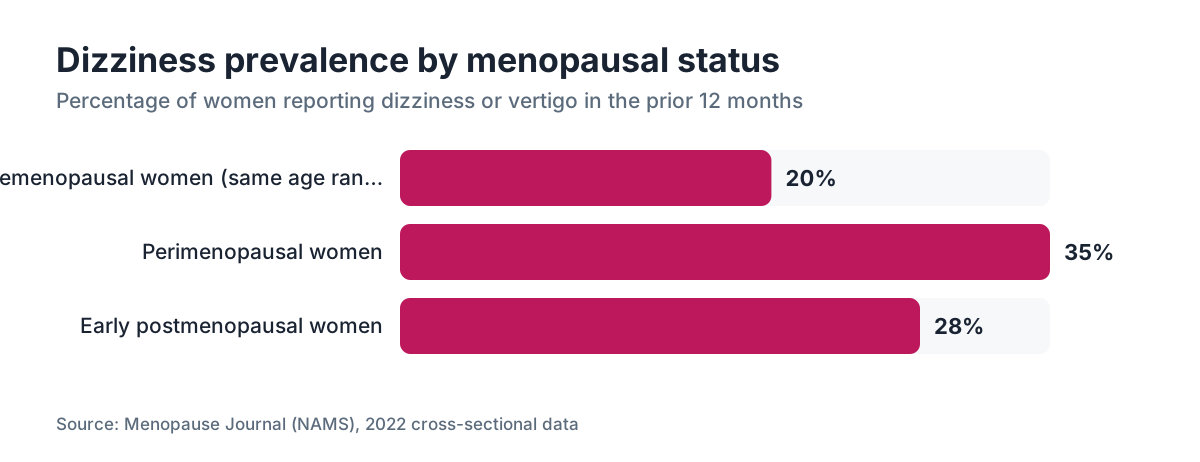
A large cross-sectional study in Menopause (the journal of the North American Menopause Society, NAMS) found that about 35 percent of perimenopausal women reported dizziness or vertigo in the prior 12 months, compared with roughly 20 percent of premenopausal women the same age [4]. The NAMS position statement on menopause symptoms names dizziness as a recognized, if under-discussed, feature of the transition [5].
Vertigo, the spinning sensation from inner-ear disruption, peaks in women between ages 40 and 60, the exact perimenopause window [3]. Benign paroxysmal positional vertigo (BPPV), the most common form of vertigo, is roughly twice as common in women as in men, and its incidence climbs after age 40 [6]. Researchers think lower estrogen thins out the calcium carbonate crystals (otoconia) in the inner ear, making them more likely to dislodge and set off BPPV.
Here is the honest caveat. Most of these studies are observational. Nobody has run a randomized trial with dizziness as the primary endpoint, so causation is inferred from biological plausibility and timing. The correlation is strong enough that most menopause specialists treat it as settled.
What does perimenopause dizziness actually feel like?
Not everyone describes it the same way, and that difference is clinically useful because each sensation points to a different mechanism.
| Type of dizziness | What it feels like | Likely mechanism | |---|---|---| | Vertigo | Room spins, especially when turning over in bed | Inner ear (BPPV or vestibular migraine) | | Lightheadedness | Head rush, nearly faint when standing | Orthostatic hypotension | | Floating or brain fog | Disconnected, unsteady, hard to focus | Vasomotor instability, autonomic dysfunction | | Disequilibrium | Off-balance when walking, poor coordination | Central vestibular or cerebellar dysfunction | | Anxiety-driven | Dizziness with racing heart, shortness of breath | Hyperventilation, autonomic arousal |
BPPV-type vertigo tends to be brief, seconds to a couple of minutes, and it fires with specific head movements, lying down, or rolling over. Vasomotor-driven dizziness comes in waves tied to hot flashes, because they are the same event: the vasodilation that produces a flush briefly cuts cerebral perfusion.
Orthostatic dizziness hits within seconds of standing and clears when you sit back down. If yours does this reliably, ask for an orthostatic blood pressure check. It takes about two minutes in the office.
Floating or dissociative dizziness, sometimes called persistent postural-perceptual dizziness (PPPD), is more chronic and often worse with anxiety. It does not spin. It is an unmoored feeling that follows you through the day. This type is genuinely underdiagnosed in perimenopausal women, and it responds best to vestibular rehabilitation plus, often, a low-dose SSRI.
Does the inner ear really change during perimenopause?
Yes, and the research here is more solid than most people expect.
The inner ear carries estrogen receptors in at least three spots: the cochlea (hearing), the utricle and saccule (gravity and linear movement), and the semicircular canals (rotational movement) [3]. Estrogen influences the production and reabsorption of endolymph, the fluid that fills these structures. When estrogen drops, endolymph composition can shift, and the signals your inner ear sends to your brain become less reliable.
The otoconia connection is well documented. Otoconia are tiny calcium carbonate crystals attached to sensory hair cells. When they dislodge, they float into the semicircular canals and create false rotation signals. That is BPPV. A 2020 study in the Journal of Vestibular Research found significantly lower bone mineral density in the temporal bone, the skull bone housing the inner ear, in postmenopausal women with recurrent BPPV compared with controls [6]. It mirrors what happens in bones everywhere else: estrogen maintains calcium density, and its loss speeds up calcium resorption.
The cochlea takes a hit too. Many women notice tinnitus (ringing) or subtle hearing changes in perimenopause. Those auditory symptoms and vestibular symptoms travel together because they share the same estrogen-sensitive tissue.
This is also why hormone replacement therapy is sometimes specifically helpful for vestibular symptoms, beyond its effect on hot flashes and bone density.
How do hot flashes and dizziness connect?
They share a mechanism and they often land within the same few minutes.
A hot flash is a sudden surge of vasodilation triggered by the hypothalamus misreading core body temperature, likely because estrogen normally calibrates the thermoneutral zone. Blood vessels in the skin open fast to dump heat. That redistribution of blood flow temporarily reduces cerebral blood flow, which is why so many women feel lightheaded or foggy during or right after a flush.
A 2022 study in Menopause tracked ambulatory blood pressure in perimenopausal women during objectively measured hot flashes and found mean arterial pressure dropped 4 to 8 mmHg during the flush phase, enough to produce transient lightheadedness in women with borderline resting blood pressure [4]. If your pressure already runs low, or you are on a blood pressure medication, a hot flash can tip you into real dizziness.
Night sweats add another layer. If you are waking repeatedly drenched, you are probably mildly dehydrated by morning, and dehydration cuts blood volume, which worsens orthostatic hypotension. The dizziness you feel getting up at 6 AM can be a downstream effect of the night sweats you had at 2 AM.
Managing hot flashes often improves dizziness as a side effect. That is mechanism, not coincidence.
What else could be causing dizziness in midlife? (ruling out other causes)
Perimenopause is a plausible explanation, but it should not be the only thing you and your doctor consider. Several other conditions cluster in the same age range.
Thyroid dysfunction is the big one. Hypothyroidism and hyperthyroidism both cause dizziness, and thyroid disorders are far more common in women aged 40 to 60 than in any other group. A simple TSH blood test rules it in or out. If your last thyroid panel is more than a year old, get a new one.
Vestibular migraine is now recognized as a major cause of recurrent dizziness in midlife women. You do not need head pain to have it. The vertigo itself can be the whole presentation. A history of migraine at any point in your life raises the odds a lot.
Anemia, especially iron-deficiency anemia from the heavier, irregular periods common in perimenopause, cuts oxygen delivery to the brain and causes lightheadedness. A complete blood count (CBC) is the screen.
Cardiovascular causes, including arrhythmias and orthostatic hypotension from autonomic dysfunction, need ruling out if your dizziness is severe, comes with chest pain or palpitations, or makes you actually lose consciousness. A 12-lead ECG and a Holter monitor are reasonable if there is any cardiac concern.
Meniere's disease, an inner-ear disorder involving fluid buildup, causes episodic severe vertigo (20 minutes to several hours), hearing loss, and tinnitus. It is distinct from BPPV and needs an ENT evaluation.
Medication side effects are easy to miss. Many antidepressants, blood pressure drugs, antihistamines, and sedatives cause dizziness, and the number of prescriptions tends to climb in midlife.
Here is the rule of thumb most vestibular specialists use. If dizziness is your only new symptom and it tracks with other perimenopausal symptoms, a hormonal cause is likely. If you also have neurological symptoms (double vision, slurred speech, weakness, difficulty swallowing), get a neurological evaluation urgently.
Does hormone therapy help with perimenopausal dizziness?
Probably yes for dizziness driven by estrogen fluctuation, but the evidence is inferential rather than from randomized trials with dizziness as the primary endpoint.
Several observational studies and retrospective analyses found lower BPPV recurrence in women using estrogen therapy than in those not using it [6]. The rationale is straightforward: stable estrogen should stabilize inner-ear fluid dynamics and slow otoconia resorption. Women on hormone therapy also report fewer and milder hot flashes, which secondarily cuts the vasomotor-driven dizziness episodes.
The NAMS Hormone Therapy Position Statement says hormone therapy is appropriate for perimenopausal and early postmenopausal women with bothersome vasomotor symptoms when the benefits outweigh the risks for that individual, and it lists quality-of-life symptoms among the considerations [5]. That is not a blanket endorsement for every woman, but it is a legitimate clinical option.
Progesterone matters here too. Some neurologists think progesterone has a direct calming effect on the vestibular nuclei in the brainstem through its action on GABA receptors, which could reduce dizziness independent of its estrogen-balancing role. This is less established, but it is one reason practitioners sometimes use combined therapy rather than estrogen alone.
If you are considering hormone therapy, the delivery form matters. The estrogen patch gives steadier serum levels than oral estrogen, which peaks and troughs with gut absorption, and steadier levels may be better for the inner ear specifically. Worth raising with whoever prescribes your hormones.
At WomenRx, this is exactly the kind of hormonal decision our practitioners work through with patients, looking at symptom patterns, lab values, and individual risk before recommending anything.
For BPPV specifically, vestibular rehabilitation therapy (VRT) with a physical therapist is the evidence-based first-line treatment, whatever the hormonal backdrop. The Epley maneuver, a specific repositioning technique, clears acute BPPV in roughly 80 percent of cases within one to three treatments [6].
What lifestyle changes actually reduce perimenopausal dizziness?
A handful of changes have real mechanistic backing, well beyond generic wellness advice.
Hydration matters, and not as a platitude. Low blood volume is a direct driver of orthostatic hypotension. Aim for at least 2 liters of water daily. If you are sweating heavily from night sweats or exercise, add an electrolyte source, because sodium matters as much as water for holding blood pressure up.
Salt intake, counterintuitively, may need to go up a little if you run low blood pressure and orthostatic dizziness. Most cardiovascular guidelines push people to limit salt, but those guidelines target people with hypertension. If your blood pressure sits at 100/65 and you get dizzy on standing, a small bump in dietary sodium (with your doctor's knowledge) can help maintain blood volume.
Sleep is not optional. Vestibular processing leans hard on a well-rested cerebellum. If night sweats and insomnia have you running on four to five hours, your balance system is genuinely impaired the next day. Treat the insomnia, through hormones, cognitive behavioral therapy for insomnia, or short-term sleep aids, and dizziness usually eases.
Alcohol worsens both vestibular function and vasomotor symptoms. Cutting back, or cutting it out, makes a real difference for many perimenopausal women.
Regular exercise, especially balance training and yoga, lowers fall risk and helps the brain compensate for vestibular input errors. Tai chi has published evidence for reducing dizziness in middle-aged adults.
Slow down positional changes. Getting up gradually, sitting on the edge of the bed for 30 seconds before standing, can head off orthostatic episodes without any medication.
Caffeine is complicated. Small amounts support blood pressure and may reduce dizziness in hypotensive women. Large amounts increase anxiety and worsen vestibular migraine. Know your personal threshold.
When should you see a doctor about dizziness in perimenopause?
Most perimenopausal dizziness is benign, meaning it is uncomfortable and disruptive but not dangerous. Some of it, though, needs prompt evaluation.
Get seen urgently if dizziness comes with a sudden severe headache (the "worst headache of my life"), double vision, slurred speech, facial drooping, arm weakness, or trouble walking. Those combinations suggest a central nervous system event and are medical emergencies.
See your doctor within days if dizziness makes you fall or you have already fallen, if episodes are increasing in frequency or duration, if you have sudden hearing loss in one ear alongside dizziness (this can be Meniere's or sudden sensorineural hearing loss, both time-sensitive), or if dizziness is bad enough to keep you from driving or working.
Schedule a routine visit if dizziness is mild, comes and goes, and seems tied to hot flashes, position changes, or your cycle. Bring a symptom log: date, time, how long it lasted, what you were doing, what helped. That information speeds up diagnosis a lot.
The visit should include, at minimum, blood pressure lying and standing, a basic metabolic panel, a complete blood count, a TSH, and a brief vestibular exam (the Dix-Hallpike test for BPPV takes under two minutes). Many of these get skipped at routine annual visits because dizziness never gets flagged as the main complaint. You may need to be direct: "I want to be evaluated specifically for dizziness."
Can perimenopause cause anxiety that then causes dizziness?
Yes, and this loop is more common than most clinicians admit.
Estrogen influences serotonin and GABA signaling. When it drops, some women get new-onset anxiety or a flare of existing anxiety, sometimes years before they connect it to perimenopause [2]. Anxiety fires the sympathetic nervous system, which speeds heart rate and breathing. Faster, shallower breathing lowers blood CO2, which constricts cerebral arteries. The reduced blood flow produces dizziness and a sense of unreality, which ratchets up the anxiety, which worsens the dizziness.
That is the anxiety-dizziness loop, and it feeds itself. Women caught in it often pile up a stack of normal test results and leave feeling dismissed. Treatment has to hit both legs of the loop at once: the anxiety (which may respond to estrogen therapy, SSRIs, or cognitive behavioral therapy) and the vestibular component (which may need VRT).
Panic attacks, which spike in perimenopause for hormonal reasons, produce intense dizziness, derealization, and a pounding heart. They get mistaken for cardiac events all the time. If you have had an ER visit for suspected cardiac symptoms that came back clear, and dizziness came along for the ride, panic with a vestibular component is worth raising with your doctor.
For the full timeline and symptom picture, see our overview of perimenopause age and when does menopause start.
What treatments do doctors actually prescribe for perimenopause-related dizziness?
Treatment depends entirely on which mechanism is driving the dizziness, which is why the characterization step matters so much.
For BPPV: vestibular rehabilitation therapy and the Epley maneuver come first. Most cases need no medication, and medication can actually slow recovery by suppressing the vestibular compensation the brain has to learn.
For vestibular migraine: the same preventives used for classic migraine work here. Beta-blockers (propranolol), tricyclic antidepressants (amitriptyline), and certain anticonvulsants (topiramate) are common choices. Trigger management around sleep, caffeine, alcohol, and hormonal fluctuation is part of the plan.
For orthostatic hypotension: more hydration and salt, compression stockings, fludrocortisone (a mineralocorticoid that raises blood volume) in more severe cases, and avoiding the medications that make it worse.
For PPPD (persistent postural-perceptual dizziness): low-dose SSRIs or SNRIs are the pharmacological standard, paired with vestibular rehabilitation. The evidence base keeps growing; published clinical reviews support SSRIs for functional dizziness [7].
For hormone-driven vestibular instability: estrogen therapy, as a patch, gel, or spray, to steady serum levels. Oral estrogen has higher peak-to-trough swings and may be less ideal for this indication.
For Meniere's disease: low-sodium diet, diuretics, and sometimes intratympanic injections, all managed by an otolaryngologist.
Not every woman needs a prescription. Many do well on vestibular rehabilitation alone plus the lifestyle changes above. But knowing the mechanism lets you have a specific, productive conversation rather than leaving with a generic "it's probably hormones" non-answer.
Frequently asked questions
Can perimenopause cause dizziness every day?
Yes. Some women get daily dizziness during perimenopause, especially with overlapping drivers like persistent orthostatic hypotension, ongoing vestibular dysfunction, chronic anxiety, or frequent vasomotor episodes. Daily dizziness warrants a medical evaluation to pin down the specific mechanism, because treatment for daily BPPV differs completely from treatment for daily anxiety-driven dizziness or daily orthostatic drops.
What does perimenopause dizziness feel like?
It varies. Inner-ear BPPV causes brief spinning, especially when rolling over in bed or tilting your head. Vasomotor dizziness feels like a wave of lightheadedness tied to a hot flash. Orthostatic dizziness is a head rush when you stand. Anxiety-driven dizziness feels like floating or unreality. Many perimenopausal women have more than one type at different times.
How long does perimenopause dizziness last?
It depends on the cause. BPPV episodes last seconds to minutes. Vasomotor-linked dizziness lasts as long as the hot flash, typically one to five minutes. Persistent postural-perceptual dizziness can run for hours or stay nearly constant until treated. For most women, dizziness improves in postmenopause once estrogen settles at a consistently low level, though that can take several years from when symptoms first show up.
Can low estrogen cause vertigo?
Yes. Estrogen receptors in the inner ear regulate endolymph fluid and the calcium carbonate crystals (otoconia) that detect movement. When estrogen drops, these systems get disrupted, raising the odds of BPPV, the most common form of vertigo. Studies show BPPV incidence roughly doubles in women over 40 compared with younger women, matching the perimenopause transition.
Does hormone replacement therapy help dizziness in perimenopause?
Observational evidence suggests it does for women whose dizziness ties to estrogen fluctuation or frequent hot flashes. Estrogen patches, which deliver steadier serum levels than oral pills, may be better for vestibular symptoms specifically. HRT is not proven to fix BPPV directly, but it may cut recurrence and improve the vasomotor part of dizziness. The decision means weighing individual risk and benefit with a knowledgeable prescriber.
Is dizziness a sign of perimenopause or something more serious?
Usually perimenopause, if it shows up alongside irregular periods, hot flashes, and disrupted sleep. But dizziness with sudden severe headache, vision changes, slurred speech, arm weakness, or facial drooping needs emergency evaluation. Dizziness from thyroid dysfunction, anemia, cardiac arrhythmia, or Meniere's disease also has to be ruled out with basic lab work and an exam before pinning everything on hormones.
Can perimenopause cause dizziness and nausea together?
Yes. Nausea often rides along with vestibular dizziness because the inner ear and the nausea centers of the brainstem are closely wired. BPPV and vestibular migraine both frequently cause nausea. Vasomotor episodes can produce it too. If nausea is severe or vomiting comes with dizziness, see a doctor to rule out Meniere's disease, which causes episodic severe vertigo with nausea as a hallmark.
Can perimenopausal dizziness cause falls?
Yes, and it is a legitimate safety concern. Postural instability increases in perimenopause and continues into postmenopause. BPPV in particular can cause sudden vertigo that ends in a fall. Research on postmenopausal women shows vestibular dysfunction is a significant, underappreciated fall-risk factor. Balance training, VRT, and treating the underlying cause all lower fall risk. If you have had a near-fall, mention it to your doctor.
What vitamins or supplements help with dizziness in perimenopause?
Vitamin D deficiency is linked to BPPV recurrence; one randomized trial found vitamin D supplementation cut recurrence in deficient patients. Magnesium may help vestibular migraine. Iron corrects dizziness caused by anemia. Beyond those specific situations, the supplement evidence is thin. Testing your vitamin D and iron before supplementing makes more sense than taking them speculatively.
Does perimenopause cause dizziness when lying down?
Dizziness when lying down or rolling over in bed is the hallmark of BPPV, which is more common in perimenopausal women because lower estrogen affects inner-ear calcium crystal stability. It typically lasts under a minute. The Dix-Hallpike test, done in a doctor's office or by a trained vestibular physical therapist, can confirm BPPV in minutes, and the Epley maneuver can resolve it in the same visit.
Can anxiety from perimenopause cause dizziness?
Yes. Estrogen decline lowers serotonin and GABA activity, which increases anxiety. Anxious breathing is faster and shallower, dropping blood CO2 and reducing cerebral blood flow, which produces dizziness. That creates a loop: dizziness increases anxiety, which increases dizziness. SSRIs or SNRIs combined with vestibular rehabilitation therapy work best for this pattern. Hormone therapy often helps by easing the underlying estrogen-withdrawal anxiety.
How do I tell if my dizziness is from perimenopause or my thyroid?
You cannot tell from symptoms alone, because hypothyroidism and hyperthyroidism both cause dizziness, fatigue, and mood changes that overlap with perimenopause. A TSH blood test distinguishes them. Many practitioners check TSH, free T4, and sex hormones together when a woman in her 40s or 50s shows up with dizziness and fatigue, because thyroid disorders and perimenopause often coincide.
What is the Epley maneuver and does it work for perimenopausal dizziness?
The Epley maneuver is a series of guided head and body positions that move dislodged calcium crystals out of the semicircular canals, resolving BPPV. It works for BPPV specifically, not all dizziness. Evidence shows roughly 80 percent success within one to three treatments. A physical therapist or ENT performs it, or can teach a self-administered version. If your dizziness fires with head movement or lying down, BPPV and the Epley are worth trying first.
Will dizziness go away after menopause?
For many women, yes. Once estrogen settles at a consistently low postmenopausal level, the dramatic swings that destabilize the inner ear stop. Hot-flash-driven dizziness also tends to improve as vasomotor symptoms peak and then fade over postmenopause. But if BPPV or vestibular migraine has become an established pattern, it can persist and need specific treatment regardless of hormonal status.
Sources
- North American Menopause Society (NAMS), Menopause 101: A Primer for the Perimenopausal
- National Institute on Aging (NIA), What Is Menopause?
- Cass SP, Menopause and the Vestibular System, Seminars in Hearing 2009
- Menopause Journal (NAMS), dizziness and vasomotor symptoms in perimenopausal women
- North American Menopause Society (NAMS), Hormone Therapy Position Statement
- Journal of Vestibular Research, temporal bone density and BPPV recurrence in postmenopausal women, 2020
- Cochrane Library, reviews on SSRIs for functional and persistent postural-perceptual dizziness
- Office on Women's Health (OWH), Menopause Symptoms and Relief
- NIH National Institute of Deafness and Other Communication Disorders (NIDCD), Balance Disorders
- Endocrine Society, Menopause Clinical Practice Guideline
- American Academy of Otolaryngology (AAO-HNS), BPPV Patient Information
- Neurology (AAN journal), Vitamin D and BPPV recurrence randomized trial, 2020