Can menopause cause nausea? What's actually behind the symptom
TL;DR: Yes, menopause can cause nausea. Swinging estrogen and progesterone affect the gut, the brain's vomiting center, and how fast the stomach empties. Hot flashes, hormone therapy, some supplements, and midlife medications each add their own trigger. Nausea isn't a headline symptom, but studies suggest 15 to 30% of perimenopausal women feel it at some point.
Can menopause cause nausea?
Yes, it can. Nausea doesn't make the standard short list of menopause symptoms the way hot flashes or broken sleep do, but it's real, it's documented, and it sends a lot of women to Google wondering if something else is wrong.
Here's the mechanism. Estrogen and progesterone both influence the gastrointestinal tract and the brain's chemoreceptor trigger zone, the area that kicks off vomiting. When those hormones swing erratically during perimenopause and then bottom out after the final period, the gut can respond with nausea, bloating, or an unsettled stomach you can't trace to a meal or a bug [1].
Menopause nausea is often secondary, too. Something else about the transition causes it rather than the hormone shift acting on the stomach directly. Hot flashes, anxiety, wrecked sleep, and certain hormone therapies can each set off nausea on their own. So "does menopause cause nausea" gets a yes, sometimes directly and sometimes at one remove.
What matters is figuring out which mechanism is at work in your case. The fix changes depending on the cause.
How do fluctuating estrogen and progesterone cause nausea?
Estrogen has receptors throughout the gut, including the stomach, the small intestine, and the esophagus. Research on gastrointestinal physiology shows estrogen changes gastric motility, the speed food moves through the stomach [2]. When estrogen drops sharply, which it does repeatedly and without warning during perimenopause before falling for good, gastric emptying can slow down. Slow emptying is that heavy, queasy, bloated feeling you get even when you haven't eaten anything unusual.
Progesterone is the more direct culprit. Progesterone relaxes smooth muscle throughout the body, which is part of why levels climb in pregnancy and why morning sickness is so common then. During the late luteal phase of perimenopausal cycles, progesterone can still spike, and that smooth-muscle relaxation slows the gut and lets stomach acid pool in ways that read as nausea [3].
Estrogen also works on serotonin pathways in the gut. About 90% of the body's serotonin sits in the GI tract, and serotonin drives the vomiting reflex directly. Falling estrogen disrupts that signaling, which makes the gut twitchier and quicker to fire nausea signals up to the brain [1].
Not every woman in perimenopause will feel sick. Sensitivity varies a lot. But if you're in your 40s or early 50s, your cycles are changing, and you're having bouts of unexplained nausea, the hormonal explanation is a legitimate one.
What percentage of women get nausea during perimenopause or menopause?
Nausea specifically during the menopause transition falls in the range of 15 to 30% of women at some point in perimenopause, though the exact number depends on how the question was asked and what other symptoms were in play [1]. Precise figures are harder to find than you'd expect. Nausea rarely gets tracked as a standalone symptom in large menopause studies, and it's often chalked up to something else.
The studies that do capture it fold it into broader GI symptom clusters. The Study of Women's Health Across the Nation (SWAN), one of the largest long-term studies of midlife women in the US, documented a range of GI symptoms including nausea across perimenopausal cohorts, with rates varying by race, ethnicity, and menopausal stage [4].
For scale: hot flashes affect about 75% of menopausal women in the US, and vasomotor symptoms are far and away the most studied. Nausea sits in a second tier, common enough to matter clinically but underreported because women often don't mention it to their doctors [5].
Wondering when does menopause start or whether your irregular cycles mean the transition has begun? That context matters here. Nausea tends to peak during perimenopause, when hormones lurch, and quiet down in postmenopause, once they're steadily low.
Does a hot flash cause nausea?
For a lot of women, yes. A hot flash is a sudden surge of heat driven by the hypothalamus misfiring in response to low estrogen. The hypothalamus sits right next to the brain structures that handle nausea and vomiting, and it wires directly into the vagus nerve, which runs down to the stomach.
During an intense flash, the body's temperature response includes a fast heart rate, flushing, and sometimes drenching sweat. That sharp autonomic jolt, physiologically close to a stress response, can trigger nausea and occasionally vomiting, especially in women with more severe vasomotor symptoms [5].
Flash-driven nausea usually hits at the same time as the heat or just after, lasts a few minutes, and fades on its own. If your nausea is episodic and shadows your hot flashes, that's almost certainly what's happening. Treating the flashes, most effectively with estrogen-based hormone replacement therapy, usually clears this kind of nausea along with the flashes [6].
Can hormone replacement therapy cause nausea?
Yes, and it's one of the top reasons women quit HRT in the first few weeks, before it has a chance to work.
Oral estrogen tablets pass through the liver on first pass, and for some women that hepatic processing sets off nausea, worst in the morning on an empty stomach. It usually peaks in the first two to four weeks of oral HRT and fades as the body adjusts [6].
Changing the delivery method usually ends it. Transdermal estrogen, via an estrogen patch, gel, or spray, skips the liver and reaches the bloodstream without that first-pass metabolism. Nausea rates with transdermal estrogen run well below oral tablets, and the blood levels are steadier, which helps symptom control overall [6].
Oral micronized progesterone (Prometrium in the US) can also cause nausea, though less often than synthetic progestins. Take it at bedtime with a small snack and it drops off considerably. If you're on a combined oral tablet with estrogen and progestin and you feel sick, ask your prescriber about separating the two to spot which one is the problem.
The NAMS 2022 Hormone Therapy Position Statement notes that transdermal routes are preferred for women with GI sensitivity, and the evidence that they're better tolerated than oral holds up across multiple trials [6].
Can GLP-1 medications used during menopause cause nausea?
Yes, and nausea is the number-one side effect of the whole GLP-1 class, so it deserves its own explanation. GLP-1 receptor agonists like semaglutide are increasingly used by women in the transition for weight management, since the hormone shift often drives fat redistribution and metabolic changes that blunt standard weight-loss efforts.
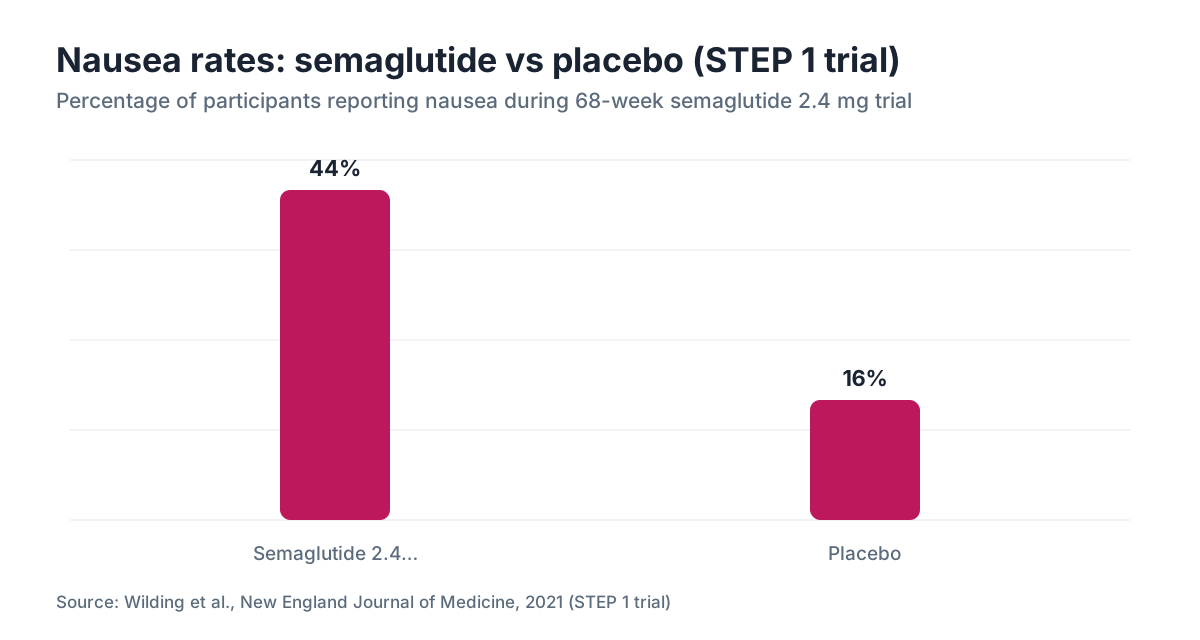
In the STEP 1 trial of semaglutide 2.4 mg for obesity, 44% of participants reported nausea versus 16% on placebo [7]. The SURMOUNT-1 trial of tirzepatide found similar rates. The mechanism is direct: GLP-1 receptors in the brainstem's area postrema (the vomiting center) slow gastric emptying, which drives nausea especially in the first weeks of dose escalation.
If you're perimenopausal or postmenopausal, on a GLP-1, and also having menopausal symptoms, you may have two independent nausea sources running at once. That's genuinely hard to untangle without slowing the GLP-1 titration and watching whether the nausea eases.
Our guides to semaglutide for weight loss and semaglutide vs tirzepatide cover how these drugs work and how they compare. WomenRx prescribers routinely help women sort out these overlapping symptom pictures, which is one reason a menopause-informed prescriber beats a general weight-loss clinic during this life stage.
GLP-1 nausea is dose-dependent and mostly manageable with slow titration, small meals, and enough water. It's not a reason to walk away from a medication that's otherwise working.
What other menopause-related causes of nausea should I know about?
Past hormones, hot flashes, HRT, and GLP-1s, a handful of other things common in midlife feed into nausea.
Anxiety and the gut-brain axis. Anxiety climbs during perimenopause, partly because falling estrogen affects GABA and serotonin systems. Anxiety reliably causes nausea through vagal signaling and cortisol release. If your nausea comes with a sense of dread or a racing heart outside of a hot flash, anxiety may be the main driver [5].
Sleep deprivation. Menopausal sleep disruption is near-universal. Running on broken sleep raises cortisol, slows the stomach, and leaves most people feeling vaguely sick. Treat the underlying sleep problem, often nocturnal hot flashes, and this tends to improve.
Supplements and herbal remedies. Many women start supplements now for bone health or symptom relief. High-dose iron is a common nausea offender. Some herbal menopause products, black cohosh included, carry their own GI side effects [8].
Thyroid changes. Thyroid trouble gets more common around the transition. Both underactive and overactive thyroid can cause GI symptoms including nausea. If your nausea is persistent and comes with fatigue, weight changes, or temperature sensitivity that doesn't fit the hot-flash pattern, get a thyroid panel [9].
Medications. Antidepressants prescribed for hot flashes, especially SSRIs and SNRIs like escitalopram and venlafaxine, often cause nausea in the first weeks. It's a listed side effect in their prescribing information.
How is nausea from menopause different from pregnancy nausea or illness?
The timing and pattern give it away. Menopause nausea tends to be episodic, tied to hormone swings across an irregular cycle or to specific triggers like hot flashes. It doesn't favor the morning, and it doesn't come with the other signs of pregnancy.
Pregnancy nausea peaks in the first trimester, hits hardest in the morning, and rides rising hCG and progesterone.
Still, perimenopause and the chance of pregnancy overlap. Women in their 40s and early 50s can still conceive. If there's any chance of pregnancy, a test comes first, not a self-diagnosis of menopause nausea.
Illness-related nausea usually brings fever, vomiting, diarrhea, or a clear exposure. Menopause nausea is more of a low-grade, background queasiness or episodic wooziness without those extras.
The line for calling a doctor is nausea that's severe, causes vomiting, leads to weight loss, or drags on past a few weeks without a plausible hormonal reason. Those patterns warrant a GI workup no matter where you are in the transition [5].
What actually helps with nausea during menopause?
The best move depends on which cause is behind your nausea. These aren't interchangeable.
For hormone-driven nausea: Steady the estrogen. Continuous-dose transdermal estrogen (patch, gel, or spray) cuts the hormone swings that provoke nausea better than oral estrogen or doing nothing. The NAMS 2022 position statement backs HRT as the most effective drug treatment for vasomotor and related symptoms in women without contraindications [6].
For hot-flash-triggered nausea: Same answer. Control the flash and you control the nausea behind it. If HRT isn't an option, fezolinetant (Veoza), an FDA-approved non-hormonal drug that targets neurokinin B pathways, cut hot flash frequency and severity in trials and was approved in 2023 [10].
For HRT-induced nausea: Switch from oral to transdermal. Take oral progesterone at bedtime with food. Give it four to six weeks before you call it intolerable.
For GLP-1-induced nausea: Slow the titration. Eat small, low-fat, low-sugar meals. Stay hydrated. Don't lie down for two hours after eating. These are supported in the prescribing information for semaglutide and tirzepatide [7].
General measures with some evidence: Ginger (tea, capsules, or candied) reduces nausea across many settings and is low-risk. Vitamin B6 (pyridoxine) has evidence for pregnancy nausea and gets used off-label elsewhere. Small, frequent meals keep the stomach from getting either too full or too empty, both of which worsen nausea when gastric motility is slow [8].
If your nausea rides with anxiety, treating the anxiety with therapy, an SNRI (which also helps hot flashes), or low-dose progesterone, which is mildly calming through its action on GABA-A receptors, can help both problems at once.
When should nausea during menopause prompt a doctor visit?
Most menopause nausea is mild, episodic, and fine to manage at home. Some patterns aren't.
See a clinician if nausea is bad enough to interfere with eating or daily life, you're losing weight without trying, vomiting comes with it, it's lasted more than two to three weeks without a clear trigger, or you have upper abdominal pain, especially on the right side. That last one can point to gallbladder disease, which gets more common in women during and after the transition, partly because estrogen affects bile composition [5].
Ask for a thyroid panel (TSH, free T4) if nausea is chronic and you haven't had your thyroid checked recently. Hypothyroidism can mimic menopause on fatigue and GI symptoms, and the two can run together.
Get a pregnancy test if there's any chance you're pregnant, since the transition doesn't guarantee infertility until a full 12 months have passed without a period. The formal definition of menopause is 12 consecutive months without a menstrual period [6].
If you want a full read on your hormones alongside the nausea, providers at practices like WomenRx can order hormone panels, review medication interactions, and adjust HRT delivery to cut GI side effects.
Does nausea get better after menopause is complete?
For most women whose nausea comes from hormone swings, yes. The wild lurching of perimenopause is the main driver, and once estrogen settles at a steadily low level in postmenopause, the stomach tends to calm down.
Hot-flash nausea tracks the flashes themselves. For most women, vasomotor symptoms peak in the years just before and after the final period, then ease off. The median duration of moderate-to-severe hot flashes is about 7.4 years, per the SWAN study published in JAMA Internal Medicine in 2015 [4]. Flash-linked nausea follows roughly that curve.
If you're postmenopausal and the nausea is new or getting worse, look at what changed. A new medication, a new supplement, a thyroid shift, or the start of a GLP-1 are the usual suspects. New GI nausea in postmenopause with no clear trigger deserves a real workup, not a shrug at menopause.
Frequently asked questions
Can menopause cause nausea and vomiting?
Nausea is more common than outright vomiting during menopause, but vomiting can happen, especially during severe hot flashes or as a reaction to new hormone therapy or GLP-1 medications. If vomiting is frequent or bad enough to affect eating and hydration, see a clinician rather than pinning it on menopause without a look.
Does perimenopause cause nausea?
Yes, perimenopause is more likely to cause nausea than postmenopause because hormones are fluctuating rather than steadily low. Erratic estrogen and progesterone swings affect gastric motility, gut serotonin signaling, and the brain's nausea centers. Women often describe a queasy, unsettled stomach that shows up mid-cycle or before a period with no obvious food trigger.
Can low estrogen cause nausea?
Low and fluctuating estrogen can both contribute, through different routes. Rapidly falling estrogen disturbs gut serotonin pathways and gastric emptying. Steadily low estrogen in postmenopause is less likely to cause nausea by itself, though it can still shift GI motility. The sharpest nausea comes from rapid drops, not from a consistently low baseline.
Can progesterone supplements cause nausea?
Yes. Oral progesterone, including bioidentical micronized progesterone (Prometrium), can cause nausea because it relaxes smooth muscle in the GI tract. Taking it at bedtime with a little food cuts this for most women. Vaginal progesterone largely skips the systemic GI effects and is an option if you can't tolerate the oral form.
How long does menopause nausea last?
If it's driven by hormone swings during perimenopause, it tends to track the length of the transition, which averages four to eight years but varies widely. If it's a side effect of a new medication or hormone therapy, it usually resolves in two to four weeks. Nausea that drags past a month despite adjustments should be evaluated.
Can menopause cause nausea after eating?
Yes. Estrogen and progesterone changes slow gastric motility, so the stomach empties more slowly than usual. That can cause a queasy, overly full feeling after meals even with normal portions. Smaller, more frequent meals, less high-fat food, and not lying down after eating are the first steps for this pattern.
Is nausea a sign of perimenopause starting?
It can be one of several signs, though it's not the most specific. More reliable early markers are irregular periods, changing cycle length, new or worse PMS, disrupted sleep, and early hot flashes. Nausea that shows up alongside those changes, with no other explanation like a new medication or illness, is worth raising with a provider as part of the bigger picture.
Can menopause cause nausea and dizziness?
Yes, both can happen together. Dizziness during menopause links to estrogen's effects on fluid balance, inner ear function, and blood pressure control. Hot flashes can cause light-headedness and nausea at once through rapid shifts in blood flow. The combination can also signal anxiety or, less often, cardiovascular or inner ear issues that warrant evaluation.
Can menopause cause nausea in the morning?
Yes, though morning nausea in a woman in her 40s always raises the pregnancy question first. If pregnancy is ruled out, morning nausea in perimenopause may reflect the early-morning cortisol peak amplifying an already sensitized gut. Oral hormone therapy taken at night can cause morning nausea as blood levels peak. Switching to an evening dose or transdermal delivery usually helps.
Does hormone therapy help with menopause-related nausea?
When the nausea comes from hot flashes or estrogen swings, yes, hormone therapy is often highly effective. Transdermal estrogen in particular steadies hormone levels without the first-pass liver processing that makes oral estrogen more likely to upset the stomach. The NAMS 2022 position statement backs hormone therapy as the most effective treatment for vasomotor symptoms, including their downstream effects like nausea.
What natural remedies help with menopause nausea?
Ginger has the strongest evidence across nausea types: tea, capsules (250 mg up to four times daily), or candied ginger all have some support. Vitamin B6 is used off-label with modest evidence. Small, frequent low-fat meals reduce the gastric overload that worsens nausea. Cutting alcohol, caffeine, and strong smells helps. These ease nausea but don't touch the underlying hormonal cause.
Can menopause cause nausea and headaches?
Yes, and the link is often estrogen. Estrogen withdrawal is a well-documented migraine trigger, and migraines frequently bring nausea and vomiting. Women with a history of menstrual migraines often see them worsen in perimenopause as estrogen turns more erratic. Steadying estrogen with low-dose transdermal therapy can help both the headaches and the nausea.
Should I worry if menopause nausea is severe?
Severe nausea, especially with vomiting, weight loss, or upper abdominal pain, shouldn't be blamed on menopause without evaluation. Gallbladder disease, thyroid dysfunction, and GI conditions get more common around the transition and can mimic or overlap with hormonal nausea. See a clinician for nausea that's severe, lasts beyond two to three weeks, or comes with any of those red-flag symptoms.
Sources
- The Menopause Society (NAMS), Menopause Symptoms Overview
- NIH National Institute of Diabetes and Digestive and Kidney Diseases, Gastroparesis overview
- NIH National Library of Medicine, PubMed: Sex hormones and gastrointestinal tract motility
- JAMA Internal Medicine 2015, Avis NE et al., Duration of Menopausal Vasomotor Symptoms Over the Menopause Transition (SWAN study)
- Office on Women's Health, U.S. Department of Health and Human Services, Menopause symptoms and relief
- The Menopause Society (NAMS), 2022 Hormone Therapy Position Statement
- Wilding JPH et al., New England Journal of Medicine 2021, STEP 1 trial of semaglutide 2.4 mg for obesity
- NIH National Center for Complementary and Integrative Health, Black Cohosh
- American Thyroid Association, Hypothyroidism Brochure
- FDA Drug Approval, Veoza (fezolinetant) 2023