Can low estrogen cause anxiety and panic attacks?
TL;DR: Yes. Low estrogen disrupts serotonin, GABA, and norepinephrine signaling in ways that directly produce anxiety and panic attacks. Studies show up to 51% of perimenopausal women report new or worsening anxiety. The risk is highest during perimenopause, when estrogen fluctuates wildly before dropping. Hormone therapy reduces these symptoms for many women, though the evidence for each intervention varies.
What does estrogen actually do in your brain?
Estrogen runs your brain chemistry, not only your reproductive cycle. It binds to receptors throughout the brain, including the amygdala (the fear-processing center), the prefrontal cortex, and the hippocampus. When estrogen levels are adequate, it increases serotonin production, up-regulates serotonin receptors, and supports GABA activity, which is the brain's main calming neurotransmitter [1].
It also holds norepinephrine in check. Norepinephrine is the chemical that drives the fight-or-flight response. Too much of it, and your heart races, your chest tightens, and your mind spins out. Estrogen normally keeps that system from overreacting.
When estrogen drops, even temporarily, all of those systems wobble. Serotonin dips. GABA quiets down. Norepinephrine surges. The result can feel exactly like anxiety or a panic attack, because at the neurochemical level, that is precisely what is happening [1][2].
This is not a personality quirk or 'just stress.' It is a real, measurable physiological shift. That distinction changes how you treat it.
How common is anxiety during perimenopause and menopause?
More common than most doctors acknowledge. A 2006 study in the Archives of General Psychiatry found perimenopausal women had roughly three times the odds of a major depressive episode compared with premenopausal women, and anxiety frequently rides along with depression in this group [3].
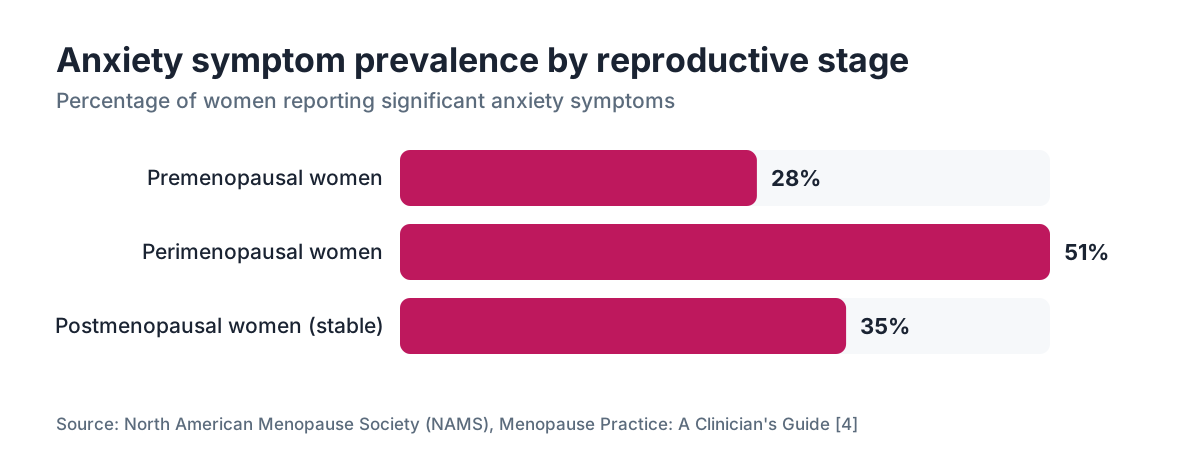
The North American Menopause Society (NAMS) reports that up to 51% of women in perimenopause experience anxiety symptoms, compared with roughly 28% of premenopausal women [4]. That is a meaningful jump.
Panic attacks as an isolated outcome are less well studied, but clinical data and NAMS guidance both recognize new-onset panic disorder as a symptom cluster in the menopause transition [4].
The timing matters enormously. Perimenopause, not menopause itself, tends to be the hardest stretch neurologically. Estrogen does not fall smoothly. It swings: high one week, crashed the next. Those swings destabilize the neurotransmitter systems most aggressively. Many women are symptom-free once their estrogen settles at a low postmenopausal baseline. Others keep struggling.
See the chart below for a quick comparison of anxiety prevalence across reproductive stages.
Why do panic attacks specifically happen with low estrogen?
Panic attacks are not random. They have a mechanism, and estrogen's relationship to that mechanism is direct.
The locus coeruleus is a small region in the brainstem that is essentially the brain's norepinephrine factory. Estrogen normally restrains its overactivity. When estrogen falls, the locus coeruleus fires more easily and with less provocation. That translates into a sudden surge of norepinephrine that triggers the classic panic sequence: racing heart, shortness of breath, dizziness, a sense of impending doom [1][2].
Hot flashes make this worse. A hot flash is itself a surge of autonomic activity. Many women describe waking from sleep during a hot flash and immediately feeling panicked. That is not coincidence. The same norepinephrine surge that causes the hot flash can tip into a full panic response when the nervous system is already destabilized by low estrogen.
A 2006 study in the Archives of General Psychiatry found that women with a history of premenstrual mood sensitivity, who were already reactive to estrogen fluctuations, were at higher risk of perimenopausal anxiety and mood disorders [5]. If your periods ever made you anxious or depressed, your brain has already shown you how it responds to estrogen flux.
Night sweats compound the loop. Broken sleep raises cortisol. Elevated cortisol raises anxiety. Anxiety worsens sleep. The cycle reinforces itself, and low estrogen started the whole chain.
What are the symptoms of low-estrogen anxiety, and how is it different from regular anxiety?
The symptoms overlap heavily with generalized anxiety: excessive worry, irritability, racing thoughts, trouble sleeping, and dread that has no obvious trigger. Panic attacks feel the same regardless of cause: chest tightness, shortness of breath, pounding heart, dizziness, sometimes a feeling of unreality.
What sets low-estrogen anxiety apart is the pattern and context.
It often appears suddenly in a woman with no prior anxiety history, usually in her 40s or early 50s. It frequently arrives alongside other perimenopausal symptoms: irregular periods, hot flashes, night sweats, brain fog, or disrupted sleep [4]. It can follow a clear hormonal event, like stopping birth control pills (which had been masking perimenopause), the months after delivery (the postpartum estrogen crash), or the days before a period when estrogen dips in the luteal phase.
Another tell: the anxiety often has a physical quality. Women describe it as coming from the body first, not the mind. Heart pounding before the worry starts. That bottom-up direction, body triggering brain, fits norepinephrine-driven panic rather than cognitive anxiety spiraling into physical symptoms.
The two are not mutually exclusive. Low estrogen can worsen pre-existing anxiety disorders, and midlife stressors (career pressure, caregiving, relationship changes) stack on top of the hormonal changes. A clear-eyed clinician looks at both.
Does hormone therapy actually reduce anxiety and panic attacks?
For many women, yes. The evidence is not perfect, but it is consistent enough to take seriously.
Estrogen therapy improved mood and reduced anxiety in perimenopausal women across multiple randomized controlled trials. A 2000 trial by Schmidt and colleagues in the American Journal of Obstetrics and Gynecology found that transdermal estradiol significantly improved mood symptoms in perimenopausal women compared to placebo [6]. The benefit was strongest in women who had not yet reached full menopause.
The Endocrine Society's 2015 clinical practice guideline on menopause hormone therapy notes that estrogen has shown efficacy for vasomotor symptoms and for mood-related symptoms in perimenopausal women, while flagging that the evidence for postmenopausal anxiety specifically is weaker [7].
NAMS takes a similar line: hormone therapy is an appropriate first-line option for women under 60 or within 10 years of menopause onset who have bothersome symptoms, and mood and anxiety symptoms belong in that assessment [4].
Micronized progesterone (like Prometrium) tends to beat synthetic progestins (medroxyprogesterone acetate) for anxiety, because it metabolizes into allopregnanolone, which modulates GABA-A receptors and calms the nervous system. Synthetic progestins do not do this and may worsen mood in some women [8].
A platform like WomenRx can connect you with a clinician who specializes in perimenopausal hormone management if you want a prescription evaluation without a long wait.
Hormone therapy does not work for everyone. Some women find that even physiologic estrogen doses trigger anxiety, particularly at the start of treatment when levels are still fluctuating. Starting low and going slow is standard practice for that reason.
For women who cannot or prefer not to use hormones, SSRIs and SNRIs have solid evidence for menopausal anxiety. Venlafaxine (an SNRI) also cuts hot flashes, which makes it a sensible choice when both symptoms show up together [4].
Are there other hormone imbalances that cause anxiety alongside low estrogen?
Yes, and this is where midlife hormone evaluation gets complicated.
Thyroid dysfunction is the most commonly missed contributor. Hypothyroidism causes fatigue and depression; hyperthyroidism causes anxiety, palpitations, and panic. Thyroid disorders are more common in women and grow more prevalent with age. Any perimenopausal woman with new anxiety should have TSH checked. For a deeper look at this overlap, thyroid hormone replacement therapy is worth reading.
Low progesterone is its own issue. Progesterone (and its metabolite allopregnanolone) is calming. In perimenopause, progesterone often drops before estrogen does, and the resulting estrogen-dominance state can feel anxious and agitated even before estrogen itself crashes [8].
Cortisol dysregulation, meaning chronically high cortisol from poor sleep or ongoing stress, keeps the nervous system primed for anxiety and blunts estrogen's calming effects even when estrogen levels look normal on paper.
Low testosterone is underrated here. Testosterone supports mood stability and drive in women. It is not primarily an anxiety trigger, but low testosterone paired with low estrogen can deepen the sense of being overwhelmed and emotionally flat.
A hormone panel that includes estradiol, FSH, progesterone, thyroid (TSH, free T3, free T4), and ideally total and free testosterone gives you a real picture. A single estradiol number drawn on a random day in perimenopause is nearly meaningless, because levels swing dramatically across the cycle.
What does the research say about FSH levels and anxiety?
FSH (follicle-stimulating hormone) is what the pituitary releases when it senses estrogen is low. High FSH is the clinical marker for menopause. The standard threshold is FSH greater than or equal to 30 mIU/mL on two tests taken at least 30 days apart, per Endocrine Society guidance [7].
Some researchers have asked whether FSH itself, more than estrogen, contributes to anxiety. A 2017 paper in Nature reported that FSH acts directly on adipose tissue and bone via FSH receptors, and later work raised the possibility that high FSH levels contribute to mood disturbance and body composition changes in perimenopause [9]. The research is early and not yet at the clinical application stage, but it hints that treating estrogen alone may not address every symptom driver.
For now, FSH is most useful as a diagnostic tool rather than a treatment target. If your FSH is elevated and you still have periods, you are in perimenopause. If FSH is elevated and periods have stopped for 12 months, you are postmenopausal. Either way, estrogen remains the main clinical lever available.
Can birth control pills or other hormonal contraceptives cause or mask anxiety related to estrogen?
This is a real and underappreciated issue.
Combined oral contraceptives (COCs) suppress your natural estrogen and progesterone and swap in synthetic versions. For many women in their 40s who are already perimenopausal, stopping the pill drops them off a hormonal cliff. The week after stopping can bring intense anxiety and even depressive episodes, because the brain had been leaning on synthetic hormones and now has neither those nor adequate production of its own.
The pill can also hide perimenopausal symptoms entirely. A woman on COCs may have no hot flashes, regular withdrawal bleeds, and no idea she is in perimenopause until she stops. Then everything arrives at once.
Some COC formulations, particularly those with androgenic progestins like levonorgestrel, are linked to mood changes and anxiety in susceptible women. The levonorgestrel IUD delivers very little systemic hormone and generally does not move mood much, though individual responses vary.
If you stopped hormonal contraception in your 40s and developed anxiety soon after, that timing is almost certainly not coincidental.
What non-hormonal options actually work for low-estrogen anxiety?
Several options have real evidence behind them.
SSRIs and SNRIs are first-line drug options when hormone therapy is not appropriate or preferred. Escitalopram, venlafaxine, and desvenlafaxine all have evidence for menopausal anxiety and depression. Venlafaxine additionally reduces vasomotor symptoms by 50 to 60% in some trials, which makes it uniquely useful when hot flashes and anxiety coexist [4].
Cognitive behavioral therapy (CBT) has strong evidence for both anxiety and menopausal symptoms. A 2012 randomized trial in Menopause found CBT reduced hot flash bother scores and improved mood and sleep in menopausal women [10]. It is not a quick fix, but the results last.
Mindfulness-based stress reduction (MBSR) has modest evidence for menopausal anxiety. It works better for stress-related anxiety than for severe panic disorder.
Magnesium glycinate gets recommended constantly. The evidence base is thin, but magnesium does support GABA activity and is low-risk at 200 to 400 mg per day. Many women report subjective improvement.
Regular aerobic exercise reduces anxiety by calming HPA-axis activity and raising BDNF (brain-derived neurotrophic factor). Thirty minutes of moderate cardio four to five days a week is a reasonable, evidence-consistent target.
Alcohol earns a mention as something to cut. Many perimenopausal women reach for wine to calm anxiety, not knowing that alcohol wrecks sleep architecture, raises cortisol, and ultimately worsens both anxiety and hot flashes. Even one drink close to bedtime measurably fragments sleep.
For an overview of how peer communities and evidence-based books are reshaping the conversation, the new menopause is a useful read.
When should you see a doctor, and what tests should you ask for?
See a doctor if anxiety is interfering with daily life, if you are having panic attacks more than once a month, if you have chest pain that has not been evaluated (rule out cardiac causes first), or if the symptoms are new in your 40s or 50s with no obvious psychological trigger.
Ask specifically for:
Estradiol (E2), drawn on day 2 to 3 of your cycle if you still have one. A random mid-cycle draw is hard to read in perimenopause.
FSH, which puts the estradiol level in context.
Progesterone, best drawn 7 days after confirmed ovulation if you are cycling, or at any time if you are not.
TSH plus free T4, and free T3 if TSH is borderline.
Total and free testosterone.
CBC, metabolic panel, and B12, because anemia and B12 deficiency produce anxiety-adjacent symptoms.
A clinician who specializes in menopause care, such as one certified through NAMS (the menopause society), will take this presentation more seriously than a general practitioner who may pin everything on stress or refer straight to psychiatry without considering the hormonal picture.
WomenRx offers telehealth evaluation for exactly this kind of workup if you want a clinician who will look at the full hormone picture without dismissing your symptoms.
Documenting your anxiety in relation to your cycle, or if periods have stopped, in relation to sleep and hot flash patterns, gives a clinician useful signal. A symptom diary for 4 to 6 weeks is not glamorous, but it genuinely helps.
What can you do right now if you think low estrogen is causing your anxiety?
The practical short list, ranked roughly by evidence and immediacy:
Get labs. You cannot know whether hormones are the driver without data. Most of the relevant tests are standard and covered by insurance with a clinical indication.
Stop or cut alcohol. This is the single lifestyle change with the fastest impact on both anxiety and sleep quality.
Protect sleep aggressively. Cognitive behavioral therapy for insomnia (CBT-I) is now available as a digital program (Sleepio has clinical validation) and works without drugs.
Start regular aerobic exercise if you are not already. Even 20-minute walks produce measurable anxiety relief over 4 to 6 weeks.
Talk to a clinician about your options. Hormone therapy, SSRIs, SNRIs, and CBT all have real evidence. The right choice depends on your hormone levels, history, and risk factors.
For symptom tracking and perimenopause-specific information, the health & her perimenopause support resource is useful for understanding what to log and when.
Do not spend years with debilitating anxiety hoping it passes on its own. Many women suffer needlessly because they and their clinicians never connect the anxiety to the hormonal transition. The connection is real, the mechanisms are understood, and effective treatment exists.
Frequently asked questions
Can low estrogen cause anxiety even if I still have regular periods?
Yes. Perimenopause often begins years before periods become irregular. Estrogen can fluctuate significantly within cycles that still look regular on a calendar, and those fluctuations, particularly the estrogen drop in the late luteal phase before your period, can produce anxiety, irritability, and panic. If your anxiety is cyclical and tied to the week before your period, low or fluctuating estrogen is a likely driver.
How quickly does anxiety improve after starting hormone therapy?
Most women who respond to hormone therapy notice mood and anxiety improvement within 4 to 8 weeks of reaching a stable, therapeutic estrogen level. The first 2 to 4 weeks can actually be turbulent as estrogen rises and fluctuates. Give any new HRT regimen at least 8 to 12 weeks before judging whether it is working for mood symptoms. Dose adjustments may be needed.
Is it anxiety or is it a thyroid problem? How do I tell the difference?
You often cannot tell clinically without labs. Both low thyroid function and estrogen deficiency cause anxiety; hyperthyroidism causes a more agitated, rapid-heart-rate type of anxiety. Any midlife woman with new anxiety should have TSH checked alongside estradiol and FSH. The two conditions can also coexist, and treating only one while the other goes unaddressed will leave symptoms partially controlled.
Do panic attacks in perimenopause ever go away on their own?
For some women, yes. Once estrogen stabilizes at a postmenopausal baseline, the wild fluctuations that provoke panic stop, and attacks diminish or cease without treatment. That stabilization can take 2 to 5 years from the start of perimenopause. Waiting it out while suffering frequent panic attacks is a choice, but it is not the only one. Treatment during the transition is reasonable and effective for most women.
Can low estrogen cause heart palpitations that feel like panic attacks?
Yes. Estrogen influences cardiac electrical stability and autonomic tone. When estrogen drops, the autonomic nervous system becomes more reactive, producing palpitations, skipped beats, and racing-heart episodes that can trigger panic or be mistaken for it. A cardiac evaluation is worthwhile if palpitations are new, frequent, or come with chest pain or lightheadedness. Once cardiac causes are ruled out, hormonal management is appropriate.
Will taking progesterone help my anxiety if my estrogen is still normal?
It might. In perimenopause, progesterone often declines before estrogen does, and low progesterone combined with relatively higher estrogen produces an agitated, anxious state for some women. Micronized progesterone metabolizes to allopregnanolone, which activates GABA-A receptors and is calming. Synthetic progestins like medroxyprogesterone acetate do not have this effect. Labs showing low progesterone with a normal estradiol would support a trial of micronized progesterone.
Can antidepressants and hormone therapy be used together for menopausal anxiety?
Yes, and this is sometimes the most effective approach. SSRIs or SNRIs and estrogen therapy work through different mechanisms. Some women need both: estrogen to restore the hormonal substrate and an SSRI or SNRI to address the anxiety and mood disorder that has taken root. A psychiatrist or hormone-specialist clinician can manage both safely. There are no major drug interactions between standard antidepressants and estrogen therapy.
What estrogen level is considered 'low' for causing anxiety?
There is no single threshold. In premenopausal women, estradiol typically ranges from 30 to 400 pg/mL across the cycle. In postmenopause, it is usually below 30 pg/mL. Anxiety symptoms often emerge when estradiol falls below roughly 50 pg/mL or when it fluctuates unpredictably, rather than at any fixed number. Individual sensitivity to estrogen varies widely, so symptoms matter as much as the lab value.
Is anxiety from low estrogen the same as generalized anxiety disorder?
Not exactly, though they feel similar and can overlap. Generalized anxiety disorder (GAD) is a psychiatric diagnosis requiring at least 6 months of excessive worry across multiple domains. Low-estrogen anxiety often has a more acute onset, a hormonal pattern, and physical triggers like hot flashes or sleep disruption. Treatment differs: GAD usually needs psychotherapy and possibly psychiatric medication; hormonal anxiety often responds to hormone management. A thorough evaluation tells them apart.
Can hormone therapy make anxiety worse before it gets better?
Yes, and this is well documented clinically. In the first 2 to 4 weeks of starting estrogen, some women feel increased anxiety as levels rise and fluctuate before stabilizing. It is especially common when the starting dose is too high. The standard approach is to start low, go slow, and reassure the patient that early worsening does not mean the treatment is wrong. Most women who push through the initial period find their anxiety settles and improves.
Does vaginal estrogen help with anxiety, or does it have to be systemic?
Vaginal (local) estrogen works mainly on vaginal and urinary tissue and is not absorbed systemically at meaningful levels. It will not touch brain-level serotonin, GABA, or norepinephrine imbalances. For anxiety, you need systemic estrogen, typically a patch, gel, or spray, which reaches blood levels that affect the central nervous system. Vaginal estrogen is excellent for genitourinary symptoms but the wrong tool for mood.
Are there supplements that genuinely help low-estrogen anxiety?
The honest answer: no supplement replaces estrogen for estrogen-deficiency anxiety. Magnesium glycinate (200 to 400 mg daily) has a plausible mechanism via GABA support and is low-risk. Ashwagandha has some evidence for cortisol reduction and anxiety in small trials. Black cohosh has weak evidence for mood in menopause. Phytoestrogens like soy isoflavones show modest and inconsistent data. None match the effect size of actual hormone therapy or CBT for moderate to severe anxiety.
Can weight gain from menopause make anxiety worse?
Yes, through several pathways. Adipose tissue produces a weaker estrogen called estrone, so more body fat does buffer estrogen loss somewhat, but it also raises inflammatory cytokines that worsen mood. Sleep apnea, which worsens with weight gain, fragments sleep and raises cortisol and anxiety. Body image changes during menopause independently add psychological distress. Managing weight during the transition helps anxiety through multiple mechanisms.
Sources
- NIMH / Bethea et al., summary of estrogen and brain neurotransmitter systems
- Epperson CN et al., 'Gonadal steroids in the treatment of mood disorders,' Psychosomatic Medicine 1999
- Cohen LS et al., 'Risk for new onset of depression during the menopausal transition,' Archives of General Psychiatry 2006
- North American Menopause Society (NAMS), Menopause Practice: A Clinician's Guide
- Freeman EW et al., 'Associations of hormones and menopausal status with depressed mood in women with no history of depression,' Archives of General Psychiatry 2006
- Schmidt PJ et al., 'Estrogen replacement in perimenopause-related depression,' American Journal of Obstetrics and Gynecology 2000
- Endocrine Society, 'Menopause: Hormone Therapy Clinical Practice Guideline,' 2015
- NAMS position statement on progesterone formulations and mood
- Liu P et al., 'Blocking FSH induces thermogenic adipose tissue and reduces body fat,' Nature 2017
- Ayers B et al., 'The impact of cognitive behaviour therapy on menopausal hot flushes and night sweats,' Menopause 2012
- FDA, 'Menopause and Hormones: Common Questions,' FDA Consumer Health Information
- NIH Office of Research on Women's Health, 'Menopause'