Can leptin resistance cause menopause weight gain?
TL;DR: Yes, leptin resistance contributes to menopause weight gain, but it rarely acts alone. Falling estrogen weakens the brain's response to leptin, so your fullness and metabolism signals stop working even when fat stores are high. The result is more hunger, a slower metabolic rate, and fat that moves to your belly. Fixing both estrogen and leptin signaling matters.
What is leptin resistance and why does it matter for women in midlife?
Leptin is a hormone your fat cells make. Its job is to tell your brain, specifically the hypothalamus, that you have enough stored energy and can stop eating. The more body fat you carry, the more leptin you make. In a healthy system, that feedback loop keeps weight roughly stable.
Leptin resistance breaks the loop. Your fat cells keep pumping out leptin, blood levels are often high, but the brain stops listening. The hypothalamus gets no clear "you're full" signal, so hunger stays up and metabolic rate drops. It behaves a lot like insulin resistance, except the hormone being ignored manages satiety instead of blood sugar.
For women in perimenopause and beyond, this matters because estrogen directly changes how well the brain responds to leptin [1]. Research in Endocrinology found that estrogen receptor alpha in the hypothalamus is required for full leptin sensitivity. When estrogen falls during the menopause transition, that receptor pathway gets quieter, and leptin's signal weakens even when circulating leptin is normal or high [2].
Here is the part women rarely hear: you can eat exactly what you ate at 38 and still gain weight at 48. That is not a willpower failure. It is a hormone signaling problem.
How does estrogen loss during menopause disrupt leptin signaling?
Estrogen and leptin talk to the same patch of brain: the arcuate nucleus of the hypothalamus. Estrogen amplifies leptin's appetite-suppressing effect. When estrogen is high, leptin's "stop eating" signal reaches the brain more cleanly. When estrogen drops, that amplification fades [2].
There is also a body composition angle. Before menopause, most women store fat in the hips and thighs (subcutaneous fat). After menopause, fat shifts toward the abdomen and visceral depots. Visceral fat cells are more metabolically active, produce more inflammatory signals, and go with higher leptin levels but worse leptin sensitivity [3].
So the transition sets up a double bind. You lose estrogen, which weakens leptin signaling in the brain. You gain visceral fat, which worsens leptin resistance further. Each problem feeds the other. This is why the average woman gains 5 to 8 pounds during perimenopause and menopause, even with no change in diet or exercise [4].
The North American Menopause Society (NAMS) describes changes in body composition during menopause as multifactorial and calls out the shift in fat distribution as a clinical concern separate from total weight [4]. That distinction matters, because BMI alone will not capture what is actually happening metabolically.
What does the research actually show about leptin levels in menopausal women?
The picture is messier than most headlines suggest. Some studies show leptin rises after menopause, some show no consistent change, and the answer swings on whether you control for body fat percentage (which itself changes in menopause). A 2014 review in Maturitas concluded that postmenopausal women tend to have higher leptin levels than premenopausal women at the same BMI, which fits worsening leptin resistance rather than a simple drop in the hormone [5].
A study in the Journal of Clinical Endocrinology and Metabolism examined leptin, adiponectin, and sex hormones across the menopause transition in 3,302 women. As estradiol declined, the ratio of leptin to adiponectin shifted unfavorably [6]. A higher leptin-to-adiponectin ratio is a recognized marker of metabolic dysfunction, and it tracks with insulin resistance, abdominal fat, and cardiovascular risk.
Nobody has clean longitudinal data tracking leptin sensitivity (as opposed to leptin levels) across the full menopause transition in large populations. The closest work uses proxy measures like fasting insulin, HOMA-IR, and adiponectin ratios. Those proxies consistently show metabolic sensitivity, including to leptin, worsening as estrogen falls.
Blood leptin in menopausal women is often normal or even high, which makes leptin testing at your doctor's office a poor way to diagnose leptin resistance. The resistance is in the signaling, not the amount of hormone.
What are the signs that leptin resistance might be contributing to your weight gain?
There is no single test for leptin resistance. But the pattern is recognizable.
You feel hungry an hour or two after a full meal. You gain weight faster than your calorie intake seems to explain. You crave high-fat, high-calorie foods. Your energy crashes in the afternoon. Your waist circumference may be high (above 35 inches is the threshold most guidelines use for metabolic risk in women) even if your BMI reads normal [4].
Labwork fills in the rest. Fasting insulin above 10 uIU/mL suggests insulin resistance, which usually travels with leptin resistance. Fasting triglycerides above 150 mg/dL and HDL below 50 mg/dL in women fit the same metabolic pattern. A high-sensitivity CRP above 1.0 mg/L points to low-grade inflammation, which is both a cause and a consequence of leptin resistance.
Some functional medicine practitioners measure fasting leptin. A fasting leptin above roughly 25 ng/mL in women, alongside those symptoms, is sometimes used as a clinical clue. But standard endocrinology guidelines do not recommend routine leptin testing, partly because the assay is not standardized across labs and partly because it changes the plan very little. The interventions for leptin resistance overlap almost entirely with those for metabolic syndrome anyway.
Does hormone therapy improve leptin resistance in menopause?
Here the data is reasonably good. Multiple trials show estrogen therapy improves markers of leptin sensitivity in postmenopausal women.
A randomized trial in Fertility and Sterility found women on transdermal estradiol had lower fasting leptin and better leptin-to-adiponectin ratios than placebo, despite similar body weight [7]. The mechanism fits the basic science: restoring estrogen improves hypothalamic responsiveness to leptin.
NAMS guidance supports hormone therapy for body composition benefits in early menopause, noting it can reduce visceral fat and improve insulin sensitivity [4]. Delivery matters. Transdermal estradiol appears to have less effect on triglycerides and clotting factors than oral estrogen, which is relevant for metabolic risk.
Timing matters too. Women who start hormone therapy within 10 years of their final period or before age 60 appear to get greater metabolic benefit than women who start later. This is often called the "window of opportunity," and re-analyses tied to the Women's Health Initiative support that reading [8].
Progesterone type matters for body composition as well. Micronized progesterone (Prometrium) looks weight-neutral or modestly favorable for metabolic markers. Synthetic progestins, especially medroxyprogesterone acetate, have been linked to less favorable metabolic effects in some analyses [8].
If you are in perimenopause and weighing hormone therapy, the body composition and leptin data belong in the conversation with your clinician. WomenRx runs hormone therapy evaluations for women in perimenopause and menopause, and that individualized conversation is exactly where the leptin-estrogen connection becomes something you can act on.
Can GLP-1 receptor agonists help with leptin resistance and menopause weight gain?
GLP-1 medications (semaglutide, tirzepatide) are now the most effective drugs for menopause-related weight gain, and their mechanism overlaps with leptin resistance in a useful way.
GLP-1 receptor agonists act partly on the same hypothalamic circuits leptin targets. They reduce appetite, slow gastric emptying, and improve insulin sensitivity. They appear to work even when leptin resistance is present, because they hit overlapping but distinct pathways in the arcuate nucleus [9].
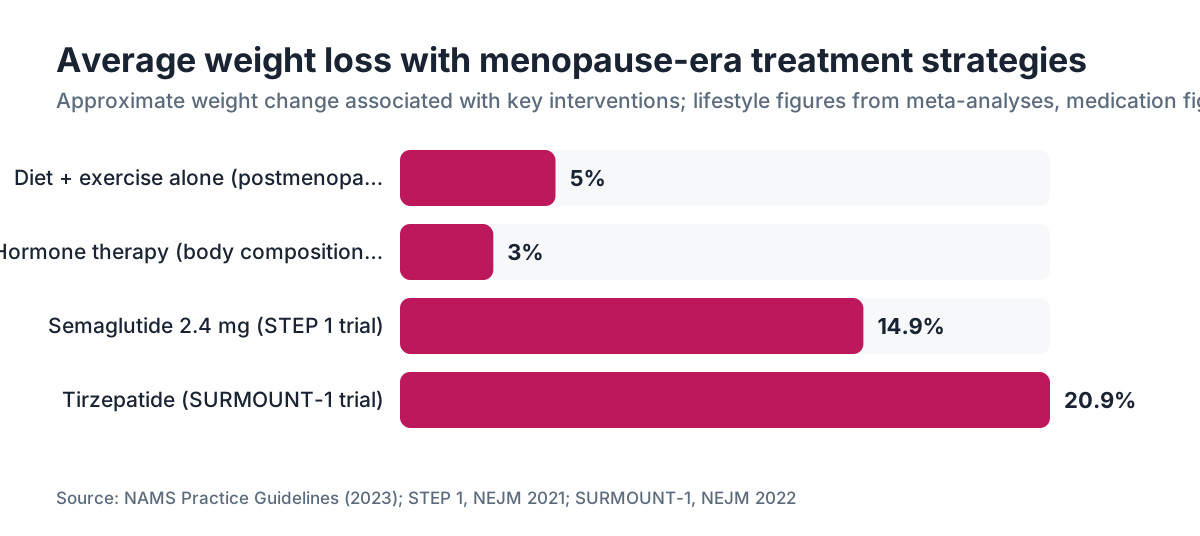
The SURMOUNT-1 trial of tirzepatide showed average weight loss of 20.9% in adults with obesity over 72 weeks [10]. The STEP 1 trial of semaglutide 2.4 mg showed average weight loss of 14.9% over 68 weeks [11]. Both trials included women in the menopause-age range, though neither broke out results by menopausal status in the primary publications.
For women where leptin resistance and estrogen loss both drive the problem, pairing hormone therapy with a GLP-1 medication may address both at once. No large randomized trial has tested that combination yet, but the mechanism holds up and clinicians increasingly use it. For more on how these medications work, see is semaglutide the same as ozempic and semaglutide news.
Cost is real. Branded semaglutide (Wegovy) runs roughly $1,300 to $1,400 per month without insurance, and tirzepatide (Zepbound) sits in a similar range. Compounded versions, where available, cost less but carry their own questions around quality and regulatory status.
What lifestyle changes actually reduce leptin resistance in menopause?
Sleep is the most underrated lever here. One night of poor sleep (under 6 hours) measurably raises ghrelin, the hunger hormone, and blunts leptin sensitivity the next day. Chronic sleep disruption, which is common in perimenopause thanks to night sweats and insomnia, creates a sustained leptin resistance state [12]. Treating sleep is not optional. It is metabolic medicine.
Strength training matters in a way cardio alone does not. Skeletal muscle is metabolically active tissue, and building it improves insulin and leptin signaling over time. Women lose roughly 3 to 8 percent of muscle mass per decade after 30, and that loss speeds up after menopause. Two to three resistance sessions a week, built around compound movements, consistently improves metabolic markers in postmenopausal women.
Diet quality beats diet quantity for leptin resistance specifically. Ultra-processed foods, especially those high in fructose, worsen leptin resistance independently of total calories. Fructose is metabolized in the liver in a way that skips the normal leptin response, so high-fructose diets can hold leptin resistance in place even at modest calorie levels. Cutting ultra-processed food and added sugar is the most consistent dietary recommendation in the leptin literature.
Omega-3 fatty acids (EPA and DHA) from fatty fish or supplements show modest effects on leptin sensitivity in controlled trials. Anti-inflammatory eating patterns more broadly (Mediterranean-style, high vegetable variety, legumes, limited refined carbohydrates) go with better leptin sensitivity in observational data.
Chronic stress raises cortisol, which drives visceral fat and worsens leptin resistance. This is not a soft claim. The cortisol-visceral fat-leptin resistance link is documented mechanistically and in human cohort studies. Stress management is metabolic work.
Is leptin resistance the same as insulin resistance, and do they always occur together in menopause?
They are related but distinct. Both are cellular resistance to a hormone that normally regulates energy metabolism. Both involve the hypothalamus and metabolic tissues. And in practice, they very often occur together, especially in postmenopausal women.
The overlap happens because both worsen with more visceral fat, chronic inflammation, poor sleep, and sitting all day. Visceral fat produces inflammatory cytokines (TNF-alpha, IL-6) that impair signaling for both insulin and leptin at once.
But you can have one without the other, at least early. Some women develop insulin resistance with leptin sensitivity mostly intact. Others develop early leptin resistance without overt insulin resistance on standard labs. The two share risk factors and tend to converge over time, but they are not the same diagnosis.
Insulin resistance is easier to measure (fasting insulin, HOMA-IR, oral glucose tolerance test). Leptin resistance currently has no clean lab test. When a clinician evaluates metabolic health in a perimenopausal or postmenopausal woman, the full panel (fasting glucose, insulin, lipids, HbA1c, waist circumference, blood pressure) gives a far better picture than any single marker. For the broader hormonal picture during this transition, peri menopausal covers the full perimenopause hormone shift.
Can thyroid problems be confused with leptin resistance in menopause?
Yes, and it is a common source of diagnostic confusion. Hypothyroidism causes weight gain, fatigue, cold intolerance, constipation, and brain fog. Leptin resistance in menopause can cause weight gain, fatigue, and cognitive sluggishness. The overlap is big enough that thyroid function should be checked before you pin unexplained weight gain entirely on leptin resistance or menopause.
TSH, free T4, and sometimes free T3 are the labs to order. TSH above 4.0 mIU/L is the conventional threshold for hypothyroidism, though some clinicians treat symptoms at lower levels depending on context. Autoimmune thyroid disease (Hashimoto's thyroiditis) becomes more common in the perimenopause years, and estrogen swings can shift thyroid binding globulin, which makes thyroid labs harder to read.
The honest answer: thyroid disease, leptin resistance, and estrogen loss can all be happening at once, and often are. Treat one and ignore the others, and you get partial results at best. A full hormonal workup is the right starting point. See thyroid hormone replacement therapy for how thyroid treatment works in this context.
How much weight gain should women expect from leptin resistance specifically, versus other menopause factors?
The literature cannot cleanly assign a specific pound count to leptin resistance alone. What it shows is that the menopause transition goes with an average of 5 to 8 pounds of weight gain over the perimenopausal years, with individual variation from no gain to 20 or more pounds [4].
Leptin resistance is one mechanism in that trajectory. Others include lower estrogen slowing metabolic rate, muscle loss lowering resting energy expenditure, sleep disruption, and shifts in physical activity. These mechanisms interact, so pinning a specific pound figure on leptin resistance alone would be invented precision.
What is clearer is the body composition shift. Even women whose total weight holds steady through menopause often see waist circumference climb by 2 to 3 inches and visceral fat rise sharply [3]. That change in where fat sits, not the number on the scale, is where the metabolic risk concentrates. Visceral fat goes with cardiovascular disease, type 2 diabetes, and certain cancers independently of BMI.
So the clinical target should not be "get back to my premenopause weight." It should be "improve metabolic health, reduce visceral fat, keep muscle." A woman who weighs the same as she did at 40 but carries much more visceral fat and less muscle is in worse metabolic shape, not the same.
What tests should you ask for if you suspect leptin resistance is driving your weight gain?
No single test confirms leptin resistance. Here is what a reasonable workup looks like.
Fasting metabolic panel: fasting glucose, fasting insulin, HbA1c, complete lipid panel. Calculate HOMA-IR (fasting insulin times fasting glucose divided by 405; values above 2.0 suggest insulin resistance, which commonly co-occurs with leptin resistance).
Thyroid panel: TSH and free T4 at minimum, free T3 if TSH is borderline.
Sex hormones: estradiol, FSH, and total testosterone. These help pin down where you are in the menopause transition and whether hormone therapy might fit.
High-sensitivity CRP: chronic inflammation is both a driver and a marker of leptin resistance.
Waist circumference: measured at the navel. Above 35 inches in women marks elevated metabolic risk regardless of BMI [4].
Fasting leptin: some clinicians order this, though standard guidelines do not require it. If ordered, a value above 25 ng/mL in a woman with symptoms is suggestive, but the decision-making is the same with or without it.
Bring these results to a clinician who understands the menopause-metabolism connection. WomenRx clinicians regularly review this full hormonal picture for women facing unexplained weight changes in midlife. The menopause society also publishes clinical guidance documents worth reading before your appointment.
Frequently asked questions
Can you test for leptin resistance with a blood test?
Not reliably. Blood leptin can be measured, but leptin resistance is a signaling problem in the brain, not a low-hormone problem. Many women with leptin resistance have normal or high leptin levels. A fasting leptin above roughly 25 ng/mL with typical symptoms is suggestive, but standard endocrinology guidelines do not recommend routine testing because it rarely changes the treatment plan.
Does menopause cause leptin levels to go up or down?
Studies are mixed, but postmenopausal women tend to have higher or similar leptin levels compared to premenopausal women at the same BMI. The problem is not the amount of leptin but how well the brain responds to it. Falling estrogen weakens hypothalamic leptin sensitivity, so even adequate leptin fails to suppress appetite and hold metabolic rate steady.
Will losing weight fix leptin resistance during menopause?
Partly. Reducing visceral fat improves leptin sensitivity over time. But menopause-related leptin resistance has a hormonal driver, falling estrogen, that weight loss alone does not fully address. Women who lose weight without addressing estrogen deficiency often see the weight return faster, because the underlying signaling disruption persists. Combining weight loss strategies with hormone therapy produces better metabolic outcomes in most studies.
Is there a specific diet that reverses leptin resistance in menopause?
No single diet has been proven in randomized trials to reverse leptin resistance in menopausal women. The most consistent evidence points to cutting ultra-processed foods and added fructose (which impairs leptin signaling in the liver and brain), eating enough protein to preserve muscle, and following an anti-inflammatory eating pattern. Mediterranean-style eating fits this and has the broadest evidence base for postmenopausal metabolic health.
How long does it take to improve leptin sensitivity after starting hormone therapy?
Most studies showing improvements in leptin-related markers (leptin-to-adiponectin ratio, fasting leptin, visceral fat) use durations of 3 to 12 months. A randomized trial in Fertility and Sterility showed measurable changes in leptin markers within 3 months of transdermal estradiol. Full body composition changes take longer, usually 6 to 12 months, and are more noticeable with concurrent exercise.
Can intermittent fasting help with leptin resistance in menopause?
The evidence is suggestive but thin. Short-term fasting can lower fasting insulin and improve metabolic flexibility, which may indirectly help leptin sensitivity. But very low-calorie periods can also raise cortisol in some women, which worsens visceral fat and cancels the benefit. For perimenopausal women who already have sleep disruption, aggressive fasting may worsen the hormonal picture. A moderate 12 to 14 hour overnight window is the most cautious starting point.
Do GLP-1 medications work if you have leptin resistance?
Yes. GLP-1 receptor agonists like semaglutide and tirzepatide act on hypothalamic circuits that overlap with but are distinct from leptin pathways. They suppress appetite and improve insulin sensitivity even when leptin resistance is present. The STEP 1 trial showed 14.9% average weight loss with semaglutide 2.4 mg, and SURMOUNT-1 showed 20.9% with tirzepatide, in populations that included many women with features of leptin resistance.
Is menopause belly fat always caused by leptin resistance?
No. Menopause belly fat has several causes: lower estrogen shifts fat toward visceral depots independently of leptin, muscle loss lowers resting metabolic rate, cortisol from sleep disruption and stress promotes abdominal fat, and age-related gut microbiome changes alter energy extraction from food. Leptin resistance is one contributor to this picture, not the sole cause.
Can high leptin levels during menopause be dangerous?
High circulating leptin in the context of leptin resistance goes with chronic low-grade inflammation, insulin resistance, and cardiovascular risk in observational studies. It also links to higher blood pressure (leptin activates the sympathetic nervous system) and has been studied in relation to breast cancer risk, though causality is not established. The elevated leptin is a marker of the underlying metabolic problem rather than a direct cause of disease.
Does exercise reduce leptin resistance in postmenopausal women?
Yes, particularly resistance training. Strength training builds skeletal muscle, which improves metabolic rate and insulin sensitivity, and over time improves hypothalamic leptin sensitivity. Aerobic exercise helps too, mainly by reducing visceral fat. Studies in postmenopausal women generally find that combined resistance and aerobic training produces the best improvements in leptin-related markers, with effects visible within 8 to 16 weeks of consistent work.
At what stage of menopause does leptin resistance typically start?
Evidence suggests leptin sensitivity begins to shift during perimenopause, as estrogen starts fluctuating and declining, not after the final period. Some women notice unexplained weight gain and increased hunger 3 to 7 years before their last period. That fits the biology: estrogen's role in leptin signaling means even the erratic estrogen swings of early perimenopause can start breaking the feedback loop.
Is leptin resistance related to hot flashes or other menopause symptoms?
Indirectly. Leptin resistance does not directly cause hot flashes, which come from estrogen withdrawal and altered thermoregulation in the hypothalamus. But the hypothalamus is the shared site for both processes, and some evidence suggests fat-related hormonal signals affect hot flash frequency and severity. Women with higher BMI, which often tracks with leptin resistance, tend to report more severe hot flashes, though the mechanism is not fully worked out.
Sources
- Clegg DJ et al., Endocrinology, 2006 — estrogen receptor alpha required for leptin sensitivity in hypothalamus
- Gao Q & Horvath TL, Annual Review of Neuroscience, 2008 — estrogen-leptin crosstalk in the hypothalamus
- Davis SR et al., Nature Reviews Endocrinology, 2012 — body composition changes across menopause
- North American Menopause Society (NAMS), Menopause Practice Guidelines
- Niskanen L et al., Maturitas, 2014 — leptin levels in postmenopausal vs premenopausal women
- Wildman RP et al., Journal of Clinical Endocrinology and Metabolism, 2008 — leptin, adiponectin, and sex hormones across menopause transition in 3,302 women
- Simoncini T et al., Fertility and Sterility, 2004 — transdermal estradiol and leptin markers in postmenopausal women (randomized trial)
- Manson JE et al., New England Journal of Medicine / WHI re-analysis, 2013 — timing hypothesis for hormone therapy metabolic benefits
- Berthoud HR et al., Cell Metabolism, 2017 — GLP-1 receptor agonists and hypothalamic energy regulation
- Jastreboff AM et al. (SURMOUNT-1), New England Journal of Medicine, 2022 — tirzepatide in adults with obesity
- Wilding JPH et al. (STEP 1), New England Journal of Medicine, 2021 — semaglutide 2.4 mg in adults with obesity
- Spiegel K et al., PLOS Medicine, 2004 — sleep restriction reduces leptin and raises ghrelin