Can HRT estrogen cause acne? What the evidence actually shows
TL;DR: Estrogen rarely causes acne. It usually improves it by raising SHBG, which lowers free testosterone. The likelier culprit is the progestogen paired with it, especially androgenic ones like norethindrone or levonorgestrel. Switching to micronized progesterone or drospirenone clears HRT-related breakouts for most women. Give any new regimen eight to twelve weeks before you blame it.
Can HRT estrogen actually cause acne?
Estrogen is unlikely to be the trigger. It usually does the opposite: it suppresses acne by cutting the free androgens circulating in your blood. It raises sex hormone-binding globulin (SHBG), a protein that grabs onto testosterone and keeps it away from your oil glands. That's the same mechanism behind the birth control pills the FDA approved to treat acne.
So when a woman starts hormone replacement therapy and her skin erupts, the reflex to blame estrogen is usually wrong. The real suspects are the progestogen in the regimen, the delivery method, the dose, and the hormonal churn of the transition itself.
Skin is never simple, though. A small number of women do report worse acne on estrogen-only therapy, and the reasons probably include individual differences in how skin cells read hormonal signals, baseline androgen levels, and whether the estrogen dose is nudging their system somewhere unexpected. The case for estrogen-as-cause is anecdotal. The case for progestogen-as-cause is much stronger, backed by decades of oral contraceptive data. [1]
What types of progestogen are most likely to cause breakouts?
The chemistry decides this. Progestogens are not interchangeable. Some latch onto androgen receptors and behave like weak testosterone. Others are androgen-neutral, and a couple actively block androgens.
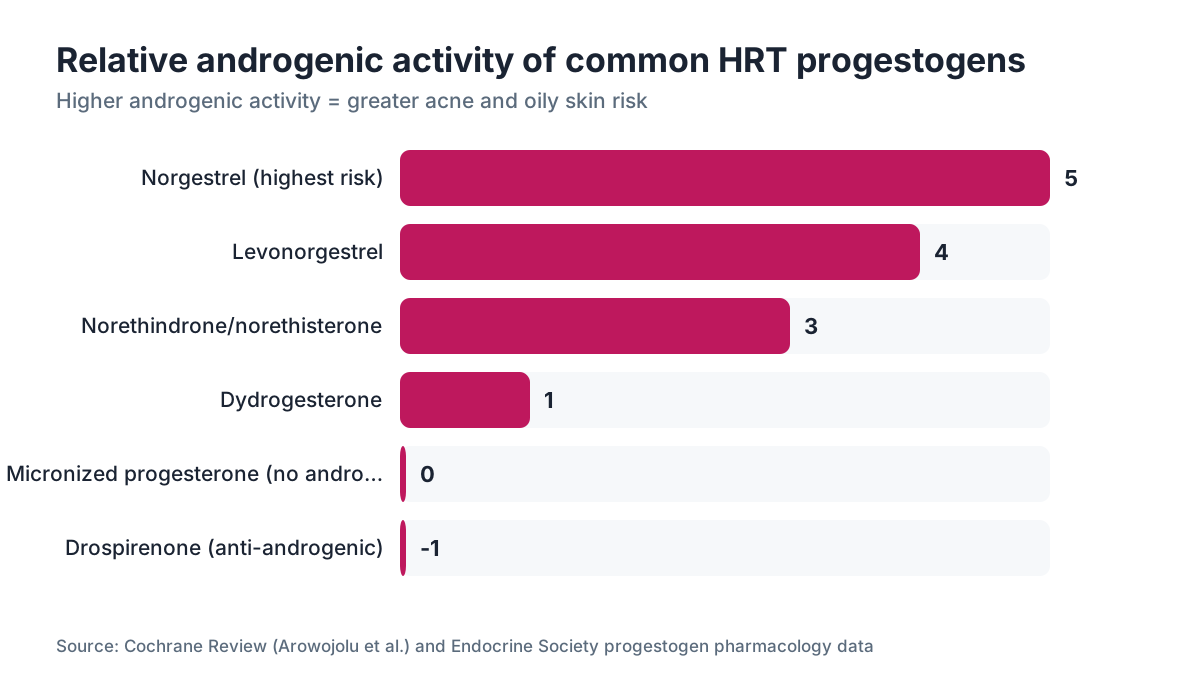
High-androgenic progestogens tied to acne and oily skin include norethindrone (norethisterone), levonorgestrel, and norgestrel. These are older first- and second-generation molecules, and they show up in plenty of common HRT tablets and some low-dose pills used in perimenopause. [2]
Lower-androgenic or anti-androgenic options include:
| Progestogen | Androgenic activity | Common HRT form | |---|---|---| | Micronized progesterone (Prometrium, Utrogestan) | None (progesterone-receptor only) | Oral capsule, vaginal | | Drospirenone | Anti-androgenic | Bijuva, some HRT combinations | | Dydrogesterone | Low | Femoston (Europe) | | Norethindrone/norethisterone | High | Many HRT tablets | | Levonorgestrel (IUS) | Moderate-high locally | Mirena |
The Mirena IUD is its own case. It releases levonorgestrel locally inside the uterus, so systemic absorption stays very low. Some women who use Mirena as the progestogen half of their HRT report no skin changes. Others get mild breakouts. Individual response varies more than the pharmacology would predict. [3]
If your skin broke out after you added progesterone to your HRT, the specific type matters far more than the dose.
How do hormonal fluctuations during perimenopause affect acne on their own?
Before you blame the prescription, understand what your skin is already doing during perimenopause. A lot of "HRT acne" is really perimenopause acne with bad timing.
In the years before your final period, estrogen goes erratic. It doesn't glide down. It spikes and crashes without warning. Testosterone, meanwhile, falls more slowly than estrogen. That relative androgen surplus is why so many women in their 40s get jawline and chin acne they haven't seen since high school. [4]
Start HRT at 47 and notice breakouts, and you may be watching perimenopause acne that was already on its way, not a drug side effect. Two clues sort this out. If the breakouts started before your first HRT dose, or if they cluster on your jawline and chin (the classic androgen pattern), the perimenopause shift is likely the bigger driver.
HRT that flattens the estrogen peaks and valleys may actually reduce this kind of acne once your body settles, which usually takes two to four months.
Does the delivery route of estrogen matter for acne risk?
Yes, and few people mention it. How estrogen gets into your body changes how it moves your hormone-binding proteins, and that changes your skin.
Oral estrogen passes through the liver before it reaches your bloodstream (first-pass metabolism). That liver pass pushes SHBG production way up. More SHBG means less free testosterone, which usually means calmer skin. It's a big reason estrogen-containing pills work so well against acne. [1]
Transdermal estrogen (patches, gels, sprays) skips the liver. You get steady estradiol in the blood without the SHBG surge. For clot and cardiovascular safety, transdermal is generally the better choice, especially for women over 60 or anyone with cardiovascular risk. But the smaller SHBG effect means it does less to hold down free androgens. For androgen-driven acne, that's a real difference. [5]
The estrogen patch is not the villain. It wins on most outcomes. But if you swapped an oral pill for a patch and your skin got worse, this is the mechanism.
Vaginal estrogen (cream, ring, tablet) stays almost entirely local and does next to nothing to your facial skin either way.
What does the research actually say about HRT and acne?
The honest answer: large randomized trials on HRT and acne don't exist. Most of what we have comes from observational studies, dermatology case reports, and borrowed conclusions from oral contraceptive research.
The Women's Health Initiative (WHI), the largest randomized HRT trial ever run, never measured acne as an outcome. [6] Smaller studies and systematic reviews of how progestogens affect skin keep landing in the same place: androgenic progestogens worsen acne, and anti-androgenic or neutral ones don't. A Cochrane review of combined hormonal contraceptives (same hormones, different doses) found that pills containing cyproterone acetate, drospirenone, or chlormadinone improved acne more than pills with more androgenic progestogens. [2]
For HRT specifically, a 2020 review in Menopause concluded that skin changes during the transition, acne included, come mostly from relative androgen excess rather than from the estrogen replacement itself, and recommended switching women with acne to less androgenic progestogen formulations first. [7]
Nobody has clean head-to-head trial data comparing, say, norethindrone-based HRT against micronized progesterone on acne in menopausal women. The nearest evidence is the contraceptive literature, which points the same direction but involves younger women and higher doses.
Why do some women break out when they first start HRT even if the regimen is fine?
Starting any hormonal therapy shakes up a system that's been running one way for years. In the first four to eight weeks, your skin may be reacting to the change itself, not to the steady-state effect of the medicine.
Sebaceous glands read hormonal signals closely, and they don't recalibrate overnight. Some women get a short-lived jump in breakouts that fades once levels level off. This shows up in patient reports far more than in trials, but dermatologists and menopause specialists both recognize it.
Here's the rule of thumb. If your acne started within the first six weeks of HRT and it's already improving, that's reassuring. If it started after the first month and is still getting worse at month three or four, take it seriously with your prescriber.
At WomenRx, clinicians managing HRT often ask women to log acne onset and location month by month, because that timeline tells you most of what you need to know about cause.
Can HRT estrogen improve acne in some women?
Yes, and this is the more common direction of effect.
Women entering menopause tend to have low estrogen and relatively higher androgen activity. Add estrogen back, especially by an oral route that raises SHBG, and you can drop free testosterone enough to clear acne outright. Plenty of women who fought adult acne all through perimenopause say HRT was the first thing that finally settled their skin.
Dermatologists have known this from contraceptive data for decades. Three combination pills are FDA-approved specifically for acne (Ortho Tri-Cyclen, Estrostep Fe, and Beyaz), and all three contain ethinyl estradiol. The estrogen is doing real work on the skin. [1]
HRT uses bioidentical estradiol at lower doses than most contraceptive pills, so the skin benefit may be smaller. The direction is identical. If your skin is genuinely better since you started HRT, the estrogen is probably part of that, and you should weigh it before you change anything.
How do you figure out whether your HRT is causing your acne?
A structured look beats guessing. Work through five checks.
Map the timeline. When did the acne start relative to your first HRT dose? If it predates the prescription or landed during a dose change, that's a clue. If it appeared within two to three weeks of starting, a transition effect is plausible. If it showed up after months of clear skin, look for something else that changed.
Read the pattern. Jawline and chin acne is classically androgenic. Forehead and hairline acne often tracks oil production and topical products (including transdermal hormone gels applied to the upper body and transferred by hand). Cheek acne links more often to a disrupted skin barrier.
Check the progestogen. Ask your pharmacist or prescriber which one you're on and look up its androgenic activity. Norethindrone, levonorgestrel, and norgestrel are the high-androgenic names to flag.
Rule out the other variables. Stress, diet shifts, a new skincare product, stopping a prior medication: any of these can hit your skin at the same moment you start HRT.
Give it three months before you convict the HRT, unless the breakouts are severe or painful. Most hormonal skin changes take eight to twelve weeks to stabilize.
What can you actually do if HRT is making your acne worse?
You have several options that work, and you can stack them.
Switch the progestogen. If you're on norethindrone, ask about micronized progesterone (Prometrium) or drospirenone. That's a reasonable first move. Micronized progesterone has no androgenic activity and is the skin-friendliest choice in HRT. The KEEPS trial (Kronos Early Estrogen Prevention Study) compared oral conjugated equine estrogen plus oral micronized progesterone against transdermal estradiol plus vaginal micronized progesterone and found both regimens well tolerated, though skin wasn't a primary endpoint. [8]
Change the delivery route. On transdermal estrogen and worried about weaker SHBG activity? Ask whether oral estrogen fits your cardiovascular risk. If you apply transdermal gel to your upper chest or neck and get facial acne, move the application to your thigh or abdomen to cut skin-contact transfer.
Add a topical. Retinoids, azelaic acid, and topical clindamycin all pair fine with HRT. A dermatologist can prescribe these without touching your hormone therapy. Spironolactone, an oral anti-androgen, is a workhorse for adult hormonal acne and works well alongside HRT.
Adjust the timing of oral progesterone. Some providers have women take micronized progesterone at bedtime for its mild sedative effect. No direct evidence says this changes acne, but skin complaints are reported a bit less with evening dosing than morning.
Sometimes patience is the answer. If the acne started in the first eight weeks, a three-month trial before any prescription change is reasonable, as long as the breakouts aren't severe or cystic.
Should acne be a reason to stop HRT?
Almost never, if HRT is otherwise helping you. Acne is a fixable side effect. Quit HRT over breakouts and you trade manageable skin for whatever sent you to HRT in the first place: hot flashes, wrecked sleep, vaginal dryness, bone loss risk, mood swings.
The North American Menopause Society (NAMS) position for women under 60 or within 10 years of menopause is that the benefits generally outweigh the risks for symptomatic women. [9] Acne isn't among the risks that change that math.
The better path is a conversation about reformulating your regimen. Most HRT-related acne responds to a progestogen switch within two to three months. If it doesn't, adding topical or systemic dermatology treatment lets you keep the hormonal benefits.
See the fuller picture of menopause care and what's available for women moving through this.
Are there any other hormones in HRT protocols that affect skin?
Testosterone shows up in more HRT protocols now, often for low libido, fatigue, or mood. The evidence base is growing, though the FDA has not approved any testosterone product specifically for women, so every formulation prescribed for women is off-label. [10]
Even low-dose testosterone can raise sebum and cause acne, because the sebaceous gland answers directly to androgens. Women adding testosterone to estrogen-progestogen HRT are more likely to break out than those on estrogen and progesterone alone. If you're on testosterone and breaking out, cutting the dose or moving to a lower-absorption route (cream instead of injection) is usually the first adjustment.
DHEA (dehydroepiandrosterone) turns up too, either topically for vaginal symptoms (Intrarosa, FDA-approved) or as an oral supplement. Oral DHEA converts to androgens and estrogens in the body and can worsen acne in women who are androgen-sensitive. Vaginal DHEA converts minimally and is unlikely to touch your facial skin. [11]
Knowing when menopause starts and how your hormonal baseline moves over time explains why skin sensitivity to these hormones shifts across your 40s and 50s.
Frequently asked questions
Can HRT estrogen cause acne?
Estrogen rarely causes acne and usually improves it by raising SHBG, which lowers free testosterone. When HRT triggers breakouts, the progestogen is normally to blame, especially androgenic types like norethindrone or levonorgestrel. Switching to micronized progesterone or drospirenone clears it for most women. Give any new HRT regimen at least eight to twelve weeks before you decide it's the cause.
Does estrogen patch cause acne?
Transdermal patches raise SHBG less than oral estrogen because they bypass the liver first-pass effect. That means patches do less to suppress free testosterone than pills. Women whose acne is androgen-driven may see slightly worse skin on patches than on oral estrogen. The patch is still preferred for clot and cardiovascular safety. The skin tradeoff is real but manageable with the right progestogen pairing.
Why did I break out after starting HRT?
Three likely reasons: your progestogen is androgenic and is stimulating oil glands, you're in an adjustment phase where shifting hormone levels temporarily disrupt skin (usually gone by week eight), or your perimenopause androgen excess was already driving acne and the timing just overlapped. Check which progestogen you're on, map when the breakouts started relative to your prescription, and talk to your provider before stopping.
Which HRT is least likely to cause acne?
Estrogen plus micronized progesterone (like Prometrium) is the combination least tied to acne. Micronized progesterone binds only progesterone receptors and has no androgenic activity. Drospirenone is anti-androgenic and may improve acne. Delivery route matters too: oral estrogen raises SHBG more than transdermal, which further suppresses androgen-driven breakouts. Avoid norethindrone or levonorgestrel-based HRT if acne is a concern.
Can stopping HRT cause acne?
Yes. Stop HRT and estrogen drops, so the relative androgen surplus returns, sometimes more abruptly than in natural perimenopause. That shift can trigger or worsen acne, especially on the jawline and chin. If you're stopping HRT for a reason unrelated to skin, ask a dermatologist about bridging support with topical retinoids or spironolactone.
Is HRT acne hormonal acne?
HRT-related acne is almost always hormonal, driven by androgen receptor stimulation of the sebaceous glands. It usually shows up on the jawline, chin, and lower cheeks, the classic androgen-excess pattern. It's the same mechanism as perimenopause acne, when estrogen drops and testosterone's relative influence rises. Treatment follows the same logic: cut androgenic stimulation or add anti-androgen therapy.
Does progesterone cause acne more than estrogen?
In HRT, yes, when the progestogen is androgenic. Norethindrone and similar progestins directly stimulate sebaceous glands and can cause cystic acne. Estrogen tends to suppress androgen activity through SHBG. The variable that matters is which progestogen you're taking. Micronized progesterone (bioidentical) has essentially no androgenic effect. Synthetic progestins vary widely. Ask your prescriber to review the androgenic profile of yours.
Can estrogen cream cause acne?
Topical estrogen on the face is rarely used in HRT and would be unusual. Vaginal estrogen cream is localized with minimal systemic absorption, so it doesn't meaningfully affect facial skin. Transdermal estrogen gels applied to the body can occasionally transfer to the face if you don't wash your hands, which could affect local skin, but systemic estrogen-driven facial acne from these products is unlikely.
How long does HRT acne last?
If it's a transition-phase effect from starting HRT, most women improve within eight to twelve weeks as levels stabilize. If it's driven by an androgenic progestogen, it usually won't clear without a regimen change. After switching to a less androgenic progestogen like micronized progesterone, skin typically starts improving within four to eight weeks and can take three to four months to reach full effect.
Can spironolactone be taken with HRT for acne?
Yes. Spironolactone is an aldosterone antagonist that also blocks androgen receptors in the skin, which makes it effective for hormonal acne. It's widely prescribed for adult acne in women and is compatible with HRT. Its anti-androgenic effect can complement estrogen therapy. Acne doses (25 to 100 mg daily) are lower than heart-condition doses. Talk it through with your prescriber.
Does testosterone HRT cause acne in women?
Testosterone added to HRT is a real acne risk. Even low-dose testosterone for libido or energy can raise sebum, because sebaceous glands respond directly to androgens. Women already prone to hormonal acne are most susceptible. If testosterone-related acne develops, dose reduction, a delivery method change, or adding spironolactone (topical or oral) are the standard management steps.
What's the difference between perimenopause acne and HRT acne?
Perimenopause acne comes from natural estrogen swings that leave testosterone relatively dominant, mostly at the jawline and chin. HRT acne, if it's real and not coincidental, usually comes from an androgenic progestogen in the regimen rather than the estrogen. Timeline is your best clue: if the acne predates HRT or was already worsening, perimenopause is the more likely driver.
Can I treat HRT-related acne with over-the-counter products?
For mild breakouts, yes. Niacinamide (4 to 5%), azelaic acid, and salicylic acid are all over the counter and work on hormonal acne. Benzoyl peroxide handles the bacterial component. For moderate to severe or cystic acne, prescription options like topical retinoids or spironolactone are more effective. OTC products manage symptoms but won't fix the underlying hormonal driver if it's an androgenic progestogen.
Should I tell my dermatologist I'm on HRT?
Absolutely. Your regimen, including the specific progestogen, the estrogen dose, and the delivery method, is directly relevant to how a dermatologist treats your acne. Knowing you're on norethindrone versus micronized progesterone changes the recommendation. Some dermatologists can also coordinate with your prescriber about whether a progestogen switch would fix the skin before adding a separate acne medication.
Sources
- FDA, Ortho Tri-Cyclen prescribing information and approval history
- Cochrane Database of Systematic Reviews, Arowojolu et al., 'Combined oral contraceptive pills for treatment of acne'
- Mirena (levonorgestrel-releasing intrauterine system) FDA prescribing information
- American Academy of Dermatology, adult acne in women clinical guidance
- NAMS (North American Menopause Society), 2022 Hormone Therapy Position Statement
- NIH NHLBI, Women's Health Initiative study overview
- Menopause journal, 'Skin and the menopause transition' review, 2020
- KEEPS Trial (Kronos Early Estrogen Prevention Study), Annals of Internal Medicine 2014
- NAMS, 2022 Hormone Therapy Position Statement
- Endocrine Society, 'Testosterone therapy in women: a clinical practice guideline'
- FDA, Intrarosa (prasterone/DHEA) prescribing information
- Prometrium (micronized progesterone) prescribing information, FDA