Can GLP-1 medications interact with hormone replacement therapy?
TL;DR: GLP-1 receptor agonists and hormone replacement therapy can be taken together, and many women use both safely. The main concerns are indirect. GLP-1s slow gastric emptying, which can lower absorption of oral estrogen and oral progesterone. Transdermal HRT sidesteps that problem. Estrogen also boosts how well GLP-1 therapy works for weight. There is no hard contraindication between the two, but monitoring matters.
What is the direct interaction between GLP-1s and HRT?
There is no direct pharmacological antagonism between GLP-1 receptor agonists (like semaglutide or tirzepatide) and hormone replacement therapy. They do not block each other's receptors or cancel each other's effects at the molecular level. But "no direct interaction" does not mean "no interaction at all."
The real concern runs through the gut. GLP-1 agonists slow gastric emptying, sometimes a lot. Semaglutide's prescribing information acknowledges that it "may influence the absorption of concomitantly administered oral medications" because of that delayed emptying [1]. When the stomach empties more slowly, oral drugs sit longer in the upper GI tract before they hit their peak absorption window. That matters for oral estradiol and oral micronized progesterone, both of which depend on reliable GI absorption to reach therapeutic blood levels.
Transdermal estradiol (patches, gels, sprays) and vaginal estrogen skip the gut entirely, so gastric emptying speed is irrelevant to how they get delivered. If you are already on a patch or gel, this interaction is not on your list of things to worry about.
The second layer runs the opposite direction: estrogen influences how well GLP-1 therapy works. Estrogen receptors sit on the GLP-1-secreting L-cells in the gut and on GLP-1 receptors in the hypothalamus. Animal and human data both suggest estrogen sharpens GLP-1 sensitivity and amplifies its appetite-suppressing effects. So women who start HRT while already on a GLP-1 may see weight loss pick up a little, and women who stop HRT may find the GLP-1 working less well. Nobody has large RCT data on this specific question yet. The closest evidence comes from observational work in postmenopausal women and mechanistic studies in rodents [2].
Does semaglutide affect how well oral estrogen or progesterone is absorbed?
Potentially, yes. This is the interaction most worth raising with your prescriber.
Gastric emptying delay is dose-dependent with semaglutide. The 2.4 mg/week dose used for weight loss (Wegovy) slows emptying more than the lower doses used for type 2 diabetes (Ozempic). Tirzepatide (Mounjaro, Zepbound) also slows gastric emptying through its GIP action, though the magnitude differs somewhat from pure GLP-1 agonists [3]. The FDA label for oral semaglutide (Rybelsus) tells patients to take it on an empty stomach with only 4 oz of plain water, then wait 30 minutes before eating or taking other medications, precisely because co-administration cuts absorption [1].
For injectable semaglutide or tirzepatide, the label is quieter about oral hormone timing, but the same mechanism still applies. Oral estradiol pills and oral progesterone capsules (Prometrium) are both absorbed in the small intestine. When gastric emptying slows, time-to-peak concentration stretches out and the peak itself may drop. How much this matters clinically depends on the woman, her dose, and how tightly her HRT needs to be calibrated.
A few things reduce the risk. Switching to transdermal or vaginal estrogen is the cleanest fix, and many menopause specialists already prefer it because it avoids first-pass liver metabolism and carries a better clot and cardiovascular profile than oral estradiol, GLP-1 or not [4]. If a woman needs to stay on oral HRT, taking it at a consistent time (same relationship to meals, same relationship to the injection day if that matters) trims the variability. And tracking symptoms, with a blood level when needed, catches under-delivery early.
For a closer look at the estrogen delivery options that interact least with GLP-1 therapy, the North American Menopause Society has published detailed guidance on transdermal versus oral routes.
Does HRT affect how well GLP-1 medications work for weight loss?
Probably yes, and probably in your favor, but the data are still thin. That is the honest version.
Estrogen has well-documented effects on body weight and fat distribution. The menopause transition brings weight gain averaging roughly 1.5 kg per year, though the range is wide [5]. Much of that is fat shifting from subcutaneous to visceral depots, driven by estrogen loss rather than aging alone. GLP-1 agonists act centrally and peripherally to suppress appetite and slow gastric emptying. Estrogen's GLP-1-sensitizing effect at the hypothalamus means the two may work better together than either alone.
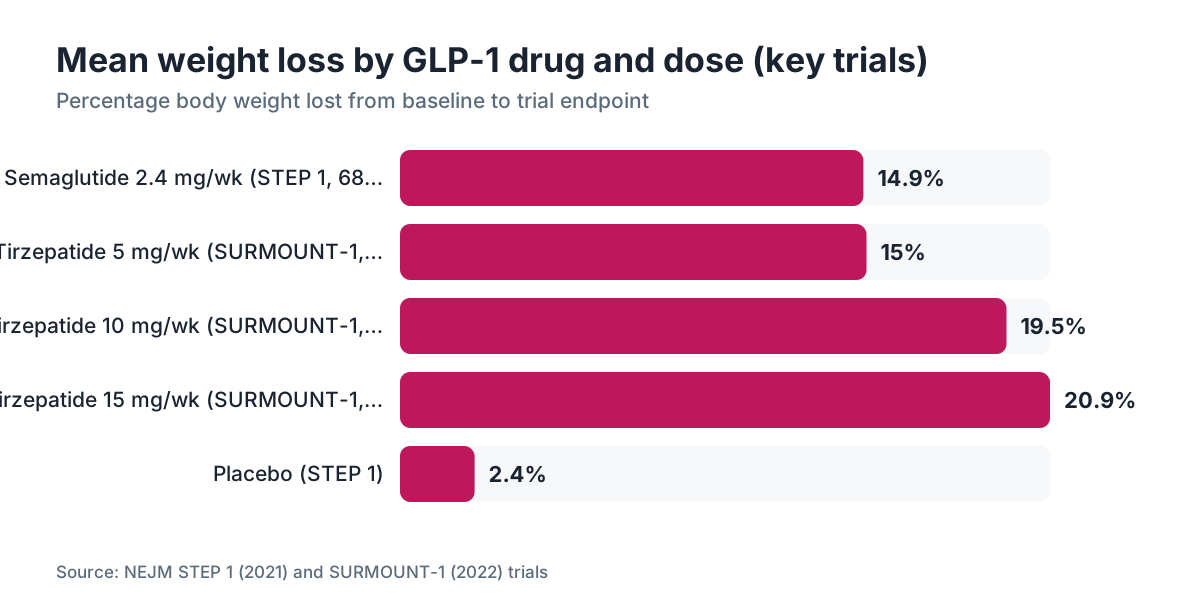
Observational analyses in postmenopausal women found that those on estrogen therapy lost more weight on GLP-1 therapy than those who were not, though these were confounded by many variables. The STEP trials (semaglutide 2.4 mg) and the SURMOUNT trials (tirzepatide 5/10/15 mg) did not stratify their results by HRT status in the primary publications, so clean RCT comparison data does not exist yet [6][7]. Mechanistic work shows estrogen raises GLP-1 receptor expression in brain regions tied to satiety, which is a plausible biological reason for the observed boost.
The flip side: a woman who stops HRT while on a GLP-1 may hit a plateau or regain a little, and it can look like GLP-1 tolerance when it is actually reduced estrogen-driven sensitivity. Flag that possibility before you change either medication.
Is it safe to take a GLP-1 and HRT at the same time?
For most women, yes. There is no contraindication in the FDA labeling for semaglutide (Ozempic, Wegovy), tirzepatide (Mounjaro, Zepbound), or standard HRT preparations against using the other class at the same time [1][3].
The safety considerations that do exist are the same ones your provider should already be watching for each drug on its own. For HRT: cardiovascular risk (largely resolved for healthy women under 60 who start early in menopause), breast tissue effects with long-term use, and clot risk with oral but not transdermal estrogen. For GLP-1s: GI side effects (nausea, vomiting, constipation), the small risk of pancreatitis, and the need for slow dose titration. Combining the two does not make either list meaningfully longer.
One nuance is worth raising. Women with obesity who start a GLP-1 lose fat tissue, including peripheral fat, which is a site of estrogen conversion from androgens (aromatization). In postmenopausal women not on HRT, big fat loss can, in theory, lower endogenous estrogen even further. This is not well-studied in the GLP-1 setting, but it is another reason postmenopausal women on GLP-1s may want to talk with their provider about HRT if they are not already on it.
If you use a telehealth platform like WomenRx that prescribes both GLP-1s and HRT, the upside is one provider who can see your full medication list, your hormone levels, and how everything is trending together.
Which form of HRT is best if you are also taking a GLP-1?
Transdermal estradiol wins on nearly every metric once a GLP-1 is in the picture. It skips the gut, skips first-pass liver metabolism, and carries the lower clot risk.
The table below compares the main HRT delivery routes on the factors that matter when you are also on a GLP-1:
| HRT Route | GI absorption dependent? | Affected by gastric emptying? | First-pass liver metabolism? | Clot risk vs. oral? | |---|---|---|---|---| | Oral estradiol pill | Yes | Yes | Yes | Higher | | Oral micronized progesterone (Prometrium) | Yes | Yes | Yes | Moderate | | Transdermal estradiol patch/gel | No | No | No | Lower | | Vaginal estradiol cream/ring/tablet | Minimal | No | Minimal | Lowest | | Progesterone vaginal gel | No | No | Minimal | Lower | | Injectable estradiol | No | No | No | Lower |
The North American Menopause Society's position statement on hormone therapy notes that transdermal estradiol carries a lower risk of venous thromboembolism than oral formulations, which holds true independent of GLP-1 use [4]. For women who need progesterone (those with an intact uterus), micronized progesterone (Prometrium) is the form most menopause specialists prefer. But if gastric slowing is a concern, a progesterone IUD or vaginal gel delivers the endometrial protection you need without leaning on GI absorption.
If you are on oral HRT and starting a GLP-1, have an honest talk with your provider about switching routes rather than assuming your current dose will behave the same way. An estradiol blood level 6 to 8 weeks after starting the GLP-1 tells you whether oral absorption has dropped.
Can GLP-1s change menopause symptoms, and does HRT still help?
GLP-1s do appear to move some menopause symptoms independent of weight loss, which matters when you are trying to sort out what is actually working.
Hot flashes have the most interesting preliminary data. Some women report fewer and milder hot flashes on GLP-1 therapy. The mechanism is not confirmed, but GLP-1 receptors sit in the hypothalamus near the thermoregulatory center, and weight loss on its own reduces hot flash burden in some women. Early observational reports have linked semaglutide use to lower vasomotor symptom scores in perimenopausal women with obesity, though the samples were too small to draw firm conclusions.
HRT still beats any weight-loss drug for vasomotor symptoms, and it is not close. The Endocrine Society's clinical practice guideline on menopause hormone therapy states that estrogen therapy is "the most effective treatment for vasomotor symptoms" and recommends it for symptomatic women who are not in a high-risk group [8]. GLP-1 therapy does not replace that. The two can complement each other: HRT treats the estrogen-deficiency symptoms directly, while the GLP-1 handles the metabolic and weight trajectory that menopause disrupts.
In perimenopause specifically, separating what belongs to hormone fluctuation from what belongs to GLP-1 titration (nausea, appetite suppression, fatigue) takes a few months. Keep a symptom log through the first 8 to 12 weeks of any new medication so the signals stay distinct. You can read more about the perimenopausal experience at our peri menopausal guide.
Does weight loss from GLP-1s change hormone levels?
Yes, meaningfully. This is one of the underappreciated reasons to monitor hormone levels once a GLP-1 is doing its job.
Fat tissue is metabolically busy. It converts androgens into estrogen, and sex hormone-binding globulin (SHBG) shifts with fat mass. When a woman loses 10 to 15% of her body weight on a GLP-1 (a typical response in the STEP and SURMOUNT trials [6][7]), several hormonal cascades move.
SHBG rises with weight loss. Higher SHBG means more estradiol is bound and less is free. On a fixed-dose HRT, free estradiol can fall even when total estradiol holds steady. That can bring back hot flashes, brain fog, or vaginal dryness she thought were handled.
In premenopausal and perimenopausal women, weight loss can restore or improve ovarian function and change cycle regularity. This matters most for women with PCOS on GLP-1s, where significant weight loss has been shown to restore ovulatory cycles and raise the risk of unintended pregnancy in women who assumed they were relatively infertile [9].
In postmenopausal women, losing peripheral fat reduces extraglandular estrogen production. That is a small contributor to overall estrogen in a postmenopausal woman on HRT, but it is one more variable that can make a fixed HRT dose start to feel insufficient as weight comes off.
The practical takeaway: recheck your hormone panel once you have lost more than 10% of your starting weight, and adjust HRT based on symptoms and levels rather than assuming the original dose still fits.
Should you tell your HRT provider you are starting a GLP-1 (and vice versa)?
Yes. This is one of those situations where split care genuinely causes problems.
Many women see a gynecologist for HRT and an internist or weight-loss specialist for the GLP-1. If neither one knows what the other is prescribing, the absorption interaction, the SHBG shift, and the hormonal changes from weight loss never make it onto anyone's radar. Returning hot flashes six months into GLP-1 therapy get misread as "HRT failure" when the real cause is oral estrogen absorption dropping with gastric slowing, or SHBG rising with weight loss.
The fix is simple: bring a current medication list to every visit, name both drugs out loud, and ask at least once whether the two prescribers should talk. If one platform handles both, that coordination happens on its own. For what to look for in a prescriber who understands where menopause care and metabolic medicine overlap, the new menopause covers how the clinical approach to this phase has shifted.
Women on thyroid medication should pay even closer attention to the gastric emptying issue. Levothyroxine is extremely sensitive to absorption timing and co-administration, and GLP-1-induced gastric slowing has been reported to change thyroid hormone levels in some patients [10]. Read more at thyroid hormone replacement therapy.
Are there any women who should not take both a GLP-1 and HRT?
The contraindications to each drug class are separate, not additive. A woman who is not a candidate for HRT (active hormone-sensitive breast cancer, unexplained vaginal bleeding, recent blood clot) stays a non-candidate regardless of GLP-1 use. A woman who is not a candidate for GLP-1 therapy (personal or family history of medullary thyroid carcinoma or MEN2, active pancreatitis) stays a non-candidate regardless of HRT status.
Unexplained postmenopausal bleeding pauses any HRT discussion until it is worked up, because it means ruling out endometrial pathology. That process is separate from GLP-1 use entirely. See our piece on is bleeding after menopause always cancer for what that evaluation usually involves.
One combination deserves extra caution: women on oral HRT who have significant GLP-1-induced nausea and vomiting. If vomiting is frequent, consistent oral drug delivery is compromised no matter what gastric emptying is doing. Here, switching to transdermal HRT is both the logical and the safer choice, and it tends to reduce nausea a little too, since oral estrogen can worsen nausea in some women.
Women with a history of bariatric surgery already have altered GI absorption, and a GLP-1 on top of that adds another layer for any oral medication. These women should work with a team that has bariatric and hormonal expertise together.
What does the research still not know about GLP-1s and HRT together?
A lot. This is a frontier area, and honesty demands saying so.
The STEP and SURMOUNT trials enrolled large numbers of women, but the published primary analyses did not stratify by HRT use, menopausal status, or hormone levels [6][7]. Secondary analyses may surface eventually, but as of mid-2025 there is no clean randomized trial showing how HRT changes weight-loss response on semaglutide 2.4 mg or tirzepatide in perimenopausal versus postmenopausal women.
We also lack long-term data (beyond 2 to 3 years) on bone density when a woman loses significant weight on a GLP-1 while on HRT. Weight-bearing load protects bone, and GLP-1s reduce body weight, which reduces that mechanical stimulus. Estrogen protects bone independently. Whether HRT fully offsets the theoretical bone-density risk from large GLP-1-driven weight loss in older perimenopausal women is not answered.
Cardiovascular data is an open question too. The SELECT trial showed semaglutide reduced major adverse cardiovascular events in people with established cardiovascular disease and overweight or obesity [11], but women made up only about 28% of that trial, and HRT use was not reported as a subgroup. The Women's Health Initiative gave us a complicated picture of HRT and cardiovascular risk that took years to read correctly [12]. How the two interact long-term on cardiovascular endpoints is genuinely unknown.
For now, the practical guidance is straightforward: use transdermal HRT to avoid absorption issues, monitor hormone levels after significant weight loss, keep both prescribers informed, and watch for better data. You can track semaglutide news as new trial analyses come out.
What should you actually monitor if you are on both a GLP-1 and HRT?
Concrete monitoring beats vague reassurance. Here is what makes sense to track.
Before starting either drug, get a full hormone panel: FSH, LH, total and free estradiol, total and free testosterone, SHBG, and thyroid (TSH, free T4). That gives you a reference point.
At 8 to 12 weeks after starting the GLP-1, recheck estradiol and SHBG, especially if you are on oral HRT. If estradiol has dropped and symptoms have crept back, that is when the route-switch conversation should happen.
At every 10% body-weight-loss milestone, reassess hormone levels and HRT symptoms. That number is not arbitrary. Around 10% weight loss is where SHBG, insulin sensitivity, and adipokine profiles shift enough to matter clinically.
Women on oral progesterone should track cycle patterns (if perimenopausal) or any breakthrough bleeding (if postmenopausal). If bleeding or spotting starts after adding a GLP-1, do not assume it is progesterone doing its job. Get it evaluated, especially because GI nausea from GLP-1 therapy can cause missed or inconsistent oral progesterone doses.
Blood pressure and fasting glucose are worth tracking too. GLP-1s improve both. If a woman was on HRT partly to manage cardiovascular risk factors and then loses 15% of her body weight on a GLP-1, her whole risk profile shifts, and it is worth revisiting the full picture with her provider.
WomenRx providers review hormone and GLP-1 prescriptions together, which makes this kind of integrated monitoring easier to keep up over time.
Frequently asked questions
Can I take my oral estrogen pill and my GLP-1 injection on the same day?
Yes. Injectable GLP-1s (semaglutide, tirzepatide) are not taken by mouth, so there is no direct co-administration timing issue the way there is with oral semaglutide (Rybelsus). The gastric emptying slowing from the injection lasts throughout the week, so no single day is "safer" for oral estrogen than another. If absorption worries you, the cleaner move is switching to a transdermal or vaginal estrogen delivery method.
Will starting semaglutide make my HRT stop working?
Not in a binary sense, but it can reduce the effectiveness of oral HRT if gastric emptying slows enough to lower estradiol absorption. Women on transdermal estrogen are far less likely to notice this. If you are on oral HRT and your menopause symptoms return after starting semaglutide, get a blood estradiol level and talk with your provider about switching routes, rather than automatically raising your HRT dose.
Does estrogen make GLP-1 weight loss more effective?
Preliminary evidence points that way. Estrogen appears to raise GLP-1 receptor expression in the hypothalamus, which may amplify appetite suppression. Observational data shows postmenopausal women on HRT tend to lose more weight on GLP-1 therapy than those not on estrogen. No large randomized trial has confirmed this yet. The STEP and SURMOUNT trials did not stratify their weight-loss results by HRT use.
Can I use a GLP-1 to reduce menopause weight gain instead of HRT?
GLP-1s can address the weight side of menopause, but they do not treat estrogen deficiency itself. Hot flashes, vaginal dryness, sleep disruption, bone loss, and the cognitive symptoms come from estrogen decline, not from weight. The Endocrine Society guidelines confirm estrogen therapy is the most effective treatment for vasomotor symptoms. GLP-1s and HRT do different jobs, and many women benefit from both.
Is tirzepatide's interaction with HRT different from semaglutide's?
Both slow gastric emptying, so the absorption concern for oral HRT applies to both. Tirzepatide also acts on GIP receptors in addition to GLP-1 receptors, but that dual mechanism does not create a meaningfully different interaction with hormone therapy based on available data. The degree of gastric emptying delay varies between individuals on either drug, which is why symptom monitoring and hormone levels matter more than which specific GLP-1 you take.
Will GLP-1-driven weight loss change my estrogen levels if I'm postmenopausal?
It can, modestly. Postmenopausal estrogen comes largely from peripheral aromatization in fat tissue. Significant weight loss reduces that fat and can lower circulating estradiol slightly. If you are on HRT, your exogenous estrogen is the dominant source, so this matters less. If you are not on HRT, significant weight loss on a GLP-1 may marginally lower your already-low endogenous estrogen, which is one reason to stay alert to menopause symptoms as you lose weight.
Can GLP-1s help with hot flashes during menopause?
There is early, preliminary signal that GLP-1s may reduce hot flash frequency, possibly through direct hypothalamic effects or through weight loss itself (obesity increases hot flash burden). This evidence is small-scale and observational. Estrogen therapy remains far more effective for vasomotor symptoms. GLP-1 therapy should not be substituted for HRT in women with significant vasomotor symptoms unless there is a clear contraindication to estrogen.
Should I check my hormone levels after starting a GLP-1?
Yes, particularly if you are on oral HRT. A follow-up estradiol level 8 to 12 weeks after starting a GLP-1 can reveal whether gastric emptying changes have lowered your estrogen absorption. Also recheck at every 10% body-weight-loss milestone, since SHBG rises with weight loss and can reduce free estradiol even if total estradiol is unchanged. Monitoring prevents the frustrating experience of symptoms returning with no obvious reason.
Does oral progesterone interact with GLP-1s?
The same gastric-emptying issue that applies to oral estradiol applies to oral micronized progesterone (Prometrium). Slower gastric emptying can reduce and delay peak progesterone absorption. For women who need progesterone for endometrial protection, alternatives that bypass the GI tract include the levonorgestrel IUD and vaginal progesterone gel. Discuss this with your provider before switching, since endometrial protection is a clinical priority.
Is it safe to start HRT while already on a GLP-1 for weight loss?
Yes, for most women. Starting HRT while on a GLP-1 does not add new safety risks beyond those of each drug class on its own. The main things to address at the start are the delivery route (transdermal is preferred), a baseline hormone panel to guide dosing, and provider communication so both prescriptions are reviewed together. Many women find that adding HRT improves energy and mood during GLP-1 therapy, which can help them stick with both.
Does losing weight on a GLP-1 mean I need less HRT over time?
Not necessarily. HRT dosing is driven by symptom control and estrogen levels, not body weight directly. Some women do find that weight loss reduces symptom burden enough to lower their HRT dose, but this is individual. Do not cut HRT on your own based on weight loss alone. Track symptoms, repeat hormone levels at major weight-loss milestones, and adjust dosing with your provider based on what the data shows.
Are there any studies specifically on GLP-1s and HRT together in women?
As of mid-2025, there are no published large randomized trials examining GLP-1 and HRT combination therapy as a primary endpoint. The major GLP-1 trials (STEP, SURMOUNT, SELECT) included women but did not report HRT subgroups. Mechanistic studies and small observational analyses have examined estrogen-GLP-1 receptor interactions and weight-loss differences by hormone status. This is an active research area, but direct clinical trial data is still pending.
What is semaglutide and is it the same as Ozempic?
Semaglutide is the active molecule in both Ozempic (2 mg/week maximum, approved for type 2 diabetes) and Wegovy (2.4 mg/week, approved for weight management). They are the same drug at different doses with different FDA indications. Rybelsus is oral semaglutide, approved for type 2 diabetes. For more, see our full breakdown at is semaglutide the same as ozempic.
If I'm on both GLP-1 and HRT, which doctor should manage both?
Ideally, at least one provider sees both prescriptions at once. Fragmented care is where problems start: the HRT prescriber does not know you have begun a GLP-1 and does not adjust for absorption changes, while the GLP-1 prescriber does not know your hormone levels are drifting. A menopause-trained internist, a women's health endocrinologist, or an integrated telehealth platform that prescribes both can manage this. Always share your full medication list at every visit.
Sources
- FDA, Wegovy (semaglutide) prescribing information
- Mauvais-Jarvis F et al., Endocrinology 2021; estrogen and GLP-1 receptor interactions
- FDA, Zepbound (tirzepatide) prescribing information
- North American Menopause Society, Menopause Hormone Therapy Position Statement 2022
- Greendale GA et al., JAMA Internal Medicine 2019; menopause and weight change
- Wilding JPH et al. (STEP 1 trial), NEJM 2021; semaglutide 2.4 mg weight loss trial
- Jastreboff AM et al. (SURMOUNT-1 trial), NEJM 2022; tirzepatide weight loss trial
- Endocrine Society Clinical Practice Guideline, Treatment of Symptoms of the Menopause 2015
- Palomba S et al., Human Reproduction Update 2009; weight loss and ovulation restoration in PCOS
- Amin AM et al., Diabetes Obesity Metabolism 2023; GLP-1 agonists and levothyroxine absorption
- Lincoff AM et al. (SELECT trial), NEJM 2023; semaglutide cardiovascular outcomes
- Women's Health Initiative, NIH, HRT cardiovascular findings