Can fluctuating hormones cause heart palpitations?
TL;DR: Yes. Falling and erratic estrogen levels directly affect the heart's electrical system and autonomic nervous system, making palpitations one of the most common perimenopausal symptoms. Studies put the prevalence anywhere from 25% to 54% of women in the menopause transition. Most are benign, but some warrant a cardiac workup. Here is what the evidence actually says.
What exactly causes hormone-related heart palpitations?
Estrogen is more than a reproductive hormone. It has receptors on cardiac muscle cells, on the sinoatrial node (the heart's natural pacemaker), and throughout the autonomic nervous system [1]. When estrogen levels drop or swing sharply, as they do throughout perimenopause, those receptors lose their stabilizing signal.
The result is increased sympathetic nervous system tone. Think of it as the "fight or flight" branch getting louder while the calming "rest and digest" branch gets quieter. That imbalance makes the heart more prone to skipping, fluttering, or racing for no obvious external reason.
Estrogen also influences two other things that matter here. First, it helps regulate catecholamines like adrenaline, which directly speed heart rate [2]. Second, it has a mild calcium-channel effect on cardiac cells, keeping the electrical threshold for an extra beat slightly higher. Remove estrogen's steadying influence and that threshold drops.
Progesterone matters too. It has a mild relaxant effect on smooth muscle, including blood vessel walls. When progesterone crashes in the luteal phase of an irregular perimenopausal cycle, blood pressure can tick up momentarily, and the heart compensates with a harder or faster beat that the woman feels as a "thump."
None of this is mysterious or poorly understood. The cardiac estrogen receptor alpha pathway is well characterized in basic science [1]. What is less settled is why some women feel every single ectopic beat while others feel nothing. Perception threshold appears to vary enormously and may itself be partly hormonal.
How common are palpitations during perimenopause and menopause?
More common than most doctors tell patients at first visit. The Study of Women's Health Across the Nation (SWAN), which followed more than 3,000 women through the menopause transition, found that palpitations were reported by roughly 25% of women at any given assessment point, with higher rates during the late perimenopause stage [3].
Other survey data put the figure higher. A widely cited review published in Menopause (the journal of the Menopause Society) noted prevalence estimates ranging from 25% to 54% depending on how symptoms were measured and which stage of the transition women were in [4].
Hot flashes get most of the press. Palpitations are the third or fourth most common vasomotor-adjacent complaint in this life stage, after hot flashes, night sweats, and sleep disruption. Many women have all of them at once because they share the same hormonal trigger.
Women with a history of panic disorder, thyroid disease, or mitral valve prolapse report palpitations at higher rates still. That is partly because those conditions lower the perception threshold, and partly because fluctuating hormones can unmask a pre-existing electrical quirk that was previously too subtle to feel.
The palpitations tend to peak in late perimenopause, the 12 to 24 months before the final menstrual period, and often improve noticeably within one to two years after the final period as hormone levels settle into a consistently low (rather than wildly variable) state [3].
What do hormone-related palpitations actually feel like?
Women describe them in a few distinct ways, and the description matters clinically.
The most common sensation is a "skipped beat" or "flip-flop" in the chest, usually a premature atrial contraction (PAC) or premature ventricular contraction (PVC) followed by a compensatory pause and then a harder-than-usual beat. That compensatory thump is what most people feel, not the extra beat itself.
Some women describe a fluttering, like a fish flopping, lasting a few seconds. Others feel a sudden racing that starts and stops abruptly. A subset notice the palpitation primarily in the throat or neck rather than the chest, because the carotid pulse becomes more prominent during a stronger-than-usual beat.
Hormone-driven palpitations classically come at night, often waking women from sleep, or in the immediate aftermath of a hot flash. The hot flash triggers a surge of adrenaline and a rapid change in skin blood flow, and the heart responds. Some women feel the flash and the palpitation as a simultaneous event; others feel only one or the other.
The timing pattern is a useful diagnostic clue. If palpitations cluster around hot flash episodes, track closely with the menstrual cycle, or began in the 40s or early 50s in an otherwise healthy woman with no prior cardiac history, a hormonal origin is very plausible. If they are constant, occur with exertion, or come with dizziness or near-fainting, that needs a different workup first.
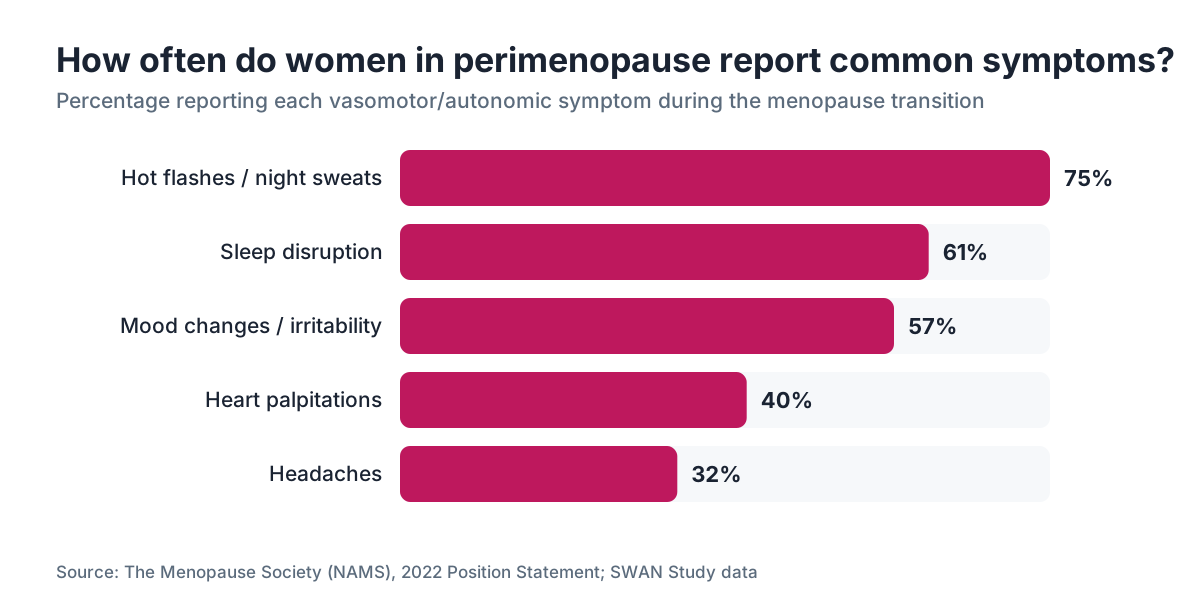
Which hormones specifically are involved, and how?
| Hormone | Direction of change in perimenopause | Cardiac effect | |---|---|---| | Estradiol (E2) | Drops on average, swings wildly | Reduces cardiac estrogen receptor signaling; raises sympathetic tone | | Progesterone | Falls sharply, cycles become anovulatory | Loses smooth muscle relaxant effect; blood pressure variability increases | | FSH | Rises substantially | May have direct vasomotor effects; exact mechanism still studied | | Cortisol | Dysregulation common | Elevated cortisol raises heart rate and increases PVC burden | | Thyroid hormones | Not directly menopausal, but often disrupted in this decade | Even subclinical hyperthyroidism sharply increases palpitation frequency |
Estradiol is the primary driver. The 2022 Menopause Society position statement on hormone therapy notes that estrogen's loss coincides with a measurable shift in autonomic balance toward sympathetic dominance [4].
Thyroid deserves a separate mention because perimenopause and thyroid dysfunction share so much demographic overlap (women in their 40s and 50s) and so many symptoms. Palpitations, anxiety, heat intolerance, and irregular periods appear in both. A TSH and free T4 should be part of any palpitation workup at this life stage. If you are also dealing with fatigue, hair thinning, or a family history of thyroid disease, see our article on thyroid hormone replacement therapy for what a proper thyroid panel looks like.
FSH rises as the ovaries respond less reliably to signaling. Some researchers have proposed FSH has its own direct cardiovascular effects independent of estrogen, though the data are not definitive yet [5].
Cortisol is often overlooked. The same stressors that worsen menopausal symptoms, poor sleep, psychological stress, erratic blood sugar, also raise cortisol, which directly increases cardiac excitability. This is not a "it's all in your head" explanation. Cortisol is a physiological trigger for ectopic beats.
Are hormone-related palpitations dangerous?
For most women, no. The isolated PACs and PVCs that account for the vast majority of hormone-related palpitations are benign on a structurally normal heart. The American Heart Association notes that PVCs are found in up to 75% of people on extended cardiac monitoring, and that in the absence of structural heart disease, frequent PVCs are not associated with increased mortality [6].
That said, this is a your-money-or-your-life question and the honest answer takes some nuance. Perimenopause is also the decade when several real cardiac risks start climbing in women: atherosclerosis accelerates after estrogen loss, hypertension becomes more common, and for women who carried certain pregnancy complications (preeclampsia, gestational diabetes), the risk trajectory is even steeper [7].
So the palpitations themselves are usually benign, but the backdrop is one where cardiac vigilance is genuinely warranted. A woman who has never had an EKG and is now noticing palpitations at 48 should get one, not because the palpitations are dangerous, but because this is a good time to establish a baseline.
Some symptoms should prompt same-day or emergency evaluation, rather than a scheduled appointment:
- Palpitations with syncope (fainting) or near-fainting
- Palpitations with chest pain, jaw pain, or left arm discomfort
- A sustained rapid regular heartbeat over 150 bpm lasting more than 30 minutes
- Palpitations in someone with a known structural heart defect or prior cardiac event
- New palpitations after starting a medication that prolongs the QT interval
Regular palpitations with no red-flag symptoms in a woman with a normal EKG and no structural heart disease? That is very likely hormonal, and it is worth treating the hormone problem.
What does the research say about estrogen therapy and palpitations?
This is where the evidence gets genuinely interesting, and where a lot of women are underinformed.
Observational data and some small randomized trials suggest that hormone therapy, specifically estradiol, reduces the frequency of palpitations and ectopic beats in perimenopausal women [8]. This makes mechanistic sense: if falling estrogen raises sympathetic tone and lowers the ectopic beat threshold, replacing estrogen should reverse some of that. And in many women, it does.
The Women's Health Initiative (WHI), which is often cited as a reason to fear HRT, studied a population of mostly older postmenopausal women (average age 63) using conjugated equine estrogen plus medroxyprogesterone acetate, a progestin formulation now considered less favorable than micronized progesterone [7]. The WHI was not designed to study palpitations, and its results do not cleanly apply to a 47-year-old in early perimenopause.
More recent guidance from the Menopause Society is direct: for women under 60, or within 10 years of menopause onset, without contraindications, the benefits of hormone therapy outweigh the risks for most women [4]. Vasomotor symptoms including palpitations are among the approved indications.
Micronized progesterone (Prometrium in the US) has a better cardiac safety profile than synthetic progestins and may have a mild additional calming effect on the autonomic nervous system. If you are being offered hormone therapy and your provider is still prescribing medroxyprogesterone acetate rather than micronized progesterone, that is worth a conversation.
WomenRx, which offers telehealth-based hormone evaluation for women across the US, uses individualized prescribing that accounts for both palpitation history and cardiovascular risk profile when selecting formulations. A thorough evaluation can help you and your provider decide whether hormone therapy makes sense for your situation.
For more context on where menopause care is heading, the menopause society page covers current clinical standards.
What other causes can mimic hormone-related palpitations?
Getting the cause right matters because the treatment differs completely.
Thyroid dysfunction is the most common hormonal mimic. Hyperthyroidism, even the subclinical kind where TSH is low-normal but not suppressed, dramatically increases cardiac excitability. Given that autoimmune thyroid disease peaks in women in their 40s and 50s, this overlap is common [5]. Any palpitation workup should include TSH and free T4.
Anemia is underappreciated as a palpitation trigger in perimenopausal women. Heavy or irregular periods, a hallmark of perimenopause, can cause iron-deficiency anemia. An anemic heart has to work harder, and the result is a pounding or racing sensation. A CBC is a simple screen.
Caffeine and alcohol have straightforward dose-response effects on ectopic beat frequency. Both disrupt adenosine signaling in ways that increase atrial irritability. Women often find they can no longer tolerate two afternoon coffees the way they could at 35.
Dehydration and electrolyte imbalance, common during hot flash-heavy nights, lower the threshold for PACs and PVCs. Magnesium deficiency in particular is associated with increased cardiac excitability [9]. Actual hypomagnesemia requires medical treatment, but many women with borderline-low dietary magnesium notice palpitations improving when they increase intake through diet or a supplement.
Anxiety and panic disorder share so many symptoms with perimenopause that distinguishing them is genuinely difficult. They can also coexist and amplify each other. The hormonal fluctuations of perimenopause physically lower the threshold for anxiety states, so "anxiety palpitations" in a 48-year-old may be both psychologically and hormonally real at the same time.
Rare but important: supraventricular tachycardia (SVT), which can present for the first time in perimenopause, possibly because estrogen has a mild protective effect on the accessory pathway tissue that causes SVT. SVT produces a very distinct, sudden-onset rapid heartbeat that ends just as abruptly. If that is the pattern, an electrophysiology referral is appropriate.
How do doctors diagnose whether palpitations are hormone-related?
There is no single test that says "this palpitation was caused by low estrogen." Diagnosis is built by ruling out other causes and correlating the pattern with hormonal change.
A standard workup includes:
- 12-lead EKG (rules out pre-excitation syndromes, prolonged QT, signs of structural disease)
- TSH and free T4 (thyroid)
- CBC (anemia)
- Basic metabolic panel (electrolytes, glucose)
- Blood pressure measurement in both arms
- FSH and estradiol levels, which help document where in the transition the woman is (though a single FSH or estradiol is a snapshot and can be misleading)
If the EKG is normal and the history is consistent with perimenopause, a 2-week continuous cardiac monitor (Holter or ZIO patch) can quantify the PVC/PAC burden and confirm there is nothing more serious going on. A PVC burden under 20% of total beats on a structurally normal heart is generally considered benign [6].
Correlating symptoms with a menstrual cycle diary is underused and very informative. If palpitations cluster in the week before a period, in the late luteal phase when progesterone crashes, that is a strong hormonal signal. If they are random with no cycle pattern, that nudges toward other causes.
FSH over 25 IU/L, along with irregular cycles in a woman over 40, supports perimenopause as the context, though the Menopause Society notes that a single elevated FSH is not sufficient to diagnose menopause and should be interpreted alongside symptom history [4].
For more on understanding where you are in the transition, the peri menopausal article walks through staging in plain language.
What lifestyle changes actually help with hormonal palpitations?
The evidence base here is thinner than the evidence for drug therapies, but several changes have reasonable mechanistic and observational support.
Sleep is probably the highest-yield intervention. Sleep deprivation raises cortisol, lowers vagal tone, and directly increases ectopic beat frequency. If night sweats are disrupting sleep and the palpitations are mostly nocturnal, treating the night sweats (whether through hormone therapy or behavioral cooling strategies) often reduces the palpitations as a downstream effect.
Limiting caffeine is worth trying for 4 to 6 weeks. Many women find the relationship is dose-dependent rather than requiring total elimination. Switching from coffee after noon to herbal tea is a smaller change than eliminating caffeine entirely and may be enough to see a difference.
Magnesium glycinate or magnesium malate, 200 to 400 mg at night, is frequently recommended and has a reasonable safety profile. A small randomized trial published in PLOS ONE found that magnesium supplementation reduced PAC frequency in patients with symptomatic ectopic beats [9]. The effect size was modest, not dramatic. But it is low risk and inexpensive.
Aerobic exercise cuts both ways. It reduces resting sympathetic tone over time (good for palpitations) but can temporarily trigger ectopic beats during exertion in deconditioned women (disconcerting but usually harmless). Starting with moderate intensity and building slowly is the practical approach.
Alcohol reduction matters more than many women expect. Even one or two drinks can trigger palpitations in estrogen-deficient women who never had this problem in their 30s.
Mindfulness-based stress reduction has a small but replicated effect on heart rate variability, a marker of autonomic balance [10]. It is not a replacement for treating the underlying hormonal cause, but it is a reasonable adjunct.
For a broader look at what perimenopause support actually involves, the health & her perimenopause support article covers supplement and lifestyle evidence.
When should you call your doctor about palpitations?
Most hormone-related palpitations do not require emergency care. But there are clear thresholds where waiting for your next scheduled appointment is the wrong call.
Call 911 or go to an emergency room for:
- Any palpitation with fainting, severe dizziness, or loss of consciousness
- Chest pain, pressure, or tightness accompanying a palpitation
- A palpitation that causes shortness of breath at rest
- A very fast heartbeat (over 150 bpm) that does not stop within 30 minutes
Call your doctor within a day or two for:
- New palpitations you have never experienced before
- Palpitations that are clearly increasing in frequency over weeks
- Palpitations accompanied by significant anxiety, fatigue, or unintentional weight change (the thyroid screen flags)
- Palpitations that began after starting a new medication
Schedule a routine appointment for:
- Occasional palpitations you recognize as the "skipped beat" type, in a woman already diagnosed with perimenopause, with a normal EKG in the last two to three years
- Palpitations that clearly correlate with hot flashes and improve with cooling
The pattern, your symptom history, and your cardiovascular risk factors together determine urgency far better than the palpitations alone. A 52-year-old with known mitral valve prolapse and new palpitations warrants faster attention than a 46-year-old with classic perimenopausal symptoms and a normal cardiac workup from two years ago.
If you want a provider who thinks about both the hormonal and the cardiac dimension together, WomenRx offers telehealth consultations that can review your symptom timeline, prior labs, and EKG history before making a hormone therapy recommendation.
Does hormone therapy actually reduce palpitations, or just treat other symptoms?
Both, and the two are connected.
The most direct evidence comes from studies showing that transdermal estradiol reduces hot flash frequency and severity, and that palpitations which co-occur with hot flashes decrease in parallel [8]. Whether estradiol also reduces palpitations independent of hot flash reduction is less settled, but the autonomic mechanism described earlier suggests it should.
A 2021 review in the journal Heart noted that estrogen therapy is associated with improved heart rate variability (a measure of autonomic flexibility) in postmenopausal women compared to placebo [8]. Better heart rate variability means a more resilient, less excitable cardiac electrical system.
Micronized progesterone appears to add a mild anxiolytic and GABAergic effect that may independently reduce the sympathetic overdrive that causes palpitations. Some women notice palpitations improve more on combined estrogen-plus-micronized-progesterone therapy than on estradiol alone.
Non-hormonal options have evidence for vasomotor symptoms, with palpitations as a secondary endpoint. Low-dose SSRIs and SNRIs (paroxetine, escitalopram, venlafaxine) reduce hot flash frequency and appear to reduce associated palpitations. Gabapentin has similar effects. Fezolinetant, an FDA-approved neurokinin 3 receptor antagonist, reduces hot flash frequency and is not hormonal, though palpitation data specifically are limited so far [11].
Beta-blockers are sometimes prescribed specifically for bothersome palpitations in the perimenopausal context. They reduce heart rate and blunt the sympathetic response. They do not treat the underlying hormonal cause but can provide real relief while a longer-term hormonal strategy is sorted out.
For more on what the current menopause treatment landscape looks like, the the new menopause article covers how clinical thinking has shifted in the last decade.
Frequently asked questions
Can low estrogen directly cause an irregular heartbeat?
Low estrogen raises sympathetic nervous system tone and lowers the electrical threshold for premature beats, which are technically "irregular" but usually benign. Estrogen does not typically cause dangerous arrhythmias like atrial fibrillation on its own, though the cardiovascular risk environment after menopause, including higher blood pressure and inflammation, does slightly raise lifetime atrial fibrillation risk. An EKG is the right first step to characterize what kind of irregularity you are having.
Why do palpitations often happen right after a hot flash?
A hot flash is a sudden sympathetic nervous system surge. The same adrenaline spike that dilates skin blood vessels and raises your skin temperature also speeds and sometimes destabilizes your heart rate for a minute or two afterward. Women who feel the flash and the palpitation as one event are experiencing exactly this cascade. Treating the hot flashes often reduces the palpitations as a result, rather than requiring separate treatment.
Do palpitations go away after menopause is complete?
For many women, yes. The variability phase, when estrogen swings wildly, is what drives most hormone-related palpitations. Once estrogen settles at a consistently low postmenopausal level, the wild swings stop and palpitations often decrease significantly. Most women see improvement within one to two years after their final menstrual period. Women whose palpitations persist well into postmenopause should be evaluated for other causes, including thyroid disease and atrial fibrillation risk.
Can progesterone deficiency cause palpitations even when estrogen is normal?
Yes, especially in the luteal phase of an irregular perimenopausal cycle. Progesterone has a relaxant effect on blood vessel walls and a mild calming influence on the autonomic nervous system. When progesterone crashes after anovulatory cycles, women can notice palpitations, anxiety, and sleep disruption clustered in the days before a period. This is sometimes labeled as premenstrual dysphoric disorder but has a direct hormonal mechanism in progesterone withdrawal.
What is the difference between hormone-related palpitations and atrial fibrillation?
Hormone-related palpitations are usually brief, isolated premature beats with a flip-flop or skipped sensation. Atrial fibrillation (AFib) produces a sustained irregular, often rapid heartbeat that lasts minutes to hours and can feel like a quivering or chaotic pounding rather than a single skip. AFib requires prompt medical evaluation and is distinct from benign PACs or PVCs. If your palpitations last more than a few minutes and the rhythm feels completely irregular, a same-day EKG is warranted.
Can anxiety from perimenopause cause palpitations even if the heart is fine?
Absolutely. Estrogen modulates GABA receptor sensitivity and serotonin signaling, so its decline literally lowers the biological threshold for anxiety states. The anxiety itself then triggers adrenaline release, which causes real, physical palpitations on a structurally normal heart. This is not imaginary or purely psychological. It is a physiological cascade from a hormonal root cause. Treating the hormonal driver often improves the anxiety and the palpitations together.
Should I get an EKG if I'm having perimenopause palpitations?
Yes, at least once. An EKG is cheap, quick, and non-invasive. It rules out pre-excitation syndromes, prolonged QT interval, and signs of structural disease that could make ectopic beats dangerous. If you are over 40, have never had one, and are now noticing palpitations, this is the baseline you want on record. Most perimenopause-related palpitations will produce a normal or near-normal EKG, which is itself reassuring information.
Does magnesium help with hormone-related heart palpitations?
Possibly. Magnesium is needed for normal cardiac electrical function, and low dietary magnesium is common. A small randomized trial found that magnesium supplementation modestly reduced PAC frequency in symptomatic patients. The effect is not dramatic, but the risk profile of magnesium glycinate at 200 to 400 mg nightly is very low. It is a reasonable thing to try for 4 to 6 weeks while addressing the underlying hormonal cause. Actual hypomagnesemia (low blood magnesium) should be treated medically.
Can thyroid problems cause the same kind of palpitations as hormone fluctuations?
Yes, and they can be nearly identical in feel. Hyperthyroidism, including subclinical hyperthyroidism with a low-normal TSH, causes increased cardiac excitability and palpitations that are indistinguishable from estrogen-deficiency palpitations by symptom description alone. This is why a TSH and free T4 should always be part of the initial workup. Autoimmune thyroid disease peaks in women in their 40s and 50s, the same window as perimenopause, so the two commonly coexist.
Can hormone therapy make palpitations worse?
In rare cases, yes. Some women notice more palpitations in the first few weeks after starting hormone therapy, likely because the body is adjusting to new hormone levels after a period of deprivation. This usually settles within four to six weeks. If palpitations worsen significantly and persist beyond six weeks, dose adjustment or a different delivery route (transdermal vs oral) is worth discussing. Oral estrogen raises certain clotting factors that transdermal does not, which is one reason transdermal is often preferred anyway.
Is it possible to have palpitations from birth control pills due to hormone fluctuations?
Yes, particularly with the placebo week. Combined oral contraceptives produce a predictable hormone drop during the pill-free or placebo days, which can trigger the same sympathetic nervous system rebound that causes perimenopausal palpitations. Women who notice palpitations reliably in the placebo week may benefit from a continuous hormonal regimen that eliminates the drop, or a different contraceptive method. This is worth discussing with your prescriber if the pattern is clear.
How long do hormone-related palpitations last during perimenopause?
Perimenopause itself averages about 4 to 7 years, and palpitations tend to peak in the late perimenopause phase, the 12 to 24 months before the final menstrual period. Most women see significant improvement within one to two years after menopause is established. Untreated, the symptom burden varies widely. Women who address the underlying hormonal cause through therapy or lifestyle changes tend to have a shorter and less intense symptom course.
What should I track before my doctor's appointment about palpitations?
Track the date and time of each episode, how long it lasted, what you were doing (resting, exercising, waking from sleep), whether a hot flash preceded it, your menstrual cycle day if you are still cycling, caffeine and alcohol intake that day, and sleep quality the night before. A two-week diary with this information is far more useful to a clinician than a vague description. Many wearables like Apple Watch or Garmin can capture heart rate data during episodes, which adds objective value.
Sources
- Physiological Reviews, Mendelsohn & Karas (1999), "The protective effects of estrogen on the cardiovascular system"
- European Heart Journal, Collins et al., "Sex differences in cardiovascular disease"
- SWAN (Study of Women's Health Across the Nation), NIH-funded cohort
- The Menopause Society (NAMS), 2022 Hormone Therapy Position Statement
- Endocrine Society Clinical Practice Guidelines, Hypothyroidism in Adults
- American Heart Association, Premature Ventricular Contractions patient page
- NIH National Heart, Lung, and Blood Institute, Women's Health Initiative
- Heart journal, BMJ Publishing, "Estrogen, heart rate variability and autonomic function"
- PLOS ONE, Hague et al., magnesium supplementation and premature atrial contractions
- JAMA Internal Medicine, Mindfulness-based stress reduction and heart rate variability meta-analysis
- FDA, Veozah (fezolinetant) drug approval information, 2023
- CDC, Women and Heart Disease