Breast tenderness in perimenopause: why it happens and what helps
TL;DR: Breast tenderness is one of the most common perimenopausal symptoms, affecting an estimated 50-70% of women in their 40s and early 50s. Fluctuating estrogen and falling progesterone drive most of it. The pain usually peaks in early perimenopause and fades as cycles become irregular. Lifestyle tweaks, a well-fitted bra, and sometimes hormone therapy can reduce it significantly.
Why does breast tenderness happen in perimenopause?
Breast tenderness in perimenopause is almost always hormonal. The short version: estrogen doesn't just drop in perimenopause, it swings wildly, and those swings cause breast tissue to swell and ache.
Here's the mechanism. Estrogen stimulates the proliferation of breast ductal cells and increases fluid retention in breast tissue. In a normal menstrual cycle, progesterone rises in the second half and modulates that estrogen-driven growth. In perimenopause, progesterone often falls first and falls harder than estrogen, leaving estrogen's effects relatively unopposed for stretches of time. The result is breast tissue that gets repeatedly stimulated without the counterbalancing effect of adequate progesterone. [1]
The medical term is mastalgia. Cyclical mastalgia (pain that tracks with the menstrual cycle) is more common in the years leading up to the final period. Non-cyclical mastalgia (pain that doesn't follow a predictable pattern) becomes more prominent as cycles turn erratic. Most women in early perimenopause have cyclical pain, but as cycles lengthen and become unpredictable, the tenderness can start to feel random and confusing.
Estrogen also raises levels of prolactin and insulin-like growth factor 1 (IGF-1), both of which act on breast tissue. High-fat diets and elevated body weight increase circulating estrogen through peripheral conversion of androgens in fat tissue, which may explain why breast tenderness is more common and more severe in women with higher body mass index during this transition. [2]
The core driver is estrogen excess relative to progesterone. Understanding that helps when you're deciding between options.
How common is breast tenderness during perimenopause?
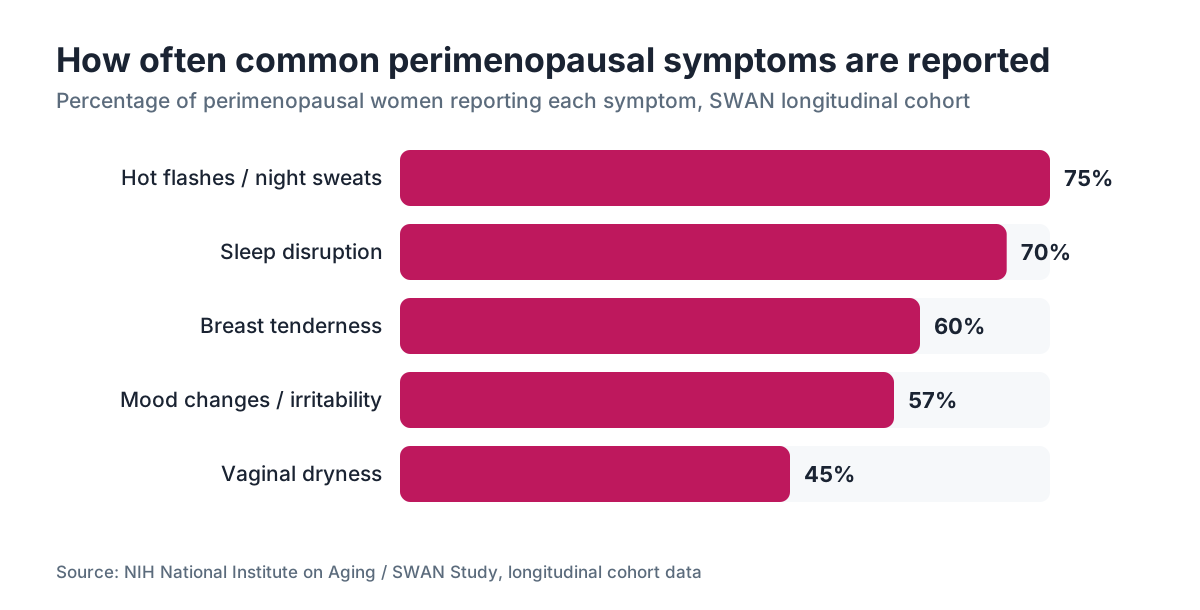
Very common. Studies vary in their estimates depending on how they define perimenopause and how they measure pain, but the range in published research is roughly 50-70% of perimenopausal women reporting some degree of breast discomfort. [3]
The Study of Women's Health Across the Nation (SWAN), one of the most careful longitudinal studies of midlife women ever run, found breast tenderness among the top five most frequently reported perimenopausal symptoms alongside hot flashes, sleep disruption, and mood changes. [3]
Breast tenderness tends to peak in early perimenopause, when estrogen fluctuations are most dramatic, and then gradually eases as estrogen levels decline toward the lower postmenopausal range. Many women are relieved to learn the pain typically gets better after menopause, not worse. The exception is women who start hormone therapy after menopause. Estrogen therapy, particularly estrogen-alone therapy, can reintroduce breast tenderness as a side effect. [4]
If you've read that breast pain is rare in midlife, you've been misled. It's one of the most under-discussed perimenopausal symptoms, partly because women often assume it's a warning sign of something serious rather than a predictable hormonal event.
What does perimenopausal breast pain actually feel like?
The texture of the pain matters for figuring out what's going on. Most women describe perimenopausal breast tenderness as a diffuse heaviness or fullness, sometimes with a burning or aching quality. It's usually bilateral (both breasts) and often worst in the upper outer quadrant. The tissue can feel lumpy or nodular, especially in the days before a period would have been expected.
Cyclical tenderness tends to worsen in the week or two before menstruation and improve once bleeding starts. As cycles become irregular in perimenopause, this pattern blurs. You might feel pain for three weeks straight, get a period, feel better for a few days, and then have pain return before the next cycle even arrives.
Some women describe soreness to touch, making it uncomfortable to hug someone firmly, sleep on their stomach, or wear a structured bra. Others have spontaneous aching that doesn't require any touch to trigger. A small number experience shooting or stabbing pain, which is more often non-cyclical and may warrant additional evaluation. [5]
What doesn't fit this picture: a single persistent lump, skin changes (dimpling, redness, orange-peel texture), nipple discharge (especially bloody or clear one-sided discharge), or pain strictly confined to one breast that doesn't change with your cycle. Those symptoms warrant prompt evaluation, separate from the hormonal tenderness discussion entirely.
When should you be worried about breast pain?
Most perimenopausal breast tenderness is benign. Certain features, though, should prompt a call to your clinician rather than a wait-and-see approach.
See your provider promptly if you notice any of these: a new discrete lump or thickening that doesn't go away after your period, skin changes like dimpling or puckering, nipple changes including inversion or bloody discharge, pain strictly confined to one area of one breast that doesn't vary with your cycle, or redness and warmth suggesting possible infection (mastitis, which can occur even without breastfeeding). [5]
The American Cancer Society is explicit that most breast pain is not a sign of cancer and that breast cancer rarely presents with pain as the only symptom. [5] Still, if you're overdue for a mammogram, breast tenderness is a good reminder to schedule one. The U.S. Preventive Services Task Force recommends biennial mammography beginning at age 40 for average-risk women, with shared decision-making about starting earlier. [6]
Keep up with your routine screening. Perimenopause doesn't change your mammogram schedule, and dense breast tissue (more common in younger women and often maintained through the hormonal fluctuations of perimenopause) can make imaging harder to read. If you have dense breasts, ask your radiologist whether supplemental imaging is appropriate. [6]
Which hormonal changes specifically cause breast pain to worsen or improve?
The hormone-pain relationship is more textured than a simple estrogen-goes-up-pain-goes-up story. Here's each relevant hormone.
Estrogen: Promotes breast ductal growth and fluid retention. Surges in estrogen, common in early perimenopause as the ovaries make erratic attempts to ovulate, tend to produce the most severe tenderness. Chronically low estrogen (deep postmenopause) is actually associated with less breast pain, not more. [1]
Progesterone: Normally modulates estrogen's proliferative effects on breast tissue. As progesterone production falls in perimenopause (often before estrogen does), breast tissue loses this counterbalance. Some data suggest progesterone, including topical progesterone applied to the breasts, may reduce cyclical mastalgia. The evidence is mixed, but the mechanism is plausible. [1]
Prolactin: Elevated in some perimenopausal women and associated with breast tenderness. Stress raises prolactin. High caffeine intake may raise it modestly in some women, which is one rationale for the caffeine-reduction recommendation. [7]
Androgens: Testosterone and DHEA are typically declining in perimenopause. Some evidence from small studies suggests androgen deficiency may actually worsen breast tenderness, and that testosterone replacement in physiologic doses does not increase it. This is an active area of research. [1]
Understanding this picture is useful if you're considering hormone therapy. The type and route of hormones matter. Oral estrogen raises sex hormone-binding globulin and IGF-1 more than transdermal estrogen, which may affect breast symptoms. Micronized progesterone (Prometrium) appears to have a more favorable breast profile than synthetic progestins in some research, including the French E3N cohort study, though the data are observational rather than from randomized trials. [1]
If you're already on hormone therapy and developing breast tenderness, the first question is whether your estrogen dose is too high or whether switching from oral to transdermal delivery (see our guide to estrogen patch) might help. The second is whether your progestogen type or dose needs adjustment.
What lifestyle changes actually reduce breast tenderness in perimenopause?
Several non-prescription strategies have at least some evidence behind them, and none of them are harmful to try first.
Bra fit: Under-supported breast tissue moves more and hurts more. A properly fitted sports bra with wide straps and firm encapsulation cups (not compression-only) consistently shows up in patient reports as the single fastest relief measure. Large randomized trials don't back this, but the physics are sound, and several UK-based mastalgia clinics recommend proper support as first-line. [5]
Caffeine reduction: The xanthine hypothesis (caffeine metabolites stimulate breast tissue) has been argued over for decades. A 2012 review found only modest evidence, but the intervention is low-risk. If you drink four or more cups of coffee daily, cutting to one or two for six weeks is a reasonable experiment. [7]
Dietary fat: The Cardiff Mastalgia Clinic pioneered the low-fat, high-fiber approach. The evidence is limited but points to a reduction in cyclical mastalgia with dietary fat reduction. [5]
Evening primrose oil: Contains gamma-linolenic acid, which may reduce inflammatory prostaglandin production in breast tissue. Studied at 3 grams per day in clinical trials. Response rate in cyclical mastalgia studies runs around 45-58%, with effects seen after 3-6 months. It doesn't work quickly. [7]
Vitamin E: Studies are small and results are inconsistent. Some trials show modest benefit at 400-800 IU/day; others show none. Not harmful at these doses but not strongly supported either.
Topical NSAIDs: Topical diclofenac applied to the breast has shown benefit in small randomized trials and is worth considering before moving to systemic medications. It avoids the gastrointestinal effects of oral NSAIDs. [5]
Body weight: Because fat tissue converts androgens to estrogen, keeping weight in a healthy range is a real hormonal strategy, not a vague health platitude. Women dealing with perimenopausal weight gain (which is extremely common) may find that weight reduction modestly improves breast symptoms alongside other benefits. For women struggling with this specifically, semaglutide for weight loss and related GLP-1 options are increasingly part of the midlife conversation.
Does hormone replacement therapy make breast tenderness better or worse?
This is the question that confuses most women, and the honest answer is: it depends on the type, dose, and route.
Estrogen therapy alone, used without progesterone (appropriate only for women who have had a hysterectomy), is the form of HRT most likely to cause or worsen breast tenderness. The WHI trials found breast tenderness in roughly 11% of women taking conjugated equine estrogen alone, compared to 6% on placebo. [4]
Combined estrogen-plus-progestogen therapy is associated with higher rates of breast tenderness than estrogen alone, particularly in the first 6-12 months of use. The WHI reported breast tenderness in about 9% of women on combined conjugated equine estrogen plus medroxyprogesterone acetate. [4] The type of progestogen matters, though. Synthetic progestins like medroxyprogesterone acetate have different receptor activity than micronized progesterone, and observational data suggest micronized progesterone may produce less breast tenderness. No head-to-head randomized trial has directly confirmed this.
Transdermal rather than oral estrogen delivery tends to produce lower peak estrogen levels and less IGF-1 stimulation, which may translate to less breast tenderness, though the direct comparison data are limited.
For most women, HRT-related breast tenderness is worst in the first few months and improves as the body adjusts. If it persists beyond six months, reassess the dose and formulation with your provider. Reducing the estrogen dose is often enough.
For perimenopausal women whose breast tenderness is driven by progesterone deficiency rather than estrogen excess, low-dose progesterone supplementation may actually be the right move. You can read more in our overview of progesterone and its role in the perimenopausal transition.
If you're unsure whether HRT fits your symptoms in general, the hormone replacement therapy guide covers the current evidence and risk discussion in detail.
Are there prescription medications that treat perimenopausal breast pain?
Yes, though most clinicians hold them back for severe cases where lifestyle changes and OTC measures haven't helped.
Danazol: A synthetic androgen that suppresses ovarian hormone production. It is the only drug formally approved by the FDA for mastalgia in the United States. Response rates in cyclical mastalgia trials run 70-80%. The catch is the side effect profile: acne, weight gain, voice changes, and possible adverse lipid effects make it poorly tolerated in many women, and it requires contraception in premenopausal women because of teratogenicity. Most clinicians use it only when other options have failed. [10]
Bromocriptine: A dopamine agonist that lowers prolactin. Once used for mastalgia but largely abandoned due to side effects (nausea, dizziness, hypotension). Rarely prescribed for this now.
Tamoxifen: At low doses (10 mg/day or even less in some protocols), tamoxifen has shown efficacy in severe cyclical mastalgia that hasn't responded to other treatment. It is not FDA-approved for mastalgia specifically, so this is off-label. It is generally reserved for women with severe, refractory symptoms given its risk profile, including endometrial effects and thromboembolic risk. [7]
Topical diclofenac gel: As noted above, this is a reasonable early-line prescription option with a better safety profile than systemic medications. Less side-effect burden than oral NSAIDs.
Low-dose oral contraceptives: Sometimes used in perimenopausal women who still need contraception. They can steady the hormonal fluctuations driving cyclical breast pain, though some formulations worsen tenderness. The estrogen dose and progestin type matter considerably.
Clinicians who specialize in perimenopausal hormone management can help you figure out which of these options fits your specific hormonal picture rather than applying a one-size-fits-all protocol.
How is perimenopausal breast tenderness diagnosed?
There is no single test that diagnoses perimenopausal mastalgia. The diagnosis is largely clinical, built from your symptom history, cycle pattern, age, and physical exam.
A symptom diary kept for two to three menstrual cycles is the most useful diagnostic tool. Record pain intensity (1-10 scale), location, whether it's bilateral or unilateral, and its relationship to bleeding or expected bleeding. This diary does two things: it clarifies whether your pain is truly cyclical, and it gives your clinician objective data to work from.
The physical exam should include breast palpation to rule out a discrete mass and assessment of nodularity (diffuse fibrocystic change versus a focal finding). A clinical breast exam by a trained clinician separates diffuse hormonal tenderness from findings that need imaging follow-up.
Blood work in the context of breast pain is not routinely indicated unless there's a clinical reason to check hormone levels. That said, many perimenopausal women have hormone testing done to understand their overall hormonal picture. FSH, estradiol, and progesterone levels can give context, though they are notoriously variable during perimenopause and a single blood draw is not diagnostic. [8]
If you have a focal finding on exam, imaging follows (mammogram for women 40 and older, ultrasound as an adjunct). If imaging is negative and the pain fits the perimenopausal pattern, reassurance and symptom management are appropriate. If imaging reveals dense tissue, a radiologist can advise on whether additional evaluation is warranted.
FSH above 25 IU/L on a blood draw, in the right clinical context, is one marker that perimenopause is underway, though the North American Menopause Society (NAMS) notes that hormone levels alone cannot definitively stage the menopausal transition. The best staging tool remains menstrual history. [8]
Will breast tenderness go away after menopause?
For most women, yes. Once estrogen levels settle into the consistently lower postmenopausal range and the wild swings of perimenopause stop, cyclical breast tenderness typically resolves.
The SWAN study found that breast pain frequency and severity dropped significantly in the late menopausal transition and early postmenopause compared to early perimenopause. [3] This is one of the counterintuitive facts about menopause: the transition itself, with its hormonal volatility, is often harder on breast tissue than postmenopause.
The exception is women who start hormone therapy postmenopause. As noted above, estrogen therapy can bring back breast tenderness in women who were previously symptom-free. This is a common reason women quit HRT, though dose adjustment usually fixes it rather than requiring complete cessation.
Some women also get non-cyclical breast pain postmenopause that has nothing to do with hormones: musculoskeletal pain from the chest wall, costochondritis (inflammation of the cartilage connecting ribs to the sternum), or referred pain from the neck or shoulder. These are worth considering if breast pain shows up or persists well into postmenopause without a clear hormonal explanation.
The timeline of perimenopause matters here. On average, perimenopause lasts four to eight years, with the final two years before the last period typically the most symptomatic. Knowing where you are in that timeline helps predict when relief might come. Our article on perimenopause age and the related piece on when does menopause start can help you place yourself.
How does breast tenderness differ in perimenopause versus premenopause or postmenopause?
The hormonal drivers and the character of the pain shift meaningfully across these three phases, and mixing them up leads to confusion.
In premenopause (regular cycles, no perimenopause): Cyclical breast tenderness in the luteal phase is driven by predictable progesterone and estrogen fluctuations. It's usually brief (a few days premenstrually) and clears cleanly with menstruation. This is classic premenstrual mastalgia.
In perimenopause: Cycles turn irregular, progesterone production is erratic (and often inadequate in anovulatory cycles), and estrogen can spike dramatically. Breast tenderness lasts longer, comes at less predictable times, and is sometimes more severe. The tissue may feel more generally nodular. Pain can run for weeks rather than days. [3]
In postmenopause (12 months after final period): Hormone-related cyclical breast tenderness largely resolves. New breast pain postmenopause should prompt evaluation, not an assumption that it's hormonal. The differential includes musculoskeletal causes, HRT effects, and, less commonly, breast pathology that needs a workup.
This phased difference is why treatments aimed at luteal-phase hormonal swings (like luteal progesterone supplementation) make more sense in perimenopause than in postmenopause, and why postmenopausal breast pain needs a fresh diagnostic approach rather than assuming it's the same symptom.
For a fuller picture of where perimenopause fits in the hormonal lifespan, the menopause overview is a useful companion read.
What is the evidence for topical progesterone and breast tenderness?
Topical progesterone applied directly to breast tissue has been studied specifically for mastalgia, and the results are more positive than for many other mastalgia interventions, though the evidence base is still thin.
A randomized controlled trial published in Obstetrics and Gynecology found that women using topical progesterone gel (4% concentration) applied to the breasts in the luteal phase had a significantly greater reduction in breast pain scores than placebo. A later trial by Leonetti et al. (1999) found similar results with transdermal progesterone cream. [9]
The proposed mechanism: progesterone receptors are expressed in breast epithelial tissue, and progesterone may directly reduce estrogen-driven proliferation at the local level, separately from any systemic hormonal effect. Direct application to the breast may allow local tissue concentrations that exceed what systemic absorption would achieve.
The story is complicated, though. Topical progesterone reaches measurable tissue concentrations in the breast, which raises the question of long-term safety. The FDA has not approved any over-the-counter progesterone cream for mastalgia, and many OTC products contain far lower progesterone concentrations than those studied in trials. Prescription bioidentical progesterone cream (compounded) at studied concentrations is a different product from a 2% OTC cream.
The NAMS 2022 position statement on menopause management notes that data on compounded hormones, including topical progesterone, are insufficient to evaluate long-term safety. [8] That's an honest limit. If this approach interests you, discuss it with a clinician who can prescribe an appropriately dosed formulation and monitor your response rather than relying on an OTC product.
For a deeper look at how progesterone works in the perimenopausal context, see our progesterone guide.
Frequently asked questions
Can perimenopause cause sharp stabbing breast pain, more than aching?
Yes, though stabbing pain is less typical than aching or heaviness. Sharp, shooting pain in the breast (sometimes called Tietze's syndrome or non-cyclical mastalgia) can be hormonally influenced but is more often musculoskeletal, arising from the chest wall or costal cartilage. If it's strictly one-sided, focal, and doesn't change with your cycle, see your clinician to rule out a non-hormonal cause before blaming perimenopause.
Is breast pain worse at the beginning of perimenopause or at the end?
Typically worst in early to mid-perimenopause, when estrogen fluctuations are most dramatic and anovulatory cycles (cycles without ovulation, meaning lower progesterone) grow more frequent. As you move into late perimenopause and estrogen levels trend consistently lower, most women find breast tenderness eases. It usually resolves within one to two years after the final period.
Does caffeine really make perimenopausal breast tenderness worse?
The evidence is modest. The xanthine theory holds that caffeine metabolites may stimulate breast tissue, and several small studies support an association. Cutting caffeine won't help everyone, but it's a zero-risk experiment worth six weeks if you're drinking more than two or three cups of coffee or tea daily. If pain improves, you have your answer. If not, you can resume without worry.
Can evening primrose oil help perimenopausal breast pain?
Possibly, for cyclical mastalgia specifically. Evening primrose oil contains gamma-linolenic acid, which may reduce inflammatory prostaglandins in breast tissue. Trials show response rates of 45-58% at 3 grams per day, but effects take three to six months to appear. It won't help everyone, and it has no significant safety concerns at standard doses. Don't expect fast results.
Does starting birth control help or worsen breast tenderness in perimenopause?
It varies by formulation. Low-dose combined oral contraceptives can steady perimenopausal hormone fluctuations and reduce cyclical breast pain in some women. Other formulations, particularly those with higher estrogen content or certain progestins, can worsen tenderness. If you also need contraception (perimenopause does not guarantee infertility), ask your clinician which formulation is least likely to worsen symptoms.
Should I change my diet to reduce breast pain during perimenopause?
A lower-fat, higher-fiber diet has been studied in mastalgia clinics and shows modest benefit. The more practical lever is body weight: fat tissue converts androgens to estrogen, so excess body fat can worsen estrogen-driven breast symptoms. Reducing dietary fat, increasing fiber, and managing overall weight are all reasonable steps. Results are modest and take weeks to months, but the interventions carry other perimenopausal benefits too.
Can anxiety or stress make perimenopausal breast tenderness worse?
Indirectly, yes. Stress raises cortisol and prolactin, both of which can influence breast tissue sensitivity. Stress also commonly worsens pain perception generally. No large randomized trial shows that stress reduction directly improves mastalgia, but managing perimenopause-related anxiety (itself extremely common) may reduce how intensely breast pain registers. Sleep deprivation, which stress worsens, also amplifies pain signaling.
Does mammography hurt more during perimenopause because of breast tenderness?
Yes, and this is a real barrier to screening. Perimenopausal women with tender, dense breast tissue often find mammography more uncomfortable. Scheduling your mammogram for the week after menstruation (if your cycle is still somewhat predictable) rather than premenstrually can reduce discomfort. Taking an OTC NSAID like ibuprofen one hour before the appointment is also reasonable. Don't skip mammography over anticipated pain; discuss timing with your imaging center.
Is it normal to have breast tenderness every single day during perimenopause?
It can happen, especially during periods of sustained estrogen elevation or when cycles are very irregular. Persistent daily breast pain lasting more than four to six weeks warrants evaluation to rule out a non-hormonal cause, but a hormonal driver is the most likely explanation during perimenopause. A symptom diary documenting daily pain intensity alongside any bleeding or cycle-related changes helps your clinician tell cyclical from non-cyclical mastalgia.
Can hormone therapy make breast tenderness worse, and should I stop it if it does?
HRT can cause or worsen breast tenderness, particularly in the first several months. It's one of the most common reasons women quit therapy. Rather than stopping entirely, discuss a dose reduction or formulation change with your provider first. Switching from oral to transdermal estrogen or from a synthetic progestin to micronized progesterone often clears the tenderness while keeping the other benefits. Stopping outright is rarely the only option.
What is the difference between fibrocystic breast changes and perimenopausal breast tenderness?
They often coexist. Fibrocystic changes (benign lumpy, tender breast tissue with or without cysts) are hormonally driven and extremely common in perimenopausal women. The tenderness of fibrocystic breasts worsens with the same estrogen fluctuations that drive perimenopausal mastalgia. A fibrocystic change is a tissue finding on exam or imaging; mastalgia is the symptom. Many women with fibrocystic breasts have significant cyclical pain during perimenopause. The management approach is the same.
What supplements have the strongest evidence for breast pain in perimenopause?
Evening primrose oil (3 g/day, three to six months to see effect) has the most consistent trial data. Vitamin E shows mixed results in small studies. Magnesium has limited data but is low-risk. None have strong large-scale randomized trial evidence. Prescription options like low-dose danazol or off-label tamoxifen have stronger efficacy data but heavier side effect profiles. For most women, starting with evening primrose oil and bra optimization is the most reasonable first step.
Can weight loss reduce breast tenderness during perimenopause?
Potentially, yes. Fat tissue is a source of peripheral estrogen production via aromatization of androgens. Reducing total body fat may lower circulating estrogen and reduce breast tissue stimulation. The effect size isn't large in published studies, but given that perimenopausal weight gain is common and carries other health implications, weight management is a legitimate part of a breast health strategy, not a general platitude.
Sources
- Endocrine Society, Journal of Clinical Endocrinology and Metabolism: Physiology of the Menopause and Breast Tissue
- National Cancer Institute, Breast Cancer Risk Factors: Hormones and Body Weight
- SWAN (Study of Women's Health Across the Nation), NIH National Institute on Aging
- Women's Health Initiative, NHLBI: Estrogen plus Progestogen Trial Results
- American Cancer Society: Breast Pain (Mastalgia)
- U.S. Preventive Services Task Force: Breast Cancer Screening Recommendation Statement 2024
- Mansel RE et al., Randomized trial of dietary fat reduction for mastalgia and evening primrose oil; BMJ and Cardiff Mastalgia Clinic publications
- North American Menopause Society (NAMS): 2022 Hormone Therapy Position Statement
- Leonetti HB et al., Transdermal progesterone cream for vasomotor symptoms and postmenopausal bone loss, Obstetrics and Gynecology 1999
- FDA Drug Label: Danazol (Danocrine), FDA label database
- National Library of Medicine, MedlinePlus: Fibrocystic Breast Changes