Breast discomfort in menopause: why it happens and what actually helps
TL;DR: Breast discomfort during perimenopause and menopause is common, hitting roughly 50 to 70 percent of women. Swinging estrogen and progesterone drive most of it. Pain usually peaks in perimenopause and fades after the final period. A well-fitted bra, evening primrose oil, and adjusting your hormone therapy formulation help most women. Any new lump, one-sided pain, or skin change needs prompt evaluation.
How common is breast discomfort during menopause?
Breast pain, tenderness, and a general heaviness in the chest are among the most under-discussed symptoms of the menopause transition. Studies suggest somewhere between 50 and 70 percent of women report mastalgia (the clinical term for breast pain) at some point during perimenopause, though exact figures vary by how researchers define the symptom and what age range they study [1]. That makes it more common than most women expect, and far more common than their doctors typically bring up at annual visits.
The discomfort takes a few different forms. Cyclic mastalgia tracks with whatever remains of the menstrual cycle: breasts feel tender or swollen in the week or two before a period and then ease up. Non-cyclic mastalgia is not tied to the cycle at all; it can feel like a constant ache, a burning sensation, or a sharp pull in one spot. Both types can coexist in perimenopause, which makes the symptom confusing to manage.
The reassuring part: most breast discomfort in the menopause transition is benign. A large body of evidence links it to hormonal fluctuation rather than structural disease. That does not mean you should ignore every new symptom, but it does mean that pain alone, in the absence of a lump or skin change, is rarely the first sign of breast cancer [2].
What causes breast pain and tenderness in perimenopause?
The short answer is fluctuating hormones, but the mechanism is worth understanding because it shapes treatment decisions.
Estrogen stimulates the growth of breast ductal tissue. Progesterone influences the lobular tissue. During perimenopause, both hormones swing erratically rather than declining in a smooth, predictable line [3]. A cycle might bring a large estrogen surge with too little progesterone to counterbalance it. That relative estrogen dominance makes breast tissue swell, increases fluid retention in the stroma (the connective tissue around the ducts), and amplifies sensitivity in local nerve endings. The result is that diffuse ache or sharp twinge many women describe.
Fat tissue matters too. As body composition shifts during the transition, the ratio of estrogen receptor-rich fatty tissue to glandular tissue changes. Women who gain weight around the chest and midsection can notice worse tenderness partly because fat tissue makes its own estrogen (through a process called peripheral aromatization), adding to the hormonal load [4].
Caffeine has a complicated reputation here. Some older observational data suggested methylxanthines (the compound class caffeine belongs to) worsen fibrocystic changes in breast tissue. Controlled trials have been less convincing, and no major guideline currently recommends cutting caffeine as first-line treatment. Still, plenty of women find that cutting back helps, so it is a low-risk experiment.
A few non-hormonal causes also matter. An ill-fitting bra is probably the single most common structural contributor. Cooper's ligaments, which suspend breast tissue from the chest wall, can strain without enough support, causing a persistent dull ache that gets mistaken for a hormonal symptom. Costochondritis (inflammation at the rib-cartilage junction) and intercostal muscle strain can mimic breast pain entirely. So can referred pain from cervical or thoracic spine issues.
Does hormone therapy make breast pain better or worse?
This is the question that confuses women most, and the honest answer is: it depends on the formulation, the dose, and the individual.
Women with significant perimenopausal breast tenderness who then start a combined estrogen-progestogen HRT regimen sometimes see the pain get worse, at least at first. The added hormones can amplify the stimulation that was already irritating breast tissue. Studies of continuous combined HRT (estrogen plus a synthetic progestin taken daily) found higher rates of breast tenderness than cyclical regimens, especially in the first three to six months of use [5].
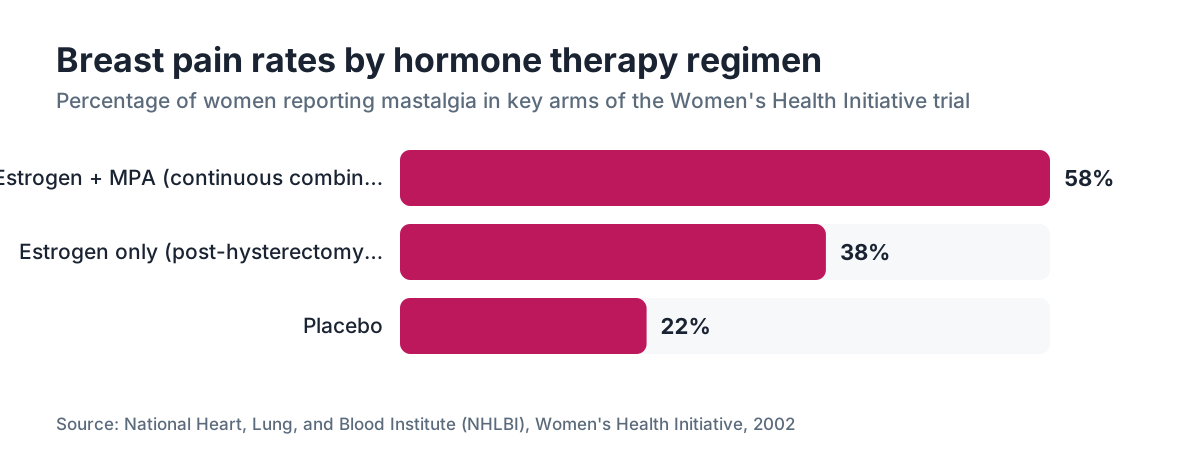
The type of progestogen matters enormously. Synthetic progestins, particularly medroxyprogesterone acetate (MPA), tend to cause more breast tenderness than micronized bioidentical progesterone. The Women's Health Initiative trial found that the estrogen-plus-MPA arm had more mastalgia than the estrogen-only arm [5]. Observational data from the E3N cohort in France suggest transdermal estrogen combined with micronized progesterone has a gentler breast-pain profile than oral estrogen combined with synthetic progestins, though that study was not a randomized trial.
For women on hormone replacement therapy who develop new or worse breast pain, a formulation switch is often the first practical step. Moving from a continuous to a cyclical progestogen schedule, dropping the progestogen dose, or switching to micronized progesterone can fix the issue without abandoning HRT entirely.
Estrogen-only therapy (appropriate only for women who have had a hysterectomy) has lower rates of breast tenderness than combined therapy. Transdermal delivery (patch, gel, spray) keeps estrogen levels steadier than oral dosing and may reduce peak-level breast stimulation. The estrogen patch is worth discussing with your clinician if oral estrogen is causing breast symptoms.
What does menopause-related breast pain actually feel like?
Women describe it in wildly different ways, which is part of why it often goes undiagnosed or gets dismissed. The most common descriptions fall into a few patterns.
Diffuse bilateral tenderness: both breasts feel heavy, swollen, or sensitive to the touch. Wearing a bra or even a shirt feels uncomfortable. This pattern tracks closely with perimenopausal hormonal surges and tends to fluctuate week to week.
Burning or shooting pain: a hot, electric sensation that moves through the breast or toward the armpit. This can be alarming but is often neuropathic in origin, tied to the same nerve-sensitizing effects of estrogen fluctuation.
Focal aching: a dull, persistent discomfort in one area, often the upper outer quadrant where the most glandular tissue sits. When this is non-cyclic and does not move with position changes, it warrants clinical evaluation to rule out a structural cause.
Lumpiness or nodularity: breast tissue that feels more textured or "gritty" than usual, sometimes with small palpable cysts. This often reflects fibrocystic changes driven by hormonal fluctuation and is benign in the vast majority of cases, but any new dominant lump (distinct, hard, fixed, or growing) needs imaging.
Symptoms that should prompt a call to your doctor rather than a wait-and-see approach: a lump that is distinct, hard, or has not changed in size over a full cycle; nipple discharge that is bloody or clear and spontaneous; skin dimpling, redness, or thickening; and any breast pain that is one-sided, new, worsening, and does not improve after a menstrual cycle.
Does breast pain mean you are at higher risk for breast cancer?
Breast pain alone is not a reliable indicator of breast cancer risk. The American College of Obstetricians and Gynecologists notes that mastalgia is overwhelmingly benign in origin, and population studies consistently find that fewer than three percent of breast cancers present with pain as the sole symptom [2].
That statistic is reassuring but not a reason to skip screening. Mammography schedules should continue on whatever timeline you and your clinician have agreed to. The U.S. Preventive Services Task Force recommends biennial mammography starting at age 40 for average-risk women, while the American Cancer Society recommends annual mammography starting at 45, with the option to begin at 40 [6]. Women with dense breast tissue, a personal history of biopsies showing atypical hyperplasia, or a family history of BRCA-related cancers have a different risk calculus and may need supplemental ultrasound or MRI screening.
Fibrocystic breast changes, which are extremely common in the perimenopause years, do not independently raise cancer risk in most women. The exception is if a biopsy reveals atypical ductal or lobular hyperplasia, which does carry a modest risk increase. If you have had a biopsy with those findings, work with a breast specialist to understand your specific situation.
What treatments actually relieve breast pain in menopause?
There is a spectrum from low-effort lifestyle changes to prescription medications, and the evidence quality varies considerably across it.
Bra fit and support. This sounds too simple to matter, but a properly fitted sports bra worn during exercise and a well-fitted underwire bra or bralette during the day resolves pain for a meaningful number of women. A study of women with cyclic mastalgia found that wearing a correctly fitted sports bra significantly reduced breast pain scores [7]. It costs nothing to get measured, and an ill-fitting bra is almost certainly a contributor if you have changed bra size during the transition (very common).
Evening primrose oil (EPO). EPO contains gamma-linolenic acid (GLA), which may modulate prostaglandin pathways that contribute to breast pain. Trial evidence is modest: a randomized trial published in the Lancet in the 1980s found that GLA helped cyclic mastalgia but did less for non-cyclic pain [7]. Studied doses were typically 3,000 mg per day. EPO is generally well-tolerated. It is not a slam-dunk treatment, but the risk profile is low enough that a two to three month trial is reasonable.
Vitamin E. Some small studies suggest 400 to 600 IU per day may reduce cyclic mastalgia. The evidence is not strong, but again the risk is low at those doses for short-term trials.
Dietary fat reduction. Older work from the 1980s and 1990s found that a low-fat, high-carbohydrate diet reduced cyclic breast pain in some women, possibly through effects on estrogen metabolism. This has largely fallen out of clinical practice because compliance is hard and larger trials have not confirmed the effect convincingly.
Topical NSAIDs. Diclofenac gel applied to the breast has shown benefit in several small trials for non-cyclic mastalgia and for women who cannot tolerate oral anti-inflammatories. It reduces systemic exposure compared to oral NSAIDs.
Danazol. A synthetic androgen that suppresses the hypothalamic-pituitary-ovarian axis, danazol is the only medication with FDA approval specifically for mastalgia in the United States. It works, but its side effect profile (acne, hirsutism, weight gain, voice changes) means most clinicians reserve it for severe, refractory cases [8].
Tamoxifen (low-dose, off-label). Low-dose tamoxifen (10 mg per day or even 10 mg every other day) has been studied for mastalgia with meaningful success rates, particularly for cyclic pain. It is used off-label for this. Women with a history of hormone-sensitive breast cancer or thromboembolic disease are not candidates.
Bromocriptine. A dopamine agonist that lowers prolactin levels, bromocriptine can help when elevated prolactin contributes to breast tenderness. It is used less often now because side effects (nausea, dizziness) are significant.
For women working with a telehealth menopause provider like WomenRx, the formulation and timing of HRT is often the most direct lever to pull. Switching progestogens, adjusting dose, or changing delivery route frequently resolves breast pain without adding another medication.
How does breast pain change after menopause (after periods stop completely)?
For most women, non-HRT breast pain improves substantially after the final menstrual period. The wild hormonal oscillations of perimenopause settle, estrogen levels reach a new lower baseline, and much of the stimulation driving breast tissue swelling resolves. Women who have struggled with mastalgia for years often describe the early postmenopause period as a relief in that specific respect.
The exceptions are women on combined HRT (as discussed above) and women who develop breast pain de novo in postmenopause. New-onset breast pain in a woman who has been postmenopausal for a year or more and is not on hormones is less likely to be hormonal and more likely to warrant investigation. Non-cyclic breast pain in this group can come from structural causes (cysts, costochondritis, referred pain from the spine) or, rarely, from a new pathology that needs imaging.
Breast cysts, which are fluid-filled sacs that can appear and grow during perimenopause, often stabilize or regress after menopause. Simple cysts on ultrasound are benign. Complex cysts (with internal echoes or septations on imaging) may need aspiration or follow-up imaging to characterize. If you have known cysts and the pain worsens, tell your clinician so the cysts can be re-imaged rather than assumed stable.
Can GLP-1 medications affect breast symptoms in menopause?
GLP-1 receptor agonists like semaglutide are increasingly used by perimenopausal and postmenopausal women for weight management. Weight loss through any mechanism changes breast tissue composition: the fatty portion shrinks, and the relative density of glandular tissue may increase (or appear to increase on mammography). Some women notice a change in breast feel, size, and occasionally sensitivity as they lose weight on a GLP-1.
There is no published evidence that GLP-1 medications independently cause mastalgia. Breast pain is not listed as a common adverse event in the STEP trial program for semaglutide or the SURMOUNT trials for tirzepatide [9][10]. What can happen is that rapid changes in breast size with weight loss create temporary ligament strain, and the tissue settles over a few months.
If you are losing weight on a semaglutide or similar medication and notice new breast changes, the most practical steps are: get re-fitted for a bra at your new size, keep up with scheduled mammography, and let your prescriber know so they can evaluate whether the symptom has any hormonal component worth addressing. Women using semaglutide for weight loss during perimenopause sometimes find that weight loss itself improves hormonal balance by reducing peripheral aromatization, which can secondarily reduce breast tenderness.
What should you tell your doctor about breast pain in menopause?
Most women mention breast discomfort only if directly asked, assuming it is too minor to bring up or that nothing can be done. Both assumptions are wrong.
When you bring it to your clinician, the most useful information to share is: whether the pain is cyclic or not, which side or both sides, where in the breast (diffuse vs. a focal area), what makes it better or worse, how long it has been present, any changes in your periods or HRT regimen around the time it started, any new lumps or skin changes you have noticed, and your current bra size relative to six months ago.
Your clinician will typically perform a clinical breast exam and may order breast imaging depending on your age, last mammogram, and exam findings. They will also review your HRT regimen if you are on one, and may check prolactin levels if there is nipple discharge alongside pain.
The NAMS (North American Menopause Society) 2022 position statement on managing menopausal symptoms notes that breast tenderness is one of the most common reasons women modify or discontinue hormone therapy, and that formulation adjustment rather than discontinuation is often the right approach [11]. If your current provider dismisses the symptom or simply tells you to stop HRT without exploring alternatives, a second opinion from a menopause specialist is reasonable.
How are perimenopause breast changes different from premenopause breast changes?
In the reproductive years, breast tenderness is usually predictably cyclic. It starts five to ten days before a period, peaks the day before or day of the period, and then disappears. It is bilateral, diffuse, and hormonally driven in a relatively organized way.
In perimenopause, that predictability dissolves. Cycles become irregular, hormone levels swing more dramatically, and breast symptoms may show up at unpredictable times with unpredictable intensity. The shift from cyclic to non-cyclic mastalgia that many women notice in their late 30s and 40s often signals perimenopause even before obvious cycle changes appear.
Breast density also changes with age. Glandular tissue gradually converts to fatty tissue over time (a process accelerated by low estrogen), so postmenopausal breasts are typically less dense than premenopausal ones. This matters because dense breast tissue can obscure findings on mammography, and women with dense breasts may benefit from supplemental screening ultrasound. If you are not sure whether you have dense breasts, your mammography report should say. Many states now require that mammography reports disclose breast density directly to patients [12].
Most women going through the transition benefit from understanding both when perimenopause typically starts and what the full menopause timeline looks like, so the breast changes they experience have a context rather than arriving as a surprise.
Are fibrocystic breast changes in menopause dangerous?
Fibrocystic changes, sometimes called fibrocystic breast disease (though most clinicians have dropped the word "disease" because the condition is so common it is essentially a normal variant), describe a range of benign findings: lumpiness, cysts, fibrosis, and adenosis in breast tissue. They are driven by hormonal stimulation and are most common in the reproductive years and perimenopause.
The vast majority of fibrocystic changes carry no increased cancer risk [2]. The exception, as noted earlier, is when a biopsy shows atypical hyperplasia. Short of that pathological finding, cysts and general lumpiness are not a cancer precursor.
Cysts can grow, shrink, or disappear as hormone levels fluctuate. A painful cyst can be aspirated (drained) in a simple office procedure, which provides immediate relief and also allows the fluid to be sent for cytology if there is any concern. The cyst may recur; that is normal and not a sign of danger.
Fibroadenomas (benign solid tumors of fibrous and glandular tissue) can also persist into perimenopause. They typically enlarge with high estrogen states and may become more symptomatic during the transition. A fibroadenoma found on imaging in a perimenopausal woman is usually managed with observation rather than surgery unless it is growing rapidly, causing significant symptoms, or has uncertain imaging characteristics.
The bottom line: fibrocystic changes are common, usually benign, and often feel worse during perimenopause because of hormone fluctuation. They do not require treatment unless they are causing significant pain or a specific lesion needs further characterization.
Frequently asked questions
Can breast pain be a sign of menopause starting?
Yes, new or worse breast tenderness in your late 30s or 40s can be one of the earliest signs of perimenopause. Fluctuating estrogen and progesterone begin years before periods stop, and breast tissue is sensitive to those swings. If your cycle is also becoming irregular and you are noticing other symptoms like sleep disruption or mood changes, the breast pain is likely part of the same hormonal shift.
Why do my breasts hurt more since I started hormone therapy?
Combined HRT, particularly regimens using synthetic progestins like medroxyprogesterone acetate, commonly causes breast tenderness in the first three to six months of use. If pain persists beyond that or is severe, ask your clinician about switching to micronized progesterone, changing from continuous to cyclical dosing, or reducing the progestogen dose. Stopping HRT entirely is usually not the first step; a formulation adjustment resolves breast tenderness for many women.
Is breast pain after menopause normal?
Breast pain typically improves after the final menstrual period because hormonal fluctuations settle. New-onset breast pain in a woman who has been postmenopausal for over a year and is not on HRT is less common and worth investigating. It can stem from structural causes like cysts, costochondritis, or referred pain, or occasionally from new pathology. Tell your doctor rather than waiting it out.
How long does breast tenderness last in perimenopause?
There is no universal timeline. Perimenopause itself lasts an average of four to seven years, and breast symptoms can fluctuate throughout that entire period. Many women find the tenderness most intense during the years of irregular cycles and erratic hormone swings, then notice significant improvement in the first one to two years after the final period.
Does losing weight during menopause reduce breast pain?
It can. Fatty tissue makes estrogen through peripheral aromatization, so reducing body fat can lower the overall estrogen load and reduce breast stimulation. Weight loss also changes breast size and composition, which sometimes temporarily worsens pain due to ligament strain but typically improves it over time. Getting refitted for a bra after meaningful weight loss is a practical step that helps significantly.
What supplements help breast pain in menopause?
Evening primrose oil (gamma-linolenic acid) at around 3,000 mg per day has the most evidence for cyclic mastalgia, though the trial data are modest. Vitamin E at 400 to 600 IU per day is also studied with weak but positive findings. Neither is a guaranteed fix. Iodine supplementation is promoted online but the evidence is very thin and high-dose iodine carries thyroid risks; I would not recommend it without medical guidance.
Is it safe to get a mammogram if my breasts are very sore?
Yes, and you should not postpone mammography because of pain. If tenderness is severe, schedule the mammogram for the second week of your cycle (if you still have cycles) when hormonal stimulation is lower and breasts tend to be less sensitive. Tell the mammography technologist about your pain before the exam so they can adjust compression technique and take breaks between images if needed.
Does caffeine make breast pain worse during menopause?
Older research suggested methylxanthines (found in caffeine, theophylline, and theobromine) worsen fibrocystic breast changes, but controlled trials have not consistently confirmed this. Some women do notice improvement when they cut back on coffee, tea, and chocolate. Since reducing caffeine has other benefits for sleep and anxiety during perimenopause, a four to six week caffeine reduction trial is a reasonable experiment with no real downside.
What type of bra is best for menopause breast pain?
A well-fitted soft-cup bra or a supportive sports bra worn consistently is what the available evidence and clinical consensus support. Underwire bras are not harmful if they fit correctly (no digging into breast tissue), but an ill-fitting underwire is a common pain source. Sleeping in a soft supportive bra can help women with significant overnight tenderness. Get professionally measured, since bra size changes frequently during perimenopause.
Can progesterone cream help with breast pain in menopause?
Over-the-counter progesterone creams contain low concentrations of progesterone and are not well-absorbed transdermally in amounts sufficient to reliably counterbalance estrogen at the breast. Prescription topical progesterone applied to breast tissue has been studied (primarily in Europe) and shows some benefit for localized pain, but it is not FDA-approved for this use in the US. If you want progesterone as part of your regimen, prescription-grade oral or vaginal micronized progesterone has better-characterized absorption.
When should breast pain in menopause be considered an emergency?
Breast pain alone is rarely an emergency. Seek prompt evaluation (same week, not the emergency room unless other symptoms are severe) if you find a new hard, fixed, or growing lump; notice spontaneous bloody or clear nipple discharge; see skin dimpling, redness, or thickening that looks like an orange peel; or develop one-sided, rapidly worsening pain with redness and fever, which can indicate mastitis or a breast abscess.
Does stopping hormone therapy make breast pain go away?
Often yes, if HRT is the primary driver. Breast tenderness associated with combined HRT typically resolves within one to three months after stopping. But stopping HRT may bring back menopausal symptoms that the therapy was managing. It is worth trying a formulation change first. If you do stop, work with your clinician on a plan for the vasomotor and other symptoms that may return.
Are there prescription medications specifically for breast pain?
Danazol is the only FDA-approved medication specifically for mastalgia in the United States, but its androgenic side effects (acne, weight gain, voice changes, menstrual disruption) limit its use to severe cases. Low-dose tamoxifen and topical diclofenac are used off-label with reasonable evidence. Bromocriptine works when elevated prolactin is a contributor. Most clinicians try lifestyle and HRT-formulation changes before reaching for any of these.
How is breast pain in menopause diagnosed?
Diagnosis is largely clinical: a detailed history of the pain pattern, a thorough breast and chest wall exam, and a review of current medications and hormone therapy. Your clinician may order a mammogram or breast ultrasound to rule out structural causes, especially if the pain is focal, one-sided, or associated with any palpable finding. Blood tests are not routinely needed but prolactin levels may be checked if nipple discharge accompanies the pain.
Sources
- UpToDate / Breast pain overview (Wolters Kluwer); prevalence figures widely cited in peer-reviewed literature
- American College of Obstetricians and Gynecologists (ACOG) – Breast Concerns
- Endocrine Society – Menopause and Hormones fact sheet
- Women's Health Initiative (WHI) – NIH; estrogen plus progestin trial results
- U.S. Preventive Services Task Force – Breast Cancer Screening Recommendation
- Gateley CA et al. – Drug treatments for mastalgia: 17 years' experience in the Cardiff Mastalgia Clinic. Journal of the Royal Society of Medicine, 1992
- FDA – Drugs@FDA database, Danazol (Danocrine) label
- Wilding JPH et al. – STEP 1 Trial: Once-Weekly Semaglutide in Adults with Overweight or Obesity. NEJM 2021
- Jastreboff AM et al. – SURMOUNT-1 Trial: Tirzepatide Once Weekly for the Treatment of Obesity. NEJM 2022