Bone density supplements: what actually works for women
TL;DR: The supplements with the strongest evidence for bone density in women are calcium (1,000 to 1,200 mg/day total from food plus supplements), vitamin D3 (1,500 to 2,000 IU/day), magnesium, and vitamin K2. None of them replace estrogen or prescription bone drugs if you have osteoporosis, but for women in perimenopause and beyond they genuinely slow bone loss when used consistently.
Why do women lose bone density faster than men?
Bone is living tissue. Cells called osteoclasts break it down, cells called osteoblasts rebuild it, and this happens constantly, your whole life. Estrogen keeps the osteoclasts in check. When estrogen drops during perimenopause and then falls off a cliff at menopause, osteoclast activity surges and bone gets broken down faster than it gets rebuilt.
The numbers are stark. Women can lose 1 to 2% of bone mineral density per year in the first five to ten years after menopause, and some lose up to 20% of total bone density in the decade following their last period [1]. Men lose bone too, but slowly, and without the hormonal cliff.
This matters because the fracture risk from low bone density is not abstract. The National Osteoporosis Foundation estimates that about one in two women over 50 will break a bone because of osteoporosis [2]. Hip fractures carry the worst outcomes, with roughly 20 to 24% of hip fracture patients dying within a year [2].
So the question of which supplements help is a real one, not a wellness rabbit hole. If you are in your 40s and perimenopause is starting, or you are already postmenopausal, your bones are almost certainly losing density right now. Targeted nutrition can slow that process. No supplement fully replaces the bone-protective effect of estrogen, but the right ones buy you real ground.
For the full hormonal picture behind this transition, our overview of menopause covers what estrogen decline does across the body.
Which bone density supplements have the strongest evidence?
Here is the real evidence, ranked by how much the data actually supports each one.
Calcium is the mineral bone is literally built from. About 99% of the body's calcium sits in bones and teeth [3]. Adequate intake is the base requirement, and most American women miss it from food alone. The recommended daily intake for women 19 to 50 is 1,000 mg/day; for women 51 and older it rises to 1,200 mg/day [3]. What counts is total intake from all sources combined, not the number on your supplement bottle. If you eat dairy and calcium-rich vegetables, a small supplement may be all you need to close the gap.
Calcium carbonate is the cheapest form and packs the most calcium by weight (40%), but it needs stomach acid to absorb and works best with food. Calcium citrate (21% elemental calcium) absorbs well even on an empty stomach and is the better pick if you take proton-pump inhibitors or run low on stomach acid. One point worth making: doses above 500 mg at once do not absorb meaningfully better than 500 mg, so split anything larger [3].
Do calcium supplements prevent fractures? The data is mixed, and that is the honest answer. The Women's Health Initiative calcium-plus-D trial found modest fracture reduction, but compliance was low and many women already got enough calcium from food [4]. A 2022 meta-analysis in the British Medical Journal found calcium supplementation alone reduces fracture risk modestly in older adults with low baseline intake. Supplements help most when your diet is genuinely short on calcium. The ceiling effect is real.
Vitamin D3 (cholecalciferol) is the partner calcium cannot work without. It drives calcium absorption in the gut. Take all the calcium you want without enough vitamin D and you absorb a fraction of it. The Institute of Medicine's reference intake for adults is 600 IU/day up to age 70 and 800 IU/day after, but many bone specialists, the Endocrine Society among them, recommend 1,500 to 2,000 IU/day for adults at risk of deficiency, aiming for a serum 25-hydroxyvitamin D of at least 30 ng/mL [5]. Plenty of women, especially those with darker skin, limited sun, or obesity, fall below that line.
Vitamin D3 absorbs better than vitamin D2, the form in most prescription high-dose supplements. If your doctor prescribes 50,000 IU D2 weekly to correct a deficiency, that is fine short-term. For daily maintenance, D3 is the better choice.
Magnesium gets far less attention than it earns. It is a cofactor in more than 300 enzymatic reactions, and about 60% of the body's magnesium is stored in bone [6]. It is required to convert vitamin D to its active form and to regulate parathyroid hormone. Low magnesium tracks with lower bone density independent of calcium and vitamin D. The RDA for women is 310 to 320 mg/day, and many fall short. Magnesium glycinate and citrate absorb better than magnesium oxide, the cheap form in most store brands. Doses above 350 mg of supplemental magnesium can cause loose stools, which is a built-in ceiling.
Vitamin K2 (menaquinone, especially MK-7) is where the science has gotten more interesting over the last decade. K2 activates osteocalcin, a protein that binds calcium to the bone matrix. Without enough K2, osteocalcin stays inactive and calcium drifts into soft tissue instead of bone. Several randomized trials, including a 2013 three-year RCT in postmenopausal women published in Osteoporosis International, found MK-7 at 180 mcg/day significantly reduced bone loss at the lumbar spine and femoral neck [7]. The effect size is modest, the mechanism is plausible, and the data is reasonably consistent. If you take warfarin, do not add K2 without your prescriber, because it will move your INR.
Collagen peptides are newer here and the data is less mature. Type I collagen makes up roughly 90% of the protein matrix of bone. A few small trials suggest hydrolyzed collagen peptides (5 to 10 g/day) alongside calcium and vitamin D may improve bone density compared to calcium and D alone [8]. A 2018 trial found increases in spine and femur BMD in postmenopausal women after 12 months. Promising, not definitive. I'd call it a reasonable add-on, not a core supplement.
Strontium is worth flagging because you may see it in health food stores. Pharmaceutical strontium ranelate was once approved in Europe for osteoporosis, then withdrawn or heavily restricted over cardiovascular risk. Over-the-counter strontium citrate is a different compound and not proven to carry the same risk, but it substitutes for calcium on DEXA scans, making your results look better than your bones actually are. Skip it until there is better safety data.
Below is a quick reference for the main supplements, their targets, and the evidence quality.
How much calcium per day do women actually need?
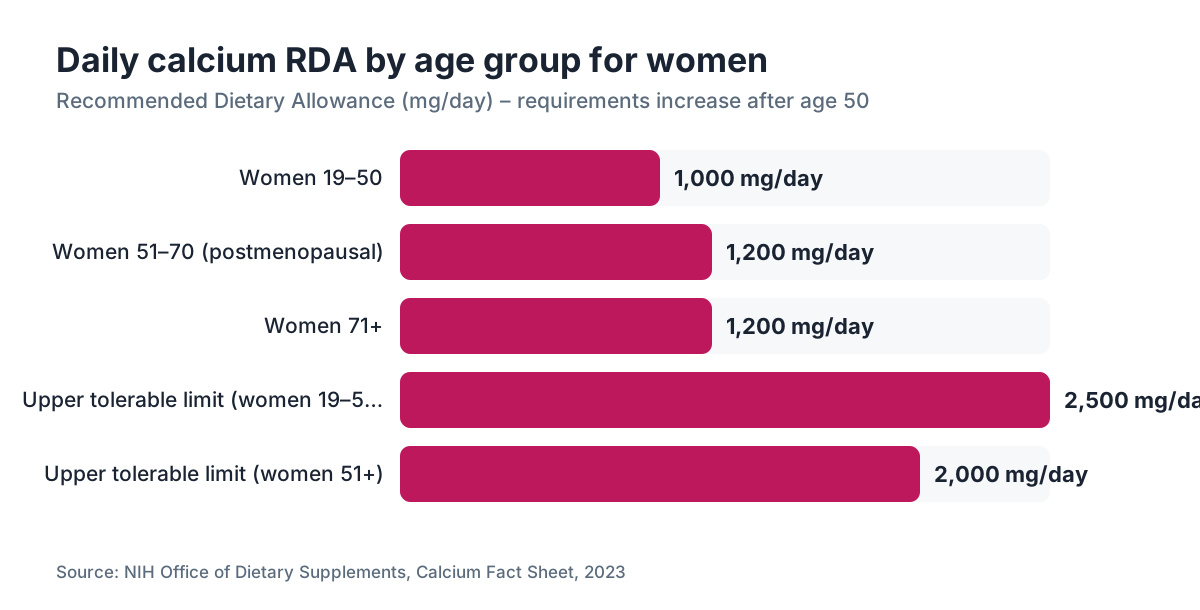
It depends on age and where you are in menopause. According to the NIH Office of Dietary Supplements, the recommended dietary allowance for calcium in women is [3]:
| Age group | Calcium RDA | |---|---| | Women 19 to 50 | 1,000 mg/day | | Women 51 to 70 (postmenopausal) | 1,200 mg/day | | Women 71+ | 1,200 mg/day | | Pregnant/lactating 19 to 50 | 1,000 mg/day |
The upper tolerable intake level is 2,500 mg/day for adults under 50 and 2,000 mg/day for women over 50 [3]. Going above those levels consistently from supplements plus food raises kidney stone risk and, in some observational data, possibly cardiovascular calcification, though that link remains debated.
The practical math: one cup of plain yogurt has roughly 400 mg calcium. One cup of milk has about 300 mg. One cup of cooked kale has about 180 mg. Many women on a typical Western diet get 500 to 700 mg from food. That leaves a gap of 300 to 700 mg, which a single supplement can close without going over the limit.
Do not take calcium in single doses above 500 mg. Absorption efficiency drops sharply past that point. Two smaller doses across the day beat one large one [3].
What vitamin D level do you actually need for bone health?
This is where clinical guidance and the general supplement world part ways. The IOM's RDA of 600 to 800 IU is set for bone health in healthy people with little deficiency risk. The Endocrine Society's clinical practice guideline, which addresses people at risk of deficiency (most postmenopausal women), recommends targeting a serum 25-hydroxyvitamin D of at least 30 ng/mL and notes that reaching and holding that level often takes 1,500 to 2,000 IU/day of supplemental D3 [5].
NIH data suggests roughly 35% of US adults have serum 25(OH)D below 20 ng/mL, which counts as deficient [9]. Women with darker skin, women who cover their skin, women with obesity (vitamin D is fat-soluble and gets sequestered in fat tissue), and anyone living at northern latitudes from October to April carry the most risk.
Get your 25(OH)D tested. Most labs run it for around $30 to 60 out of pocket, and most insurance covers it once a year if your doctor codes it right. Below 20 ng/mL, you likely need a short course of higher-dose repletion (often 50,000 IU of D2 weekly for 8 to 12 weeks) before moving to maintenance. Between 20 and 30 ng/mL, 1,500 to 2,000 IU of D3 daily should bring you up. Above 30 ng/mL, 1,000 IU daily is probably enough for most women.
The upper tolerable limit for vitamin D is 4,000 IU/day for most adults, though toxicity is rare below 10,000 IU/day [9]. There is no benefit to megadosing past what gets you to target.
Does magnesium help bone density, or is it overhyped?
Magnesium sits in a strange spot: the mechanism is compelling but the human RCT data is thinner than for calcium and vitamin D. What we know clearly is that magnesium is required to make active vitamin D (converting 25-hydroxyvitamin D to 1,25-dihydroxyvitamin D runs on magnesium-dependent enzymes), and that magnesium deficiency impairs parathyroid hormone function, which throws off calcium regulation [6].
Observational studies consistently link higher dietary magnesium with higher bone density in women. Larger population datasets find magnesium intake predicts total hip BMD even after adjusting for calcium and vitamin D. The catch is that observational data cannot prove causation, and the RCTs testing magnesium supplementation on BMD are small and short.
My honest take: if your diet is low in magnesium, which is likely if you eat few nuts, seeds, legumes, and leafy greens, supplementing 200 to 400 mg of magnesium glycinate or citrate daily is low risk, cheap, and probably helpful. It also helps sleep and muscle cramps, both common in perimenopause. It won't replace the calcium-D3 foundation, but it earns its spot in the stack.
If you are perimenopausal or postmenopausal, our article on perimenopause age covers when the hormonal changes driving bone loss typically start.
Is vitamin K2 actually worth taking for bones?
Of the supplements here, K2 has the strongest mechanistic story and a reasonably solid RCT record for something that is not a drug.
The mechanism: vitamin K2 carboxylates (activates) two proteins bone depends on. Osteocalcin binds calcium to the hydroxyapatite matrix of bone. Matrix Gla protein keeps calcium out of arteries. The idea is that K2 directs calcium to bone rather than soft tissue.
The 2013 three-year trial by Knapen et al. in Osteoporosis International randomized 244 healthy postmenopausal women to 180 mcg/day of MK-7 (the long-chain form of K2) or placebo. The study concluded that "MK-7 intake significantly improved vitamin K status and decreased the age-related decline in BMC and BMD at the lumbar spine and femoral neck." Bone strength indices improved too [7]. The effect was modest but statistically significant and built up over three years.
The MK-7 form (found in fermented foods like natto) has a longer half-life than MK-4 and is the form used in most positive trials. Standard doses run 100 to 200 mcg/day. Dietary sources include natto (very high), hard cheeses, egg yolks, and some fermented foods, but most Western diets deliver far less than 100 mcg/day.
The caveat holds: if you take warfarin or another vitamin K-dependent anticoagulant, K2 supplementation needs coordination with your prescriber. For everyone else, 100 to 200 mcg/day of MK-7 is a sound addition to the foundational stack.
Can supplements replace hormone therapy or prescription bone medications?
No. This needs saying plainly.
Estrogen is the most potent bone-protective intervention available to perimenopausal and early postmenopausal women. The Women's Health Initiative confirmed that hormone therapy significantly reduces fracture risk, hip fractures included [4]. With estrogen on board, osteoclast activity is suppressed and your supplement foundation has a solid structure to build on. Without estrogen, resorption runs so high that supplements are working against the tide.
For women who already have osteoporosis (T-score at or below -2.5 on a DEXA scan), prescription drugs are the standard of care: bisphosphonates (alendronate, risedronate), denosumab, romosozumab, and anabolic agents like teriparatide. These rebuild bone in ways no supplement can. Calcium and D are still required alongside them, because most osteoporosis drug trials mandated adequate calcium and vitamin D in both the treatment and placebo arms.
For women with osteopenia (T-score between -1.0 and -2.5) not yet in the drug zone, hormone therapy (if appropriate) plus the evidence-based supplement stack plus weight-bearing exercise is the most rational approach.
If you are over 50 or postmenopausal and haven't had a bone density scan, get one. Our article on the bone density test walks through what a DEXA scan involves, how T-scores work, and when insurance covers it.
Hormone therapy is a conversation worth having with a clinician who specializes in menopause. A provider at WomenRx can look at your full hormonal picture, including whether hormone replacement therapy or an estrogen patch makes sense given your fracture risk and health profile.
For more on what estrogen decline does to your skeleton and the rest of you, the menopause overview is a good next read.
Do GLP-1 medications like semaglutide affect bone density?
More women on GLP-1s for weight loss are asking this, and the honest answer is: we don't have long-term bone data yet, but there are signals worth watching.
Rapid weight loss from any cause, GLP-1-driven included, reduces mechanical loading on the skeleton. Bone density responds to the forces placed on it. Weigh less, and bones feel less stress and can shed density in response. This is the same reason fracture risk runs higher in underweight women than in women with higher BMIs.
In the STEP and SURMOUNT trials for semaglutide and tirzepatide, bone density was not a primary endpoint and was not systematically measured in most participants. Data from shorter obesity trials shows modest decreases in bone density with weight loss, in line with what happens after any significant weight loss. Whether GLP-1 receptor agonists affect bone metabolism beyond the weight loss itself is an active research question. Some animal data hints that GLP-1 receptors on osteoblasts may be protective, but that hasn't been confirmed in adequate human trials.
What this means for you: if you are on semaglutide or another GLP-1 for weight loss, keeping your calcium, vitamin D, and magnesium up is not optional, it matters more. Weight-bearing exercise, resistance training in particular, is the single best way to offset the mechanical unloading that comes with weight loss. If you are still deciding, our semaglutide for weight loss article covers what the trial data actually shows.
What else affects bone density beyond supplements?
Supplements are real levers. They are not the only ones.
Weight-bearing and resistance exercise is probably the most underused bone intervention there is. Bone responds to mechanical loading by adding density. Walking helps some. Resistance training and impact exercise (jogging, jumping, tennis) help more. A 2022 meta-analysis in the British Journal of Sports Medicine found resistance training significantly improved lumbar spine and femoral neck BMD in postmenopausal women [10]. Aim for two to three sessions of progressive resistance training a week.
Smoking speeds bone loss, lowers estrogen, and impairs calcium absorption. Women who smoke reach menopause roughly two years earlier than nonsmokers on average, which compounds the damage.
Alcohol interferes with calcium absorption, suppresses osteoblasts, and raises fracture risk even at moderate intake. More than one drink a day tracks with meaningfully lower BMD in observational studies.
Caffeine in high amounts (above about 300 mg/day) can slightly raise urinary calcium loss, though the effect is small and mostly offset by adequate calcium intake.
Some medications are major bone loss accelerators. Corticosteroids top the list, with even inhaled steroids contributing at higher doses. Proton-pump inhibitors cut calcium absorption over time by lowering stomach acid. Aromatase inhibitors used in breast cancer treatment can cause dramatic bone loss. Some SSRIs have been tied to lower BMD in observational data, though the effect is small.
Falling risk matters as much as bone density for preventing fractures. Good balance, muscle strength, corrected vision, and no trip hazards at home work alongside any bone density intervention.
What does a practical supplement stack for bone density look like?
Here is what the evidence supports as a daily regimen for a woman in perimenopause or postmenopause with no contraindications:
Foundational (high evidence):
- Calcium: total dietary intake of 1,200 mg/day. If food provides 500 to 700 mg, supplement 500 to 600 mg of calcium citrate or carbonate in split doses with meals.
- Vitamin D3: 1,500 to 2,000 IU/day, or enough to get serum 25(OH)D above 30 ng/mL. Test your level first.
- Magnesium: 200 to 400 mg/day of glycinate or citrate (not oxide), taken separately from calcium to avoid absorption competition.
Reasonable add-ons (moderate evidence):
- Vitamin K2 (MK-7): 100 to 200 mcg/day. Skip it if you're on warfarin without prescriber guidance.
- Collagen peptides: 5 to 10 g/day of hydrolyzed type I collagen, especially if you also care about joints and connective tissue.
Not worth the money on current evidence:
- Boron: some mechanistic data, but the human trial data is weak and inconsistent.
- Silicon: an observational link with BMD but no solid RCT evidence.
- Strontium: the DXA interference alone makes it a poor choice.
- Mega-dose vitamin D (above 4,000 IU without deficiency): no added benefit, possible harm at very high doses.
The core stack costs roughly $25 to 60/month depending on brand and source. You don't need expensive proprietary formulas. The same calcium citrate, D3, magnesium glycinate, and MK-7 come in generic or store-brand form at most pharmacies.
One last thing. If you are early in perimenopause and wondering whether progesterone plays into bone health, there is some evidence it has direct anabolic effects on osteoblasts independent of estrogen. Our article on progesterone covers that in more detail.
How long does it take for bone density supplements to show results?
Bone remodeling is slow. A complete cycle (resorption followed by formation) takes three to six months, and measurable changes in bone density take longer to build and detect.
Most clinical trials showing BMD changes from supplementation run 12 to 36 months. The Knapen MK-7 trial ran three years [7]. The collagen trial ran 12 months [8]. You are not going to see a DEXA change in three months.
What the evidence does suggest is that the protective effect, slowing loss rather than dramatically rebuilding bone, can start relatively fast. Bone turnover markers (blood tests like CTx and P1NP) can shift in three to six months if you want early confirmation your regimen is doing something.
Expect to wait 1 to 2 years for your next DEXA to show a measurable difference. Stay consistent. The biggest problem with bone supplements is that people start them, feel nothing (bones have no nerve endings telling you they're getting denser), and quit after a few months. Consistency over years is what moves the needle.
Frequently asked questions
What is the best supplement combination for bone density in postmenopausal women?
The combination with the most consistent clinical support is calcium (1,200 mg/day total from food and supplements), vitamin D3 (1,500 to 2,000 IU/day), and magnesium (200 to 400 mg/day of citrate or glycinate). Adding vitamin K2 as MK-7 at 100 to 200 mcg/day is a reasonable next step if your budget allows. None of these replace estrogen or prescription osteoporosis drugs if your DEXA shows osteoporosis.
Is calcium citrate or calcium carbonate better for women over 50?
Calcium citrate is generally the better choice for women over 50 because it absorbs well without needing stomach acid, which declines with age. Calcium carbonate is cheaper and has more elemental calcium per pill but requires food and enough stomach acid to absorb. If you take a proton-pump inhibitor like omeprazole, calcium citrate is clearly the right choice. Either form works if taken with meals and in doses no larger than 500 mg at a time.
Can you get enough calcium for bone health from food alone?
Yes, if your diet is genuinely high in calcium-rich foods. Three to four servings of dairy or fortified plant milk plus leafy greens can get you to 1,000 to 1,200 mg/day. In practice, most American women get 500 to 700 mg from food, leaving a 300 to 600 mg gap a modest supplement can close. Track a few days of your actual intake using a nutrition app before buying supplements, so you're closing a real gap and not doubling up.
Does vitamin D alone improve bone density without calcium?
Vitamin D alone has modest independent effects on bone density, but its main job is enabling calcium absorption in the gut. Without enough calcium coming in, even perfect vitamin D levels won't give your body the raw material to build or maintain bone. The two work together. A 2022 systematic review confirmed that combined calcium plus vitamin D supplementation reduces fracture risk more than either alone, particularly in older adults with low baseline intake.
Are there bone density supplements safe to take with osteoporosis medications?
Calcium and vitamin D are more than safe alongside bisphosphonates and denosumab, they are required. Most osteoporosis drug trials mandated 1,000 to 1,500 mg/day calcium and 400 to 800 IU D3 in both arms because without them the drugs cannot work properly. Magnesium and K2 are generally compatible, but tell your prescribing physician what you are taking. The one supplement to flag is vitamin K2 if you are on warfarin, as it interacts with anticoagulation.
Can supplements reverse osteoporosis, or do you need prescription medications?
Supplements alone cannot reverse established osteoporosis (T-score at or below -2.5). They can slow further loss and support bone quality, but rebuilding bone mass enough to significantly cut fracture risk requires prescription-strength treatment: bisphosphonates, denosumab, romosozumab, or teriparatide. Supplements still matter as adjuncts, because the prescription drugs need adequate calcium and D3 to work. Think of supplements as the foundation and prescription treatment as the actual rebuilding work.
Does collagen supplementation help bone density?
Early evidence is promising. A 2018 randomized trial found that postmenopausal women taking 5 g/day of specific collagen peptides plus calcium and vitamin D had significantly greater increases in lumbar spine and femoral neck BMD after 12 months than women taking calcium and D alone. The study was small and needs replication, but the mechanism makes sense given that collagen is the protein scaffold of bone. I'd call it a reasonable add-on, not a proven cornerstone.
How do I know if I am vitamin D deficient?
The only reliable way is a blood test measuring serum 25-hydroxyvitamin D (25(OH)D). Below 20 ng/mL is deficient, 20 to 29 ng/mL is insufficient, and at least 30 ng/mL is the target for bone health per the Endocrine Society guidelines. Testing is widely available, typically $30 to 60 out of pocket or covered by insurance once annually. Given how common deficiency is, especially in postmenopausal women with limited sun, testing once and rechecking after 3 months of supplementation is reasonable.
Do weight-bearing exercises actually increase bone density in women over 50?
Yes, and this is probably the most underused bone intervention. Bone density adapts to mechanical load. A 2022 meta-analysis in the British Journal of Sports Medicine found resistance training significantly improved BMD at the lumbar spine and femoral neck in postmenopausal women. Impact exercise (jogging, jumping, dancing) helps too. Walking alone gives modest benefits. Two to three sessions of progressive resistance training per week, with adequate calcium and vitamin D, is the most evidence-backed non-drug approach.
Is magnesium important for bone density, and which form absorbs best?
Magnesium is genuinely important: it is required to convert vitamin D to its active form and for proper parathyroid hormone function, and about 60% of body magnesium is stored in bone. Magnesium glycinate and citrate are the best-absorbed forms. Magnesium oxide, the cheapest and most common in discount supplements, has poor bioavailability. Target 200 to 400 mg/day of a well-absorbed form. Doses above 350 mg of supplemental magnesium can cause loose stools, which is a natural dose ceiling.
At what age should women start taking bone density supplements?
Adequate calcium and vitamin D matter throughout life, but they become especially important in the late 30s and early 40s as bone mass starts declining and perimenopause approaches. Peak bone mass is largely set by your late 20s, but the rate of loss from your 40s onward depends directly on nutrition. If you are perimenopausal or postmenopausal and not hitting calcium and vitamin D targets from food, supplementation should start now, whatever your current DEXA shows.
Does vitamin K2 interact with any medications?
The main interaction is with warfarin (Coumadin) and other vitamin K-dependent anticoagulants. Vitamin K2 at supplemental doses can reduce the drug's effect and move INR unpredictably. If you take warfarin, do not add K2 without explicit guidance from your prescribing physician. For women on other medications, including bisphosphonates, blood pressure drugs, or statins, there are no well-documented interactions with K2 at standard doses of 100 to 200 mcg/day.
What foods are highest in calcium besides dairy?
The best non-dairy calcium sources are canned sardines or salmon with bones (roughly 300 mg per 3 oz), firm tofu made with calcium sulfate (200 to 400 mg per half cup), cooked collard greens (268 mg per cup), fortified plant milks (usually 300 to 450 mg per cup), white beans (130 mg per half cup), and edamame (100 mg per cup). Combining several daily can get a non-dairy eater reasonably close to 1,200 mg, though supplementing 300 to 500 mg is often still needed.
How does perimenopause affect bone density, and should I be testing my bones earlier?
Perimenopause begins the hormonal shift that accelerates bone loss. Even before periods stop, fluctuating and declining estrogen raises osteoclast activity. Most guidelines recommend a baseline DEXA scan at menopause or at age 65, whichever comes first, but women with risk factors (small frame, family history of hip fracture, long-term steroid use, smoking, early menopause before 45) should test earlier. If you want to know where perimenopause fits in your timeline, our article on perimenopause age covers the typical onset window.
Sources
- North American Menopause Society (NAMS), Menopause Practice: A Clinician's Guide
- National Osteoporosis Foundation, Osteoporosis Fast Facts
- NIH Office of Dietary Supplements, Calcium Fact Sheet for Health Professionals
- Women's Health Initiative, Jackson et al., NEJM 2006, Calcium plus vitamin D supplementation and the risk of fractures
- Endocrine Society, Clinical Practice Guideline: Vitamin D Deficiency, 2011
- NIH Office of Dietary Supplements, Magnesium Fact Sheet for Health Professionals
- Knapen MH et al., Osteoporosis International, 2013: Three-year low-dose MK-7 supplementation helps decrease bone loss in healthy postmenopausal women
- König D et al., Nutrients, 2018: Specific collagen peptides improve bone mineral density and bone markers in postmenopausal women
- NIH Office of Dietary Supplements, Vitamin D Fact Sheet for Health Professionals
- British Journal of Sports Medicine, 2022 meta-analysis on resistance training and BMD in postmenopausal women
- U.S. Preventive Services Task Force, Vitamin D, Calcium, or Combined Supplementation for the Primary Prevention of Fractures in Community-Dwelling Adults (2018)
- CDC, National Center for Health Statistics, Osteoporosis Data