Bone density medication: what every woman should know
TL;DR: The most prescribed bone density medications are bisphosphonates like alendronate, which cut vertebral fracture risk by roughly 50% in women with osteoporosis. Newer options include denosumab, romosozumab, and teriparatide. The right choice depends on fracture risk score, kidney function, insurance, and whether you are also managing menopause-related bone loss.
What are bone density medications and who actually needs them?
Bone density medications are drugs designed to either slow bone breakdown, stimulate new bone formation, or both. Doctors prescribe them when a woman's bone mineral density (BMD) falls low enough that her fracture risk outweighs the drug's risks, or when she has already had a low-trauma fracture.
The clinical threshold that typically triggers a prescription is a T-score of -2.5 or lower on a DEXA scan, which meets the World Health Organization definition of osteoporosis [1]. But T-score alone is rarely the whole story. Guidelines from the National Osteoporosis Foundation (now the Bone Health and Osteoporosis Foundation, BHOF) recommend treating women with a 10-year hip fracture probability of 3% or greater, or a major osteoporotic fracture probability of 20% or greater, as calculated by the FRAX tool [2]. Those thresholds put millions of postmenopausal women in treatment range even before their T-score hits -2.5.
Women in perimenopause or early menopause lose bone faster than at any other point in adult life. Estrogen suppresses osteoclast activity; when estrogen drops, bone resorption speeds up. Some women lose 1 to 3 percent of bone mass per year in the first five years after their last period, compared with the usual 0.5 to 1 percent annual loss in older age [3]. That acceleration is exactly why screening and treatment conversations should start earlier, not at 65 when Medicare first pays for DEXA.
What are the main types of bone density medication?
There are five mechanistic classes approved in the United States. Each works differently and carries a different risk profile.
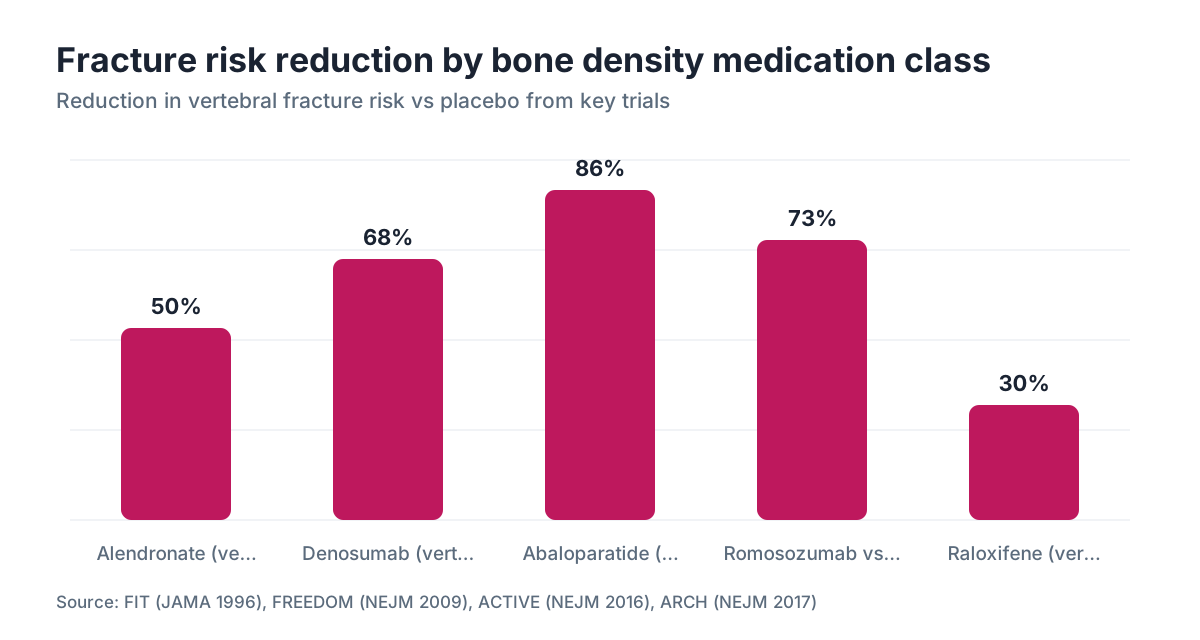
Bisphosphonates are the oldest and most studied class. They bind to bone mineral and get taken up by osteoclasts (the cells that break bone down), slowing resorption. Oral versions include alendronate (Fosamax), risedronate (Actonel, Atelvia), and ibandronate (Boniva). Intravenous zoledronic acid (Reclast) is given once a year by infusion. The Fracture Intervention Trial found alendronate cut vertebral fracture risk by roughly 50% and hip fracture risk by roughly 51% in women with existing vertebral fractures [4]. Generic oral alendronate costs as little as $4 to $15 per month at most major pharmacies, which makes it the default first-line option for most women.
RANK Ligand inhibitor (denosumab, Prolia) works differently. It blocks RANKL, a protein that signals osteoclasts to activate. Denosumab is given as a 60 mg subcutaneous injection every 6 months. The FREEDOM trial showed it reduced vertebral fracture risk by 68% and hip fracture risk by 40% over three years [5]. There is a critical catch: if you stop denosumab without transitioning to a bisphosphonate, bone density drops fast and rebound vertebral fractures can occur within months.
Parathyroid hormone analogs (anabolic agents) actually build new bone rather than just slowing loss. Teriparatide (Forteo) and abaloparatide (Tymlos) are daily self-injections limited to two years of use because animal data showed a dose-dependent risk of osteosarcoma (though the relevance to humans at clinical doses remains debated). They are typically reserved for women with severe osteoporosis or multiple fractures.
Romosozumab (Evenity) is a newer anabolic-antiresorptive agent. It inhibits sclerostin, increasing bone formation while cutting resorption at the same time. It is given as two subcutaneous injections monthly for 12 months. The ARCH trial showed it reduced vertebral fractures by 73% compared with alendronate after one year, but the trial also found a small imbalance in serious cardiovascular events, so it carries a boxed warning and is contraindicated within one year of a heart attack or stroke [6].
SERMs (selective estrogen receptor modulators) like raloxifene (Evista) bind estrogen receptors in bone and cut vertebral fracture risk by about 30%, though they have not been shown to reduce hip fractures. Raloxifene also lowers invasive breast cancer risk, which makes it a reasonable option for women who need both considerations addressed. It does raise the risk of blood clots and hot flashes, which limits use in women already struggling with vasomotor symptoms around perimenopause age.
| Medication | Route | Frequency | Approx. cost/yr (cash) | Reduces hip Fx? | |---|---|---|---|---| | Alendronate (generic) | Oral | Weekly | $50-$180 | Yes | | Risedronate (generic) | Oral | Weekly/monthly | $200-$600 | Yes | | Zoledronic acid (generic) | IV infusion | Yearly | $200-$600 (generic) | Yes | | Denosumab (Prolia) | Injection | Every 6 mo | $3,000-$5,000 | Yes | | Teriparatide (Forteo) | Injection | Daily | $20,000-$30,000 | No (wrist/spine) | | Abaloparatide (Tymlos) | Injection | Daily | $20,000-$30,000 | Yes | | Romosozumab (Evenity) | Injection | Monthly x12 | $20,000-$25,000 | Yes | | Raloxifene (generic) | Oral | Daily | $600-$1,200 | No |
Cash prices above are estimates from GoodRx and manufacturer data as of 2024; actual insurance copays vary widely.
How does hormone replacement therapy compare to prescription bone medications?
This is a question a lot of women ask, and it deserves an honest answer rather than a default to whichever drug came up first.
Hormone replacement therapy (HRT) is FDA-approved for the prevention of osteoporosis, not treatment of established osteoporosis (T-score below -2.5). The distinction matters. HRT preserves bone mass by replacing the estrogen your ovaries stop producing, essentially keeping the brakes on osteoclast activity. The Women's Health Initiative (WHI) showed that combined estrogen-progestin HRT reduced hip fracture risk by 34% and vertebral fracture risk by 34% over 5.6 years in postmenopausal women [3]. Those are real numbers, competitive with raloxifene and modest bisphosphonate data.
The problem is that once HRT is stopped, bone protection disappears within a few years. And the WHI data raised cardiovascular and breast cancer concerns that shifted prescribing patterns, though later analyses suggest those risks are substantially lower for women who start HRT before age 60 or within 10 years of menopause. The NAMS 2022 position statement concludes that HRT is appropriate for bone protection in symptomatic perimenopausal and early postmenopausal women for whom the benefits outweigh risks [7].
Practically: if a woman is 50, in early menopause, has a T-score of -1.8 (osteopenia), and has significant hot flashes, sleep disruption, and genitourinary symptoms, starting an estrogen patch addresses several problems at once. That same woman at 68 with a T-score of -2.7 and no symptoms would almost certainly do better starting alendronate or zoledronic acid, because the fracture risk is higher and HRT carries more cardiovascular risk at that age.
The two categories are not mutually exclusive. Women on HRT still get DEXA screening, and some women with established osteoporosis take both HRT and a bisphosphonate, though the added benefit of combining them is modest.
What are the real risks and side effects of bisphosphonates?
Bisphosphonates are genuinely safe for the vast majority of women who take them, but two rare side effects get a lot of coverage, sometimes out of proportion to how often they actually happen.
Atypical femoral fractures (AFF) are stress fractures of the femoral shaft that can occur with long-term bisphosphonate use. The absolute risk runs about 3.2 to 50 per 100,000 person-years of use, rising with duration [8]. That sounds scary until you compare it to the risk of hip fracture the drug prevents: bisphosphonates prevent roughly 100 hip fractures for every 1 atypical femoral fracture caused. The FDA label requires a warning, and most guidelines suggest considering a drug holiday after 3 to 5 years for lower-risk patients precisely to lower AFF risk.
Osteonecrosis of the jaw (ONJ) is another rare complication, most often seen in cancer patients receiving high-dose intravenous bisphosphonates, not in osteoporosis patients taking oral weekly doses. The incidence in osteoporosis patients is estimated at less than 1 in 10,000 to 1 in 100,000 patient-years [8]. Tell your dentist you are on a bisphosphonate before any invasive dental work. That is sensible. It is not a reason to avoid the drug.
Gastrointestinal side effects are far more common and far less discussed. Oral bisphosphonates must be taken on an empty stomach with a full glass of water, and you have to stay upright for 30 to 60 minutes. Esophageal irritation hits a meaningful minority of women. If you cannot tolerate oral bisphosphonates, annual IV zoledronic acid eliminates all GI risk.
Kidney function matters. Zoledronic acid and other bisphosphonates are contraindicated when creatinine clearance falls below roughly 30 to 35 mL/min. Your prescriber should check kidney function before starting any bisphosphonate and before each annual infusion.
Who should consider an anabolic agent instead of a bisphosphonate?
Anabolic agents (teriparatide, abaloparatide, romosozumab) are not first-line drugs. The cost alone puts them out of reach for most women without strong insurance coverage, and the safety data call for more patient monitoring. But there are clear situations where they are the right call.
Current guidelines from the BHOF and the American Society for Bone and Mineral Research (ASBMR) identify "very high risk" patients who benefit most from starting with an anabolic rather than an antiresorptive. This means women with a T-score below -3.0, multiple vertebral fractures, or a fragility fracture on an antiresorptive drug [2]. The logic is that antiresorptives slow breakdown but do not add much new bone. If the architecture of the bone is already severely compromised, building new bone first, then locking it in with an antiresorptive, produces better outcomes.
The ACTIVE trial comparing abaloparatide with teriparatide and placebo showed abaloparatide cut new vertebral fractures by 86% versus placebo over 18 months, with a somewhat lower risk of hypercalcemia than teriparatide [9]. Both drugs are limited to a lifetime maximum of 2 years (teriparatide) or 18 months (abaloparatide), after which transition to an antiresorptive is mandatory.
Romosozumab's 12-month course fits women who are at very high fracture risk but have no recent cardiovascular history. The ARCH trial compared romosozumab followed by alendronate against alendronate alone and found significantly better outcomes in the romosozumab arm by year 2, but the cardiovascular signal means careful patient selection matters.
Does denosumab (Prolia) have any advantages over bisphosphonates?
For certain patients, denosumab is genuinely the better choice. It does not require adequate kidney function the way bisphosphonates do, which makes it an option for women with chronic kidney disease stages 3 to 4 who cannot safely take bisphosphonates. It also helps women who cannot tolerate oral medications, struggle with weekly pill schedules, or have had esophageal problems.
The FREEDOM trial reported that after 10 years of denosumab, women kept gaining bone density with no plateau, which is different from bisphosphonates where density gains largely level off after 3 to 4 years [5].
The discontinuation problem is real and underappreciated. The FDA added a warning in 2022 specifically about rebound vertebral fractures following denosumab discontinuation [10]. Stop Prolia injections without taking a bisphosphonate for 6 to 12 months afterward, and your bone loss can overshoot baseline, leaving you at significantly higher fracture risk. This is not theoretical. Case series from Europe described clusters of multiple vertebral fractures within 6 to 18 months of stopping denosumab. The practical implication: do not start Prolia unless you are ready for a long-term commitment or a careful transition plan.
Cost is a barrier for many women. A single Prolia injection lists at roughly $1,500 to $2,500, so two injections per year runs $3,000 to $5,000 before insurance. Most major insurers cover it for osteoporosis, but prior authorization requirements and step therapy (requiring bisphosphonate failure first) are common.
How does bone loss from GLP-1 medications factor into this conversation?
This is an emerging concern worth taking seriously, especially as semaglutide for weight loss and other GLP-1 receptor agonists become common in women who are also perimenopausal or postmenopausal.
Rapid weight loss, no matter the method, is tied to bone loss. The STEP 1 trial of semaglutide 2.4 mg showed a mean weight loss of 14.9% at 68 weeks, and participants lost lean mass along with fat mass [11]. Observational data suggest that GLP-1 mediated weight loss may reduce bone density, particularly in older women who start with lower baseline BMD. Whether GLP-1 receptors in bone tissue have direct effects independent of weight loss is still an open research question; the data are mixed and no definitive conclusions exist yet.
Practically, if you are a perimenopausal woman starting semaglutide or tirzepatide and you have a baseline T-score in the osteopenia range, getting a repeat bone density test 18 to 24 months after starting makes sense. Resistance training and adequate protein intake help preserve lean mass and bone during weight loss, and calcium plus vitamin D adequacy is basic maintenance. WomenRx clinicians who prescribe GLP-1s routinely assess bone health baseline for women over 45, which is exactly the right approach.
None of this means GLP-1s are off the table for women with low bone density. The cardiovascular and metabolic benefits of significant weight loss generally outweigh the fracture risk for most women. But the conversation should happen, not get ignored.
What do vitamin D and calcium actually do for bone density, and are supplements enough?
Here is the honest version: vitamin D and calcium are not bone density medications. They are prerequisites for any bone density medication to work, and they matter enormously for baseline bone health, but supplements alone will not stop or reverse osteoporosis once it is established.
Vitamin D deficiency impairs calcium absorption from the gut and stimulates parathyroid hormone, which signals bone resorption. The National Institutes of Health recommends 600 IU of vitamin D daily for women aged 51 to 70, and 800 IU for women over 70, with an upper tolerable limit of 4,000 IU/day [12]. Serum 25-hydroxyvitamin D levels below 20 ng/mL are generally considered deficient; many endocrinologists aim for 30 to 50 ng/mL in women with osteoporosis.
Calcium recommendations are 1,000 mg/day for women aged 19 to 50 and 1,200 mg/day for women 51 and older. Food sources (dairy, fortified foods, leafy greens) beat supplements because some meta-analyses tie high-dose calcium supplements to modestly higher cardiovascular risk, though the evidence is genuinely mixed.
Every major bisphosphonate and denosumab trial required participants to have adequate calcium and vitamin D as part of the protocol. Start alendronate while deficient in vitamin D and you raise the risk of hypocalcemia and blunt the drug's effect. Check serum 25-hydroxyvitamin D before starting any bone density medication.
How long do you need to take bone density medication?
Duration depends almost entirely on which drug you take, how high your fracture risk is, and whether you have fractured on therapy.
For bisphosphonates, the concept of a "drug holiday" came out of data showing the drugs stay bound in bone for years after stopping. The Fracture Intervention Trial Long-Term Extension (FLEX) found that women who took alendronate for 10 years had similar non-vertebral fracture rates to those who stopped at 5 years, while those who stopped had higher clinical vertebral fracture rates [4]. Current BHOF guidance suggests that lower-risk women (T-score above -2.5, no fractures on therapy) can take a 1 to 2 year holiday after 5 years of oral bisphosphonates or 3 years of IV zoledronic acid. Higher-risk women should continue.
For denosumab, there is no drug holiday. The rebound fracture risk on discontinuation means the only safe way to stop is to bridge with a bisphosphonate, as discussed above.
For anabolic agents, the time limit is built into the label: 2 years maximum for teriparatide, 18 months for abaloparatide, 12 months for romosozumab. After that, antiresorptive therapy is required to hold the gains.
The practical upshot for most women: expect to be on alendronate or zoledronic acid for at least 3 to 5 years. If your FRAX score stays high or you fracture on therapy, the conversation about indefinite treatment or switching classes becomes necessary.
What does bone density medication cost with and without insurance?
Cost varies dramatically by drug class, and it is one of the most underappreciated barriers to treatment.
Generic alendronate is genuinely cheap. Using GoodRx or pharmacy discount programs, a 30-day supply of 70 mg weekly tablets (four tablets per month) costs roughly $4 to $20 at most major chains. Medicare Part D and most commercial plans cover it with a tier-1 copay. If someone tells you they cannot afford osteoporosis treatment, generic alendronate is almost always within reach.
Generic risedronate and generic ibandronate cost somewhat more than alendronate, typically $20 to $60 per month cash. Generic zoledronic acid infusion is billed as a medical benefit rather than a pharmacy benefit, so out-of-pocket costs depend heavily on insurance and infusion site (hospital outpatient infusions run higher than independent infusion centers).
Denosumab (Prolia) has no generic as of mid-2025. Manufacturer copay assistance programs exist for commercially insured women and can bring out-of-pocket costs to near zero, but Medicare patients are excluded from manufacturer assistance programs and often face substantial cost sharing.
Anabolic agents are the priciest and routinely require prior authorization, documentation of osteoporosis severity, and often evidence of bisphosphonate failure or intolerance. Without insurance, teriparatide and abaloparatide can top $20,000 to $30,000 per year. Patient assistance programs through manufacturers (Eli Lilly for teriparatide, Radius Health for abaloparatide) offer free or reduced-cost access for income-qualifying patients.
Medicare covers DEXA scans every 24 months for eligible beneficiaries [13]. Getting the scan covered removes the main barrier to knowing whether you need a drug at all.
When should you start thinking about bone density medication?
The U.S. Preventive Services Task Force (USPSTF) recommends DEXA screening for all women 65 and older, and for younger postmenopausal women whose 10-year fracture probability equals or exceeds that of a 65-year-old white woman with no additional risk factors, roughly 9.3% on the FRAX tool [14].
But that recommendation is a floor, not a ceiling. If you are a 50-year-old woman with early menopause, a family history of hip fracture, a history of long-term glucocorticoid use (steroids for asthma, rheumatoid arthritis, etc.), low body weight (BMI under 20), heavy smoking, or more than two to three drinks of alcohol per day, getting a DEXA scan before age 65 is reasonable. A DEXA scan runs about $150 to $300 without insurance; with insurance, most plans cover it at the recommended screening intervals.
For women whose menopause starts earlier than average, before age 45 (see when does menopause start), early initiation of HRT is generally recommended partly to protect bone. Those women may also need earlier pharmacologic treatment if bone loss is significant.
The window between osteopenia (T-score -1.0 to -2.5) and established osteoporosis is where lifestyle and sometimes hormonal intervention make the biggest difference. Resistance training, adequate protein, calcium, vitamin D, and HRT in the right candidates can stabilize or modestly improve BMD during this phase without a prescription bone drug. By the time T-score hits -2.5 or a fracture occurs, prescription medication is usually warranted.
What questions should you ask your doctor before starting bone density medication?
A few questions cut through a lot of unnecessary confusion.
First, ask for your FRAX score, more than your T-score. A 60-year-old woman with a T-score of -2.2 and a prior wrist fracture may carry a higher 10-year fracture probability than a 58-year-old with a T-score of -2.6 and no fractures. FRAX factors in age, sex, body weight, fracture history, parental hip fracture history, smoking, alcohol use, glucocorticoid use, and rheumatoid arthritis. The tool is free at sheffield.ac.uk/FRAX.
Second, ask whether your vitamin D and calcium status have been checked. Starting a bisphosphonate without knowing your vitamin D level is incomplete care.
Third, ask about kidney function. If you have any history of kidney disease, this shapes which medications are safe.
Fourth, for bisphosphonates, ask about the dental implications and whether you should have any pending dental work done before starting. The risk of ONJ with low-dose oral bisphosphonates is very small, but getting a tooth extraction done cleanly before starting is sensible.
Fifth, ask how you will know if the drug is working. A follow-up DEXA scan in 1 to 2 years is standard practice. If bone density keeps falling on a bisphosphonate, that signals either non-adherence, malabsorption, secondary causes of osteoporosis, or the need to consider switching to an anabolic agent.
For women managing this alongside perimenopause symptoms, find a provider who thinks about both at once. Telehealth platforms like WomenRx, which specialize in women's hormonal health, can help coordinate the hormonal and bone health picture, especially for women trying to decide between HRT, a bisphosphonate, or both.
Frequently asked questions
What is the most commonly prescribed bone density medication for women?
Alendronate (Fosamax), a bisphosphonate, is the most prescribed osteoporosis medication in the United States. Generic versions cost as little as $4 to $20 per month, it has roughly 30 years of safety data, and it reduces vertebral and hip fracture risk by approximately 50% in women with established osteoporosis. Most guidelines recommend it as the first-line option for most postmenopausal women who need pharmacologic treatment.
Can HRT replace bisphosphonates for bone protection?
HRT is FDA-approved for osteoporosis prevention, not treatment. It reduces hip and vertebral fracture risk by about 34%, according to the Women's Health Initiative, but bone protection disappears within a few years of stopping. For a perimenopausal woman with osteopenia and significant menopause symptoms, HRT can address both problems. For a postmenopausal woman with established osteoporosis (T-score below -2.5), bisphosphonates are the standard of care.
How long does it take for bone density medication to work?
Bisphosphonates stabilize bone density within the first year and typically show measurable DEXA improvement at 1 to 2 years. Anabolic agents like teriparatide produce larger and faster gains, with meaningful density increases visible at 6 to 12 months. A follow-up DEXA scan at 1 to 2 years after starting treatment is standard to confirm response. Symptom improvement is not a useful marker since osteoporosis itself causes no symptoms until fracture.
What happens if you stop taking Prolia (denosumab) suddenly?
Stopping denosumab without transitioning to a bisphosphonate causes rapid bone loss and a significantly elevated risk of multiple vertebral fractures, sometimes within 6 to 18 months of the missed injection. The FDA added an explicit label warning about this in 2022. If you need to stop denosumab for any reason, your doctor should plan a bridging course of oral or IV bisphosphonate to prevent rebound bone loss.
Are there natural alternatives to bone density medications?
Lifestyle factors genuinely help: weight-bearing and resistance exercise, adequate calcium (1,200 mg/day for women over 50), vitamin D (800 IU/day or enough to keep serum levels at 30-50 ng/mL), not smoking, and limiting alcohol. These measures can stabilize bone in the osteopenia range. They do not adequately reduce fracture risk in established osteoporosis (T-score below -2.5). Supplements and exercise are foundational, but they are not substitutes for FDA-approved therapy in high-risk women.
Does semaglutide or tirzepatide affect bone density?
Rapid weight loss from any cause, including GLP-1 medications like semaglutide, is associated with some bone loss, partly because lean mass decreases alongside fat. The STEP 1 trial showed 14.9% mean weight loss with semaglutide; whether GLP-1 receptors in bone have direct effects beyond weight loss is still under study. Women over 45 starting GLP-1 therapy should have baseline bone density assessed and prioritize resistance training and protein intake to protect bone mass.
What is the difference between osteopenia and osteoporosis for treatment purposes?
Osteopenia means a T-score between -1.0 and -2.5 on DEXA. Osteoporosis is a T-score of -2.5 or lower, or a low-trauma fragility fracture at any T-score. Most women with osteopenia do not need prescription bone medication; lifestyle, calcium, vitamin D, and sometimes HRT are appropriate. Treatment is typically recommended when 10-year fracture probability on the FRAX tool exceeds 3% for hip or 20% for major osteoporotic fracture, regardless of T-score category.
How often should you get a DEXA scan when on bone density medication?
Once you start pharmacologic treatment, a follow-up DEXA scan at 1 to 2 years is standard to confirm treatment response. After stable results, rescreening every 2 to 3 years while on therapy is typical. Medicare covers DEXA every 24 months for eligible beneficiaries. If bone density continues to fall significantly despite treatment, that warrants reassessment for secondary causes, non-adherence, or possible medication change.
Is there a bone density medication that does not require weekly pill-taking?
Yes, several options avoid the weekly oral schedule. Zoledronic acid (Reclast) is a once-yearly intravenous infusion taking about 15 minutes. Denosumab (Prolia) is a subcutaneous injection every 6 months. Ibandronate is available as a once-monthly oral tablet. Monthly risedronate formulations also exist. For women who find weekly alendronate inconvenient or irritating to the esophagus, these alternatives offer real advantages.
Can you take bone density medication if you have kidney disease?
Bisphosphonates are contraindicated or require dose adjustment when creatinine clearance falls below approximately 30 to 35 mL/min. Zoledronic acid is contraindicated below 35 mL/min. Denosumab does not require dose adjustment for kidney disease and is the preferred option for women with stages 3 to 4 chronic kidney disease who have osteoporosis. Kidney function should be checked before starting any bisphosphonate.
What is the FRAX score and should I know mine?
FRAX is the WHO fracture risk assessment tool that estimates your 10-year probability of hip fracture and major osteoporotic fracture based on clinical risk factors with or without BMD. The tool is free at sheffield.ac.uk/FRAX. U.S. treatment guidelines recommend prescription therapy when 10-year hip fracture risk is 3% or higher or major fracture risk is 20% or higher. Most women over 50 with any risk factors should know their score.
Are bisphosphonates safe for women over 70?
Yes, with appropriate monitoring. Bisphosphonates have the most fracture-prevention evidence in older postmenopausal women, and that is also where fracture consequences are greatest. Kidney function must be checked. The risk of atypical femoral fracture increases with duration of use, so most guidelines recommend reassessing need for a drug holiday after 5 years of oral therapy. Older women with severe osteoporosis or prior fractures generally should not take a holiday.
What role does progesterone play in bone density?
Progesterone receptors exist on osteoblasts, the cells that build bone, and some research suggests progesterone may have a modest independent bone-protective effect. However, the evidence is much weaker than for estrogen. In the context of HRT, studies have not consistently shown that adding progesterone to estrogen provides additional bone protection beyond what estrogen alone achieves. Progesterone remains essential in women with an intact uterus to protect the endometrium, and bone is a secondary consideration.
Can younger women in perimenopause need bone density medication?
It is uncommon but not rare. Women with premature ovarian insufficiency (menopause before 40), early menopause (before 45), long-term glucocorticoid use, eating disorders, or celiac disease can develop significant bone loss well before 65. If a perimenopausal woman has a T-score below -2.5 or a FRAX score above the treatment threshold, prescription medication is appropriate regardless of age. HRT is generally preferred in younger symptomatic women, with bisphosphonates added if bone loss persists.
Sources
- World Health Organization, Assessment of fracture risk and its application to screening for postmenopausal osteoporosis (WHO Technical Report Series 843)
- Bone Health and Osteoporosis Foundation (BHOF), Clinician's Guide to Prevention and Treatment of Osteoporosis
- NAMS (The Menopause Society), 2022 Hormone Therapy Position Statement
- Black DM et al., Fracture Intervention Trial (FIT), JAMA 1996 and FLEX extension, JAMA 2006
- Cummings SR et al., FREEDOM trial, New England Journal of Medicine 2009 and 10-year extension
- Saag KG et al., ARCH trial, New England Journal of Medicine 2017
- The Menopause Society (NAMS), 2022 Position Statement on Hormone Therapy
- FDA Drug Safety Communication, Bisphosphonates and atypical femoral fractures and osteonecrosis of the jaw
- Miller PD et al., ACTIVE trial, New England Journal of Medicine 2016
- FDA Drug Safety Communication, Prolia (denosumab) - risk of multiple vertebral fractures after discontinuation, 2022
- Wilding JPH et al., STEP 1 trial, New England Journal of Medicine 2021
- National Institutes of Health Office of Dietary Supplements, Vitamin D Fact Sheet for Health Professionals
- Medicare.gov, Bone mass measurements (bone density) coverage
- U.S. Preventive Services Task Force (USPSTF), Osteoporosis Screening in Postmenopausal Women Recommendation 2018