Bone density exercises: what actually works and why
TL;DR: Weight-bearing and resistance exercises are the most effective non-drug tools for maintaining and improving bone density. Walking alone is not enough. You need impact loading (jumping, running, brisk hiking) plus progressive resistance training at least 2-3 days per week. Studies show 1-3% gains in lumbar spine and hip density are realistic with consistent training over 6-12 months.
Why does exercise build bone density in the first place?
Bone is not static. It remodels constantly through a cycle where osteoclasts break down old bone and osteoblasts lay down new bone. That cycle is heavily influenced by mechanical load. When you stress a bone, the bone cells sense the strain through a process called mechanotransduction and respond by signaling more bone formation. Without that stress, resorption wins.
This is why astronauts in zero gravity lose roughly 1-2% of their hip bone density per month, a figure documented by NASA research and cited in reviews of disuse osteoporosis [1]. The same principle works in reverse on Earth: apply the right mechanical stimulus, and bone responds.
Not every type of movement creates enough strain to drive adaptation. The stimulus has to be above the bone's habitual loading threshold, meaning it has to be something your skeleton is not already used to. That is the core reason a sedentary woman who starts walking briskly will see some early benefit, while a woman who has walked every day for a decade probably will not gain much new bone from the same walk. The bone has adapted. You need progressive overload, the same principle that makes muscles grow.
Estrogen is a major regulator of this cycle [2]. When estrogen drops at perimenopause and menopause, osteoclast activity accelerates and women can lose 2-3% of trabecular bone per year in the first few years after the final menstrual period. Exercise does not fully compensate for estrogen loss, but it is one of the most powerful levers you still have.
Which types of exercise actually improve bone density?
Two categories have real evidence behind them: weight-bearing impact activities and progressive resistance training. A third category, balance and flexibility work, matters for fracture prevention even though it does not build bone directly.
Weight-bearing impact exercise means your feet hit the ground and your skeleton absorbs a ground-reaction force greater than your body weight. Walking qualifies, but the force is only about 1.0-1.2 times body weight. Jogging is roughly 2-3 times body weight. Jumping and hopping can hit 3-5 times body weight and produce the highest osteogenic stimulus [3].
High-impact activities with consistent evidence for bone benefits include:
- Running and jogging
- Jumping rope
- Stair climbing (actual stairs, not a StairMaster, which has less impact)
- Court sports (tennis, basketball, volleyball)
- Plyometrics and jump training
- Hiking on uneven terrain (adds loading variability)
Progressive resistance training stimulates bone through the pull of muscle on bone (tendon attachment sites) and through axial compression of the spine and hips. Squats, deadlifts, lunges, and loaded carries hit the lumbar spine and proximal femur, the two sites most relevant to osteoporotic fracture risk. Upper-body compound lifts like rows and overhead press protect the forearm and thoracic spine.
The key word is progressive. Lifting the same 10-pound dumbbells for two years is maintenance at best. To drive bone adaptation, load must increase over time.
What does not build bone on its own: Swimming and cycling are excellent cardiovascular choices and important for overall health, but neither is weight-bearing. Multiple studies show competitive swimmers and cyclists have similar or even lower hip bone density compared to age-matched controls [4]. If those are your primary activities, add resistance training and impact work on separate days.
Yoga and Pilates improve flexibility, posture, and balance, all of which reduce fall risk, but their direct effect on bone mineral density is small in most randomized trials. Some studies show modest spine benefits from yoga, likely from the weight-bearing positions on hands and the loading through the spine in standing poses, but this is not a primary bone-building tool.
What does the research say about specific bone density gains from exercise?
The honest answer is: modest but meaningful. Exercise is not going to turn a T-score of -2.5 into -1.0 without other interventions. What it reliably does is slow loss and, with the right program, produce gains in the range of 1-3% at the lumbar spine and 0.5-2% at the femoral neck over 12 months [5].
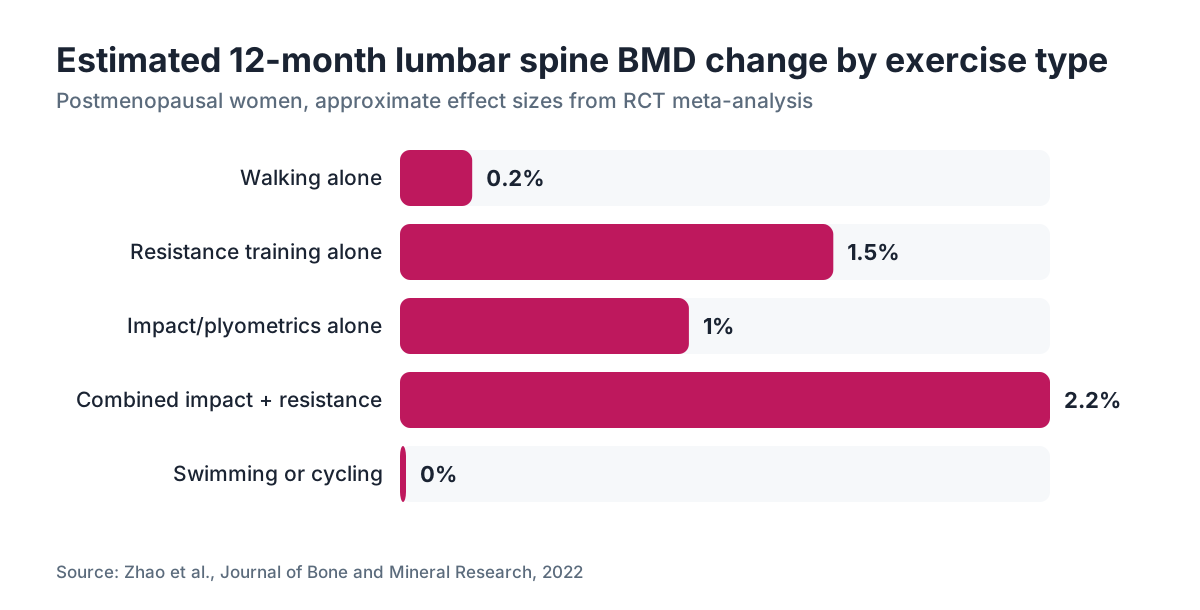
A 2022 meta-analysis in the Journal of Bone and Mineral Research reviewed 174 randomized controlled trials and found that combined impact plus resistance exercise was the most effective single exercise strategy for hip and lumbar spine BMD in postmenopausal women, outperforming either modality alone [5]. This is the most useful framing: the question is not which single exercise to do, it is how to combine modalities.
The LIFTMOR trial (2018) tested a high-intensity resistance and impact training protocol in postmenopausal women with low bone mass. The program involved deadlifts, overhead press, back squats, and jumping chin-ups performed at 80-85% of one-repetition maximum, twice weekly for 8 months. Participants in the exercise group showed statistically significant gains in lumbar spine BMD (+3.2%) and femoral neck BMD (+0.3%) versus controls who lost bone [6]. Supervised high-intensity training was also well-tolerated with no serious adverse events.
For women who cannot tolerate high-impact loading because of arthritis, fracture history, or severe osteoporosis, lower-impact resistance training still provides benefit. A slower timeline and smaller gains, but still meaningful.
| Exercise type | Lumbar spine BMD change (12 mo) | Hip/femoral neck BMD change | Notes | |---|---|---|---| | Walking alone | ~0 to +0.5% | ~0% | Insufficient stimulus in habituated walkers | | Resistance training alone | +1 to +2% | +0.5 to +1% | Must be progressive, not light weights | | Impact/plyometrics alone | +0.5 to +1.5% | +0.5 to +1.5% | Depends on baseline fitness and impact dose | | Combined impact + resistance | +1.5 to +3% | +0.5 to +2% | Best evidence base for postmenopausal women | | Swimming/cycling | minimal to 0 | minimal to 0 | Non-weight-bearing; add other modalities |
Sources: Zhao et al., JBMR 2022 [5]; Watson et al., BJSM 2018 [6].
What is the best exercise program for women with osteoporosis or osteopenia?
The starting point is your bone density test result and your fracture history. Those two pieces of information determine how aggressive you can safely be.
For women with osteopenia (T-score -1.0 to -2.4) and no prior fragility fractures, the evidence supports a moderately high-intensity program. The LIFTMOR protocol described above was designed for exactly this population and produced clinically meaningful results [6]. A reasonable template:
- 2-3 days per week of progressive resistance training: squats, deadlifts or trap-bar deadlifts, rows, overhead press. Start at a weight that is challenging at 8-10 reps, increase load when you can complete all sets with good form.
- 2-3 days per week of impact work: jogging, jumping rope, stair running, or a brief jump protocol (studies have used as few as 50 hops per day and seen BMD benefits over 6 months)
- Daily walking as baseline activity, minimum 30 minutes, but do not count it as your bone-building session
For women with established osteoporosis (T-score below -2.5) or a prior vertebral or hip fracture, the program needs modification. High spinal flexion under load (think: crunch with weight, seated row in deep trunk flexion) increases vertebral fracture risk and should be avoided [7]. The National Osteoporosis Foundation recommends working with a physical therapist to develop a safe program before progressing to independent training [7].
Modified program for osteoporosis:
- Resistance training emphasizing hip extension (hip hinges, bridges, leg press) and row variations performed with a neutral spine
- Avoid loaded spinal flexion and deep twisting under load
- Impact work at lower intensity: brisk walking with poles (Nordic walking), stair climbing, gentle hopping only if approved by a provider
- Balance training: single-leg stands, tandem walking, perturbation training, because falling is the proximate cause of fracture
Balance training cuts fall rates significantly. A Cochrane review found that exercise interventions reduced falls in older adults by 23% on average, and programs specifically targeting balance reduced fall-related fractures [8]. For women with osteoporosis, this is arguably as important as BMD itself.
How often do you need to exercise to see bone density results?
Frequency and consistency beat any single heroic session. Bone adaptation follows a minimum effective dose rule: you need enough stimulus, often enough, to stay above the remodeling threshold.
The research broadly supports 2-3 resistance training sessions per week with at least one rest day between sessions. Impact exercise can be done more frequently, though most bone-focused protocols use 3-5 days per week.
One nuance changes how you should schedule it. Bone responds to novel and varied loads better than repetitive identical loads. Animal research showed that distributing loading bouts throughout the day with rest intervals between them produced greater bone formation than the same total number of cycles performed all at once [9]. The practical implication for humans is that even short bouts of impact activity spread through the day, a few flights of stairs, a brief set of jumps before lunch, accumulate benefit.
How long before you see results? BMD changes measured by DXA take at least 6 months to appear, because the scan measures net mineral density and the remodeling cycle takes 3-6 months to complete one full turn. Do not judge a new exercise program by a 3-month DEXA. The 12-month scan is the meaningful one.
Consistency over years is what separates women who hold their bone mass through their 60s and 70s from those who don't. The gains from a 12-month program erode within 6-12 months of stopping [5]. This is a lifetime habit, not a course of treatment.
Does walking build bone density or is it overrated?
Walking gets enormous credit in general wellness messaging. For bone density specifically, some of that credit is deserved and some is not.
In previously sedentary women, starting a walking program produces measurable BMD improvements, particularly at weight-bearing sites like the femoral neck. The problem is that adaptation is fast. Within a few months, walking at the same pace and distance becomes the habitual load, and the osteogenic signal fades.
A systematic review in Osteoporosis International found that walking programs alone did not produce statistically significant improvements in hip or lumbar spine BMD in postmenopausal women compared to controls in most included trials [10]. The effect size was small and often not clinically meaningful.
Walking is still worth doing. It protects cardiovascular health, maintains leg strength and balance, keeps you out of sedentary patterns, and the fall-reduction benefit of regular walking is real. But if building or maintaining bone density is your main goal, walking alone is not the prescription. Think of it as your daily movement floor, not your bone intervention.
To make walking more osteogenic, you can increase pace to brisk (3.5-4.5 mph), add hills or stairs, use a weighted vest (studies have tested 4-10% of body weight in vests), or periodically break into a jog or add brief hopping intervals. Each of those modifications increases the ground-reaction force and makes the stimulus more novel.
How does menopause affect bone loss and how much can exercise help?
The drop in estrogen at menopause is the single biggest driver of bone loss in women. Estrogen suppresses osteoclast activity. When it falls, bone resorption accelerates, and women lose an estimated 20% of their total bone mass in the first 5-10 years after menopause [2]. The rate of loss is steepest in the first 2-3 years.
Exercise during this window matters, but it competes against a strong biological headwind. The studies showing 1-3% BMD gains from exercise are real, but a woman losing 2-3% per year from estrogen withdrawal is running to stay in place.
That is why the clinical conversation about bone health in perimenopause and early menopause cannot be limited to exercise alone. The North American Menopause Society states that "estrogen therapy remains the most effective treatment for prevention of postmenopausal bone loss" and that it is FDA-approved specifically for osteoporosis prevention [11]. For women who are candidates, hormone replacement therapy (particularly estrogen, with or without progesterone depending on uterine status) both slows bone resorption and appears to improve the bone's response to exercise.
Women using telehealth services like WomenRx to manage perimenopausal hormone therapy can ask their provider specifically about how HRT timing and bone outcomes fit together. Starting estrogen therapy in the first decade after menopause (the "timing hypothesis" window) appears to produce better bone and cardiovascular outcomes than starting later.
For women who cannot or choose not to use HRT, exercise remains the most impactful modifiable bone-protective behavior, and combining it with adequate calcium and vitamin D is the foundation. The goal is to preserve as much of the bone you built in your 20s and 30s as possible, and to slow the rate of loss to something your remodeling cycle can partially offset.
What exercises should you avoid if you have osteoporosis?
This question matters a lot and gets glossed over in many exercise guides. Not all movement is appropriate for women with established osteoporosis or prior vertebral fractures.
The spine, especially the thoracic and lumbar vertebrae, is most vulnerable to compression fractures when it is in flexion under load. The classic high-risk movement is any form of loaded forward bending: a crunch, a sit-up, bending over to pick something up with a rounded back, or twisting the spine sharply. Even seemingly benign actions like forceful coughing or sneezing have caused vertebral fractures in women with severe osteoporosis.
The American College of Sports Medicine and the National Osteoporosis Foundation both recommend avoiding [7]:
- High-impact activities if bone density is very low (T-score below -3.0 or prior fragility fracture)
- Spinal flexion under load
- Explosive trunk rotation under load
- Exercises that create significant risk of falling before balance is established
This does not mean women with osteoporosis should be sedentary. It means the program needs to be built around safe loading patterns: hip-dominant moves with a neutral spine, supported balance work, low-impact aerobic activity like walking or aquatic exercise, and gradual progression under supervision.
Physical therapists with geriatric or orthopedic specialization are the best resource for designing a program within these constraints. Many women with osteoporosis have never been referred for exercise programming and are either doing nothing or inadvertently doing high-risk movements.
Does strength training build bone density better than cardio?
For postmenopausal women, the evidence generally favors progressive resistance training over steady-state cardio for BMD outcomes. The 2022 meta-analysis in JBMR ranked combined impact plus resistance as the most effective strategy, with resistance training alone outperforming aerobic-only programs for both lumbar spine and femoral neck BMD [5].
The mechanism makes intuitive sense. Resistance training applies high compressive forces to bone at the attachment sites of contracting muscles and at the joints under load. A deadlift loads the lumbar spine and hip at once. A squat loads the femoral neck. Those are exactly the fracture sites you are trying to protect.
Cardio, especially running, does produce significant hip BMD benefits in women who start it young. Recreational runners consistently have higher hip bone density than sedentary controls [4]. But for a 55-year-old postmenopausal woman starting an exercise program, the evidence that progressive resistance training produces faster, more site-specific BMD gains than a new running program is fairly consistent.
The practical answer for most women: do both. A training week that includes 2-3 days of serious resistance work (weights that are actually challenging, not symbolic) plus 2-3 days of some form of impact cardio gives you the broadest bone protection and the best cardiovascular, metabolic, and functional fitness outcomes. If you can only pick one, resistance training has the stronger evidence for bone density specifically.
One practical note on GLP-1 medications: women using semaglutide or tirzepatide for weight loss (see semaglutide for weight loss) need to be especially intentional about resistance training. Rapid weight loss from any cause, including GLP-1s, can accelerate bone loss if muscle mass is not preserved [12]. That makes resistance training non-negotiable during any significant weight loss phase.
How much calcium and vitamin D do you need alongside exercise?
Exercise creates the stimulus for bone formation. Calcium and vitamin D supply the raw materials. Doing one without the other is inefficient.
The National Institutes of Health recommends 1,200 mg of calcium per day for women over 50, preferably from food sources. Dairy, fortified plant milks, leafy greens (kale, bok choy, broccoli), canned fish with bones, and tofu set with calcium sulfate are the best dietary sources [13]. Calcium supplements are an option when diet falls short, but there is ongoing discussion about cardiovascular risk at high supplemental doses, and most evidence suggests keeping supplemental calcium below 500-600 mg per dose and getting the rest from food.
Vitamin D is necessary for calcium absorption in the gut. The Endocrine Society guideline recommends that adults at risk for deficiency maintain serum 25-hydroxyvitamin D levels above 20 ng/mL (50 nmol/L) for bone health, with many bone specialists targeting 30-50 ng/mL [14]. Dietary intake of 1,500-2,000 IU per day from food plus supplements is often needed to maintain adequate levels, especially in women who live at northern latitudes or have limited sun exposure.
Protein also matters more than most people realize. Bone matrix is roughly 30% protein (primarily collagen), and adequate dietary protein supports both the matrix and the muscle mass needed to load bone effectively. Most adults over 50 benefit from protein intakes above the standard RDA of 0.8 g/kg, with many sports nutrition and aging researchers recommending 1.2-1.6 g/kg per day for active older adults.
Can exercise reverse osteoporosis or only slow it?
Honest answer: exercise alone rarely reverses osteoporosis. What it does reliably is slow the rate of loss, maintain or modestly improve BMD at specific sites, and dramatically reduce fracture risk through improved muscle strength, balance, and coordination.
The 1-3% gains in lumbar spine BMD seen in the best exercise trials are real but modest against a condition that may have already produced a T-score of -2.5. Pharmacologic therapies like bisphosphonates, denosumab, or anabolic agents like teriparatide and romosozumab produce larger BMD gains (5-15% or more over 2-3 years depending on the agent and site) and are the primary tools for women with established osteoporosis and high fracture risk [7].
That said, exercise adds to medication rather than competing with it. Women who exercise while on osteoporosis medications show better BMD responses than those who take medication alone. And for women with osteopenia who are not yet at the threshold for drug therapy, a serious exercise program combined with adequate calcium, vitamin D, and possibly HRT is a legitimate and evidence-based way to avoid medication altogether.
The most important thing exercise does for fracture risk is not on the DEXA scan. It is in your balance, reaction time, hip abductor strength, and ability to catch yourself when you stumble. Falls cause 90% of hip fractures. A woman who is strong, balanced, and well-coordinated has substantially lower fracture risk than her DEXA T-score alone would predict.
If you have not had a bone density scan and you are over 50 or have risk factors including early perimenopause, low body weight, smoking, or family history, getting a bone density test is the necessary first step before designing your exercise program.
What is a sample weekly exercise plan for bone health?
A realistic and evidence-informed weekly schedule for a postmenopausal woman with osteopenia and no prior fractures might look like this:
Monday: Resistance training, 45-60 minutes. Compound lower body focus: barbell or trap-bar deadlift, goblet squat, single-leg Romanian deadlift, hip thrust. 3 sets of 6-8 reps at 75-85% of 1RM. Core work in neutral spine positions (dead bug, pallof press).
Tuesday: Brisk walking 30-40 minutes plus balance work: single-leg stands on each foot for 30-60 seconds, tandem walking.
Wednesday: Resistance training, 45-60 minutes. Upper body and spine focus: bent-over row (neutral spine), overhead press, lat pulldown, farmer's carry. Same rep/set scheme.
Thursday: Impact cardio, 20-30 minutes. Options: jogging, jump rope intervals, stair running, jump protocol (10 sets of 10 hops with 30 seconds rest).
Friday: Rest or yoga/Pilates for mobility and flexibility.
Saturday: Longer weight-bearing activity: hiking, tennis, pickleball, or a longer run.
Sunday: Rest or light walking.
This is a template. The actual weights, intensities, and activity choices depend on your fitness level, joint health, and any fracture history. A certified personal trainer or physical therapist with bone health experience can take this framework and make it appropriate for your specific starting point.
Women using WomenRx for hormone or metabolic care can also ask how their current medications (HRT, GLP-1s, thyroid medications) fit with a bone health exercise plan, since some affect bone remodeling directly.
Frequently asked questions
Can you build bone density after 60?
Yes, though the gains are smaller than in younger women. Studies in women in their 60s and 70s show that progressive resistance training and impact exercise can produce 1-2% BMD gains at the lumbar spine and hip over 12 months. The more important goal at this age is preserving bone, building strength to prevent falls, and maintaining balance. All three are achievable well into the 70s and 80s with consistent training.
How long does it take for exercise to improve bone density?
Measurable changes on a DEXA scan take at least 6-12 months because the bone remodeling cycle takes 3-6 months to complete. A 6-month scan will often not yet show full benefit. Most exercise trials use 12 months as the minimum endpoint to assess BMD change. Strength and balance improvements happen faster, within 6-8 weeks of starting a resistance program, and those reduce fracture risk even before BMD changes are detectable.
Is yoga good for bone density?
Yoga has modest benefits for lumbar spine BMD based on a small number of trials, likely from the weight-bearing load through the arms in poses like downward dog and the spinal loading in standing poses. It is not a primary bone-building tool. Its stronger benefits are in flexibility, balance, posture, and fall prevention, all of which matter for fracture risk. Use it as a complement to resistance training and impact work, not a substitute.
What is the best exercise for hip bone density specifically?
Hip-loading exercises with the highest evidence for femoral neck BMD are weighted squats, deadlifts, lunges, hip thrusts, and impact activities like jumping and running. These apply both compressive load and muscle-pull forces to the proximal femur. The LIFTMOR trial found statistically significant femoral neck BMD gains from a twice-weekly program of squats, deadlifts, and overhead press at high intensity in postmenopausal women over 8 months.
Does jumping help bone density?
Yes. Jumping produces ground-reaction forces 3-5 times body weight, well above the threshold for osteogenic stimulus. Studies have tested protocols as simple as 10 sets of 10 hops per day and found significant hip BMD improvements over 6 months in premenopausal women. In postmenopausal women the effect is smaller but present. Jumping is not appropriate for women with established osteoporosis or prior fractures without medical clearance.
Is swimming good for bone density?
Swimming is not effective for bone density because it is not weight-bearing. Multiple studies show competitive swimmers have similar or lower hip and lumbar BMD compared to sedentary controls. Swimming is excellent for cardiovascular fitness, joint health, and muscle endurance. If it is your primary exercise, add resistance training and some form of impact activity on separate days to get the bone-building stimulus swimming cannot provide.
How does a weighted vest help bone density?
A weighted vest increases the load your skeleton carries during walking, stair climbing, or other weight-bearing activities, raising the mechanical stimulus above your habitual threshold. Studies have used vests loaded at 4-10% of body weight. A 2003 RCT found that postmenopausal women who walked while wearing a weighted vest maintained hip BMD while controls lost bone. It is a practical way to make walking more osteogenic without changing the activity itself.
What exercises are safe for spinal osteoporosis?
Safe choices include hip-dominant resistance exercises with a neutral spine (hip hinge, hip thrust, leg press), walking, light impact if cleared by a provider, and balance training. Avoid loaded spinal flexion (crunches, sit-ups, toe touches under load), heavy trunk rotation, and any exercise with significant fall risk. Working with a physical therapist experienced in osteoporosis is the safest path to building a program that protects rather than risks the spine.
Does resistance training build bone as well as weight-bearing cardio?
For postmenopausal women, the evidence shows resistance training alone produces similar or greater BMD gains at the lumbar spine and hip compared to weight-bearing aerobic exercise alone. The best outcomes come from combining both. A 2022 meta-analysis of 174 RCTs found combined impact plus resistance training was the most effective exercise strategy for BMD in postmenopausal women. If you can only do one, resistance training has the stronger site-specific bone evidence.
Can exercise reduce fracture risk even if it does not improve my T-score?
Yes, significantly. Falls cause approximately 90% of hip fractures, and exercise reduces fall risk through improved balance, reaction time, hip abductor strength, and coordination. A Cochrane review found exercise programs reduced falls in older adults by about 23% on average. You can have a T-score of -2.5 and dramatically lower your actual fracture risk through consistent strength and balance training, independent of what happens on your next DEXA scan.
How does estrogen loss at menopause affect bone density and can exercise compensate?
Estrogen suppresses osteoclast activity. When it falls at menopause, bone resorption accelerates and women can lose 2-3% of trabecular bone per year in the first few years after their final period. Exercise produces gains of 1-3% over 12 months with a good program, so it partially but not fully compensates. For women losing bone rapidly, estrogen therapy is the most effective prevention tool per NAMS guidelines, and exercise works best as an addition rather than a replacement.
Do GLP-1 medications like semaglutide affect bone density?
Rapid weight loss from any cause, including GLP-1 medications, can accelerate bone loss because bone adapts its mass to mechanical load, and lower body weight means lower habitual load. Early data from GLP-1 trials suggest BMD changes are modest but present. Women using semaglutide or similar medications for weight loss should prioritize progressive resistance training throughout their weight loss period to maintain muscle mass and preserve the mechanical stimulus that keeps bone density stable.
How do I know if my exercise program is actually working for my bones?
A follow-up DEXA scan at 12 months is the standard way to assess BMD change. Changes under 6 months are often within the scan's measurement error range and should not be used to judge a program. Other meaningful indicators that are available sooner include improved strength (you are lifting more weight), better balance (you can hold a single-leg stand longer), and reduced falls. Talk to your provider about the right scan interval for your baseline risk category.
Sources
- NASA Technical Reports Server, Disuse Osteoporosis in Spaceflight
- Nichols JF et al., Bone mineral density in female high school athletes, Journal of Pediatrics 2007
- Zhao R et al., Journal of Bone and Mineral Research, 2022, meta-analysis of 174 RCTs on exercise and BMD
- Watson SL et al., LIFTMOR trial, British Journal of Sports Medicine, 2018
- National Osteoporosis Foundation, Clinician's Guide to Prevention and Treatment of Osteoporosis
- Sherrington C et al., Cochrane Database of Systematic Reviews, Exercise for preventing falls in older people
- Robling AG et al., Journal of Bone and Mineral Research, 2002, Distribution of mechanical loading and bone formation
- Martyn-St James M, Carroll S, Osteoporosis International 2008, systematic review of walking and BMD in postmenopausal women
- North American Menopause Society (NAMS), Menopause Practice: A Clinician's Guide, 2022
- NIH Office of Dietary Supplements, Calcium Fact Sheet for Health Professionals
- Endocrine Society Clinical Practice Guideline, Vitamin D Deficiency, Journal of Clinical Endocrinology and Metabolism 2011
- Villareal DT et al., Exercise-induced weight loss and bone density, Obesity 2019