Blood work for perimenopause: which tests actually matter
TL;DR: No single blood test diagnoses perimenopause. A targeted panel covering FSH, estradiol, TSH, a metabolic panel, and a lipid panel gives your clinician real data to work with. FSH above 10 IU/L on two draws at least a month apart, combined with irregular cycles and symptoms, is the most reliable lab signal. Results alone never tell the whole story. Your symptom picture matters just as much.
Can blood work actually diagnose perimenopause?
Sort of, but not cleanly. Perimenopause is a clinical diagnosis, meaning your doctor weighs your symptoms, your cycle changes, and your age together before landing on it. Labs support that picture. They don't replace it.
The reason a single blood draw falls short is that hormone levels swing wildly during perimenopause. Estradiol can look normal in the morning and crash by afternoon. FSH can read high one month and perfectly normal the next, especially in early perimenopause when the ovaries still fire sporadically. The North American Menopause Society (NAMS) states explicitly that "a single FSH measurement is not sufficient to diagnose menopause or perimenopause in women still having menstrual cycles" [1].
What blood work does well is rule out other causes of your symptoms (thyroid disease, anemia, diabetes), confirm that hormones are shifting in the expected direction, and give you a baseline so future draws show real change. That's genuinely useful, even if it's not a single definitive answer.
Which blood tests should you get for perimenopause?
A thorough perimenopause panel usually includes the tests below. Most clinicians order them together at a single morning draw.
FSH (Follicle-Stimulating Hormone) FSH is the most diagnostically useful single marker. As ovarian function declines, the pituitary gland pumps out more FSH trying to stimulate the ovaries. A level consistently above 10 IU/L in a woman still cycling suggests perimenopause is underway; a level above 30-40 IU/L on two draws at least four to six weeks apart, in the absence of a period for twelve months, is the conventional threshold for menopause [1]. Timing matters: ideally draw FSH on day 2-3 of your cycle if your cycles are still regular.
Estradiol (E2) Estradiol is the dominant estrogen during reproductive years. In perimenopause it becomes erratic before it declines, so a single low number is suggestive but a single normal number means little. Most labs report the normal premenopausal range as roughly 15-350 pg/mL depending on cycle phase; postmenopausal levels are typically below 10-20 pg/mL [2]. Your clinician cares less about one number than about the pattern across draws and how it maps onto your symptoms.
TSH (Thyroid-Stimulating Hormone) This one is non-negotiable. Hypothyroidism and hyperthyroidism both mimic perimenopause almost perfectly: fatigue, irregular periods, mood changes, weight shifts, heat intolerance. The American Thyroid Association recommends testing TSH every five years in adults, but any woman presenting with perimenopausal symptoms should have it checked first, because treating thyroid disease is far simpler than managing the hormonal transition and the overlap is a real clinical trap [3]. The normal TSH range is generally 0.4-4.0 mIU/L, though some clinicians treat functional hypothyroid symptoms at levels above 2.5 mIU/L.
Complete Blood Count (CBC) Heavy, irregular periods are classic perimenopause. They can also produce iron-deficiency anemia without anyone noticing until fatigue becomes disabling. A CBC catches that. It also flags other causes of fatigue and cognitive fog that have nothing to do with hormones.
Complete Metabolic Panel (CMP) The CMP checks fasting glucose, kidney function, liver enzymes, and electrolytes. Estrogen has real protective effects on insulin sensitivity; as estrogen drops, fasting glucose and insulin resistance can worsen. Catching rising glucose early matters a lot for long-term cardiometabolic health [4].
Fasting Lipid Panel Women often skip this in their 40s and regret it in their 50s. Estrogen keeps LDL low and HDL relatively high. As estrogen drops in perimenopause, LDL rises, triglycerides can climb, and cardiovascular risk shifts meaningfully. The American Heart Association considers women's risk to accelerate at menopause, and some data show LDL rising 10-15% across the perimenopausal transition [5]. A baseline lipid panel now gives you something to compare against.
AMH (Anti-Müllerian Hormone) AMH reflects the size of your remaining egg supply (ovarian reserve). It declines steadily with age and drops sharply in late perimenopause. Some clinicians include it to gauge where you are in the transition, especially if your cycles are still fairly regular but you're symptomatic. It doesn't fluctuate with cycle phase the way FSH does, which is one advantage. Its limitation: low AMH doesn't tell you when your last period will be, only that ovarian reserve is falling.
Testosterone (Total and Free) Often overlooked. Testosterone declines gradually through the 30s and 40s in women; some women notice loss of libido, motivation, and muscle mass that tracks with this decline rather than with estradiol specifically. If low libido or body composition changes are among your chief complaints, asking for total and free testosterone is reasonable. The Endocrine Society's clinical practice guideline on female androgen therapy notes there is no validated lower limit of normal testosterone for women, which makes interpretation genuinely tricky, but a pattern over time is still informative [6].
DHEA-S DHEA-S is an adrenal androgen, a precursor to testosterone and estrogen. It peaks in the mid-20s and declines with age in everyone. Some clinicians include it when assessing the adrenal contribution to androgen decline. Its clinical value is debated. I'd call it optional unless your clinician has a specific reason to look.
Progesterone Progesterone drops early in perimenopause, often before estradiol does, contributing to irregular cycles and sleep disruption. Measuring it mid-luteal phase (roughly day 19-22 of a 28-day cycle) confirms whether ovulation is happening. A mid-luteal progesterone above 3 ng/mL suggests ovulation occurred; below 3 ng/mL suggests an anovulatory cycle. More and more cycles become anovulatory as perimenopause progresses. If you're reading more about progesterone and what low levels mean for sleep and mood, that context matters here. [6]
What is a normal FSH level in perimenopause?
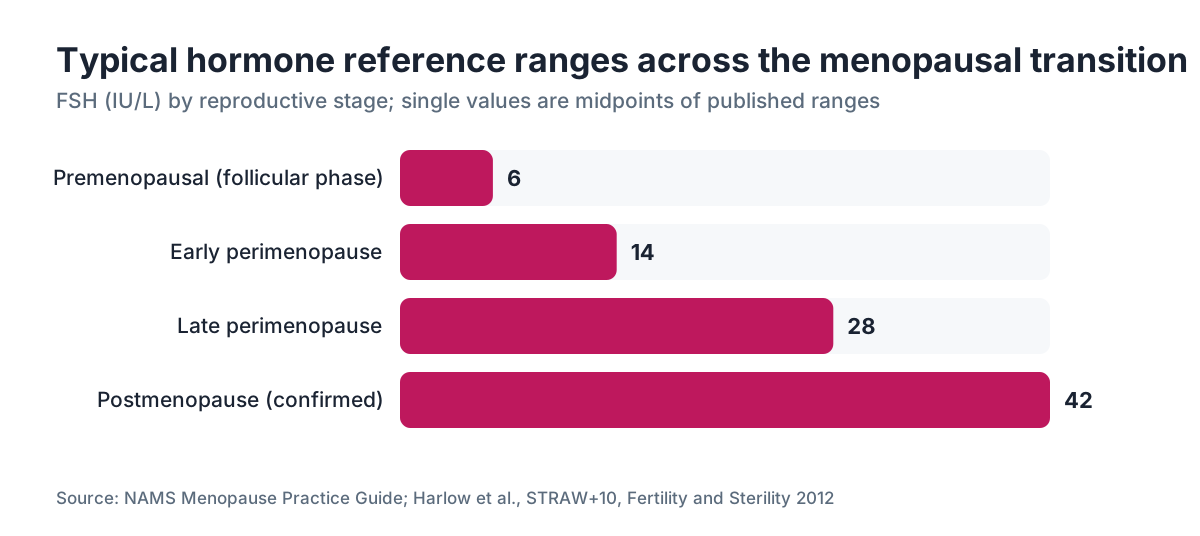
FSH doesn't have a single "perimenopause" threshold, because the transition is a spectrum, not a moment. Here are the broadly used reference ranges:
| Stage | Typical FSH Range | |---|---| | Premenopausal (follicular phase) | 3-10 IU/L | | Early perimenopause | 10-20 IU/L | | Late perimenopause | 20-40 IU/L | | Postmenopause (confirmed) | >30-40 IU/L on two draws |
These ranges vary by lab and assay, so always read your result against the reference range your specific laboratory prints on the report [1]. A result of 14 IU/L in a 47-year-old with hot flashes and skipped periods means something real even if it's technically borderline.
One timing note that changes everything: FSH surges at ovulation and spikes in the follicular phase of an early cycle. Drawing it on day 2 or 3 of your period gives the most stable, interpretable number. If you no longer have regular periods, timing matters less, but a morning draw is still preferred.
When should you get perimenopause blood work done?
The short answer: when symptoms appear, regardless of age. Perimenopause can begin as early as the late 30s in some women, though the average onset is around 47, with menopause arriving on average at 51 [11]. Waiting until 50 to check your labs because you think you're too young is a common mistake.
Symptoms that should prompt a lab draw include irregular or skipped periods, new hot flashes or night sweats, sleep disruption without another cause, mood changes or anxiety that feel physically different from your usual baseline, brain fog, vaginal dryness, or unexplained weight gain centered in the abdomen.
For timing within your cycle: if you're still cycling, day 2-3 is ideal for FSH and estradiol. Progesterone is best measured day 19-22. TSH, CBC, CMP, and lipids can be drawn any day, fasting for the glucose and lipid components. If your periods are wildly irregular, draw FSH and estradiol whenever you can and repeat them six to eight weeks later to see the pattern.
Women who start hormone therapy should recheck estradiol roughly 6-8 weeks after starting or adjusting a dose to confirm absorption and target range. That's different from the diagnostic draw. It's a monitoring draw.
What do your results mean and what happens next?
Labs rarely hand you a clean answer, and that's frustrating. Here's how to read the picture.
If your FSH is elevated (above 10-20 IU/L), estradiol is low-normal or fluctuating, and you're symptomatic, that's a consistent picture of perimenopause. Your clinician may recommend starting hormone replacement therapy or a lower-dose hormonal option depending on your symptom severity and personal history.
If your TSH is out of range, that gets treated first before anyone concludes your symptoms are hormonal. Thyroid issues are common (about 5% of adult women have overt hypothyroidism; subclinical hypothyroidism affects another 5-10%) [3], and treating them can resolve fatigue, mood changes, and cycle irregularities entirely.
If your fasting glucose is creeping up (100-125 mg/dL is impaired fasting glucose; 126 mg/dL on two draws is diabetes), that flags metabolic risk that needs addressing regardless of where your hormones land [12]. This is where some women begin seriously considering options like GLP-1 medications for cardiometabolic protection. If that's on your radar, the comparison of semaglutide vs tirzepatide may be relevant context.
If your lipids are worsening (LDL above 130 mg/dL, triglycerides above 150 mg/dL), that's more than a cardiology problem. Estrogen's protective lipid effects are real, and their loss during the menopausal transition speeds up cardiovascular risk for women who were previously low risk. This finding strengthens the case for discussing hormone therapy timing, given the data suggesting cardiovascular benefit when HRT starts within ten years of menopause onset or before age 60 [8].
If your CBC shows low hemoglobin (below 12 g/dL in women) alongside low ferritin (below 12-15 ng/mL), iron-deficiency anemia is likely. Heavy perimenopausal periods are a leading cause of anemia in this age group, and it's very treatable.
At WomenRx, clinicians read your full lab panel alongside your symptom history before recommending any treatment, because the numbers alone never tell the complete story.
A word on normal results with real symptoms: don't let a "normal" FSH convince you that you aren't perimenopausal. Early perimenopause frequently produces fully normal FSH values. The symptom pattern often precedes lab changes by one to three years. If your clinician dismisses you because your FSH is 8, bring your symptom log and ask for a repeat draw in six to eight weeks.
Does perimenopause blood work show up on a standard physical?
Sometimes, but usually not completely. A standard annual physical in the US commonly includes a CBC, CMP, and lipid panel. What it rarely includes without a specific request: FSH, estradiol, progesterone, AMH, and testosterone. TSH may or may not be included depending on your clinician's practice.
This gap is one of the most consistent frustrations women report in perimenopause care. You get a clean bill of health from your annual labs and still feel terrible, because the hormonal markers aren't in the standard order set.
The fix is simple: ask explicitly. Before your next appointment, write down your symptoms with dates and tell your doctor you want a hormonal panel that includes FSH, estradiol, and progesterone in addition to the standard metabolic and lipid work. Most clinicians will order this without resistance once they understand what you're asking for. If you're using telehealth for hormone care, a good platform orders the full panel before your first consultation.
Insurance coverage varies. FSH and estradiol are typically covered under standard laboratory benefits when ordered for an appropriate indication. AMH and testosterone may require prior authorization or be billed out of pocket; costs run roughly $30-100 per test at commercial labs, or you can use a direct-to-consumer lab service for a bundled panel.
How does perimenopause differ from menopause on lab work?
The defining clinical criterion for menopause is twelve consecutive months without a period. Once that's confirmed, you're postmenopausal, and lab work shifts from diagnostic to monitoring.
On labs, postmenopausal women typically show FSH consistently above 30-40 IU/L and estradiol below 10-20 pg/mL, often below 10 [1]. Perimenopause, by contrast, shows erratic swings: estradiol might be 80 pg/mL one draw and 18 pg/mL two months later, and FSH might jump from 12 to 35 within a year.
AMH is usually undetectable or near-zero by the time postmenopause is established. Luteal-phase progesterone is low or undetectable because ovulation has stopped.
If you want to understand the full timeline of the menopausal transition, including when does menopause start and what perimenopause age typically looks like, those are worthwhile reads alongside your lab results.
A practical table:
| Marker | Premenopausal | Perimenopause | Postmenopause | |---|---|---|---| | FSH (IU/L) | 3-10 | 10-40, fluctuating | >30-40, stable | | Estradiol (pg/mL) | 15-350 (cycle-dependent) | Variable, declining trend | <10-20 | | AMH (ng/mL) | 1-3+ | <1, declining | <0.1 or undetectable | | Mid-luteal progesterone (ng/mL) | >3 | Variable, often <3 | <1 |
What about bone density and other non-blood tests in perimenopause?
Blood work is only part of the picture. Estrogen is the primary brake on bone resorption; once it drops, bone density can fall faster than most women expect.
The US Preventive Services Task Force recommends a DEXA scan (bone mineral density test) for all women at age 65, and earlier screening for postmenopausal women under 65 who have risk factors like low body weight, fracture history, smoking, or prolonged glucocorticoid use [9]. Many clinicians begin screening perimenopausal women with risk factors in their late 40s or early 50s. If you're approaching that window, reading about bone density tests is worthwhile before your next physical.
Vitamin D (25-OH vitamin D) is worth checking in your blood panel even though it's not a hormone per se. Vitamin D sufficiency (generally 30-50 ng/mL) matters for bone health, immune function, and mood, and deficiency is very common in women at northern latitudes. A level below 20 ng/mL is deficient by most standards; supplementation is cheap and effective.
Blood pressure and fasting glucose round out the cardiometabolic picture that perimenopause makes more urgent.
How often should perimenopause labs be repeated?
There's no universal protocol, because perimenopause varies so much between women. A reasonable framework:
Initial diagnostic panel: draw all of the above once symptoms start. Repeat FSH and estradiol 6-8 weeks later to see the pattern rather than a single data point.
If you start hormone therapy (an estrogen patch, oral progesterone, or another formulation): recheck estradiol and sometimes progesterone 6-8 weeks after starting, then again after any dose change. Once stable, annual labs are usually enough.
Metabolic monitoring (CBC, CMP, lipids): annually, especially if glucose or lipids were borderline at baseline. TSH every 1-2 years if thyroid was normal initially; sooner if symptoms shift.
Bone density (DEXA): every 1-2 years if you're on hormone therapy or have known bone loss; every 2-3 years otherwise once you begin screening.
Testosterone: if being used therapeutically, check 4-6 weeks after starting and then every 6 months to avoid supraphysiologic levels.
Women who have surgical menopause (oophorectomy before natural menopause) go through an abrupt hormonal change rather than a gradual one, and their monitoring needs to be more frequent in the first year after surgery because the transition is faster and often more severe.
Can you order perimenopause blood tests yourself, without a doctor?
Yes, in most US states you can order your own labs through direct-to-consumer (DTC) laboratory services. Companies like Quest Diagnostics and LabCorp operate walk-in services, and several online platforms let you order a panel, visit a local draw site, and get results in your patient portal without a physician order.
The advantage: you don't have to fight for an appointment or justify your symptoms before getting data. The limitation: you get results without clinical context, which can be genuinely scary if you see an FSH of 38 and don't know what it means for your age and symptoms.
Costs for a DTC perimenopause panel typically run $100-250 for the core hormonal markers, depending on the service and whether you add metabolic and thyroid markers. The same labs billed through insurance with a physician order are often free or cost-share only.
If you go the DTC route, plan to review results with a clinician who has experience in hormonal health, rather than a general internist who may not be comfortable interpreting mid-range perimenopausal FSH or the AMH decline curve. Telehealth platforms specializing in women's hormonal health, including WomenRx, will typically review externally ordered labs as part of a consultation.
One thing to know: some states (New York, New Jersey, Maryland, and a few others) restrict certain DTC lab orders. Check your state's rules before ordering.
What if all your labs are normal but you still feel perimenopausal?
This is one of the most common and most dismissed experiences in women's healthcare. You come in with hot flashes, disrupted sleep, brain fog, and a 47-day cycle after years of 28-day cycles, and the FSH comes back at 7.2 and estradiol at 94. The report says normal.
Here's the clinical reality: labs can lag symptoms by months to years in early perimenopause. Estrogen's decline in perimenopause is not a smooth downward slope. It's chaotic, with large spikes and crashes. That crash on day 18 of your cycle that's causing your 3 a.m. wake-ups won't show up in a morning fasting draw on day 2.
The Stages of Reproductive Aging Workshop (STRAW+10) criteria, published in Fertility and Sterility and recognized by NAMS and the Endocrine Society, explicitly acknowledge that perimenopausal symptoms can precede consistent hormonal changes in lab values [7]. A woman with irregular cycles and classic symptoms is in perimenopause by clinical definition even if a single FSH draw is normal.
If this is your situation: track your symptoms with dates and cycle length, request a repeat draw in six to eight weeks (ideally at the same cycle day), and specifically ask for AMH, which may show declining ovarian reserve before FSH climbs. If your clinician is still dismissing you, a second opinion from a menopause-specialized provider is entirely reasonable. The menopause specialist network through NAMS (menopause.org) is a legitimate starting point for finding someone with real expertise in this transition.
Frequently asked questions
What blood tests confirm perimenopause?
No single test confirms perimenopause because it's a clinical diagnosis. The most useful combination is FSH (elevated above 10-20 IU/L on two draws six or more weeks apart), estradiol (variable, declining trend), and AMH (low). These findings alongside irregular cycles and symptoms like hot flashes give a clinician a strong picture. TSH, CBC, and metabolic labs are also part of the workup to rule out other causes.
What FSH level indicates perimenopause?
An FSH above 10 IU/L in a woman still having menstrual cycles suggests perimenopause may be starting, especially with symptoms. Above 20-30 IU/L on two separate draws points toward late perimenopause. Confirmed menopause is generally defined as FSH above 30-40 IU/L after twelve months without a period. Always interpret results against your lab's own reference range and your clinical picture.
Can perimenopause blood work look normal?
Yes, very commonly. Early perimenopause frequently produces FSH and estradiol values that fall within standard premenopausal reference ranges. Hormones fluctuate so much during the transition that a single draw can look completely normal even when the pattern over time clearly shows decline. Symptoms often precede consistent lab changes by one to three years, so a normal result does not rule out perimenopause.
What is a normal estradiol level during perimenopause?
There is no single normal estradiol level during perimenopause because levels fluctuate dramatically. Before perimenopause, estradiol ranges from roughly 15-350 pg/mL depending on cycle phase. In perimenopause, it may swing from above 200 to below 20 pg/mL within weeks. Postmenopausal women typically run below 10-20 pg/mL. The trend across multiple draws matters far more than any one number.
Should I check my AMH during perimenopause?
AMH (Anti-Müllerian Hormone) can be useful because it reflects ovarian reserve and doesn't fluctuate with cycle phase the way FSH does. Low or very low AMH in a symptomatic woman in her 40s supports a perimenopause picture. Its main limitation is that it can't predict when your last period will be. It's worth requesting if your cycles are still regular but you're symptomatic and your FSH looks borderline.
Does perimenopause blood work show up in a routine physical?
Usually not completely. A standard annual physical typically includes CBC, metabolic panel, and lipids but rarely orders FSH, estradiol, progesterone, AMH, or testosterone without a specific request. If you're having perimenopausal symptoms, ask your clinician explicitly to add hormonal markers to your panel before your appointment. Most clinicians will agree once you describe your symptoms.
How do I time my blood draw during perimenopause?
If you're still cycling, draw FSH and estradiol on day 2 or 3 of your period (day 1 is the first day of flow). Progesterone is best checked mid-luteal phase, around day 19-22 of a 28-day cycle. TSH, CBC, CMP, and fasting lipids can be drawn any morning fasting. If your periods are irregular, draw whenever you can and repeat six to eight weeks later to see a pattern.
How much does perimenopause blood work cost?
Through insurance with a physician order, most labs (CBC, CMP, TSH, lipids) are free or low cost-share. FSH and estradiol are generally covered when ordered for an appropriate indication. AMH and testosterone may require prior authorization or be billed out of pocket. Direct-to-consumer lab services charge roughly $100-250 for a bundled hormonal panel, without insurance. Always check your specific plan's laboratory benefits.
What does low progesterone in perimenopause mean?
Low mid-luteal progesterone (below 3 ng/mL) usually means an ovulatory cycle didn't occur. As perimenopause progresses, more cycles become anovulatory and progesterone production drops. This can cause irregular cycles, worse PMS-like symptoms, poor sleep, and heavy bleeding. Low progesterone is also one of the earliest hormonal shifts in the perimenopausal transition, sometimes appearing before estradiol clearly declines.
Should I test testosterone during perimenopause?
Yes, if loss of libido, motivation, or muscle mass is among your chief complaints. Testosterone declines gradually through the 30s and 40s in women. Total and free testosterone help identify whether this may be contributing. Interpretation is tricky because there is no validated lower limit of normal testosterone for women according to the Endocrine Society, but a pattern across draws alongside symptoms is still clinically informative.
Can perimenopause cause elevated blood sugar?
Yes. Estrogen has a meaningful protective effect on insulin sensitivity. As estrogen declines in perimenopause, insulin resistance can worsen and fasting glucose tends to rise in many women. This is one reason a fasting glucose or full metabolic panel is part of a good perimenopause workup. Impaired fasting glucose is 100-125 mg/dL; diabetes is 126 mg/dL or above on two draws.
What is the STRAW+10 criteria and how does it relate to lab results?
STRAW+10 (Stages of Reproductive Aging Workshop) is the international framework that defines the stages of the menopausal transition using cycle regularity, FSH levels, and AMH. It was published in Fertility and Sterility in 2012 and is endorsed by NAMS and the Endocrine Society. It recognizes that symptoms can precede lab changes, validating a clinical diagnosis even when FSH appears normal.
Does being on hormonal birth control affect perimenopause blood tests?
Yes, significantly. Hormonal contraceptives suppress your own FSH and estrogen production, so FSH and estradiol drawn while on the pill, patch, or hormonal IUD do not reflect your natural ovarian function. If you want an accurate hormonal picture, labs need to be drawn after stopping hormonal contraception, which can take two to three months for FSH to reflect your true baseline.
What is the difference between perimenopause and premature ovarian insufficiency on labs?
Premature ovarian insufficiency (POI) is diagnosed when FSH is consistently above 40 IU/L in a woman under 40 with absent or irregular periods for at least four months. It differs from perimenopause by age of onset and has specific implications for bone, cardiovascular, and cognitive health. Any woman under 40 with elevated FSH and irregular cycles needs a POI evaluation, not a routine perimenopause workup.
Sources
- North American Menopause Society (NAMS), Menopause Practice: A Clinician's Guide
- MedlinePlus (NIH/NLM), Estradiol blood test
- American Thyroid Association, Hypothyroidism Brochure
- NIH National Institute of Diabetes and Digestive and Kidney Diseases, Insulin Resistance and Prediabetes
- American Heart Association, Menopause and Heart Disease
- Endocrine Society Clinical Practice Guideline, Androgen Therapy in Women (Journal of Clinical Endocrinology and Metabolism, 2014)
- Harlow SD et al., STRAW+10 Collaborative Group, Fertility and Sterility 2012
- The NAMS 2022 Hormone Therapy Position Statement, Menopause journal
- US Preventive Services Task Force, Osteoporosis to Prevent Fractures: Screening (2018)
- MedlinePlus (NIH/NLM), FSH blood test
- Office on Women's Health (DHHS), Menopause basics
- CDC, Prediabetes: Your Chance to Prevent Type 2 Diabetes