Black cohosh for menopause: what the evidence actually says
TL;DR: Black cohosh (Actaea racemosa) modestly reduces hot flash frequency and severity in some women, with the best trials showing roughly a 26% reduction compared to placebo. It does not contain estrogen, its mechanism is still debated, and NAMS says evidence is inconsistent. It is reasonable for mild symptoms if you cannot or will not use hormone therapy, but it is not a like-for-like substitute for HRT.
What is black cohosh and why do women use it for menopause?
Black cohosh (Actaea racemosa, also sold under its old botanical name Cimicifuga racemosa) is a flowering plant native to eastern North America. Indigenous peoples used its root for a range of complaints long before European settlers arrived. By the 1950s, a German pharmaceutical company had standardized a root extract called Remifemin, and that product is still the most studied commercial preparation on the market today.
Women reach for it because hot flashes are miserable and not every woman can take, wants, or can afford hormone replacement therapy. The supplement is sold over the counter, it does not require a prescription, and the marketing around it has been aggressive for decades. That makes it worth understanding carefully, because the gap between what the marketing implies and what the clinical data actually show is significant.
The key thing to know upfront: black cohosh is not a phytoestrogen. It does not contain estrogen or estrogen-like compounds in the way soy isoflavones do [1]. Early theories that it acted on estrogen receptors have largely been discredited. Current research points toward serotonergic and dopaminergic pathways as the more likely mechanism, though nobody has pinned this down definitively [2]. That distinction matters if you are worried about estrogen-sensitive conditions.
For context on what menopause actually does to the body, and why vasomotor symptoms like hot flashes happen in the first place, that background is worth reading before evaluating any treatment.
Does black cohosh actually reduce hot flashes? What do the trials show?
The honest answer: evidence is mixed, leaning toward a modest benefit over placebo, with study quality all over the map.
The largest and most rigorous independent trial was the NIH-funded Black Cohosh and Multibotanical Trial (part of the Herbal Alternatives for Menopause or HALT study), published in the Annals of Internal Medicine in 2006. That trial enrolled 351 women over 12 months and found that black cohosh alone did not significantly outperform placebo on vasomotor symptoms [3]. The researchers concluded, in their words, that "neither black cohosh nor a multibotanical supplement significantly reduced the number of vasomotor symptoms."
Smaller European trials, many using the Remifemin formulation, have found more favorable results. A 2010 meta-analysis pooling 16 randomized trials found a statistically significant reduction in hot flash frequency, roughly a 26% decrease versus placebo, though the authors flagged high heterogeneity across studies and called for longer, better-designed trials [4].
A few things explain the inconsistency. Different preparations, extraction methods, doses, and study populations all produce different results. Remifemin is standardized to 1 mg triterpene glycosides per 20 mg tablet. Many generic store-brand products are not standardized to anything meaningful, which means you may be taking a product with almost none of the active fraction.
The North American Menopause Society (NAMS) reviewed the full body of evidence in its 2023 position statement and concluded that black cohosh "may have a small benefit on vasomotor symptoms" but that evidence remains inconsistent and it should not be considered a substitute for hormone therapy [5]. That is a carefully worded statement from people who read every trial. Take it seriously.
How does black cohosh compare to hormone therapy for hot flashes?
Head-to-head comparisons are rare, which is itself telling.
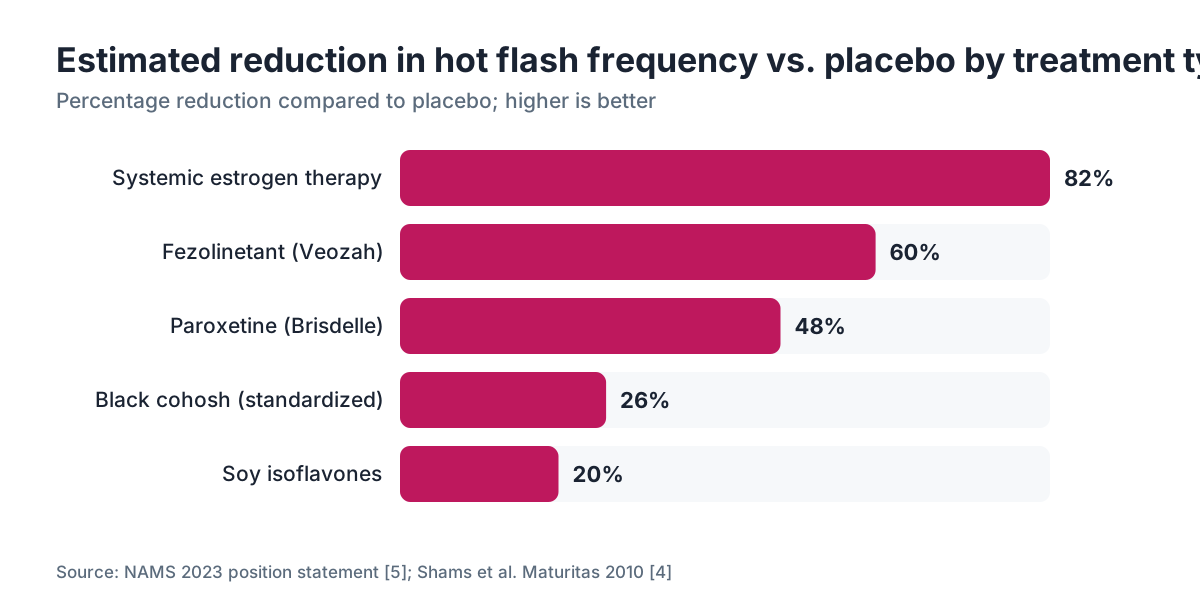
The most frequently cited comparison comes from a 2005 trial that randomized women to either Remifemin or low-dose transdermal estradiol. Both groups improved, but the estrogen group showed meaningfully greater reductions in the Kupperman index (a composite symptom score) by week 12 [6]. Estrogen therapy is still the most effective treatment for vasomotor symptoms by a wide margin. NAMS states that hormone therapy remains the most effective treatment for hot flashes, with studies showing 75 to 90% reductions in frequency compared to placebo.
The table below compares what the evidence shows across options commonly discussed for menopause symptom relief.
| Treatment | Typical reduction in hot flash frequency vs. placebo | Requires prescription? | Key caveat | |---|---|---|---| | Estrogen therapy (systemic) | 75-90% [5] | Yes | Not appropriate for some women with history of breast cancer, clots | | Combined estrogen + progesterone | 75-90% [5] | Yes | Same contraindications; progestogen needed with uterus intact | | Black cohosh (standardized) | ~26% [4] | No | Modest, inconsistent evidence | | Soy isoflavones | ~20% [5] | No | Very modest, evidence weak | | Paroxetine (Brisdelle) | ~33-64% [5] | Yes | Only FDA-approved non-hormonal Rx for hot flashes | | Fezolinetant (Veozah) | ~60% [5] | Yes | Newer NK3 antagonist, approved May 2023 |
If you cannot take estrogen for medical reasons, black cohosh sits in a reasonable middle tier alongside other non-hormonal options. But if you are avoiding HRT because you are nervous about it based on outdated readings of the early 2000s WHI data, revisit the current evidence on hormone replacement therapy before settling for a less effective option.
What is the right dose of black cohosh and how long can you take it?
The dose used in most positive clinical trials is 20 mg twice daily of a standardized root extract (standardized to 1 mg triterpene glycosides per 20 mg tablet), which is the formulation used in Remifemin [6]. Some trials used 40 mg once daily. No trial has convincingly shown that higher doses work better, and doses above 40 mg per day have not been systematically studied for safety.
Duration is a real concern. Most clinical trials ran for 12 to 24 weeks. The HALT trial ran for 12 months, which is the longest well-designed independent study available [3]. There is very little safety data beyond one year of continuous use. German health authorities (the Commission E, the equivalent of a regulatory body for herbal medicines) historically recommended limiting use to six months, though that recommendation has softened somewhat as longer-term data has accumulated without clear signals of new harm.
NAMS currently suggests that short-term use (under six months) appears safe for most women, and that clinicians use clinical judgment for longer durations [5]. That is not a ringing endorsement for indefinite use. If your symptoms are severe enough that you need more than six months of relief, you are probably a candidate for a prescription option.
Is black cohosh safe? What are the real risks?
For most women, short-term use of a standardized preparation appears to be safe. The most common side effects reported in trials are mild gastrointestinal complaints, headache, and dizziness. Rash is occasionally reported.
The serious concern that emerged in the mid-2000s was liver toxicity. Case reports from around the world described sudden liver failure in women taking black cohosh, with a handful requiring liver transplants [7]. The FDA issued a warning in 2002, and many product labels now carry a liver warning. The causal link has never been definitively proven. Some researchers have argued that the cases involved adulterated products, particularly from China, containing other Actaea species or unrelated adulterants rather than authentic Actaea racemosa. A 2011 systematic review found 83 case reports of hepatotoxicity associated with black cohosh products but concluded that causality was "possible" in only a minority of cases, not "probable" or "definite" [7].
This is a genuine uncertainty, not a manufactured one. The honest position: the absolute risk of serious liver injury is probably low but cannot be quantified with precision. Women with pre-existing liver disease should avoid it. All users should stop and get liver function tests if they develop jaundice, dark urine, or severe fatigue while taking it.
The estrogen-sensitivity question: because black cohosh is not estrogenic, the theoretical concern that it could stimulate estrogen-receptor-positive breast cancer has not been supported in the available data. Two large observational studies, including a 2007 analysis in the International Journal of Cancer, found no increased breast cancer risk and one found a possible protective signal, though that result should be treated with caution [8]. Current NAMS guidance does not list a history of breast cancer as an absolute contraindication, but recommends discussion with a physician, particularly an oncologist, before use.
Black cohosh does interact with some medications, including chemotherapy agents like doxorubicin and some statins, by affecting CYP3A4 and P-glycoprotein pathways. If you are on prescription medications, check with your prescriber.
Does black cohosh help with sleep, anxiety, or mood changes during menopause?
This is where the data gets thinner but the interest is high.
Some trials have included secondary endpoints measuring sleep quality, depression scores, and anxiety. A 2007 randomized controlled trial published in Advances in Therapy found that Remifemin significantly improved sleep disturbance scores compared to placebo over 12 months, though this was a secondary endpoint and the trial was funded by the manufacturer [9]. Sleep disruption during menopause is often caused by nocturnal hot flashes, so it is plausible that if the supplement reduces vasomotor events, sleep follows. Whether it has a direct effect on sleep architecture independent of hot flash reduction is not established.
For mood and anxiety, the evidence is largely from the same trials, and the picture is similar: modest, plausible, not definitive. The serotonergic mechanism hypothesis gives a biologically plausible basis for a mood effect, since serotonin pathways are involved in both hot flash thermogenesis and mood regulation. But no large, independent, rigorously designed trial has confirmed a meaningful antidepressant or anxiolytic effect for black cohosh specifically.
If mood disruption is a primary concern during perimenopause, the evidence base for SSRIs and SNRIs is considerably stronger, and hormone therapy itself has well-documented mood stabilizing effects in the context of estrogen withdrawal.
What forms of black cohosh are available and which is best?
The market splits into three categories: standardized root extracts in tablet or capsule form, liquid tinctures, and raw dried root for tea. The evidence base is built almost entirely on standardized extracts, and the Remifemin brand in particular. You can find Remifemin in most pharmacies for roughly $15 to 25 for a 30-day supply, though prices vary.
Generic standardized extracts that explicitly state "standardized to triterpene glycosides" on the label are a reasonable substitute if the standardization percentage is disclosed (look for 2.5% triterpene glycosides on a 20 to 40 mg tablet). Generic products that list only "black cohosh root" with no standardization information are a gamble. The active fraction concentration in unstandardized products varies by a factor of 10 or more across brands, a finding confirmed by independent testing from organizations like ConsumerLab, which has tested herbal supplements for label accuracy.
Liquid tinctures are even harder to evaluate. Alcohol extraction ratios differ, concentration varies, and there is no standardized potency definition. You can take a liquid tincture and have no idea whether you are getting a therapeutic dose or essentially nothing.
Tea from dried root is the least reliable delivery method and has no meaningful clinical evidence behind it. Skip it unless you enjoy the ritual with no expectation of pharmacological effect.
A few combination products pair black cohosh with St. John's wort (for mood), and one decent German trial found that combination superior to black cohosh alone for psychological symptoms [9]. St. John's wort has significant drug interactions, particularly with oral contraceptives, anticoagulants, and HIV medications, so the combination product requires the same medication review as St. John's wort alone.
How does black cohosh fit into a broader menopause treatment plan?
Think of it as a first-line option for mild-to-moderate vasomotor symptoms in women who are appropriate candidates, not as a substitute for more effective therapy in women with severe symptoms.
A reasonable clinical framework, echoing what NAMS recommends in its 2023 position statement [5], looks like this: women with mild symptoms may try lifestyle changes first (cool sleeping environment, layered clothing, reducing alcohol and spicy food triggers, regular aerobic exercise). If symptoms persist, a short trial of black cohosh or another non-hormonal supplement is appropriate. If symptoms are moderate to severe, or if non-hormonal options fail after a reasonable trial of 8 to 12 weeks, prescription therapy, hormonal or non-hormonal, should be seriously evaluated.
If you are working with a clinician at a telehealth practice like WomenRx, where providers evaluate symptoms, medical history, and contraindications before recommending a treatment path, you can get a more personalized answer to whether HRT, a non-hormonal prescription, or a supplement makes sense for your situation. Self-treating with supplements works fine for mild symptoms. It starts to fail women when symptoms are genuinely severe and interfering with sleep, cognition, and daily function.
Black cohosh does nothing for the other consequences of estrogen loss that matter to long-term health: bone density loss, genitourinary syndrome of menopause, and cardiovascular risk. Women concerned about bone loss should read about bone density testing and understand that an herbal supplement will not substitute for the bone-protective effects of estrogen or bisphosphonate therapy.
Does black cohosh affect estrogen levels or have hormonal activity?
No, and this distinction is worth being clear about.
Early laboratory studies from the 1980s suggested that black cohosh extracts might bind estrogen receptors, which led to it being classified loosely as a "phytoestrogen." More careful studies using competitive binding assays and cell-culture models have consistently failed to show meaningful estrogen receptor agonism at doses relevant to human supplementation [2]. A 2003 study tested Remifemin and found no changes in LH, FSH, prolactin, sex hormone binding globulin, or estradiol levels in postmenopausal women compared to placebo [2]. That is a well-designed null result and it matters.
The current best hypothesis for how it works, when it works, involves modulation of serotonin-1A receptors in the hypothalamus, which are involved in thermoregulation. This is a plausible mechanism that would explain both the hot flash effect and a possible mood effect without requiring any hormonal activity. But it remains a hypothesis, not a proven mechanism.
For women with estrogen-receptor-positive breast cancer who have been told by their oncologist to avoid anything estrogenic, the non-estrogenic profile of black cohosh is at least theoretically reassuring. The evidence on breast cancer safety is observational and limited, and this decision should be made with your oncologist, not based on supplement marketing or a general article.
What does the FDA say about black cohosh, and is it regulated?
Black cohosh is regulated as a dietary supplement under the Dietary Supplement Health and Education Act of 1994 (DSHEA). Under DSHEA, manufacturers do not need to prove safety or efficacy before selling a supplement, and the FDA cannot require pre-market approval [10]. The FDA can act to remove a product after it is on the market if it proves to be unsafe, but that bar is high.
The FDA issued a consumer advisory about black cohosh and liver injury in 2002, recommending that anyone with liver problems avoid it and that users of any product containing black cohosh consult their doctor if they develop jaundice or dark urine [10]. That advisory remains current.
Because of the DSHEA framework, the label on your black cohosh supplement can say it "supports hormonal balance" or "supports menopause comfort" without the manufacturer needing to prove those claims, as long as the label also includes a disclaimer that these statements have not been evaluated by the Food and Drug Administration and the product is not intended to diagnose, treat, cure, or prevent any disease. This is why reading supplement marketing requires a calibrated skepticism that reading pharmaceutical prescribing information does not.
The U.S. Pharmacopeia (USP) and NSF International run voluntary verification programs for dietary supplements. A black cohosh product bearing a USP Verified or NSF Certified for Sport seal has been independently tested for label accuracy and contaminant levels [12]. This is not a guarantee of efficacy but it is a meaningful quality signal.
Who should not take black cohosh?
The clearest contraindications are:
Liver disease of any kind. The case reports of hepatotoxicity, however uncertain in causality, make this a firm recommendation from most clinicians and from product labels themselves. Do not take black cohosh if you have hepatitis, cirrhosis, elevated liver enzymes, or any active liver condition.
Pregnancy. Black cohosh has historically been used as a uterine stimulant, and there are documented cases of premature labor and fetal harm associated with use during pregnancy. The evidence for this risk is stronger than the evidence for liver toxicity [11]. This is a hard no.
Hormone-sensitive cancers. While the estrogenic activity data is reassuring, the evidence on breast cancer safety is not strong enough to give a clear recommendation without oncology input. Anyone with a history of estrogen-receptor-positive breast cancer, uterine cancer, or ovarian cancer should discuss with their oncologist before starting black cohosh.
Prescription medication users. The CYP3A4 and P-glycoprotein interactions mentioned earlier are clinically relevant for women on statins, certain anticoagulants, and chemotherapy. A pharmacist review of drug interactions takes five minutes and is worth doing.
Children and adolescents. No safety or efficacy data exists for this population. Not appropriate.
How long does black cohosh take to work, and how will you know if it's working?
Most clinical trials that showed benefit reported meaningful symptom improvement beginning at four to eight weeks of consistent daily use [4]. Some women report noticing a difference within two to three weeks; others see nothing at eight weeks. The reasonable trial period is eight to twelve weeks at a standardized dose. If you have not noticed any reduction in hot flash frequency or severity by week twelve, the evidence suggests you are probably a non-responder to this particular intervention.
Tracking matters. The most common mistake is starting a supplement and relying on a general impression of whether you feel better or worse, which is heavily influenced by regression to the mean (symptoms fluctuate naturally and tend to improve somewhat on their own, especially in the first year after menopause onset). Keep a simple daily log of hot flash frequency, severity on a 1 to 5 scale, and sleep quality. A structured log over eight weeks gives you actual data to evaluate.
If symptoms are improving on the log but you are still having significant disruption to sleep or daily function, that is a signal to talk to a clinician about adding or switching to a prescription option rather than continuing to optimize a modestly effective supplement.
Frequently asked questions
How much black cohosh should I take for menopause symptoms?
The dose used in most positive clinical trials is 20 mg twice daily of a standardized extract, or 40 mg once daily, standardized to triterpene glycosides. That is the formulation used in Remifemin, the most studied brand. Doses above 40 mg per day have not been shown to work better and have less safety data. Stick to a standardized product and the tested dose.
Is black cohosh safe to take long-term?
Most clinical trials ran for 12 to 24 weeks. The longest independent trial ran one year without clear new safety signals. German Commission E guidelines have historically recommended limiting use to six months, though NAMS now suggests clinical judgment for longer durations. Serious liver toxicity has been reported in case studies, though causality is uncertain. Women with liver disease should not take it. For everyone else, short-term use appears reasonably safe with periodic monitoring.
Can I take black cohosh if I have had breast cancer?
Black cohosh is not estrogenic, which is reassuring in theory. Two large observational studies found no increased breast cancer risk and one suggested a possible protective signal. The evidence is not strong enough to give a definitive green light without your oncologist's input. This decision should be made with your cancer care team, especially if you are on tamoxifen or an aromatase inhibitor, given potential drug interactions.
How does black cohosh compare to menopause supplements like soy isoflavones?
Black cohosh has a modestly better evidence base than soy isoflavones, though neither is strongly supported. The best meta-analysis of black cohosh trials shows roughly a 26% reduction in hot flash frequency versus placebo. Soy isoflavones show a roughly 20% reduction, with significant variability across studies. Soy isoflavones have genuine phytoestrogenic activity, so the choice between them matters more for women with hormone-sensitive conditions.
Does black cohosh raise or lower estrogen levels?
No. A 2003 study found no changes in estradiol, LH, FSH, prolactin, or sex hormone binding globulin in postmenopausal women taking Remifemin versus placebo. Black cohosh does not bind estrogen receptors in a meaningful way at supplemental doses. Its proposed mechanism involves serotonin receptor modulation in the hypothalamus, not hormonal activity.
What are the side effects of black cohosh?
The most common side effects reported in clinical trials are mild: gastrointestinal upset, headache, dizziness, and occasionally rash. The serious concern is liver toxicity, reported in case studies of women taking products labeled as black cohosh. Causality has not been definitively proven, but stop taking it and get liver function tests if you develop jaundice, dark urine, or unexplained severe fatigue. GI side effects are usually dose-related and often improve after the first week.
Can black cohosh help with sleep during menopause?
Some trials, including a 2007 randomized controlled trial published in Advances in Therapy, found improved sleep quality scores in women taking Remifemin versus placebo over 12 months. Much of that effect is likely indirect, meaning fewer nocturnal hot flashes lead to less sleep disruption. Whether black cohosh has a direct effect on sleep architecture independent of vasomotor symptom relief is not established by the current evidence.
Is Remifemin better than generic black cohosh?
Remifemin is the formulation used in the majority of clinical trials, standardized to 1 mg triterpene glycosides per 20 mg tablet. Generic products standardized to the same fraction at equivalent concentrations are likely comparable in effect. Unstandardized generics that list only 'black cohosh root' with no potency information are a genuine unknown. Independent testing has found wide variability in active ingredient concentration across brands, so standardization labeling is the minimum to look for.
Can I take black cohosh with HRT or an estrogen patch?
There is no strong pharmacological reason to avoid combining black cohosh with low-dose estrogen patch therapy, and some clinicians do use both. There is very little trial evidence on the combination specifically, and if your hormone therapy is adequately controlling symptoms, adding black cohosh provides no established additional benefit. The drug interaction concern is lower for estrogen patches than for oral medications affected by CYP3A4, but discuss with your prescriber.
Does black cohosh help with weight gain during menopause?
No credible evidence supports black cohosh for menopause-related weight gain. Menopausal weight gain, particularly the redistribution toward abdominal fat, is driven primarily by declining estrogen and age-related metabolic changes. Black cohosh has no known effect on these metabolic pathways. If weight change is a significant concern, hormone therapy has modest metabolic benefits, and GLP-1 receptor agonists have emerging evidence in midlife women.
When should I see a doctor instead of trying black cohosh on my own?
Seek medical evaluation if your hot flashes are severe enough to disrupt sleep regularly, if you have mood changes that affect daily function, if you have any history of liver disease, breast or gynecologic cancers, blood clots, or are on prescription medications. Mild, infrequent hot flashes are a reasonable target for self-managed supplement trials. Severe or persistent symptoms deserve a clinical assessment and access to more effective options.
How quickly does black cohosh start working?
Most clinical trials reporting positive results saw meaningful symptom reductions starting at four to eight weeks of consistent daily use. Some women notice improvement in two to three weeks; others do not respond at all. A reasonable trial period is eight to twelve weeks at a standardized dose. If you notice no reduction in hot flash frequency or severity by week twelve, you are likely a non-responder and should consider other options.
Does black cohosh interact with any medications?
Yes. Black cohosh affects CYP3A4 and P-glycoprotein drug metabolism pathways, which means it can interact with some statins, certain chemotherapy agents including doxorubicin, some antiretrovirals, and blood thinners. Combination products containing St. John's wort have additional interactions including reduced effectiveness of oral contraceptives. Run your full medication list by a pharmacist before starting black cohosh.
What is the difference between black cohosh and red clover for menopause?
Red clover contains isoflavones with genuine phytoestrogenic activity, meaning they bind estrogen receptors weakly. Black cohosh is not estrogenic and works through a different, still-debated mechanism. Evidence for both is modest. Women with estrogen-sensitive conditions may prefer black cohosh's non-estrogenic profile, though red clover's isoflavone content is better characterized. Neither comes close to the effectiveness of prescription hormone therapy for significant vasomotor symptoms.
Sources
- NIH National Center for Complementary and Integrative Health, Black Cohosh fact sheet
- Liske E et al., Journal of Women's Health and Gender-Based Medicine, 2002; and Seidlova-Wuttke D et al., Maturitas 2003, summarized in NCCIH black cohosh review
- Newton KM et al., Annals of Internal Medicine, 2006, HALT trial
- Shams T et al., Maturitas 2010, meta-analysis of 16 RCTs of black cohosh
- North American Menopause Society (NAMS), 2023 Menopause Practice: A Clinician's Guide and NAMS position statement on nonhormonal management
- Nappi RE et al., Gynecological Endocrinology 2005, RCT comparing Remifemin to low-dose transdermal estradiol
- Teschke R et al., Annals of Hepatology 2011, systematic review of black cohosh hepatotoxicity case reports
- Rebbeck TR et al., International Journal of Cancer 2007, observational study of black cohosh and breast cancer risk
- Oktem M et al., Advances in Therapy 2007, RCT of Remifemin on sleep and psychological symptoms in menopause
- U.S. Food and Drug Administration, Dietary Supplements guidance and DSHEA overview
- NIH National Library of Medicine, MedlinePlus, Black Cohosh
- U.S. Pharmacopeia (USP), Dietary Supplement Verification Program