Birth control for perimenopause: what actually works and why
TL;DR: Low-dose combined pills, the hormonal IUD, and the progestin-only pill all relieve perimenopause symptoms, steady irregular cycles, and prevent pregnancy in a window when you're still fertile. They are not the same thing as menopause hormone therapy. The right choice turns on your heart risk, smoking history, migraine pattern, and how close you are to your final period.
What is perimenopause and why does contraception still matter?
Perimenopause is the hormonal runway into menopause, the point defined as 12 straight months without a period. It usually starts in a woman's mid-to-late 40s, though some notice changes in their late 30s. [1] The North American Menopause Society (NAMS) puts the transition at four to eight years on average, with the final two years before the last period being the most turbulent. [2]
Here is what most women are never told. You can absolutely get pregnant during perimenopause. Ovulation becomes unpredictable, not absent. An irregular cycle is not the same as an infertile one. The Centers for Disease Control and Prevention reports that unintended pregnancy rates among women 40 to 44 stay clinically meaningful, and obstetric risk climbs sharply with age. [3] Contraception is not optional until menopause is confirmed.
For more on timing, see perimenopause age and when does menopause start.
The perimenopausal hormone environment runs on rising FSH, erratic estradiol swings, and progesterone that fades in the second half of the cycle. That combination produces the familiar cluster: hot flashes, night sweats, irregular and sometimes very heavy bleeding, mood shifts, wrecked sleep, and worsening PMS. Hormonal birth control can address several of those at once. That's exactly why many clinicians reach for it first.
Does birth control help perimenopause symptoms?
Yes, and meaningfully, for most of the big symptoms, with some real caveats. [4]
Combined oral contraceptives (COCs) shut down the erratic natural cycle and replace it with a steady, predictable low-dose hormone environment. That smoothing effect cuts hot flashes, controls heavy and irregular bleeding, ends ovulatory pain, and steadies mood. A 2009 review in Maturitas found low-dose COCs managed vasomotor symptoms and menstrual irregularity in perimenopausal women, with benefits comparable to standard-dose menopausal hormone therapy for symptom control. [5]
The hormonal IUD (levonorgestrel-releasing, sold as Mirena or Liletta in the US) thins the endometrial lining and cuts menstrual blood loss by up to 90% in clinical trials. [6] That's its main job in perimenopause. If your biggest complaint is flooding, clotting, or anemia from heavy cycles, a hormonal IUD may be the single most effective tool you have. It also carries the lowest systemic hormone exposure of any hormonal method, which matters when clot or heart risk is in the picture.
The progestin-only pill and the subdermal implant suppress ovulation less reliably but still prevent pregnancy and can lighten bleeding. Clinicians pick them when estrogen is off the table.
What birth control does not do: it does not deliver the bone, heart, or genitourinary benefits that postmenopausal hormone therapy is built for. [4] Those are different goals for different tools. The hormone replacement therapy article walks through how MHT is formulated and what evidence backs it.
Which birth control options are used most in perimenopause?
| Method | Mechanism | Best for | Main concern | |---|---|---|---| | Low-dose COC (20 mcg EE) | Suppresses ovulation, steadies cycle | Hot flashes, irregular bleeding, cycle control | VTE risk, off-limits with migraine with aura, smoking over 35 | | Levonorgestrel IUD (Mirena 52 mg) | Local progestin, thins endometrium | Heavy bleeding, convenience, low systemic exposure | Irregular spotting first 3 to 6 months | | Progestin-only pill (norethindrone, desogestrel) | Thickens cervical mucus, variable ovulation suppression | Estrogen contraindicated | Irregular bleeding, must be taken same time daily | | Subdermal implant (Nexplanon) | Suppresses ovulation via etonogestrel | Set-and-forget contraception | Unpredictable bleeding patterns | | Copper IUD (Paragard) | Spermicidal, hormone-free | Estrogen and progestin contraindicated | Can worsen heavy or painful periods | | Vaginal ring (NuvaRing, Annovera) | Low-dose combined hormonal, local delivery | Women who prefer non-pill methods | Same estrogen cautions as COC |
The low-dose COC delivers 20 micrograms of ethinyl estradiol, down from the older 30 to 35 mcg formulations, and it's the standard starting point for perimenopausal symptom management in women without contraindications. NAMS guidelines endorse it for this group. [2]
The levonorgestrel IUD holds a unique spot because you can run it alongside separately prescribed estrogen when a woman needs both contraception and stronger control of hot flashes. That pairing, a hormonal IUD plus transdermal estrogen, is a recognized approach in clinical practice. The IUD supplies the progestin that protects the uterus. The estrogen patch or gel handles the systemic symptoms. For more on that setup, see estrogen patch and progesterone.
Who should not use estrogen-containing birth control in perimenopause?
This is where it gets clinically serious, and where a lot of women get either under-warned or scared off for no reason.
The FDA absolute contraindications to estrogen-containing methods include current or past venous thromboembolism (VTE), known thrombophilia, a history of stroke or ischemic heart disease, migraine with aura, active liver disease, uncontrolled hypertension (systolic above 160), current breast cancer, and smoking at age 35 or older. [7] That last one is the most common snag in perimenopause. A woman who has smoked for decades and is now 46 with hot flashes is not a COC candidate. The risk of arterial clots, meaning heart attack and stroke, rises substantially when estrogen meets cigarettes after 35.
Migraine with aura gets under-screened all the time. The mechanism is thought to involve estrogen-related cortical spreading depression and its effects on clotting. Women with aura already carry higher ischemic stroke risk, and exogenous estrogen stacks on top of it. ACOG guidelines are blunt here: migraine with aura at any age is a WHO Medical Eligibility Criteria Category 4 contraindication, which means the method should not be used. [8]
For women in any of these categories, progestin-only methods, the copper IUD, or non-hormonal strategies are the real options. If symptom control is the main goal, a hormone replacement therapy consultation makes sense, because low-dose transdermal estrogen with a progestin carries a different, lower VTE profile than oral estrogen-containing contraceptives.
How do birth control pills for perimenopause differ from menopause HRT?
This distinction trips up almost everyone, including some clinicians. The two are not interchangeable.
Birth control pills carry synthetic hormones dosed to suppress ovulation in a fertile woman. A standard low-dose pill uses ethinyl estradiol, a synthetic estrogen roughly four to six times more potent per microgram than the estradiol in menopausal hormone therapy. [4] The progestins in most COCs, levonorgestrel, norethindrone, norgestimate, are synthetic and don't behave exactly like bioidentical progesterone.
Menopausal hormone therapy uses estradiol (usually 1 mg oral or 0.05 mg transdermal) with either micronized progesterone or a low-dose progestin, dosed to relieve symptoms in a woman who has stopped ovulating. Those doses are too low to suppress ovulation in a still-fertile perimenopausal woman.
The practical takeaway: you cannot use standard menopause HRT as contraception during perimenopause. You need a method that reliably suppresses ovulation or blocks implantation, and you handle symptoms separately if the HRT-range dose falls short.
Some women make the switch as they cross from perimenopause into confirmed menopause. Stop the COC at 50 to 51, confirm periods have ended (or check an FSH level off hormones), then move to lower-dose HRT if symptoms persist. NAMS says healthy non-smoking women can stay on low-dose COCs until age 50 to 51, at which point the risk-benefit math usually tips toward HRT. [2]
For what comes after contraception, the menopause guide covers the full HRT picture.
Can birth control regulate irregular periods during perimenopause?
Yes. An irregular cycle is one of the clearest reasons to use hormonal contraception at this stage.
Perimenopausal cycles tend to shorten first, from 28 days down to 24 or 25, then lengthen unpredictably, then skip or vanish. Follicular-phase irregularity drives the short cycles. Anovulatory cycles drive the long ones and the heavy, clotting periods that come with them. With no luteal-phase progesterone to oppose estrogen, the lining keeps building, then sheds in an uncontrolled flood. That's why perimenopausal flooding is so common.
Combined oral contraceptives override the whole hypothalamic-pituitary-ovarian axis. A woman bleeds only during the hormone-free interval, predictably, usually lighter and shorter than her natural period. The levonorgestrel IUD takes another route: it doesn't always stop ovulation, but it suppresses lining growth locally, so even during an anovulatory cycle there's very little to shed.
Women who want to skip periods entirely can use extended-cycle COC regimens, taking active pills for 84 or more days straight. The evidence supports it, and it's widely used in perimenopause. The FDA has approved several extended-cycle formulations, including Seasonique and continuous-use Amethyst. [7]
One rule holds firm. Abnormal uterine bleeding in a perimenopausal woman gets evaluated before you start hormonal contraception. Endometrial polyps, fibroids, and, rarely, endometrial hyperplasia or cancer can all show up as irregular bleeding. If you haven't had a pelvic ultrasound and endometrial evaluation, that comes first.
What about bone density and cardiovascular health during perimenopause?
Two longer-term worries define perimenopause, bone loss and cardiovascular risk, and birth control touches both.
Bone density comes first. The perimenopausal years kick off accelerated bone loss as estrogen declines. The combined pill holds estrogen high enough to preserve bone mineral density. A 2010 study in Maturitas found low-dose COC use in perimenopausal women maintained lumbar spine and hip bone density over two years of follow-up. [9] The hormonal IUD and progestin-only methods don't offer real bone protection on their own, because systemic estrogen stays low or variable. If a woman in her late 40s is on a progestin-only method and has osteoporosis risk factors, a bone density test is worth having.
Cardiovascular health is the other side. Oral estrogen in any form pushes the liver to make more clotting factors and raises VTE risk modestly. For a healthy non-smoking woman under 50, the absolute risk is small but not zero. A 2019 analysis in the BMJ found current COC users carried a VTE risk roughly three times that of non-users, with absolute incidence around 6 to 7 per 10,000 woman-years for low-dose pills. [10] Transdermal estrogen (used in HRT) skips hepatic first-pass metabolism and doesn't raise VTE risk to the same degree, which is one reason postmenopausal HRT guidelines favor the patch over oral estrogen in women with clot risk factors.
Blood pressure climbs with age and is common across this cohort. Estrogen-containing methods can push it higher in susceptible women. Checking it at every visit is standard.
How do you know when to stop birth control and switch to menopause HRT?
This is one of the most common questions in women's health, and there's no single clean answer. There are guidelines.
NAMS says healthy non-smoking women can stay on low-dose COCs through age 50 to 51, then move to HRT if symptoms linger. [2] By that age, ovarian reserve is usually depleted enough that pregnancy risk has dropped hard, and the risk-benefit ratio of oral estrogen shifts.
Figuring out whether menopause has actually arrived is tricky on hormonal contraception, because the pill suppresses FSH artificially. One practical path: stop the pill at 50 to 51, switch to a barrier method for contraception, wait 6 to 8 weeks, then check FSH. Two FSH levels above 30 IU/L taken 4 to 6 weeks apart make menopause likely. [2] Some clinicians skip the labs entirely and tell women to assume fertility until 12 straight pill-free months with no period. That's more conservative, and it sidesteps hormone-confounded lab reading.
Women who feel fine on their current pill with no contraindications sometimes ask if they need to switch at all. The honest answer: the COC is doing more hormonal work than postmenopausal HRT needs to, at somewhat higher VTE risk. But for a symptom-controlled, compliant, low-risk woman, staying on a low-dose pill into the early 50s is a defensible choice that plenty of gynecologists make.
If you're working through this with a provider, telehealth practices like WomenRx can run the full risk stratification, order the labs, and prescribe the transition, whether that stays contraception, moves to HRT, or combines both.
Non-hormonal options: what works without hormones in perimenopause?
Not every woman wants hormones or can use them, and the menu has grown.
The copper IUD (Paragard) is the most effective hormone-free contraceptive there is. It lasts up to 10 to 12 years, has no hormonal side effects, and is reversible the day it comes out. The catch in perimenopause: it can worsen the heavy bleeding many women already have. If your periods are flooding-level, this is usually the wrong pick. If your periods are light or normal and you want hormone-free long-term protection, it's worth discussing.
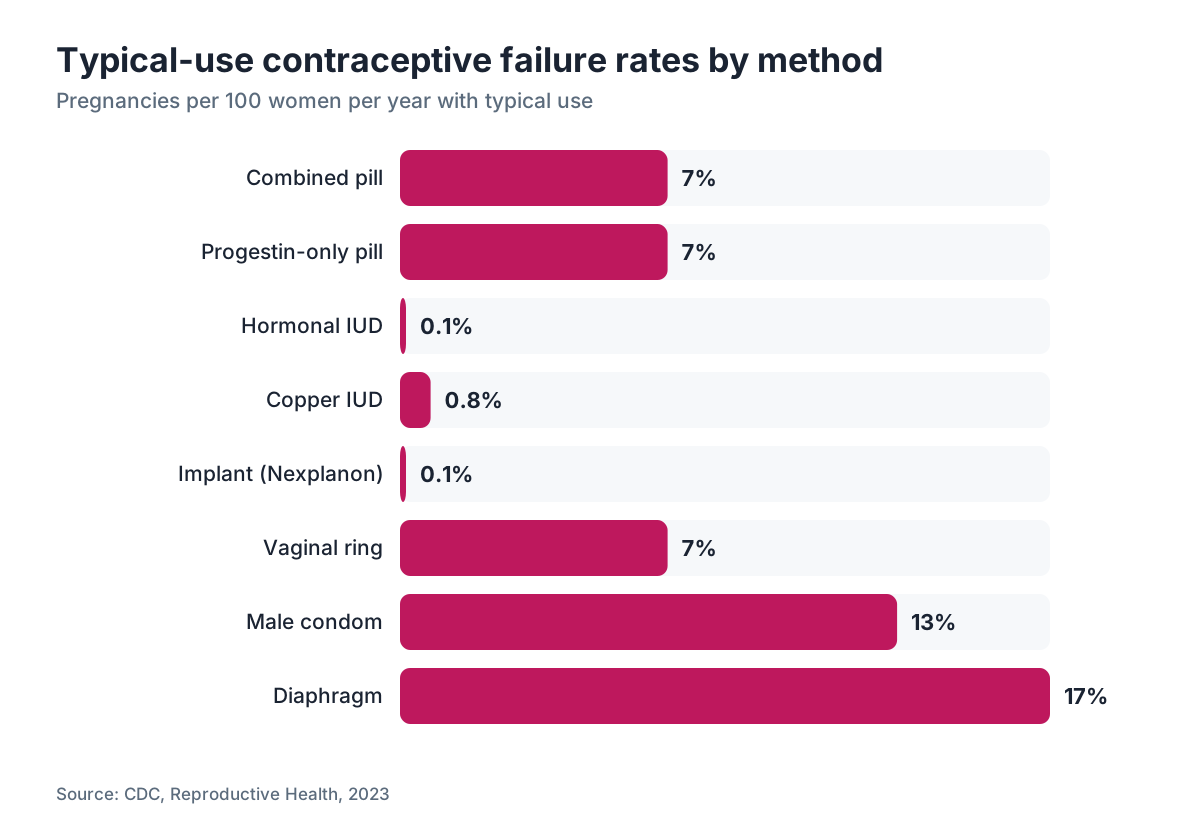
Barrier methods, condoms (male or female), the diaphragm, the cervical cap, all make sense as perimenopause moves along and fertility naturally drops. Typical-use failure rates run higher than hormonal methods: condoms around 13%, the diaphragm around 17%. [3] Some clinicians suggest pairing a barrier method with cycle tracking, though irregular cycles make tracking unreliable in perimenopause specifically.
Permanent sterilization, tubal ligation or a partner's vasectomy, is still the most chosen method for women over 40 in the United States and a solid choice for anyone certain they don't want a future pregnancy.
For symptoms without hormonal contraception, SSRIs (escitalopram and venlafaxine in particular), gabapentin, and the non-hormonal FDA-approved fezolinetant (Veozah) all have evidence for cutting hot flashes. [4] None of them is a contraceptive, so you'd still need a separate method.
If weight gain is a separate worry during perimenopause, GLP-1 receptor agonists have shown real benefit. The semaglutide for weight loss article covers the evidence in detail.
What are the most common side effects of birth control in perimenopause?
Side effects in perimenopausal women look a lot like those in younger women, but a few deserve specific attention.
Breakthrough bleeding shows up more often in perimenopause because the lining is less predictable. It usually settles within three months of starting a new method. If it doesn't, switching progestin type can help, since different progestins act differently on the endometrium.
Mood changes are already common in perimenopause, and some women find progestins make them worse. Levonorgestrel and norethindrone carry mild androgenic activity, which can add irritability, acne, or low libido in susceptible women. Micronized progesterone (oral or vaginal) in the HRT setting is often gentler on mood, but it doesn't come in contraceptive form because it can't reliably suppress ovulation.
Libido and vaginal dryness can worsen on COCs through the pill's effect on sex hormone-binding globulin (SHBG). The pill raises SHBG, which binds free testosterone and can flatten desire. This is underreported. If a woman starts a pill and notices a sharp drop in libido, that mechanism is a more plausible cause than stress.
Headaches run high in perimenopause anyway, and the hormone-free week of a cyclic pill can set off menstrual migraines through estrogen withdrawal. Extended-cycle regimens that shrink or drop the hormone-free interval can help.
Nausea, breast tenderness, and bloating usually ease after the first two or three cycles and aren't a reason to quit a method early. Women report weight gain often, but clinical trial data show minimal mean weight change tied to low-dose COCs specifically. [5]
How do you talk to your doctor about birth control in perimenopause?
Plenty of perimenopausal women say their providers either brush the topic aside or default to an HRT conversation without handling the contraception piece. Both problems are real.
Come in with a clear symptom list. How irregular are your cycles, how heavy, any hot flashes or night sweats, mood or sleep trouble, and whether any of it is disabling. That gives your provider the picture to match a method to your main complaint.
Bring your cardiovascular risk profile. Blood pressure readings if you have them, whether you smoke, any personal or family history of VTE or stroke, and your migraine history including whether you get aura. Those four factors decide which hormonal methods are actually available to you.
Ask about the transition plan directly. When should you expect to stop contraception? How will you know menopause has happened? What will you do about symptoms after the pill stops? A provider who can't answer those may not have current training in perimenopausal care.
Telehealth has widened access a lot. WomenRx, for one, offers perimenopausal hormone consultations that cover both contraception and the HRT transition in a single visit, which is how this should be managed anyway, since they're really one clinical decision.
If you're also managing weight alongside hormonal symptoms, know that GLP-1 medications interact with parts of perimenopausal metabolism. The semaglutide overview explains how these drugs work and who they suit.
What does birth control cost during perimenopause, and is it covered?
Under the Affordable Care Act, Health Resources and Services Administration (HRSA) guidelines require most private plans to cover all FDA-approved contraceptive methods with no cost-sharing. [11] That covers pills, IUDs, implants, and sterilization. The mandate applies to non-grandfathered plans and has been in force since 2012, though specific formulary coverage varies by insurer.
Medicare (age 65 and older, or disabled) is more limited. It does not cover contraceptives as a routine preventive benefit, which matters for women still perimenopausal in their early 50s and on Medicare for disability reasons.
Cash-pay costs without insurance, as of 2024: combined oral contraceptives run about $20 to $50 a month at major pharmacy chains with GoodRx or similar discount programs. The hormonal IUD (Mirena) costs $900 to $1,300 for the device plus insertion, and it lasts up to 8 years. The implant (Nexplanon) costs $800 to $1,300 similarly. The copper IUD (Paragard) costs $800 to $1,000 and lasts 10 to 12 years, which makes its cost per year low.
Many Planned Parenthood locations and federally qualified health centers (FQHCs) offer sliding-scale pricing for contraceptive services. [11]
Frequently asked questions
Can I get pregnant during perimenopause?
Yes. Perimenopause means irregular ovulation, not absent ovulation. Until you've gone 12 straight months without a period, assume you can still conceive. Unintended pregnancies in women over 40 carry higher obstetric risks. Use reliable contraception until menopause is confirmed, either by 12 period-free months off hormones or by FSH levels above 30 IU/L on two separate tests.
Are birth control pills safe in your 40s?
For non-smoking women with normal blood pressure and no history of VTE, migraine with aura, or cardiovascular disease, low-dose combined pills are generally considered safe through the early 50s. NAMS supports their use in this group. Women who smoke and are over 35, or who have any of those cardiovascular risk factors, should use progestin-only or non-hormonal methods instead.
What is the difference between birth control and menopause hormone therapy?
Birth control pills use synthetic estrogen and progestins at doses high enough to suppress ovulation in a fertile woman. Menopausal hormone therapy uses lower doses of estradiol and micronized progesterone to relieve symptoms in a woman who no longer ovulates. HRT is not contraceptive. You can't swap one for the other, and moving from pill to HRT takes planning and sometimes FSH testing.
Does the hormonal IUD help with perimenopause symptoms?
The levonorgestrel IUD (Mirena) is highly effective at reducing heavy and irregular bleeding, cutting blood loss by up to 90% in clinical data. It has minimal systemic hormone exposure, which makes it a good option for women with cardiovascular risk factors who can't take estrogen. It won't reduce hot flashes much on its own, but it pairs with separately prescribed estrogen for broader symptom control.
How do I know when to stop taking birth control and start HRT?
NAMS suggests healthy non-smoking women can stay on low-dose pills until age 50 to 51, then consider HRT if symptoms persist. To confirm menopause off the pill, stop hormones, use a barrier method, and check FSH after 6 to 8 weeks. Two FSH levels above 30 IU/L, four to six weeks apart, suggest menopause. Some clinicians prefer to wait for 12 hormone-free months without a period.
Can birth control cause or worsen hot flashes?
Active combined pill use usually suppresses hot flashes by holding estrogen steady. But the hormone-free week of a cyclic pill can trigger a withdrawal dip that provokes hot flashes or migraines in some perimenopausal women. Extended-cycle or continuous regimens with no pill-free interval often fix this. Progestin-only methods don't reliably prevent hot flashes, since they don't keep estrogen steady.
Does birth control affect bone density in perimenopause?
Low-dose combined oral contraceptives appear to help maintain bone mineral density in perimenopausal women by delivering consistent estrogen during a stretch of accelerating bone loss. Progestin-only methods and the hormonal IUD don't offer meaningful bone protection, because systemic estrogen stays low. Women on progestin-only contraception with osteoporosis risk factors should consider a bone density scan.
What birth control is best for perimenopausal women with migraines?
It depends on whether you get aura. Migraine with aura is a WHO Medical Eligibility Criteria Category 4 contraindication to estrogen-containing methods, meaning they should not be used because of ischemic stroke risk. Women with aura should use progestin-only pills, the hormonal IUD, the implant, or the copper IUD. Migraine without aura is Category 2 (generally usable with caution) for combined methods.
Will birth control help with perimenopausal mood swings and sleep problems?
Combined pills can steady the erratic estrogen swings that fuel mood shifts and disrupted sleep in perimenopause. Many women report better PMS-like symptoms and sleep on a continuous or extended-cycle regimen. That said, some progestins worsen mood in susceptible women. If mood dips on a new pill, switching progestin or trying a non-androgenic option like norgestimate may help.
Is the copper IUD a good choice for perimenopause?
The copper IUD is the most effective hormone-free long-term option, lasting up to 10 to 12 years. It's reasonable for women who can't or don't want hormones and whose periods aren't already heavy. In perimenopause, anovulatory cycles often cause heavy bleeding, and the copper IUD can make that worse. Women with already heavy or painful periods should generally choose something else.
Does birth control help with perimenopausal weight gain?
Low-dose combined contraceptives don't cause meaningful weight gain in clinical trial data, but they also don't treat the metabolic shifts of perimenopause that drive fat redistribution. Perimenopausal weight gain comes from declining estrogen, muscle loss, and insulin resistance, not your contraceptive choice. If weight is the main concern, resistance training and, where appropriate, GLP-1 medications matter more than switching pills.
Can I use vaginal ring contraception during perimenopause?
Yes. The vaginal ring (NuvaRing, Annovera) delivers low-dose combined estrogen and progestin and carries the same contraindications as combined pills: no smoking over 35, no migraine with aura, no VTE history, no uncontrolled hypertension. Some perimenopausal women prefer it for convenience. Annovera is a one-year ring, NuvaRing is monthly. Efficacy and side effects track closely with low-dose COCs.
What happens if I skip the hormone-free week on my birth control pill during perimenopause?
Taking active pills straight through with no hormone-free interval, called an extended-cycle or continuous regimen, is safe with most monophasic combined pills and useful in perimenopause. It ends withdrawal bleeding, prevents the estrogen drop that triggers hot flashes or migraines in the pill-free week, and reduces overall hormone swing. The FDA has approved several continuous-regimen pills. Talk it over with your prescriber.
Does birth control interact with any perimenopause supplements or medications?
St. John's Wort is the interaction that matters most: it induces CYP3A4 enzymes and can drop pill efficacy enough to allow breakthrough ovulation. Some antiepileptics (phenytoin, carbamazepine) do the same, and rifampin is a strong inducer. Black cohosh, soy isoflavones, and most common supplements don't significantly affect pill metabolism, though evidence is thin. Tell your prescriber everything you take, prescription and not.
Sources
- ACOG (American College of Obstetricians and Gynecologists), Practice Bulletin No. 141: Management of Menopausal Symptoms
- NAMS (North American Menopause Society), Menopause Practice: A Clinician's Guide, 2022 edition
- CDC (Centers for Disease Control and Prevention), Contraception: How Effective Are Birth Control Methods?
- NAMS, 2023 Nonhormone Therapy Position Statement
- Hardman SM, Gebbie AE. Hormonal contraceptive regimens in the perimenopause. Maturitas. 2009;63(3):204-212.
- FDA, Mirena (levonorgestrel-releasing intrauterine system) prescribing information
- FDA, Combined Hormonal Contraceptives: Drug Safety Communications and approved labeling
- ACOG Practice Bulletin No. 206: Use of Hormonal Contraception in Women with Coexisting Medical Conditions
- Gambacciani M, et al. Effect of low-dose continuous combined hormone replacement therapy on bone mineral density in perimenopausal women. Maturitas. 2010;65(3):257-261.
- Lidegaard O, et al. Risk of venous thromboembolism from use of oral contraceptives. BMJ. 2019.
- HRSA (Health Resources and Services Administration), Women's Preventive Services Guidelines