Bioidentical progesterone: what it is, how it works, and who needs it
TL;DR: Bioidentical progesterone is a hormone with the exact molecular structure your ovaries make. The FDA-approved form, micronized progesterone (brand name Prometrium), protects the uterine lining when you take estrogen. It behaves differently from synthetic progestins in side effects and breast cancer data. If you have a uterus and take estrogen, you need it. Compounded versions exist but carry more uncertainty.
What is bioidentical progesterone and how is it different from synthetic progestins?
Bioidentical progesterone has the exact molecular structure of the progesterone your ovaries produce. Same molecule, not a close cousin. Synthetic progestins, the versions used in combination hormone pills and patches since the 1970s, share some of progesterone's effects but have altered chemical structures. That structural difference matters more than most people realize.
The most studied synthetic progestin, medroxyprogesterone acetate (MPA), was the version used in the Women's Health Initiative (WHI) trial [1]. The WHI found increased breast cancer risk in women taking combined estrogen plus MPA. Micronized progesterone was never tested in the WHI. Later observational data, including the French E3N cohort published in the International Journal of Cancer, found that women using estrogen plus micronized progesterone had a breast cancer risk profile closer to estrogen-only therapy than to estrogen-plus-MPA [2]. That's not the same as zero risk. But the signal looked different.
The FDA-approved bioidentical product is micronized progesterone, sold as Prometrium and as a generic. "Micronized" means the hormone is ground into tiny particles so an oral capsule can actually absorb. Without that step, progesterone barely gets through the gut.
Here's where people get confused. When a practitioner or patient says "bioidentical," they mean one of two things: the FDA-regulated micronized progesterone (Prometrium or generic), or a custom-compounded preparation made by a compounding pharmacy. These are not interchangeable. Prometrium has standardized dosing and quality controls. Compounded progesterone varies by pharmacy and gets no FDA safety or efficacy review of the finished product [3]. Keep that split in mind for the rest of this article, because it changes almost every decision downstream.
Why do women need progesterone during menopause hormone therapy?
Estrogen thickens the uterine lining. Left unopposed, that lining can overgrow into a condition called endometrial hyperplasia, which can progress to endometrial cancer. Progesterone counters it. It makes the lining shed or stay thin. Every major guideline, including those from the North American Menopause Society (NAMS) and the Endocrine Society, says that a woman who has a uterus and takes systemic estrogen must also take a progestogen, either a synthetic progestin or bioidentical progesterone [4].
Women who've had a hysterectomy have no uterus, so they don't need progesterone for protection. They usually get estrogen alone. Adding progesterone for them isn't standard, though some practitioners do it off-label for sleep.
During perimenopause, irregular ovulation means ovarian progesterone output is already erratic. Some practitioners prescribe low-dose progesterone in this window, before full menopause, for sleep disruption, mood swings, and heavy bleeding. The evidence for those uses is thinner than for uterine protection. It's not nothing.
Progesterone also binds receptors in the brain, mainly through its metabolite allopregnanolone, which modulates GABA-A receptors. That's almost certainly why it calms and sedates many women. Synthetic progestins like MPA don't reliably do this, and in some women they do the reverse: mood instability, bloating. That difference in receptor activity is clinically real, and it's why swapping a synthetic progestin for micronized progesterone sometimes fixes side effects on its own.
What are the FDA-approved doses of micronized progesterone?
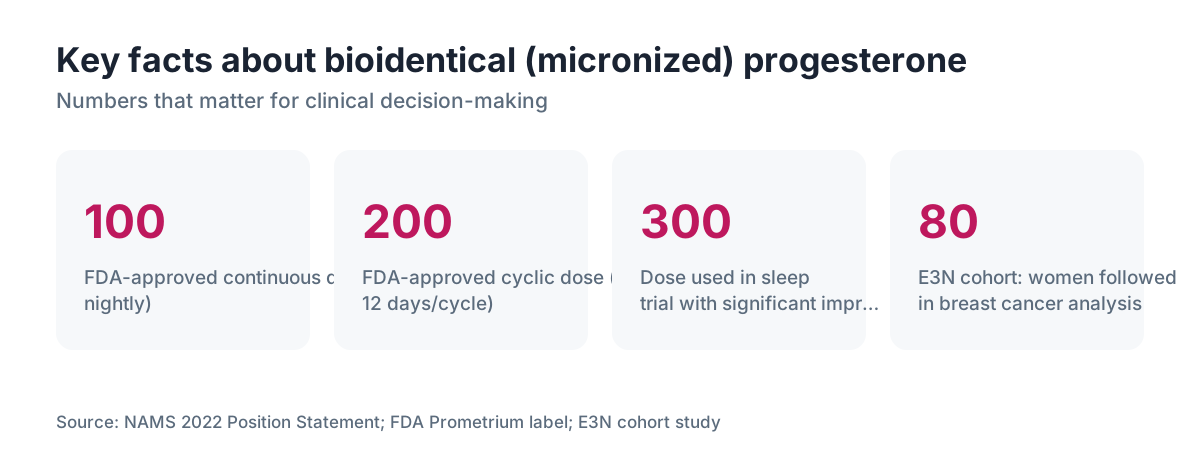
Prometrium comes in two oral capsule strengths, 100 mg and 200 mg. The FDA-approved dosing for uterine protection in women on estrogen is 200 mg at bedtime for 12 days out of a 28-day cycle, or 100 mg every night continuously with no break [5]. Both protect the endometrium.
The cyclic 200 mg approach mimics a more natural hormonal rhythm and produces a scheduled bleed. The continuous 100 mg approach is simpler and, once the lining settles, tends to cause less spotting over time.
Take it at bedtime. This isn't a convenience note. The sedating effect is real and hits some women hard, especially in the first weeks. Dosing at night turns a side effect into a benefit.
Some practitioners prescribe Prometrium vaginally, off-label, for women who can't tolerate oral sedation or have absorption concerns. Vaginal delivery gives higher local uterine concentrations with lower systemic levels, which cuts drowsiness. The FDA hasn't approved that route for menopausal hormone therapy specifically, but it's routine in fertility medicine and well described in clinical practice.
Table: FDA-approved oral micronized progesterone regimens for uterine protection
| Regimen | Dose | Schedule | Typical use case | |---|---|---|---| | Cyclic | 200 mg | 12 days out of every 28 | Women who prefer a scheduled bleed | | Continuous | 100 mg | Every night | Women who want no scheduled bleeding |
Source: Prometrium prescribing information, FDA [5]
What does the research actually say about bioidentical progesterone and breast cancer risk?
Most women ask this first, and the honest answer is that the data is reassuring but not settled.
The WHI used MPA, not micronized progesterone. Its breast cancer finding gets quoted constantly, but it doesn't transfer cleanly to women using estrogen plus micronized progesterone [1].
The French E3N cohort followed more than 80,000 postmenopausal women. Those using estrogen plus micronized progesterone showed no statistically significant rise in breast cancer risk versus non-users, while estrogen plus synthetic progestins did [2]. This was observational, not randomized. It can't prove cause. Confounding is possible.
NAMS put it plainly in its 2022 Hormone Therapy Position Statement, stating that "the risk of breast cancer with EPT is attributable to the progestogen and is related to the duration of use" and that micronized progesterone and dydrogesterone appear to carry a more favorable risk than MPA and other synthetic progestins [4]. That's the leading menopause society drawing a clinical line.
The Endocrine Society's 2015 guideline notes the same distinction while calling for more randomized data [6].
So here's the bottom line, without spin. No randomized trial has answered this for micronized progesterone at WHI scale. The observational data leans favorable next to MPA. Anyone who tells you it's risk-free is overstating the evidence. Anyone who tells you it's as risky as MPA is ignoring the evidence we have.
How does bioidentical progesterone affect sleep, mood, and brain fog?
This is where many women say they feel progesterone the most.
The brain and liver convert progesterone into allopregnanolone, a strong positive modulator of GABA-A receptors. GABA is the brain's main inhibitory neurotransmitter. More GABA activity means less neural excitation, which shows up as sedation, lower anxiety, and easier sleep onset. Benzodiazepines hit the same receptor family, though the mechanism differs and progesterone's effect is gentler [7].
Several small trials show oral micronized progesterone improves sleep in perimenopausal and postmenopausal women. A randomized crossover trial in Menopause (the NAMS journal) found that 300 mg of oral micronized progesterone for 3 weeks improved subjective sleep quality and cut waking after sleep onset versus placebo [8]. That's above standard uterine-protection dosing, and higher doses mean more sedation, but the biology holds.
Mood is messier. Many women report less irritability and anxiety on micronized progesterone than on synthetic progestins. MPA and norethindrone can actually make some women more anxious, probably because they hit GABA receptors differently and can carry partial androgenic activity. Bioidentical progesterone has no androgenic activity.
Brain fog is the hardest to study. But better sleep, lower anxiety, and direct neurosteroid effects on GABA circuits give a believable reason some women feel sharper on micronized progesterone. It won't work for everyone. Menopausal cognitive symptoms have several drivers, and progesterone alone won't touch all of them.
What is compounded progesterone and is it safe?
Compounded progesterone is a custom preparation made by a compounding pharmacy, usually as a cream, troche (a sublingual dissolving tablet), pellet, or capsule. It is not FDA-approved. The pharmacy mixes a specific formula to a prescriber's order.
The FDA has said the same thing about compounded hormones repeatedly. In a 2022 statement, the agency noted that compounded drugs are not FDA-approved, have not been reviewed for safety or efficacy, and may carry manufacturing quality risks [3]. That's not bureaucratic hand-waving. Hormone concentrations in compounded products vary batch to batch and pharmacy to pharmacy. A study in Menopause found significant variability in progesterone content across compounded creams [9].
There are still real reasons compounding exists. Some women are allergic to the peanut oil that Prometrium capsules are dissolved in, so a peanut-free compounded capsule may be their only oral option. Some vaginal progesterone doses aren't sold commercially and have to be compounded. And some women simply can't tolerate the standard product.
NAMS prefers FDA-approved hormones over compounded ones, while acknowledging compounding has a place in specific situations [4].
If you do use a compounded product, pick a pharmacy with PCAB (Pharmacy Compounding Accreditation Board) accreditation. It doesn't guarantee perfect quality. It sets a floor. And skip any provider who bases dosing on salivary hormone testing, because saliva levels don't reliably track tissue levels or clinical response.
If you're mapping your full hormone replacement therapy options, get this FDA-approved versus compounded distinction straight before you commit to anything.
What are the side effects of bioidentical progesterone?
The most common side effect is drowsiness, and it can be heavy, especially at oral doses of 200 mg or more. That's why bedtime dosing is standard. If you take it orally and feel hungover in the morning, your dose or timing probably needs a tweak.
Other common side effects:
Bloating and breast tenderness, mostly in the first 2 to 3 months. These usually settle as the body adjusts.
Headaches, sometimes a flare of migraines in the first cycle. Some women need to titrate slowly.
Spotting or irregular bleeding, especially on continuous regimens in the first few months before the lining stabilizes.
Dizziness, more likely if you take the dose too early in the evening or pair it with alcohol.
The serious but uncommon risks include blood clots, though the risk with bioidentical progesterone looks substantially lower than with older synthetic progestins. Oral estrogen raises clotting risk. Transdermal estrogen (patch, gel, spray) doesn't appear to raise it at standard doses. Progesterone's own contribution to clotting looks minimal next to the estrogen component, and micronized progesterone reads as neutral or even slightly protective on platelet aggregation in some studies [6].
Don't start progesterone without careful specialist evaluation if you have a history of breast cancer, unexplained vaginal bleeding, liver disease, or active blood clots. And Prometrium is contraindicated if you're allergic to peanuts or peanut products.
How is bioidentical progesterone different from over-the-counter progesterone cream?
Over-the-counter progesterone creams are sold as cosmetics or supplements in the US, so they aren't regulated as drugs. The progesterone content ranges wildly, from almost none to amounts that could produce real physiological effects.
Here's the problem. Even when an OTC cream contains real progesterone, skin absorption is unpredictable and doesn't reliably raise serum progesterone. Studies show topical cream can bump salivary or blood levels briefly, but doesn't consistently reach the sustained levels needed to protect the uterine lining alongside systemic estrogen [10].
This is the part that can hurt you. If you're on estrogen and leaning on an OTC cream for uterine protection, you may be getting almost none. Endometrial hyperplasia can build silently. You might not know until abnormal bleeding or a uterine biopsy tells you.
NAMS states flatly that OTC progesterone cream has not been shown to give adequate endometrial protection in women using systemic estrogen [4]. That's not a gray area.
Some women use OTC creams for symptom relief and feel better. Placebo effects in hormone research are real and worth respecting. But if you have a uterus and you're on systemic estrogen, prescription micronized progesterone (oral or vaginal) is the standard of care. The cream is not.
Can progesterone help with perimenopause symptoms before you're in full menopause?
Yes, and this is a spot where clinical practice has outrun the randomized trial data.
Perimenopause can start in the early 40s for many women (see when does menopause start for the full timeline). It runs on erratic estrogen and falling progesterone. Ovulation gets irregular, so the corpus luteum (the structure that makes progesterone after ovulation) fires less reliably. Progesterone can run low and jumpy for years before periods stop.
Practitioners often prescribe low-dose micronized progesterone (50 to 100 mg nightly, or 100 to 200 mg cyclically in the luteal phase) for perimenopausal women with sleep disruption, heavy periods, mood swings, or anxiety. The FDA hasn't approved Prometrium for perimenopause symptoms, so this is off-label. Off-label prescribing is legal and routine in medicine. It just means the formal regulatory review for that specific use hasn't happened.
For heavy or irregular perimenopausal bleeding, cyclic progesterone (12 to 14 days per cycle) can regulate and lighten periods by opposing the estrogen-driven lining buildup. A Mirena IUD (levonorgestrel, a synthetic progestin) is another route some practitioners prefer, since it delivers progestogen locally with very low systemic absorption.
WomenRx practitioners manage this kind of perimenopausal work regularly, including sorting out whether low-dose progesterone alone handles the symptoms or whether adding estrogen makes more sense at a given stage. The right mix depends on where you are in the transition, your symptom profile, and your medical history.
If you're in this window, a workup with FSH, estradiol, and ideally a day-21 progesterone level gives you and your provider real data to work from instead of a guess.
How does bioidentical progesterone interact with cardiovascular health and bone density?
Progesterone's cardiovascular effects get misread constantly, mostly because the bioidentical molecule behaves so differently from synthetic progestins here.
Medroxyprogesterone acetate (MPA) appears to blunt some of estrogen's cardiovascular benefits, at least in certain models. It has androgenic properties and can move lipids the wrong way. Micronized progesterone has no androgenic activity and reads as more neutral, even slightly favorable, on lipids and vascular reactivity in observational and small trial data [6].
The Endocrine Society's 2015 guideline says the randomized evidence isn't strong enough to draw firm cardiovascular distinctions between progestogen types, but the mechanistic and observational data favor bioidentical progesterone [6].
On bone, estrogen is the main driver of protection in hormone replacement therapy. Progesterone's direct contribution to bone mineral density is murkier. Some receptor work suggests progesterone receptors sit on osteoblasts (bone-building cells) and may nudge them, but that hasn't turned into consistent trial-level evidence. The reason to track bone density in menopausal women is really the estrogen side of the regimen plus overall fracture risk. If you haven't had a bone density test, raise it with your provider, especially after 65 or earlier with risk factors.
Blood pressure effects of progesterone look minimal at standard doses. The older androgenic synthetic progestins were the ones more likely to push blood pressure and lipids in the wrong direction.
How do you know if your progesterone dose is right?
This is more a clinical conversation than a lab number, which throws a lot of people.
Blood progesterone levels after oral micronized progesterone are hard to read. Oral dosing creates a big first-pass surge through the liver, so serum levels spike briefly and don't track tissue exposure or clinical effect well. NAMS says routine serum progesterone monitoring is not the standard approach for women on oral micronized progesterone [4]. Some practitioners check levels for rough orientation, not fine titration.
The signals that matter more: Is your uterine lining staying thin on imaging? If you have a uterus and take estrogen, periodic transvaginal ultrasound to check endometrial thickness is a reasonable safety step. Abnormal uterine bleeding should trigger evaluation, sometimes including endometrial biopsy, rather than reassurance.
And the functional questions. Are your sleep, mood, and hot flashes improving? Is breakthrough bleeding calming down? Are the side effects tolerable? These tell you more than a serum value.
Vaginal progesterone plays by different rules, because the first-pass effect doesn't apply. Vaginal dosing produces much lower serum levels but strong local endometrial exposure. The uterine effect is real even when the blood level looks low. That's the first uterine pass effect, and it's why vaginal dosing and monitoring work differently from oral.
Working with a provider on a telehealth platform built around women's hormones (like WomenRx), these details should come up at every check-in, not something you have to go chasing.
Is bioidentical progesterone right for you?
If you have a uterus, take systemic estrogen, and your provider hasn't brought up progesterone, close that gap now. It's not optional for uterine safety.
If you're perimenopausal with sleep disruption, mood swings, or heavy periods, low-dose micronized progesterone is worth discussing. The evidence isn't as clean as for postmenopausal uterine protection, but the biology is sound and the safety profile is good.
If you've had a hysterectomy, you don't need progesterone for protection. Some practitioners prescribe it for sleep, mood, or theoretical cardiovascular reasons. The evidence for those off-label uses is weaker, and adding a hormone you don't need carries some risk. Have that specific conversation.
If you're pulled toward compounded progesterone over FDA-approved Prometrium or generic, ask why. A peanut allergy or a delivery route that isn't sold commercially is a real reason. "It's more natural" or "it absorbs better," offered without evidence, is not.
The best current guidance comes from NAMS, the Endocrine Society, and published trial data. Decisions built on hormone levels alone, especially salivary tests from direct-to-consumer labs, tend to produce over-treatment or misguided treatment. Symptoms plus medical history plus a well-trained clinician's judgment is still the standard.
For more context, read our progesterone overview and the full menopause guide.
Frequently asked questions
Is bioidentical progesterone the same as natural progesterone?
The terms get used interchangeably, but "natural" is imprecise. Bioidentical progesterone is molecularly identical to what your ovaries make, but it's synthesized in a lab from plant sterols (usually yam or soy). It isn't extracted from the body. The FDA-approved form is micronized progesterone (Prometrium or generic). It differs meaningfully from synthetic progestins like medroxyprogesterone acetate, which have modified molecular structures.
Can I take bioidentical progesterone without estrogen?
Yes. Low-dose progesterone alone is sometimes used in perimenopause for sleep, anxiety, or irregular bleeding without adding estrogen. That's off-label but common. If your main problem is hot flashes, night sweats, or vaginal dryness, progesterone alone probably won't fix it. Those usually need estrogen. The right combination depends on your symptom profile and where you are in the transition.
What is the difference between Prometrium and compounded bioidentical progesterone?
Prometrium is an FDA-approved micronized progesterone capsule with standardized dosing and quality controls. Compounded progesterone is made by a pharmacy to a custom formula with no FDA review for safety or efficacy. NAMS prefers FDA-approved forms. Compounding fits specific situations, like a peanut allergy (Prometrium contains peanut oil) or doses not sold commercially, but it's not a blanket upgrade over the regulated product.
Does bioidentical progesterone cause weight gain?
Water retention and mild bloating are common in the first 2 to 3 months, especially at higher doses, and some women read that as weight gain. True fat gain from micronized progesterone isn't well-documented in the literature. Synthetic progestins, particularly MPA, have a worse reputation for weight-related side effects because of glucocorticoid and androgenic receptor activity that bioidentical progesterone doesn't share. Most women don't report significant sustained weight gain.
Can bioidentical progesterone help with anxiety and mood swings?
Yes, for many women. Progesterone metabolizes to allopregnanolone, which activates GABA-A receptors in the brain and produces a calming, anti-anxiety effect. That's biologically distinct from how synthetic progestins work, and some synthetic progestins can actually worsen mood. The effect is real but varies between individuals. Women who had mood problems on oral contraceptives containing synthetic progestins sometimes do better on bioidentical progesterone.
How long does it take for bioidentical progesterone to start working?
Sleep improvements can show up in the first week of oral dosing at 100 to 200 mg nightly, because the sedating effect is pharmacological and fairly immediate. Mood stabilization usually takes 4 to 6 weeks. For uterine lining effects, a full 3-month cycle is often needed to see whether breakthrough bleeding has settled. If you see no benefit after 3 months, the dose, timing, or route may need reconsidering.
Is bioidentical progesterone safe for women with a history of blood clots?
Micronized progesterone appears to have a more neutral or slightly favorable clotting profile than synthetic progestins, based on limited data. But a personal history of deep vein thrombosis or pulmonary embolism makes this a high-stakes decision that needs specialist evaluation. The progesterone is less of the concern than the estrogen in combined therapy. Transdermal estrogen has a better clotting profile than oral estrogen if hormones are used at all.
What happens if I miss a dose of bioidentical progesterone?
On a continuous nightly regimen, if you miss one dose, take the next dose the following night at the usual time. Don't double up. Occasional missed doses on a cyclic regimen may cause irregular spotting. Missing multiple doses in a row while on systemic estrogen with a uterus creates a potential endometrial protection gap if it happens repeatedly. Consistency matters more than perfection, but habitual gaps need to go to your provider.
Can I use an estrogen patch with bioidentical progesterone?
Yes. Combining a transdermal estrogen patch with oral or vaginal micronized progesterone is one of the most commonly prescribed and best-studied hormone therapy combinations in menopause medicine. The patch skips liver first-pass metabolism, which helps clotting risk and blood pressure. Progesterone protects the uterine lining. NAMS guidelines list this as a reasonable, well-tolerated regimen. See our estrogen patch article for more detail.
Does progesterone protect against breast cancer or is it neutral?
Neither claim is proven. The best available observational data (the French E3N cohort) suggests micronized progesterone has a more favorable breast cancer signal than MPA-based progestins, but not zero risk. NAMS says its breast cancer risk profile appears more favorable than synthetic progestins. No large randomized trial has studied micronized progesterone and breast cancer at WHI scale. The honest answer: probably lower risk than MPA, not protective.
What dose of bioidentical progesterone is used for sleep?
A randomized crossover trial published in Menopause used 300 mg of oral micronized progesterone nightly and found significant improvements in sleep quality. The standard FDA-approved doses are 100 mg (continuous) or 200 mg (cyclic) nightly for uterine protection. Some practitioners prescribe 100 to 200 mg off-label for sleep in women without a uterus. The sedating effect is dose-dependent. Starting at 100 mg and adjusting by response and tolerance is reasonable.
Is there a progesterone option that doesn't cause drowsiness?
Vaginal micronized progesterone produces much lower systemic blood levels than oral, so drowsiness is greatly reduced or absent. It still gives good local endometrial protection through the uterine first-pass effect. The tradeoff is the route of administration, which some women prefer to avoid. Synthetic progestins in patches or pills (like norethindrone acetate or levonorgestrel) are another less-sedating alternative, though they differ from bioidentical progesterone in receptor activity and side effects.
How does bioidentical progesterone interact with thyroid medication?
Progesterone can influence thyroid hormone binding proteins, and there's some evidence it modestly affects thyroid hormone metabolism. Women on thyroid replacement (levothyroxine) who start hormone therapy, progesterone included, may occasionally need a thyroid dose adjustment. Monitor with TSH after starting or changing hormone therapy. The interaction is generally mild and manageable, not a contraindication, but flag it to whoever manages your thyroid.
Sources
- NIH National Heart, Lung, and Blood Institute: Women's Health Initiative
- International Journal of Cancer: E3N French cohort study, Fournier et al.
- FDA: Compounding and the FDA (agency information on compounded drugs)
- The Menopause Society (NAMS): 2022 Hormone Therapy Position Statement
- FDA: Prometrium (micronized progesterone) prescribing information
- Endocrine Society: Postmenopausal Hormone Therapy Clinical Practice Guideline, 2015
- NIH National Institute on Alcohol Abuse and Alcoholism: research on allopregnanolone and GABA-A receptors
- Menopause journal (NAMS): randomized crossover trial of oral micronized progesterone and sleep
- Menopause journal (NAMS): study on variability in compounded progesterone cream content
- Menopause journal (NAMS): transdermal progesterone cream absorption study