Bioidentical hormones pros and cons: what the evidence actually shows
TL;DR: Bioidentical hormones are chemically identical to the hormones your body makes. FDA-approved versions (estradiol, micronized progesterone) have real safety data and relieve hot flashes, sleep disruption, and bone loss. Compounded custom blends carry more uncertainty and no FDA review. Neither is automatically safer than conventional HRT. Your choice should hinge on symptom burden, personal risk profile, and the specific product you actually take.
What are bioidentical hormones, exactly?
Bioidentical hormones are molecules structurally identical to the hormones your ovaries, adrenal glands, and other tissues make on their own. The term covers estradiol (the main estrogen your body produces during your reproductive years), progesterone (not the synthetic progestin medroxyprogesterone acetate), and testosterone, among others.
"Bioidentical" is a marketing and pharmacology word, not an FDA category. Some bioidentical hormones are FDA-approved drugs with trial data behind them. Estradiol patches, gels, sprays, and the oral micronized progesterone capsule Prometrium are all bioidentical and FDA-approved [1]. Others get custom-compounded by specialty pharmacies and have no individual approval at all.
That split matters more than most brochures let on. When your provider prescribes a bioidentical estradiol patch, you get a product that cleared manufacturing quality standards and labeling rules. When you get a compounded pellet or cream, the dose, absorption, and sterility ride entirely on one pharmacy's practices [2].
See also: estrogen patch and progesterone for product-level detail on the most common bioidentical options.
How do bioidentical hormones differ from conventional HRT?
Conventional hormone therapy has always included both synthetic and bioidentical molecules. The confusion comes from decades of blending the two together in people's minds. The Women's Health Initiative (WHI) trial, whose 2002 results scared a generation of women and doctors, tested conjugated equine estrogens (from mare urine) plus medroxyprogesterone acetate, a synthetic progestin. Neither one is bioidentical [3].
FDA-approved bioidentical progesterone (micronized progesterone, brand name Prometrium) appears to carry a different cardiovascular and breast-tissue profile than medroxyprogesterone acetate, though head-to-head long-term trial data comparing them is still thin. The E3N cohort study from France, which followed more than 80,000 women, found that estrogen combined with micronized progesterone was tied to lower breast cancer risk than estrogen combined with synthetic progestins: a relative risk of 1.00 versus 1.69 for those two combinations [4]. That is one observational study, not a randomized trial. Treat the numbers as directional, not settled.
Here is the real difference. The molecule matters, the delivery method matters, and whether the product went through regulatory review matters. "Bioidentical" does not automatically mean safer than conventional HRT, and conventional HRT does not automatically mean riskier than bioidentical.
For a full breakdown of the options on the market, see hormone replacement therapy.
What are the proven benefits of bioidentical hormones?
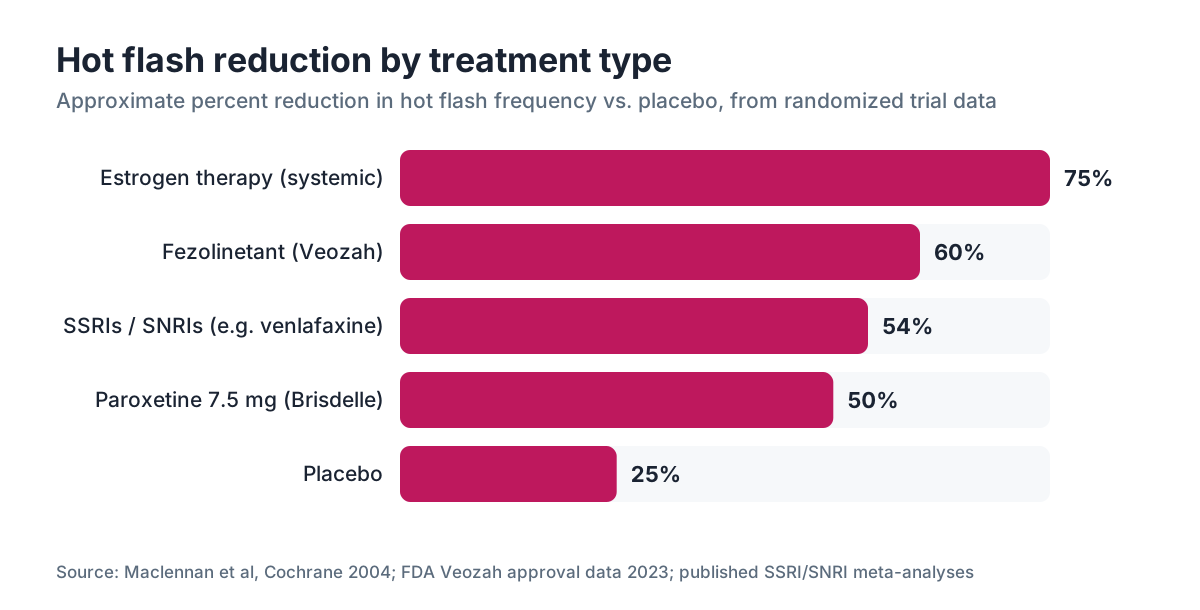
For women in perimenopause or menopause, the symptom relief from estradiol therapy is real and well-documented. Hot flash frequency drops by roughly 75% on average with estrogen therapy versus placebo in controlled trials [5]. Sleep, vaginal dryness, painful sex, and mood disruption all improve. None of that is trivial.
Bone protection is a second concrete benefit. Estrogen maintains bone mineral density, and the FDA has approved several estradiol products specifically to prevent postmenopausal osteoporosis [1]. Women who have had a hysterectomy can take estrogen alone. Women with a uterus need to add a progestogen (micronized progesterone in the bioidentical camp) to protect the uterine lining from the overgrowth that unopposed estrogen can cause.
Genitourinary syndrome of menopause, the cluster of vaginal dryness, urinary urgency, and recurrent UTIs, responds well to low-dose vaginal estradiol with minimal systemic absorption. The Menopause Society (formerly NAMS) notes that low-dose vaginal estrogen is appropriate even for many women with a history of hormone-sensitive breast cancer, a point clinicians often miss [6].
Cardiovascular effect is the most argued-over area. Observational data consistently shows that women who start estrogen within ten years of menopause (the "timing hypothesis," or window of opportunity) have lower rates of cardiovascular disease than nonusers [7]. Randomized WHI data in older women showed neutral to slightly harmful cardiovascular effects, but those women started therapy more than a decade past menopause. Timing is the whole story here, and the Menopause Society backs that distinction [6].
To understand the perimenopause window when you might start considering this, see perimenopause age.
What are the real risks and downsides of bioidentical hormones?
Breast cancer risk is the number most women ask about first. For combined estrogen-progestogen therapy started around menopause, the WHI found an increase roughly equal to drinking one glass of wine a day: about 8 extra breast cancer cases per 10,000 woman-years [3]. With estrogen alone (in women without a uterus), the WHI actually found a reduced incidence. Risk climbs with longer use, runs lower with transdermal delivery than oral, and may run lower with micronized progesterone than synthetic progestins. These are real distinctions, not spin.
Blood clots (venous thromboembolism) are a risk with oral estrogen. Transdermal delivery skips first-pass liver metabolism and appears to carry much lower clot risk than oral forms [7]. If you have a history of clots or a clotting disorder, transdermal is the standard call.
Compounded bioidentical hormones stack on risk that FDA-approved versions don't carry. The FDA has sent multiple warning letters to compounding pharmacies over unsubstantiated claims (including that compounded hormones are safer than FDA-approved ones) and over quality failures [2]. Independent lab testing of compounded products has found wide dose variation, so you may be getting a lot more or less hormone than the label says. The FDA puts it plainly: "FDA is not aware of any credible scientific evidence to support the claims of safety or effectiveness for compounded bioidentical hormones" [2].
Hormone pellets, implanted under the skin, are the most loosely regulated of all. They aren't FDA-approved as a delivery method, and testosterone pellets in particular can deliver 2 to 10 times normal female physiologic levels, which brings androgenic side effects and unknown long-term risk.
Any hormone therapy also needs ongoing monitoring. Blood pressure, breast exams, and pelvic checks matter, and some women need dose changes over time.
Bioidentical hormones pros and cons: a side-by-side comparison
The table compares FDA-approved bioidentical hormones against compounded bioidentical hormones on the points most women weigh before deciding.
| Factor | FDA-approved bioidentical | Compounded bioidentical | |---|---|---| | Regulatory oversight | Yes, full FDA review | No individualized approval | | Quality/dose consistency | Standardized manufacturing | Varies by pharmacy | | Evidence base | Clinical trials and post-market data | Limited; mostly anecdote or small studies | | Delivery options | Patch, gel, spray, vaginal, oral | Creams, pellets, troches, injections | | Covered by insurance | Usually yes | Rarely | | Cost without insurance | $30-$150/month typical range | $50-$300+/month depending on formulation | | Customizable dose | Limited to labeled doses | Yes, theoretically | | Saliva/blood level testing required | Not routinely | Often marketed as required |
One note on that saliva line. Many compounding pharmacies require or push serial saliva hormone testing to guide dosing. The Menopause Society and the Endocrine Society have both said salivary hormone testing is unreliable for monitoring HRT, because levels swing widely across the day and don't track tissue levels well [6][8]. For some practices it's a revenue stream, not a validated clinical tool.
Is compounded BHRT actually safer or more "natural" than FDA-approved HRT?
This is the claim that launched a thousand spa-clinic brochures, and it doesn't hold up. Natural and safe are not the same thing. Estradiol made from soy or yam extract in a compounding pharmacy is chemically identical to FDA-approved estradiol, but the approved version cleared real manufacturing quality control and you know exactly what dose you're getting.
The FDA's stance is blunt: "Compounded drugs do not undergo FDA premarket review for safety, effectiveness, or quality" [2]. That doesn't make them useless. Women with real allergies to excipients in commercial products, or who need a dose or delivery route that isn't sold commercially, have a legitimate medical reason to compound. The problem starts when it gets sold as premium, superior, or safer instead of what it actually is: a custom workaround for when standard options fail.
The Endocrine Society's clinical practice guideline on menopausal hormone therapy states: "We recommend against the use of salivary hormone testing to guide dosing of menopausal hormone therapy" and flags concerns about unmonitored high-dose testosterone from pellets [8].
If a clinic's main pitch is that its custom compounded hormones are "natural" and safer than what your gynecologist prescribes, that is a marketing claim, not a medical one. Ask them for the published evidence.
Who is a good candidate for bioidentical hormone therapy?
Women with moderate to severe menopause symptoms who are under 60 or within ten years of their last period get the best benefit-to-risk ratio from hormone therapy [6]. Hot flashes that wreck sleep, mood changes that interfere with daily life, and genitourinary symptoms that hurt your sex life are all well-supported reasons to treat.
Women at high breast cancer risk (BRCA1/2 carriers, strong family history, or a prior hormone-receptor-positive breast cancer) should have a detailed one-on-one conversation with a menopause specialist and their oncologist before starting any systemic hormone therapy. This isn't a blanket ban. It's a call for careful risk stratification.
Women with a history of blood clots, untreated hypertension, or active liver disease usually get steered toward non-hormonal options or, if hormones are warranted, transdermal delivery to cut clot and liver risk.
Primary ovarian insufficiency (POI), which affects about 1% of women under 40, is a case where hormone therapy is generally strongly recommended, because women with POI face much higher cardiovascular and osteoporosis risk from early, prolonged estrogen loss [9].
Waiting it out is a valid choice too. About 30% of women have symptoms mild enough that lifestyle changes, non-hormonal medications (SSRIs, SNRIs, or the neurokinin B antagonist fezolinetant), or nothing at all works fine for them. Nobody is required to take hormones.
See menopause for the full picture of treatment options, and when does menopause start if you're still figuring out where you are in the transition.
What does bioidentical hormone therapy cost, and is it covered by insurance?
FDA-approved bioidentical hormones are generally covered by insurance when prescribed for menopause symptoms, though copays and formulary tiers vary a lot. Without insurance, an estradiol patch usually runs $30 to $80 a month at retail pharmacies, and micronized progesterone (Prometrium or generic) runs roughly $20 to $60 a month. GoodRx and similar discount programs can cut those numbers hard.
Compounded bioidentical hormones are almost never covered, because they lack FDA approval. Out-of-pocket cost runs from about $50 to well over $300 a month depending on the formulation, delivery method, and pharmacy. Testosterone pellet insertions, a minor in-office procedure every 3 to 6 months, typically cost $200 to $500 each, and that cost is rarely covered.
The consultation model varies too. Telehealth providers offering bioidentical HRT usually charge a monthly membership or per-visit fee, somewhere around $30 to $150 a month depending on the platform. In-person functional medicine or anti-aging clinics often charge a good deal more, and some bundle expensive, unvalidated testing packages on top.
If you're comparing options, WomenRx offers telehealth hormone care that prescribes FDA-approved bioidentical hormones (not compounded blends), which keeps costs predictable and allows insurance coverage in many cases.
What does the research actually say about long-term bioidentical hormone safety?
The honest answer: long-term safety data is stronger for FDA-approved products and much thinner for compounded ones.
For FDA-approved estradiol and micronized progesterone, the best evidence comes from the WHI (flawed in how well it generalizes to younger women, but still the largest randomized trial [3]), the KEEPS trial, the Danish Osteoporosis Prevention Study, and several European cohorts. Together they support one conclusion: hormone therapy started near menopause in healthy women does not raise mortality, likely lowers cardiovascular events and fractures, and raises breast cancer risk modestly with combined therapy.
For compounded hormones specifically, a 2020 FDA-commissioned National Academies report found no adequate evidence of safety or efficacy that separates compounded bioidentical products from FDA-approved ones in either direction [2]. That is not the same as saying they're dangerous. It means we don't have the data.
The Menopause Society updated its 2022 position statement to affirm that hormone therapy is the most effective treatment for vasomotor symptoms and that the risks are acceptable for most healthy symptomatic women under 60 [6]. The statement does not endorse compounded or custom combinations over FDA-approved products.
One genuinely quotable line from the 2022 Menopause Society position statement: "For women aged younger than 60 years or who are within 10 years of menopause onset and have no contraindications, the benefit-risk ratio is favorable for treatment of bothersome VMS." [6]
For tracking bone health as you go, a bone density test is a reasonable baseline before you start and periodically after.
How do you find a good bioidentical hormone provider?
This is where the practical advice counts as much as the science. A good provider takes a thorough history, orders relevant baseline labs (estradiol, FSH, and depending on context thyroid, a metabolic panel, lipids, sometimes testosterone), and prescribes FDA-approved products first unless there's a specific clinical reason to compound.
Red flags to watch for: a provider who makes you buy expensive quarterly saliva panels, who leads with pellets without discussing alternatives, who promises menopause relief plus anti-aging plus weight loss plus better libido from one custom blend, or who waves off the breast cancer conversation entirely.
A menopause-certified provider is worth seeking out. The Menopause Society offers a certified practitioner credential and keeps a provider directory on its website [6]. The Endocrine Society and the American College of Obstetricians and Gynecologists (ACOG) also publish guidance for finding specialists [11].
Telehealth has widened access for women in areas short on specialists. If you're in a city like Charleston with growing telehealth coverage, a service like WomenRx prescribing bioidentical hormone replacement (Charleston and nationwide) can get you a same-week visit with a clinician who actually specializes in this, rather than a general practitioner who learned menopause in a two-hour CME module.
Wherever you get care, ask three things directly: which product are you prescribing, is it FDA-approved, and what does monitoring look like after we start?
Are there non-hormonal alternatives worth considering alongside or instead of bioidenticals?
Yes, several have real evidence. Fezolinetant (brand name Veozah), FDA-approved in May 2023, is the first non-hormonal drug designed specifically for hot flashes. It blocks neurokinin B receptor signaling in the hypothalamus and cut hot flash frequency by about 60% in phase 3 trials [10]. It's a legitimate option for women who can't or won't take hormones.
SSRIs and SNRIs (paroxetine, escitalopram, and venlafaxine in particular) reduce hot flash frequency by roughly 50 to 60% and hold the most evidence among the non-hormonal options that predate fezolinetant. Paroxetine 7.5 mg (brand name Brisdelle) is the only SSRI with an FDA indication specifically for hot flashes [10].
For genitourinary symptoms, ospemifene (an oral selective estrogen receptor modulator) and local vaginal DHEA (prasterone) are non-estrogen options with FDA approval.
Weight also intersects here more than most hormone discussions admit. GLP-1 receptor agonists like semaglutide don't touch hot flashes, but insulin resistance worsens in menopause and belly weight gain gets common. If you're managing both, see semaglutide for weight loss for what the evidence shows on that side, and semaglutide vs tirzepatide if you're comparing the main GLP-1 options.
Lifestyle measures (cutting alcohol, keeping a cool sleep environment, regular aerobic exercise, quitting smoking) each modestly reduce symptom burden and are worth doing no matter what else you decide.
Frequently asked questions
Are bioidentical hormones safer than traditional HRT?
FDA-approved bioidentical hormones (estradiol, micronized progesterone) have a safety profile comparable to, and in some analyses better than, older synthetic combinations. Compounded bioidentical blends are not proven safer and add quality-control uncertainty. The molecule, delivery route, dose, and timing relative to menopause affect safety far more than the bioidentical label itself does.
Do bioidentical hormones cause cancer?
Combined estrogen-progestogen therapy (bioidentical or otherwise) modestly increases breast cancer risk, roughly 8 extra cases per 10,000 women per year in the WHI. Estrogen alone (for women without a uterus) did not increase risk in that trial. Using micronized progesterone instead of synthetic progestins may lower the risk, but large randomized data confirming that is still missing.
What is the difference between bioidentical and synthetic hormones?
Bioidentical hormones have the same molecular structure as the hormones your body makes. Synthetic hormones (like medroxyprogesterone acetate) have similar but not identical structures. Both bind hormone receptors, but the downstream effects differ. Bioidentical does not automatically mean natural or safe. It describes the molecule's shape, not how or where it was manufactured.
What are the most common side effects of bioidentical hormone therapy?
Common side effects include breast tenderness, bloating, spotting or light bleeding (especially early on), headaches, and mood changes. Most are dose-related and improve with adjustment. With compounded creams and pellets, inconsistent dosing can cause swings between too little and too much, so symptom control gets erratic. Report side effects to your prescriber rather than adjusting the dose yourself.
Can I use bioidentical hormones if I've had breast cancer?
Systemic hormone therapy is generally not recommended after hormone receptor-positive breast cancer. For genitourinary symptoms, low-dose vaginal estradiol has minimal systemic absorption, and the Menopause Society considers it an option in many cases after consulting your oncologist. Hormone-receptor-negative survivors may be candidates for systemic therapy in some situations. This is a decision to make with your oncology team.
How long does it take for bioidentical hormones to work?
Most women notice better hot flashes and sleep within two to four weeks of starting estradiol. Full benefit often takes six to twelve weeks. Vaginal symptoms can take longer, sometimes two to three months. If you're on compounded hormones and see no improvement at eight weeks, ask your provider whether the dose or delivery method needs changing.
Is testosterone therapy for women part of bioidentical HRT?
Testosterone is a normal part of female hormone physiology. Low doses can help low libido and, for some women, energy and mood. No testosterone product has FDA approval specifically for women in the US, so it's prescribed off-label or compounded. Testosterone pellets often deliver doses far above normal female levels, which is a real concern. Topical low-dose compounded testosterone cream or gel is the most common approach.
What is saliva hormone testing and should I use it to monitor my bioidentical HRT?
Saliva testing measures free hormone fractions and gets heavily marketed by compounding pharmacies. Both the Menopause Society and the Endocrine Society recommend against using it to guide HRT dosing. Saliva levels swing widely across the day, don't track tissue levels reliably, and lack validated reference ranges for women on HRT. Blood serum testing is the standard for the limited monitoring that's actually warranted.
Are bioidentical hormones covered by insurance?
FDA-approved bioidentical hormones (estradiol patches, gels, sprays, micronized progesterone) are typically covered by commercial insurance and Medicare Part D, though tier placement and copays vary. Compounded bioidentical hormones are almost never covered because they lack FDA approval. Without insurance, FDA-approved options generally run $30 to $150 a month depending on the product.
What should I ask my doctor before starting bioidentical hormone therapy?
Ask: Is this an FDA-approved product or a compounded one? Which hormone, dose, and delivery method do you recommend, and why? What monitoring happens after we start? What are my personal risk factors for breast cancer, blood clots, and cardiovascular disease? What are the non-hormonal alternatives if I decide this isn't for me? A provider who welcomes these questions is a better sign than one who brushes them off.
Can bioidentical hormones help with weight gain during menopause?
Estrogen therapy can modestly reduce the shift toward central (abdominal) fat that comes after menopause, but it isn't a weight loss treatment. Women on hormone therapy in trials generally gained less weight than controls, rather than actively losing. For significant menopause-related weight gain, a mix of hormone therapy (if appropriate), nutrition changes, and possibly GLP-1 therapy is a more complete approach.
What is bioidentical hormone replacement therapy in Charleston?
Charleston, South Carolina has both in-person OB/GYN and functional medicine practices offering bioidentical HRT, plus telehealth providers who can prescribe to South Carolina residents. Judge any provider by the same standards: ask whether the hormones are FDA-approved, what monitoring is included, and whether the clinic leans on unvalidated saliva testing. Telehealth options have widened access a lot for women outside major metros.
When should I stop taking bioidentical hormones?
There's no universal stopping age, despite older guidance suggesting you quit at 65. The Menopause Society says the decision to stop should be individualized based on ongoing symptoms, updated risk assessment, and your own preference. Women who stop abruptly often see symptoms return. A gradual taper tends to be more comfortable. Some women, especially those with early menopause or POI, benefit from continuing well into their 50s or 60s.
How do bioidentical hormones interact with other medications?
Estradiol can interact with blood thinners, thyroid medications, and some seizure drugs. Oral estrogen changes clotting factor production in the liver, which is why transdermal delivery is preferred when there's any clot risk. Give your prescriber a complete medication and supplement list. St. John's Wort, for example, can lower estrogen levels by inducing liver enzymes.
Sources
- FDA, Drugs (drug approvals and labeling information)
- FDA, Consumers (bioidentical hormone safety information)
- Writing Group for the WHI Investigators, JAMA 2002
- Fournier A et al, Breast Cancer Research and Treatment 2008 (E3N cohort)
- Maclennan AH et al, Cochrane Database of Systematic Reviews 2004
- The Menopause Society (formerly NAMS), 2022 Hormone Therapy Position Statement
- Vinogradova Y et al, BMJ 2019
- Endocrine Society Clinical Practice Guideline, Treatment of Symptoms of the Menopause, 2015
- European Society of Human Reproduction and Embryology, POI Guideline 2016
- FDA, Drugs (Veozah/fezolinetant approval information, 2023)
- American College of Obstetricians and Gynecologists (ACOG)