Bioidentical hormones: what they are, how they work, and what the evidence says
TL;DR: Bioidentical hormones are hormones chemically identical to those your body makes, derived mostly from plant sources. Some are FDA-approved (estradiol patches, micronized progesterone); others are custom-compounded and largely unregulated. Both the Endocrine Society and NAMS say FDA-approved bioidentical options work and have reasonable safety data, while custom compounded versions lack the same quality controls and evidence base.
What are bioidentical hormones?
Bioidentical hormones are molecules whose chemical structure is identical to hormones produced naturally in the human body. Estradiol, progesterone, and testosterone are the most commonly discussed. The word "bioidentical" describes the molecular structure, not the source, and not whether something is natural or synthetic in the everyday sense.
The hormones are usually derived from plant sterols found in soy and wild yam, then chemically converted in a laboratory into a final molecule that matches human hormone structure exactly. Wild yam on its own does not convert to progesterone in the body, which is a persistent myth that misleads a lot of women into buying creams that do nothing measurable.
Here is where terminology gets muddy. Many women hear "bioidentical" and assume it means custom-compounded or pharmacy-mixed. That is not always true. Several FDA-approved products on the market are bioidentical by structure: Estrace (estradiol), Vivelle-Dot (estradiol patch), Climara (estradiol patch), and Prometrium (oral micronized progesterone) are all examples [1]. You can get bioidentical hormones through a standard prescription your gynecologist or internist writes, filled at any pharmacy.
The separate category is custom-compounded bioidentical hormones, mixed at a compounding pharmacy to a provider's specific formula. This is where regulation gets thin and marketing gets loud, and it is where most of the controversy lives.
What is the difference between bioidentical hormones and conventional hormone replacement therapy?
The term "conventional HRT" usually refers to products like Premarin (conjugated equine estrogens, derived from pregnant mare urine) and older synthetic progestins like medroxyprogesterone acetate (MPA). These are not chemically identical to human estradiol or progesterone. Premarin contains a mix of estrogens, some of which do not exist naturally in the human body.
Bioidentical estradiol and bioidentical progesterone, by contrast, match the molecules your ovaries produced during your reproductive years. That structural difference matters in practice. Oral micronized progesterone (Prometrium) does not appear to carry the same thrombosis or breast cancer risk signal that synthetic MPA does, according to multiple observational studies and re-analyses of the Women's Health Initiative data [2]. This is not a minor distinction and it shapes how many menopause specialists now prescribe.
For a longer look at the full evidence base for hormones in menopause, see our article on hormone replacement therapy.
What bioidentical hormones do NOT guarantee is superior efficacy, perfect safety, or freedom from all risk. Estradiol is estradiol; whether it came from a pharmaceutical plant or a compounding pharmacy, the molecule interacts with your receptors the same way. The risks of estrogen therapy, including the modest increase in blood clot risk with oral estrogen, apply regardless of whether the product carries the "bioidentical" label. The route of delivery (patch vs. pill vs. gel) matters more for some risks than the bioidentical vs. non-bioidentical distinction.
Are bioidentical hormones FDA-approved?
Some are, some are not. This is the single most important thing to understand, and marketing materials gloss over it constantly.
FDA-approved bioidentical products have passed testing for purity, potency, and bioavailability. The FDA has approved multiple estradiol products (patches, gels, sprays, rings, pills) and Prometrium (micronized progesterone 100 mg and 200 mg capsules) [1]. These are bioidentical by structure and regulated the same way any pharmaceutical drug is regulated.
Custom-compounded bioidentical hormones, mixed at a compounding pharmacy, are not FDA-approved. The FDA does not evaluate or approve compounded drugs for safety or efficacy. Compounding pharmacies operate under state pharmacy board oversight, and the potency of any given batch can vary. The FDA has repeatedly stated that it cannot confirm the safety or efficacy of compounded hormone products and has issued warning letters to compounding pharmacies for potency errors and contamination [3].
The Endocrine Society's 2016 scientific statement concluded: "The Endocrine Society strongly recommends against the use of custom-compounded hormones, for which there is no evidence of superior efficacy or safety compared to commercially available products" [4]. That is a direct quote from their published position, not a paraphrase.
None of this means custom-compounded hormones are always dangerous or never appropriate. There are legitimate clinical reasons to compound: a patient has an allergy to an inactive ingredient in an FDA-approved product, needs a dose not commercially available, or cannot tolerate a specific delivery method. The concern is using compounding as a default to sidestep regulation, or believing the marketing claim that compounded is inherently safer or more natural.
What is estriol (biest and triest) and why does it matter?
Estriol is a weak estrogen your body makes in large amounts during pregnancy but in very small amounts otherwise. It is one of the three main estrogens along with estradiol (the most potent) and estrone.
Compounding pharmacies sometimes offer formulations called "Biest" (a mix of estradiol and estriol) or "Triest" (estradiol, estriol, and estrone), based on the idea that matching the body's own blend of all three estrogens is more physiologic. This sounds logical. The evidence does not support it.
Estriol has no FDA-approved indication. There are no large randomized controlled trials showing Biest or Triest is safer or more effective than estradiol alone. The FDA issued a ruling in 2008 that compounded drugs containing estriol could not be marketed based on clinical superiority claims, because no such evidence existed [3]. Whatever theoretical appeal the three-estrogen blend has, it is not backed by the kind of data that would exist for an FDA-approved drug.
For women considering any estrogen therapy, the place to start is a conversation about FDA-approved estradiol options. See our deeper guide on the estrogen patch to understand how transdermal delivery changes the risk and benefit profile.
Do bioidentical hormones actually work for menopause symptoms?
Yes. The bioidentical hormones with clinical data behind them work well for menopause symptoms, and this is not really in dispute.
Estradiol is the most effective treatment known for vasomotor symptoms (hot flashes, night sweats). Multiple randomized controlled trials show transdermal estradiol reduces hot flash frequency by roughly 75% or more compared to placebo [5]. Micronized progesterone protects the uterine lining from estrogen-driven overgrowth in women who still have a uterus. Both of these are bioidentical.
For genitourinary symptoms (vaginal dryness, painful sex, recurrent UTIs), low-dose vaginal estradiol (cream, ring, or tablet) is highly effective with minimal systemic absorption. The 2023 NAMS Menopause Practice Guidelines endorse these options specifically [10].
Sleep, mood, joint pain, and cognitive fog are harder to measure, and the data is messier. Some women report dramatic improvement on hormones; placebo-controlled data is less consistent. That does not mean the improvement is not real. It means the research has not been able to cleanly separate the direct hormone effect from the downstream effect of simply sleeping better once hot flashes stop.
What the evidence does not support is the claim that compounded bioidentical formulas work better than FDA-approved estradiol. The molecule is the same. A compounded estradiol cream at 0.1 mg per gram should behave like any other estradiol preparation at that dose, assuming the compounding pharmacy hit the target concentration, which is the part you cannot verify the way you can with an FDA-approved product [11].
For context on where menopause begins and how symptoms evolve, see our articles on perimenopause age and when does menopause start.
How do bioidentical hormones compare: FDA-approved vs. compounded options
The table below sums up the differences between FDA-approved bioidentical hormone products and custom-compounded versions.
| Factor | FDA-approved bioidentical | Custom-compounded bioidentical | |---|---|---| | Potency testing | Required, batch-tested | Variable, no federal requirement | | Safety data | Published trials, adverse event reporting | Minimal to none | | Efficacy evidence | Yes, for approved indications | Little to none | | Insurance coverage | Usually covered | Rarely covered | | Cost | Varies by product, often $20-$100/month with insurance | Often $100-$300+/month out of pocket | | Regulation | FDA oversight | State pharmacy board only | | Customizable dose | Limited to approved strengths | Yes, wide range | | Contains estriol | No (estriol has no FDA-approved product) | Sometimes (Biest, Triest) |
The case for compounding is legitimate when a woman cannot tolerate an FDA-approved formulation or genuinely needs a dose or delivery form that does not exist commercially. The case against compounding as a default choice is that you are trading regulatory accountability for flexibility you may not actually need.
What are the real risks of bioidentical hormone therapy?
Bioidentical hormones carry real risks. The "natural" label does not change that, and anyone who tells you otherwise is selling you something.
Estrogen therapy, bioidentical or not, increases the risk of endometrial cancer in women who have a uterus and take estrogen without a progestogen. This is why progesterone (bioidentical micronized progesterone or a synthetic progestin) is always added for women with an intact uterus.
Oral estrogen increases the risk of blood clots (venous thromboembolism). Transdermal estradiol at standard doses appears to carry a much lower or possibly no increased clot risk, based on large observational studies including the ESTHER study [7]. This is one of the most clinically meaningful distinctions in hormone prescribing, and it holds whether the estradiol is compounded or FDA-approved.
Breast cancer risk is the most discussed and most anxiety-producing concern. The Women's Health Initiative (WHI) found that combined equine estrogen plus MPA increased breast cancer risk after about 5 years of use [2]. Estrogen alone (in women without a uterus) did not increase risk and possibly reduced it. Bioidentical progesterone appears to carry a lower breast cancer risk signal than MPA in observational data, though head-to-head randomized trial data on this exact question does not exist yet.
The general message from NAMS's 2022 Hormone Therapy Position Statement is that for healthy women under 60 or within 10 years of menopause onset, the benefits of hormone therapy typically outweigh the risks [10]. That calculus shifts for women with a personal history of hormone-sensitive breast cancer, certain clotting disorders, or active cardiovascular disease.
For a fuller review of the menopause experience these decisions live inside, see our guide on menopause.
What hormones are typically included in bioidentical hormone replacement therapy for women?
The core hormones in any female hormone replacement regimen are estradiol and progesterone. Testosterone is sometimes added, and DHEA occasionally comes up.
Estradiol is the primary hormone for symptom relief. It comes as patches (Vivelle-Dot, Climara, Minivelle), gels (EstroGel, Divigel), sprays (Evamist), rings (Estring for local use, Femring for systemic use), vaginal tablets (Vagifem), or oral pills (Estrace). Transdermal forms bypass liver first-pass metabolism, which is why they carry a lower clot risk than oral forms.
Progesterone (Prometrium) is taken orally, usually at night because it has a mild sedating effect many women find helps sleep. For women who have had a hysterectomy, progesterone is optional from a uterine protection standpoint, though some providers still include it for sleep and mood support.
Testosterone is not FDA-approved for women in the United States. That is a real gap given that testosterone deficiency is common after menopause and after surgical removal of the ovaries, and small trials show meaningful benefits for sexual function and energy [8]. Many providers prescribe it off-label or via compounding. The Global Consensus Position Statement on testosterone for women (endorsed by multiple major societies including the Endocrine Society) supports use for hypoactive sexual desire disorder in postmenopausal women at physiologic doses [8].
For more on one of the most misunderstood hormones in this regimen, see our detailed guide on progesterone.
How does bioidentical hormone therapy work in practice: what to expect
Getting started usually means a baseline lab panel. Providers typically check FSH, LH, estradiol, progesterone (if still cycling), testosterone (total and free), SHBG, and thyroid function. Some add DHEA-S, cortisol, and a lipid panel. There is no single agreed-upon standard protocol for this workup.
Dosing is not one-size-fits-all. The goal is the lowest dose that controls symptoms. Most women start at a low estradiol dose (for example a 0.025 mg or 0.0375 mg patch changed twice weekly) and titrate up based on symptom response and follow-up labs at 8 to 12 weeks.
Follow-up matters. Hormone levels on transdermal therapy can vary a lot between individuals because skin absorption differs. Labs at baseline and after starting therapy help a provider adjust your dose rather than guess. This is also why buying hormone creams online without medical oversight is a bad idea.
For women in Massachusetts seeking telehealth access to bioidentical hormone prescribing, Massachusetts telehealth law allows prescribing after a valid patient-provider relationship is established, which for controlled substances and hormones typically requires a thorough intake evaluation. WomenRx works with licensed Massachusetts practitioners who can evaluate and prescribe FDA-approved bioidentical hormone protocols remotely.
Side effects to watch for include breast tenderness, bloating, spotting (especially in perimenopausal women), headache, and mood changes. Most improve with dose adjustment. Annual mammogram and uterine monitoring (endometrial biopsy if unexpected bleeding shows up) stay part of routine care.
What does bioidentical hormone therapy cost and does insurance cover it?
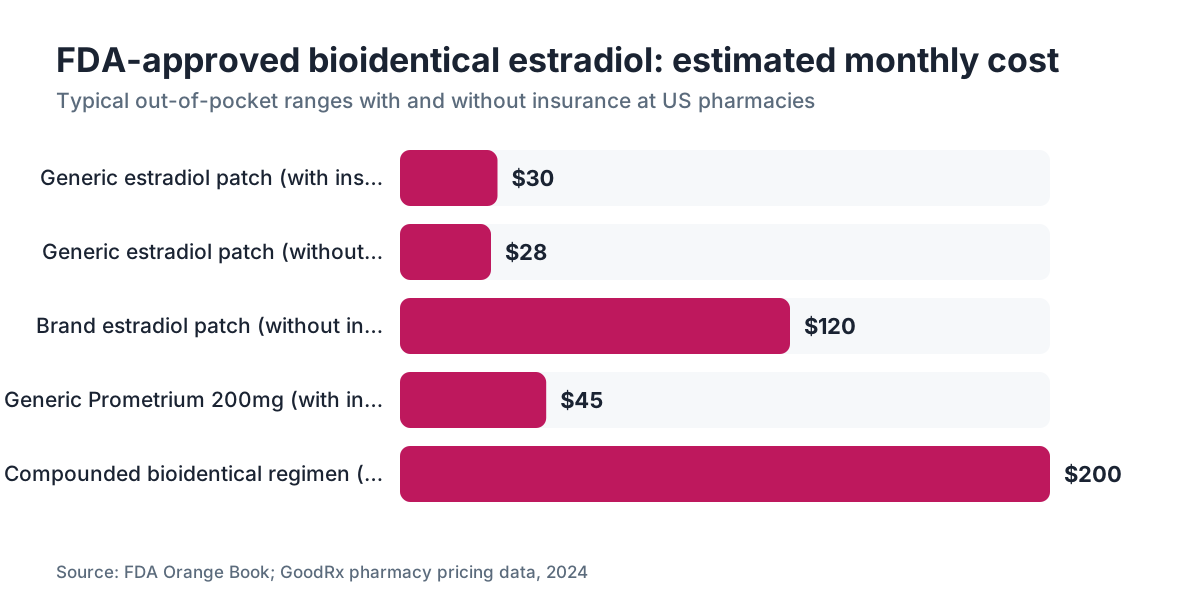
FDA-approved bioidentical hormone products are covered by most insurance plans when prescribed for an approved indication (menopause symptoms), but coverage varies widely by plan and formulary. With insurance, many women pay $20 to $60 per month for a patch or gel. Without insurance, an estradiol patch can run $40 to $150 per month depending on the brand and pharmacy.
Generic estradiol patches and generic Prometrium have brought costs down a lot. GoodRx and similar discount programs can drop the out-of-pocket cost of generic estradiol patches to under $30 for a month's supply at many pharmacies.
Custom-compounded bioidentical hormones are rarely covered by insurance because compounded drugs are not FDA-approved. Out-of-pocket costs for a compounded regimen from a specialty pharmacy often run $100 to $300 or more per month depending on what is included.
The argument that compounding is worth it for customization does not hold up for most women. For the minority who genuinely cannot tolerate FDA-approved formulations, the premium is justified. For women choosing compounding because a provider or wellness clinic marketed it as superior, the data does not support spending more.
Telehealth platforms have made access to FDA-approved prescriptions easier without the markup of a brick-and-mortar functional medicine clinic. A telehealth visit for hormone evaluation typically costs $100 to $250 for an initial consultation depending on the platform, with follow-ups at $75 to $150.
Who should not use bioidentical hormones?
The contraindications for bioidentical estrogen therapy are essentially the same as for any estrogen therapy. Women who should not use systemic estrogen include those with a personal history of estrogen receptor-positive breast cancer, active or recent blood clots (deep vein thrombosis or pulmonary embolism), active liver disease, undiagnosed vaginal bleeding, or known or suspected pregnancy.
Women with a history of migraines with aura, poorly controlled hypertension, or certain inherited clotting disorders (like Factor V Leiden) should discuss risk carefully with a provider before starting oral estrogen. Transdermal estrogen is generally considered safer in these situations than oral estrogen because it avoids the liver first-pass effect on clotting factors [7].
The picture is more nuanced for BRCA mutation carriers. Current guidance from major oncology societies does not absolutely prohibit short-term hormone therapy for BRCA carriers who have had risk-reducing oophorectomy (surgical removal of the ovaries), but this is a highly individualized decision made with an oncologist.
Low-dose vaginal estradiol for genitourinary symptoms has such minimal systemic absorption that it is sometimes considered even in women with breast cancer history, particularly after discussion with the oncologist. Ospemifene (a SERM) and vaginal DHEA (prasterone) are non-estrogen alternatives for this specific indication.
Age alone is not a contraindication, but the risk-benefit picture does shift. For women over 60 or more than 10 years past menopause, starting hormone therapy for the first time carries more cardiovascular caution and requires more individualized discussion.
What questions should I ask my doctor about bioidentical hormones?
The quality of what you get out of a hormone consultation depends a lot on what you bring into it. Here are the questions that will actually move the conversation forward.
First: which specific product are you prescribing, and is it FDA-approved? If a provider hands you a prescription for a compounded Biest or Triest cream as a first-line recommendation with no medical rationale for why an FDA-approved estradiol patch would not work, that is worth pushing back on.
Second: what lab tests will we run before starting, and when will we recheck them? A provider who is not checking baseline labs and planning a follow-up at 8 to 12 weeks is not managing your hormone therapy. They are guessing.
Third: how long do you expect me to be on this? There is no universal answer, but your provider should have an opinion. Some women stay on hormone therapy indefinitely; others use it for a defined period to get through the early menopause transition. NAMS does not recommend a specific time limit for women who are benefiting and have no contraindications [10].
Fourth: what monitoring do I need while on therapy? At minimum, annual mammogram, blood pressure check, and review of any symptoms. If you have a uterus and get unexpected bleeding, an endometrial biopsy may be needed to rule out uterine changes.
Fifth: are there reasons a transdermal route would be better for me than oral? For most women with cardiovascular risk factors or a personal or family history of blood clots, the answer is yes, and a good provider will have already made this recommendation.
If you are weighing telehealth options for hormone prescribing, WomenRx offers full intake evaluations with licensed practitioners who can order labs, discuss FDA-approved bioidentical protocols, and build a monitoring plan matched to your history.
Can bioidentical hormones help with weight changes during menopause?
Menopause-related weight gain, especially the shift of fat to the abdomen, is real and well documented. Estrogen decline changes where the body stores fat and how insulin-sensitive muscle tissue stays. It is more than calories in versus calories out.
Estrogen therapy does not produce meaningful weight loss on its own, but it may blunt the menopause-related shift toward abdominal fat. A meta-analysis published in the journal Menopause found that hormone therapy reduced central adiposity compared to placebo, even without significant total weight change [9]. That matters for metabolic health beyond appearance.
For women who need meaningful weight loss on top of hormone management, GLP-1 receptor agonists like semaglutide or tirzepatide have strong evidence for significant weight reduction. These are different tools for a different problem, and they are not mutually exclusive with hormone therapy. Some women use both.
If weight loss is a major goal alongside menopause management, see our guides on semaglutide for weight loss and how semaglutide compares to tirzepatide for what the GLP-1 data actually shows.
One thing worth knowing: protecting bone density matters as much as weight for long-term health in menopause. Estrogen therapy has a measurable protective effect on bone. For women who stop hormones or who were never candidates for them, a bone density test at menopause is a reasonable baseline.
Frequently asked questions
Are bioidentical hormones safer than traditional HRT?
FDA-approved bioidentical hormones (estradiol, micronized progesterone) have a good safety record and some advantages over older synthetic hormones, particularly oral micronized progesterone's lower clot and breast cancer risk signal compared to synthetic progestins. Custom-compounded bioidentical hormones are not proven safer; they lack the same quality controls and evidence base. "Bioidentical" alone does not mean safe.
Is bioidentical progesterone better than synthetic progestins?
Observational data, including large French and British cohort studies, suggests oral micronized progesterone carries a lower risk of breast cancer and blood clots compared to synthetic progestins like medroxyprogesterone acetate. No large randomized trial has directly compared them head-to-head for these outcomes, so the evidence is strong but not definitive. Most menopause specialists now prefer micronized progesterone when a progestogen is needed.
Can I get bioidentical hormones online or through telehealth?
Yes. Telehealth platforms can evaluate you, order labs, and prescribe FDA-approved bioidentical hormone products (estradiol patches, gels, Prometrium) in most US states after establishing a valid patient-provider relationship. The prescriptions go to a standard pharmacy. Compounded bioidentical hormones require a compounding pharmacy and are also prescribable via telehealth where state law allows.
How long does it take for bioidentical hormones to work?
Most women notice some improvement in hot flashes and night sweats within 2 to 4 weeks of starting estradiol. Full symptom stabilization often takes 8 to 12 weeks as levels equilibrate. Sleep and mood improvements may lag behind vasomotor relief. Vaginal symptoms typically take longer, often 4 to 12 weeks, to respond to estrogen therapy, local or systemic.
Do bioidentical hormones cause weight gain?
Estrogen therapy does not reliably cause weight gain and may help prevent the menopause-related shift of fat to the abdomen. Some women get temporary water retention or bloating when starting therapy, which usually resolves with dose adjustment. The weight gain many women see in perimenopause and menopause is driven by hormonal change; hormone therapy may modestly blunt that effect rather than worsen it.
What is the difference between bioidentical hormones and compounded hormones?
Bioidentical describes the molecular structure: hormones identical to what the human body makes. Compounded describes how a product is made: custom-mixed at a pharmacy rather than manufactured by a pharmaceutical company. Not all bioidentical hormones are compounded (many are FDA-approved products), and not all compounded hormones are bioidentical. The terms overlap but are not interchangeable.
Does the FDA regulate bioidentical hormones?
The FDA regulates FDA-approved bioidentical hormone products (like estradiol patches and Prometrium) fully, including manufacturing standards and labeling. Custom-compounded bioidentical hormones are not FDA-approved and fall under state pharmacy board oversight instead. The FDA has stated it cannot confirm the safety or efficacy of compounded hormone preparations and has taken action against compounding pharmacies for quality violations.
Are bioidentical hormones covered by insurance?
FDA-approved bioidentical hormone products (estradiol patches, gels, pills; Prometrium) are usually covered by health insurance when prescribed for menopause symptoms, though formulary coverage and cost-sharing vary by plan. Generic versions cost $20 to $60 per month with most insurance. Custom-compounded bioidentical hormones are rarely covered by insurance and typically cost $100 to $300 or more per month out of pocket.
Can bioidentical hormones help with mood and anxiety during perimenopause?
Some women report meaningful improvements in mood, anxiety, and irritability on estradiol therapy, particularly in the perimenopausal transition when estrogen fluctuates. Controlled trial data is mixed: estrogen is not approved as an antidepressant, but it appears to have mood-stabilizing effects in hormone-sensitive individuals. For women whose mood symptoms clearly track with hormonal fluctuation, a trial of estrogen is often a reasonable step before or alongside an antidepressant.
What is the difference between biest and standard estradiol?
Biest is a compounded mix of estradiol and estriol, promoted on the theory that combining two estrogens is more physiologic than estradiol alone. There is no clinical trial evidence that Biest is more effective or safer than standard estradiol. Estriol has no FDA-approved indication in the US, and the FDA has challenged marketing claims about estriol-containing compounds. Most menopause specialists do not recommend Biest over FDA-approved estradiol.
At what age should women consider bioidentical hormone therapy?
Most women start evaluating hormone therapy in perimenopause or at menopause, typically between ages 45 and 55, though surgical menopause can occur at any age. NAMS and the Endocrine Society generally support hormone therapy initiation for women under 60 or within 10 years of menopause onset who have bothersome symptoms and no contraindications. Women who experience premature ovarian insufficiency (before age 40) have a strong rationale for hormone therapy up to average menopause age.
Can women with a history of breast cancer use bioidentical hormones?
Systemic estrogen therapy is generally contraindicated for women with a history of estrogen receptor-positive breast cancer. This applies to bioidentical estradiol as much as to any other estrogen. Low-dose vaginal estradiol for genitourinary symptoms is sometimes considered with oncologist input, as systemic absorption is very low. Non-hormonal alternatives (ospemifene, vaginal DHEA, topical moisturizers) are the standard recommendation for this group.
Is testosterone therapy part of bioidentical hormone replacement for women?
Testosterone is often discussed as a component of bioidentical hormone replacement, particularly for low libido, low energy, and sexual dysfunction. No testosterone product is FDA-approved specifically for women in the US. The Global Consensus Position Statement on testosterone therapy for women supports its use for hypoactive sexual desire disorder at physiologic doses, and many providers prescribe it off-label or via compounding at low, female-appropriate doses.
How is bioidentical hormone therapy different from birth control pills?
Birth control pills contain synthetic hormones (usually ethinyl estradiol plus a synthetic progestin) at doses high enough to suppress ovulation. Bioidentical hormone therapy uses estradiol and natural progesterone at lower doses aimed at replacing what declining ovaries are no longer making, not at suppressing the cycle. The two are not interchangeable, and birth control pills are not a substitute for menopausal hormone therapy.
Sources
- FDA, Approved Drug Products with Therapeutic Equivalence Evaluations (Orange Book)
- NIH Women's Health Initiative (WHI) study findings
- FDA, Compounding and the FDA (Human Drug Compounding)
- Endocrine Society, Scientific Statement on Bioidentical Hormones (Journal of Clinical Endocrinology & Metabolism, 2016)
- Cochrane Review: Hormone therapy for vasomotor symptoms (2015, updated)
- ESTHER Study (Canonico et al., Circulation, 2007)
- Global Consensus Position Statement on the Use of Testosterone Therapy for Women (Journal of Clinical Endocrinology & Metabolism, 2019)
- Meta-analysis of hormone therapy and body composition (journal Menopause)
- The Menopause Society (formerly NAMS), 2022 Hormone Therapy Position Statement and 2023 Menopause Practice Guidelines
- Stanczyk FZ et al., Compounded bioidentical hormone preparations: review (Endocrine Reviews, 2013)