Bioidentical hormone therapy doctors: how to find one and what to ask
TL;DR: Bioidentical hormone therapy doctors prescribe hormones molecularly identical to those your body makes. The term covers both FDA-approved products and custom compounded ones. Your outcome depends far more on the doctor's training and monitoring protocol than on the word 'bioidentical.' Here is how to find a qualified prescriber, vet them, and know when a standard HRT option works just as well.
What does a bioidentical hormone therapy doctor actually do?
A bioidentical hormone therapy doctor evaluates your hormone levels, symptoms, and health history, then prescribes hormones that are chemically identical to the estradiol, progesterone, or testosterone your ovaries once produced in abundance. That last word matters. 'Bioidentical' describes the molecule, not the product. FDA-approved options like estradiol patches, Prometrium (oral micronized progesterone), and compounded creams can all be bioidentical. So can a custom pellet from a compounding pharmacy. The prescriber's job is to figure out which form, dose, and delivery route fits your physiology and your risk profile.
The North American Menopause Society (NAMS) distinguishes between FDA-approved bioidentical hormones and compounded bioidentical hormones (cBHT), noting that the former have documented efficacy and safety data while the latter do not [1]. That distinction shapes what a good doctor should explain to you at your first appointment.
In practice these doctors come from several specialties: ob-gyn, internal medicine, family medicine, reproductive endocrinology, and integrative medicine. Some have completed additional fellowship training through groups like the Menopause Society. Others trained through continuing medical education conferences or functional-medicine programs of variable rigor. Credential-checking is not optional.
See our overview of hormone replacement therapy for a broader look at the full landscape of options before you book your first consult.
What credentials should a bioidentical hormone replacement therapy doctor have?
Board certification in the prescriber's base specialty (ob-gyn, internal medicine, family medicine) is the floor, not the ceiling. Beyond that, two credentials carry the most weight in menopause hormone care.
The Menopause Society Certified Menopause Practitioner (MSCP) designation, awarded by NAMS, requires passing a rigorous written examination covering reproductive endocrinology, cardiovascular risk, bone health, and sexual health [2]. As of 2024 fewer than 1,200 clinicians in North America hold the credential. That is a very small pool relative to demand.
The American College of Obstetricians and Gynecologists (ACOG) also publishes continuing medical education on menopause management, and their Practice Bulletins are a reasonable signal that an ob-gyn is keeping current [3].
Red flags to watch for:
- No base-specialty board certification
- Credentials issued only by the clinic that employed them or by a proprietary training program with no external exam
- A certificate from a compounding pharmacy's in-house education arm (this is a conflict of interest, not a credential)
- Promises to 'balance your hormones' with no mention of how they will monitor you or what endpoints they are targeting
A good prescriber will tell you upfront what labs they order, how often, and what they are looking for. If the answer is vague, keep looking.
How do bioidentical hormone therapy doctors differ from standard HRT prescribers?
Honestly, in many cases the molecule is the same. Estradiol is estradiol. Micronized progesterone is micronized progesterone. A physician who prescribes an FDA-approved estradiol patch and a physician who prescribes a compounded estradiol cream are both prescribing bioidentical estrogen. The practical differences are in the product's regulatory history and in the prescriber's philosophy.
Doctors who lean toward compounded bioidentical hormone therapy (cBHT) often emphasize customized dosing and alternative delivery routes like subdermal pellets or troches (dissolvable tablets). Doctors who stay with FDA-approved options point to the pharmacokinetic data: approved products have been tested for consistent absorption, whereas compounded formulations can vary batch to batch [1].
There is also a fee-for-service gap. Many cBHT-focused practices operate outside insurance networks, which means higher out-of-pocket costs. A telehealth visit with a NAMS-certified prescriber for FDA-approved HRT might run $100 to $200 per consult, while an in-person pellet insertion can cost $300 to $600 per procedure, repeated every 3 to 6 months [4].
The Endocrine Society's 2023 clinical practice guideline on menopause states that "compounded hormone therapy is associated with the same risks as licensed hormone therapy" and adds that compounded preparations carry additional risks related to variability in dosing [5]. That is a direct quote from a primary source, and it is worth sharing with any prescriber who implies that compounded hormones are categorically safer.
See our deeper look at progesterone for why the form of progestogen your doctor chooses matters for cardiovascular and breast risk.
What do reviews on bioidentical hormone replacement therapy actually tell you?
Patient reviews of bioidentical hormone replacement therapy doctors are everywhere: Google, Healthgrades, RateMDs, Reddit's r/Menopause, and Facebook menopause groups with tens of thousands of members. They are useful but need translation.
Positive reviews cluster around a few real experiences: the doctor listened for more than 15 minutes, symptoms improved within a few weeks, and the prescriber adjusted the dose when it was not working instead of saying 'your labs are normal.' Those are genuine signals of a thoughtful clinician.
Negative reviews fall into predictable buckets too: the doctor dismissed symptoms, would only prescribe synthetic hormones and would not discuss compounded options (or vice versa), ran expensive panels with no clear clinical rationale, or pushed pellets aggressively without explaining risks.
What reviews cannot tell you is whether the treatment was evidence-based, whether the monitoring protocol was appropriate, or whether the improvements patients report would also have happened with a lower-cost FDA-approved alternative. Symptom relief is real but attribution is hard.
One honest data point: a 2022 survey published in Menopause (the journal of NAMS) found that 41 percent of women using cBHT reported no discussion with their provider about the difference between compounded and FDA-approved options [6]. That gap between patient perception and clinical communication is exactly where reviews should make you skeptical of a practice.
The most useful review signals: the prescriber explains trade-offs, adjusts doses over time, and orders follow-up labs. A practice with five-star reviews that all mention 'finally feeling like myself' but never mention follow-up appointments should prompt questions.
What questions should you ask a bioidentical hormone replacement doctor at your first appointment?
You have limited time and your prescriber's willingness to answer directly tells you a lot. Here are questions that actually separate careful clinicians from less careful ones.
-
Which hormone products are you considering for me, and are they FDA-approved or compounded? What is the specific reason for that choice in my case?
-
What labs will you order at baseline, and what will you order to monitor my response? How often?
-
If I am perimenopausal with an intact uterus, how will you protect my endometrium? (A correct answer always involves progestogen.)
-
What are the absolute contraindications that would make you not prescribe HRT to me? (A good prescriber has a clear list and applies it.)
-
Where did you train in menopause medicine specifically? Are you an MSCP?
-
If I want to stop, what is the process?
-
Will you communicate with my primary care physician or ob-gyn?
If a prescriber is visibly irritated by these questions, that is your answer. A clinician who has done this work for years finds them easy to answer.
For context on where you are in your hormonal journey before your appointment, our article on perimenopause age covers what to expect and when symptoms typically start.
How do you find bioidentical hormone therapy doctors near you or via telehealth?
NAMS maintains a provider directory at menopause.org where you can search by zip code for certified menopause practitioners [2]. This is the most reliable starting point for finding a bioidentical hormone replacement doctor because it filters for practitioners who have passed an independent examination, more than practitioners who simply call themselves hormone specialists.
The Endocrine Society's Find an Endocrinologist tool (at endocrine.org) surfaces reproductive endocrinologists who specialize in menopause, particularly useful if you have a complex history involving thyroid disease, adrenal issues, or premature ovarian insufficiency [5].
Telehealth has changed access significantly. Women in rural areas, or in states with historically thin specialist coverage (including some areas around Gallatin, Tennessee, and similar mid-sized markets with limited specialist density), can now reach NAMS-certified prescribers without a multi-hour drive. Bioidentical hormone therapy in Gallatin and similar markets used to mean driving to Nashville or waiting months for an appointment. Telehealth practices serving those zip codes now offer initial consultations within a week in many cases.
WomenRx operates as a telehealth service specifically for women's hormones, GLP-1 therapy, and peptides, and its prescribers can assess whether FDA-approved bioidentical options or a referral for compounded therapy fits your situation.
When evaluating a telehealth prescriber, apply the same credential checks. Telehealth licensing means the provider must be licensed in your state, but it does not guarantee specialty training. Ask the same questions you would in person.
What conditions do bioidentical hormone doctors typically treat?
The primary indication is menopause-related hormone deficiency: hot flashes, night sweats, sleep disruption, vaginal dryness, mood changes, and cognitive fog tied to declining estrogen and progesterone. NAMS 2023 guidelines confirm that hormone therapy remains the most effective treatment for vasomotor symptoms of menopause, and that for women under 60 or within 10 years of menopause onset, the benefit-risk ratio is favorable for most [7].
Beyond classic menopause, these doctors treat:
- Perimenopause: erratic cycles, worsening PMS, early vasomotor symptoms. Read more about menopause and when menopause starts for the typical timeline.
- Premature ovarian insufficiency (POI): cessation of ovarian function before age 40, where hormone therapy is urgent for bone and cardiovascular protection
- Low testosterone in women: fatigue, low libido, poor exercise recovery. FDA-approved testosterone products for women do not exist in the US, so this is always compounded or off-label
- Surgical menopause: abrupt loss of hormones after oophorectomy, which often requires higher starting doses
- Genitourinary syndrome of menopause (GSM): vaginal atrophy, recurrent UTIs, painful sex, often treated with local low-dose vaginal estrogen
A bone density screening is often part of the initial workup because estrogen loss accelerates bone resorption sharply in the first 5 to 7 years after menopause [8]. See our piece on bone density tests for how to interpret your results and discuss them with your prescriber.
Weight changes are another reason women seek these doctors. Some find that optimizing estrogen improves body composition; others need additional support. For that overlap, our coverage of semaglutide for weight loss is worth reading alongside your hormone evaluation.
What is the difference between FDA-approved bioidentical hormones and compounded ones?
This is the single most misunderstood question in the space, and your prescriber's answer to it tells you whether they are being straight with you.
FDA-approved bioidentical hormones include: 17-beta estradiol in patches (Climara, Vivelle-Dot), gels (EstroGel, Divigel), sprays (Evamist), rings (Estring, Femring), vaginal inserts (Vagifem/Yuvafem), and oral tablets (Estrace); and micronized progesterone (Prometrium) [9]. These products have gone through clinical trials for efficacy, have defined pharmacokinetic profiles, and carry FDA-reviewed labeling including risk disclosures.
Compounded bioidentical hormones are mixed by a licensed compounding pharmacy, typically based on a prescriber's order. They are not FDA-approved in the sense that the specific compounded product has never been reviewed for that patient's dose or formulation. The FDA's position, stated directly: "Compounded drugs do not have FDA approval" and the agency has noted concerns about hormone pellet implants in particular, including cases of serious infection, pellet extrusion, and inability to reverse the dose once implanted [9].
That said, compounded hormones fill real gaps. No FDA-approved testosterone product exists for women in the US. Some women genuinely cannot tolerate the preservatives or carriers in approved products. Customized vaginal estriol formulations serve women who need that specific molecule. These are legitimate clinical reasons, not marketing.
The key table comparing the two:
| Feature | FDA-Approved Bioidentical | Compounded Bioidentical |
|---|---|---|
| Regulatory review | Yes, full NDA or ANDA | No (pharmacy-level oversight only) |
| Batch-to-batch consistency | Tested, required | Variable, not independently verified |
| Insurance coverage | Often covered | Usually not covered |
| Dosing flexibility | Fixed commercial doses | Custom |
| Pellet option | No | Yes |
| Testosterone for women | No approved product | Yes, but off-label |
| Evidence base | Randomized trials | Limited; mostly observational |
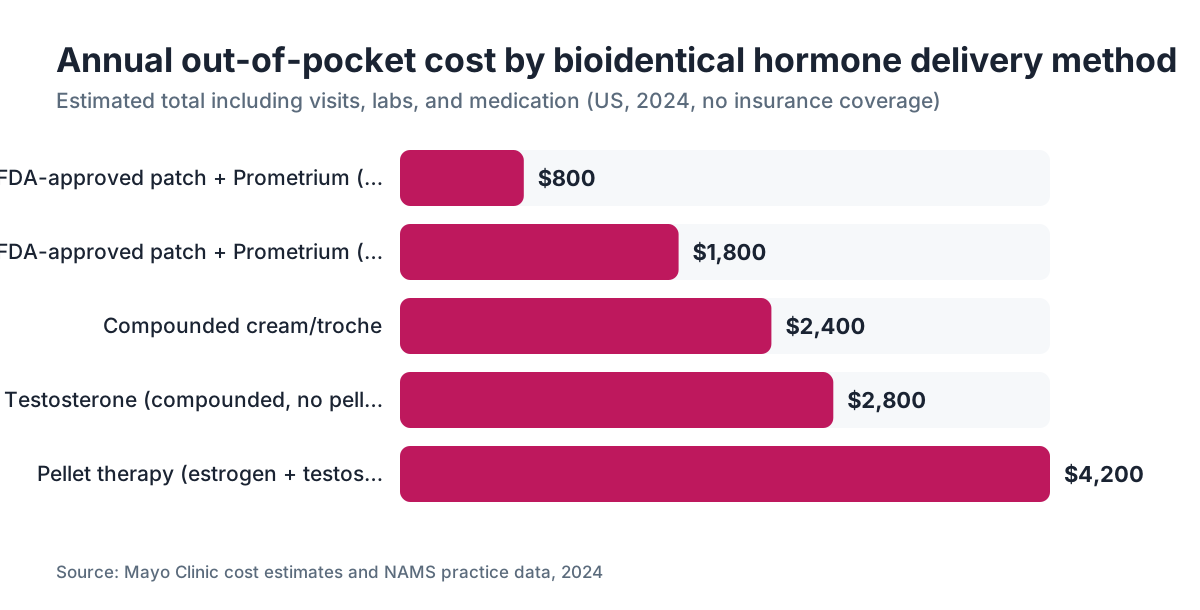
How much does a bioidentical hormone therapy doctor cost?
Cost breaks down into the visit, the labs, and the ongoing medication. None of these are standardized and they vary a lot by practice model.
Visit costs: An initial consult with a menopause specialist in-network can run $150 to $400 depending on your plan's specialist copay. Out-of-network or direct-pay practices charge $200 to $500 for a new-patient visit. Telehealth initial visits range from $75 to $250 depending on the platform and the provider's credentials. Follow-up visits are shorter and cheaper, typically $75 to $150.
Lab costs: A full hormone panel (FSH, LH, estradiol, progesterone, total and free testosterone, SHBG, thyroid) through a commercial lab can cost $200 to $800 out of pocket, or much less if covered by insurance. Some practices charge a flat 'panel fee' that bundles labs with interpretation.
Medication costs: FDA-approved estradiol patches cost $30 to $80 per month with insurance, or $50 to $120 out of pocket. Prometrium (micronized progesterone) is $40 to $90 per month without insurance. Compounded creams and troches vary widely, typically $50 to $150 per month. Pellet insertion is the most expensive route at $300 to $650 per procedure, 2 to 4 times a year [4].
Total annual cost at a cash-pay compounded pellet practice: $2,000 to $5,000 is a realistic estimate, not counting labs. Total annual cost using FDA-approved HRT covered by insurance: $500 to $1,500 depending on your plan and whether you need combination therapy.
The price difference is real. So is the trade-off in flexibility and monitoring. A doctor who recommends the most expensive option without walking you through why it fits your specific case better than a covered alternative deserves harder questions.
Are there risks specific to bioidentical hormone therapy that your doctor should discuss?
Yes, and they mirror the risks of conventional HRT rather than eliminating them. This is probably the biggest misconception the term 'bioidentical' creates: the idea that a hormone identical to yours is inherently safe. Your body produced estrogen for 30 years and you still need to manage its risks when you reintroduce it.
The main risks a prescriber should cover:
Endometrial hyperplasia and cancer: Any woman with a uterus taking estrogen needs adequate progestogen. This is non-negotiable regardless of whether the estrogen is bioidentical or synthetic. Bioidentical progesterone (Prometrium) has a slightly more favorable data profile on this than older synthetic progestins, but 'adequate' still means consistent and monitored [7].
Breast cancer: The Women's Health Initiative (WHI) data, which originally alarmed clinicians, has been re-analyzed at length. The current picture, per NAMS 2023, is that the absolute risk increase for most women under 60 using estrogen plus progesterone is small, roughly 1 additional case per 1,000 women per year of use, and that timing and formulation matter [7]. Your personal risk factors (family history, BRCA status, prior biopsies) are what the prescriber should be weighing.
Venous thromboembolism (VTE): Oral estrogen raises clotting risk more than transdermal estrogen. Transdermal delivery bypasses first-pass liver metabolism. This is a reason many thoughtful prescribers prefer patches or gels over oral pills, not because they are compounded but because the route matters [7].
Pellet-specific risks: The FDA has flagged pellet insertion complications including infection, extrusion, and inability to reduce dose if a patient has an adverse response [9]. This is a real limitation. Once a pellet is in, you cannot take it out.
A prescriber who discusses none of these is either rushing or avoiding the conversation. Either way, that is your signal to find someone else.
What should follow-up care look like with a bioidentical hormone doctor?
Good follow-up is one of the clearest separators between careful and careless prescribers. Here is what a reasonable monitoring protocol looks like.
At 6 to 12 weeks after starting therapy: symptom check, blood pressure, and (depending on the formulation) a serum hormone level. The purpose is not to 'optimize' a number but to confirm the dose is in a physiologically appropriate range and that you are absorbing it as expected.
Annually: repeat labs, a clinical breast exam or mammogram coordination, blood pressure, and a conversation about whether continued therapy still makes sense given any new health developments.
For women on testosterone: more frequent monitoring because testosterone can aromatize to estrogen and because supraphysiologic levels carry their own risks (acne, hair loss, voice changes, clitoral enlargement at high doses).
For women using pellets: levels should be checked 4 to 6 weeks post-insertion when the pellet is releasing most actively, because peak levels can run much higher than trough levels, sometimes reaching supraphysiologic testosterone ranges [4].
For bone health: a baseline DEXA scan is reasonable for most women entering menopause, with a follow-up scan 2 years later if the baseline is abnormal or if the woman has significant risk factors [8].
A practice that charges for an initial consult and then essentially automates refills without follow-up labs is not practicing careful medicine. It is a subscription business. Those two things can coexist, but the patient bears the risk. WomenRx includes structured follow-up as part of its hormone care protocols, which is one way to tell a patient-focused telehealth service from a prescription vending machine.
For context on estrogen delivery specifically, see our piece on estrogen patches.
Is telehealth a safe way to access bioidentical hormone replacement therapy doctors?
For the majority of perimenopausal and menopausal women without complex comorbidities, yes, telehealth is a legitimate and often superior access point. The clinical workup (history, symptom inventory, labs ordered through a local draw site) translates well to video. The prescription gets sent to a pharmacy electronically. Follow-up labs get ordered the same way.
Where telehealth has limits: women with a history of hormone-sensitive cancer who want HRT need an in-person oncology consultation first. Women with significant cardiovascular disease benefit from a physical exam to assess blood pressure and vascular health before starting estrogen. Women seeking pellet insertion obviously need an in-person procedure.
The regulatory framework: telehealth prescribers must be licensed in your state. Ryan Haight Act requirements govern controlled substances (testosterone is Schedule III), meaning testosterone prescribing via telehealth requires at least one in-person evaluation or falls under DEA-registered telehealth exceptions that have been subject to changing rules [10]. Non-controlled hormones (estradiol, progesterone) have no federal telehealth prescribing restriction beyond state licensure.
Something worth knowing: a 2021 JAMA Internal Medicine analysis found that telemedicine visits for menopause care resulted in similar patient satisfaction and symptom improvement scores compared to in-person visits, with the expected caveat that physical examination was not performed [11]. That is real evidence, not a platform's marketing claim.
For women curious about other telehealth hormone-adjacent therapies, our coverage of semaglutide and semaglutide vs tirzepatide covers the GLP-1 landscape that many hormone patients are asking about at the same time.
Frequently asked questions
What is the difference between a bioidentical hormone therapy doctor and a regular gynecologist?
A gynecologist and a bioidentical hormone prescriber can be the same person. The difference is in focus and training. Not all ob-gyns complete dedicated menopause education; the Menopause Society Certified Menopause Practitioner (MSCP) credential requires a separate exam. A self-described 'bioidentical hormone doctor' may or may not have formal menopause specialty training. Check credentials in both cases.
Can a primary care doctor prescribe bioidentical hormones?
Yes. Family medicine and internal medicine physicians can and do prescribe FDA-approved bioidentical hormones. Some have completed menopause fellowship or CME training. The limiting factor is experience with dosing, monitoring, and managing side effects, which varies widely. If your PCP is comfortable with menopause care and uses current NAMS guidelines, their specialty title matters less than their knowledge.
Do bioidentical hormone replacement therapy doctors take insurance?
Many do, especially those who prescribe FDA-approved products and practice within a health system or multi-specialty group. Cash-pay and direct-pay practices that specialize in compounded hormones, pellets, or 'functional medicine' hormone therapy usually do not accept insurance for visits. Lab work is often separately billable to insurance regardless of the practice model.
How long does it take to feel better after starting bioidentical hormone therapy?
Vasomotor symptoms (hot flashes, night sweats) often improve within 4 to 8 weeks of reaching a therapeutic dose. Sleep disruption can improve faster, sometimes within 2 weeks. Vaginal dryness and genitourinary symptoms take 3 to 6 months of consistent use to fully resolve. Mood and cognitive effects are harder to predict and vary more between individuals. Most prescribers reassess at 8 to 12 weeks.
Are bioidentical hormones safer than synthetic hormones?
The evidence does not support the idea that bioidentical hormones are categorically safer. Bioidentical estradiol and progesterone do have favorable data compared to some older synthetic options, but that is a comparison between specific molecules, not a broad safety claim for everything marketed as 'bioidentical.' The Endocrine Society's 2023 guideline states compounded bioidentical therapy carries the same risks as conventional HRT, plus additional risks from dosing variability.
What labs do bioidentical hormone therapy doctors typically order?
A reasonable baseline panel includes FSH, LH, estradiol, progesterone (timed to cycle phase if still cycling), total and free testosterone, sex hormone binding globulin (SHBG), and TSH. Some add a metabolic panel, fasting glucose, and lipids. CBC is common if the prescriber is considering testosterone. Saliva testing is used by some practitioners but lacks standardization and is not recommended by NAMS or the Endocrine Society for routine monitoring.
What is the typical cost of bioidentical hormone pellet therapy?
Pellet insertion typically costs $300 to $650 per procedure, and most patients need 2 to 4 insertions per year, putting the annual medication cost at $600 to $2,600 before adding office visits and labs. Insurance does not cover pellets. This is the most expensive delivery method for bioidentical hormones and the one with the fewest reversibility options if something goes wrong.
Can I get bioidentical hormone therapy for perimenopause, or only after full menopause?
Hormone therapy is frequently used in perimenopause, sometimes earlier than most women expect. Irregular cycles with worsening PMS, sleep disruption, anxiety, and early hot flashes can all respond to low-dose hormonal support well before the final menstrual period. A prescriber who insists you wait until you are 'officially' in menopause is behind current clinical thinking. NAMS guidelines support treating symptomatic perimenopause.
Are there any conditions that would disqualify me from bioidentical hormone therapy?
Absolute contraindications include unexplained vaginal bleeding, active or recent estrogen-receptor positive breast cancer, active venous thromboembolism, recent stroke or myocardial infarction, and known clotting disorders (depending on severity and delivery route). Women with a history of hormone-sensitive cancer should have a specific oncology consult before any hormone therapy. A good prescriber takes a full history before prescribing, not after.
What is the difference between estrogen and progesterone in bioidentical hormone therapy?
Estrogen (usually estradiol) addresses most classic menopause symptoms: hot flashes, night sweats, vaginal dryness, cognitive changes. Progesterone protects the uterine lining from estrogen-driven overgrowth in women with an intact uterus. It may also improve sleep. Women who have had a hysterectomy typically use estrogen alone. Progesterone without estrogen is sometimes used in perimenopause when progesterone levels drop before estrogen does.
How do I find a bioidentical hormone replacement therapy doctor through telehealth?
Start with the NAMS provider directory at menopause.org to find MSCP-certified practitioners who offer telehealth visits. Confirm the prescriber is licensed in your state. Ask whether they prescribe FDA-approved options, compounded options, or both, and what their monitoring protocol is. Most telehealth hormone practices can complete your labs through a local draw site and have your prescription ready within 1 to 2 weeks of your consult.
What should I expect at my first bioidentical hormone doctor appointment?
Expect a detailed health history covering your menstrual history, symptoms, family history of breast and cardiovascular disease, bone health, and current medications. A good prescriber orders baseline labs before prescribing, not after. They explain which products they are recommending and why, discuss the risks alongside the benefits, and tell you how and when they will follow up. First appointments often run 45 to 60 minutes with a specialist.
How does weight gain in menopause relate to hormone therapy?
Estrogen loss shifts fat distribution toward the abdomen and reduces insulin sensitivity, both of which contribute to weight gain in menopause. Hormone therapy can partially offset this, though it is not a weight loss treatment. Some women pursuing hormone therapy are also appropriate candidates for GLP-1 receptor agonists. Your hormone prescriber and a GLP-1 prescriber ideally communicate, since both affect metabolism and body composition.
Is saliva testing for hormones reliable when used by bioidentical hormone doctors?
Saliva testing is popular in some compounding-focused practices but is not validated for clinical hormone management. NAMS, the Endocrine Society, and ACOG all recommend serum (blood) testing for estradiol, testosterone, and progesterone. Saliva results are highly variable based on hydration, timing, and lab methodology, and they do not reliably predict tissue levels. A prescriber who uses only saliva testing to make dosing decisions is working outside the clinical evidence base.
Sources
- NAMS (North American Menopause Society), Compounded Bioidentical Hormone Therapy position statement
- NAMS, Menopause Society Certified Menopause Practitioner (MSCP) program description
- ACOG (American College of Obstetricians and Gynecologists), Practice Bulletin on Menopause
- Mayo Clinic, Hormone therapy: Is it right for you?
- Endocrine Society, Clinical Practice Guideline: Treatment of Symptoms of the Menopause (2023)
- Menopause (NAMS journal), survey on patient-provider communication about cBHT (2022)
- NAMS, The 2023 Menopause Society Position Statement on Hormone Therapy
- National Institutes of Health, Osteoporosis and Related Bone Diseases resource
- U.S. Food and Drug Administration, Bio-identicals: Sorting Myths from Facts
- U.S. Drug Enforcement Administration, Ryan Haight Online Pharmacy Consumer Protection Act
- JAMA Internal Medicine, Telemedicine and Menopause Care patient outcomes analysis (2021)