Best time of day to apply an estradiol patch for hot flashes
TL;DR: For most women, the exact hour you apply an estradiol patch matters less than applying it on the same schedule, rotating sites, and never letting it lapse. Patches reach steady-state blood levels within 24 to 48 hours and deliver hormone continuously. Morning application has practical adherence advantages. Site rotation and skin prep are what most clinicians watch closely, not the clock.
Does the time of day you apply your estradiol patch actually matter for hot flashes?
Not much. The rhythm you pick matters more than the hour.
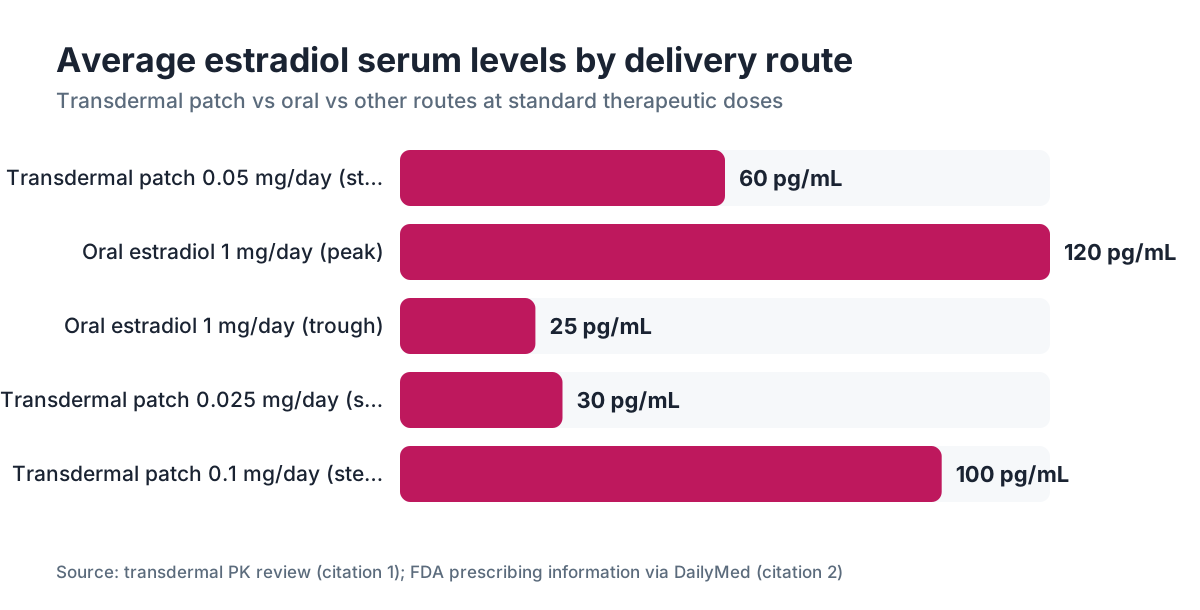
Estradiol patches deliver hormone through the skin at a controlled, near-constant rate. Oral estradiol spikes in the bloodstream within one to two hours of a pill and then falls off. A patch does the opposite: it produces a flat pharmacokinetic curve once it reaches steady state, which typically arrives within 24 to 48 hours of first application [1].
Here's what that means in practice. A patch applied at 7 a.m. and one applied at 9 p.m. produce nearly identical average estradiol levels by the end of day two. The FDA-approved labeling for twice-weekly patches (like Vivelle-Dot and its generics) tells women to apply a new patch twice weekly on a consistent schedule, with no specific hour of the day named [2].
So the best time is the time you'll actually remember. Consistency is the whole pharmacological point.
How does an estradiol patch work, and why does steady-state matter for hot flash control?
Hot flashes come from a narrowing of the thermoregulatory zone in the hypothalamus, driven largely by low estradiol and the surge in norepinephrine that follows [3]. Estrogen widens that zone back out. Relief holds only when estradiol blood levels stay within a therapeutic range without big dips.
Twice-weekly patches (changed every three to four days) and weekly patches (changed every seven days) both release estradiol at a steady microgram-per-hour rate across their wear time. A standard 0.05 mg/day patch is labeled to release about 50 micrograms of estradiol per 24 hours [2]. Blood levels from a properly applied patch stay far more stable than oral dosing, which is part of why patches are often preferred for women who get breakthrough hot flashes mid-cycle on pills.
The catch is absorption. If the patch peels early, if you forget a change day, or if you apply it to a poor-absorption site (the breast, an abdomen with heavy body hair, or skin that was just moisturized), levels drop and hot flashes can return within hours. That variability, not the hour of application, is what most often disrupts symptom control [4].
The menopause society has published detailed guidance on transdermal estrogen delivery and why consistent absorption matters more than timing precision.
Are there any practical reasons to prefer morning vs. evening patch application?
Yes, a few. None are pharmacologically decisive, but they're worth knowing.
Morning application tends to win on adherence. Most people move through a morning routine like a checklist, which makes a skipped step easy to notice. Shower, dress, apply patch. Evening routines drift.
If you apply after a shower (which most dermatologists and the prescribing information both recommend), a morning shower makes morning application the natural fit [2]. Skin has to be clean, dry, and free of lotion or oils before the patch goes on. Applying right after a shower, once skin is fully dry (give it a few minutes), produces better adhesion than applying over moisturized or sweaty skin.
One argument for evening: if a new patch is going to cause any mild skin irritation, it usually shows up in the first couple of hours. Applying before bed means you sleep through that window. That's a comfort argument, not a hormonal one.
Night sweats specifically: no published evidence shows that an evening application gives faster relief overnight. Because the patch sits at steady state and delivers hormone continuously, a p.m. change doesn't create a spike that would cover the night better than an a.m. change.
Twice-weekly vs. weekly patches: does the change schedule affect symptom control?
This is where your timing choices genuinely move the needle.
Twice-weekly patches (changed Monday/Thursday or Tuesday/Friday, say) hold more stable estradiol levels across the week than weekly patches, mostly because there's less time for levels to tail off before the next change. A 2007 analysis in Circulation from the ESTHER study found that transdermal estradiol carried a lower venous thromboembolism risk than oral estrogen, in part because transdermal delivery bypasses first-pass hepatic metabolism [5].
Weekly patches trade some of that stability for convenience. For most women with mild to moderate hot flashes, a weekly patch at the right dose controls symptoms fine. Women with more severe vasomotor symptoms sometimes find twice-weekly patches give steadier day-to-day relief.
The schedule comparison:
| Patch type | Change frequency | Brands (US examples) | Typical dose range | |---|---|---|---| | Twice-weekly | Every 3-4 days | Vivelle-Dot, Minivelle, generics | 0.025-0.1 mg/day | | Weekly | Every 7 days | Climara, generics | 0.025-0.1 mg/day |
If breakthrough hot flashes hit near the end of your wear time (day 3 to 4 for twice-weekly, day 6 to 7 for weekly), that's a strong signal to talk to your prescriber about a higher dose or a switch from weekly to twice-weekly. It's not a reason to change the application time.
Where you apply the patch matters more than when: rotation and site selection
Most online sources underplay this part.
The FDA-approved application sites for most estradiol patches are the lower abdomen, buttocks, and outer thigh, away from the waistband. Some patches are approved only for the buttocks. Always check the prescribing information for your specific product [2].
Skin absorption varies a lot by body site. The lower abdomen and buttocks absorb transdermal estradiol reasonably well, while the breast is specifically contraindicated. Site choice changes how much hormone actually reaches your bloodstream.
Rotation matters for two reasons. Repeated application to the same spot causes mild skin inflammation and shifts local absorption over time. It also reduces the raised, itchy reactions some women get from adhesive buildup. Move the patch to a fresh spot at each change, and rest any used site for at least a week.
Four site-rotation rules that hold up in clinical practice:
- Apply to clean, dry skin. Wait at least 5 minutes after a shower.
- No lotions, oils, powders, or sunscreen on the site first.
- Press the patch firmly with your palm for 30 to 60 seconds after application.
- If a patch peels before its change day, apply a new one to a fresh site and keep the original change schedule (confirm with your prescribing information) [2].
What if my hot flashes aren't controlled even with the patch on correctly?
Inconsistent absorption is the usual culprit, but a few others show up.
Dose is the first thing to revisit. Standard starting doses for symptomatic menopause run 0.025 to 0.05 mg/day. Some women need 0.075 or 0.1 mg/day for adequate control. The North American Menopause Society (NAMS) recommends starting at the lowest effective dose and titrating on symptom response, not on serum estradiol targets [6].
When you started treatment matters too. The timing hypothesis, sometimes called the window of opportunity, suggests women who start hormone therapy within ten years of menopause onset or before age 60 tend to get the best cardiovascular and symptom outcomes [7]. This doesn't touch the hour of day you apply your patch, but delayed treatment can mean a longer ramp-up before full symptom control.
Other variables that blunt patch effectiveness: obesity (adipose tissue metabolizes estradiol peripherally), thyroid dysfunction (often confused with or layered on top of menopause symptoms; see thyroid hormone replacement therapy for more on that overlap), and medications that induce liver enzymes, which can affect systemic estradiol even with transdermal delivery.
If hot flashes persist despite correct patch use, ask your provider to check a mid-cycle serum estradiol level. The therapeutic range for symptom relief is generally 40 to 100 pg/mL, though NAMS notes there is no established minimum threshold that guarantees symptom control for every woman [6].
At WomenRx, clinicians often review patch adherence patterns alongside serum levels when patients report ongoing breakthrough symptoms, because when the flashes occur (end of wear period vs. throughout the day) usually points straight to the fix.
Does the estradiol patch help with night sweats specifically, and does evening application change that?
Night sweats are hot flashes that happen during sleep. Same underlying mechanism, the narrowed hypothalamic thermoregulatory zone, and the same treatment [3].
Because the patch is already at steady state, the time of day you change it doesn't create a surge that would preferentially cover nighttime. Hormone level from a properly worn patch is essentially the same at 2 a.m. as at 2 p.m.
What does move night sweats is dose adequacy. Women with severe night sweats sometimes need a slightly higher dose than what controls daytime flashes, because sleep itself involves thermoregulatory shifts and because waking from sweating compounds the sleep disruption.
Non-hormonal adjuncts with real evidence: cognitive behavioral therapy for menopausal hot flashes (tested in the MENOS 2 trial) [11], fezolinetant (FDA-approved as a nonhormonal option in 2023) [12], and clonidine or gabapentin for women who can't use estrogen [3]. None of them change the patch-timing question.
You can also read health & her perimenopause support for non-prescription approaches to sleep disruption during perimenopause, which often work alongside HRT rather than instead of it.
Can you apply the estradiol patch after a shower, and does that affect absorption?
Yes. Applying after a shower is actually recommended, with one caveat: the skin has to be fully dry first.
Wet or damp skin has a temporarily disrupted surface lipid layer and can stop the adhesive from making proper contact. The result is early peeling and inconsistent hormone delivery. Most prescribing information recommends waiting at least 2 to 3 minutes after drying off before applying [2].
Don't apply to any area you've just shaved. Microtears from shaving don't boost absorption in any useful way, and they raise local irritation.
Heat increases transdermal absorption somewhat. A 2000 study in Clinical Therapeutics found that applying heat via a heating pad to a patch site raised estradiol absorption by roughly 25% [4]. Worth noting, but not a reason to deliberately heat the site. It does mean a hot tub or sauna could transiently increase delivery, which is worth mentioning to your provider if you use those regularly.
Swimming and exercise don't much affect a well-adhered patch. Most patches are built to stay on through normal water exposure.
Are there drug interactions or health conditions that change the best timing for estradiol patch use?
A few worth knowing.
Thyroid hormone replacement: if you take levothyroxine, note that oral estrogen (not the patch) raises thyroid-binding globulin and can push up levothyroxine requirements. Transdermal estradiol has a much smaller effect on binding globulin because it bypasses first-pass hepatic metabolism, but it's still worth monitoring, especially in the first months of starting or changing your dose. The issue isn't the hour of day, it's being aware the two interact [8].
St. John's Wort: this herbal supplement induces CYP3A4 enzymes and can lower estradiol levels from patches. If you take it, your prescriber should know [10].
Blood clotting: transdermal estradiol carries a notably lower venous thromboembolism risk than oral estradiol because it avoids hepatic first-pass effects on clotting factors [5]. That's one of the main reasons the patch is often preferred over oral estrogen for women with cardiovascular risk factors.
Breast cancer history: for women who have had certain breast cancers, estrogen therapy may be contraindicated or require specialist guidance. This isn't about patch timing, it's about whether the patch is appropriate at all, which is a conversation with your oncologist and gynecologist [9].
Women who had peri menopausal symptoms for years before their final period sometimes start transdermal estradiol earlier in the transition. The timing question there is about when in the cycle to initiate, not what hour of the day.
What does the FDA label actually say about when to apply an estradiol patch?
The FDA-approved prescribing information for Vivelle-Dot, a widely prescribed twice-weekly 17-beta-estradiol patch, says the system should be applied twice weekly and that the adhesive side should go on a clean, dry area of the lower abdomen, avoiding the waistline [2]. It names no time of day.
The label instructs women to replace the system on the same two days of each week. That's the scheduling instruction that matters clinically. Consistency of change day, not change hour.
The label also carries the standard class-wide warnings for estrogen-alone therapy: increased risk of endometrial cancer (for women with a uterus not also taking a progestogen), cardiovascular events, and breast cancer with long-term use. These risks are dose-dependent and unaffected by time of application [2].
The NAMS 2022 Hormone Therapy Position Statement, the most current North American guidance, confirms that transdermal routes are preferred for women with elevated triglycerides, clotting risk factors, or migraine with aura, and that the lowest effective dose for the shortest duration consistent with treatment goals is the guiding principle [6]. "The absolute risks of hormone therapy in healthy women aged 50 to 59 years or within 10 years of menopause are low," the statement reads [6].
What questions should you ask your provider about your estradiol patch at your next visit?
Most women on the patch don't need a dose change or a schedule change. But here are the questions worth raising if hot flash control isn't what you expected.
First: are you on the right dose? Ask whether your provider would check a mid-cycle serum estradiol level, and what their target range is. There's no universal answer, but their reasoning helps you decide whether to push for a dose adjustment.
Second: twice-weekly or weekly patch? If you're getting end-of-wear breakthrough symptoms, frequency may matter more than dose.
Third: do you need progesterone (or a progestogen)? If you have a uterus, estrogen therapy requires concurrent progestogen to protect the endometrial lining. The method and timing of progesterone delivery can affect mood, sleep, and hot flash control in ways that interact with your patch [6].
Fourth: are other symptoms (fatigue, weight gain, hair loss, mood changes) being pinned on menopause when they might also involve thyroid function? The two systems overlap a lot in perimenopausal women [8].
Fifth: is any bleeding accounted for by your regimen? Any bleeding after menopause that your hormone regimen doesn't explain warrants evaluation.
A telehealth hormone clinic like WomenRx can often review your current patch protocol, dose, and change schedule in a structured way that's faster than waiting for a standard OB/GYN appointment, especially if your main question is whether your dose or schedule needs adjusting.
Frequently asked questions
Does it matter if I apply my estradiol patch in the morning or at night?
Pharmacologically, no. Estradiol patches reach steady-state blood levels within 24 to 48 hours and deliver hormone continuously at a near-constant rate, so the hour of application doesn't meaningfully change your average estradiol level. Morning application wins on adherence for most women because it fits a post-shower routine. Pick the time you'll reliably remember and stick to it.
Can I apply my estradiol patch right after a shower?
Yes, and it's a good routine. Wait 2 to 5 minutes after drying off so the skin is completely dry before applying. Wet or damp skin stops the adhesive from bonding properly, which leads to early peeling and inconsistent hormone delivery. Avoid applying over freshly shaved or moisturized skin.
Why am I still having hot flashes with my estradiol patch on?
The most common reasons: dose too low, inconsistent absorption from poor site prep or reusing the same spot, a patch peeling at the edges, or a forgotten change day. If your patch is applied correctly and you're still symptomatic, ask your provider about a mid-cycle serum estradiol check and whether a dose increase or a switch from weekly to twice-weekly would help.
How long does an estradiol patch take to work for hot flashes?
Most women notice fewer hot flashes within one to two weeks of starting or increasing a patch dose. Steady-state estradiol levels are reached in 24 to 48 hours, but the hypothalamic thermoregulatory response takes longer to stabilize. Meaningful relief is typically evident within four weeks, with full benefit over two to three months.
Where is the best place on my body to put an estradiol patch?
The lower abdomen and buttocks are the standard approved sites for most brands. Outer thigh is approved for some products. Avoid the waistband area, breast, irritated or broken skin, and any spot you'll sit on for long stretches. Rotate sites at each change, giving each location at least a week before reusing it.
What happens if I forget to change my estradiol patch on schedule?
Apply the new patch as soon as you remember and resume your original change schedule. Most prescribing information supports this. Don't double up patches. A single missed change is unlikely to cause severe rebound, but repeated delays will let estradiol levels drop and hot flashes return.
Do estradiol patches cause weight gain?
The evidence doesn't support a direct causal link between transdermal estradiol and weight gain. Some women get mild fluid retention when starting, which usually resolves. Menopause itself changes body composition and metabolic rate in ways that can add weight independent of hormone therapy. The NAMS 2022 position statement notes HRT does not cause clinically significant weight gain in most women.
Is an estradiol patch better than oral estrogen for hot flashes?
Both work. The patch has a better safety profile for women with elevated triglycerides, clotting risk factors, or migraine with aura, because it bypasses hepatic first-pass metabolism. Oral estradiol is easier for some women to take consistently. The 2007 ESTHER analysis in Circulation found transdermal delivery carried lower venous thromboembolism risk than oral estrogen. Your prescriber can weigh your specific risk factors.
Can I wear my estradiol patch while swimming or exercising?
Yes. Most estradiol patches are designed to stay adhered during normal water exposure including swimming and showering. Sweating during hard exercise doesn't much affect a properly placed patch. Heat (a hot tub or sauna) can transiently increase absorption, which is worth noting to your provider if you use these regularly.
Does timing of the estradiol patch change if I'm also taking progesterone?
Not pharmacologically for the patch itself. If you take oral micronized progesterone, though, it's usually recommended at night because it has a sedating effect many women find helpful for sleep. The two medications don't need to be taken together. Apply your patch on your scheduled change days; take progesterone per your provider's separate instruction.
At what estradiol serum level do hot flashes usually stop?
There's no universal threshold. The range most often referenced for symptom control is roughly 40 to 100 pg/mL, but NAMS notes there is no established minimum serum estradiol level that guarantees relief across all women. Some feel better at the low end; others need higher levels. Titrating on symptoms, not serum targets alone, is the recommended approach.
Can I cut an estradiol patch to lower my dose?
It depends entirely on the patch type. Matrix patches (hormone distributed throughout the adhesive layer) can sometimes be cut, and some prescribing information explicitly allows it. Reservoir patches (hormone in a central reservoir) must never be cut. Check your specific product's prescribing information before attempting this, and talk to your provider first.
Will the estradiol patch help with brain fog and mood more than hot flashes?
Evidence supports estradiol for vasomotor symptoms (hot flashes, night sweats) and the sleep disruption they cause, which in turn lifts mood and cognitive clarity for many women. The mood effect is partly direct, partly downstream of better sleep. Evidence for estrogen as a standalone treatment for depression or significant cognitive decline is less consistent; those symptoms often warrant separate evaluation.
Sources
- Kuhl H, Pharmacology of estrogens and progestogens, Climacteric (review of transdermal estradiol pharmacokinetics)
- FDA, Vivelle-Dot (estradiol transdermal system) prescribing information, accessed via DailyMed
- Freedman RR, Menopausal hot flashes: mechanisms, endocrinology, treatment, Physiological Reviews
- Shomaker TS et al., Effect of heat on transdermal estradiol delivery, Clinical Therapeutics, 2000
- Canonico M et al., Hormone therapy and venous thromboembolism among postmenopausal women (ESTHER study), Circulation, 2007
- The Menopause Society (NAMS), 2022 Hormone Therapy Position Statement
- Rossouw JE et al., WHI Investigators, Risks and benefits of estrogen plus progestin in healthy postmenopausal women, JAMA, 2002
- Arafah BM, Increased need for thyroxine in women with hypothyroidism during estrogen therapy, New England Journal of Medicine, 2001
- American Cancer Society, Menopausal Hormone Therapy and Cancer Risk
- National Center for Complementary and Integrative Health (NIH), St. John's Wort
- Ayers B et al., MENOS 2 trial, group and self-help CBT for menopausal hot flushes and night sweats, Menopause, 2012
- FDA, drug approvals and databases (Veozah / fezolinetant, approved 2023)