Best supplements for perimenopause brain fog: what actually works
TL;DR: Perimenopause brain fog is driven largely by falling estrogen, disrupted sleep, and inflammation. The supplements with the strongest evidence are omega-3 fatty acids, magnesium glycinate, phosphatidylserine, and B vitamins (especially B12 and folate). None replaces hormone therapy if that's appropriate for you, but several can meaningfully reduce symptoms while you sort out your bigger hormonal picture.
What causes brain fog during perimenopause?
Brain fog in perimenopause is not in your head. Well, it is literally, but it's not imaginary. Estrogen is a neuroprotective hormone. It supports cerebral blood flow, promotes production of acetylcholine (the neurotransmitter most tied to memory and attention), and damps down inflammatory signaling in brain tissue [1]. When estrogen starts its erratic perimenopausal decline, typically beginning in a woman's mid-to-late 40s but sometimes earlier, those protective effects wobble. Memory lapses, word-finding difficulty, inability to concentrate, and mental sluggishness show up in a significant share of perimenopausal women.
A 2019 study published in Menopause found that roughly 60% of women report cognitive symptoms during the menopausal transition [2]. That number tracks with what clinicians see daily. The fog often peaks in early perimenopause when estrogen is swinging wildly, not necessarily at its lowest.
Several things make it worse. Sleep disruption from night sweats fragments the deep sleep stages when memory consolidation happens. Cortisol (the stress hormone) rises in the face of hormonal chaos and is directly toxic to hippocampal neurons over time. Thyroid function can shift during perimenopause too, and hypothyroidism on its own causes brain fog that's easy to miss if nobody checks. Worth reading more about how thyroid hormone replacement therapy intersects with menopause symptoms if your fog is accompanied by fatigue and cold sensitivity.
So brain fog here is a multi-driver problem. Supplements can address several of those drivers. They are not a cure, but some of them genuinely help.
Does hormone therapy help with perimenopause brain fog more than supplements?
Honest answer: for many women, yes. Estrogen therapy, particularly when started early in the menopausal transition, is the most direct intervention for estrogen-driven cognitive symptoms. The SWAN study (Study of Women's Health Across the Nation) documented that verbal memory and processing speed track closely with estrogen levels across the transition [1]. Restoring estrogen closer to premenopausal levels addresses the root mechanism, not a downstream symptom.
The North American Menopause Society (NAMS) acknowledges that hormone therapy may benefit cognition in symptomatic women, especially those under 60 or within 10 years of menopause onset, though it does not currently recommend HRT solely for cognitive protection [3]. The evidence for HRT in brain fog is better for verbal memory and processing speed than for the broader "foggy" subjective experience.
So where do supplements fit? Several places. Some women can't take or prefer not to take hormone therapy. Some are still figuring out whether HRT is right for them and need something in the meantime. And some women on HRT still have residual fog driven by sleep, nutrient deficiencies, or inflammation. Supplements address those gaps. They are better understood as complementary tools than as alternatives.
If you're weighing both routes, a telehealth service like WomenRx can help you evaluate HRT candidacy while building a supplement plan that makes sense alongside it.
Which supplements have real evidence for perimenopause brain fog?
Let's go through them honestly. The evidence quality varies a lot, and I'll tell you where it's solid and where it's thin.
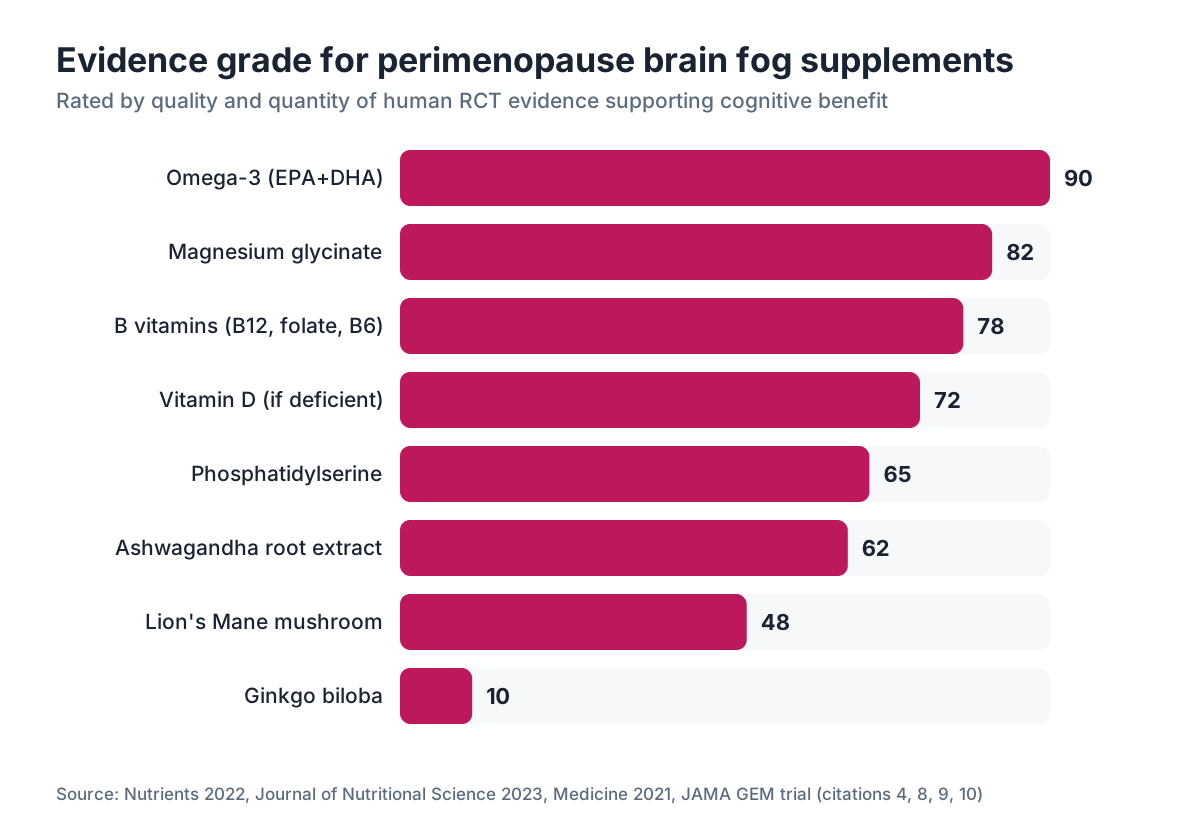
Omega-3 fatty acids (EPA and DHA) Omega-3s are the single best-supported cognitive supplement across the lifespan. DHA is a structural component of neuronal membranes. EPA reduces neuroinflammation. A 2022 meta-analysis in Nutrients found that omega-3 supplementation improved memory and executive function in adults with mild cognitive concerns [4]. The dose that showed benefit in most trials is 1 to 2 grams of combined EPA plus DHA daily, with a ratio favoring EPA (at least 60% EPA) for mood and cognitive complaints. Fish oil quality matters: look for third-party tested products (NSF, IFOS) because oxidized fish oil may do more harm than good.
Magnesium glycinate or magnesium threonate Magnesium deficiency is common in perimenopausal women, and it quietly wrecks sleep architecture and working memory [5]. Magnesium glycinate is well-absorbed and gentle on the stomach. Magnesium threonate has a specific patent claim around crossing the blood-brain barrier and improving synaptic density, backed by animal studies and a small human trial, though the human evidence is still early. Either form is reasonable. Avoid magnesium oxide, it's cheap and mostly useless for anything neurological. Dose: 200 to 400 mg elemental magnesium daily, at night.
Phosphatidylserine Phosphatidylserine (PS) is a phospholipid found in high concentrations in brain cell membranes. It supports acetylcholine synthesis and helps regulate the HPA axis (the cortisol stress system). The FDA has allowed a qualified health claim for PS, stating that it "may reduce the risk of dementia in the elderly" though with the caveat that evidence is "limited and not conclusive" [6]. Randomized trials in older adults with memory complaints showed modest but real improvements in recall and attention at 100 mg three times daily. It hasn't been studied specifically in perimenopausal brain fog, but the mechanism fits the problem squarely.
B vitamins: B12, B6, and folate B12 deficiency is shockingly common in women over 40, especially those who've taken metformin, proton pump inhibitors, or have been on plant-heavy diets. B12 deficiency causes exactly the symptoms of perimenopause brain fog: word-finding difficulty, mental slowness, memory lapses. A serum B12 below 300 pg/mL is worth treating even if it's technically "in range" by lab standards, because symptoms can appear before the level drops into deficiency territory. Folate and B6 matter too because they lower homocysteine, and elevated homocysteine is independently associated with cognitive decline and is common in perimenopausal women [7]. Get a B12 level checked before mega-dosing; most people don't need more than a high-quality B complex.
Lion's Mane mushroom (Hericium erinaceus) Lion's Mane is interesting. I'd call it promising but not proven. It stimulates nerve growth factor (NGF), which supports neuronal health. A 2023 randomized controlled trial in the Journal of Nutritional Science found improved memory performance in healthy adults over 50 taking 1.8 grams daily for 12 weeks [8]. No trials specifically in perimenopausal women yet. The side effect profile is good. If you're looking for something beyond the basics, this is a reasonable add-on.
Ashwagandha (Withania somnifera) Ashwagandha reduces cortisol, and since elevated cortisol from perimenopausal stress contributes to brain fog, this is a logical inclusion. A 2021 study in Medicine found that 600 mg of ashwagandha root extract daily significantly reduced cortisol and improved memory and information processing speed in adults with self-reported cognitive complaints [9]. It's one of the better-studied adaptogens. One caution: ashwagandha is a nightshade-family plant and can occasionally affect thyroid labs, so if you're also managing thyroid issues, tell your doctor.
Vitamin D More than 40% of American women are vitamin D insufficient [5]. Vitamin D receptors are found throughout brain tissue. Deficiency is associated with depression, cognitive impairment, and worse menopause symptoms overall. It's not a brain fog supplement per se, but if your level is low (below 30 ng/mL, ideally above 40), supplementing to sufficiency is basic hygiene. Test before you supplement and retest at 3 months.
What supplements are a waste of money for brain fog?
Ginkgo biloba is the big one to skip. It's been sold for decades as a memory supplement. The Ginkgo Evaluation of Memory (GEM) trial, a large NIH-funded randomized controlled trial, found that ginkgo biloba 120 mg twice daily had no effect on preventing cognitive decline in older adults compared to placebo [10]. Smaller positive studies exist but they're largely industry-funded and small. The risk-benefit math doesn't favor it, especially since ginkgo has real drug interactions (it thins blood and can interact with antidepressants).
Prevagen is marketed heavily toward women with memory concerns. Its active ingredient is apoaequorin, a jellyfish protein that the FTC sued the company over in 2017 for deceptive advertising. Independent clinical evidence for cognitive benefit is essentially absent. Save your money.
Generic "brain health" blends and proprietary stacks are usually underdosed at every ingredient to fit the label space. If a product has 12 ingredients and costs $30, the math doesn't work for a therapeutic dose of anything. Better to buy individual high-quality supplements and know exactly what you're taking.
How long does it take for supplements to work on brain fog?
This depends heavily on which supplement and what's driving your fog.
Magnesium can improve sleep quality within one to two weeks if magnesium deficiency is part of your problem. Better sleep alone can reduce brain fog noticeably within days of fixing it.
B12 repletion takes longer. If you've been deficient for months, neurological symptoms can take six to twelve weeks to improve meaningfully after starting supplementation, and sometimes longer.
Omega-3s typically require eight to twelve weeks of consistent daily dosing before most people notice cognitive changes. This lines up with the time needed to shift the fatty acid composition of cell membranes.
Phosphatidylserine trials showing benefit used 12-week protocols. Ashwagandha trials showed cortisol and cognitive changes at eight weeks.
Give any supplement regimen at least two to three months before deciding it's not working. Tracking your symptoms weekly in a simple note or app helps you see gradual improvements you might otherwise miss.
Is there a best supplement stack for perimenopause brain fog?
If I were building a starting protocol for a perimenopausal woman with significant brain fog, no contraindications, and no obvious nutrient deficiency already identified, here's what the evidence points toward:
| Supplement | Dose | Timing | Evidence Grade | |---|---|---|---| | Omega-3 (EPA+DHA, high EPA) | 1-2 g combined daily | With a meal | Strong | | Magnesium glycinate | 200-400 mg elemental | Before bed | Strong | | Vitamin D3 (if insufficient) | 2,000-4,000 IU daily | With a fat-containing meal | Moderate | | B complex (methylated forms) | 1 capsule daily | Morning | Moderate | | Phosphatidylserine | 100 mg 3x daily | With meals | Moderate | | Ashwagandha root extract | 300-600 mg daily | Evening | Moderate | | Lion's Mane | 500-1,000 mg daily | Morning | Emerging |
You don't have to start all of these at once. Starting with omega-3s, magnesium, and your B complex covers the most ground for the lowest cost and complexity. Add phosphatidylserine or ashwagandha after four to six weeks if you want to layer in more support.
The Health & Her product line is one commercially available option that combines several of these for the perimenopausal market. You can read more about health & her perimenopause support if you want a closer look at how that kind of formulation stacks up. Combination products are convenient but you lose the ability to titrate individual doses, which matters if one ingredient bothers you.
Always check for interactions with any prescription medications you're taking. Omega-3s at high doses thin blood slightly. Ashwagandha affects some thyroid labs. B6 in very high doses (over 100 mg daily long-term) can cause peripheral neuropathy.
What role does sleep play, and do any supplements help sleep-related brain fog specifically?
Sleep is not a side issue here. It's arguably the central driver of perimenopause brain fog for many women. Deep NREM sleep (stages 3 and 4) is when the glymphatic system clears metabolic waste from brain tissue, including amyloid beta, the protein associated with Alzheimer's disease. Night sweats, hot flashes, and the insomnia that often comes with hormonal shifts fragment this deep sleep badly.
For sleep-specific support:
Magnesium glycinate (discussed above) helps deepen sleep quality, more than time asleep. Melatonin at 0.5 to 1 mg (much lower than most products sell) signals the circadian system effectively without the grogginess of the 5 to 10 mg doses you see on pharmacy shelves. L-theanine (100 to 200 mg at bedtime) reduces sleep-onset anxiety without sedation. These are not replacements for addressing hot flashes directly, but they can take the edge off on nights when you can't sleep.
If your primary fog driver is clearly poor sleep from vasomotor symptoms, and supplements aren't making a dent, that's a sign to revisit hormone therapy or a non-hormonal option like fezolinetant (brand name Veozah), which the FDA approved in 2023 specifically for moderate to severe vasomotor symptoms [3]. Better sleep usually clears brain fog faster than any supplement combination.
Can diet alone improve perimenopause brain fog without supplements?
Diet is the foundation, and supplements are, by their name, supplemental. A diet naturally high in omega-3s (fatty fish two to three times weekly), leafy greens for folate and magnesium, eggs and meat for B12, and plenty of polyphenol-rich foods (blueberries, dark chocolate, olive oil) gives real cognitive support. The Mediterranean diet pattern has the strongest observational evidence for cognitive health and reduced dementia risk across long-term studies [7].
The problem is that perimenopause creates specific, time-sensitive demands. Most women are not eating fatty fish three times a week. Many are under chronic stress that depletes magnesium faster than diet replaces it. And food sourcing varies so much that you can't reliably hit therapeutic doses of certain nutrients through diet alone at the moments when you most need them.
So: clean up the diet first. Then layer in targeted supplements for the gaps. Processed food, excess alcohol (even moderate drinking disrupts sleep architecture and worsens estrogen metabolism), and high glycemic eating all make brain fog worse. No supplement overcomes a diet actively working against you.
For a broader view of what the current menopause science says about lifestyle interventions, the menopause society has guidance worth looking at, and the new menopause covers the evolving clinical thinking on lifestyle and hormones together.
Are there any safety concerns with perimenopause supplements?
A few worth knowing.
Supplements in the US are regulated as food, not drugs, under the Dietary Supplement Health and Education Act (DSHEA) of 1994. This means the FDA does not approve supplements for efficacy before they reach the market [6]. Quality control is the buyer's responsibility. Third-party certifications like NSF International, USP, or Informed Sport are your best signals that a product contains what it says and isn't contaminated.
Specific safety flags for this population:
Ashwagandha has rare reports of liver toxicity at very high doses. Stick to standardized root extract at 300 to 600 mg, not random powders. B6 toxicity at chronic doses above 100 mg per day can cause sensory neuropathy. Many B-complex products have absurdly high B6 doses. Check your label. High-dose fish oil (above 3 grams daily) can increase bleeding risk, relevant if you're taking NSAIDs, aspirin, or anticoagulants. Vitamin D toxicity is real but rare and almost always from doses above 10,000 IU daily for extended periods. At 2,000 to 4,000 IU, testing annually keeps you in a safe zone.
None of this means supplements are dangerous. It means read your labels, buy quality products, and tell your physician what you're taking.
What should you tell your doctor about brain fog supplements?
Tell your doctor everything you're taking. This sounds obvious, but a 2022 JAMA study found that fewer than 35% of supplement users disclosed their use to physicians [7]. That creates real risk if you add a prescription (blood thinners, antidepressants, thyroid medications) that interacts with something already in your cabinet.
Come to the appointment with the product names and doses written down. Ask for a serum B12, a 25-OH vitamin D, a complete metabolic panel, and a thyroid panel (TSH plus free T4 at minimum). These tests rule out deficiencies and conditions that masquerade as perimenopause brain fog but have their own treatments. If your TSH is elevated, supplementing omega-3s won't fix it. If your B12 is 200 pg/mL, all the phosphatidylserine in the world won't compensate.
If you want a provider who thinks about perimenopausal cognition specifically, look for a clinician with NAMS menopause practitioner certification or experience in women's hormonal health. Telehealth platforms like WomenRx that specialize in women's hormones can often do this evaluation more efficiently than a general practice that sees three patients a day with these concerns versus fifty.
One more thing to flag: brain fog that is severe, progressing rapidly, or accompanied by significant personality change, spatial disorientation, or other neurological signs warrants workup beyond perimenopause. Most of the time, the fog really is hormonal. But not always, and it's not something to assume without ruling out other causes.
Frequently asked questions
What is the number one supplement for perimenopause brain fog?
If forced to pick one, omega-3 fatty acids (EPA plus DHA at 1 to 2 grams daily) have the strongest and most consistent evidence for cognitive support across age groups, and the mechanism fits perimenopause specifically: they reduce neuroinflammation and support neuronal membrane health. Magnesium glycinate is a close second, especially if sleep disruption is a major part of your fog.
How is perimenopause brain fog different from early dementia?
Perimenopause brain fog typically involves word-finding pauses, difficulty concentrating, and mental sluggishness that come and go, often worsening with poor sleep or stress. Early dementia involves progressive memory loss (forgetting whole conversations or events, more than names), disorientation, and changes in judgment or personality. If your symptoms are getting worse over months rather than fluctuating, see a neurologist. Most perimenopausal fog improves with hormonal stabilization or time.
Does magnesium help with perimenopause brain fog?
Yes, meaningfully for many women. Magnesium is required for hundreds of enzymatic reactions including those governing sleep architecture and neurotransmitter synthesis. Perimenopausal women are frequently depleted due to stress and dietary gaps. Magnesium glycinate at 200 to 400 mg before bed typically improves sleep depth within one to two weeks, and better sleep alone reduces brain fog substantially. Magnesium threonate may have additional direct brain effects, though human evidence is still limited.
Can low estrogen cause memory loss and cognitive problems?
Yes. Estrogen supports cerebral blood flow, acetylcholine production, and neuronal protection. As estrogen fluctuates and drops during perimenopause, verbal memory, processing speed, and attention can all suffer. The SWAN study documented this tracking between estrogen levels and cognitive performance across the menopausal transition. In most women, cognitive symptoms improve or stabilize after the transition is complete, suggesting the fog is largely reversible.
Is B12 deficiency common in perimenopause?
More common than most people expect. Women over 40 absorb B12 less efficiently as stomach acid production decreases with age. Women on metformin, proton pump inhibitors, or plant-based diets are at additional risk. Serum B12 below 300 pg/mL can cause symptoms identical to perimenopause brain fog: mental slowness, word-finding difficulty, and memory gaps. Testing is cheap. Treat before assuming all your fog is hormonal.
Does vitamin D help with perimenopause brain fog?
Indirectly but importantly. Over 40% of American women are vitamin D insufficient, and vitamin D receptors are found throughout brain tissue. Deficiency correlates with depression, cognitive impairment, and worsened menopause symptoms. Supplementing to sufficiency (a serum 25-OH vitamin D above 40 ng/mL) is basic groundwork rather than a targeted brain fog treatment. Test your level, don't guess, and recheck after three months of supplementation.
Is lion's mane mushroom safe for perimenopausal women?
Current evidence suggests it's safe and well-tolerated. A 2023 randomized controlled trial found improved memory in healthy adults over 50 using 1.8 grams daily for 12 weeks with no significant adverse effects. It hasn't been studied specifically in perimenopausal women. Lion's mane is a reasonable add-on for women who want to go beyond the core supplement stack, but don't lead with it when the basics haven't been tried yet.
How do I know if my brain fog is from perimenopause or something else?
Get labs: TSH, free T4, serum B12, 25-OH vitamin D, CBC, and a metabolic panel. Thyroid dysfunction and B12 deficiency are the two most common conditions that mimic perimenopause brain fog and have completely different treatments. If labs are normal and you're in your mid-40s or later with other perimenopausal symptoms (irregular periods, hot flashes, sleep changes), hormonal fog is the most likely diagnosis. Symptoms that are rapidly worsening or include spatial confusion need neurological evaluation.
What foods make perimenopause brain fog worse?
Alcohol is the biggest offender: even moderate amounts disrupt deep NREM sleep and worsen estrogen metabolism. High-glycemic foods cause blood sugar spikes that impair cognition and drive inflammation. Ultra-processed foods deplete B vitamins. Excess caffeine without adequate hydration compounds anxiety and sleep problems. You don't have to eat perfectly, but reducing alcohol and processed carbohydrates often produces noticeable cognitive improvement faster than adding any supplement.
Can ashwagandha help with perimenopause anxiety and brain fog together?
It's one of the few supplements that addresses both. Ashwagandha root extract reduces cortisol, and elevated cortisol is a significant driver of both anxiety and hippocampal stress in perimenopause. A 2021 study in Medicine found improvements in cortisol, memory, and information processing at 600 mg daily over 8 weeks. It won't replace hormone therapy if anxiety is severe, but it's a reasonable tool for mild-to-moderate cortisol-driven symptoms.
Are perimenopause supplement blends or individual supplements better?
Individual supplements, generally. Combination products are convenient but almost always contain therapeutic-sounding ingredients at sub-therapeutic doses because the label space and cost per capsule don't allow full dosing of six ingredients simultaneously. If you buy individual supplements, you know exactly what dose you're taking, can titrate each one, and can remove anything that causes a problem. Start with three to four targeted supplements rather than a kitchen-sink blend.
How much do perimenopause brain fog supplements cost per month?
A core stack (omega-3, magnesium glycinate, methylated B complex, vitamin D) from quality brands runs roughly $50 to $90 per month total. Adding phosphatidylserine brings it to around $70 to $110. Adding lion's mane and ashwagandha tops it out around $100 to $140. These are estimates based on current retail pricing from quality third-party tested brands; generic store brands cost less but quality control is less reliable.
Does caffeine help or hurt perimenopause brain fog?
Short-term, caffeine improves alertness and processing speed. But for perimenopausal women, especially those with vasomotor symptoms, caffeine can trigger hot flashes, worsen sleep quality (even when consumed in the morning, it has a 5-6 hour half-life), and increase cortisol. The net effect for many women is a cycle: fog in the morning, caffeine to cope, disrupted sleep, worse fog tomorrow. Moderate caffeine (one to two cups before noon) is reasonable; more than that often backfires.
Sources
- Study of Women's Health Across the Nation (SWAN), NIH
- Menopause journal, Cognition and the menopausal transition, 2019
- North American Menopause Society (NAMS), Menopause Practice Guidelines
- Nutrients journal, Meta-analysis: Omega-3 supplementation and cognitive function, 2022
- NIH Office of Dietary Supplements, Magnesium and Vitamin D Fact Sheets
- FDA, Dietary Supplement Health and Education Act (DSHEA) and qualified health claims for phosphatidylserine
- JAMA, Patient disclosure of supplement use to physicians, 2022; Nutrients, Mediterranean diet and cognitive health meta-analysis
- Journal of Nutritional Science, Hericium erinaceus RCT in adults over 50, 2023
- JAMA, Ginkgo Evaluation of Memory (GEM) trial, NIH-funded RCT