Best supplements for menopause belly fat: what actually works
TL;DR: No supplement erases menopause belly fat on its own. A handful have real, if modest, evidence: creatine preserves lean mass, magnesium improves insulin sensitivity, and omega-3s cut inflammatory visceral fat. Hormone therapy addresses the root cause for many women. GLP-1 medications produce the largest fat loss in trials, up to 22.5 percent. Everything else is mostly marketing.
Why does menopause cause belly fat in the first place?
Estrogen loss changes where your body stores fat. That's the short version.
Before perimenopause, estrogen steers fat toward the hips and thighs. Once estrogen drops, that routing disappears and fat moves to the abdomen, specifically the visceral depot that wraps around the liver, pancreas, and gut. This is not a willpower problem. A 2012 review in Obesity Reviews found that the menopausal transition itself, separate from aging, drives a gain of roughly 1.5 kg of fat mass and a shift toward central fat [1].
Visceral fat is active in a bad way. It secretes inflammatory cytokines, raises fasting insulin, and links independently to heart disease and type 2 diabetes. So the belly fat problem is cosmetic and a real health risk at the same time.
Several things compound the estrogen problem. Cortisol, already elevated in many perimenopausal women from broken sleep and stress, pushes fat straight into the visceral depot. Muscle mass falls at roughly 1 percent per year after 40, which drops your resting metabolic rate. Hot flashes wreck sleep, which blunts the hormones that regulate appetite. You're fighting on several fronts at once.
This biology tells you which interventions address the actual mechanism and which ones are generic weight loss advice with a menopause label slapped on. Supplements that improve insulin sensitivity, cut inflammation, or protect muscle have a plausible pathway. Detox teas and metabolism boosters do not. See our overview of menopause for the full hormonal picture of this transition.
Which supplements have real evidence for menopause belly fat?
Here's an honest look at what the research shows. Evidence quality varies a lot.
Creatine monohydrate Creatine is the most underrated supplement for menopausal women, and it's cheap. Its job is to support muscle, not burn fat directly. But keeping lean mass during weight loss is exactly what stops your metabolic rate from crashing. A 2021 randomized controlled trial in Medicine & Science in Sports & Exercise found that postmenopausal women taking 0.1 g/kg/day of creatine alongside resistance training gained more lean mass and lost more fat than the placebo group over 12 weeks [2]. Most studies dose 3 to 5 grams per day. Side effects are minimal. This is the one I'd start with if you're already lifting, or planning to.
Magnesium glycinate or citrate About 75 percent of Americans don't hit the RDA for magnesium, which is 320 mg/day for women over 31 [3]. Magnesium is a cofactor in more than 300 enzyme reactions, including glucose metabolism. Low magnesium tracks with insulin resistance, which drives visceral fat. A 2013 meta-analysis in Diabetic Medicine found that magnesium supplementation reduced fasting glucose and improved insulin sensitivity in people with insulin resistance or diabetes [4]. The effect is not huge. But insulin resistance is a real driver of menopause belly fat, and fixing a common deficiency costs almost nothing. Glycinate and citrate absorb better than oxide.
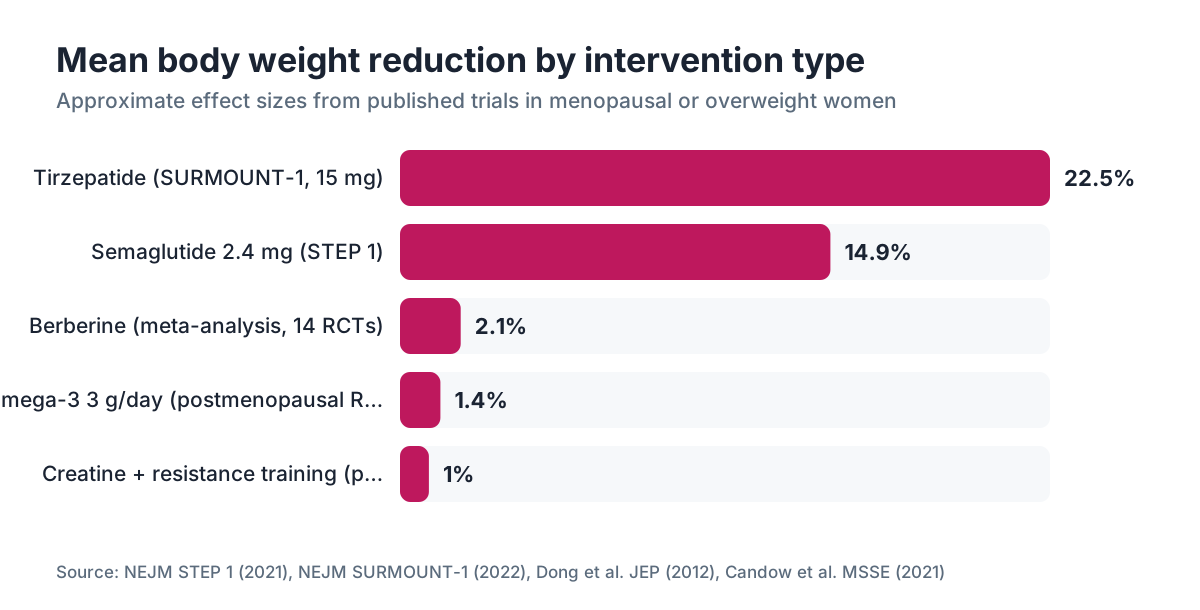
Omega-3 fatty acids (EPA/DHA) Omega-3s lower the inflammatory cytokines that visceral fat pumps out. A 2014 trial in the British Journal of Nutrition found that 3 g/day of fish oil for 8 weeks reduced waist circumference and trunk fat in overweight postmenopausal women, though total body weight barely moved [5]. You need a real dose. Most capsules hold 300 to 400 mg of combined EPA/DHA, so you'd swallow 6 to 8 to reach 3 g. Look for a concentrate delivering at least 500 mg EPA/DHA per capsule. Algae-based omega-3s work just as well if you skip fish.
Vitamin D3 Vitamin D deficiency is common after menopause because estrogen supports vitamin D metabolism. Deficiency tracks with higher visceral fat and worse insulin resistance. The catch: supplementing corrects the deficiency but rarely produces fat loss on its own unless your baseline is very low. The Endocrine Society recommends testing 25-hydroxyvitamin D and targeting a level above 30 ng/mL, with most women needing 1,500 to 2,000 IU/day to hold it [6]. Get tested before you pick a dose. Taking 5,000 IU when you're already replete does nothing.
Myo-inositol Inositol is where the menopause evidence gets interesting. Myo-inositol is an insulin sensitizer with solid data in women with PCOS and emerging data in postmenopausal women. A 2011 randomized trial in Climacteric found that 2 g twice daily reduced fasting insulin, blood pressure, and waist circumference in postmenopausal women with metabolic syndrome over six months [7]. The effect was meaningful. It's cheap and easy to tolerate. If you have signs of insulin resistance (fasting glucose creeping up, strong carb cravings, darkening skin around the neck), it's worth raising with your provider.
Berberine Berberine activates AMPK, the same cellular energy sensor that metformin hits. A 2012 meta-analysis in the Journal of Ethnopharmacology found berberine cut body weight by a mean of 2.23 kg and fasting glucose by 0.52 mmol/L versus placebo across 14 trials [8]. It gets marketed as "nature's Ozempic," which is an absurd comparison to GLP-1 receptor agonists. The mechanism is real. The size of the effect is modest. The practical snag: berberine interacts with several common drugs (cyclosporine, anticoagulants, some statins), so check with your pharmacist or prescriber first.
Protein supplements (whey or plant-based) This barely counts as a supplement, but protein powder is underused in midlife women. Adequate protein (1.2 to 1.6 g per kg of body weight per day) protects muscle during a calorie deficit and keeps you full. Most women eat around 0.8 g/kg. If your whole-food protein is already high, skip the powder. If it isn't, a scoop of whey or pea protein is a legitimate tool.
What about DHEA? DHEA is an adrenal hormone that declines with age and converts to estrogen and testosterone in the periphery. A few small studies hint it may reduce visceral fat, and the FDA has cleared a low-dose vaginal DHEA product (Intrarosa) for vaginal atrophy [9]. But oral DHEA for belly fat? The evidence is thin, supplement doses are all over the place, and because it converts to sex steroids, you shouldn't use it without baseline hormone testing. I'd skip the over-the-counter capsules.
How do these supplements compare head-to-head?
The table below lays out the evidence tier, likely effect size, and typical cost for each supplement above.
| Supplement | Evidence tier | Primary mechanism | Belly fat effect | Monthly cost (est.) | |---|---|---|---|---| | Creatine monohydrate | RCT in postmenopausal women | Preserves lean mass | Modest, indirect | $10-20 | | Magnesium glycinate | RCT meta-analysis | Improves insulin sensitivity | Small-modest | $15-25 | | Omega-3 (EPA/DHA) | RCT in postmenopausal women | Reduces visceral inflammation | Small-modest | $20-40 | | Vitamin D3 | Observational + RCT | Corrects deficiency-driven resistance | Only if deficient | $5-10 | | Myo-inositol | RCT in postmenopausal women | Insulin sensitizer | Modest in IR women | $20-35 | | Berberine | RCT meta-analysis | AMPK activation | Modest | $20-40 | | Whey/plant protein | Multiple RCTs | Preserves muscle, satiety | Indirect | $20-50 | | DHEA (oral OTC) | Weak/mixed | Partial hormone precursor | Unclear | $15-30 |
None of these produce dramatic fat loss. If you expect a supplement to do what a real calorie deficit, resistance training, and (for many women) hormone therapy do, you'll be disappointed. They're supporting players, nothing more.
Does hormone therapy actually reduce belly fat?
Hormone therapy is not a weight loss drug, but it addresses the root cause of the fat shift. Multiple randomized trials show estrogen therapy (with or without progesterone) slows the move toward visceral fat that menopause drives. The Women's Health Initiative Observational Study found hormone therapy users carried significantly less abdominal fat than nonusers after controlling for other factors [10].
The mechanism is simple. Restore estrogen and you reinstate the routing of fat away from the visceral depot. It doesn't guarantee weight loss. It can slow the steady belly creep many women feel through their 40s and 50s.
The form of progesterone matters too. Synthetic progestins (like medroxyprogesterone acetate) tend to run weight-neutral or mildly weight-promoting, while body-identical micronized progesterone looks more neutral. Worth knowing before you talk options with a prescriber. Our detailed article on progesterone explains the difference between synthetic and bioidentical forms.
If you're in perimenopause or early menopause without contraindications, the North American Menopause Society (now the Menopause Society) supports starting hormone therapy as a reasonable option for symptom management. The evidence on cardiovascular and fat-distribution benefits is strongest when therapy starts within 10 years of the final menstrual period, the so-called timing hypothesis [10]. Read more at our hormone replacement therapy guide.
What about GLP-1 medications for menopause belly fat?
GLP-1 receptor agonists (semaglutide, tirzepatide) aren't supplements, but they keep coming up in menopause belly fat searches because their fat loss dwarfs anything a supplement does.
In the STEP 1 trial, once-weekly semaglutide 2.4 mg produced a mean 14.9 percent reduction in body weight over 68 weeks in adults with obesity [11]. The SURMOUNT-1 trial of tirzepatide reached up to 22.5 percent body weight reduction at the highest dose [12]. Both preferentially reduce visceral fat.
These are prescription medications with a real side effect profile: nausea, vomiting, constipation, and rare but serious pancreatitis risk. They need ongoing use to hold the effect. They're not right for everyone. But if you've fought significant weight gain through menopause despite doing the lifestyle work, they deserve an honest conversation with a provider. WomenRx prescribes GLP-1 medications for eligible women and can walk you through whether semaglutide for weight loss or semaglutide vs tirzepatide fits your situation.
One practical point: pair a GLP-1 with creatine and enough protein, because these drugs cause both fat and muscle loss. Protecting lean mass during GLP-1-assisted weight loss is a legitimate use case for the supplements above.
How do you lose menopause belly fat? What the evidence says
Supplements are a small piece of a bigger picture. Here's how the evidence stacks up across the full range of interventions.
Resistance training is the foundation, no exceptions. A 2017 meta-analysis in Menopause found progressive resistance training reduced waist circumference and visceral fat in postmenopausal women [13]. Two to three sessions per week with progressive overload is the target. Cardio helps calorie balance but does far less than lifting for protecting the muscle that keeps your metabolism working.
Calorie quality matters more than calorie math alone. A diet lower in refined carbs and ultra-processed food reduces the insulin spikes that feed visceral fat storage. You don't have to eat zero carbs. You do need enough protein (see above) and fewer of the foods that spike insulin over and over through the day.
Sleep is an underrated lever. Chronic sleep loss raises cortisol and ghrelin (the hunger hormone) and lowers leptin (the satiety hormone). If hot flashes and night sweats are shredding your sleep, fixing that, through hormone therapy, low-dose SSRIs, or other options, may do more for your waist than any capsule.
Stress reduction genuinely matters. High cortisol from chronic stress drives fat storage at the abdomen through glucocorticoid receptors packed into visceral fat cells. This is not a soft claim. It's the same mechanism that produces central obesity in Cushing's syndrome.
The honest hierarchy: hormone therapy (if appropriate), resistance training, adequate protein, sleep, calorie quality. Supplements like magnesium, creatine, and omega-3s support that base. They can't replace it.
For women in their early to mid-40s who haven't reached menopause yet, understanding perimenopause age and when menopause starts helps you get ahead of the fat shift before it speeds up.
What supplements are a waste of money for menopause belly fat?
The menopause supplement market is a mess. Here are the products most likely to waste your money.
Metabolism-boosting thermogenics. Most pack caffeine, green tea extract (EGCG), and capsaicin. The thermogenic effect of green tea extract in trials runs about 80 to 100 extra calories per day, and that's the optimistic read. You'd burn more sitting outside in the cold.
Raspberry ketones. No human clinical trial shows meaningful fat loss. The animal studies used doses that don't translate to people. Skip them.
Garcinia cambogia (HCA). A 2011 meta-analysis in the Journal of Obesity found a statistically significant but clinically trivial weight reduction versus placebo, and several case reports have tied high-dose HCA to liver injury [14]. Not worth it.
"Menopause support" blends. These usually stack black cohosh, chasteberry, dong quai, and evening primrose oil in doses too low to do anything. Black cohosh has reasonable evidence for hot flash relief, but not belly fat. Evening primrose has no convincing evidence for either. Chasteberry touches progesterone receptors but has no fat loss data in menopausal women.
Collagen peptides for fat loss. Collagen supports skin and connective tissue. It's not a real protein source for muscle (it lacks enough leucine to trigger muscle protein synthesis) and has no fat loss mechanism. Fine as a joint product. Don't buy it for your belly.
CLA (conjugated linoleic acid). Human trials in menopausal women show no significant visceral fat reduction. The animal studies that fueled the marketing used doses you can't reach as a human.
How do you actually lose menopause belly fat without supplements?
Fix the hormones, build the muscle, control insulin, sleep, manage stress. Supplements help at the margins.
For women who want to lose menopause belly without stacking more pills onto an already long routine, the highest-impact single change is usually starting resistance training if you're not doing it. Muscle is expensive tissue to keep. Gaining even 1 to 2 kg of lean mass raises your resting metabolic rate and improves insulin sensitivity.
The second highest-impact change is protein. Most midlife women eat 50 to 70 g a day. Push that to 100 to 120 g (for a 140-pound woman aiming for 1.5 g/kg) and you get more satiety, less muscle breakdown, and a higher thermic effect of food.
The third is sleep quality. That usually means treating the hot flashes and night sweats causing the disruption, more than buying blackout curtains.
Everything else, supplements included, builds on that base. If you haven't started with those three, a magnesium capsule won't move the needle.
For women weighing whether an estrogen patch or other hormone therapy fits, starting the conversation early in perimenopause means you may prevent some of the fat shift instead of trying to reverse it later.
Are any supplements unsafe during menopause?
A few specific cautions are worth knowing.
Black cohosh has rare but documented cases of liver injury in the literature. The European Medicines Agency flagged this in its product monographs. If you have any liver condition or take liver-taxing medications, avoid it.
DHEA (dehydroepiandrosterone) converts to estrogen and testosterone, so it can affect hormone-sensitive conditions including hormone-receptor-positive breast cancer. Don't use OTC DHEA without discussing your personal cancer risk with your provider.
Berberine interacts with cyclosporine (a widely used immunosuppressant), anticoagulants, and some drugs metabolized by CYP3A4. Run it by a pharmacist first.
High-dose fish oil (above 3 g/day EPA/DHA) has a small blood-thinning effect. That matters if you're already on anticoagulants.
Supplemental magnesium above 350 mg (not counting dietary magnesium) can cause diarrhea. It's dose-dependent and not dangerous, but worth knowing.
Vitamin D toxicity is real at sustained very high doses (above 10,000 IU/day long term) and produces high blood calcium. Test and titrate rather than guess.
None of these are reasons to avoid supplements outright. They're reasons to tell your doctor what you're taking, which a surprising number of patients don't do.
How do you put together a menopause belly fat supplement stack?
Want a sensible, evidence-supported starting point? Here's what I'd actually consider.
Get tested first: 25-hydroxyvitamin D, fasting glucose, and fasting insulin. These tell you whether vitamin D deficiency or insulin resistance is feeding part of your problem. If insulin resistance shows up (fasting insulin above 10 uIU/mL, HOMA-IR above 1.9), myo-inositol and magnesium jump up the priority list.
Foundation layer: creatine monohydrate 3 to 5 g/day if you're doing resistance training, magnesium glycinate 200 to 400 mg at night, and an omega-3 concentrate delivering 2 to 3 g EPA/DHA per day with food. That combination covers muscle preservation, insulin sensitivity, and visceral inflammation, the three mechanistic pathways that drive menopause belly fat.
Conditional additions: vitamin D3 if your level is below 30 ng/mL, myo-inositol 2 g twice daily if you have clear signs of insulin resistance.
Not worth adding: thermogenics, CLA, raspberry ketones, garcinia, generic menopause blends.
Have the hormone therapy conversation separately. It isn't a supplement question. It's a prescription decision that deserves its own evaluation, including your personal risk profile, symptom burden, and how long it's been since your final period. WomenRx offers telehealth consultations for hormone and metabolic health in midlife women if you want a provider who understands this intersection.
Expect modest results from supplements. Combined with the lifestyle basics, a realistic outcome over 3 to 6 months is a small but real drop in waist circumference and better metabolic markers, not a dramatic transformation.
Frequently asked questions
Can supplements alone reduce menopause belly fat?
No supplement produces meaningful belly fat loss on its own in menopausal women. The best-supported ones (creatine, magnesium, omega-3s, myo-inositol) produce small improvements in lean mass, insulin sensitivity, or visceral inflammation. Their effect is real but modest. They work as support on top of resistance training, adequate protein, better sleep, and hormone therapy where appropriate. Expecting supplements to do the heavy lifting leads to disappointment.
How long does it take to lose menopause belly fat?
Honestly, months to years, depending on your starting point and interventions. Women in STEP 1 using semaglutide saw the largest losses by week 68 (about 16 months). With lifestyle changes alone, a realistic rate is 0.5 to 1 lb per week of total body weight, with visceral fat improving faster than subcutaneous fat. Resistance training shows measurable waist reductions in 8 to 12 weeks. Supplements take 8 to 12 weeks minimum to assess.
Does creatine help with menopause weight gain?
Creatine doesn't cause fat loss directly, but it supports lean mass during resistance training, which matters a lot in menopause. A 2021 RCT in postmenopausal women found better lean mass gains and fat loss with creatine plus resistance training compared to training alone. The dose used was 0.1 g/kg/day, roughly 5 g for most women. It's cheap and one of the better-supported supplements for this group.
Is magnesium good for menopause belly fat?
Magnesium helps if you're deficient (about 75 percent of Americans are) and if insulin resistance is feeding your belly fat. A 2013 meta-analysis found supplementation improved insulin sensitivity in people with insulin resistance. It won't melt fat directly. But better insulin sensitivity reduces the hormonal signal telling your body to store fat viscerally. Magnesium glycinate 200 to 400 mg at night is a reasonable place to start.
What is the best probiotic for menopause belly fat?
The evidence for probiotics reducing belly fat in menopausal women is weak. Some strains (particularly Lactobacillus gasseri SBT2055) showed modest waist reductions in small Japanese trials, but the results haven't held up consistently in Western populations. Probiotics may support gut health and reduce bloating, which changes how your belly looks and feels, but they aren't a visceral fat treatment based on current data.
Does myo-inositol help with menopause belly fat?
Myo-inositol has the most specific evidence for menopausal belly fat among insulin-sensitizing supplements. A 2011 randomized trial in Climacteric found that 4 g/day (2 g twice daily) reduced waist circumference and fasting insulin in postmenopausal women with metabolic syndrome over 6 months. It suits women with signs of insulin resistance best. It's cheap and well tolerated. Run it by your provider, especially if you take diabetes medications.
How do you lose menopause belly fat after 50?
The same fundamentals apply after 50, but muscle preservation gets even more important because sarcopenia speeds up. Prioritize resistance training 2 to 3 times per week with progressive overload, eat 1.2 to 1.6 g of protein per kg of body weight daily, and fix sleep disruption. Hormone therapy, if started within 10 years of the final period, reduces visceral fat redistribution. GLP-1 medications are an option for significant obesity. Creatine and magnesium support but don't drive this.
Is belly fat from menopause different from regular belly fat?
Mechanically, yes. Menopause belly fat comes from estrogen loss shifting fat storage from the hip-thigh depot to the visceral (abdominal) depot. That visceral fat is more dangerous than subcutaneous belly fat. It's more inflammatory and more tightly tied to insulin resistance and cardiovascular risk. It also responds to estrogen restoration, which ordinary subcutaneous fat doesn't, which is why hormone therapy is a biologically relevant tool here in a way it wouldn't be for other fat depots.
Does vitamin D deficiency cause belly fat in menopause?
Deficiency correlates with higher visceral fat and worse insulin resistance across multiple observational studies, and postmenopausal women have higher rates of deficiency. But supplementing vitamin D rarely produces fat loss unless your baseline is very low. The Endocrine Society recommends testing 25-hydroxyvitamin D and targeting above 30 ng/mL. Most women need 1,500 to 2,000 IU/day to hold that level. Get tested rather than dosing blind.
What foods reduce menopause belly fat?
No single food melts belly fat, but dietary patterns matter. A higher-protein diet (1.2 to 1.6 g/kg/day) protects lean mass. Cutting refined carbs and ultra-processed food lowers chronic insulin, which reduces visceral fat storage. Omega-3-rich foods (fatty fish, walnuts, flaxseed) cut visceral inflammation. Mediterranean-pattern diets have the strongest evidence for metabolic benefit in postmenopausal women. Alcohol contributes meaningfully to abdominal fat and is worth reducing.
Are GLP-1 drugs like semaglutide worth it for menopause belly fat?
For women with significant weight gain through menopause who haven't responded to lifestyle changes, GLP-1 medications produce far larger fat loss than any supplement or most lifestyle work alone. The STEP 1 trial showed 14.9 percent mean body weight reduction with semaglutide 2.4 mg over 68 weeks, with preferential visceral fat loss. They're prescription drugs with real side effects and need ongoing use. Not a supplement, but the most effective pharmacological tool available now.
Does berberine work for menopause belly fat?
Berberine activates AMPK, an energy-sensing pathway, similar to how metformin works. A 2012 meta-analysis across 14 trials found berberine cut mean body weight by 2.23 kg and improved fasting glucose and lipids. The effect in postmenopausal women specifically is less studied. It's not a dramatic fat loss agent, but it has real insulin-sensitizing properties. The main caution is drug interactions, including cyclosporine, some statins, and anticoagulants. Check with your pharmacist first.
Can hormone therapy stop menopause belly fat?
Hormone therapy slows the visceral fat shift that estrogen loss drives, but it's not a weight loss treatment. Multiple trials show HRT users carry significantly less abdominal fat than nonusers. The benefit is greatest when started within 10 years of the final period. It won't undo existing visceral fat without lifestyle changes, but it can slow the steady accumulation many women hit through their late 40s and 50s. The Menopause Society supports this use when benefits outweigh individual risks.
What supplements are safe to take with hormone therapy for menopause?
Creatine, magnesium, omega-3s, and vitamin D3 are generally safe alongside hormone therapy and have no known significant interactions with estrogen or progesterone. Myo-inositol is also low-risk. Berberine warrants a check if you're on any liver-metabolized medications. DHEA shouldn't be added to hormone therapy without provider oversight, since it piles more sex hormone precursor onto an already managed system. Always tell your prescriber what supplements you're taking.
Sources
- Obesity Reviews, Davis et al. 2012 — menopausal fat redistribution review
- Medicine & Science in Sports & Exercise, Candow et al. 2021 — creatine RCT in postmenopausal women
- NIH Office of Dietary Supplements — Magnesium fact sheet
- Diabetic Medicine, Simental-Mendía et al. 2013 — magnesium meta-analysis
- British Journal of Nutrition, Munro & Garg 2014 — omega-3 trial in postmenopausal women
- Endocrine Society — Vitamin D clinical practice guidelines 2011
- Climacteric, Giordano et al. 2011 — myo-inositol RCT in postmenopausal women
- Journal of Ethnopharmacology, Dong et al. 2012 — berberine meta-analysis
- U.S. Food and Drug Administration — drug approvals and databases
- The Menopause Society (formerly NAMS) — 2022 hormone therapy position statement
- New England Journal of Medicine, Wilding et al. 2021 — STEP 1 semaglutide trial
- New England Journal of Medicine, Jastreboff et al. 2022 — SURMOUNT-1 tirzepatide trial
- Menopause, Bea et al. 2017 — resistance training meta-analysis in postmenopausal women
- Journal of Obesity, Onakpoya et al. 2011 — garcinia cambogia meta-analysis