Best online hormone replacement therapy: how to choose in 2026
TL;DR: Online HRT platforms prescribe, ship, and monitor estrogen, progesterone, and testosterone without a waiting room. Monthly cost runs $20 to $400 depending on insurance, compounded hormones, or brand-name patches. The best platform matches your symptoms, uses a licensed prescriber, and checks labs at least once a year. No single provider fits everyone.
What is online hormone replacement therapy and how does it work?
Online hormone replacement therapy is the same medical treatment your ob-gyn or internist prescribes, delivered through a telehealth visit instead of a waiting room. You fill out a symptom questionnaire, meet a licensed clinician (MD, NP, or PA) by video or message, get labs ordered if needed, and receive a prescription sent to a pharmacy or mailed to your door.
The hormones are identical. Estradiol, progesterone, and testosterone are the same molecules whether a brick-and-mortar clinic or an online platform prescribes them. What changes is the convenience, the level of follow-up, and the cost structure.
The North American Menopause Society (NAMS) states that hormone therapy is the most effective treatment for vasomotor symptoms and genitourinary syndrome of menopause, and that for women under 60 or within 10 years of menopause onset, the benefits generally outweigh the risks for most women [1]. That clinical standard holds online just as much as in person.
Telehealth prescribing expanded fast after 2020. As of early 2026, most states allow hormone prescriptions after a synchronous video visit, and a handful still require at least one in-person exam before prescribing certain compounds. Confirm your state's rules with the platform before you sign up.
One thing online care cannot do: a hands-on pelvic exam, a breast exam, or bone density imaging. The best platforms flag when you need an in-person referral and never try to substitute a chat message for a physical finding. That is the line worth watching.
What types of hormones can you get prescribed online?
Most telehealth HRT platforms prescribe some combination of the following.
Estradiol is the main estrogen prescribed for menopause symptoms. It comes as a transdermal patch, gel, spray, or oral tablet. The estrogen patch form skips first-pass liver metabolism, which many clinicians prefer for women with clotting risk or migraines. FDA-approved transdermal estradiol patches include Vivelle-Dot and Climara [2].
Progesterone is prescribed for any woman who still has a uterus and takes systemic estrogen, because estrogen alone raises endometrial cancer risk. Oral micronized progesterone (Prometrium) has the best safety profile in current evidence [1]. Synthetic progestins (like medroxyprogesterone acetate, used in the WHI trial) carry a different, less favorable risk picture. Read more about progesterone and why the distinction matters.
Testosterone for women is a genuinely useful off-label option for low libido and fatigue, but no FDA-approved female testosterone product exists in the US [3]. Platforms prescribing it use compounded creams or gels, or sometimes men's testosterone products at lower doses. This is legal, but it means you are outside FDA-approved labeling.
DHEA (prasterone) for vaginal symptoms is FDA-approved under the brand Intrarosa. Some platforms prescribe it. Others stick to estradiol.
Compounded bioidentical hormones are custom-mixed preparations from compounding pharmacies. They are not FDA-approved as finished products, though the hormones themselves (estradiol, progesterone) are bioidentical to what your body made. The Endocrine Society's 2016 position statement on compounded bioidentical hormones noted that "there is a lack of evidence supporting their superiority to FDA-approved menopausal hormone therapy" [4]. Compounded options can make sense when a woman cannot tolerate a commercial formulation or needs a dose that is not sold commercially. They should not be pitched as safer or more natural. No trial data support that framing.
For a broader look at what hormone replacement therapy involves, including risks and benefits by age, that overview is worth reading before you pick a platform.
How much does hormone replacement therapy cost online?
Cost is where online platforms vary most, and where women get surprised. Here is a realistic breakdown.
| Cost item | Typical range | Notes | |---|---|---| | Telehealth visit / membership | $0, $199/month | Some charge per visit; others are subscription | | Generic oral estradiol (90-day supply) | $10, $30 | Usually covered by insurance with Rx | | Estradiol patch (generic, 90 days) | $30, $80 | Varies widely by pharmacy | | Oral micronized progesterone (generic, 90 days) | $20, $60 | Generic Prometrium now widely available | | Compounded estradiol/progesterone cream | $40, $150/month | Cash pay, not covered by insurance | | Compounded testosterone cream (women's dose) | $30, $80/month | Cash pay | | Lab panel (hormone levels, metabolic) | $50, $300 if out-of-pocket | Often covered by insurance |
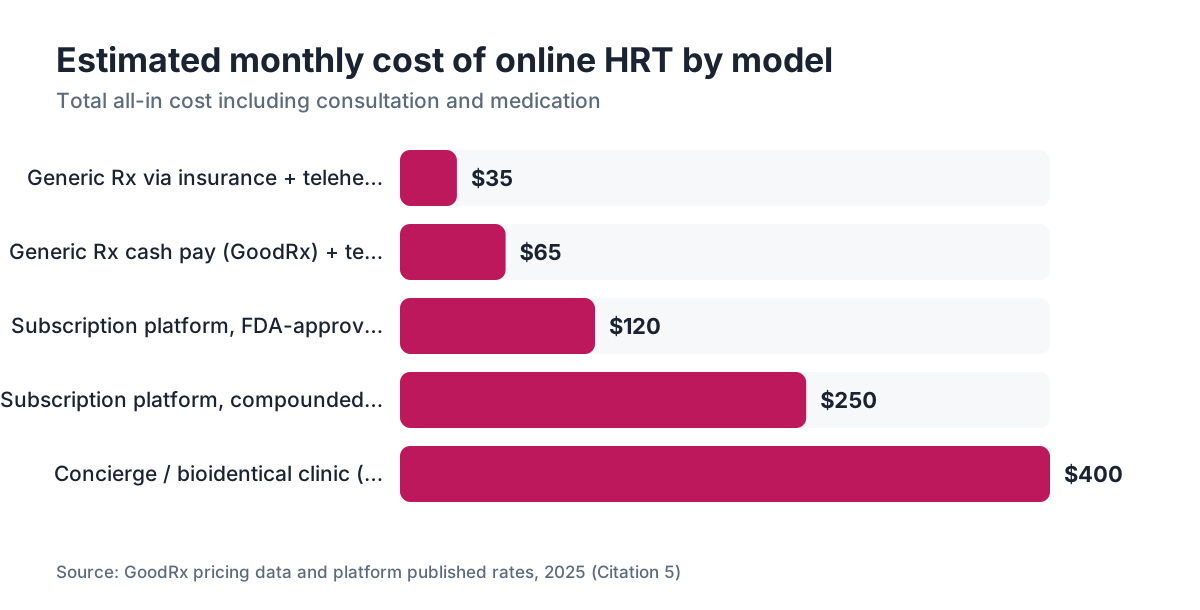
A woman using a subscription telehealth model with compounded hormones might pay $150 to $400 per month all-in. A woman who uses telehealth just for the prescriber visit, then fills generics at her pharmacy through GoodRx or insurance, might pay $30 to $80 per month. The difference is real.
For bioidentical hormone replacement therapy cost specifically, expect cash prices toward the higher end because compounding is not covered by most insurance plans. In cities like Tampa, where several concierge bioidentical hormone replacement clinics operate (both in-person and as hybrid telehealth), cash-pay monthly costs often run $200 to $500 once you add consultation fees. Online-only platforms serving those same women can often cut that in half by removing the overhead of a physical office.
If you are asking "how much does hormone replacement therapy cost" and your main goal is keeping it affordable, the answer is simple: use a telehealth platform that lets you fill at a retail pharmacy with your insurance, and ask specifically whether they prescribe FDA-approved generics first-line. Generic oral estradiol and generic progesterone are cheap. The cost of HRT is a prescription-plus-pharmacy math problem, not a fixed number [5].
What criteria separate a good online HRT provider from a bad one?
This is where I have real opinions, after reading the peer-reviewed literature on telehealth care quality and the patient safety problems that have surfaced in the HRT telehealth space.
Criterion 1: A real licensed prescriber reviews your case. Not an algorithm. Not a "care team" that pushes a script off a checklist. You want a clinician who reads your history, weighs your cardiovascular risk, and would decline to prescribe if your symptom picture calls for imaging first. Any platform that guarantees a prescription before you finish intake is a red flag.
Criterion 2: They order or review labs. NAMS recommends that clinicians assess baseline health before starting hormone therapy, including a personal and family history of cardiovascular disease, clotting disorders, and hormone-sensitive cancers [1]. A platform that never asks about labs is cutting a corner that matters.
Criterion 3: Follow-up is built in. Starting HRT is easy. Titrating it over 12 to 18 months while tracking symptom response and adjusting the dose is the actual clinical work. Good platforms have a clear protocol for follow-up visits, usually at 3 months and then annually.
Criterion 4: They are honest about compounded hormones. If a platform markets compounded hormones as "safer" or "more effective" than FDA-approved options without citing evidence, that is a sales claim, not a medical one. Some women do better on compounded formulations for practical reasons: an allergy to an excipient, a need for an unusual dose. That is fine. The pitch should be honest.
Criterion 5: Transparent pricing, no hidden upsells. Some platforms post a low headline subscription fee and then push expensive add-ons: proprietary supplements, optional "optimization" labs, concierge tiers. Know the total monthly cost before you commit.
Criterion 6: A clear in-person referral policy. Good telehealth platforms tell you upfront: a new breast lump, unexplained uterine bleeding, or a Pap smear more than three years overdue means they refer you out rather than manage it remotely. That transparency signals clinical seriousness.
WomenRx telehealth, for example, pairs women with clinicians who focus on hormones and menopause, orders labs during intake, and follows NAMS prescribing guidelines. That specialization matters, because a generalist platform optimized for UTIs and blood pressure refills is not the same as one built around menopause care.
Which hormones and formulations are FDA-approved vs. compounded?
Women deserve a clear answer here, because the marketing in this space is genuinely confusing.
FDA-approved HRT products for women in the US include estradiol patches (Vivelle-Dot, Climara, Minivelle), estradiol gels (Estrogel, Divigel), estradiol spray (Evamist), oral estradiol tablets (generic estradiol), conjugated equine estrogens (Premarin), and oral micronized progesterone (Prometrium and its generics) [2]. These products went through clinical trials showing safety and efficacy at the labeled doses. Compounding pharmacies produce custom preparations of the same or similar molecules, but those finished products are not reviewed or approved by the FDA.
The FDA states plainly that compounded hormone products are not FDA-approved and that "FDA has not reviewed these products for safety or effectiveness" [6]. That does not automatically make them dangerous, but it does mean the quality control sits with the compounding pharmacy, not the agency. USP-797 and 795 standards govern sterile and non-sterile compounding, and a pharmacy accredited by PCAB (Pharmacy Compounding Accreditation Board) follows additional quality checks.
For bioidentical hormone therapy cost purposes: FDA-approved generic estradiol and generic progesterone are bioidentical (chemically identical to what your ovaries produced) and cost far less than custom compounded versions. The word "bioidentical" has been co-opted as a marketing term implying superiority, when Prometrium and its generics are also bioidentical progesterone. The Endocrine Society made exactly this point in its position statement [4].
Start with FDA-approved generics where they fit your needs. Use compounding when there is a real clinical reason, not because a platform makes it sound premium.
Who is a good candidate for online HRT (and who should go in-person)?
Most healthy women in perimenopause or menopause with no complex medical history are reasonable candidates for online HRT. If you are 45 to 60, have hot flashes, sleep disruption, vaginal dryness, or mood changes consistent with estrogen decline, and you have had a recent well-woman exam including a mammogram, an online prescriber can safely start and manage your hormones.
You probably need to start in-person, or at least get a current in-person workup, if any of these apply.
You have unexplained uterine bleeding (this needs an endometrial biopsy or ultrasound before starting estrogen). You have a personal history of breast cancer, endometrial cancer, or a BRCA1/2 mutation (HRT decisions here need specialist co-management). You have active cardiovascular disease, a history of blood clots (DVT, PE), or a clotting disorder. You have liver disease (oral hormones need hepatic metabolism). Your symptoms started before age 40, which may signal premature ovarian insufficiency and needs a different workup [7].
Understanding when menopause starts and the range of perimenopause age helps clarify whether your symptoms fit the expected timeline or call for more investigation.
For women in the gray zone, a hybrid approach works well: one in-person visit with your ob-gyn or a menopause specialist to set baseline health, then ongoing management through a telehealth platform. Many women do exactly this.
How does bioidentical hormone replacement therapy cost compare to conventional HRT online?
The cost gap between compounded bioidentical HRT and FDA-approved conventional HRT is large, and the clinical difference is usually much smaller than the price gap suggests.
Generic oral estradiol 1mg tablets cost roughly $15 to $25 for a 90-day supply at most major pharmacies when purchased with GoodRx [5]. Generic oral micronized progesterone 100mg or 200mg runs $20 to $60 for a 90-day supply. That puts a basic, medically sound HRT regimen at $35 to $85 per quarter, or about $12 to $28 per month in drug cost alone. Add a telehealth visit fee of $0 to $50 per month and you land in the $20 to $80 per month range total.
A compounded bioidentical program from a concierge telehealth platform typically costs $100 to $400 per month. Some bioidentical hormone replacement Tampa clinics (in-person and hybrid) charge $300 to $600 per month once you fold in consultation fees. The higher price buys a custom compounded formulation, sometimes a more hands-on prescriber relationship, and the "bioidentical" branding. It does not buy proven better outcomes.
A 2020 analysis in Menopause (the journal of NAMS) compared symptom relief and safety between compounded and FDA-approved hormone therapy and found no evidence of superior efficacy for compounded preparations [8].
If cost matters to you, and for most women it does, the case for starting with FDA-approved generics is strong. You can always move to a compounded formulation later if you have a true tolerability issue with an excipient or need a dose the commercial products do not offer.
What should you expect during an online HRT consultation?
A well-run online HRT intake looks like this.
First, a detailed questionnaire covering your menopause symptoms (hot flashes, night sweats, brain fog, vaginal dryness, sleep, mood), your menstrual history, and your personal and family medical history. Done properly, this takes 15 to 30 minutes and becomes your clinician's chart before the visit.
Second, a synchronous video visit (or on some platforms, an asynchronous review) where the clinician goes through your history, answers questions, explains the options, and documents shared decision-making. This visit should not feel rushed. If it runs under 10 minutes and the clinician never asks a follow-up question, that tells you something about the depth of care.
Third, lab orders if appropriate. Many platforms send a lab requisition for a hormone panel (FSH, estradiol, sometimes testosterone, thyroid), a lipid panel, and a metabolic panel. Some skip baseline labs for perimenopausal women with classic symptoms, which is defensible under NAMS guidance but leaves less baseline data for titration later.
Fourth, a prescription sent to a pharmacy of your choice (retail or mail-order), or a compounding pharmacy the platform selects.
Fifth, a follow-up at 8 to 12 weeks to check symptom response, watch for side effects (breast tenderness, bloating, spotting), and adjust the dose if needed. Skipping this follow-up is where many low-cost platforms cut corners.
After the first 6 to 12 months, annual follow-up with labs and a renewal is the standard rhythm. At that point the clinician should also be prompting you about bone density test timing, since estrogen decline speeds up bone loss and a baseline DXA scan is recommended for most women at menopause [9].
How do the major online HRT platforms compare?
A live platform-by-platform review is beyond what a static article can keep accurate, since these companies change pricing and services often. What I can give you is an honest framework for comparison.
Subscription-based platforms (like Midi Health, Alloy, Gennev, and others) charge a flat monthly fee from $25 to $199 and include unlimited messaging or periodic video visits. Drug costs are separate. These work well if you want ongoing access without paying per visit.
Per-visit platforms charge $75 to $150 per consultation with no subscription. Cheaper if you only need a renewal twice a year. More expensive if you need frequent titration.
Compounding-focused platforms usually bundle a higher monthly fee ($150 to $400) that covers the consultation and the compounded medication shipped to you. Convenient, but you pay a premium and often cannot use insurance.
Hybrid clinic platforms pair telehealth with a network of in-person affiliate clinics. Useful if you live near one, but pricing sits closer to concierge fees.
Questions to ask any platform before signing up:
- Is my clinician an MD, NP, or PA, and what is their background in menopause care?
- Can I use my insurance for lab work and prescriptions?
- What is the cancellation policy if I want to transfer my care?
- Do they follow NAMS or Endocrine Society guidelines?
- What happens if I have a side effect or complication?
For women who want a platform built around women's hormones, including options beyond HRT like GLP-1 medications and peptides, WomenRx offers an integrated model where one clinical team can manage several parts of your health. That matters because weight, hormones, and metabolic health are genuinely connected, especially in perimenopause.
Does insurance cover online HRT, and how do you use it?
Insurance coverage for HRT medications is actually pretty good, better than most women realize. Most commercial plans and Medicare Part D cover FDA-approved HRT medications at generic pricing, which means your $100 brand-name patch might cost $15 as a generic with the same active molecule.
What insurance typically does not cover: telehealth subscription fees for platforms that are out of network, compounded hormone preparations from 503A compounding pharmacies, and any hormone preparation without an FDA-approved equivalent.
To use insurance well with online HRT:
- Choose a platform whose clinicians can e-prescribe to any pharmacy (most do).
- Ask specifically for the FDA-approved generic version of your hormone.
- Run the prescription through your insurance at a retail pharmacy (CVS, Walgreens, your grocery store pharmacy).
- If you have a high deductible, compare GoodRx prices against your insurance copay, because GoodRx sometimes wins.
- Ask whether the telehealth visit itself is billable to insurance. Some NAMS-affiliated clinicians can bill your medical insurance for a menopause consultation. Others cannot.
For lab work, if your platform orders through LabCorp or Quest, most plans cover it at in-network rates. This is one area where online care can save you money against a cash-pay concierge clinic.
Hormone replacement therapy cost is not fixed. A motivated woman who understands her pharmacy benefits can get HRT for $30 per month. The same regimen at a cash-pay bioidentical clinic might cost $400. The biology is often identical [5].
Are there risks or downsides to getting HRT online versus in-person?
Yes, and being honest about them matters.
The main clinical risk is incomplete assessment. An online clinician who does not know your blood pressure history, has not seen your latest mammogram report, and does not know about your family history of clots is prescribing with gaps in the picture. The best platforms close those gaps through thorough intake and lab review. The worst platforms skip them to compete on speed and price.
A 2023 JAMA study on direct-to-consumer telehealth prescribing found that care quality varied significantly by platform, with some showing antibiotic overprescribing patterns that point to insufficient clinical assessment [10]. That study focused on antibiotics, but the mechanism, platforms optimizing for conversion rather than clinical rigor, applies to hormone prescribing too.
The second risk is inadequate follow-up. Women on systemic estrogen need periodic monitoring for endometrial changes (if they have a uterus and take estrogen without adequate progesterone), cardiovascular risk factors, and symptom management. A platform that ships a 12-month supply and then goes quiet is not managing HRT. It is just filling a prescription.
The third concern is compounded hormones specifically. The FDA has documented quality problems at some compounding pharmacies, including dose errors and contamination [6]. That does not mean all compounded HRT is unsafe, but it does mean the pharmacy's quality matters, and an online platform should be able to tell you which pharmacy it uses and whether that pharmacy is PCAB-accredited.
None of these risks mean you should avoid online HRT. They mean you should choose your platform the way you would choose any clinician: ask hard questions about their process, and walk away if the answers are vague.
How does online HRT fit alongside other treatments like GLP-1s?
This is an underasked question, and the connection is clinically real.
Women in perimenopause and menopause often gain weight driven partly by estrogen decline and its effects on fat distribution, insulin sensitivity, and appetite. GLP-1 receptor agonists like semaglutide (Ozempic, Wegovy) and tirzepatide (Zepbound, Mounjaro) address the weight and metabolic side of that equation [11]. HRT addresses the hormonal side. Many clinicians who focus on menopausal women now manage both in parallel.
The combination is not a simple "take both and lose weight" story. Semaglutide and tirzepatide carry their own contraindications and side effect profiles. And HRT does not reliably cause meaningful weight loss on its own, though it can shift fat away from the visceral pattern that comes with menopause. The semaglutide vs tirzepatide comparison is worth reading if you are weighing GLP-1 options alongside HRT.
Platforms that manage both hormones and metabolic health in one clinical relationship have a practical advantage: the prescriber sees the whole picture. A clinician who knows your estradiol dose, your GLP-1 dose, your blood pressure, and your lipid panel makes better decisions than two separate specialists who never talk.
If you are curious whether compounded semaglutide is right for you alongside HRT, that is exactly the kind of integrated question a menopause-focused telehealth platform should answer in a single visit.
Frequently asked questions
Is online HRT as safe as getting it from my gynecologist?
It can be, if the platform follows evidence-based prescribing guidelines, takes a thorough medical history, orders appropriate labs, and provides follow-up. The safety of HRT depends on the quality of clinical assessment, not the medium through which it is prescribed. Low-quality platforms that skip intake rigor are the risk, not telehealth itself. Ask any platform whether they follow NAMS clinical guidelines before signing up.
What is the average monthly cost of hormone replacement therapy online?
Total monthly cost runs about $20 to $400. Women who use a telehealth visit just for the prescription, then fill FDA-approved generic estradiol and progesterone at a retail pharmacy with insurance or GoodRx, typically pay $20 to $80 per month. Women on subscription platforms with compounded hormones included pay $150 to $400 per month. The biology is often the same; the price difference is mostly the delivery model and formulation type.
Can I get testosterone prescribed online as a woman?
Yes, many telehealth platforms prescribe low-dose testosterone for women with low libido or fatigue. No FDA-approved testosterone product exists for women in the US, so prescribers use compounded creams or gels, or off-label low-dose men's products. This is legal and clinically common, but it means you are outside FDA-labeled use. Baseline testosterone labs and follow-up monitoring matter before and during treatment.
Does health insurance cover online HRT?
Most commercial insurance and Medicare Part D cover FDA-approved HRT medications at generic prices. What insurance usually does not cover: telehealth subscription fees from out-of-network platforms, and compounded hormone preparations. To maximize coverage, ask the platform to prescribe FDA-approved generics and send them to a retail pharmacy in your insurance network. Lab work ordered through LabCorp or Quest is typically covered if your plan includes lab benefits.
What is the difference between bioidentical and conventional hormone replacement therapy?
"Bioidentical" means the hormone molecule is chemically identical to what your ovaries produced. Both FDA-approved products (like generic estradiol and Prometrium) and compounded preparations can be bioidentical. The term has been marketed to imply that compounded bioidentical hormones are superior, but the Endocrine Society's position statement finds no evidence of superior safety or efficacy for compounded versions compared to FDA-approved bioidentical options.
How long does it take to feel results from HRT?
Hot flash relief often starts within two to four weeks. Sleep and mood improvements may follow at four to eight weeks. Vaginal tissue changes take longer, sometimes three to six months of consistent use. Full symptom optimization, including the right dose titration, often takes three to six months of follow-up. Women who do not feel significant relief at eight weeks should contact their prescriber to reassess the dose or formulation rather than stopping entirely.
What labs should be done before starting online HRT?
A thorough baseline includes estradiol, FSH (to confirm hormonal status), thyroid function (TSH), a lipid panel, and a metabolic panel. Some clinicians also check testosterone and SHBG if low libido is a concern. NAMS recommends assessing personal and family history of cardiovascular disease, clotting disorders, and hormone-sensitive cancers. Not all platforms require labs for women with classic perimenopause symptoms, but a baseline makes dose titration easier.
Can I get HRT online if I have a uterus?
Yes, and if you have a uterus and take systemic estrogen, you must also take progesterone to protect the uterine lining from estrogen-driven overgrowth. This is called opposed estrogen therapy. Estrogen alone in a woman with a uterus raises endometrial cancer risk. Any competent online prescriber will include progesterone (or a progestin) in your regimen automatically. If a platform offers estrogen-only to a woman with a uterus without explanation, leave.
Are compounded bioidentical hormones from Tampa clinics or online platforms safer than FDA-approved HRT?
No evidence supports that claim. The Endocrine Society and NAMS both state there is no proof compounded bioidentical hormones are safer or more effective than FDA-approved hormone therapy. Compounding has legitimate uses, including custom doses and allergy to commercial excipients, but the "safer and more natural" marketing language is not backed by clinical trial data. FDA-approved generic estradiol and progesterone are also bioidentical and cost far less.
What happens if I want to stop HRT?
You can stop at any time, though tapering slowly over several weeks or months is usually more comfortable than stopping abruptly, since symptoms can return quickly with abrupt discontinuation. There is no medically required minimum duration. Discuss the taper plan with your prescriber rather than just stopping your prescription. Most online platforms allow messaging between appointments to coordinate this. Your prescription will not renew automatically if you do not request it.
At what age should I start thinking about HRT?
Perimenopause symptoms can begin in the early 40s, sometimes the late 30s, and HRT can be appropriate whenever symptoms significantly affect quality of life and there are no contraindications. NAMS guidance supports starting hormone therapy in women under 60 or within 10 years of menopause onset when benefits outweigh risks. Women with premature ovarian insufficiency (before age 40) especially benefit from early hormone therapy to protect bone and cardiovascular health.
How do online HRT platforms handle prescriptions for women who need pellets?
Hormone pellets, which are implanted under the skin and release hormones over three to six months, require an in-person procedure and cannot be managed entirely online. Most telehealth HRT platforms do not offer pellets. If a platform claims to manage pellet therapy online, ask exactly how the insertion is handled. Pellets are controversial among menopause specialists because dosing is hard to adjust once implanted, and supraphysiologic levels are common.
Can online HRT providers prescribe for perimenopause, more than menopause?
Yes. Perimenopausal hormone swings cause many of the same symptoms as menopause, including irregular periods, hot flashes, sleep disruption, and mood changes, sometimes years before the final menstrual period. Online prescribers experienced in menopause care can manage perimenopausal symptoms with low-dose hormonal options or other approaches. FSH levels alone are not reliable for diagnosing perimenopause; the symptom picture matters more during this transition.
Sources
- North American Menopause Society (NAMS), 2022 Hormone Therapy Position Statement
- FDA, Approved Drug Products with Therapeutic Equivalence Evaluations (Orange Book)
- Endocrine Society, Androgen Therapy in Women Clinical Practice Guideline
- Endocrine Society, Position Statement on Bioidentical Hormones, 2016
- GoodRx, estradiol and progesterone pricing data
- FDA, Consumer Information on Compounded Hormone Therapy
- ACOG Practice Bulletin, Premature Ovarian Insufficiency
- Menopause Journal (NAMS), 2020 analysis on compounded vs. FDA-approved hormone therapy
- Bone Health and Osteoporosis Foundation, clinical guidelines
- JAMA, 2023 study on direct-to-consumer telehealth prescribing quality
- FDA, Wegovy (semaglutide) prescribing information label