Best multivitamins for perimenopause: what actually matters
TL;DR: No multivitamin fixes perimenopause. The right one closes real nutritional gaps. Target calcium (1,000 to 1,200 mg/day), vitamin D3 (1,500 to 2,000 IU), magnesium (320 mg/day), B12, iron only if you need it, and folate. Skip products heavy on marketing and light on dose. A few formulas deliver. Most are overpriced. Read the supplement facts panel, not the front of the box.
Why do multivitamin needs change during perimenopause?
Perimenopause reshapes your nutritional needs more than almost any other life stage. It usually starts in the early-to-mid 40s and can run 4 to 10 years before your final period. [1] Estrogen does far more than run your cycle. It regulates how much calcium your gut absorbs, keeps inflammation down, supports serotonin, and helps your bones hold onto mineral density. When estrogen swings and eventually drops, all of those systems wobble.
Sleep breaks down too, partly from night sweats but also because progesterone, which calms you and supports sleep, falls earlier in perimenopause than estrogen does. [2] Bad sleep drags down how well your body uses magnesium and B vitamins. Heavier, irregular periods bleed out iron. The net effect: a woman who ate perfectly in her 30s can run short on specific nutrients in her 40s without changing a single thing about her diet.
None of that means you need an expensive "menopause formula." It means you look at actual nutrient thresholds, check your own labs, and pick a product that hits the real targets. See perimenopause age for more on the timeline.
This article tells you which nutrients matter, at what doses, what the best products actually contain, and which popular options waste your money.
Which nutrients matter most in perimenopause?
Here is where most "menopause multivitamin" marketing goes sideways. Companies pack their products with adaptogens and botanicals that have thin evidence, then underdose the nutrients with real science behind them. Here is what the evidence supports.
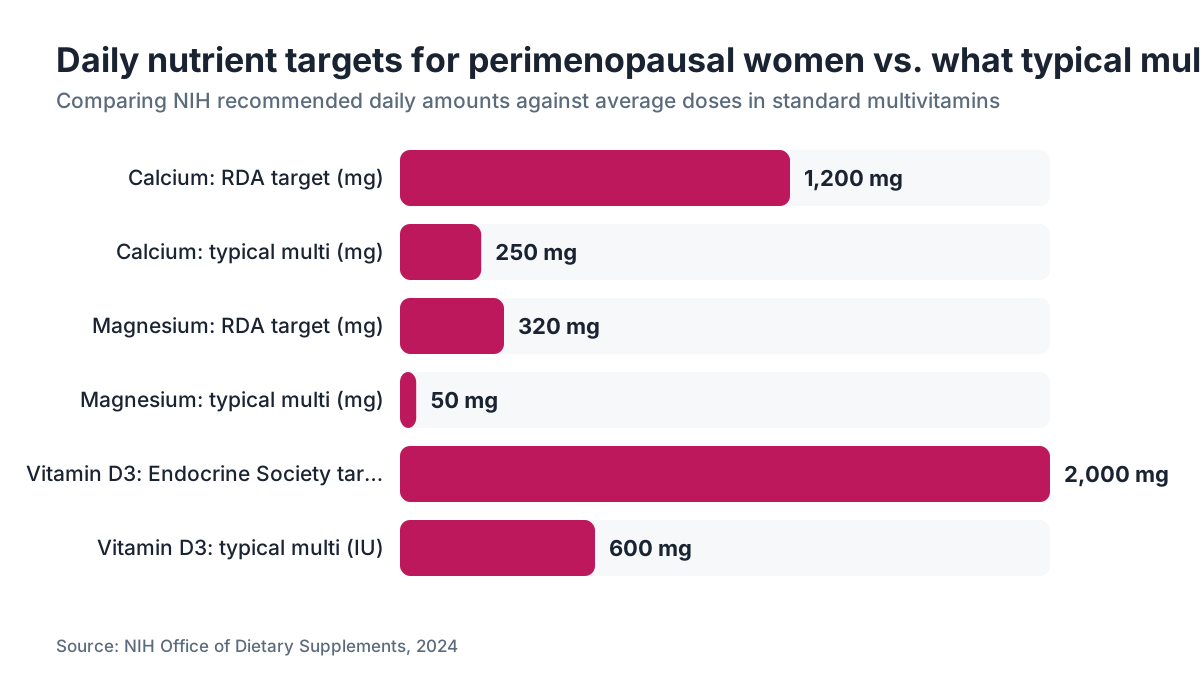
Calcium. The NIH recommends 1,000 mg/day for women 19 to 50 and 1,200 mg/day for women 51 and older. [3] Perimenopause straddles those years, and bone loss speeds up even before your last period, so aiming for 1,200 mg total daily from food plus supplement is reasonable once you hit your mid-to-late 40s. Most multivitamins hold only 200 to 300 mg of calcium, so you will likely need a separate calcium supplement unless your diet is dairy-rich. Calcium carbonate is cheaper and fine with food. Calcium citrate absorbs better on an empty stomach and wins if you take acid reducers.
Vitamin D3. The Endocrine Society's clinical practice guideline recommends 1,500 to 2,000 IU of D3 daily for adults at risk of deficiency, enough to keep blood levels above 30 ng/mL. [4] Most perimenopausal women sit in that at-risk group. D3 absorbs meaningfully better than D2, so check the form. Plenty of mainstream multivitamins still carry only 400 to 600 IU. That is not enough.
Magnesium. The RDA for women 31 and older is 320 mg/day. [3] Magnesium supports sleep, muscle function, blood sugar, and bone density. Low magnesium is everywhere, especially in heavy coffee drinkers and women under chronic stress. Look for magnesium glycinate or citrate. Magnesium oxide is cheap and poorly absorbed.
B vitamins, especially B12 and folate. B12 absorption from food drops with age, partly because stomach acid declines. [5] Perimenopause is also when cardiovascular risk starts climbing, and adequate B12 and folate keep homocysteine in check. The RDA for B12 is 2.4 mcg, but many clinicians recommend higher supplemental doses (250 to 500 mcg) because absorption is lower. Folate as methylfolate (5-MTHF) is the better choice for the 10 to 15% of women with MTHFR gene variants that impair folic acid conversion.
Iron. This one depends on your situation. Women still menstruating, especially those with the heavy irregular bleeding common in perimenopause, may need 18 mg/day. Postmenopausal women or anyone who has stopped bleeding needs only 8 mg/day. [3] Extra iron causes constipation and GI upset, so check a ferritin level before you supplement.
Omega-3s. Not usually in multivitamins, but worth a mention because the evidence for joint comfort, mood, and heart health is real. EPA and DHA at 1,000 to 2,000 mg combined per day from fish or algae oil is a separate buy most perimenopausal women should think about.
What you probably do not need more of. Most perimenopausal women get plenty of zinc, selenium, vitamin C, and vitamin E from food. Products that pile these in do nothing extra, and very high vitamin E (over 400 IU) may cause harm. [6] Preformed retinol over 10,000 IU is linked to higher fracture risk, the last thing you want during a stretch of bone loss. [3]
What should you look for on a multivitamin label?
Front panels are marketing. The supplement facts panel is where you judge the product. Check the form of each nutrient first, then the dose, then the third-party testing.
Vitamin D3 beats D2. Magnesium glycinate or citrate beats oxide. Methylfolate (5-MTHF) beats folic acid for women with MTHFR variants. Calcium citrate beats carbonate if you have low stomach acid. These swaps matter more than brand prestige.
Check the dose against the targets above. A multivitamin listing 100 mg of magnesium is not moving the needle. One with 200 to 300 mg, plus whatever you get from food, actually helps.
Look at the serving size. Some products spread a real dose across four capsules a day. That is not automatically bad, since splitting doses often improves absorption, but know what you are signing up for.
Third-party testing matters more than most people realize. The FDA does not pre-approve dietary supplements. Its own guidance is blunt: "FDA is not authorized to review dietary supplement products for safety and effectiveness before they are marketed." [7] Certification from USP, NSF International, or ConsumerLab means an independent lab confirmed the product contains what it claims and is free of common contaminants. Without that seal, you are trusting the manufacturer's own quality control.
Last, check for vitamin K2. Perimenopause-targeted formulas increasingly include it because K2 (as MK-7) helps steer calcium into bone rather than arteries. The evidence is decent, not definitive, but the risk is low and the potential upside for bone and heart health justifies the small added cost. [8]
For more on what declining estrogen does to bones, the bone density test article covers when to get a DEXA scan and how to read your results.
How do the top perimenopause multivitamins compare?
The table rates widely available options on the nutrients that matter most. Prices are approximate retail as of mid-2025 and vary by seller. Third-party testing status is current as of publication.
| Product | Vitamin D3 | Magnesium | Calcium | Methylfolate | K2 | 3rd-party tested | ~Monthly cost | |---|---|---|---|---|---|---|---| | Ritual Essential for Women 40+ | 2,000 IU D3 | 30 mg (low) | 0 mg | Yes (5-MTHF) | No | Yes (USP verified) | ~$35 | | Garden of Life mykind Women 40+ | 1,000 IU D3 | 50 mg (low) | 100 mg | Yes (food-based folate) | No | NSF Certified | ~$40 | | Nature Made Multi for Her 50+ | 1,000 IU D3 | 0 mg | 200 mg | No (folic acid) | No | USP verified | ~$15 | | MegaFood Women Over 40 | 400 IU (low) | 80 mg (low) | 85 mg | No | No | NSF Certified | ~$50 | | Thorne Women's Multi 50+ | 2,000 IU D3 | 150 mg | 0 mg | Yes (5-MTHF) | Yes (K2) | NSF Sport certified | ~$45 | | New Chapter Every Woman's One Daily 40+ | 1,000 IU D3 | 48 mg (low) | 54 mg | Yes (5-MTHF) | No | Non-GMO verified | ~$40 |
The honest read: no product on this list nails every target in one pill. Part of that is physics. Calcium and magnesium together in real doses make a tablet too big for most people to swallow. So for most women the practical fix is a solid multivitamin that covers vitamins and trace minerals well, paired with separate calcium-magnesium and vitamin D.
If someone asked me to pick, I would name Thorne Women's Multi 50+ and Ritual Essential for Women 40+. Thorne has methylfolate, K2, and a real D3 dose. Ritual is transparent about sourcing and carries third-party verification, though its magnesium dose is genuinely too low to count.
Nature Made Multi for Her 50+ at $15/month is the best budget pick if you already take separate D3 and magnesium. It is USP-verified, which most cheap multivitamins are not.
Are "menopause-specific" multivitamins actually better?
Mostly no. The category runs on marketing. A supplement labeled "menopause support" or "perimenopause formula" is held to no different standard than a generic multivitamin, and the FDA has no definition for what makes something a perimenopause supplement. [7]
What many of these products do is add botanicals like black cohosh, ashwagandha, or evening primrose oil. Some of that evidence is real. A 2021 Cochrane review found black cohosh had a modest effect on hot flash frequency, though the effect size was small and study quality was mixed. [9] Ashwagandha has decent data for cortisol and sleep. But these additions cost you. Products that include them almost always run more expensive, and the extra ingredients sometimes crowd out room for the core vitamins and minerals that matter most.
Want to try black cohosh for hot flashes? Buy it separately at a studied dose (usually 20 to 40 mg of the standardized extract). That beats a subtherapeutic sprinkle buried in a multivitamin.
The exception is a product that happens to be marketed for perimenopause and also happens to carry the right forms and doses of the core nutrients. Judge the label, not the label claim.
Should you take iron in a perimenopause multivitamin?
It depends entirely on whether you are still menstruating and how heavy your periods are.
Irregular, sometimes flooding periods are a hallmark of perimenopause. [1] Lose enough blood and your iron stores drop fast. Fatigue, brain fog, and shortness of breath in perimenopausal women often get blamed on hormones when iron-deficiency anemia is the real driver. A ferritin level below 30 ng/mL is linked to symptoms even when hemoglobin looks normal. [10]
On the other hand, if your periods have gone light or infrequent, or you have already hit menopause (12 straight months without a period), 18 mg of iron a day is unnecessary and can cause constipation and GI distress.
Most multivitamins for women 50+ drop iron to 0 or 8 mg for exactly this reason. Still having periods? Confirm your multivitamin includes 18 mg. No period in six months or more? Choose an iron-free or low-iron formula.
Get a ferritin level checked if you are symptomatic. It is a cheap, routine blood test your primary care doctor can order.
Can a multivitamin help with hot flashes, mood, or sleep?
Directly, no. A multivitamin is not a hormone. It cannot replace estradiol or progesterone, and it will not stop a hot flash the way hormone therapy does.
Correcting specific deficiencies still makes a real difference. Magnesium deficiency worsens sleep and anxiety. Low B12 causes brain fog that feels a lot like the cognitive changes women pin on perimenopause. Vitamin D deficiency tracks with worse mood and more musculoskeletal pain. [4] Fixing those gaps does not cure perimenopause, but it strips away a layer of suffering that was never inevitable.
For actual vasomotor symptoms, meaning hot flashes and night sweats, the Menopause Society is clear that hormone therapy remains the most effective treatment. [11] If your symptoms are disruptive and a multivitamin alone falls short, that is a conversation worth having with a clinician. WomenRx connects perimenopausal women with clinicians who can evaluate whether hormone replacement therapy fits their situation.
For sleep specifically, magnesium glycinate at 200 to 400 mg in the evening has reasonable evidence and is safe. If progesterone is also low, as it often is in early perimenopause, oral micronized progesterone has a direct sleep-promoting effect no supplement matches. More on that at progesterone.
How much should you expect to spend on a quality perimenopause multivitamin?
Honestly, $20 to $50 a month covers everything from budget-but-solid to genuinely excellent. Past $50/month you are usually paying for branding, packaging, or proprietary blends with little extra benefit.
The trap is dropping $60/month on a heavily marketed "women's wellness" multi, then discovering it has 400 IU of D2 and no meaningful magnesium. You would have done better with USP-verified Nature Made at $15 plus a $12 bottle of magnesium glycinate and a $10 bottle of D3.
Splitting your stack into a multivitamin plus two or three targeted supplements is almost always cheaper and more effective than chasing one all-in-one product. The all-in-ones that actually contain therapeutic doses of magnesium and calcium alongside vitamins tend to be large, hard-to-swallow tablets or four-capsule-a-day regimens.
If budget is tight, a USP-verified generic multivitamin (Nature Made is the most accessible) paired with 1,000 to 2,000 IU D3 and 200 mg magnesium glycinate at night runs about $25 to 30/month and covers the bases that matter.
Do you actually need labs before choosing a perimenopause multivitamin?
Labs are not required, but they make the decision much smarter.
At a minimum, ask your doctor to check 25-hydroxyvitamin D (25-OH D), ferritin, B12, and a basic metabolic panel at your next annual visit. These are standard, inexpensive tests. If your 25-OH D reads 15 ng/mL, you may need more than 2,000 IU to reach an optimal range, and a doctor-supervised protocol beats guessing. If your ferritin is 10 ng/mL, you need an iron-rich multivitamin and likely a separate iron supplement, not a standard formula.
Magnesium is notoriously hard to read from blood work because serum magnesium is tightly regulated and does not reflect tissue stores. Most clinicians just recommend magnesium empirically in perimenopausal women because deficiency is so common and the supplement is safe.
A DEXA scan is the standard for assessing bone density. The Bone Health and Osteoporosis Foundation recommends one at menopause, or earlier if risk factors are present. [12] If your T-score already sits in the osteopenia range, you need a more aggressive calcium and D3 protocol than any standard multivitamin delivers.
Once you have your numbers, choosing a multivitamin becomes a much more targeted exercise.
What about gummy multivitamins for perimenopause?
Gummies are fine for compliance. They are not fine for nutrient density.
To keep a gummy palatable, manufacturers have to cap the mineral content in each piece. Calcium, magnesium, and iron are almost always absent or badly underdosed in gummies. They do okay with fat-soluble vitamins like D3 and K2 and with water-soluble B vitamins.
Gummies also tend to carry added sugar (typically 2 to 4 grams per serving), which matters if you are watching carbohydrate intake, and many perimenopausal women are, given rising insulin resistance at this stage.
If you take a gummy because swallowing capsules makes you gag and you were taking nothing before, a gummy beats nothing. Just go in knowing you will need to supplement calcium and magnesium separately. And check the label: most gummy vitamins carry no third-party testing at all, so USP or NSF verification on a gummy is harder to find than it should be.
For most women, two-piece capsules go down fine and let manufacturers pack in real nutrient doses. Two or three capsules with a glass of water at breakfast is a workable routine.
How does a multivitamin fit into broader perimenopause care?
A multivitamin is a foundation, not a treatment. Think of it as filling the gaps in your diet so everything else works better.
The evidence-based tools for perimenopausal symptoms are hormone therapy for vasomotor symptoms and bone protection, strength training for bone density and metabolic health, sleep hygiene plus possibly magnesium and progesterone for sleep, and a protein-forward diet to protect the muscle that starts slipping in your 40s. [11] A good multivitamin supports all of that indirectly by keeping your micronutrient status where it should be.
Managing weight during perimenopause now comes with its own clinical tools. GLP-1 medications like semaglutide have data on weight loss in midlife women, and how they interact with nutrient absorption is worth raising with a clinician. See semaglutide for weight loss. Women on GLP-1s often eat much less food, which makes a well-dosed multivitamin more important, not less.
For where perimenopause sits in the larger hormonal arc, see when does menopause start and menopause age.
WomenRx offers telehealth access to clinicians who focus on perimenopause and menopause care, including hormone therapy and GLP-1 prescribing, for women who want to address symptoms beyond what nutrition can fix.
Frequently asked questions
Is a regular women's multivitamin good enough for perimenopause, or do I need a special formula?
A regular women's multivitamin labeled for women 40+ or 50+ is usually fine as a base, as long as it uses the right nutrient forms (D3, not D2; methylfolate over folic acid) and carries third-party testing. The "perimenopause" or "menopause support" labels on specialty products are marketing terms with no regulatory meaning. Judge the product on its supplement facts panel, not the front-of-package claim.
Can a multivitamin reduce hot flashes during perimenopause?
No multivitamin reliably reduces hot flashes. Some products include black cohosh, which has a modest, inconsistent effect on hot flash frequency in some studies, but the effect is far smaller than hormone therapy. Correcting nutrient deficiencies can reduce the fatigue and brain fog that overlap with hot flash exhaustion, but the flashes themselves respond best to estrogen therapy, and that requires a clinical evaluation.
How much vitamin D3 should a perimenopause multivitamin contain?
Look for at least 1,000 IU and preferably 2,000 IU of D3 per serving. The Endocrine Society recommends 1,500 to 2,000 IU daily for adults at risk of deficiency to keep blood levels above 30 ng/mL. Many standard multivitamins still provide only 400 to 600 IU, which is not enough for most perimenopausal women. If your 25-OH D blood level is below 20 ng/mL, a higher-dose protocol under medical guidance makes sense.
Should I take calcium separately or get it from my multivitamin?
Mostly separately. Very few multivitamins include more than 200 to 300 mg of calcium because the pill would become too large. The NIH recommends 1,200 mg/day for women over 50. If your diet delivers 600 to 800 mg from dairy or fortified foods, a 400 to 600 mg calcium supplement fills the gap. Calcium citrate is the better form if you take acid-suppressing medications. Calcium carbonate is fine taken with food.
What form of magnesium is best in a perimenopause supplement?
Magnesium glycinate and magnesium citrate absorb best and are least likely to cause loose stools. Magnesium oxide, found in many cheaper multivitamins, has absorption rates around 4% in some studies compared to higher rates for chelated forms. For sleep support, magnesium glycinate at 200 to 400 mg in the evening is a common clinical recommendation. The RDA for women 31 and older is 320 mg/day.
Do perimenopause multivitamins interact with hormone therapy?
No clinically significant interactions are well-established between standard multivitamins and estradiol or progesterone at typical supplement doses. Very high doses of vitamin E (over 400 IU) have theoretical blood-thinning effects worth flagging with your prescriber. If you are on oral estrogen, liver metabolism runs more active and some B vitamin needs may be slightly higher. A standard well-dosed multivitamin is generally compatible with HRT.
Can I take a multivitamin with a GLP-1 medication like semaglutide?
Yes, and it is a smart move. GLP-1 medications sharply reduce food intake, which raises the risk of micronutrient gaps, particularly iron, B12, and fat-soluble vitamins. Clinicians prescribing GLP-1s for weight loss often recommend adding or upgrading a multivitamin. A third-party tested product with real doses matters more here, not less. Discuss specific supplement choices with your prescribing clinician.
Is methylfolate really better than folic acid in a perimenopause multivitamin?
For the 10 to 15% of women who carry MTHFR gene variants that impair folic acid conversion, methylfolate (5-MTHF) absorbs and works meaningfully better. For everyone else, the difference is smaller, but methylfolate is still at least as effective. Since you often cannot know your MTHFR status without testing, a product with methylfolate is a reasonable default. Look for "5-MTHF" or "Quatrefolic" on the label.
When should I stop taking an iron-containing multivitamin during perimenopause?
Once your periods go very light or stop entirely, the 18 mg/day of iron most women's multivitamins include is no longer needed and may cause GI side effects. Switch to an iron-free or low-iron (8 mg) formula. If you are unsure, a ferritin blood test clarifies whether your stores are adequate. Women 51 and older have an RDA of just 8 mg/day, per the NIH.
Are gummy vitamins as effective as capsules for perimenopausal women?
Gummies fall short on minerals. Calcium and magnesium are almost always absent or badly underdosed in gummies because the amounts needed would make them taste terrible. They can deliver fat-soluble vitamins like D3 well enough. If you prefer gummies, plan to take separate calcium and magnesium supplements. Check that any gummy you choose carries USP or NSF verification, since most gummies lack third-party testing.
How long does it take to notice a difference from a perimenopause multivitamin?
Correcting iron deficiency and lifting energy takes 4 to 8 weeks of consistent supplementation. Vitamin D levels normalize over 8 to 12 weeks at therapeutic doses. Magnesium effects on sleep and muscle cramps often show up within 2 to 4 weeks. Bone density changes take months to years. Do not expect symptom improvement in the first week. Recheck relevant labs after 3 months to confirm your levels are moving.
Do I need vitamin K2 in my perimenopause multivitamin?
Vitamin K2 (as MK-7) helps steer calcium into bone rather than soft tissue and has decent evidence for bone and arterial health in perimenopausal women. It is not universally included but is worth seeking out, especially if you also supplement significant calcium. If you take warfarin, discuss any K2 supplementation with your prescriber first, because vitamin K affects clotting.
What is the best budget perimenopause multivitamin?
Nature Made Multi for Her 50+ is USP-verified and runs about $15/month, making it the most accessible option with credible third-party testing. Its weaknesses are folic acid instead of methylfolate and no magnesium. Pair it with 1,000 to 2,000 IU D3 softgels and 200 mg magnesium glycinate at night and your total monthly spend lands around $25 to 30, covering the essential bases well.
Can perimenopause multivitamins help with bone loss?
Adequate calcium and vitamin D are the nutritional foundation of bone health, and deficiency clearly speeds bone loss. But supplementation alone, even at optimal doses, does not fully prevent the loss driven by declining estrogen. The Menopause Society identifies hormone therapy as the most effective option for preventing menopause-related bone loss. Strength training adds further protection. Think of calcium and D3 as necessary but not sufficient.
Sources
- NIH Office on Women's Health, Menopause basics
- The Menopause Society (formerly NAMS), Menopause Practice: A Clinician's Guide
- NIH Office of Dietary Supplements, Calcium Fact Sheet for Health Professionals
- Endocrine Society, Vitamin D Deficiency Clinical Practice Guideline (Holick et al., J Clin Endocrinol Metab 2011)
- NIH Office of Dietary Supplements, Vitamin B12 Fact Sheet for Health Professionals
- NIH Office of Dietary Supplements, Vitamin E Fact Sheet for Health Professionals
- FDA, Dietary Supplements
- Knapen MH et al., Vitamin K2 supplementation and bone mineral density (Osteoporosis International, 2013)
- Cochrane Database of Systematic Reviews, Black cohosh for menopausal symptoms (2021)
- Soppi ET, Iron deficiency without anemia (Clinical Case Reports, 2018)
- The Menopause Society, The 2023 Nonhormone Therapy Position Statement
- Bone Health and Osteoporosis Foundation, Clinician's Guide to Prevention and Treatment of Osteoporosis