Benefits of testosterone for women: what the research actually shows
TL;DR: Testosterone declines in women starting in their 20s and drops sharply around menopause. The best-supported benefit is improved sexual desire and response. Research also points to better bone density, mood, energy, and lean body mass. No testosterone product is FDA-approved for women in the U.S., but off-label prescribing is legal and widely practiced under guidelines from the Endocrine Society and NAMS.
Why do women need testosterone at all?
Most people think of testosterone as the male hormone, full stop. That framing is wrong, and it matters clinically. Women produce testosterone in the ovaries and adrenal glands throughout their reproductive lives. It circulates at lower concentrations than in men, but it's biologically active in the same tissues: brain, bone, muscle, skin, and genitals. [1]
Peak testosterone in women happens around age 20. It then falls gradually, roughly 1-2% per year through the 30s and 40s. By the time a woman reaches natural menopause, her total testosterone is about half of what it was in her 20s. [2] Surgical menopause (oophorectomy) is more abrupt. Removing both ovaries drops testosterone by roughly 50% overnight, which is why some surgeons recommend starting testosterone replacement right after surgery.
Estrogen gets almost all the attention in menopause conversations. That's partly because estrogen drives the classic symptoms: hot flashes, vaginal dryness, sleep disruption. But testosterone has its own receptor systems, and its absence has its own consequences, particularly for libido, energy, and body composition. The two hormones also interact. Estrogen increases sex hormone binding globulin (SHBG), which binds testosterone and makes it less available. So a woman on oral estrogen alone may feel better in some ways but notice her sexual interest hasn't come back, because her free testosterone is now even lower. [3]
This is not a fringe concern. A 2019 position statement from the International Society for the Study of Women's Sexual Health noted that low testosterone is 'the most common female sexual dysfunction seen in clinical practice.' [4] Understanding why women need testosterone is the foundation for understanding its benefits.
What are the proven benefits of testosterone for women?
The evidence is stronger for some benefits than others. Being honest about that distinction matters more than selling the whole list.
Sexual desire and function: strong evidence. This is where the data is clearest. Multiple randomized controlled trials, including the APHRODITE study and the LibiGel trials, found that transdermal testosterone significantly improved sexual desire, arousal, and the number of satisfying sexual events in postmenopausal women with hypoactive sexual desire disorder (HSDD). [4] A 2019 systematic review and meta-analysis in The Lancet Diabetes & Endocrinology, covering 36 trials and more than 8,000 women, concluded that testosterone was superior to placebo for sexual function across multiple domains. [5] That is about as solid as evidence gets in this field.
Bone density: good evidence. Testosterone receptors sit on osteoblasts (bone-building cells), and testosterone converts to estradiol locally in bone tissue. Observational studies consistently show that postmenopausal women with higher endogenous testosterone have better bone mineral density. [6] A 2021 trial found that testosterone pellets maintained or improved bone density in postmenopausal women over 24 months. The benefit looks real, though it partly operates through conversion to estrogen.
Mood and cognitive function: emerging evidence. Here the data gets murkier. Several small trials show improvements in mood, energy, and subjective wellbeing with testosterone therapy. A few report better verbal memory and attention. But larger, well-controlled trials are lacking, and the Endocrine Society's 2014 guidelines said evidence is insufficient to recommend testosterone specifically for mood or cognitive symptoms outside the sexual function indication. [2] Honest practitioners admit this gap.
Lean body mass and fat distribution: modest evidence. Testosterone promotes muscle protein synthesis and can reduce fat mass, effects seen in both men and women. In postmenopausal women, testosterone therapy has increased lean mass and decreased fat mass modestly in several trials. [7] The effect sizes are smaller than in men and depend heavily on dose and whether the woman is exercising. This is not a replacement for lifestyle changes. It can work alongside them.
Energy and fatigue: limited direct evidence. Many women report a real jump in energy and motivation on testosterone. The subjective experience is consistent and hard to dismiss. The challenge is separating testosterone's direct effect from improvements in sleep, mood, and sexual satisfaction that independently raise energy. We don't have clean mechanistic trials here, but the patient reports are consistent enough that most menopause specialists take them seriously.
Here's the honest ranking. Sexual function has the strongest trial data by a wide margin. Bone density is real but partly runs through estrogen conversion. Mood, energy, and body composition effects show up in many women's experience but rest on thinner evidence. No benefit listed here is invented. The strength of the evidence just varies.
How does testosterone decline differ from estrogen decline in perimenopause and menopause?
Estrogen falls sharply in the final 1-2 years before the last menstrual period and the first year after it, the classic menopausal transition. Hot flashes, night sweats, and vaginal dryness track closely with that estrogen drop. [8]
Testosterone's decline is slower and earlier. It starts in the mid-20s and progresses through every decade, so by the time a woman is in perimenopause, she may already have testosterone levels 40-50% below her peak. The transition through menopause doesn't cause a sharp testosterone cliff the way it does for estrogen. That's why testosterone-related symptoms (declining libido, fatigue, reduced motivation) often show up years before hot flashes, and why women in their late 30s or early 40s notice them without connecting them to hormones at all.
Surgical menopause is the exception. Bilateral oophorectomy removes the primary source of testosterone production alongside estrogen, creating a sudden, severe deficiency in both. Women who have had their ovaries removed are the most likely to have clearly symptomatic testosterone deficiency and the most likely to respond dramatically to replacement. [2]
For a fuller picture of how hormonal changes progress through the transition, see our guides on when does menopause start and menopause age.
What does testosterone do for sexual desire specifically?
Hypoactive sexual desire disorder, or HSDD, affects roughly 8-10% of U.S. women at any given time, with prevalence rising in perimenopause and after. [4] It means persistently low sexual desire that causes personal distress, which is different from simply having less libido than a partner or less than in younger years. Testosterone doesn't create desire out of nothing. It lowers the threshold for arousal in the brain's reward circuitry.
The mechanism involves androgen receptors in the hypothalamus, limbic system, and genital tissues. Testosterone also promotes nitric oxide release in clitoral and vaginal tissue, which improves local blood flow and sensitivity. In clinical trials, women on testosterone report more frequent sexual thoughts, stronger arousal, better orgasm quality, and more satisfying sexual events compared to women on placebo. [5]
The Lancet meta-analysis found that testosterone increased the number of satisfying sexual events by roughly 0.85 events per month compared to placebo. That sounds modest. The effect on reported distress and quality of life was substantial. In women with surgically induced menopause, who have the sharpest testosterone deficit, response rates are often higher.
One thing worth knowing: testosterone alone doesn't fix vaginal dryness or atrophy, which are estrogen-dependent. Many women need both. If libido is the main concern but sex is also painful because of vaginal dryness, addressing the estrogen piece (topical or systemic) alongside testosterone usually produces better outcomes. See our article on hormone replacement therapy for context on combining hormones.
Is testosterone FDA-approved for women in the United States?
No. There is currently no FDA-approved testosterone product for women in the United States. This is a genuine regulatory gap, not a fringe issue. The FDA approved a testosterone patch for women called Intrinsa in Europe (2006), but the manufacturer withdrew its U.S. application after the FDA advisory committee asked for more long-term cardiovascular and breast cancer safety data. That data was requested, not denied because of existing harm signals, and it was never generated at scale. [9]
The Endocrine Society's 2014 clinical practice guideline states that off-label testosterone use is appropriate for postmenopausal women with HSDD when prescribed at doses that achieve physiologic premenopausal testosterone levels, and when potential risks are disclosed. [2] NAMS reinforced this in its 2020 position statement, recommending testosterone for HSDD in postmenopausal women with 'reasonable evidence of efficacy and safety at physiologic doses.' [4]
Off-label prescribing of FDA-approved drugs is legal in the United States and extremely common in medicine. Physicians routinely prescribe testosterone products approved for men (injectable testosterone cypionate, topical gels) at lower doses for women, or use compounded formulations. This is not a workaround. It's standard practice endorsed by the major professional societies.
What the regulatory gap means practically: your insurance likely won't cover testosterone therapy for women. You'll pay out of pocket in most cases. And you should work with a prescriber who monitors levels and adjusts doses carefully, because the products weren't designed for female physiology.
What are testosterone pellets for women, and how do they work?
Testosterone pellets are small, rice-sized implants, typically 3-7mm long, inserted under the skin of the upper buttock or hip through a minor in-office procedure. The pellet dissolves slowly over 3-5 months, releasing testosterone continuously without the peaks and troughs you get from injections or the daily variability of gels. [7]
Pellets are made from compounded testosterone. Because no FDA-approved pellet exists, every pellet product is compounded, meaning it's produced by a compounding pharmacy under a physician's order. The dose is customized based on a woman's lab values, symptoms, weight, and activity level. Typical doses for women run from 25mg to 150mg per pellet, much lower than the 150-200mg pellets used in men.
The appeal of pellets is convenience and consistency. You go in for an insertion every 3-5 months instead of applying a cream daily or giving yourself weekly injections. Many women report that pellets produce steadier symptom relief because blood levels don't swing. The downside is that you can't easily adjust or stop the dose if you develop side effects like acne, hair thinning, or elevated hematocrit, because the pellet is already in.
Pellets are not the only option. Transdermal creams and gels allow more dosing flexibility, and testosterone cypionate injections (typically 5-10mg weekly for women) are another well-studied route. The right delivery method depends on your lifestyle, your provider's experience, and how you respond. Pellets have their advantages, but they aren't inherently superior to other forms for how well they work. The Lancet meta-analysis found similar benefits across delivery methods. [5]
What do testosterone pellets for women cost?
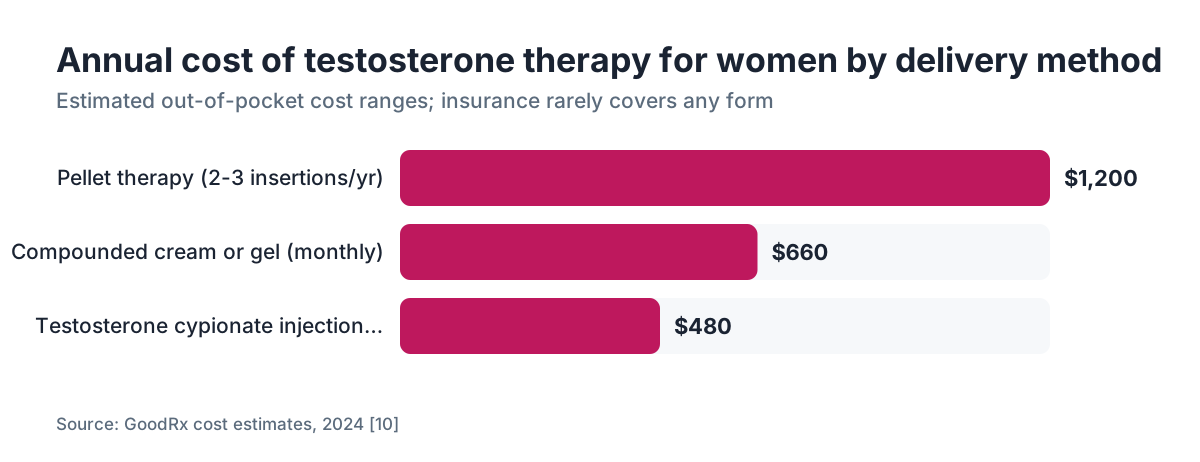
Testosterone pellet therapy for women typically costs between $300 and $600 per insertion, and most women need 2-3 insertions per year. That puts the annual cost at roughly $600 to $1,800, depending on dose, location, and the practice's fee structure. [10]
This does not include the initial consultation and lab work, which can add another $150-$400, or follow-up labs (usually drawn 4-6 weeks after insertion and again mid-cycle). Some practices bundle labs into an annual membership fee ranging from $1,000 to $2,500. Others bill everything separately.
Insurance rarely covers pellet testosterone for women. Because there is no FDA-approved female testosterone product, most insurers classify it as experimental or off-label and deny coverage. A handful of FSA/HSA plans will cover it with a prescription, worth checking.
Compared to testosterone creams or gels, pellets are more expensive per year. A compounded testosterone cream prescribed at a standard female dose might cost $30-$80 per month, or $360-$960 per year, including pharmacy fees. Weekly testosterone cypionate injections are cheaper still: a vial of injectable testosterone cypionate from a regular pharmacy (used at female doses) can cost under $50 per month. The pellet premium is real. Whether the convenience and consistency justify the cost is a personal calculation.
Telehealth providers like WomenRx have made the initial consultation and hormone management more accessible, often at lower overhead than traditional brick-and-mortar practices, which is worth knowing if cost is a barrier.
For reference, see the comparison table below.
What are the risks and side effects of testosterone for women?
Testosterone therapy in women is generally well-tolerated at physiologic doses, meaning doses that bring levels into the normal premenopausal range rather than above it. The side effects that occur are almost all dose-related, and most resolve with dose reduction. [2]
The most common side effects include acne, oily skin, increased facial or body hair (hirsutism), and clitoral sensitivity (which most women find positive at low doses, less so at high doses). Hair thinning at the temples, similar to male-pattern hair loss, can occur with high doses or in women genetically predisposed to androgenic alopecia. These effects are reversible with dose reduction, though recovery isn't always fast.
Voice changes and clitoral enlargement are rare but can be irreversible if doses stay supraphysiologic for extended periods. This is a real risk with pellet therapy specifically, because a dose that's too high can't be pulled back once the pellet is inserted. That's why careful lab monitoring matters, and why working with an experienced prescriber is not optional.
Cardiovascular risk has been studied in women, and the data is reassuring at physiologic doses. The Lancet meta-analysis found no significant adverse effects on cardiometabolic markers at doses used in trials. [5] Long-term data beyond 2 years is limited, which is an honest gap in the literature.
Breast cancer risk is the question most women ask. The data here is genuinely reassuring: no randomized trial has shown increased breast cancer incidence with testosterone therapy in women, and several studies suggest testosterone may have a protective effect on breast tissue. [5] That said, the trials aren't large enough or long enough to be definitive. The Endocrine Society and NAMS both state that testosterone at physiologic doses does not appear to increase breast cancer risk, while acknowledging that certainty requires longer follow-up. [2][4]
Women who are pregnant or trying to conceive should not use testosterone. It is teratogenic. Reliable contraception is required if there's any chance of pregnancy, because testosterone therapy can cause virilization of a female fetus.
Who is a good candidate for testosterone therapy?
The clearest indication, endorsed by both NAMS and the Endocrine Society, is postmenopausal women with HSDD: low sexual desire that is personally distressing, after other causes (depression, relationship factors, pain, medication side effects) have been ruled out. [2][4] This is the population with the strongest trial evidence.
Perimenopausal women with documented low testosterone, significant libido complaints, and fatigue that hasn't responded to addressing sleep and stress are also reasonable candidates, though the evidence base is somewhat thinner for this group because most trials enrolled postmenopausal women.
Women who have had bilateral oophorectomy are often the most clearly appropriate candidates. They have the sharpest testosterone deficit and the most dramatic symptomatic response.
Candidates should have baseline labs drawn before starting, including total testosterone, free testosterone, SHBG, DHEA-S, CBC (to check hematocrit), and a metabolic panel. [2] Women who are perimenopausal should also have FSH and estradiol measured to understand where they are in the transition. See our guide on hormone replacement therapy for how testosterone fits into a broader hormone plan.
Women who may not be good candidates include those with a history of hormone-sensitive cancers (though data on testosterone and breast cancer is not alarming, the uncertainty warrants caution), those with severe acne or hirsutism at baseline, and women who are pregnant or may become pregnant. Women with polycystic ovary syndrome (PCOS) often have elevated testosterone already and don't need replacement. They need a different evaluation.
How is testosterone monitored after starting therapy?
Monitoring is not optional. It's the thing that separates safe, effective testosterone therapy from careless prescribing.
After starting therapy, most guidelines recommend checking total testosterone and free testosterone 4-6 weeks after starting a new dose or a new pellet insertion. The goal is to confirm levels are in the normal premenopausal female range, which the Endocrine Society defines as a total testosterone of 15-70 ng/dL for adult women, though lab reference ranges vary. [2] Levels above the female physiologic range are tied to the dose-dependent side effects described above.
Ongoing monitoring usually happens every 6 months once levels are stable. Labs should include testosterone, CBC (because testosterone can raise red blood cell mass and hematocrit, which increases clotting risk at high levels), and a lipid panel annually. Some providers also check SHBG, which affects how much testosterone is biologically available.
For pellet therapy specifically, timing the lab draw matters. Drawing labs 4-6 weeks after insertion captures near-peak levels. Drawing at week 12 shows trough levels. Both are useful information. If you're managing your own care, ask your provider what timing they use and why.
Women on testosterone who also take oral estrogen should know that oral estrogen raises SHBG, which can bind more testosterone and lower free levels. Switching to a transdermal estrogen patch can sometimes improve free testosterone without changing the testosterone dose. This is a common, practical adjustment.
How does testosterone fit with other hormone therapies like estrogen and progesterone?
Testosterone rarely works best in isolation for perimenopausal and menopausal women. Most women who need testosterone also have declining estrogen and, if they have a uterus, need progesterone to protect the uterine lining from unopposed estrogen stimulation. [8]
The standard approach in menopause management is to address estrogen and progesterone first, because they handle the hot flashes, night sweats, sleep disruption, and vaginal dryness that are estrogen-dependent. If libido, energy, and body composition concerns persist after 3-6 months of estrogen and progesterone optimization, that's when adding testosterone makes the most sense. Some women find that estrogen and progesterone alone resolve enough that they don't need testosterone. Others need all three.
The hormone interaction worth understanding: oral estrogen raises SHBG, reducing available free testosterone. Transdermal estrogen (patches, gels, creams) has less effect on SHBG. Women who add testosterone while on oral estrogen may need higher testosterone doses to reach the same free testosterone effect, or may do better switching to transdermal estrogen delivery. [3] This is a nuance many general practitioners miss.
For a complete picture of how the different hormones interact in the menopause transition, see our articles on menopause and progesterone. If you're also managing weight alongside hormones, GLP-1 medications like semaglutide interact with the hormonal picture too, and some women use both.
What does the research say about testosterone and bone density in women?
Bone loss accelerates sharply after menopause, driven mostly by estrogen decline. But testosterone has independent effects on bone. Androgen receptors on osteoblasts respond directly to testosterone, and testosterone also aromatizes (converts) to estradiol locally in bone tissue, adding an estrogen-mediated bone-protective effect. [6]
Epidemiological studies consistently find that postmenopausal women with higher endogenous testosterone have better bone mineral density (BMD) at the hip and spine. In women who have had bilateral oophorectomy, the combined loss of estrogen and testosterone accelerates bone loss more than natural menopause does.
Clinical trial data on testosterone's direct bone effect in women is less extensive than the observational data. A 2021 trial of testosterone pellets in postmenopausal women showed stable or improved BMD at the lumbar spine and hip over 24 months. [7] The difficulty is separating testosterone's direct effect from its conversion to estradiol, because women in these trials are often also on estrogen.
Here's the practical read. If a woman is already on adequate estrogen therapy and has a bone density test showing osteopenia or osteoporosis, adding testosterone is unlikely to be enough treatment on its own. Bisphosphonates or other bone-specific agents may be needed. But for women who can't tolerate or decline systemic estrogen, testosterone alone may offer some bone-protective effect while also addressing libido and energy symptoms.
Frequently asked questions
Can testosterone therapy help with menopause weight gain?
Testosterone can modestly improve body composition by increasing lean muscle mass and reducing fat mass in postmenopausal women, but the effect isn't large enough to treat significant weight gain on its own. It works best alongside resistance exercise and adequate protein intake. For meaningful weight loss, GLP-1 medications have far stronger evidence. Testosterone and GLP-1s are not mutually exclusive, and some women use both under medical supervision.
How long does it take for testosterone to work in women?
Most women notice improvements in sexual desire within 4-8 weeks of reaching adequate testosterone levels. Energy and mood improvements often take 6-12 weeks. Changes in body composition (more lean mass, less fat) typically take 3-6 months and require consistent exercise to see clearly. Pellet therapy takes 2-4 weeks to reach peak levels after insertion, then declines gradually over 3-5 months.
What is a normal testosterone level for women?
The Endocrine Society defines the normal premenopausal female range as roughly 15-70 ng/dL total testosterone, though reference ranges vary slightly by lab and assay. Free testosterone (unbound, biologically active) is often more clinically meaningful but harder to measure accurately. Many women with symptoms have levels in the low-normal range rather than below the reference range entirely, which is why symptoms matter as much as numbers.
Are testosterone pellets better than creams or injections for women?
No delivery method is clearly superior for how well it works. Pellets offer convenience (one insertion every 3-5 months) and stable blood levels. Creams and gels allow easier dose adjustment if side effects occur. Injections are the least expensive option. The Lancet 2019 meta-analysis found similar benefits across delivery routes. Pellets carry a specific downside: you can't easily reduce or stop the dose mid-cycle if you develop acne, hair thinning, or elevated hematocrit.
Does testosterone cause hair loss in women?
At physiologic doses, testosterone rarely causes significant hair loss. At supraphysiologic doses, or in women genetically predisposed to androgenic alopecia, it can cause thinning at the temples or crown. This is dose-dependent and usually improves with dose reduction. Pellet therapy carries slightly higher risk because doses can overshoot the target and can't be quickly adjusted. Monitoring lab levels keeps this risk manageable.
Can testosterone therapy increase breast cancer risk in women?
Current evidence does not show increased breast cancer risk at physiologic testosterone doses. The 2019 Lancet meta-analysis found no significant increase in adverse events including breast cancer in over 8,000 women across 36 trials. Several studies suggest testosterone may have a mildly protective effect on breast tissue. However, long-term data beyond 2 years is limited, so this remains an area of ongoing study. NAMS and the Endocrine Society both consider physiologic doses reasonably safe.
Is testosterone therapy safe for women with a history of PCOS?
Women with PCOS typically have elevated testosterone rather than deficient testosterone, so they are rarely candidates for testosterone replacement. Adding more testosterone to an already elevated baseline would likely worsen PCOS symptoms like acne, hirsutism, and irregular cycles. If a woman with a PCOS history is postmenopausal and has documented low testosterone with symptoms, evaluation is still appropriate, but it requires careful baseline labs before any treatment.
Do I need a prescription for testosterone as a woman?
Yes. Testosterone is a Schedule III controlled substance in the United States and requires a physician's prescription. There is no FDA-approved over-the-counter testosterone product for women. Supplements marketed as 'testosterone boosters' aren't regulated the same way and have no proven efficacy. Legitimate testosterone therapy requires a prescription, lab work, and ongoing monitoring by a licensed prescriber.
What happens to testosterone levels after a hysterectomy?
A hysterectomy that preserves the ovaries does not directly remove the main testosterone-producing glands, so testosterone levels should not drop dramatically from the surgery itself. However, some research suggests ovarian function can be mildly affected by disrupted blood supply after hysterectomy. Bilateral oophorectomy (removal of both ovaries) causes an immediate, significant drop in testosterone of roughly 50%, and replacement is often appropriate.
Can younger women in perimenopause use testosterone therapy?
Yes, with some caveats. Perimenopausal women in their late 30s and 40s can be appropriate candidates if they have documented low testosterone and symptomatic HSDD that isn't explained by other causes. Most clinical trials enrolled postmenopausal women, so the evidence base is slightly thinner for premenopausal and perimenopausal women. Reliable contraception is required because testosterone is teratogenic and perimenopausal women may still ovulate.
How do I find a doctor who prescribes testosterone for women?
Look for providers with specific menopause or hormonal health training: board-certified menopause specialists (credentialed by NAMS), reproductive endocrinologists, or hormone-focused internists and gynecologists. Telehealth platforms focused on women's hormonal health have made access much easier for women in rural or underserved areas. Whoever you work with should draw baseline labs before prescribing and monitor levels after initiation, rather than prescribe on symptoms alone.
Can testosterone improve energy and mood in women, or is that just placebo?
The honest answer: probably real, but hard to isolate. Multiple small trials show mood and energy improvements with testosterone therapy. The challenge is that better sleep, reduced sexual distress, and improved muscle function all independently raise energy and mood, making it hard to attribute the effect to testosterone directly. The Endocrine Society's guidelines say evidence is insufficient to recommend testosterone specifically for mood symptoms, but most clinicians treating women with testosterone report consistent patient-reported improvements.
Sources
- Endocrine Society, 'Androgen Therapy in Women' overview
- Endocrine Society Clinical Practice Guideline: Androgen Therapy in Women (2014), Journal of Clinical Endocrinology & Metabolism
- Davis SR et al., 'Testosterone and women's sexual health', Nature Reviews Endocrinology, 2020
- ISSWSH/NAMS 2019 Position Statement on Testosterone Therapy for Women, Menopause journal
- Islam RM et al., 'Safety and efficacy of testosterone for women: a systematic review and network meta-analysis', Lancet Diabetes & Endocrinology, 2019
- Khosla S et al., 'Estrogen and the male skeleton', Journal of Clinical Endocrinology & Metabolism, 2002
- Glaser RL, York AE, Dimitrakakis C, 'Beneficial effects of testosterone therapy in women measured by the validated Menopause Rating Scale (MRS)', Maturitas, 2021
- NAMS 2022 Hormone Therapy Position Statement, Menopause journal
- FDA, Drug Approvals and Databases
- GoodRx, Testosterone Pellet Therapy Cost Estimates
- NIH MedlinePlus, Testosterone Levels Test
- Shifren JL et al., 'Transdermal testosterone treatment in women with impaired sexual function after oophorectomy', New England Journal of Medicine, 2000