Benefits of progesterone: what it actually does for women
TL;DR: Progesterone protects the uterine lining in women on estrogen therapy, reduces hot flashes, improves sleep quality, and may lower breast cancer risk compared to synthetic progestins. Oral micronized progesterone (Prometrium) is the form most supported by evidence. Women without a uterus don't need it, but those who do should treat it as central to any hormone regimen.
What does progesterone actually do in the body?
Progesterone is a steroid hormone made mostly in the ovaries after ovulation, with smaller amounts from the adrenal glands and, in pregnancy, the placenta. It works alongside estrogen throughout a woman's reproductive life. When both fall in perimenopause and menopause, the effects reach far past missed periods.
At its simplest, progesterone prepares the uterine lining (endometrium) for a fertilized egg and, if pregnancy doesn't happen, triggers its shedding. That's the high-school biology version. The fuller picture is more interesting. Progesterone receptors sit throughout the brain, breast tissue, bone, cardiovascular tissue, and the gut. So progesterone has effects most women, and even many clinicians, never connect to it: calmer mood, better sleep, reduced anxiety, and possibly protection against certain cancers.
The hormone binds to progesterone receptors (PRs) and changes gene expression, which is why its effects take days to weeks to show up rather than minutes. It also acts on GABA receptors in the brain through its metabolite allopregnanolone, and that's where the sleep and anti-anxiety effects come from. This is not a minor footnote. It explains why women feel a real shift in anxiety and sleep as progesterone drops in the late luteal phase of each cycle, and again as they enter perimenopause. [1]
Two forms matter most in practice: bioidentical micronized progesterone (best-known brand name Prometrium) and synthetic progestins like medroxyprogesterone acetate (MPA). They are not the same thing, and the evidence treats them very differently. When someone says "progesterone benefits," they almost always mean the bioidentical form, and that distinction matters enormously for breast cancer risk, sleep, and mood. More on that below.
What are the main benefits of progesterone for menopausal women?
Uterine protection is the benefit with the strongest evidence behind it. Any woman who has a uterus and takes estrogen for menopause symptoms needs progesterone (or a progestin) to prevent endometrial hyperplasia, a thickening of the lining that can progress to endometrial cancer if left alone. This is not theoretical. The 1975 New England Journal of Medicine paper that first flagged the risk of unopposed estrogen changed prescribing permanently. The North American Menopause Society (NAMS) states plainly that progesterone is required for endometrial protection in women with a uterus on systemic estrogen. [2]
Past that protection, here is what the published evidence shows:
Sleep. Oral micronized progesterone at 300 mg taken at bedtime improved sleep quality in postmenopausal women in a randomized trial. The mechanism is the GABA-A activity of allopregnanolone, the neurosteroid metabolite of progesterone. This is why oral progesterone beats vaginal or topical routes when sleep is the goal: first-pass liver metabolism converts more of it to allopregnanolone. [3]
Hot flashes and vasomotor symptoms. A 2021 randomized controlled trial in Menopause (the journal of NAMS) found oral micronized progesterone 300 mg per night reduced hot flash frequency and severity in perimenopausal and early postmenopausal women versus placebo. The reduction was real, though smaller than with estrogen alone. For women who can't or won't take estrogen, progesterone is a reasonable option with actual data behind it, not anecdote. [4]
Mood and anxiety. The link between falling progesterone and mood symptoms in perimenopause keeps getting stronger. Allopregnanolone acts as a positive allosteric modulator of GABA-A receptors, calming the brain by a mechanism similar to benzodiazepines (without the addiction risk at physiologic doses). Women sensitive to hormonal swings, including those with a history of PMS or PMDD, often see the biggest drop in anxiety when progesterone joins their regimen.
Bone density. Estrogen gets most of the credit for bone protection, and rightly so. But progesterone receptors sit on osteoblasts (bone-building cells), and some evidence suggests progesterone may stimulate new bone formation rather than just slowing loss. The data here are softer than for estrogen. If bone density is your main worry, the bone density test conversation with your provider should center on estrogen and lifestyle. Progesterone is a supporting player, not the lead. [5]
Does progesterone lower breast cancer risk?
This is the question women ask most, and the honest answer has real nuance. The short version: bioidentical micronized progesterone appears to carry a lower breast cancer risk than synthetic progestins, and possibly no meaningful increase at all over estrogen-only therapy.
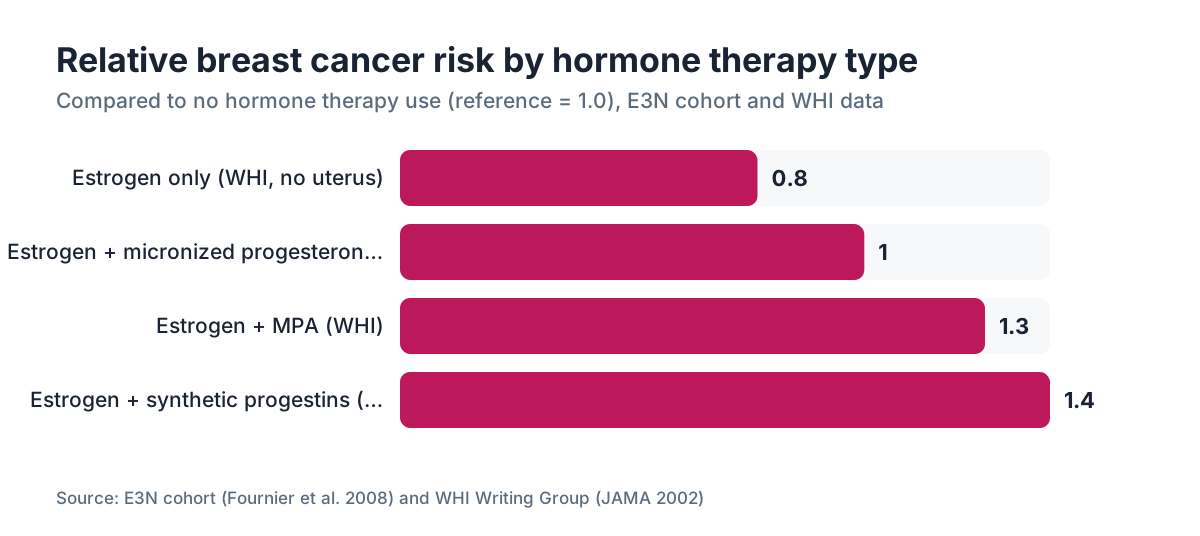
The strongest data come from the E3N French cohort study, which followed 80,000 women for more than 8 years. Women using estrogen with synthetic progestins had a clearly raised relative risk of breast cancer (around 1.4 for MPA-containing regimens). Women using estrogen with micronized progesterone had a relative risk close to 1.0, meaning no statistically significant increase. That gap is meaningful. [6]
The WHI (Women's Health Initiative), which alarmed the world about HRT in 2002, used conjugated equine estrogen plus medroxyprogesterone acetate, a synthetic progestin. Breast cancer relative risk in that arm was 1.26. The estrogen-only arm (women without a uterus) actually showed a drop in breast cancer risk. Many researchers now believe the culprit behind the WHI breast cancer signal was the MPA, not the estrogen, and certainly not bioidentical progesterone. [7]
None of this makes micronized progesterone risk-free for every woman. Women with BRCA1/2 mutations, a strong family history, or prior breast cancer need a detailed talk with an oncologist, not a blanket "HRT is fine." But for the average perimenopausal or postmenopausal woman without those risk factors, the evidence keeps pointing to micronized progesterone as the safer partner for estrogen than older synthetic options.
The NAMS 2022 Hormone Therapy Position Statement notes that "progestogen type may matter" and specifically acknowledges the more favorable safety signal for micronized progesterone over synthetic progestins. [2]
What are the benefits of progesterone pills specifically?
Oral micronized progesterone (the pill form, brand name Prometrium in the US) has real advantages over other delivery methods, and it has trade-offs worth knowing.
Start with the upside. First-pass liver metabolism converts oral progesterone into allopregnanolone, the neurosteroid that calms the brain. That makes the pill the best form for sleep and anxiety benefits. It's also the most studied form in clinical trials, so when you read about progesterone benefits in research, you're almost always reading about oral micronized progesterone. Prometrium comes in 100 mg and 200 mg capsules. 200 mg nightly is the standard dose for uterine protection in women on cyclic or continuous estrogen therapy, and 300 mg has been studied for sleep and vasomotor symptom relief. [3]
Now the trade-offs. Some women find oral progesterone makes them groggy or sedated, especially early on. Taking it at bedtime turns most of that side effect into a benefit (better sleep), but very sensitive women may notice next-morning fog that lingers. A smaller number report next-day nausea if they take it on an empty stomach.
Oral progesterone is also off the table for women with a peanut allergy, because Prometrium's capsules contain peanut oil. For anyone with that allergy, this is not a footnote. Compounded progesterone in capsule or troche form without peanut oil is available through compounding pharmacies, though compounded hormones carry their own regulatory questions.
For women who want the uterine protection and systemic effects without the sedation, vaginal progesterone (gel or suppository) delivers hormone locally to the uterus with minimal systemic absorption. This is sometimes called the "uterine first-pass effect." It protects the endometrium well but won't do much for sleep, mood, or hot flashes.
You can read more about the full progesterone landscape, compounded options included, in our progesterone overview.
How does progesterone compare to synthetic progestins?
| Feature | Micronized Progesterone (bioidentical) | Medroxyprogesterone Acetate (MPA) | Norethindrone Acetate | |---|---|---|---| | Identical to body's own hormone | Yes | No | No | | Breast cancer signal in large cohorts | Low to none (E3N) | Elevated (WHI, E3N) | Intermediate | | Sleep benefit | Yes (via allopregnanolone) | No | No | | Mood/anxiety benefit | Likely yes | Neutral to negative | Neutral | | Cardiovascular neutrality | Generally favorable | Less favorable | Variable | | FDA-approved for endometrial protection | Yes | Yes | Yes | | Peanut oil concern | Yes (Prometrium) | No | No | | Available in combination pill | No | Yes (Prempro, etc.) | Yes (Activella, etc.) |
The differences are not trivial. Synthetic progestins were developed partly because oral progesterone absorbed poorly before micronization technology improved in the 1980s. Now that oral micronized progesterone works reliably, many clinicians who focus on menopause have moved away from MPA and norethindrone except where cost or convenience drives the choice.
The cardiovascular picture deserves a mention. The PEPI trial (Postmenopausal Estrogen/Progestin Interventions) found estrogen plus micronized progesterone preserved more of estrogen's favorable HDL effect than estrogen plus MPA did. This was a surrogate marker, not a hard cardiovascular outcome, but it adds to the mechanistic case that the two types of progestogen behave differently in the body. [8]
For women starting hormone replacement therapy today, which progestogen you use is worth raising directly with your provider, rather than accepting whatever the prescription pad defaults to.
What happens to progesterone during perimenopause?
Progesterone drops before estrogen does. This surprises most women and plenty of providers. The reason: progesterone is produced after ovulation, and ovulation turns irregular and then absent years before estrogen levels meaningfully fall. So a woman in her early-to-mid forties can have perfectly normal estrogen but dramatically lower progesterone, because she's skipping ovulations or making a weak corpus luteum when she does ovulate.
The practical consequences show up as shorter cycles, heavier or more irregular periods, disrupted sleep, rising anxiety, and PMS that seems to have gotten worse with age. These are progesterone-deficiency symptoms, and they often come before the hot flashes and night sweats most people link to menopause. Many women in this phase are told their hormones are "normal" based on a single estrogen or FSH reading that misses the progesterone deficit entirely.
For women in perimenopause who still have cycles, low-dose oral micronized progesterone (100 mg nightly in the luteal phase, or continuously) is increasingly used off-label to address these symptoms. The FDA has not approved progesterone specifically for perimenopausal symptom management, but NAMS clinical guidance acknowledges its use here. The evidence for symptom relief keeps growing even as the regulatory labeling lags.
Knowing when menopause starts and what the perimenopause timeline looks like helps women push for testing and treatment at the right moment, instead of waiting until symptoms turn severe.
Can progesterone help with sleep?
Yes, and this is probably the most underrated benefit among women who get told their sleep problems are "just stress."
Oral progesterone's sleep effect works through its conversion to allopregnanolone, a neurosteroid that binds to GABA-A receptors in the brain, the same receptors targeted by sleep drugs like benzodiazepines and Z-drugs. The difference is that allopregnanolone is endogenous (your body makes it naturally from progesterone), and at physiologic replacement doses the effect doesn't carry the addiction risk or next-day cognitive drag of pharmaceutical sleep aids.
A randomized crossover study by Hitchcock and Prior found postmenopausal women taking 300 mg of oral micronized progesterone at bedtime had significant improvements in sleep onset, total sleep time, and wakefulness after sleep onset versus placebo. The improvements held up on objective polysomnography, more than self-report. [3]
For women whose main menopause complaint is insomnia, and who have a uterus, oral progesterone at bedtime often pulls double duty: uterine protection plus better sleep from one pill. For women without a uterus who want the sleep benefit without estrogen, some menopause specialists prescribe low-dose progesterone off-label. The data specifically supporting this use in women without a uterus are thinner than for those on combined HRT, but the mechanism is sound and many clinicians see it as a reasonable option.
Does progesterone affect mood and anxiety?
The relationship between progesterone and mood is real but complicated. In the right context, progesterone is calming. In the wrong context (rapid swings, or sensitivity to allopregnanolone itself), it can temporarily worsen mood in some women.
For most women, progesterone replacement in perimenopause and menopause eases the anxiety and irritability that got worse as progesterone declined. The mechanism, again, is allopregnanolone and GABA-A modulation. Women who had significant PMS or PMDD often report that stable progesterone levels (rather than the sharp premenstrual drop) quiet background anxiety in a way they didn't expect.
A subset of women, sometimes called "progesterone-sensitive," go the other direction and feel worse when progesterone is added. This showed up as a problem in some combined HRT trials and shows up in clinical practice. The symptoms can include irritability, low mood, and tearfulness. These women are not imagining it. Some do better on vaginal progesterone (less systemic allopregnanolone), some do better on very low oral doses, and some find synthetic progestins like norethindrone, paradoxically, easier to tolerate for mood despite their other drawbacks.
This is one reason getting progesterone dosing and timing right often takes a couple of months of adjustment, and why working with a clinician who actually knows hormones matters. A platform like WomenRx can connect you with providers who handle this nuance regularly, instead of defaulting to a one-size prescription.
If you've tried progesterone before and felt worse on it, that's information worth bringing to your provider. It doesn't mean you can't benefit from it. It usually means the dose, route, or timing needs adjusting.
What are the risks and side effects of progesterone?
Progesterone is generally well-tolerated, especially next to synthetic progestins, but it's not free of side effects.
The most common are drowsiness and dizziness, which is why taking it at night makes sense. Breast tenderness turns up in some women, particularly early in treatment. Bloating and nausea are less common and usually avoidable by taking the capsule with food.
At higher doses or in sensitive individuals, next-day sedation can be a problem. Women who need to drive or operate equipment early in the morning should know that 300 mg is a meaningfully sedating dose for some people, even taken at bedtime.
The peanut oil issue bears repeating: Prometrium capsules contain peanut oil. Women with a peanut allergy should not take Prometrium and should request a compounded alternative or a different progestogen.
Some conditions make progesterone contraindicated or call for extra caution. These include:
- Active or prior thromboembolic disease (though the risk with oral micronized progesterone appears lower than with synthetic progestins)
- Severe liver disease (the oral form is metabolized in the liver)
- Known or suspected hormone-sensitive cancers (discuss with an oncologist)
- Unexplained vaginal bleeding
The FDA label for Prometrium lists these contraindications and carries a boxed warning, standard for all menopausal hormone therapies, about cardiovascular risks, breast cancer, and dementia in women over 65 who start hormone therapy late. That warning comes mostly from the WHI data using conjugated estrogen plus MPA, and may not fully apply to bioidentical progesterone, but it stays on the label. [9]
Women with a history of depression should be monitored when starting progesterone, since both improvement and (less often) worsening of mood have been reported.
How is progesterone tested, and what levels indicate deficiency?
Serum progesterone is measured by a blood test, and timing matters enormously. In premenopausal women with cycles, progesterone should be tested 7 days after presumed ovulation (the mid-luteal phase, roughly day 21 of a 28-day cycle). A mid-luteal progesterone below 10 ng/mL suggests inadequate ovulation; below 5 ng/mL is a strong signal of anovulation. In postmenopausal women not on HRT, progesterone is usually undetectable or below 1 ng/mL. [1]
The limitation of testing: serum progesterone swings a lot even within the same day, and certainly across cycle days. A single reading can mislead. Clinicians experienced in hormones often weight symptoms and the whole clinical picture more heavily than one lab value, especially in perimenopause where ovulation timing is unpredictable.
Saliva and urine testing for progesterone get marketed by some functional medicine providers as more accurate than serum, but the evidence for their clinical use over serum is weak, and they are not endorsed by NAMS or the Endocrine Society for standard care. [10]
One practical note: if you're on oral progesterone and get a serum level drawn, it will read high, sometimes very high, because of absorption and first-pass conversion. That doesn't mean you're overdosed. Oral progesterone creates high serum levels that don't translate directly to tissue levels the way injected or transdermal progesterone might. Comparing serum levels across delivery routes is not apples to apples.
Who should consider taking progesterone, and who doesn't need it?
The clearest group who needs progesterone: any woman with an intact uterus taking systemic estrogen for menopause symptoms. No exceptions. The endometrial cancer risk from unopposed estrogen is well-documented, and progesterone (or a progestin) is the only way to prevent it. This holds whether the estrogen is a pill, patch, gel, spray, or pellet. [2]
The estrogen patch doesn't come with built-in uterine protection. Neither do estradiol pills. Progesterone is always a separate step, and skipping it because "the patch is natural" or "I feel fine" is a real medical mistake.
Women without a uterus (after hysterectomy) don't need progesterone for endometrial protection. They can take estrogen alone. Whether they might benefit from progesterone for sleep, mood, or other reasons is a separate, more open question. Some clinicians offer it, others don't. The data on progesterone benefits for hysterectomized women who aren't using estrogen are limited, and NAMS doesn't come down strongly either way.
Women in perimenopause with intact ovaries and uterus who aren't yet using estrogen but are living with progesterone-deficiency symptoms (worsening PMS-like symptoms, disrupted sleep, anxiety, irregular cycles) may benefit from low-dose cyclic progesterone. This is off-label but increasingly common in menopause-informed practice.
Pregnant women should not use prescription progesterone capsules formulated for menopause without obstetric guidance. Progesterone in pregnancy is a separate clinical area with different preparations and dosing.
WomenRx's hormone providers can help you figure out whether progesterone fits your situation, including a review of your symptom history and existing labs.
How does progesterone fit into a full hormone replacement therapy plan?
Progesterone is usually one piece of a two-hormone strategy. Estrogen does the heavy lifting for vasomotor symptoms (hot flashes, night sweats), vaginal dryness, bone protection, and cardiovascular benefit when started within 10 years of menopause. Progesterone adds uterine protection, and in bioidentical form, it adds sleep and possibly mood benefits on top.
The regimens look different depending on circumstances:
Continuous combined: Estrogen every day, progesterone every day. Most common in women who are clearly postmenopausal (12+ months since last period) and don't want any withdrawal bleeding. This is the most convenient approach.
Cyclic (sequential): Estrogen every day, progesterone for 10-14 days per month. Produces a withdrawal bleed at the end of the progesterone phase. Sometimes preferred in early perimenopause to mimic a natural cycle, and it may produce better endometrial shedding in women with irregular cycles.
Progesterone-only: Occasionally used alone for perimenopausal symptoms when estrogen is contraindicated or declined. The vasomotor benefit is real but smaller than with estrogen. NAMS notes progesterone alone as a reasonable alternative for women who cannot use estrogen for hot flashes. [2]
For women also managing weight with GLP-1 medications like semaglutide or tirzepatide, hormone therapy and GLP-1s can generally be used together, though the combination is still an evolving research area. You can read more at semaglutide for weight loss or the semaglutide vs tirzepatide comparison if that's part of your picture.
The dose, route, and timing of progesterone should be individualized. What works perfectly for one woman may need adjusting for another, and a provider willing to iterate matters more than the specific starting protocol.
Frequently asked questions
What are the benefits of progesterone for women who don't have hot flashes?
Even without hot flashes, progesterone offers real benefits: uterine protection if you're using estrogen, better sleep through allopregnanolone's effect on GABA receptors, reduced anxiety, and possible mood stabilization. Women who describe worsening PMS-like symptoms, insomnia, or heightened anxiety in perimenopause but no hot flashes are often dealing with progesterone deficiency and may respond well to low-dose supplementation.
Can progesterone help with weight gain in perimenopause?
Progesterone's direct effect on weight is modest and mixed. It may slightly raise metabolic rate and has some diuretic action that cuts water retention. It can also increase appetite in some women. The bigger weight driver in perimenopause is estrogen decline, not progesterone. Addressing overall hormone balance, sleep quality, and metabolic health together tends to beat focusing on progesterone alone for weight.
Is there a difference between progesterone cream and progesterone pills?
Yes, and it matters. Over-the-counter progesterone creams usually contain very little progesterone and don't reliably raise serum levels or protect the endometrium. Prescription oral micronized progesterone (Prometrium) or a compounded prescription cream at therapeutic doses does reach the bloodstream. If you're relying on an OTC cream for uterine protection while taking estrogen, know the evidence does not support that approach. Talk to your provider.
How long does it take for progesterone to start working?
Sleep improvements often show up within the first one to two weeks on oral micronized progesterone taken at bedtime. Mood and anxiety changes usually take two to four weeks. Hot flash reduction can take four to eight weeks. Endometrial protection is considered effective from the first cycle of adequate dosing on. If you feel no improvement after six to eight weeks, a dose or route adjustment is worth discussing rather than stopping.
Can you take progesterone if you've had a hysterectomy?
You don't need it for uterine protection, but some women without a uterus take progesterone for sleep, mood, or anxiety. The evidence supporting progesterone in hysterectomized women outside the uterine-protection context is thinner than in women with a uterus. Some menopause specialists offer it, others stick to estrogen-only. It's a conversation worth having, not an automatic yes or no.
What is the best time of day to take progesterone?
At bedtime, for most women taking it orally. The sedating effect of allopregnanolone (progesterone's neurosteroid metabolite) becomes an asset rather than a nuisance when timed right. Taking it on an empty stomach can increase absorption and intensify the sedation, which some women find too strong. Taking it with a little food softens the effect while keeping therapeutic blood levels.
Does progesterone protect against endometrial cancer?
Yes. This is its most evidence-backed function in menopausal hormone therapy. Unopposed estrogen significantly raises endometrial cancer risk; adequate progesterone or progestin use removes most of that excess risk. The 2022 NAMS position statement specifically requires progestogen for endometrial protection in women with a uterus on systemic estrogen. Type and dose matter: 200 mg oral micronized progesterone nightly is the standard approved dose for continuous combined therapy.
Is bioidentical progesterone the same as natural progesterone?
Bioidentical means the molecule is structurally identical to what the human ovary produces. Oral micronized progesterone (Prometrium) is bioidentical and FDA-approved. The term 'natural progesterone' is sometimes used the same way, but it also gets used loosely in marketing for OTC creams that may contain little actual progesterone. Bioidentical doesn't automatically mean safer for every woman, but it does have a more favorable evidence profile than most synthetic progestins for breast cancer risk.
Can progesterone cause depression?
In most women, no. The allopregnanolone pathway tends to be calming and may improve mood. But a subset of women, particularly those with a history of PMDD or sensitivity to progesterone-related hormonal shifts, report worsening mood, irritability, or low mood when starting progesterone. If this happens, lowering the dose, switching to vaginal delivery (less systemic allopregnanolone), or trying a different progestogen often resolves it. Stopping without trying adjustments means missing a potentially useful treatment.
How does progesterone affect cardiovascular health?
Micronized progesterone appears cardiovascularly neutral to favorable, unlike MPA. The PEPI trial showed estrogen plus micronized progesterone preserved more of estrogen's HDL-raising effect than estrogen plus MPA. Starting hormone therapy including progesterone within 10 years of menopause or before age 60 is linked to cardiovascular benefit, not harm, a finding summarized in the NAMS 2022 position statement and sometimes called the 'timing hypothesis' or 'window of opportunity.'
What dose of progesterone is used for uterine protection in menopause?
The FDA-approved dose of oral micronized progesterone (Prometrium) for endometrial protection in women on continuous combined therapy is 200 mg nightly. For cyclic regimens, 200 mg nightly for 12 days per month is typical. The 300 mg dose has been studied specifically for sleep and hot flash reduction. These aren't interchangeable goals; discuss the right dose with your provider based on your regimen type and primary symptoms.
Can I get progesterone prescribed through telehealth?
Yes. Prescription oral micronized progesterone and compounded progesterone are both available through telehealth platforms that specialize in women's hormones. You'll usually need a provider consultation, a review of your symptoms and health history, and in many cases baseline labs. Care quality varies a lot between platforms, so look for providers with menopause training and familiarity with bioidentical hormone therapy specifically.
Does progesterone help with vaginal dryness?
Not directly. Vaginal dryness in menopause is driven mostly by estrogen decline, not progesterone deficiency. Vaginal estrogen or systemic estrogen addresses it. Progesterone has no clinically meaningful effect on vaginal tissue in most women. If vaginal dryness is your main symptom, the estrogen conversation is the right starting point, and local vaginal estrogen is effective and considered low-risk for most women regardless of uterine status.
Sources
- Endocrine Society, Hormone Health Network: Progesterone overview
- NAMS 2022 Hormone Therapy Position Statement, Menopause journal
- Hitchcock CL, Prior JC. Evidence about progesterone use in postmenopausal women. Endocrine Reviews, 2012
- Menopause journal (NAMS), 2021 RCT on oral micronized progesterone for hot flashes
- NIH Office of Dietary Supplements: Calcium and Bone Health overview
- Fournier A et al. E3N cohort study, International Journal of Cancer 2008
- WHI Writing Group, JAMA 2002: Risks and benefits of estrogen plus progestin in healthy postmenopausal women
- The Writing Group for the PEPI Trial, JAMA 1995: Effects of estrogen or estrogen/progestin regimens on heart disease risk factors
- FDA Prometrium (progesterone) prescribing information
- Endocrine Society Clinical Practice Guideline: Menopause hormone therapy
- National Cancer Institute: Endometrial Cancer Risk and Estrogen