Bad perimenopause symptoms: what's normal, what's not, and what helps
TL;DR: Perimenopause can last 4 to 10 years and produce symptoms far beyond hot flashes: erratic bleeding, anxiety that appears out of nowhere, sleep destruction, joint pain, and cognitive fog. About 80% of women get vasomotor symptoms. Hormone therapy is the most effective treatment for most of them. Recognizing which symptoms are dangerous versus just miserable matters a lot.
What counts as a 'bad' perimenopause symptom?
Perimenopause is the hormonal transition before menopause, typically starting in the mid-to-late 40s and lasting anywhere from 4 to 10 years [1]. The defining feature is erratic estrogen. Unlike the gradual decline people expect, estrogen in perimenopause swings wildly high and low before the ovaries finally stop producing it. That volatility is exactly why symptoms feel so chaotic.
Most resources list hot flashes and irregular periods and stop there. That list is embarrassingly incomplete.
The full picture includes heavy or unpredictable bleeding, rage and irritability that feels out of character, anxiety and panic attacks, insomnia, brain fog and memory slips, joint pain, vaginal dryness, heart palpitations, migraines, and skin and hair changes. Any one of these can be manageable. When four or five arrive together, they genuinely interfere with work, relationships, and basic functioning.
So when we say 'bad' symptoms, we mean two things: symptoms that are severe in intensity, and symptoms that signal something that needs a diagnosis to rule out a non-hormonal cause. A heavy period during perimenopause is common. A period so heavy you're soaking a pad every hour for two hours is a reason to call your doctor that day [2].
How common are severe perimenopause symptoms?
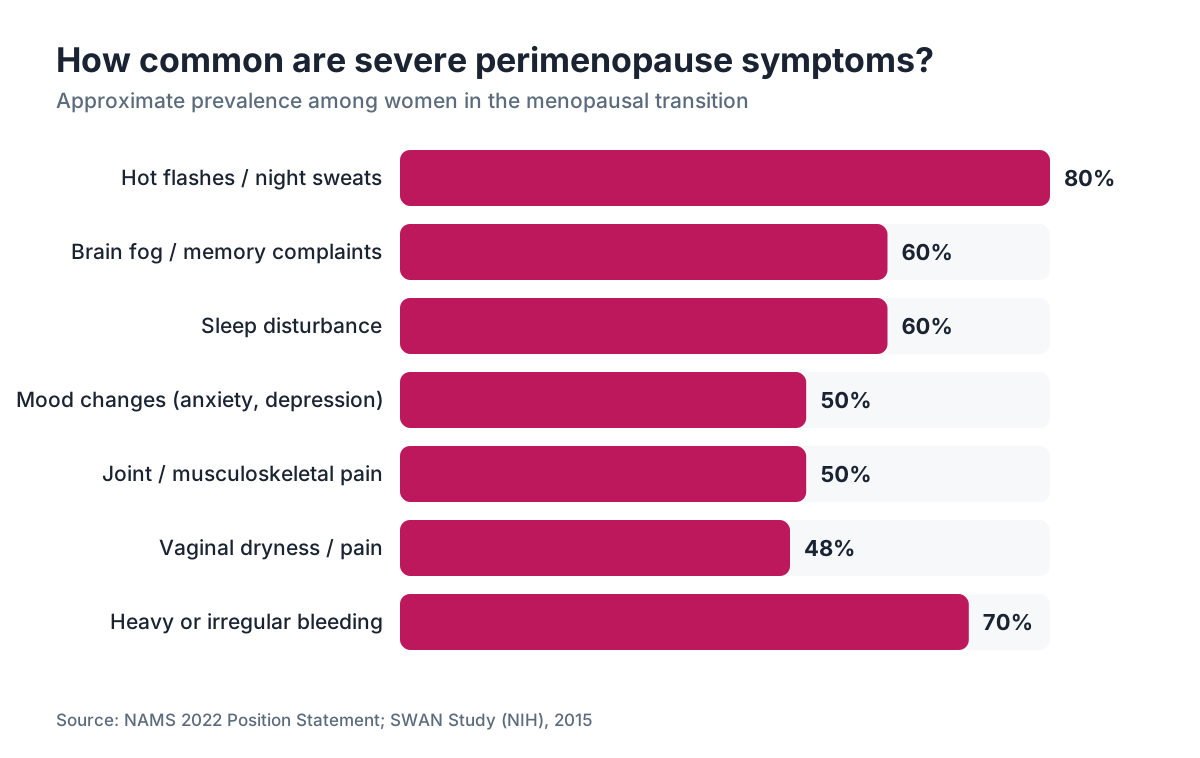
The numbers are striking. Roughly 80% of women in the menopausal transition experience vasomotor symptoms (hot flashes and night sweats) [3]. Of those, about 25 to 30% describe symptoms as severe enough to disrupt daily life. The Study of Women's Health Across the Nation (SWAN), a multi-site longitudinal study, found that vasomotor symptoms persisted for a median of 7.4 years from the final menstrual period, and women who entered the transition earlier had symptoms that lasted longer [4].
Sleep disruption affects up to 60% of perimenopausal women. Mood symptoms, including depression and anxiety, affect somewhere between 40 and 60% depending on the cohort and measurement tool [5]. Joint and musculoskeletal pain affects a large proportion too, though it gets less attention.
Severe perimenopause is not rare. For a big share of women, it is the norm. Treating it as an inconvenience rather than a medical condition has real consequences.
| Symptom | Approximate prevalence in perimenopause | |---|---| | Hot flashes / night sweats | ~80% | | Sleep disturbance | 55 to 65% | | Mood changes (anxiety, depression, irritability) | 40 to 60% | | Vaginal dryness / pain | 40 to 55% | | Brain fog / memory complaints | ~60% | | Joint pain | ~50% | | Heavy or irregular bleeding | ~70% |
Sources: SWAN study [4], NAMS 2023 Position Statement [3]
What are the worst hot flash and night sweat experiences?
Hot flashes are the signature symptom, and they range from mildly annoying to genuinely disabling. A typical hot flash lasts 1 to 5 minutes. Women describe a sudden wave of heat starting in the chest or face, then sweating, then a chill as the body overcorrects. Severe flashes happen more than 7 times a day by the FDA's classification threshold used in clinical trials [6].
Night sweats are hot flashes that occur during sleep. The practical consequence is waking up drenched, needing to change clothes or sheets, then lying awake because your nervous system is activated. Do this four or five nights a week and you accumulate a serious sleep debt within a month.
Severe vasomotor symptoms have been linked to cardiovascular risk markers and reduced quality of life scores in multiple studies. The SWAN study found that frequent vasomotor symptoms were associated with higher measures of arterial stiffness and carotid intima-media thickness, both early markers of cardiovascular disease [4]. This doesn't mean hot flashes cause heart disease, but it does mean dismissing them as cosmetic is medically incorrect.
Hormone therapy (estrogen alone for women without a uterus; estrogen plus progestogen for those with a uterus) reduces hot flash frequency by roughly 75% on average and is the most effective treatment available [3]. Non-hormonal options include fezolinetant (Veozah), FDA-approved in 2023, which works on the neurokinin 3 receptor pathway and reduces hot flash frequency by about 50 to 60% in trials [6].
Why does perimenopause cause such bad anxiety and mood changes?
This is the one that catches women most off guard. You're 44, you have a stable life, and suddenly you're having panic attacks in grocery stores or crying on the way to work for no identifiable reason. It feels like a mental health crisis. Sometimes it is. But often the cause is hormonal.
Estrogen has direct effects on serotonin, dopamine, and GABA systems in the brain [5]. When estrogen levels swing erratically, so does mood regulation. Women who have a history of PMS or postpartum depression are at higher risk for severe mood symptoms during perimenopause, which suggests a neurological sensitivity to hormonal change rather than simply low estrogen levels.
The SWAN study found that perimenopausal women had roughly twice the odds of a high depressive symptom score compared to premenopausal women, even after controlling for sleep and vasomotor symptoms [4]. That's a significant effect.
Anxiety in perimenopause often presents differently from the anxiety most women know. It's frequently a physical feeling first: racing heart, chest tightness, a sense of dread with no object. Heart palpitations during perimenopause are almost always benign but feel alarming, which triggers its own anxiety loop.
If you're experiencing new or worsening anxiety or depression during perimenopause, it warrants evaluation. Hormone therapy helps some women substantially. Others need antidepressants or therapy in addition. The evidence for estrogen as a mood stabilizer in perimenopause is stronger than many clinicians appreciate [5].
What does perimenopause brain fog actually feel like, and is it real?
Brain fog is real. The difficulty is that it's hard to measure objectively, which has led some clinicians to under-treat it. Women describe losing words mid-sentence, walking into rooms and forgetting why, having trouble tracking conversations, and feeling mentally slow in a way that's frightening if you know what your brain used to do.
Estrogen supports neuronal function, glucose metabolism in the brain, and the production of acetylcholine, a neurotransmitter critical for memory [5]. During perimenopause, dropping estrogen appears to reduce this support temporarily. The SWAN cognitive substudy found that women performed worse on tests of processing speed and verbal memory during the menopausal transition than before or after it, suggesting a transient dip in cognitive performance that tends to improve after the transition [4].
Here's the honest picture: perimenopause brain fog is real, measurable, and likely temporary for most women. It does not mean you're developing dementia. But for women who are already at risk for Alzheimer's (which affects women at roughly twice the rate of men [5]), the timing of hormone therapy initiation may matter. The 'timing hypothesis' in menopause research holds that estrogen initiated close to menopause may be neuroprotective, while initiation long after menopause may not have the same benefit. The data is not settled, but it's a reason not to wait too long if you're symptomatic.
What causes heavy and irregular bleeding in perimenopause, and when is it dangerous?
Irregular periods are the defining feature of perimenopause. Cycles can shorten to 21 days, extend to 60 days, or skip entirely. All of that is hormonal and expected. What's less expected is how heavy the bleeding can get.
In early perimenopause, estrogen levels can actually spike higher than normal because the ovaries are trying harder. Higher estrogen with less consistent progesterone (because ovulation becomes inconsistent) means the uterine lining builds up more than it should, and when it sheds, the bleeding is heavier. This is called anovulatory bleeding and it's extremely common.
But heavy bleeding in midlife needs evaluation to rule out other causes: fibroids, polyps, endometrial hyperplasia, and rarely endometrial cancer. The American College of Obstetricians and Gynecologists recommends evaluation for postmenopausal bleeding (any bleeding 12 months after the final period) and for perimenopausal bleeding that is unusually heavy, prolonged, or associated with other symptoms [2].
The practical rule: if you're soaking through a pad or tampon every hour for two or more consecutive hours, that's a reason to call a doctor the same day. Bleeding after sex warrants evaluation. Bleeding that has returned after you thought you were done warrants evaluation.
Treatment options for heavy perimenopausal bleeding include hormonal IUDs (which thin the lining), low-dose birth control pills, and cyclic progesterone. Hormone therapy for menopause symptoms can also help regulate the pattern.
Learn more about how progesterone works in perimenopause.
How bad can perimenopause joint pain and body changes get?
Joint pain during perimenopause is massively under-discussed. Estrogen has anti-inflammatory properties and helps maintain cartilage. When estrogen drops, inflammatory markers rise and joint tissues lose some of their protection. Women describe achy knees, sore hips, stiff fingers in the morning, and what feels like accelerated aging in their bodies.
This isn't just perception. A 2022 analysis in Menopause found that musculoskeletal symptoms are among the most prevalent and bothersome in the menopausal transition, affecting up to 70% of women in some cohorts, yet they rank low on the list of symptoms women discuss with clinicians [9].
Bone density also begins declining in perimenopause, and the rate of loss accelerates in the first few years after menopause. The Bone Health and Osteoporosis Foundation recommends a baseline bone density test for women 65 and older, but earlier screening is appropriate for women with risk factors including early menopause, low body weight, smoking history, or a family history of fractures [12].
Weight changes during perimenopause are also common and not purely about diet or activity. The hormonal shift promotes fat redistribution toward the abdomen even in women who maintain the same caloric intake and exercise level. Visceral fat increases independently of total weight, which carries metabolic implications including higher cardiovascular risk.
Skin thins, collagen production drops (estrogen supports collagen synthesis), and hair may become finer or shed more. These are real physiological changes, not vanity.
What actually works for the worst perimenopause symptoms?
The most effective treatment for moderate to severe vasomotor symptoms, mood disruption, sleep, and bone protection is hormone therapy. The North American Menopause Society (NAMS) 2022 Position Statement states: 'For women aged younger than 60 years or who are within 10 years of menopause onset and have no contraindications, the benefit-risk ratio is favorable for treatment of bothersome vasomotor symptoms and prevention of bone loss' [3].
That's a strong clinical endorsement that still gets ignored in practice. Many women are told to just push through, or are offered antidepressants without discussion of hormones. Both can be appropriate, but the starting conversation should include what estrogen actually does.
For women who can't use or prefer not to use hormones, the evidence-based non-hormonal options include:
- Fezolinetant (Veozah): FDA-approved 2023, targets the NK3 receptor, reduces hot flash frequency by roughly 50-60% [6]
- SSRIs and SNRIs (particularly paroxetine at low dose, the only FDA-approved non-hormonal option before Veozah, and venlafaxine): reduce hot flash frequency by roughly 50-60% [11]
- Gabapentin: modest evidence for night sweats, often used off-label
- Cognitive behavioral therapy (CBT): solid evidence for improving how women cope with hot flashes and sleep, not for reducing their frequency [11]
Vaginal estrogen for genitourinary symptoms is low-dose, minimally absorbed systemically, and appropriate even for many women who have had hormone-sensitive cancers, per NAMS guidelines [3]. This one is frequently under-prescribed.
For women whose weight gain and metabolic changes are significant, GLP-1 receptor agonists are increasingly relevant. Women in perimenopause have specific metabolic challenges, and both semaglutide and tirzepatide have shown substantial weight loss in clinical trials (STEP and SURMOUNT trial programs respectively), though the trials weren't specifically designed for perimenopausal women.
At WomenRx, clinicians evaluate symptoms across this full range and can prescribe hormone therapy, vaginal estrogen, and GLP-1s where they're appropriate. You don't have to manage each symptom separately through disconnected providers.
Lifestyle factors have real but modest effects. Regular resistance training slows bone loss and improves sleep quality. Limiting alcohol (which worsens hot flashes and disrupts sleep architecture) matters. None of this replaces hormones if symptoms are severe.
Which perimenopause symptoms need a doctor visit, more than self-care?
Some symptoms that feel hormonal are actually signals of something else, and waiting it out is the wrong call.
See a doctor promptly for:
- Bleeding that soaks a pad every hour for two or more hours
- Any bleeding after 12 consecutive months without a period (this is postmenopausal bleeding and requires evaluation for endometrial cancer)
- Bleeding after sex
- New chest pain or palpitations that don't resolve
- Significant depression, especially with any thoughts of self-harm
- Symptoms that feel neurological: sudden severe headache, visual changes, speech difficulty, weakness
See a doctor for evaluation (not emergency, but soon) for:
- Irregular periods that have dramatically changed from your baseline
- Night sweats severe enough to disrupt sleep most nights
- Mood changes significant enough to affect your relationships or work
- Memory concerns significant enough to worry you
- Joint pain that limits daily activity
The reflexive 'this is just menopause' dismissal is a real problem in clinical practice. Women in their 40s presenting with cardiac symptoms are statistically more likely to have those symptoms attributed to menopause rather than worked up for heart disease [10]. Both can be true. Cardiac evaluation is appropriate when symptoms are new, severe, or don't fit the typical perimenopausal pattern.
Thyroid disease peaks in women during midlife and mimics perimenopause almost perfectly (fatigue, mood changes, weight changes, irregular periods, brain fog). A TSH test is simple and inexpensive. If you haven't had thyroid labs checked recently and you're symptomatic, ask for them.
Iron-deficiency anemia from heavy periods is extremely common in perimenopausal women and causes profound fatigue, brain fog, and difficulty exercising. A complete blood count and ferritin level can diagnose it. Iron infusions or supplementation can be transformative.
How long do bad perimenopause symptoms last?
Longer than most women are told. The SWAN study, the largest longitudinal study of the menopausal transition in the United States, found that the median duration of vasomotor symptoms was 7.4 years, measured from when frequent symptoms began [4]. Women who started having symptoms earlier in the transition (during the late reproductive stage rather than the early transition) had symptoms that lasted even longer, some for more than a decade.
The old teaching was that menopause symptoms lasted 'a few years.' That was wrong. About 9% of women in SWAN still had frequent vasomotor symptoms 14 years after their final menstrual period [4].
Mood symptoms and sleep disruption often improve after the transition is complete and estrogen levels stabilize at a lower but consistent level. Brain fog also tends to improve. Vaginal and genitourinary symptoms, however, tend to worsen over time without treatment because they depend on estrogen and the tissue atrophies progressively.
The practical answer: expect symptoms potentially through your 50s if you start perimenopause in your mid-40s, and build a treatment plan accordingly rather than hoping things resolve on their own quickly.
You can read more about the perimenopause age range and when menopause starts to understand the full timeline.
Is hormone replacement therapy safe for women with severe perimenopause symptoms?
This is the question that stops more women from getting effective treatment than any other, and the fear is largely based on a misreading of a 2002 study.
The Women's Health Initiative (WHI) in 2002 reported an increased risk of breast cancer and cardiovascular events in women taking combined hormone therapy. What the headlines missed: the average participant was 63 years old, many years past menopause, using older oral conjugated equine estrogen combined with medroxyprogesterone acetate (synthetic progestin) [7]. The risk profile is different for women in their late 40s and early 50s using lower-dose transdermal estrogen with micronized progesterone [3].
NAMS's current position is clear: for women under 60 and within 10 years of menopause onset with bothersome symptoms and no contraindications, the benefits outweigh the risks [3]. Transdermal estrogen does not have the same clotting risk as oral estrogen. Micronized progesterone (bioidentical) appears to carry lower breast cancer risk than synthetic progestins, though data is still accruing.
Absolute contraindications to systemic hormone therapy include: unexplained vaginal bleeding, active liver disease, personal history of blood clots (especially DVT or PE), and personal history of estrogen-sensitive cancer. Women with these contraindications have non-hormonal options.
The fear-based conversation around hormone therapy has left millions of women undertreated. The risk calculus is genuinely individual, which is why it requires a real conversation with a clinician who knows your history, not a blanket refusal or a blanket endorsement.
For more on the specific hormone therapy options, see our guide to hormone replacement therapy and the estrogen patch specifically.
What can you do right now if your perimenopause symptoms are severe?
Start by documenting. Track your symptoms for two to four weeks: which ones, how severe on a 1-10 scale, what time of day, how much they affect your function. This makes clinical conversations far more productive and helps you and a clinician identify patterns (for example, symptoms peaking at certain points in your cycle suggests a different hormonal picture than constant symptoms).
Get basic labs. A TSH rules out thyroid disease. A CBC with ferritin catches anemia. FSH and estradiol levels have significant day-to-day variability during perimenopause and aren't diagnostic on their own, but they give context. If you're in your late 40s with symptoms and a normal FSH, you can still be in perimenopause.
Find a clinician who takes this seriously. Menopause medicine is a subspecialty, and the NAMS Menopause Practitioner locator is a reasonable starting point. Telehealth platforms that specialize in women's hormonal health, including WomenRx, can be a practical option if access is a barrier in your area.
If you're waiting for an appointment, some things that won't hurt and may help: keeping the bedroom cool (64-67°F is often cited as optimal for sleep), cutting alcohol especially in the evening, starting resistance training if you haven't already, and reducing refined carbohydrates which some women find worsen mood instability.
Be honest with yourself about severity. If symptoms are significantly affecting your quality of life, self-care alone is probably not enough. The treatments that work exist. Using them is not weakness.
For context on how menopause differs from perimenopause and what changes after the transition, that distinction matters for your treatment plan.
Frequently asked questions
Can perimenopause cause panic attacks?
Yes. Panic attacks and new-onset anxiety are recognized perimenopausal symptoms. Fluctuating estrogen disrupts serotonin and GABA neurotransmitter systems, which regulate the fear response. Heart palpitations from hormonal changes can also trigger secondary panic. If you're experiencing panic attacks for the first time in your 40s, a hormonal cause should be in the differential, alongside a standard anxiety evaluation.
What does a perimenopause headache feel like?
Perimenopausal headaches are often migraines or migraine-like, triggered by the estrogen drop before a period or during irregular hormonal swings. They tend to occur in the days before bleeding. Women who had menstrual migraines before perimenopause often see them worsen during the transition. Estrogen fluctuations appear to be the main driver; some women improve on continuous low-dose estrogen that reduces the swings.
Can perimenopause make you feel like you're dying?
Informally, yes, many women describe exactly this. Heart palpitations that feel like cardiac events, panic that feels like a breakdown, exhaustion that feels pathological, and brain fog that feels like neurological disease. The combination of multiple severe symptoms is genuinely alarming when you don't know the cause. None of those symptoms are lethal on their own, but they all warrant evaluation to rule out non-hormonal causes and to access treatment.
What age do the worst perimenopause symptoms usually hit?
Most women enter perimenopause between 45 and 51, and the most intense symptom period often corresponds with the late menopausal transition, typically 1 to 2 years before the final period. For most women that's somewhere in the late 40s to early 50s. But significant variability exists: perimenopause can start in the late 30s, and some women have severe symptoms throughout the entire 4 to 10 year transition.
Is it perimenopause or anxiety disorder?
It can be both, or either. The distinguishing features: if mood symptoms are closely tied to your menstrual cycle or have appeared or worsened in your mid-to-late 40s with other physical symptoms (hot flashes, sleep changes, irregular periods), a hormonal cause is plausible. A psychiatrist or therapist experienced with midlife women, plus a gynecologist or menopause specialist, gives the fullest picture. The two diagnoses aren't mutually exclusive.
Can perimenopause cause hair loss?
Yes. Hair thinning or shedding during perimenopause is common and has multiple overlapping causes: declining estrogen (which supports hair follicle cycling), rising androgens in some women (which can cause androgenic alopecia), thyroid disease (which should be tested separately), and iron deficiency from heavy periods. Significant hair loss warrants labs including TSH, ferritin, and sometimes androgen levels before attributing it purely to menopause.
How do I know if my bleeding is a perimenopause symptom or something serious?
Irregular or heavier periods during perimenopause are expected. Seek evaluation for: bleeding that soaks a pad or tampon every hour for two consecutive hours, any bleeding 12 months or more after your last period, bleeding after sex, or any dramatic change in your usual pattern. These can indicate fibroids, polyps, endometrial hyperplasia, or, rarely, cancer. Hormonal changes are the most common cause but shouldn't be assumed without evaluation.
Can perimenopause cause weight gain without changing diet?
Yes. Declining estrogen shifts fat distribution toward the abdomen (visceral fat) independent of total caloric intake. Metabolic rate also declines as muscle mass decreases, partly driven by hormonal changes. Research shows visceral fat increases during the menopausal transition even in women who maintain stable weight, with real metabolic implications including higher cardiovascular and insulin resistance risk. This is not imagined and not primarily a willpower problem.
What is the most effective treatment for perimenopause symptoms?
For moderate to severe vasomotor symptoms, mood disruption, sleep, and bone protection, hormone therapy (estrogen with progesterone for women with a uterus) is the most effective treatment available per NAMS guidelines. Transdermal estrogen has a more favorable risk profile than oral forms. Non-hormonal options include fezolinetant (FDA-approved 2023) and certain SSRIs/SNRIs. Vaginal estrogen addresses genitourinary symptoms specifically and is low-risk even for women who can't use systemic hormones.
Does perimenopause ever cause heart palpitations?
Yes, palpitations are a recognized perimenopausal symptom, typically benign and caused by autonomic nervous system instability driven by fluctuating estrogen. They often accompany hot flashes. That said, new palpitations in midlife warrant a cardiac evaluation to rule out arrhythmia, especially if they're accompanied by chest pain, syncope, or shortness of breath. Women in their 40s are not immune to cardiac disease and shouldn't be dismissed.
How do doctors diagnose perimenopause?
Perimenopause is a clinical diagnosis based on age, symptom pattern, and menstrual history. FSH and estradiol levels are too variable day-to-day to be definitive. Elevated FSH (above 25-30 IU/L on two tests 4-6 weeks apart) supports the diagnosis but isn't required. If you're in your mid-to-late 40s with hot flashes, irregular periods, and sleep disruption, that's perimenopause until proven otherwise. Labs are more useful for ruling out thyroid disease and anemia than for confirming perimenopause.
Does menopause get better after periods stop completely?
For many women, vasomotor symptoms and mood instability do improve once estrogen levels stabilize at a consistently lower level after the final period. Brain fog also tends to improve. But 'better' is relative: about 9% of women in the SWAN study still had frequent hot flashes 14 years after their final period. Vaginal and genitourinary symptoms typically worsen over time without treatment because tissue atrophies progressively with sustained low estrogen.
Can perimenopause cause insomnia even without night sweats?
Yes. Estrogen and progesterone both have direct effects on sleep architecture independent of night sweats. Progesterone has GABA-A agonist properties that promote sleep, and falling progesterone in perimenopause disrupts sleep quality even when temperature dysregulation isn't the primary problem. Women often describe waking between 2 and 4 AM unable to return to sleep. This pattern responds to hormone therapy in many cases, particularly micronized progesterone taken at bedtime.
Sources
- NAMS (North American Menopause Society) - Menopause 101
- ACOG (American College of Obstetricians and Gynecologists) - Abnormal Uterine Bleeding
- NAMS 2022 Hormone Therapy Position Statement - Menopause journal
- Study of Women's Health Across the Nation (SWAN) - JAMA Internal Medicine / NIH
- Endocrine Society - Menopause and Brain Health Position
- FDA Drug Approval - Veozah (fezolinetant) 2023
- NIH Office of Research on Women's Health - Women's Health Initiative overview
- National Institute on Aging - Menopause
- Menopause journal (NAMS) - Musculoskeletal symptoms in menopause 2022
- CDC - Women and Heart Disease
- NAMS - Nonhormonal Management of Menopause Position Statement 2023
- Bone Health and Osteoporosis Foundation - Bone Density Testing