Zinc Picolinate vs Zinc Gluconate: What Matters More
Neither form has a proven health advantage for women, so start with the amount of zinc per serving and the reason you’re taking it.
Neither zinc picolinate nor zinc gluconate is established as the better choice for women. A small head-to-head study reported changes in some zinc-status measures with picolinate, but it did not show better health outcomes. When comparing products, check the amount of zinc per serving, then ask whether the research measured an outcome relevant to you. 2
Two bottles can put different zinc forms in large print on the front while providing different amounts of zinc per serving. That makes the form name a poor shortcut for choosing between them. The more useful questions are how much zinc you’re comparing and what, exactly, a study found.
What the direct comparison found
A four-week crossover study in 15 healthy volunteers compared zinc picolinate, zinc gluconate, zinc citrate, and placebo. A review of the study reports increases in hair, urine, and red blood cell zinc measures with picolinate, but not in serum zinc. It reports no changes in the measured zinc levels with gluconate, citrate, or placebo. These were measures of zinc status, not tests of whether one form improved symptoms or health more than another. The study summary does not identify participants’ sex or give the doses used, so it also cannot establish a dose-matched advantage specifically for women. 2
You may also see the opposite claim: that gluconate is better absorbed. The same narrative review concludes that gluconate and glycinate appear better absorbed than other forms across the human studies it discusses. That broad conclusion and the small picolinate study answer different questions. Neither demonstrates that one of these two forms produces better health outcomes for women. 2
Compare the zinc amount before the form
Zinc picolinate and zinc gluconate are compounds that contain zinc. The review lists picolinate as about 21% elemental zinc by weight and gluconate as about 14%. Those percentages describe the compounds, not the amount of zinc in any particular serving. A product can contain a different weight of either compound, so the larger percentage does not mean a picolinate product necessarily provides more zinc. 2
Look for the amount of zinc per serving on each product’s label. Compare that amount alongside the form named on the label. If the amounts differ, you’re comparing both a different form and a different quantity of zinc. Keeping those two differences separate makes an absorption claim easier to judge.
Absorption is not the outcome you’re hoping for
If you’re taking zinc for a particular reason, a change in a zinc measurement is not automatically evidence that one form will help more with that concern. Even in a setting where zinc availability is a recognized problem, the distinction matters: a review focused on alcohol-associated liver disease describes low zinc bioavailability while noting that the therapeutic effectiveness of zinc supplementation remains limited. That condition does not predict what will happen in otherwise healthy women. It illustrates why getting zinc into the body and showing a meaningful health benefit are separate steps. 1
For the picolinate-versus-gluconate choice, the direct study reports zinc markers, not a demonstrated benefit for a particular symptom or health goal. Decide what result would matter to you before treating a form’s absorption claim as the deciding factor. 2
Is either form better at a particular life stage?
The direct picolinate-versus-gluconate study summary does not report a women’s subgroup. A separate six-week trial in 30 young adult women compared gluconate with glycinate, not picolinate. It found an increase in plasma zinc with glycinate, while levels were unchanged with gluconate or placebo. That result cannot settle a gluconate-versus-picolinate choice. 2
Nor does the pregnancy-related comparison in the review settle it: that observational study involved prenatal supplements containing zinc sulfate or zinc oxide. The cited comparisons do not establish a preference between picolinate and gluconate during pregnancy or at another life stage. 2
The practical comparison is therefore modest but useful: match the products by their stated zinc amount per serving, note the form, and give the most weight to research that measures the result you actually care about. At present, a claim that either form is simply “better for women” goes further than these human comparisons support. 2
What the form name can’t tell you
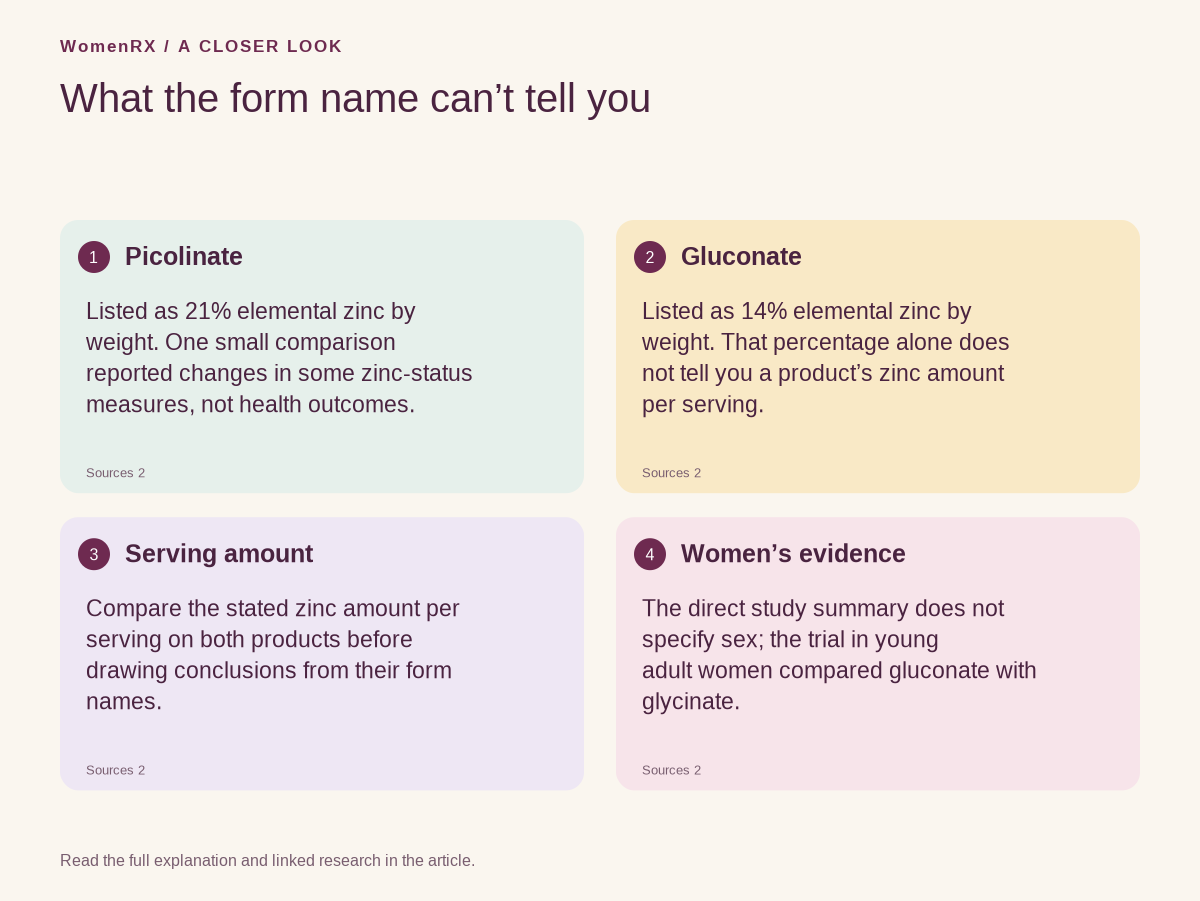
Picolinate: Listed as 21% elemental zinc by weight. One small comparison reported changes in some zinc-status measures, not health outcomes.2
Gluconate: Listed as 14% elemental zinc by weight. That percentage alone does not tell you a product’s zinc amount per serving.2
Serving amount: Compare the stated zinc amount per serving on both products before drawing conclusions from their form names.2
Women’s evidence: The direct study summary does not specify sex; the trial in young adult women compared gluconate with glycinate.2
Read the figure as text
Separate the zinc compound, the serving amount, and the outcome measured in research.- Picolinate: Listed as 21% elemental zinc by weight. One small comparison reported changes in some zinc-status measures, not health outcomes.2
- Gluconate: Listed as 14% elemental zinc by weight. That percentage alone does not tell you a product’s zinc amount per serving.2
- Serving amount: Compare the stated zinc amount per serving on both products before drawing conclusions from their form names.2
- Women’s evidence: The direct study summary does not specify sex; the trial in young adult women compared gluconate with glycinate.2
Sources you can check
- Zinc bioavailability in alcohol-associated liver disease: Mechanisms and therapeutic implications.Feng Y, Yang Q, Wang D, Chu Q, Zhou Z, Liu Y, Chen K, Lauschke VM. · Molecular aspects of medicine · 2026Return to first citation
- Comparative Absorption and Bioavailability of Various Chemical Forms of Zinc in Humans: A Narrative Review.Devarshi PP, Mao Q, Grant RW, Hazels Mitmesser S. · Nutrients · 2024Return to first citation