Zinc and Women’s Reproductive Hormones: What’s Known
Zinc deficiency can affect reproductive health, but that doesn’t show that supplements balance hormones or improve symptoms in women.
Zinc deficiency can affect the reproductive system, and pregnancy research has examined outcomes such as preterm birth. Those findings don’t show that zinc supplements regulate menstrual cycles, improve female fertility, or ease menopause symptoms. A study reporting hormone measurements in infertile men used a multi-ingredient supplement, so it can’t establish an effect of zinc alone or in women. 1 2
Zinc is needed for many body functions, including reproductive health. But a nutrient’s role in the body isn’t the same as proof that taking extra zinc changes a reproductive hormone or relieves a symptom. The useful question is what was measured, in whom, and whether the study tested zinc by itself. 1
What the findings mean at different life stages
Menstruation and female fertility: A general finding that zinc deficiency can affect reproductive tissues does not establish that supplementation regularizes cycles, changes estrogen or progesterone, or improves a woman’s chance of conceiving. Those are specific treatment claims, and they require findings in women that measure those hormones or outcomes. 1
Pregnancy: The pregnancy findings concern zinc status and birth outcomes, not hormone balancing. Low serum zinc during pregnancy might be associated with higher risks of preeclampsia and low birthweight. That association does not prove that supplements prevent either outcome. 1
Routine zinc supplementation during pregnancy has not appeared to reduce low birthweight, stillbirth, or neonatal death, though it might reduce preterm birth. These results concern pregnancy outcomes; they don’t show that zinc changes reproductive hormone levels or treats menstrual symptoms. 1
Menopause: Findings about deficiency or pregnancy shouldn’t be carried over to menopause. This research does not establish that zinc supplements ease menopause symptoms or alter hormone levels after menopause.
Why a hormone result in men doesn’t answer the question for women
A prospective study followed 420 men with infertility for six months while they took a supplement containing zinc alongside several other nutrients. The study reported that changes in FSH and testosterone were not statistically significant. Because the product combined ingredients, any effect couldn’t be attributed to zinc alone. And because the participants were men with a specific infertility diagnosis, the results don’t establish an effect in women. 2
This is why a headline about “reproductive hormones” may not tell you what you need to know. A measured hormone level is not the same outcome as cycle regularity, conception, a pregnancy outcome, or menopause symptoms. Evidence for one outcome or population can’t automatically answer questions about another.
A practical way to assess a zinc claim
When a supplement is promoted for hormone balance, look for three details: the group studied, the outcome measured, and whether zinc was tested on its own. A deficiency finding can make it worth addressing inadequate zinc status; it does not, by itself, show that extra zinc acts as a hormone treatment. 1
For a woman considering zinc because of cycle changes, fertility concerns, or menopause symptoms, the findings discussed above don’t provide a basis for expecting a hormone or symptom benefit. Pregnancy is a separate case: zinc status and some birth outcomes have been studied, but the reported results do not amount to proof that routine supplementation prevents most of those outcomes. 1
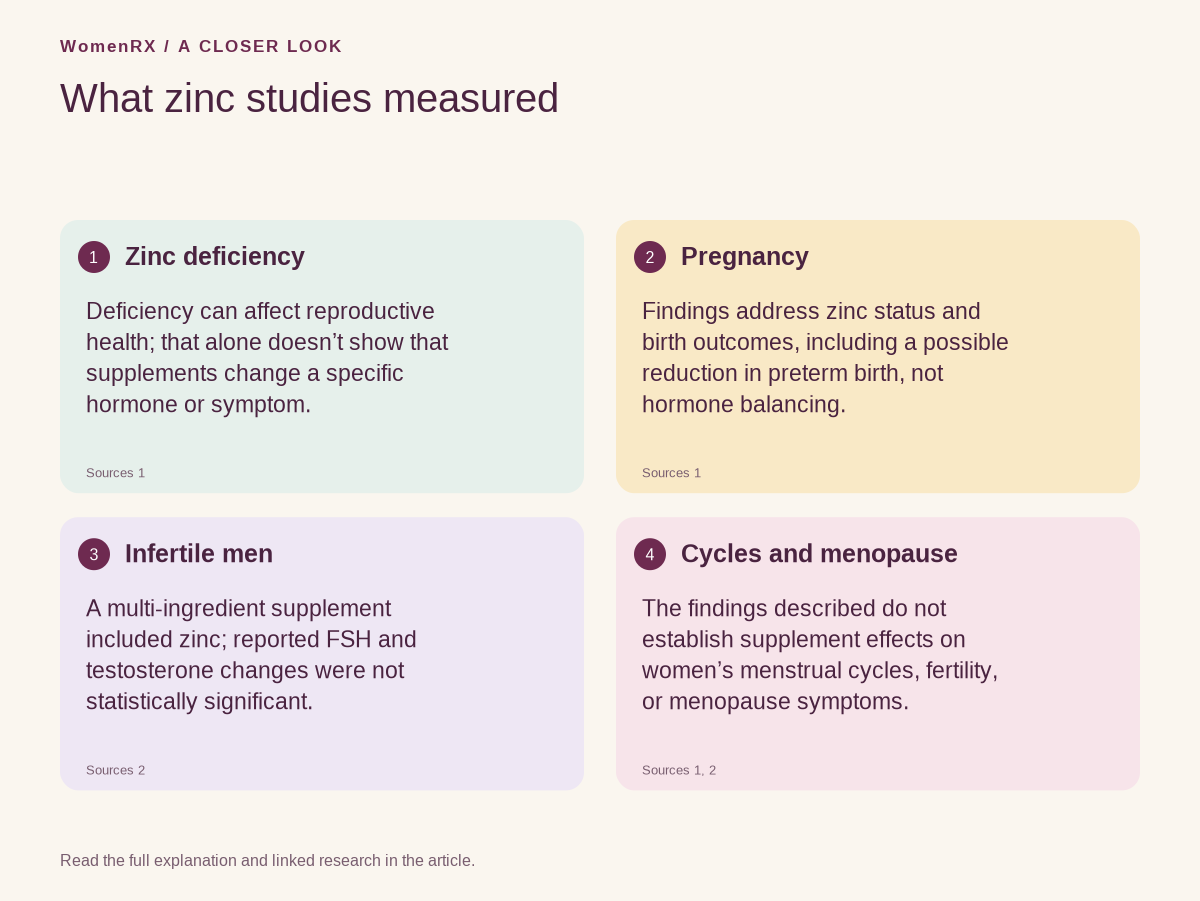
What zinc studies measured
Zinc deficiency: Deficiency can affect reproductive health; that alone doesn’t show that supplements change a specific hormone or symptom.1
Pregnancy: Findings address zinc status and birth outcomes, including a possible reduction in preterm birth, not hormone balancing.1
Infertile men: A multi-ingredient supplement included zinc; reported FSH and testosterone changes were not statistically significant.2
Cycles and menopause: The findings described do not establish supplement effects on women’s menstrual cycles, fertility, or menopause symptoms.12
Read the figure as text
The population and outcome help distinguish a nutrient’s role in reproductive health from evidence that a supplement changes hormones or symptoms.- Zinc deficiency: Deficiency can affect reproductive health; that alone doesn’t show that supplements change a specific hormone or symptom.1
- Pregnancy: Findings address zinc status and birth outcomes, including a possible reduction in preterm birth, not hormone balancing.1
- Infertile men: A multi-ingredient supplement included zinc; reported FSH and testosterone changes were not statistically significant.2
- Cycles and menopause: The findings described do not establish supplement effects on women’s menstrual cycles, fertility, or menopause symptoms.12
Sources you can check
- Zinc - Health Professional Fact SheetAccessed 2026-09-25Return to first citation
- Beneficial effects of oral antioxidant supplementation on semen quality parameters, reproductive hormones, and sperm DNA integrity in men with idiopathic oligoasthenoteratozoospermia.Rochdi C, Ouadrhiri M, Allai L, Bellajdel I, Mamri S, Taheri H, Saadi H, Mimouni A, Choukri M. · Clinical and experimental reproductive medicine · 2024Return to first citation