Zepbound and Low Blood Sugar: When Risk Rises
Zepbound lowers blood glucose, but the chance of a low depends in part on whether you also use insulin or a sulfonylurea.
Zepbound can cause low blood sugar, but the concern is greater when it’s used with insulin or a sulfonylurea, a type of diabetes medicine. In one trial of people with type 2 diabetes, low blood sugar was reported more often with Zepbound than placebo; within the Zepbound group, it was also more common among people taking a sulfonylurea. Don’t change medicines on your own. Ask your prescriber what to monitor and whether your doses need review. 2
Lower glucose isn’t the same as a low
Zepbound (tirzepatide) lowers blood glucose, but hypoglycemia means glucose has fallen too low. So a lower reading by itself doesn’t automatically mean you’re having a low; the number that matters can depend on your individual diabetes plan. For many people with diabetes, a reading below 70 mg/dL is considered low, but your care team can tell you what threshold to use. 2 3
The risk discussion changes when other medicines are involved. Insulin and sulfonylureas can also lower blood glucose, so combining them with Zepbound can increase the chance of hypoglycemia. That doesn’t mean every person taking the combination will have a low, or that every Zepbound user has the same risk. 2
What the Zepbound figures mean
In a trial of people with type 2 diabetes and a BMI of at least 27, low blood sugar, defined as a plasma glucose below 54 mg/dL, was reported in 4.2% of Zepbound-treated participants and 1.3% of placebo-treated participants. Among participants taking Zepbound, the reported percentage was 10.3% for those also taking a sulfonylurea, compared with 2.1% for those not taking one. These figures describe that trial population; they aren’t a prediction of your personal risk. The prescribing information also warns of increased risk with insulin, but these figures don’t provide a comparable insulin-specific rate. 2
Know what to notice and report
Possible low-blood-sugar symptoms include shakiness, sweating, dizziness or light-headedness, hunger, a fast heartbeat, headache, weakness, anxiety or irritability, confusion, drowsiness, blurred vision, and slurred speech. If you have diabetes and notice possible symptoms, check your glucose if you can. If you can’t check, treat the symptoms as a suspected low according to your hypoglycemia plan rather than waiting for a reading. A low reading also calls for prompt treatment. Then tell your prescriber what happened, especially if lows recur, happen overnight, or interfere with daily activities. 1 2
If you have diabetes, ask what readings or symptoms should prompt a check and whether a blood glucose meter or continuous glucose monitor fits your plan. A reading below 70 mg/dL is a commonly used threshold for many people with diabetes, but individual targets can differ. 3
A seizure can be a sign of severe low blood sugar. If someone is unconscious, don’t give them food or drink because they may not be able to swallow safely. Call emergency services if they’re unconscious and glucagon isn’t available or you don’t know how to use it. 1
Make medication review a shared decision
Before starting Zepbound, and during treatment, make sure your prescriber knows about all your diabetes medicines, including insulin and sulfonylureas. The US prescribing information says to monitor blood glucose in patients with diabetes and to consider whether the dose of insulin or a sulfonylurea needs reducing when starting Zepbound. That’s a prescriber-led review, not a reason to adjust a dose yourself. 2
Useful questions to ask include:
- Which of my medicines could cause a low when combined with Zepbound?
- What glucose level should I treat as too low for me, and when should I check?
- Should we review my insulin or sulfonylurea dose as Zepbound is started or continued?
- What should I do if I have repeated lows, nighttime symptoms, or trouble recognizing them?
If you’re pregnant, planning pregnancy, or breastfeeding, bring that up during the same review so you can discuss your diabetes and weight-management treatment together.
The key distinction is simple: Zepbound can lower glucose, but hypoglycemia risk is especially worth discussing when another glucose-lowering medicine is part of your routine.
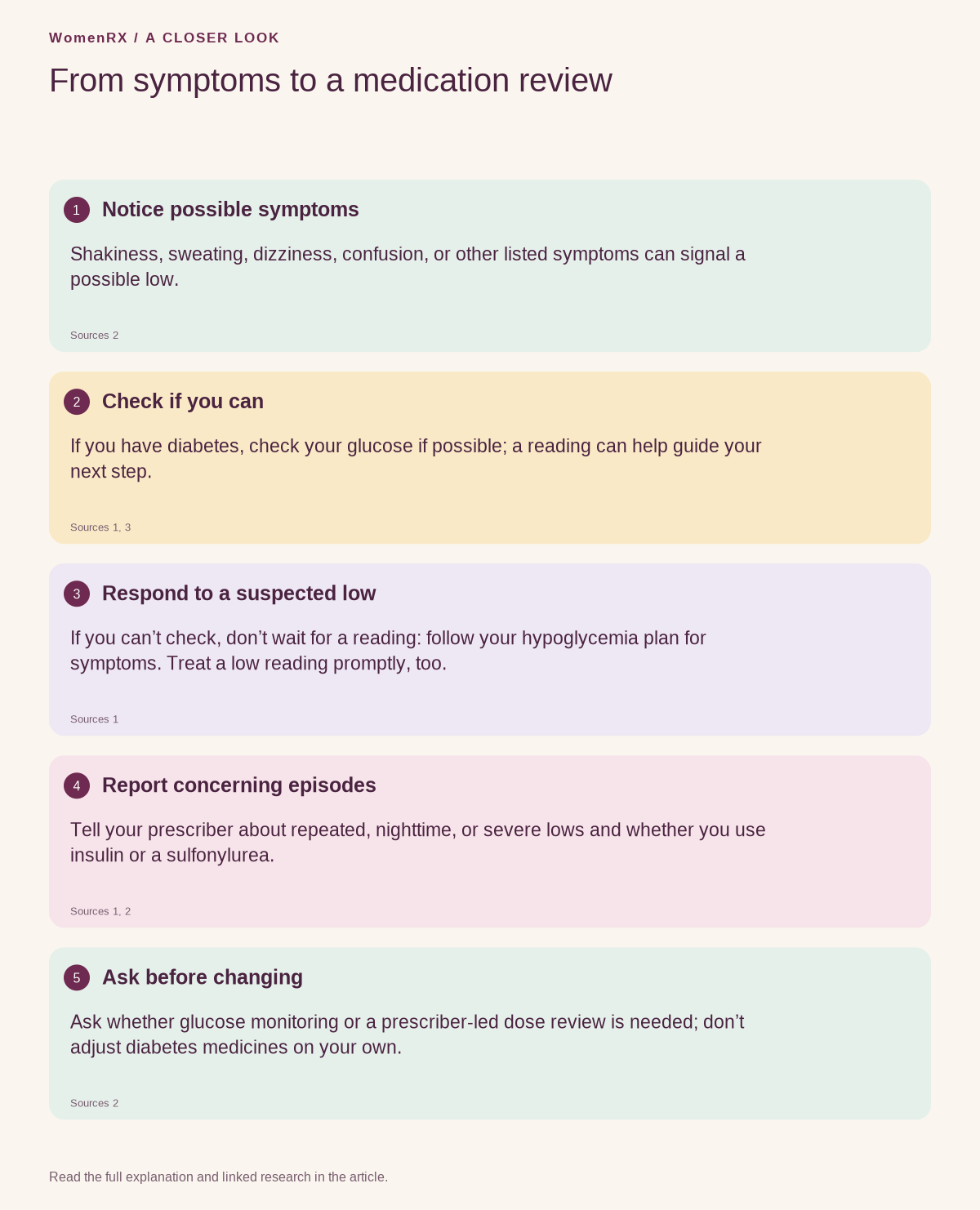
From symptoms to a medication review
Notice possible symptoms: Shakiness, sweating, dizziness, confusion, or other listed symptoms can signal a possible low.2
Check if you can: If you have diabetes, check your glucose if possible; a reading can help guide your next step.13
Respond to a suspected low: If you can’t check, don’t wait for a reading: follow your hypoglycemia plan for symptoms. Treat a low reading promptly, too.1
Report concerning episodes: Tell your prescriber about repeated, nighttime, or severe lows and whether you use insulin or a sulfonylurea.12
Ask before changing: Ask whether glucose monitoring or a prescriber-led dose review is needed; don’t adjust diabetes medicines on your own.2
Read the figure as text
A path for responding to a possible low, including what to do when you can’t check glucose, then reviewing medicines that can raise the risk.- Notice possible symptoms: Shakiness, sweating, dizziness, confusion, or other listed symptoms can signal a possible low.2
- Check if you can: If you have diabetes, check your glucose if possible; a reading can help guide your next step.13
- Respond to a suspected low: If you can’t check, don’t wait for a reading: follow your hypoglycemia plan for symptoms. Treat a low reading promptly, too.1
- Report concerning episodes: Tell your prescriber about repeated, nighttime, or severe lows and whether you use insulin or a sulfonylurea.12
- Ask before changing: Ask whether glucose monitoring or a prescriber-led dose review is needed; don’t adjust diabetes medicines on your own.2
More questions, answered
Can low blood sugar happen without diabetes?
Yes. The Zepbound prescribing information notes that hypoglycemia has been associated with Zepbound in adults without type 2 diabetes. If you notice symptoms such as shakiness, sweating, a fast heartbeat, or confusion, report them to your prescriber rather than assuming the cause. 2 3
Should I lower my insulin or sulfonylurea when I start Zepbound?
Don’t change the dose on your own. The prescribing information says a clinician may consider reducing insulin or a sulfonylurea to lower hypoglycemia risk, and recommends blood-glucose monitoring for patients with diabetes. Ask your prescriber what plan applies to your medicines and readings. 2
Sources you can check
- Low blood sugar (hypoglycaemia) - NHSAccessed 2026-09-25Return to first citation
- ZEPBOUND (TIRZEPATIDE) INJECTION, SOLUTION ZEPBOUND (TIRZEPATIDE) INJECTION, SOLUTION ZEPBOUND KWIKPEN (TIRZEPATIDE) INJECTION, SOLUTION [ELI LILLY AND COMPANY] | US prescribing information and patient instructionsAccessed 2026-09-25Return to first citation
- Hypoglycemia: MedlinePlusAccessed 2026-09-25Return to first citation