Alcohol and Tirzepatide: What We Know About the Risks
Tirzepatide can lower blood sugar, and other diabetes medicines may matter more to your drinking decision than a presumed direct interaction.
The main documented risk to check is low blood sugar: tirzepatide lowers glucose, and combining it with insulin or a sulfonylurea raises hypoglycemia risk. 1 If you have MASLD, guidelines discourage alcohol for liver-health reasons. 3 Neither the tirzepatide prescribing information nor a small study of related GLP-1 medicines establishes a direct alcohol-tirzepatide interaction or an amount that’s safe for everyone. 1 2

For a drinking decision, start with your diabetes medicines and liver health. Tirzepatide’s hypoglycemia risk is higher with insulin or sulfonylureas, while guidelines discourage alcohol if you have MASLD. 1 3 A small alcohol-challenge study of related GLP-1 medicines cannot predict how you will feel on tirzepatide. 2
The clearest concern is low blood sugar with certain diabetes medicines
Tirzepatide lowers blood glucose. In a trial of people with type 2 diabetes and a BMI of at least 27, blood glucose below 54 mg/dL was reported in 4.2% of people taking Zepbound and 1.3% taking placebo. In that trial, the rate was 10.3% among Zepbound-treated patients taking an insulin secretagogue, such as a sulfonylurea, compared with 2.1% among Zepbound-treated patients not taking a sulfonylurea. The study figures describe tirzepatide and accompanying medicines, not an alcohol comparison. 1
The prescribing information also identifies increased hypoglycemia risk when tirzepatide is used with insulin. For people with diabetes, it recommends blood glucose monitoring during treatment; any changes to diabetes medicine are a prescriber decision, not something to make to accommodate a drink. 1
So, if you use insulin or a sulfonylurea, that combination is a concrete reason to ask about your own low-blood-sugar risk before drinking. The figures above don’t tell you how alcohol changes that risk for you, and they shouldn’t be read as a drinking threshold.
A small study raises a separate question about alcohol’s effects
In a pilot study of 20 people with obesity, researchers compared people taking a GLP-1 receptor agonist with a control group during an alcohol challenge. The GLP-1-medicine group had a slower rise in breath alcohol and delayed subjective effects. This was a small study of GLP-1 receptor agonists, not evidence that tirzepatide specifically causes the same effect or that any amount of alcohol is safe. 2
The study measured alcohol levels and perceived effects, not whether drinking changes hypoglycemia risk during tirzepatide treatment.
Your health context matters beyond the drug combination
If you have metabolic dysfunction-associated steatotic liver disease (MASLD), alcohol may be a separate consideration. A 2024 European clinical guideline says alcohol and metabolic risk factors can independently and sometimes jointly affect chronic liver disease, and advises discouraging alcohol for adults with MASLD. That recommendation concerns liver health, not a tirzepatide interaction. 3
If tirzepatide is affecting how much you eat or drink, or you’re having symptoms that make drinking feel different, mention that when discussing alcohol with your prescriber. The medication’s effect on appetite and its delay of stomach emptying are described in the prescribing information, but those facts alone don’t predict how alcohol will affect you. 1
Pregnancy or breastfeeding raises a separate question. The tirzepatide and alcohol findings discussed here don’t establish alcohol guidance for either situation. Don’t interpret the absence of a specific interaction finding as a safety recommendation for pregnancy or breastfeeding.
What to ask about your situation
If you have diabetes, ask how to monitor your glucose and what to do if it runs low, especially if you take insulin or a sulfonylurea. 1 Mention any history of low blood sugar or liver disease. If alcohol feels different while you take tirzepatide, describe what happens; the pilot study of related medicines cannot predict your response. 2
Alcohol, tirzepatide, and what’s known
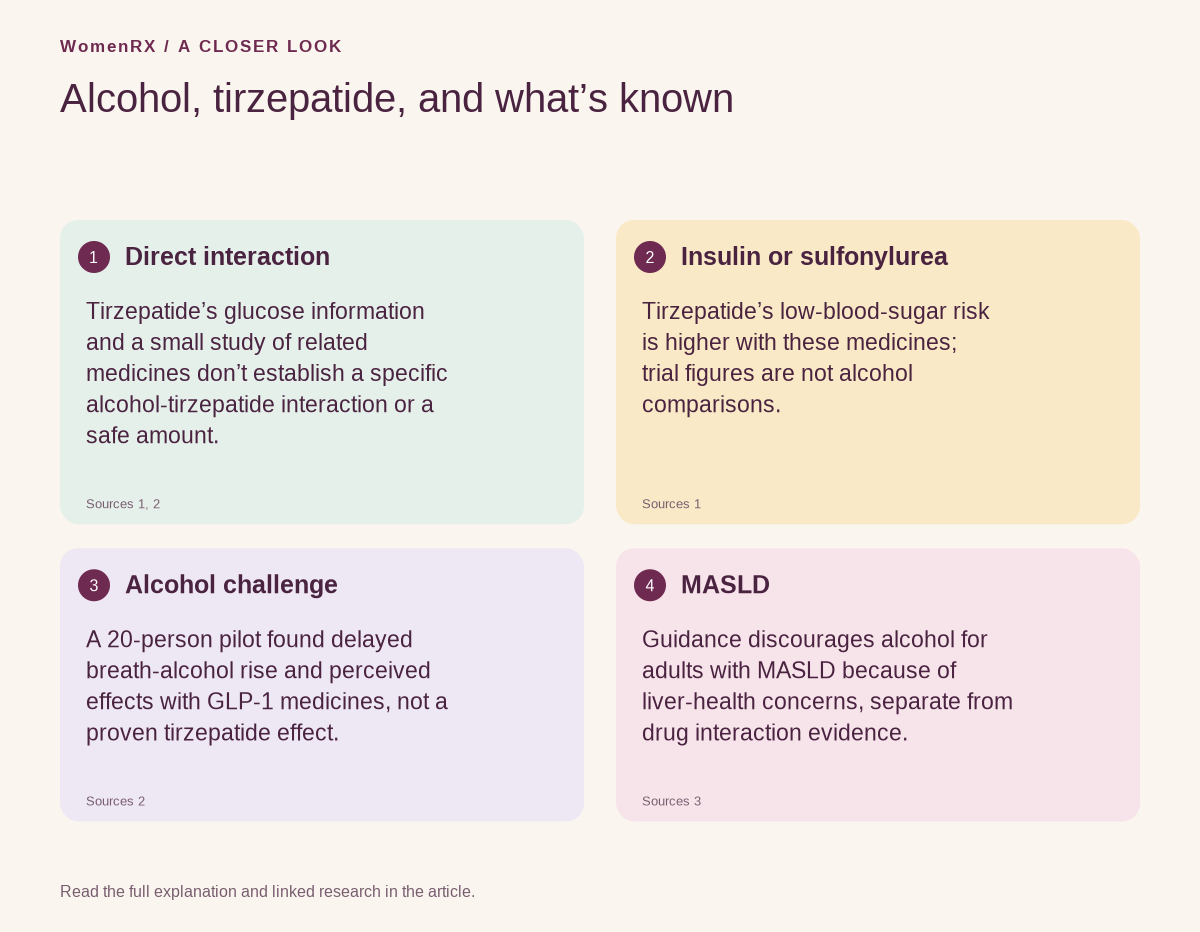
Direct interaction: Tirzepatide’s glucose information and a small study of related medicines don’t establish a specific alcohol-tirzepatide interaction or a safe amount.12
Insulin or sulfonylurea: Tirzepatide’s low-blood-sugar risk is higher with these medicines; trial figures are not alcohol comparisons.1
Alcohol challenge: A 20-person pilot found delayed breath-alcohol rise and perceived effects with GLP-1 medicines, not a proven tirzepatide effect.2
MASLD: Guidance discourages alcohol for adults with MASLD because of liver-health concerns, separate from drug interaction evidence.3
Read the figure as text
Separate the direct-interaction question from medication-related low-blood-sugar risk, preliminary alcohol findings, and liver-health considerations.- Direct interaction: Tirzepatide’s glucose information and a small study of related medicines don’t establish a specific alcohol-tirzepatide interaction or a safe amount.12
- Insulin or sulfonylurea: Tirzepatide’s low-blood-sugar risk is higher with these medicines; trial figures are not alcohol comparisons.1
- Alcohol challenge: A 20-person pilot found delayed breath-alcohol rise and perceived effects with GLP-1 medicines, not a proven tirzepatide effect.2
- MASLD: Guidance discourages alcohol for adults with MASLD because of liver-health concerns, separate from drug interaction evidence.3
More questions, answered
Does tirzepatide make alcohol affect you differently?
A small pilot study found delayed rises in breath alcohol and delayed perceived effects among people taking GLP-1 receptor agonists, but it doesn’t establish that tirzepatide has this effect or predict an individual response. 2
Does taking insulin or a sulfonylurea change the discussion?
Yes. Tirzepatide’s prescribing information identifies increased low-blood-sugar risk when it’s combined with insulin or an insulin secretagogue such as a sulfonylurea. The trial figures don’t measure the effect of alcohol. If you have diabetes, ask how to monitor your glucose and what to do if it runs low. 1
Sources you can check
- ZEPBOUND (TIRZEPATIDE) INJECTION, SOLUTION ZEPBOUND (TIRZEPATIDE) INJECTION, SOLUTION ZEPBOUND KWIKPEN (TIRZEPATIDE) INJECTION, SOLUTION [ELI LILLY AND COMPANY] | US prescribing information and patient instructionsAccessed 2026-09-25Return to first citation
- A preliminary study of the physiological and perceptual effects of GLP-1 receptor agonists during alcohol consumption in people with obesity.Quddos F, Fowler M, de Lima Bovo AC, Elbash Z, Tegge AN, Gatchalian KM, Kablinger AS, DiFeliceantonio AG, Bickel WK. · Scientific reports · 2025Return to first citation
- EASL-EASD-EASO Clinical Practice Guidelines on the Management of Metabolic Dysfunction-Associated Steatotic Liver Disease (MASLD).European Association for the Study of the Liver (EASL), European Association for the Study of Diabetes (EASD), European Association for the Study of Obesity (EASO). · Obesity facts · 2024Return to first citation