Which Foods Give You the Most Vitamin E?
Sunflower seeds, almonds, and some oils provide more vitamin E per serving than greens or fruit, though smaller amounts add up too.
Sunflower seeds and almonds are useful everyday sources of vitamin E: a one-ounce serving provides 7.4 mg and 6.8 mg, respectively. Oils can provide more per tablespoon, while peanut butter, cooked greens, and fruit contribute smaller amounts. The recommended intake is 15 mg a day for women age 14 and older, including during pregnancy, and 19 mg while breastfeeding. 1

Start with portions you might actually eat
Vitamin E is found in a range of foods, but the amount changes considerably with the portion. The figures below are for alpha-tocopherol, the form used to set vitamin E intake recommendations. Nuts, seeds, and vegetable oils are among its richest food sources. 1
| Food | Portion | Vitamin E |
|---|---|---|
| Wheat germ oil | 1 tablespoon | 20.3 mg |
| Dry-roasted sunflower seeds | 1 ounce | 7.4 mg |
| Dry-roasted almonds | 1 ounce | 6.8 mg |
| Sunflower oil | 1 tablespoon | 5.6 mg |
| Dry-roasted hazelnuts | 1 ounce | 4.3 mg |
| Peanut butter | 2 tablespoons | 2.9 mg |
| Boiled spinach | ½ cup | 1.9 mg |
| Boiled broccoli | ½ cup | 1.2 mg |
| Kiwifruit | 1 medium | 1.1 mg |
These are amounts for the listed portions, not amounts you need to get at every meal. For example, an ounce of almonds contributes more vitamin E than half a cup of cooked spinach, but the spinach still counts toward your daily intake. You could choose nuts or seeds as a snack and let vegetables contribute alongside the rest of your food, rather than trying to find one perfect source. 1
Oils deserve a little context. A tablespoon of wheat germ oil tops this comparison, but that doesn't make it a required food. Likewise, the amount of an oil used to prepare a dish isn't necessarily the amount in your own serving. The portion figures are most useful for comparing choices, not calculating a meal down to the milligram. 1
Pregnancy changes less than breastfeeding
The recommended dietary allowance is 15 mg daily for women age 14 and older, including during pregnancy. It rises to 19 mg daily while breastfeeding. The intake table doesn't set a separate vitamin E target for menopause. 1
You may also see a 15 mg Daily Value on food labels. That number helps you compare products; your vitamin E doesn't have to come from a single food. If you look for it on a package and don't find it, that doesn't necessarily mean the food contains none: vitamin E generally doesn't have to appear on a food label unless it has been added. Fortified cereals can provide vitamin E, but their amounts depend on the product. 1
Keep food amounts separate from supplement claims
A tablespoon of wheat germ oil provides more than the 15 mg Daily Value. That isn't a reason to treat it like a high-dose vitamin E pill. The NIH Office of Dietary Supplements reports no adverse effects from vitamin E consumed in food, while high-dose alpha-tocopherol supplements raise different safety concerns, including potential effects on bleeding. MedlinePlus specifically cautions that supplements may be harmful for people taking blood thinners or certain other medicines. 12
The distinction matters for benefits, too. An association between vitamin E intake and heart health doesn't show that adding a vitamin E supplement will prevent heart disease. Randomized trials summarized by the NIH have not established that routine vitamin E supplementation prevents cardiovascular disease. Choosing vitamin E-containing foods is a way to meet a nutrient need, not a promise that a concentrated supplement will deliver extra protection. 1
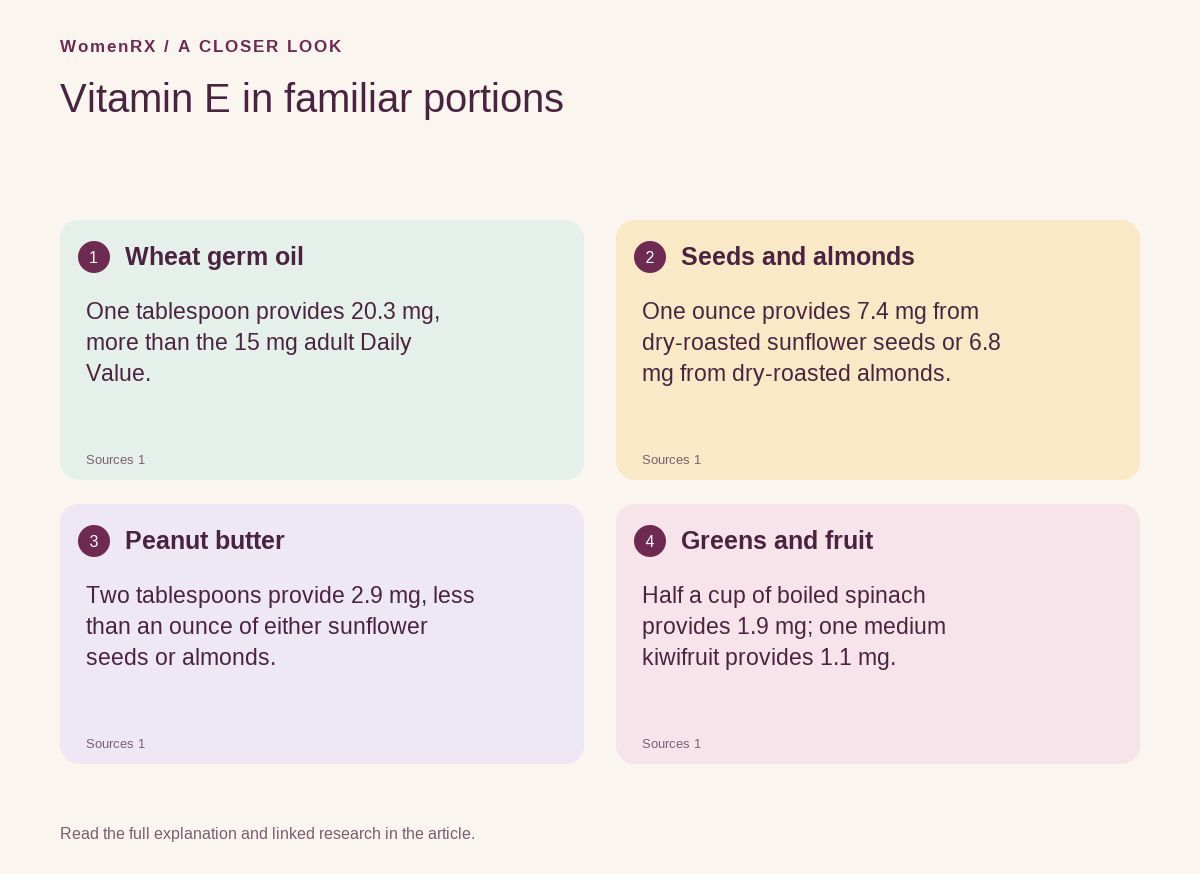
Vitamin E in familiar portions
Wheat germ oil: One tablespoon provides 20.3 mg, more than the 15 mg adult Daily Value.1
Seeds and almonds: One ounce provides 7.4 mg from dry-roasted sunflower seeds or 6.8 mg from dry-roasted almonds.1
Peanut butter: Two tablespoons provide 2.9 mg, less than an ounce of either sunflower seeds or almonds.1
Greens and fruit: Half a cup of boiled spinach provides 1.9 mg; one medium kiwifruit provides 1.1 mg.1
Read the figure as text
These alpha-tocopherol amounts show how a serving of seeds, nuts, oil, or produce compares. They are food amounts, not supplement doses.- Wheat germ oil: One tablespoon provides 20.3 mg, more than the 15 mg adult Daily Value.1
- Seeds and almonds: One ounce provides 7.4 mg from dry-roasted sunflower seeds or 6.8 mg from dry-roasted almonds.1
- Peanut butter: Two tablespoons provide 2.9 mg, less than an ounce of either sunflower seeds or almonds.1
- Greens and fruit: Half a cup of boiled spinach provides 1.9 mg; one medium kiwifruit provides 1.1 mg.1
More questions, answered
Is raw spinach as good a source as cooked spinach?
Compare the portions before comparing the numbers. The NIH list gives 1.9 mg for ½ cup boiled spinach and 0.6 mg for 1 cup raw spinach. Those are different amounts of food, not a controlled test of what cooking does to vitamin E. 1
Sources you can check
- Vitamin E - Health Professional Fact SheetAccessed 2026-09-25Return to first citation
- Vitamin E: MedlinePlusAccessed 2026-09-25Return to first citation