Omega-3 Foods: Which Give You EPA, DHA, or ALA?
Fatty fish and plant foods can both supply omega-3s, but they usually provide different kinds.
For EPA and DHA, choose fatty fish such as salmon or sardines. Chia seeds, flaxseed and walnuts supply ALA instead. Your body can turn some ALA into EPA and DHA, but the conversion is limited, so the foods aren’t interchangeable for that purpose. If you’re pregnant, might become pregnant or are breastfeeding, choose fish with the FDA and EPA’s lower-mercury guidance in mind. 13
Start with the kind of omega-3 you want
The words contains omega-3 don’t tell you which omega-3 a food provides. The three to look for are alpha-linolenic acid (ALA), eicosapentaenoic acid (EPA) and docosahexaenoic acid (DHA). ALA is an essential fat you need to get from food. Your body can convert ALA into EPA and then DHA, but only a limited amount makes that transition. If your aim is to eat foods that provide EPA and DHA directly, fatty fish is the more straightforward choice. 1
That doesn’t make plant foods lesser choices. It means a spoonful of ground flaxseed and a serving of salmon do different nutritional jobs. Human intervention studies summarized in a review of vegetarian omega-3 sources found that ALA-rich nut and seed oils did not reliably increase DHA, while microalgae oil increased blood DHA in several studies. Those findings concern DHA levels, not a head-to-head test of the overall health benefits of eating fish versus seeds. 2
Compare the foods you’d actually put on a plate
Fatty fish provides EPA and DHA directly. Salmon, sardines and herring are examples. The amount varies by species and by what the fish has eaten, so there isn’t one dependable EPA-and-DHA figure for every fish dinner. A four-ounce portion, measured before cooking, is the adult serving used in FDA and EPA fish guidance. Canned salmon or sardines can make that a simple lunch or dinner rather than a special meal. 13
Lean fish and shellfish also count as seafood, but generally provide less EPA and DHA than fatty fish. Cod, tilapia and shellfish are examples. You might choose them because you enjoy them, while choosing a fattier fish when EPA and DHA are the main reason for the meal. 1
Seeds, walnuts and certain oils provide ALA. Chia seeds, flaxseed and walnuts fit here, as do flaxseed, canola and soybean oils. For a sense of portion size, the NIH food table lists one ounce of chia seeds as providing 5.06 grams of ALA. That’s an ALA amount, not an EPA-and-DHA amount. You could add chia or walnuts to oatmeal, for example, without counting that breakfast as the equivalent of a fish serving. 1
Fortified foods need a closer look. Some eggs, dairy foods, juices and soy beverages have added DHA or other omega-3s. Because the added type can differ, check the product label for DHA or EPA rather than relying on omega-3 on the front of the package. Microalgae are the original source of the EPA and DHA that accumulate in fish; algal-oil products can provide DHA without fish, though these are generally supplements rather than an ordinary serving of seeds or nuts. 1
If you’re pregnant, the fish choice matters too
For someone who might become pregnant, is pregnant or is breastfeeding, the FDA and EPA recommend 8 to 12 ounces of a variety of lower-mercury fish each week. That’s two to three four-ounce servings from their “Best Choices” category. Canned salmon, sardines and canned light tuna are examples named in the guidance. Fish also supplies protein, vitamins and minerals, so the advice is about the whole food, not just its omega-3 content. During pregnancy, eat fish cooked rather than raw. 3
Not every tuna belongs in the same category. Canned light tuna is a “Best Choice”; albacore, or white tuna, is a “Good Choice,” limited to one serving with no other fish that week. Bigeye tuna is a “Choice to Avoid.” If you eat fish caught by family or friends, check the advisory for the water where it was caught rather than assuming a familiar fish name tells you its mercury level. 3
If you don’t eat fish, ALA-rich foods still have a place in your diet, but they aren’t a direct DHA substitute. A DHA-containing algal product is a fish-free option to consider if direct DHA intake is your goal. Fish isn’t the only way to build a healthy diet during pregnancy, and a supplement doesn’t supply all the other nutrients found in fish. 13
The useful distinction at the grocery store is simple: choose fatty fish when you want food-based EPA and DHA; choose chia, flaxseed, walnuts or their oils when you want plant-based ALA. If pregnancy guidance applies to you, make a second check for the fish’s mercury category before deciding what goes in the cart. 13
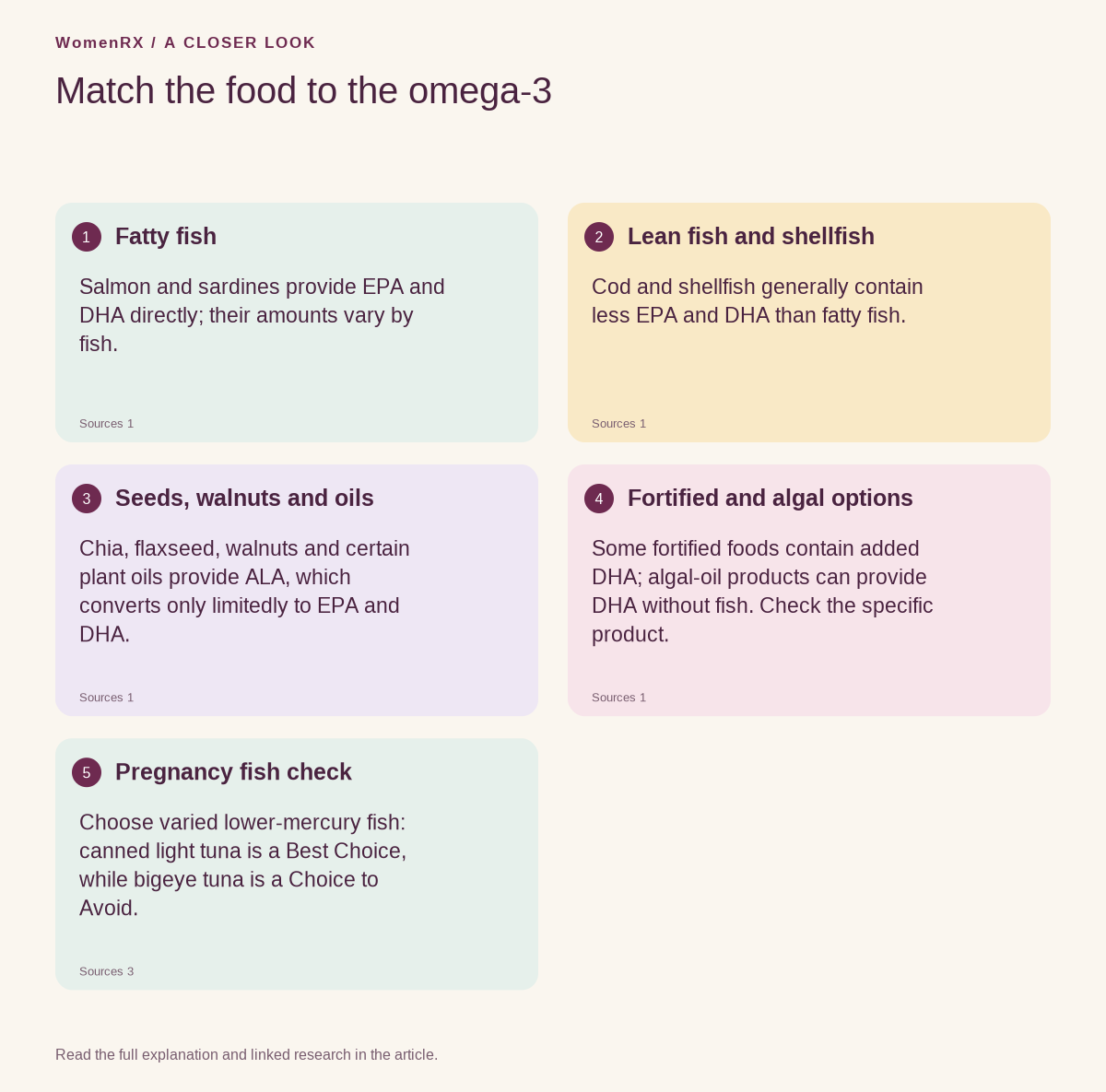
Match the food to the omega-3
Fatty fish: Salmon and sardines provide EPA and DHA directly; their amounts vary by fish.1
Lean fish and shellfish: Cod and shellfish generally contain less EPA and DHA than fatty fish.1
Seeds, walnuts and oils: Chia, flaxseed, walnuts and certain plant oils provide ALA, which converts only limitedly to EPA and DHA.1
Fortified and algal options: Some fortified foods contain added DHA; algal-oil products can provide DHA without fish. Check the specific product.1
Pregnancy fish check: Choose varied lower-mercury fish: canned light tuna is a Best Choice, while bigeye tuna is a Choice to Avoid.3
Read the figure as text
A quick comparison of what each food choice contributes, with a separate fish-safety check when pregnancy guidance applies.- Fatty fish: Salmon and sardines provide EPA and DHA directly; their amounts vary by fish.1
- Lean fish and shellfish: Cod and shellfish generally contain less EPA and DHA than fatty fish.1
- Seeds, walnuts and oils: Chia, flaxseed, walnuts and certain plant oils provide ALA, which converts only limitedly to EPA and DHA.1
- Fortified and algal options: Some fortified foods contain added DHA; algal-oil products can provide DHA without fish. Check the specific product.1
- Pregnancy fish check: Choose varied lower-mercury fish: canned light tuna is a Best Choice, while bigeye tuna is a Choice to Avoid.3
More questions, answered
Does canned light tuna count as a lower-mercury choice during pregnancy?
Yes. The FDA and EPA put canned light tuna in their “Best Choices” category, but albacore tuna is a “Good Choice” and bigeye tuna is a “Choice to Avoid.” The type of tuna matters more than the word tuna alone. 3
Sources you can check
- Omega-3 Fatty Acids - Health Professional Fact SheetAccessed 2026-09-25Return to first citation
- Bioavailability and potential uses of vegetarian sources of omega-3 fatty acids: a review of the literature.Lane K, Derbyshire E, Li W, Brennan C. · Critical reviews in food science and nutrition · 2014Return to first citation
- Questions & Answers from the FDA/EPA Advice about Eating Fish for Those Who Might Become or Are Pregnant or Breastfeeding and Children Ages 1 to 11 Years | FDAAccessed 2026-09-25Return to first citation