Vitamin E Supplements: When Do You Need One?
Most people get enough vitamin E from food, while supplements deserve a closer look if absorption or bleeding risk is part of the picture.
Most people get enough vitamin E from food. Extra vitamin E may be needed with certain conditions that affect absorption, but a general wellness goal isn’t a reason to assume more will help. If you’re considering a supplement, check the vitamin E amount in every product you use and review it before starting, especially if you take a blood thinner or aspirin or have surgery planned. 124
Start with the reason, not the bottle
Vitamin E helps your body function, and you can get it from vegetable oils, leafy greens, and some fortified foods. Most people get enough from what they eat. A supplement is a different decision: it adds vitamin E beyond your food intake, sometimes without a clear reason to do so. 2
If you’re considering it for skin, fertility, or general wellness, separate the nutrient’s role in the body from the promise on the package. Vitamin E has antioxidant functions, but that fact alone doesn’t show that taking extra vitamin E will achieve those goals. 24
When an intake concern changes the conversation
Some people with liver disease, cystic fibrosis, or Crohn’s disease may need extra vitamin E. A review describes deficiency as rare and largely associated with conditions that interfere with fat absorption. Having one of these conditions doesn’t tell you, by itself, whether you need a supplement or how much. It does give you a specific question to raise with the clinician managing your care. 24
If you’re pregnant or breastfeeding, include any vitamin E product in a review of everything you take, including a prenatal supplement if you use one. Don’t assume that general adult supplement advice establishes a pregnancy or breastfeeding benefit, or that a standalone product is needed for a skin or reproductive goal. Share the product label with your pregnancy or postpartum care team before adding it. 12
Check the amount across products
Read the vitamin E amount per serving on the label, then check any multivitamin, prenatal, or combination supplement you also use. A product doesn’t have to say “vitamin E” on the front to contain it. Looking across labels helps you see what you’d be adding rather than judging one bottle in isolation. MedlinePlus advises against taking more of a supplement than its label recommends. 1
This check matters because the safety discussion changes with supplemental amount. A 2025 review raises concerns about high-dose vitamin E, including bleeding when it’s combined with blood thinners such as warfarin or with aspirin. It does not give a personal risk estimate or a dose that is right for every reader. 4
Make the bleeding-risk check before you start
Vitamin E supplements may be harmful for people taking blood thinners or other medicines. Vitamin E can interfere with how vitamin K works, and vitamin K helps your blood clot. If you take a blood thinner, have a bleeding disorder, or use aspirin, bring the exact supplement label to the person managing that treatment before adding vitamin E. 234
Surgery is another time to speak up about supplements you already take. Tell your care team what’s in your routine and ask what to do before the procedure rather than making changes on your own. 1
A useful decision is therefore specific: What am I taking vitamin E for, how much is already in my products, and do my health conditions or medicines change the balance? For most people, food answers the intake question. When absorption or treatment raises a concern, the product label and medication list make the next conversation much more useful. 124
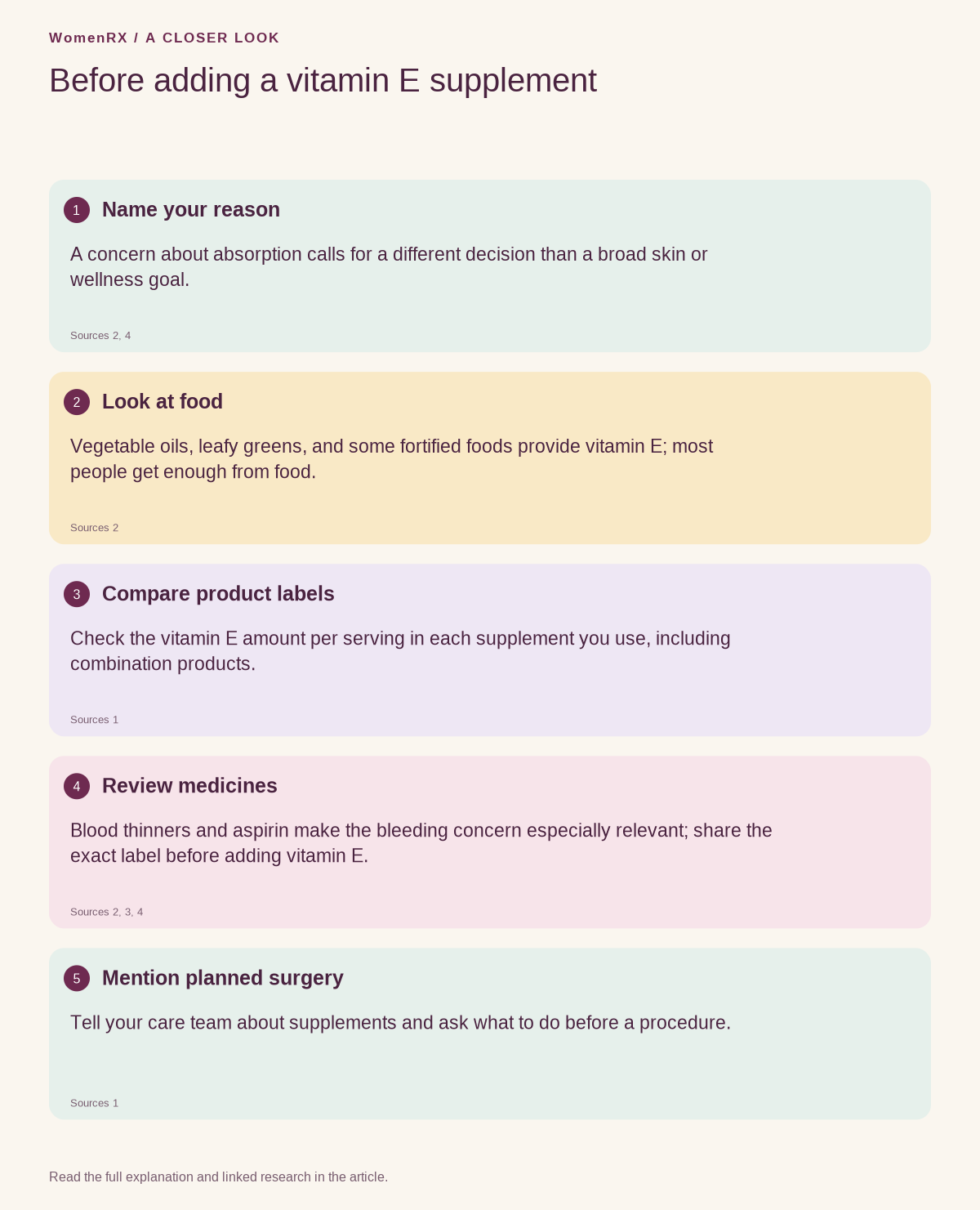
Before adding a vitamin E supplement
Name your reason: A concern about absorption calls for a different decision than a broad skin or wellness goal.24
Look at food: Vegetable oils, leafy greens, and some fortified foods provide vitamin E; most people get enough from food.2
Compare product labels: Check the vitamin E amount per serving in each supplement you use, including combination products.1
Review medicines: Blood thinners and aspirin make the bleeding concern especially relevant; share the exact label before adding vitamin E.234
Mention planned surgery: Tell your care team about supplements and ask what to do before a procedure.1
Read the figure as text
Follow the question from your reason for taking it through food intake, product labels, and treatment-related checks.- Name your reason: A concern about absorption calls for a different decision than a broad skin or wellness goal.24
- Look at food: Vegetable oils, leafy greens, and some fortified foods provide vitamin E; most people get enough from food.2
- Compare product labels: Check the vitamin E amount per serving in each supplement you use, including combination products.1
- Review medicines: Blood thinners and aspirin make the bleeding concern especially relevant; share the exact label before adding vitamin E.234
- Mention planned surgery: Tell your care team about supplements and ask what to do before a procedure.1
Sources you can check
- Dietary Supplements: MedlinePlusAccessed 2026-09-25Return to first citation
- Vitamin E: MedlinePlusAccessed 2026-09-25Return to first citation
- Vitamin K: MedlinePlusAccessed 2026-09-25Return to first citation
- Vitamin E (α-Tocopherol): Emerging Clinical Role and Adverse Risks of Supplementation in Adults.Kaye AD, Thomassen AS, Mashaw SA, MacDonald EM, Waguespack A, Hickey L, Singh A, Gungor D, Kallurkar A, Kaye AM, Shekoohi S, Varrassi G. · Cureus · 2025Return to first citation